After spending much of last year and the first part of this year living and breathing all things Steeleye Span while I worked on my book about the band (which came out this summer) it felt kind of fitting for this to be my penultimate gig of the year.
Steeleye Span are always a joy to watch live and they always seem to go that extra mile in putting together a set-list that’s unique for each tour. It’s never a case of merely churning out the same old favourites year after year. They delve deep into their back catalogue, dust down songs that have not been played in years, retire others that have been in the set for a little while and generally mix things up to create a live show that’s fresh-sounding and unique. And, because this is a band that is still eagerly releasing new music, there’s often some brand new material (or never-been-tried-before trad. arr material) to look forward to as well. This tour is no exception and we get some fantastic renditions of material from the band’s excellent new album, Conflict, released earlier this year.
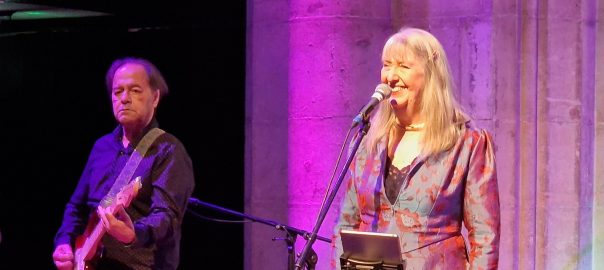
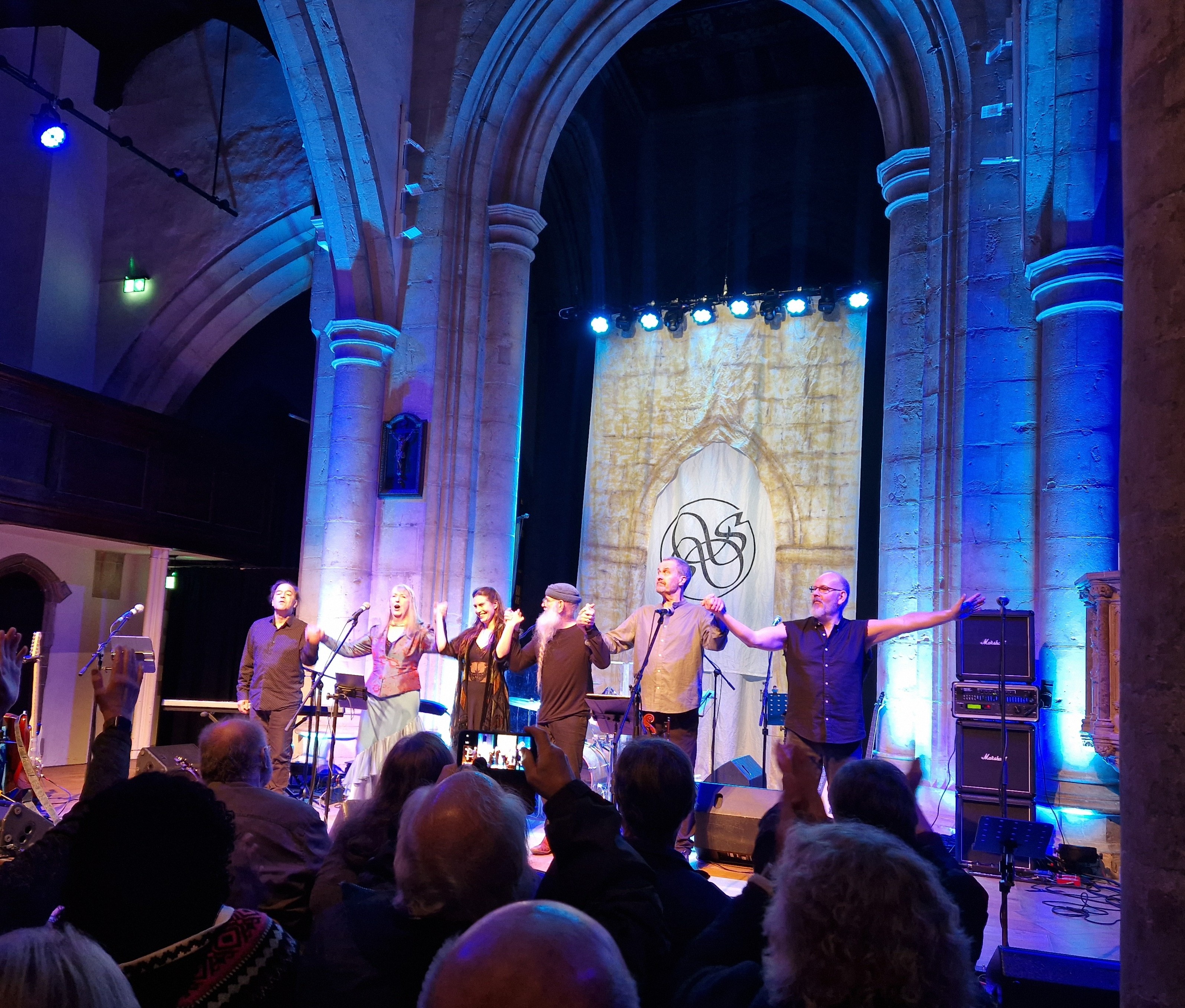
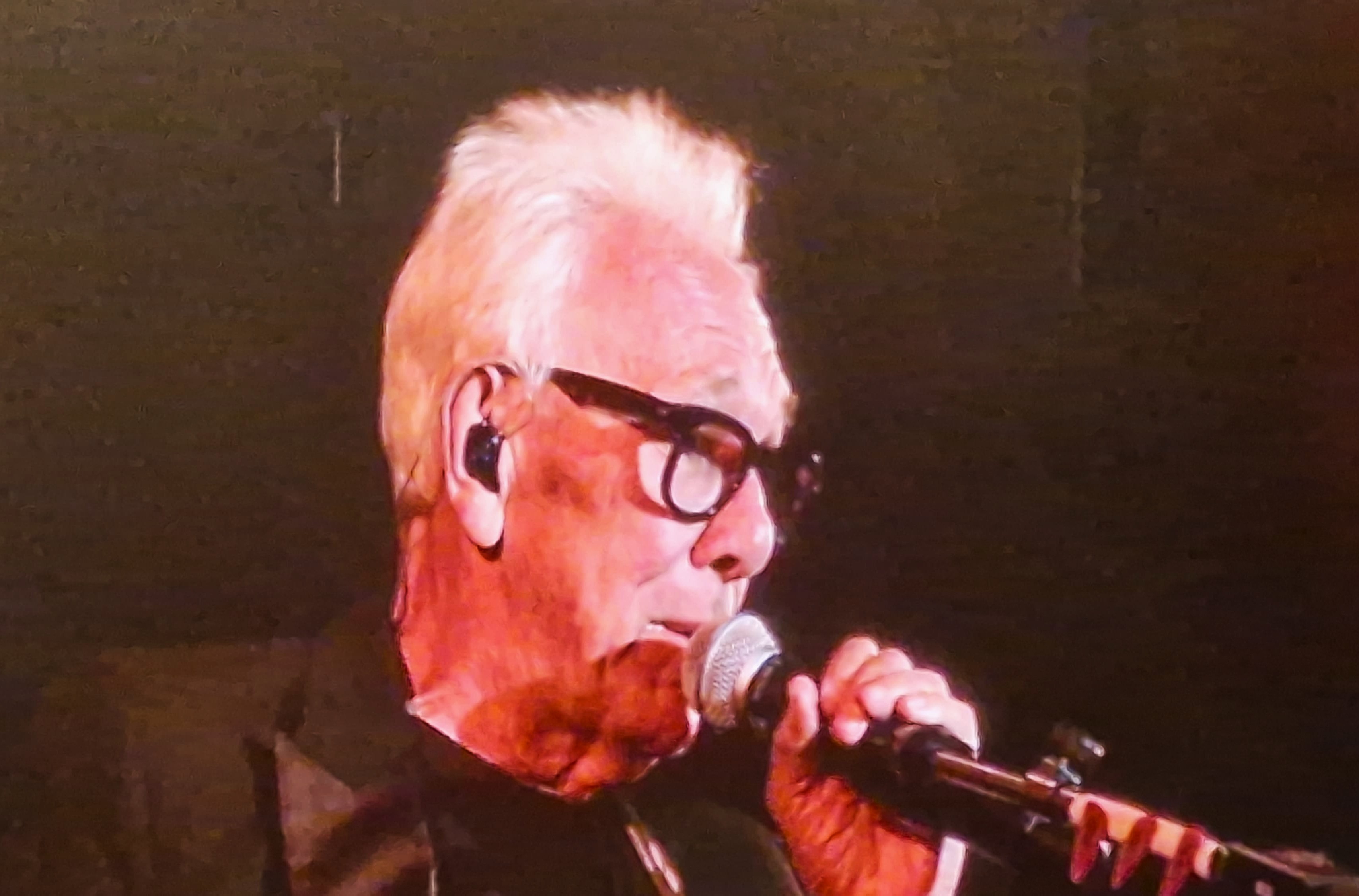
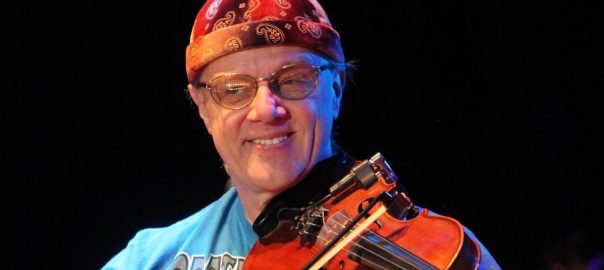
The line-up is a classic Span ‘Now We Are Six’ type formation, with guitarist, Spud Sinclair, and bass-player, Roger Carey, providing some real rock and roll oomph alongside long-time drummer, Liam Gernockey; multi-instrumentalist, Julian Littman, on guitars, mandolin and keyboards; the incredibly talented Violeta Vicci on violin; and, of course, the one and only Maddy Prior on vocals.
It means there’s bags of energy behind the band’s meaty renditions of songs like ‘Royal Forester’, and ‘King Henry’ which showcase Steeleye Span at their riffiest, folk-rockiest best. But, it being a church and all that, what became the most spellbinding moments in this beautiful setting were the choral, acapella versions of ‘Gaudette’, the band’s vintage Christmas hit, and ‘Dogs and Ferrets’ from the Commoners Crown album. Prior reminded us that the latter hadn’t been performed live since not long after the album was released over fifty years ago.
Vocally, the band are sounding superb. Carey, Littman and Sinclair all contribute and Prior’s voice has matured into something rich, warm and velvety while still being unmistakeably the voice of Maddy Prior. Meanwhile, the beautiful crystal-clear vocals of Vicci add a second female voice into the mix – and someone to “hit all the high notes” as Prior jokes. With an exceptional back catalogue, stellar musicians and incredible vocals, Steeleye Span continue to surprise and delight.
Setlist:
First set: Over The Hills And Far Away New York Girls Lady Diamond Roadways Blackleg Miner I Was An Oak Tree Trees are Whispering Royal Forester Alison Gross The Dark Morris Song
Second set: Gaudete Cruel Brother Skip to Shore Ghost Ship King Henry Dogs and Ferrets We Shall Wear Midnight Hard Times of Old England Wintersmith All Around My Hat Dodgy Bastards
Presenting Maddy with a complimentary copy of the book after the gig
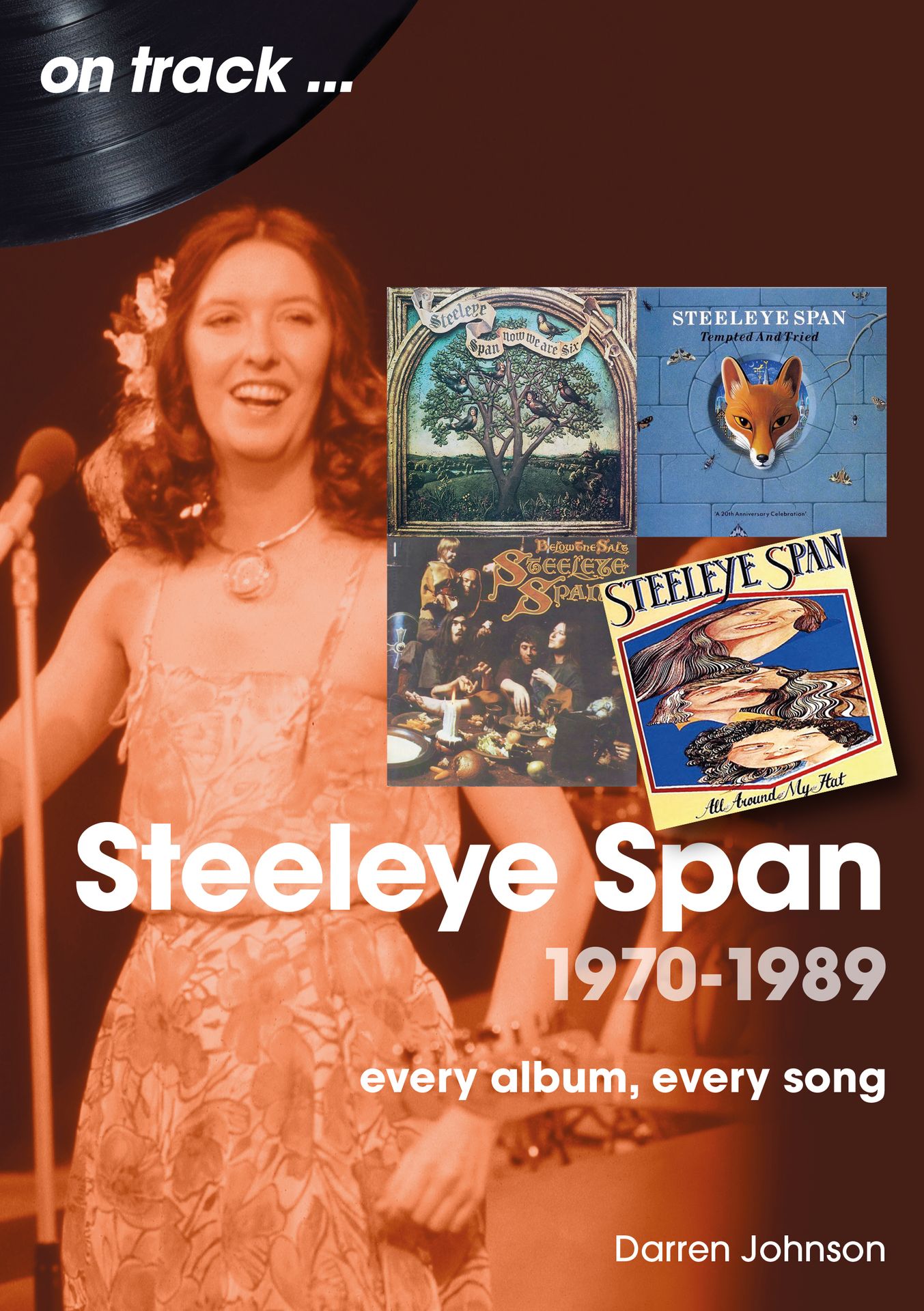
My book ‘’Steeleye Span 1970-1989 On Track: Every Album, Every Song‘ is available from Amazonor Burning Shed
Following my ‘glam rock trilogy’ on Slade, Sweet and Suzi Quatro, my fourth book for Sonicbond Publishing came out in August 2025: Steeleye Span 1970-1989 On Track: Every Album, Every Song. I’ve been really heartened by the enthusiastic responses from readers so far (reaching Number 2 on Amazon’s Music Encyclopaedias Chart) and the many kind words from reviewers.
Darren Johnson
“Both satisfying and engrossing, what should’ve been a simple task to read and comment on, became a series of rabbit holes, as songs and entire albums had to be revisited or indeed investigated. Both for the purposes of research and pure enjoyment, as well as a degree of nostalgia.”Folk North West (read full review here)
“Darren Johnson has done a remarkable job in squeezing the details of fourteen albums into this slim volume” “Johnson’s research is thorough”RnR magazine
“I hadn’t heard some of these records for a very long time, but this deep dive into the band, their music and indeed the history behind some of the traditional songs they performed, caused me to listen again with fresh ears. Check it out if ‘The Span’ or indeed folk rock in general are your thing.” The Afterword (read full review here)
“The book though is very fair in recognizing it’s sources. It brings together a lot of info into a well written book – definitely recommended!” A Celebration of Steeleye Span (read full review here)
Steeleye Span 1970-1989 On Track can be purchased via Amazonhere as well as most other major book-sellers. And via the publisher’s own online shop at Burning Shedhere
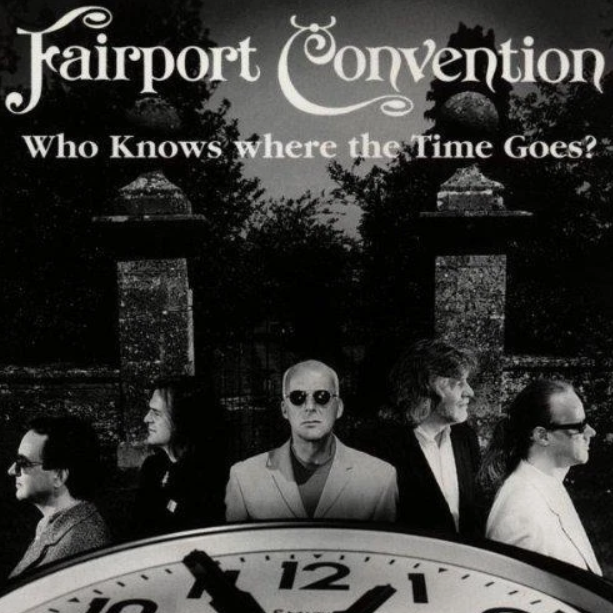
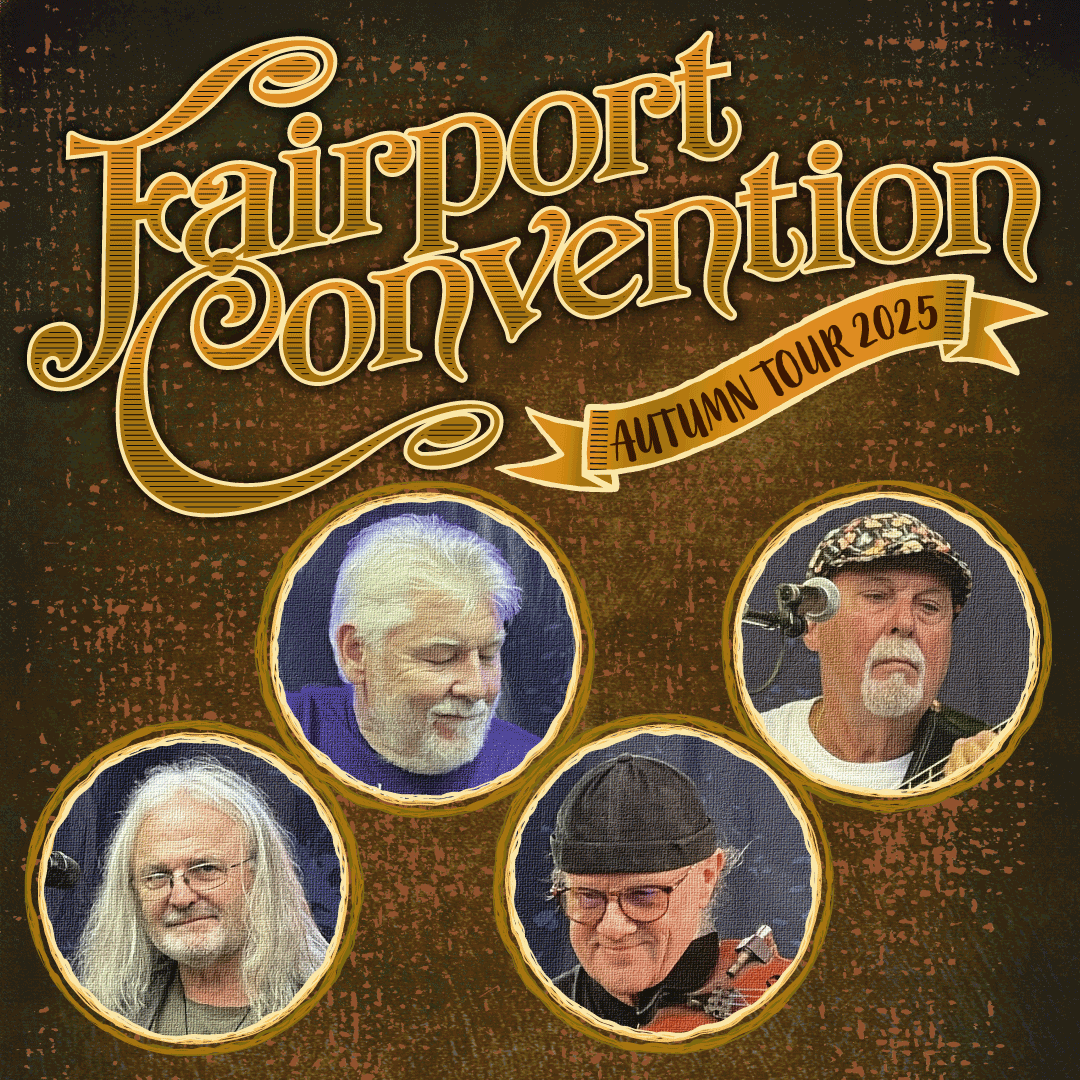
Following a triumphant sold-out Cropredy festival this summer (see my review here), folk rock legends Fairport Convention embark on an Autumn 2025 UK tour.
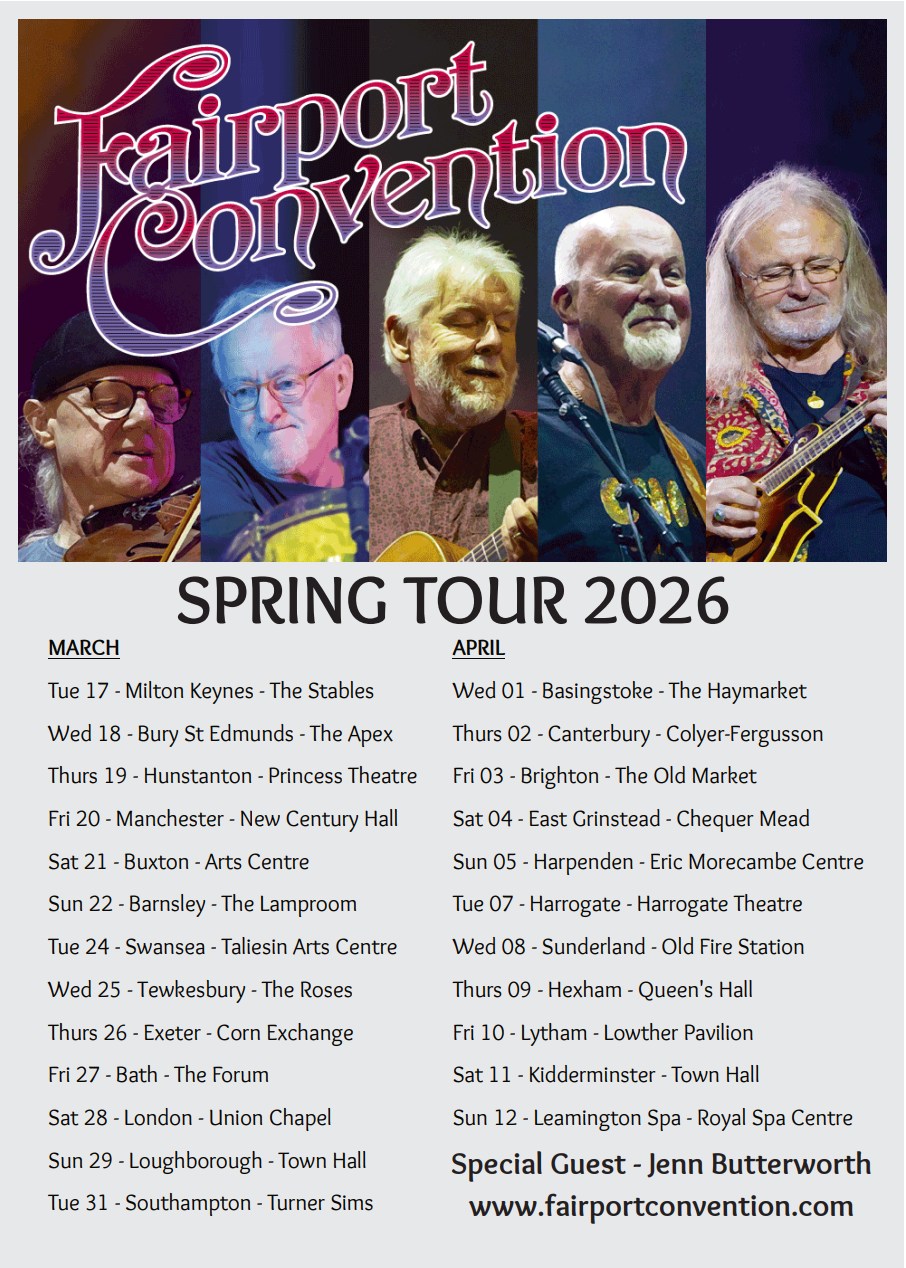
Playing as a stripped back four-piece, Simon Nicol, Dave Pegg, Ric Sanders and Chris Leslie will take to the road in October with 23 dates across England, Scotland and Wales, rounding things off in Liverpool on November 2nd.
Interviewing Dave Pegg earlier in the year, he emphasised how important playing live still was to the band:
“We still enjoy touring enormously and treading the boards has always been what Fairport is good at. We’ve had more success playing live than we’ve had making albums.”
You can read my full interview with Dave Pegg here.
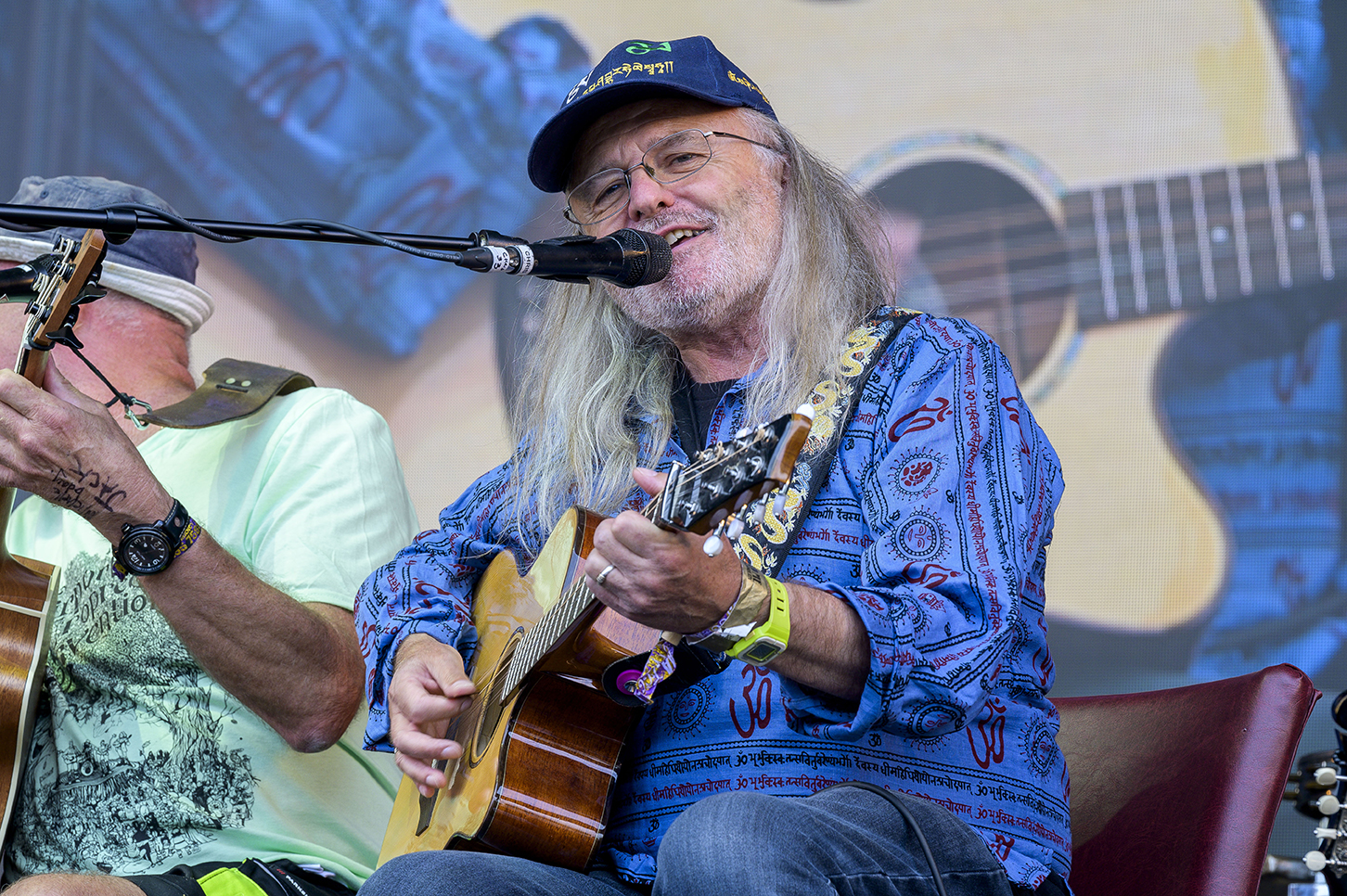
Dave Pegg at Cropredy- Photo: Simon Putman
2025 marks 40 years since the Gladys’ Leap album – the first of the reunited Fairport Convention, featuring Simon Nicol, Dave Pegg and the first contributions from Ric Sanders.
Interviewing Ric Sanders ahead of this summer’s Cropredy, we discussed the Gladys’ Leap album, and how Sanders thought he was merely being asked to contribute to a Dave Pegg side project when he first got the call:
“Peggy had this offshoot group – a fun outfit it was – and they were called Dave Pegg’s Cocktail Cowboys, of which Chris was a member as well. At this time, around about ‘85, I was just doing jazz gigs around the Midlands. Just going out, playing with different rhythm sections, like jazz musicians used to. And it wasn’t hugely lucrative, but I got by. Peggy sent me this tape and I thought he was asking me to play on a Cocktail Cowboys record because I had no idea that Swarb had decided that he didn’t want to carry on with Fairport. And so when the tape arrived and I listened to it, I thought, hello? Well, that’s Peggy playing the bass, obviously. That’s Dave Mattacks on drums. And that guitar I could tell straight away. And yeah, it turned out to be Gladys’ Leap. And I went along and my first day was just recording those three tracks that I did on the album. The standout track for me, and the one that stayed in the repertoire, is ‘The Hiring Fair’.”
You can read my full interview with Ric Sanders here.
Ric Sanders – Photo Kevin Smith
Fairport Convention’s Autumn Tour runs from 8th October to 2nd November, with some shows already sold out. Tickets are available to purchase now on the links below.
Fairport Convention – Autumn 2025 UK Tour
Wed, 8th Oct 2025 The Green Hotel, Kinross – TICKETS
Thu, 9th Oct 2025 The Green Hotel, Kinross – TICKETS
Fri, 10th Oct 2025 Byre Theatre, St Andrews – SOLD OUT
When tickets for Cropredy 2025 went on sale, it was announced that there would be some changes to the festival this year, with far fewer tickets available. Interviewing Fairport’s Dave Pegg back in January, he explained the thinking behind the new approach as follows:
“Gareth Williams our CEO came up with several formulas for trying to make it pay. It’s always been such a gamble, the last couple of years especially. Because when you don’t know how many tickets you are going to sell, you can’t budget. You’re guessing about the number of people who are going to turn up. Gareth’s idea – we’re only going to sell 6,500 tickets and we’re only selling three-day tickets. Because we know we’ve got that lump of income and we can budget accordingly without the risk of going bankrupt.“
As well as fewer tickets, the festival line-up was to look somewhat different, too. The era of big-name headline acts like Chic and Madness and Alice Cooper, who had previously graced the Cropredy stage in a bid to widen the festival’s appeal and get more bums on (folding) seats, was over. Instead, there would be far more focus on acts that the festival organisers knew and had worked alongside.
The big question, therefore, is did this new formula work? Clearly, there was no problem shifting tickets, with the vast majority being snapped up by February and with the festival selling out well in advance. Arriving at the campsite on the Thursday afternoon, it didn’t feel much different, although a couple of fields previously used for camping had apparently been taken out of use.
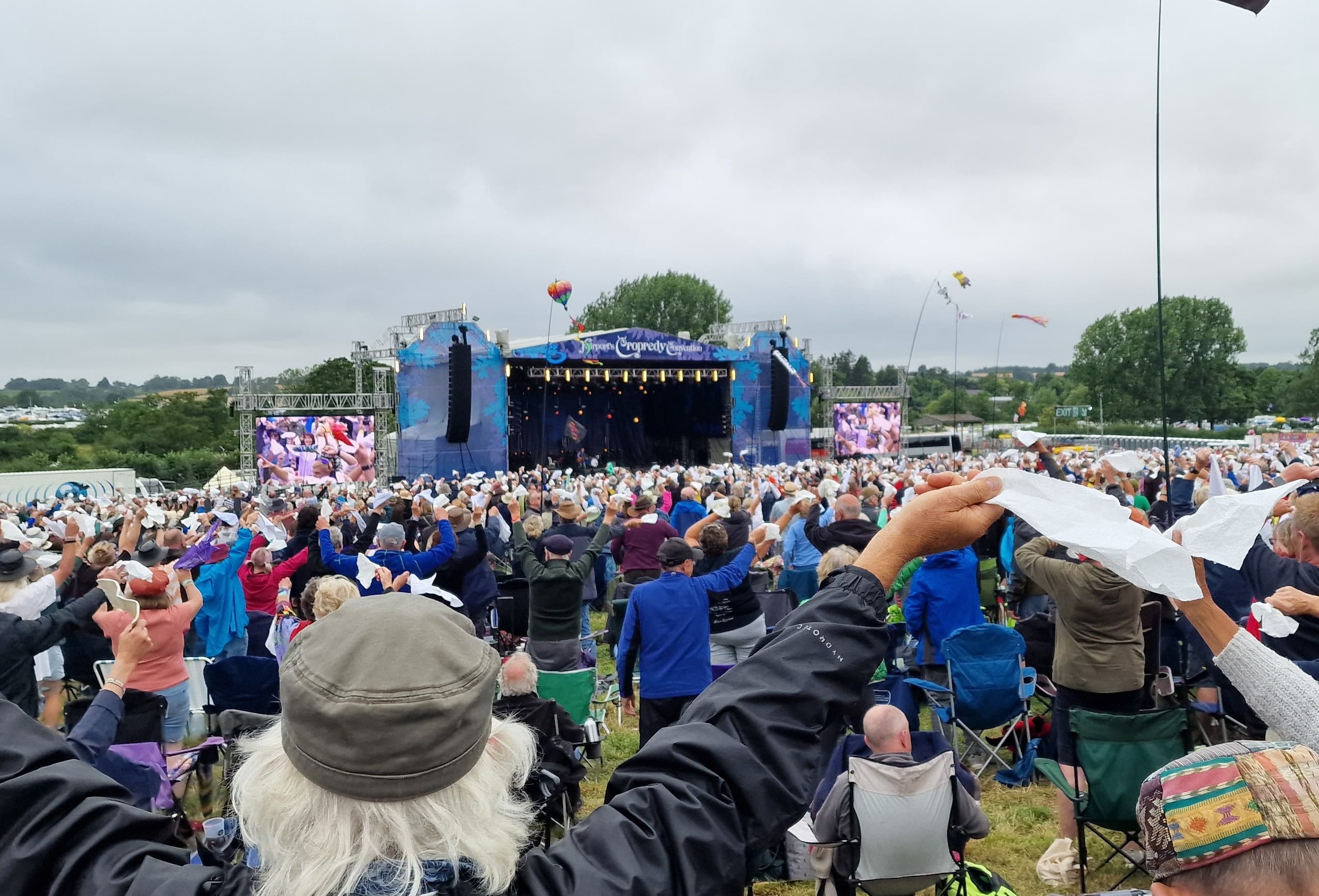
The Cropredy crowd (Photo: Simon Putman)
I was also wondering whether the slimmed-down attendance would leave us all rattling around in the main arena field but it didn’t feel like that at all. Walkways had been rejigged, the big screens at either side of the stage had been replaced by a single screen at the back of the stage but overall it very much felt like the same old Cropredy I’d been going to for the past fifteen years.
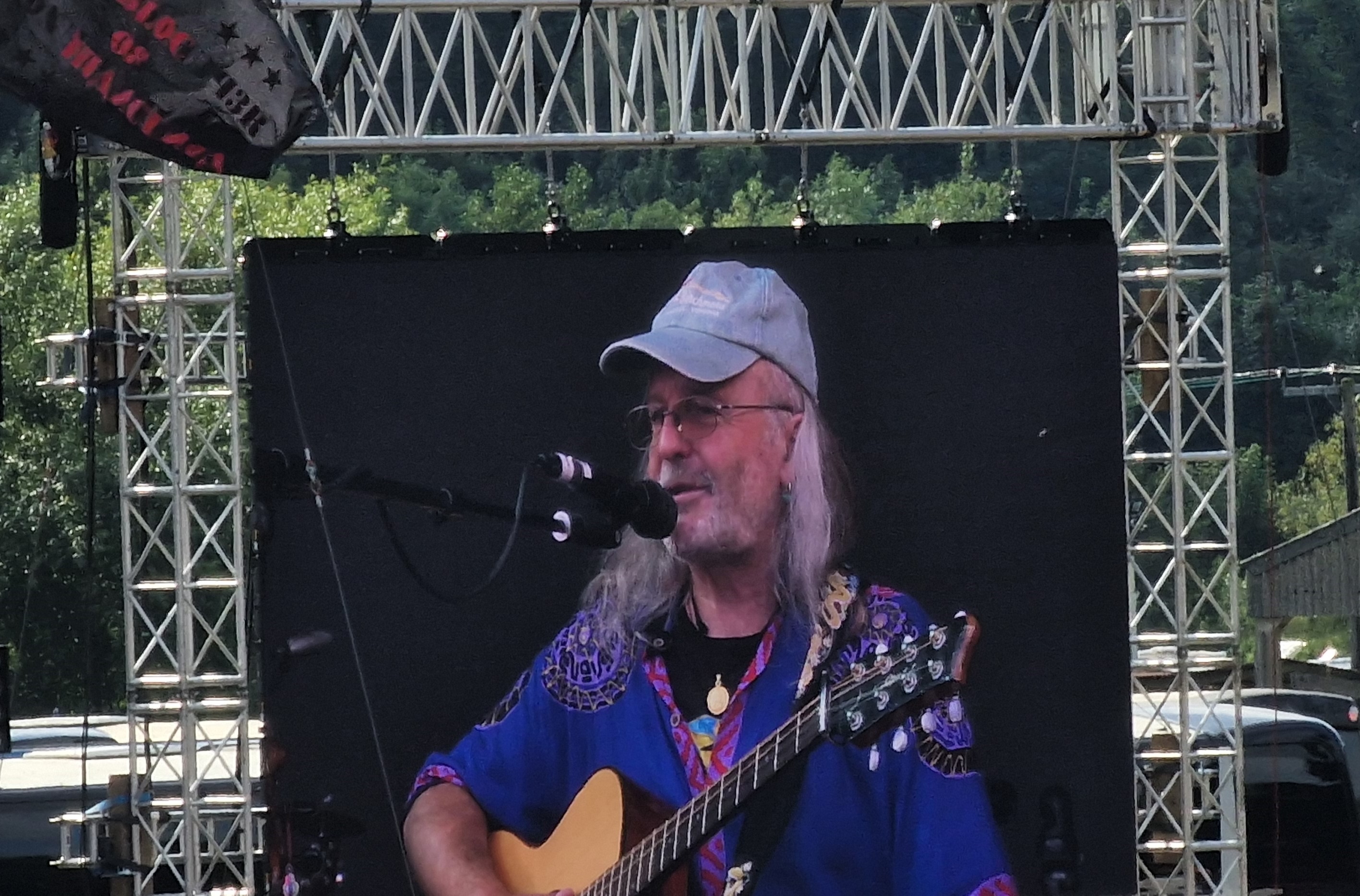
Richard Digance up on the big screen (Photo: Simon Putman)
So, enough of the festival arrangements, what of the music? I must admit that one of the real attractions for me when I first started going to Cropredy in 2010 was the mix of folk, acoustic and classic rock acts. I loved having Status Quo and Rick Wakeman and Little Feat alongside Thea Gilmore and Breabach and Bellowhead. Unlike some of the diehard Cropredy goers, I was perhaps more worried about the potential for the new ‘Friends of Fairport’ formula to squeeze out some of the rockier elements. That didn’t happen at all though. I got my fix of both folk and classic rock, in some respects more than I could possibly have hoped for.
Joe Broughton’s Conservatoire Folk Ensemble join Fairport Acoustic on stage (Photo: Simon Putman)
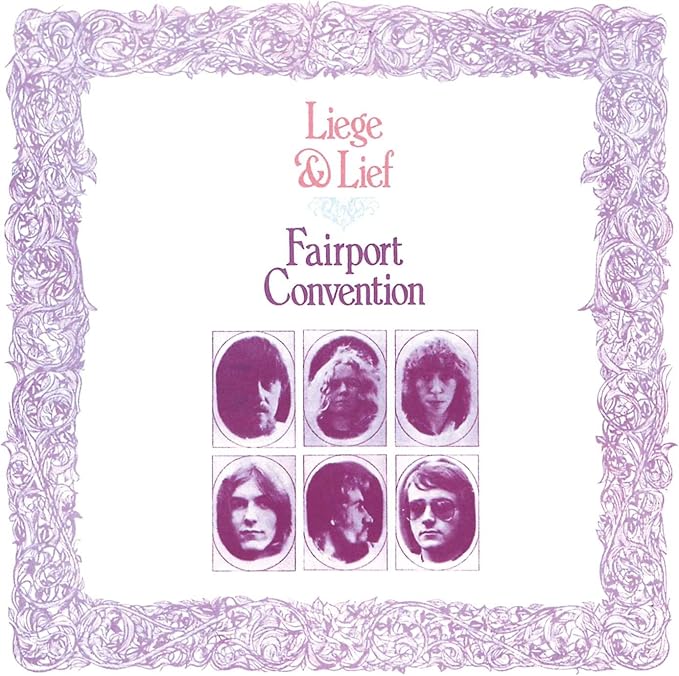
On the folky side, obvious highlights for me included Joe Broughton’s Conservatoire Folk Ensemble, whose massed ranks begun their set by joining Fairport Acoustic on stage, for an epic rendition of ‘The Lark In The Morning’ instrumental medley from the Liege & Lief album. Scottish folk band Skipinnish were another highlight for me, with a thrillingly energetic set, my second time seeing them this summer as they also performed at the New Forest Folk Festival. A special mention, too, should go to the kids of Cropredy Primary School Folk Class who kicked things off at the festival. We only made it in time to hear their last couple of songs but what a wonderful idea to link the village and the festival this way and how lovely it was seeing the huge cheer for them as they made their way from the backstage area afterwards to a waiting gaggle of proud parents.
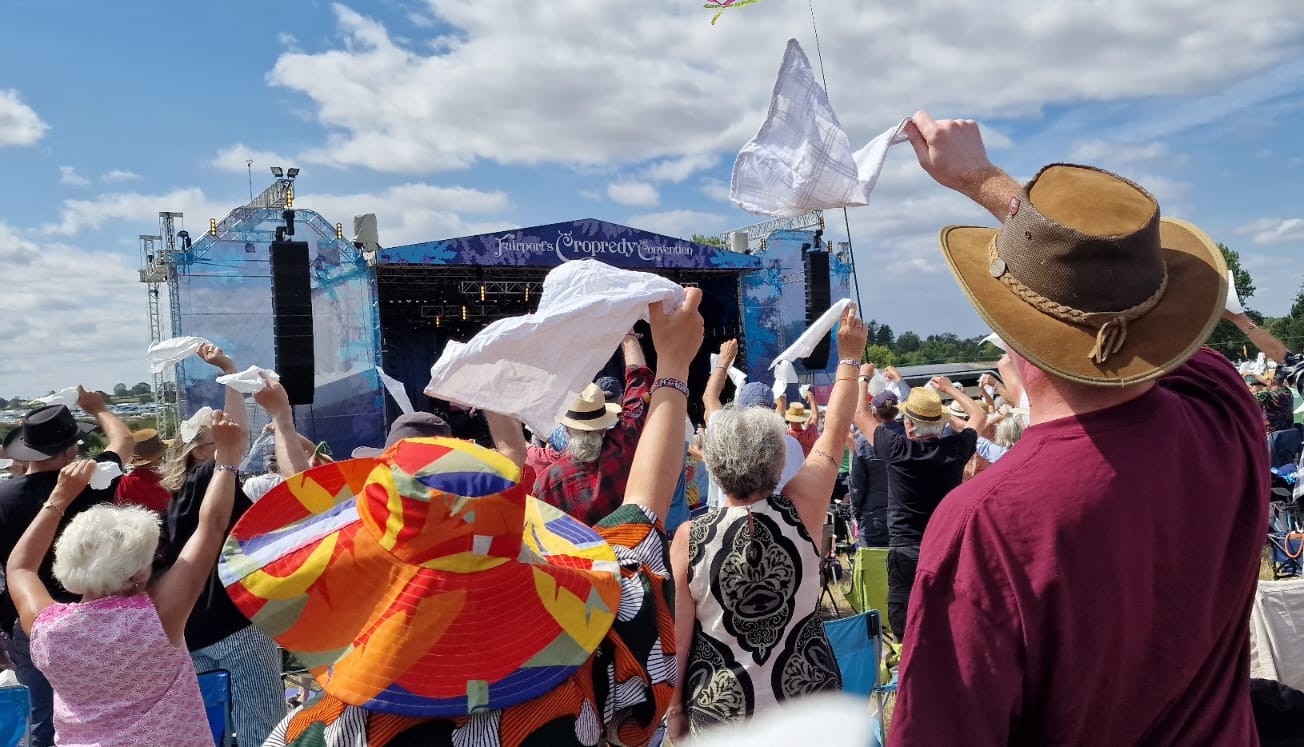
The traditional hanky waving during Richard Digance’s set (Photo: Simon Putman)
On the rock side, the festival organisers demonstrated that you didn’t need to be in the megabucks league to attract some decent classic rock acts. My many years of going to music weekends at Butlins showed me that it’s perfectly possible to line up some talented rock names without bankrupting yourself.
Trevor Horn (Photo: Simon Putman)
The Trevor Horn Band, making their third appearance at Cropredy, were hugely entertaining as ever, blasting out a deluge of hits that Horn had had a hand in, from Frankie Goes To Hollywood, to Buggles to Yes – with the added bonus of Lol Creme of 10CC on guitar and some Godley & Crème/10CC hits thrown in, too! They were originally booked under the old formula for the previous year, however, and had to reschedule because of illness so the situation was slightly different.
Martin Barre (Photo: Simon Pitman)
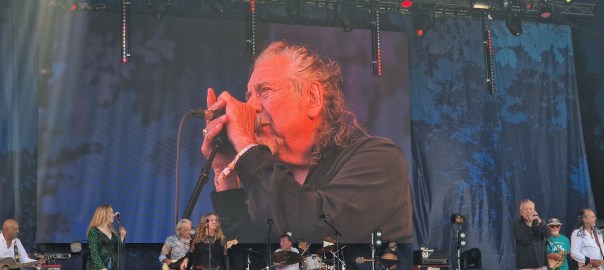
The same cannot be said for Martin Barre (ex-Jethro Tull) and Deborah Bonham (sister of Led Zep drummer, John) whose sets were clear highlights of the weekend, none more so than the latter whose special guest almost certainly provided the highlight of the weekend for many, with none other than Robert Plant stepping on to the stage to perform sizzling versions of ‘Ramble On’ and ‘Thank You’ from Led Zeppelin’s second album. It doesn’t get much better than that at Cropredy.
Robert Plant joins the Deborah Bonham Band on stage (Photo: Darren Johnson)
I didn’t get to see everyone who performed and there were acts (like Bob Fox & Billy Mitchell) I would have liked to have seen but didn’t. However, I’ve never spent the entire day in the field from mid-day to midnight. For me, time spent at the campsite, catching up with friends early in the evening and relaxing ahead of a late night finish, is as much part of the Cropredy experience for me as the music. Plus, in the last few years, our camping group has also chosen to spend a little bit of time at the Cream of the Crop festival in the adjoining field and this time we got there just in time for an explosive set by the excellent Burnt Out Wreck, the band fronted by former Heavy Pettin’ drummer, Gary Moat. No-one can say I didn’t get my fill of hard rock at Cropredy this year!
Burnt Out Wreck at Cream of the Crop next door (Photo: Simon Putman)
Fairport Convention, of course, rounded things off on the Saturday night with their usual mammoth set featuring a mix of familiar old favourites, revisited deep cuts, covers with guest artists (this time Ralph McTell and Danny Bradley) and more recent material penned by the band’s own Chris Leslie. While a couple of our camping group head back to the campsite before the end, missing ‘Matty Groves’ and ‘Meet On The Ledge’ is not something I could ever contemplate so we make our way to the front in time for a rousing ‘Matty’ (with accompanying animated video hilariously interpreting the storyline through the medium of Lego) and an always emotional ‘Meet on the Ledge’.
Ralph McTell is a guest during Fairport’s set (Photo: Simon Putman)
While it was the end of Cropredy for another year, it wasn’t quite the end of our camping trip as we had booked for several days at a lovely campsite ten miles away, just outside Barford St. Michael. The spirit of Cropredy was never far away though. The village of Barford St Michael, itself, was once home to Dave Pegg and the studio he established, Woodworm Studios, where Fairport recorded numerous albums. The studio is still in operation, although no longer owned by Peggy these days.
The Hook Norton Brewery (Photo: Simon Putman)
While camping, we also took a trip to the village of Hook Norton for a tour of the Hook Norton Brewery, who in recent years became the official suppliers for the Cropredy festival bar, taking over from Wadworth. It’s an absolutely fascinating tour of this historic nineteenth century site and our engaging tour-guide was himself a Cropredy regular who had spent many years working at the festival. If you are extending your stay in the Oxfordshire countryside and want to find out how the beer at the Cropredy bar is brewed and learn more about the history of the brewery, it’s well worth a visit!
Ahead of this year’s Cropredy festival, I catch up with Fairport Convention’s Ric Sanders. We talk about first learning to play the violin at primary school, about getting his big break with Soft Machine and the invitation to play on Fairport’s Gladys’ Leap album forty years ago this year – and, of course, this year’s Cropredy line-up.
If we can talk about your very early days first, when did you first pick up a violin?
Well, I took it up when we were in junior school. The whole class had six weeks of being taught to play the violin. I mean, it’s nowhere near enough time. It was just six weeks and we had this teacher called Mr. Tunnicliffe. He’ll be long gone now but we used to call him Ten-ton Tunnicliffe because he was quite portly. But he played the violin and he taught us. He got the whole class playing a pattern on the open strings. And then with great bravura, Ten-ton Tunnicliffe would play this jig over the top of it. Very simple thing and most of the class didn’t get on too well with it. But after that third week, I could play the tune that Ten-ton Tunnicliffe was playing. I could just do it. I don’t know why. But I wasn’t interested because I wanted to be an astronaut or a scientist. So, when the six weeks ended – and I’ve never told this to an interviewer before – I forgot all about it. They weren’t our violins – they were provided by whoever – and then I forgot about it. In actual fact, seriously, I took up playing the violin again when I was 17. Because I was 17 in, I guess, the summer of love and I’d always liked the Beatles and the Stones and stuff.
Before that, my dad was an RAF radio operator. And he was stationed in Limavady in Northern Ireland during the war with the Americans, liaising with their radio people. That was his war gig. And he came back from the war festooned with nylons and chocolates and a whole stack of 78 records. Lots of the great jazz players, like Benny Goodman and Glenn Miller, Duke Ellington, Gene Krupa and all sorts, basically. And I started to hear this jazz and I kind of really liked that.
I have an elder brother, Mike, who would buy all the records. So, when there was the Trad Jazz boom, Mike bought all the Acker Bilk and Kenny Ball… Chris Barber Band, which was my favourite, because they really rocked. And then he bought all the Beatles and the Stones’ stuff. So, the first thing I ever had to buy using my own pocket money was in fact Magical Mystery Tour. But it was Sergeant Pepper and Magical Mystery Tour that made me think this is what I want to do for the rest of my life. I want to be a musician.
But I hadn’t got a guitar or a bass. I wouldn’t have taken up the drums because there’s too much to carry around. Or a keyboard. I hadn’t got any of those things but there was an old violin that my grandma had in the loft. So, I got it out of the loft, scraped all the varnish off it, polyurethaned it, filled it with cotton wool to stop feedback, and got a contact microphone that I bought from an advert in the back of the Melody Maker magazine. It cost me 19 and 6, and I strapped it to the fiddle with a few rubber bands. And I learned the riff from ‘Willie the Pimp’ by Frank Zappa on his Hot Rats album. And that was the start of it.
My mum and dad, they were hoping I was going to have some sort of academic career or be a doctor or a lawyer or a teacher or something. Quite understandable. But my mum was a good singer and my dad played. They come from a Salvation Army background so he played in the Salvation Army brass band and stuff. So, both my folks were musical and once I convinced them that I was really earnest about doing this, they were with me all the way.
And at that time, around about ‘68, ‘69, it was when you began to hear great fiddle players in the world of rock. And then, of course, I got into jazz as well and listened to Stephane Grappelli and Django Reinhardt. Stephane was a phenomenal violin player, one of the greatest ever. But I was also listening to David LaFlamme from It’s a Beautiful Day. And I was listening to Jerry Goodman from The Flock and then the Mahavishnu Orchestra. And Sugarcane Harris, who was amazing. He played on the Hot Rats album and played the violin like a blues harmonica, it sounded like. He was the bluesiest ever and was probably my main influence. Jean-Luc Ponty, of course, who may be the most high-profile modern jazz violinist, I guess.
And, also, I was listening to some great fiddle players in the UK. Of course, there was Dave Swarbrick. I play nothing like Dave Swarbrick. I can’t. Chris Leslie can. Chris Leslie can do an impression. He can even do the voice!
The first big band that I played in was with Stomu Yamashta, a Japanese avant-garde percussionist. Stomu Yamashta Red Buddha Theatre. I did a six-week European tour with him as a dep because his wife played the electric violin but she had to go back to Japan to visit her elderly parent.
So that was your first professional gig then?
Yeah, that was my first, Stomu Yamashta. I knew it was only a short-term thing and I went and auditioned for it in a room above a London pub. And there was a queue of violinists all around the block and somehow, I got the gig. And then the real big break in my life came joining Soft Machine. Because John Marshall, the drummer, got to hear me playing with Michael Garrick, the great jazz pianist who I’d written to. I’d sent him a cassette of me playing some Chick Corea tunes and said, “Can I come and see you for jazz harmony lessons?” And he said, “Better than that. Come and do a few gigs with us.”
So, I did. And John Marshall was the drummer on one of those gigs. And Soft Machine – their soprano saxophone player, Alan Wakeman, who’s Rick’s cousin, he’d left because he got a gig being musical director for David Essex. And they couldn’t find a replacement but the violin kind of occupies that same sonic range, not totally, but pretty much. And so, I got the gig in Soft Machine.
And then I’d also sent a tape to Ashley Hutchings. And having done Stomu’s thing, which was only short term, at the end of the 70s I found myself in the exciting position of being in both Soft Machine and the Albion Band, which, of course, included Ashley Hutchings, Simon Nicol and Dave Mattacks and Michael Gregory and Graham Taylor.
So that was your foot in the door into the world of folk rock then?
Yeah, and through that I met Andy Cronshaw and June Tabor and Martin Simpson and we used to play a lot together. I don’t consider myself a gifted folk player in the way that Dave Swarbrick was or the way Chris Leslie was. I’m basically a jazz rocker really and I play everything like it’s the blues. That’s my cunning secret. I play everything like it’s the blues.
But that was always part of Fairport’s DNA anyway it was never just a pure folk band.
That’s true. And, you know, Richard Thompson could play anything. And Simon Nicol he’s underrated as a guitarist. He is an incredibly good guitarist. People say that there’s been so many musicians in Fairport Convention. There’s been 29 musicians but that was all in the early days. I joined in 1985, my first album being ‘Gladys’ Leap’, which is what we’ll be celebrating because it’s the 40th anniversary. It’s my 40th anniversary as well. So, Richard guested on that album. I appeared as a guest. I recorded it in April ’85, I think and here I am 40 years later.
So how did it come about then, being invited to play on Gladys’ Leap?I think you did three tracks on that?
I did three tracks, yeah. And what had happened was that Fairport had been pretty inactive, really, except for the festival. There hadn’t been a Fairport band from, you know, 1980 to 85. And the three main members were Simon and Peggy and Dave Mattacks, or DM, as we call him. And they’d got a bunch of new material. And Peggy, was in Jethro Tull at the time which gave him the financial security to be able to build Woodworm Studios at his home in Barford St Michael. It’s no longer Peggy’s but Woodworm Studios is a great place and still is and that was where the album was recorded. And Peggy gave me a call because we go back a quite a long way because our dads knew each other.
So, it all kind of slotted into place and I never expected to be in Fairport because they’d got one of the most phenomenal fiddle players of all time, Dave Swarbrick. But Swarb didn’t want to do the Gladys’ Leap album because he wasn’t into the material. And he’d just formed Whippersnapper with Chris Leslie. I think Chris was in the frame for joining Fairport, but he declined because he’d just formed this band with Swarb and Chris is very loyal. And Fairport had been inactive for years and Whippersnapper had a full diary.
So, I got the next call. And when Peggy called, he said, “I want you to play on some recordings I’m doing. I’ll send you a cassette.” Peggy had this offshoot group – a fun outfit it was – and they were called Dave Pegg’s Cocktail Cowboys, of which Chris was a member as well. At this time, around about ‘85, I was just doing jazz gigs around the Midlands. Just going out, playing with different rhythm sections, like jazz musicians used to. And it wasn’t hugely lucrative, but I got by. Peggy sent me this tape and I thought he was asking me to play on a Cocktail Cowboys record because I had no idea that Swarb had decided that he didn’t want to carry on with Fairport. And so when the tape arrived and I listened to it, I thought, hello? Well, that’s Peggy playing the bass, obviously. That’s Dave Mattacks on drums. And that guitar I could tell straight away. And yeah, it turned out to be Gladys’ Leap. And I went along and my first day was just recording those three tracks that I did on the album. The standout track for me, and the one that stayed in the repertoire, is ‘The Hiring Fair’.
Yeah, and a real fan favourite alongside the older material.
It really is. Well, Ralph (McTell) has contributed hugely to our repertoire. Also, Dave Mattacks, apart from being one of the world’s greatest drummers, is a very accomplished keyboard player with an incredible ear for harmonies and the instrumental section is actually written and arranged by Dave Mattacks. Well, it was right up my street because it’s not overtly folky. And I just played like I would do if it was a jazz rock thing that I was doing. So, I think probably that track more than any other helped me get the gig.
And then Maartin Allcock was recruited and as I say there’s been many people in Fairport but since I joined, which is now 40 years ago, there have only been two changes of line-up really. Which is when Maartin Allcock decided to move on and is sadly no longer with us. And when DM moved to America because he was getting so many sessions, and Gerry Conway joined the band. And of course, Gerry passed away, which is very sad. He was with us for 25 years. But now we’ve got DM. We were kind of stuck, you know. What were we going to do on the winter tour and Cropredy? And so now DM comes over from America for the winter tour and for Cropredy, which is great.
Photo credit: Kevin Smith
So just going back to 1985, you didn’t play Cropredy that year because obviously Dave Swarbrick was still booked to perform at the festival.
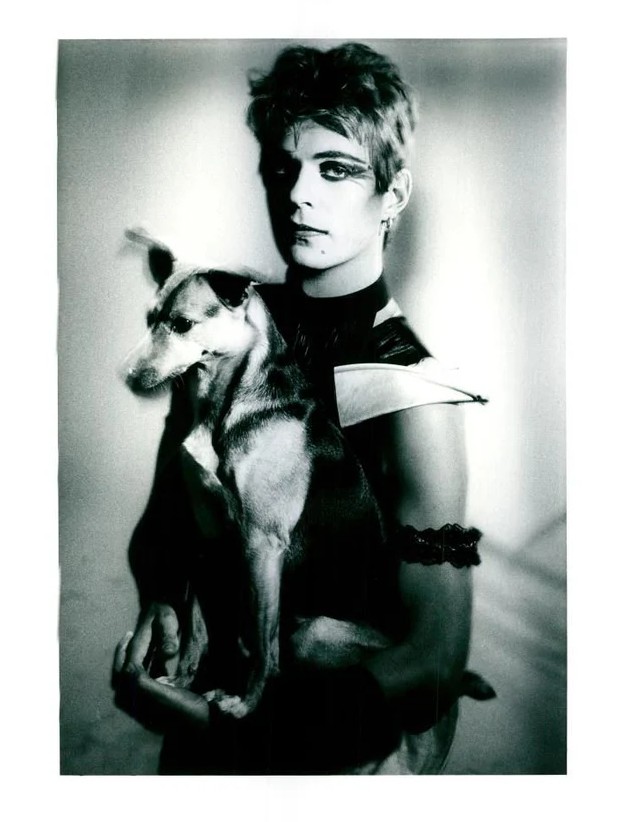
Yeah, I went on the Friday night. It was a two-day festival at the time. I couldn’t stay for the Saturday because I had to get up at the crack of dawn and go to Edinburgh because I was playing at the Edinburgh Festival with a dear friend of mine who I’ve just been recording with recently again, a guy called Phil Nicol. We did two weeks at the Edinburgh fringe and what our gig was, was playing half a dozen numbers at the end of a comedy cabaret. Some of Phil’s songs, and we also did ‘May You Never’ by John Martyn and we did ‘Every Breath You Take’ which had been big at that time. By the way, I should tell you that the main star of the comedy cabaret that we did in Edinburgh was Julian Clary, who was incredibly funny. And at that time, called himself the Joan Collins Fan Club featuring Fanny the Wonderdog.
The Joan Collins Fanclub (and Fanny): 1980s publicity shot
I remember because he was on Channel 4 a lot in those early days.
Yeah. He was great. I mean, you know, never heckle Julian. Never. And he would improvise. We would do two shows a day and the shows were different every time. And he’d do this thing where he’d go and find a lady’s handbag and go through it and improvise a routine from the contents. He was absolutely wonderful. Also, there was Jeremy Hardy, the late Jeremy Hardy. He was a great comedian. He was on that. So that was a great show. Yeah, that’s why I couldn’t go to the Saturday Fairport!
But soon after you did become a full-time member. What did it feel like taking over the fiddle player’s role in Fairport Convention from Dave Swarbrick?
Do you know, I wasn’t really that nervous about it. A little bit, I mean, I was nervous a little bit just because Swarb was not just such a great musician but such a such a great personality. His personality was stamped on Fairport. But actually, I get more nervous now than I did was when I was a kid because when you’re that young – I was only in my very early 30s when I joined Fairport – and I’d already played with some incredible musicians. Carl Jenkins, John Ethridge, Alan Holdsworth. I played with these guys. John McLaughlin, you know, I jammed with John McLaughlin. Toured with his group, Shakti. Not as part of his group but with Soft Machine and John McLaughlin doing a doubleheader tour of Europe. So, you know, I had the sort of cockiness of youth. I was young and I wasn’t too scared. I get more nervous now, actually. I’m 72 now. I thought when I got to this sort of an age, I’d be bulletproof but it’s been the reverse.
I remember the first concert that we did was at the Sir George Robey pub in London and from the word go, the Fairport audience were really good to me. And I’ve heard it said since – well Chris Leslie has said, “I wouldn’t have been the right person for the job because I would have sounded like Swarb at the time.” I mean, Chris has got his own style totally now. I was completely different because I couldn’t play like Swarb. I had to come at it from a completely different angle. So, I couldn’t be a replacement for Dave Swarbrick. It was something different.
Photo credit: Kevin Smith
Looking back over the last 40 years, what have been some of your favourite recordings in Fairport? You mentioned ‘Hiring Fair’ obviously.
I guess one of the things that I really love doing because I’m not a songwriter – Chris is a brilliant songwriter and has gone from strength to strength – but I write instrumentals. That’s what I do because that’s what I always did. And I’ve loved writing things like ‘Portmeirion’, which is my most well-known tune, I think, that people kind of like.
And another absolute standard that stands up so well alongside the older material.
Yeah, which is very gratifying. And ‘The Rose Hip’ and tunes like that. I’ve loved writing ‘Summer in December’ and stuff. They’re ballads that have got a folkish-type melody, but kind of jazzy in harmony ways. So that’s been really great to do. And, also, when I first started to write fast instrumentals for Fairport, I would just write imitation medleys. Because that was the pattern that was brilliantly done on Liege & Lief with ‘The Lark in the Morning’. When you take a jig and a reel and a hornpipe or whatever and you put three or four trad tunes as a kind of medley. So, you know, I wrote a number of those, a sort of imitation using the template of those tunes.
But then, around about Festival Bell time, I started to write instrumentals. The old way of writing, I’d write the tunes on the fiddle and then harmonise them. But then when you got to tunes like ‘Danny Jack’s Reward’ and ‘The Gallivant and ‘Steampunkery’, which is the one that’s in the repertoire at the moment, I would write those from the rhythm section up. I’d write the band part first, then find a melody to put over it. And I wasn’t sure if the band would go for that style of stuff, but that proved to be OK. One of my favourite things, which you can see on YouTube, is doing my tune ‘The Gallivant’ with the brilliant Joe Broughton and his Conservatoire Folk Ensemble, who are on the Thursday at Cropredy. Joe arranged the brass section for it. He’s a brilliant musician and I love working with him.
Is there anything else you want to tell us about Cropredy this year before we wrap up?
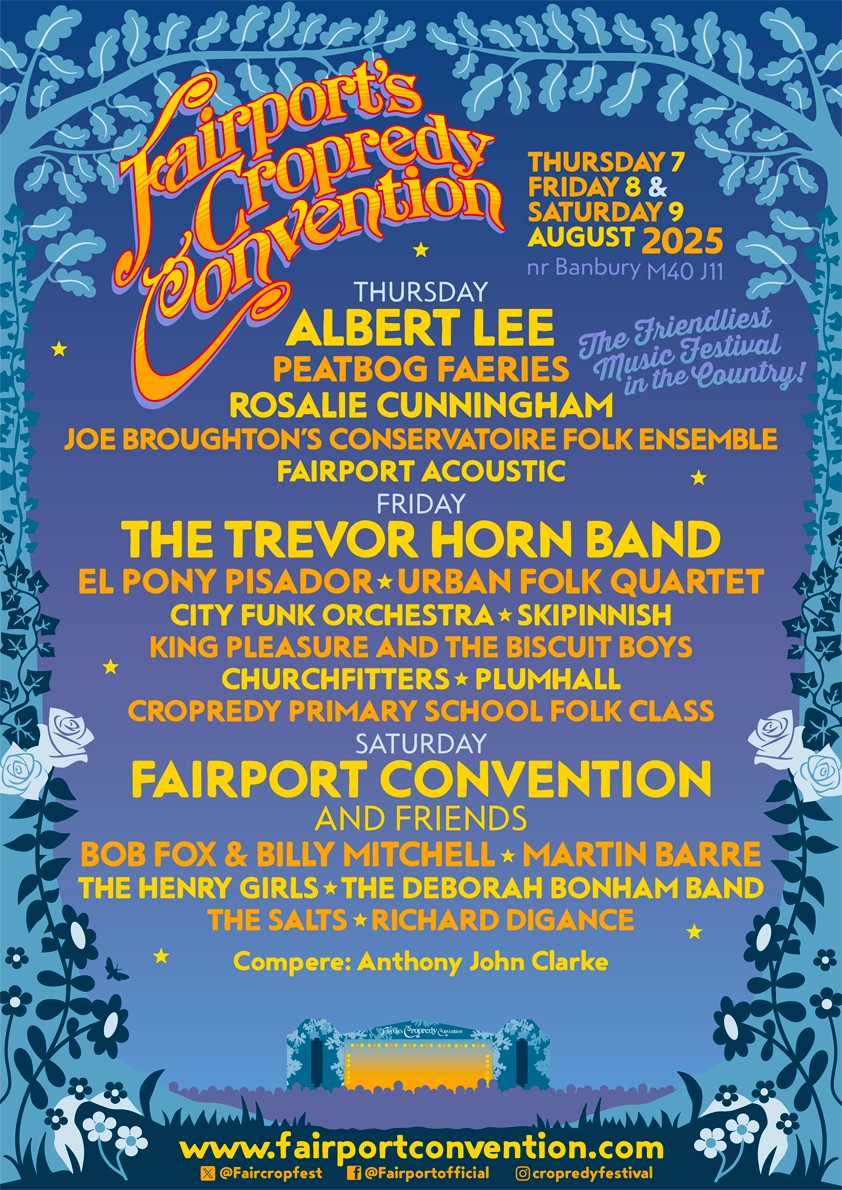
Well, we’ve got a great line-up. Thursday, Albert Lee, one of the world’s greatest guitarists. I’m sure he finishes his show with ‘Country Boy’. I don’t think they’d let him out of the venue alive if he didn’t finish with ‘Country Boy’. On Thursday, Peatbog Faeries, Joe Broughton with his Conservatoire Folk Ensemble, as I just mentioned. And of course, we kick it off on the Thursday with Fairport Acoustic, just a welcoming set. And then I think we’re going to get Broughton and co. to come on and do a number with us, to cross over. Also, the lovely Rosalie Cunningham is on Thursday. And I might be playing with her as well because I played on her last two albums. It’s kind of prog rock, you know, so it’s great. So that will be an exciting Thursday.
Photo credit: Sam Reynolds
And then we’ve got the Trevor Horn band on Friday. Last year, Trevor had to cancel because of illness so he’s headlining on Friday. And you never know who Trevor Horn’s going to turn up with, what style that he’s produced is going to show up.
Yeah, that’s always a hugely entertaining part.
I’m hoping he brings Holly Johnson some time. I’d love to see ‘Relax’ at Cropredy. It would be great. So, we’ve got Trevor Horn, Joe Broughton, again, in the Urban Folk Quartet. And some bands that I don’t actually know who they are. El Pony Pisador. Well, I don’t know that group. And City Funk Orchestra. And Skipinnish.
And then, of course, there’s King Pleasure and the Biscuit Boys. We’ve got the Church Fitters, Plumhall, who opened up for us, not this year, but the year before, which is great. And the day starts with the Cropredy Primary School folk class so that will be lovely. And then on the Saturday, we’ve got Richard Digance, of course. And the Deborah Bonham band, brilliant. Martin Barre from Jethro Tull. Bob Fox and Billy Mitchell, they’ll be brilliant. Who’s headlining? Oh, we are! Yeah. So, we have no doubt guests who I don’t know who….
So, there will be some surprises for us on the Saturday and some surprises for you by the sound of things!
Yeah, yeah. Chris Leslie and I don’t take much of a role in the organisation part, or DM. The triumvirate that runs the festival is Dave Pegg – of course, there wouldn’t be a festival, there wouldn’t be a Fairport without Peggy – and Simon Nicol and Gareth Williams, the festival director. So, they’re the guys in the driving seat. And I just, you know, turn up and play. Maybe tell a few jokes. But it’s great. I never in my life, for a minute, thought I would be in Fairport. I was always a fan, a massive fan of the group. And I knew pretty much all of the guys before I joined. But you know, Fairport is more than a band to me. It’s like my family as well. And we really have that feeling. We see so many bands fall apart and have arguments and whatever but it’s not like that with Fairport.
And occasionally I’ve been told by Simon and Peggy sometimes in the past I’ve played a little too jazzy and put in some scales that they don’t think were appropriate. They say, “Don’t do that!” And when they say that I think about it, and I think, “You know what they’re right, you know. No, you don’t need seven flat nines in ‘Walk Awhile.’ Just forget it!” So, yeah, it’s just a very happy band, really. And I don’t know how many years it will carry on. Until we drop, really, I think.
Although their first album seemed to pass me by at the time I instantly became a fan of the Faversham-based folk rock band, Green Diesel, when I was asked to review their second album, Wayfarers All, back in 2014. They are currently promoting their fifth album,Onward The Sun, which came out in April and which was recently described by Shindig! magazine as “folk rock at its finest.” I couldn’t agree more which is why I headed over to Brighton to catch the band live.
Performing at the charmingly elegant Folklore Rooms above the Quadrant pub, the band were supported first by Bity Booker, a London-based alt-folk singer-songwriter with beautiful songs, a sweet voice and some hilariously deadpan introductions. And by Brighton’s own The Witchcraft & Vagrancy Act, who delve into the macabre side of folk to come up with their own fabulous folk horror interpretations of traditional songs – think Cecil Sharp had he spent his time hanging around with Bauhaus and Alice Cooper.
Bity Booker
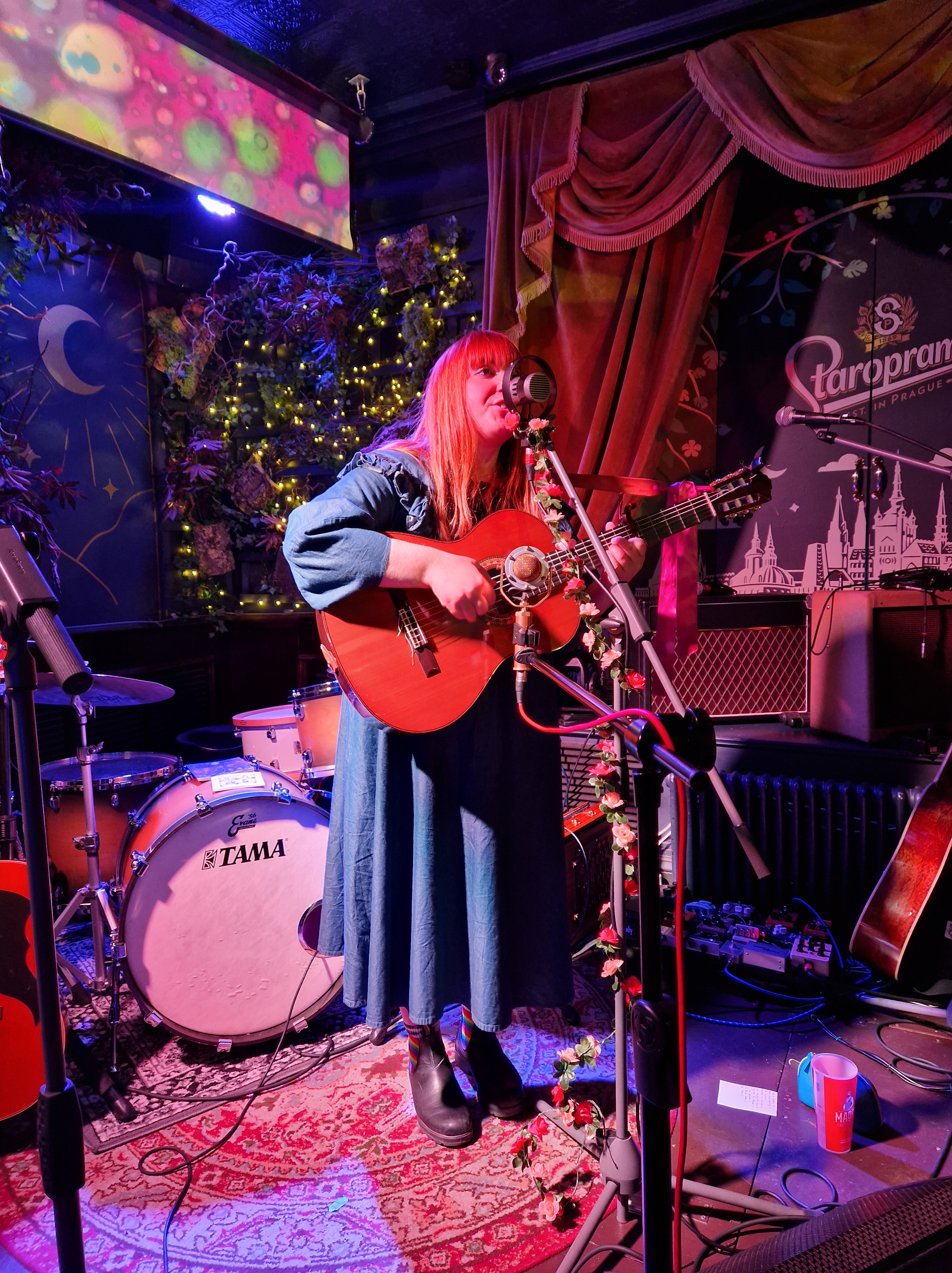
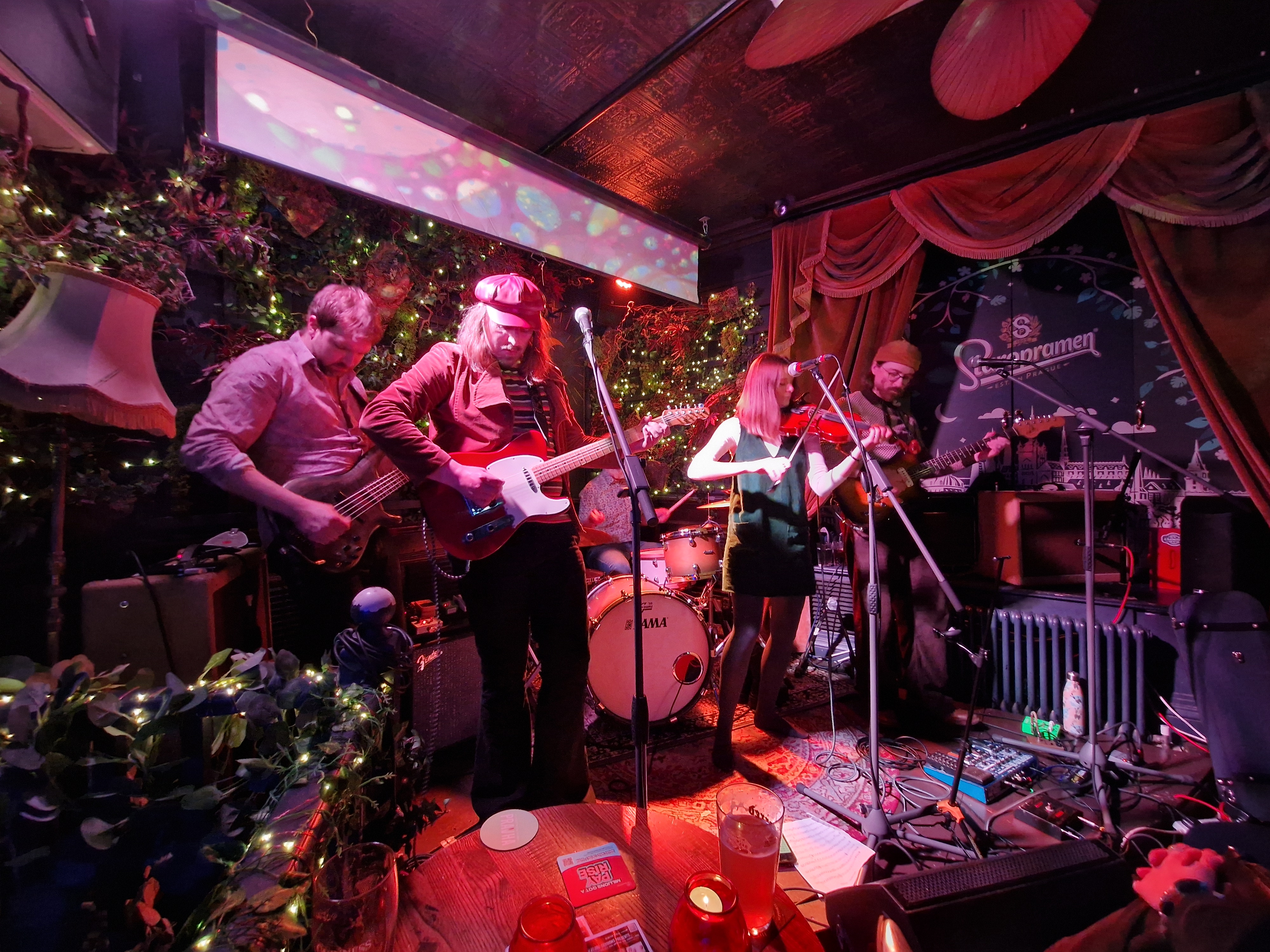
For Green Diesel, the evening provides a welcome opportunity to showcase material from the new album alongside some older favourites. There’s well-received renditions of ‘Onward the Sun!’ the album’s title track, and ‘Ring The Hill’ another superb song from the album. Ellen Care’s vocals are utterly perfect for material of this type, combining just the right amount of sweetness and menace as she lets these folklore-inspired stories unfold, backed by some psych-folk guitar-wizardry, a powerful rhythm section and her own stunning fiddle playing.
Green Diesel have never been averse to a bit of folk horror themselves, of course, and tonight’s set includes the band’s cover of ‘Maypole’ from The Wicker Man soundtrack, sung by lead guitarist, Matt Dear, and given a suitably-ominous sounding Green Diesel makeover. The band even throw in a couple of Morris tunes which comprise the instrumental segment of the new album, again given the Green Diesel treatment: heavied up and performed in minor key. Superb stuff!
Green Diesel
Green Diesel just seem to get better and better with each year that passes. And with two impressive support acts it made the trip to Brighton and the never-knowingly-reliable late train back to Hastings well worthwhile.
After a five-year gap since their last album, Emergency Lullabies, Merry Hell are back with a brand-new, full-length studio release.Rising of the Bold is very much the Wigan folk-rockers’ ‘getting-it-together-in-the-country’ album, when the eight-strong band converged at a country house in Shropshire to assemble material for this latest release.
That idyllic pastoral setting may have had an influence some the eventual output because, overall, this comes across as a more varied and slightly more sophisticated take on the trademark Merry Hell template. It’s still effortlessly catchy folk rock, packed with bags of rhythm and memorable melodies but the quota of sing-along, festival-friendly anthems seems to have been dialled down a tad in favour of a little more light and shade.
It makes for a compelling set of songs. From the pounding folk rhythms of album opener ‘Pick Yourself Up and Dance’, to the defiant storytelling of the Levellers-esque ‘Vagaband Army’, to the darker, brooding sound textures of ‘Changing Times’, to the breezy, jangling, Byrds-like aura of ‘Changing Just The Same’, to the joyful optimism of ‘Singing in the Morning’ (which rounds off the album) there’s certainly no shortage of highpoints. It all manages to remain unmistakably Merry Hell, however, and their personalities both as songwriters and as performers shine through.
New fiddle player Simon Swarbrick, nephew of the late folk legend himself, gets to make his mark across the album with some fine playing. Moreover, in true Swarbrick fashion he gets to contribute a jaunty, foot-tapping fiddle-led instrumental in the shape of ‘Lizard On A Log’.
Don’t fret. The sing-along communal anthems haven’t been banished entirely, the centrepiece of which is the self-explanatory ‘Peace Can Be Louder Than War’, with accompaniment from the Thousand Voice Choir.
Merry Hell’s status as a perennial festival attraction was never in any doubt but this latest release is proof that the band continue to deliver on the album front, too.
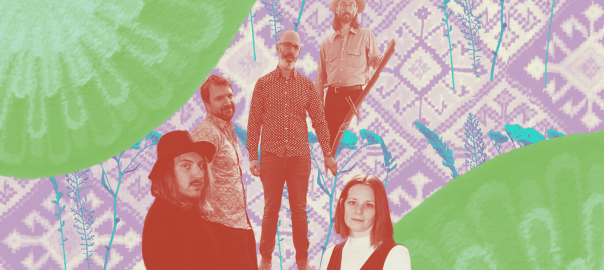
Ahead of the release of their fifth album Onward The Sun! which comes out on 25th April, I talk to Greg Ireland of Faversham-based folk rock band, Green Diesel.
We’ll move on to the new album in a bit but let’s start right at the beginning. Tell us how Green Diesel came about.
Well, it seems like a very long time ago now. I think we’ve probably graduated away from being a young new folk band. So, I guess in some ways it’s a continuation of the band I was in when I was at school. I played in a band with some of the guys who are still in the band today. It’s a completely different group, but it had the same name. And that kind of fell apart as school bands do. And we would just do an occasional gig here and there, where this ever-revolving cast of characters would play some covers that we liked at a local festival. And we could never think of another name, so we just kept going! And then I guess around 2009, that sort of time, I’d kind of gone fairly heavily down a kind of Fairport-esque path.
So, was that a departure from the original incarnation of Green Diesel then?
Well yes and no. We’d always kind of played vaguely rootsy music. So, we did some blues stuff, we did Neil Young-style songs and The Band. So, it wasn’t a complete 180 – but certainly the idea of doing music based around traditional music had been something that had been percolating in my head. And I managed to convince the other guys, again for one of the local festivals: “Oh, let’s get a violin player and as one of our numbers, we’ll do a set of tunes in the kind of classic Swarbrick style.” Which they were on board with. I think I’d dragged them along to a couple of Cropredies by this point, so they weren’t completely against the idea. So, we got Ellen (Care) in to do that and that went well and I took that as a good jumping-off point: “Oh, let’s go down this path.” And that became more of a serious band. And I started writing songs. A couple of the others had started bringing things in. We took the plunge and we got found on the street by Roger Cotton, who was a producer who liked us and said, “Do you guys want to come and make a record?” And so we did and that was our first album, Now Is The Time. And somehow – there have been quite a few people in and out of the door over that time – we’re still here today.
And when you first put the band together then, did you have a clear idea of the sound you wanted to go for from the very start? Because let me just share this. I’ve got a theory about folk rock in that while the folk element can be fairly timeless, delving back centuries, the rock element usually reflects what’s contemporary at the time in terms of rock music. That was certainly the case with Fairport in the late 60s and early 70s. I would argue bands like Oysterband as well very much reflected the post-punk era in the rock element. But clearly you didn’t go for a sort of millennium-era indie vibe or anything like that. You delved back.
I think we’d always had that kind of retro taste in music. So, certainly there was always elements of that kind of late ‘60s, vaguely psychedelic rock. But I think when we started off, we were playing much more acoustic music. Not always but I rarely played an electric guitar. And although we probably weren’t vibing off what they now call indie sleaze (and at the time I called ‘horrible music without a tune’) – there were a lot of bands around at the time, like the Decemberists who were a huge influence on us. And early Arcade Fire. We just caught the beginnings of what came to be termed ‘new folk’ and so there was an element of that in there as well.
So, I wouldn’t say it was completely “we just want to go retro”. But then, equally, I grew up listening to Britpop-type music, which always had that very ‘looking-back’ element to it. So, I guess we were the start of that musical generation who just sort of had everything – who grew up listening to their parents’ music and then had their own music. And the big genrefication that really lasted up to the early ‘90s was just starting to break down a bit. I think you see it more today with younger people who will listen to everything, you know, encompassing Disney soundtracks, to Steely Dan, to actual contemporary pop stars – which you’ll have noticed I haven’t been able to name any of! But I think guys our age were maybe at the beginning of that kind of change in music consumption that we see today, possibly.
Yeah, I think I think that’s fair. I think I did my own sort of 1980s teenage version of a Spotify playlist, which was just going to second-hand shops and buying ‘60s and ‘70s albums incredibly cheaply and discovering music that way. So, yeah, I think that’s right.
And then moving on, there’s been quite a gap between this new album, Onward The Sun, and the previous album, After Comes the Dark. Can you give us a quick update on what’s been happening in Green Diesel since the last album came out?
Yeah, in some ways it’s an even bigger gap than it might seem now. Because although After Comes the Dark came out in 2021, it was predominantly written and recorded in late 2019/early 2020 and then got stuck by COVID so we could never finish it. The material on that album feels very old, not necessarily in a bad way, but it really feels very different. So, I guess quite a lot has happened since then. Ellen’s had two children, which has somewhat made progress perhaps run a bit slower than it might otherwise have done. We’ve got a new drummer in. We had Paul (Dadswell) on the last album, circumstances took him elsewhere in life. We were very lucky to very quickly find Ben Love, who is on duties for this album and he’s been a fantastic addition. So, there was a lot of just gathering together of material. And I think one of the big things about this record that maybe is different to some of the others, it grew a lot more out of just jamming and playing around with ideas. I think in the past, it’s very much been the writer – be it me or one of the others – coming in with a song and, not everything charted out note for note, but a pretty good idea of “this is how I want it to end up”.
But this one, partly because we had long periods of time where Ellen wasn’t able to participate directly for children reasons, basically the four of us were bored. We quite liked to play something even if we weren’t able to get out and gig as much as we might have wanted to. And particularly that post-COVID period where you were able to do things again, it was a nice novelty to get together in a room and just make some noise.
So, there’s quite a few songs on this record that have grown more out of that. They’re kind of longer and a bit looser, maybe structurally. And then Ellen had a second child so we had the backings of the songs down and then we took a break. What I call her maternity leave. Then came back to it. So, it’s just a lot of playing. And I think it was particularly good when Ben Love came in on drums because it meant very quickly, we sort of found our groove, literally. It gave us a really good chance to work up that material. And I should say as well, Paul put in a lot of work on some of the songs. There were, I think, two or three that have been part of our live set now for two or three years. So, it’s very much been a group effort in that sense, which I really like about it.
So that accounts for some of the longer instrumental sections in some of the songs, which I know you’ve really gone for on this album?
Yeah. I think, jumping back to one of your earlier questions, we’ve got a lot heavier as a band over time. And that sort of lends itself to that kind of sonic exploration and just jamming it out a bit. And partly the way that our tastes have gone. I think still rooted around songs that work as songs. We write in a very hook-led way. But yeah, just that bit of freedom to keep going, I quite like.
Yeah, I like what you’ve done and, as you say, without losing the essential element of the song. I mean, some bands can jam so much that the actual purpose of the song is lost. You haven’t done that.
Yeah, we haven’t got to Grateful Dead so far. Who knows what comes next!
What do you want to tell us about the new album and some of the songs on the album?
So it’s nine tracks this time and there’s a couple of traditional pieces on there, but they’re predominantly from within the band. I’ve written some, Ben Holiday on bass wrote one, Matt on guitar has written one and we’ve got a cover as well. There’s a cover of ‘The Maypole’ song from The Wicker Man soundtrack, which Matt bought in. That was quite good fun to work on.
It does seem a very good fit for Green Diesel.
Yeah, that soundtrack as a whole has always been a big, big influence for us. So, it kind of seemed right to go there. We haven’t done a lot of covers, traditionally, so it was quite an interesting challenge.
Yeah, so there’s a good variety of writers there. I wouldn’t say there’s a theme to the album, but it kind of builds on where we were going with After Comes the Dark. Although the majority of the songs are original, they’re very much rooted in a traditional folk idiom. And there’s a lot of folk-lore. The weirder end of folklore but I suppose the term that’s popular at the moment is folk horror. And that kind of really ticks quite a lot of our boxes. So, there’s some bits about witchcraft in there and some of the traditions around potion-making. And while I say it’s darker, I think there’s a kind of optimism there as well. Very rooted in the natural world and what we see and what we experience. And then we’ve finally managed to do our Moris On bit because the instrumentals are two Morris dance tunes, which is something that me and Ellen have both been keen to do for a while. And we’ve done that in our own way. It kind of wanders off a bit in the middle and, you know, bringing some of our – those of us who have them – slightly proggish leanings. So just to really, really sell it to the hipsters, it’s Morris dance music mixed with progressive rock – because obviously that’s a pretty big thing!
They’re so evidently Morris tunes from the moment you hear them, but yeah, they’ve been given the Green Diesel treatment so it definitely fits in with the album as a whole.
Yeah, I think I’d probably describe it as quite a confident album. It’s the album of a band who kind of know who they are. That partly comes from just playing together a lot, but there’s a real core strength there. I suppose it’s the one I feel, so far, that we’ve done that sounds most like us. It feels very much like everything’s been developing up to this point to, to get to where we are in 2025.
And on the live front, you’ve got some gigs coming up in Kent and Sussex. And I’m hoping to get to the Brighton one. But where I would really like to see you would be on the main stage at Cropredy. I think you’d go down a storm. And when I interviewed Dave Pegg, he told me that they’re not able to have the really big names, the Brian Wilsons and the Alice Coopers that they’ve had, because of the financial constraints that they’re now facing. They have downsized the festival to make it more financially viable so it could be the perfect opportunity. I think you would go down an absolute storm.
That’s what I’d love to think. So, if Dave’s watching this, then come and get me! Back when my brother was still in the band and we were at I think the 2007 Cropredy, that was always the goal. Unfortunately, the goal was to do it by 2014 so we’ve missed the mark a little bit there. But we’re always open to offers!
Well, let’s see, it would be good. Because you have played the fringe, haven’t you?
Yeah, we’ve done the fringe a few times. That’s always good fun. I mean, generally, just, just being able to play to people who are open to listening to what we do is always good. The reality of being where we are in our lives means, unfortunately, we’re not in a position at the moment that we can all jump in the van and go around the country for three weeks. So, we have to be, I suppose, more, selective. And partly financial realities as well. I’d love to go to Europe, but to make it pay – or at the very least cover costs – it’s much more challenging now. And that’s just the reality of it. But, you know, and it’s probably what keeps us going, to be honest, there’s something about that kind of response from people who are listening to music that you’ve created. And it might be the first time they’ve heard it. They might have come to every show. Either way, there’s just a real kind base-level thrill to that.
Fantastic. Is there anything else you want to tell people before we wrap up?
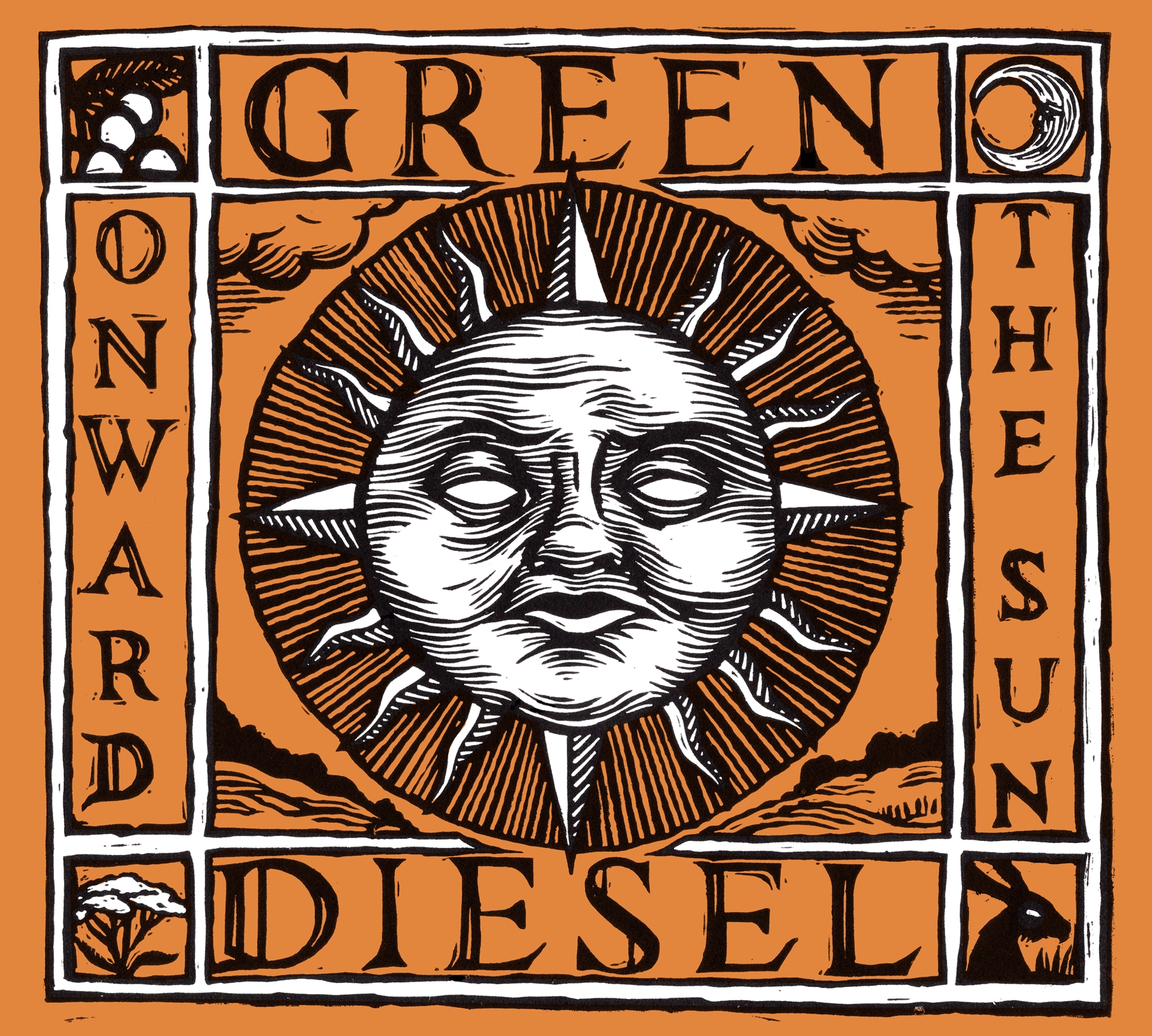
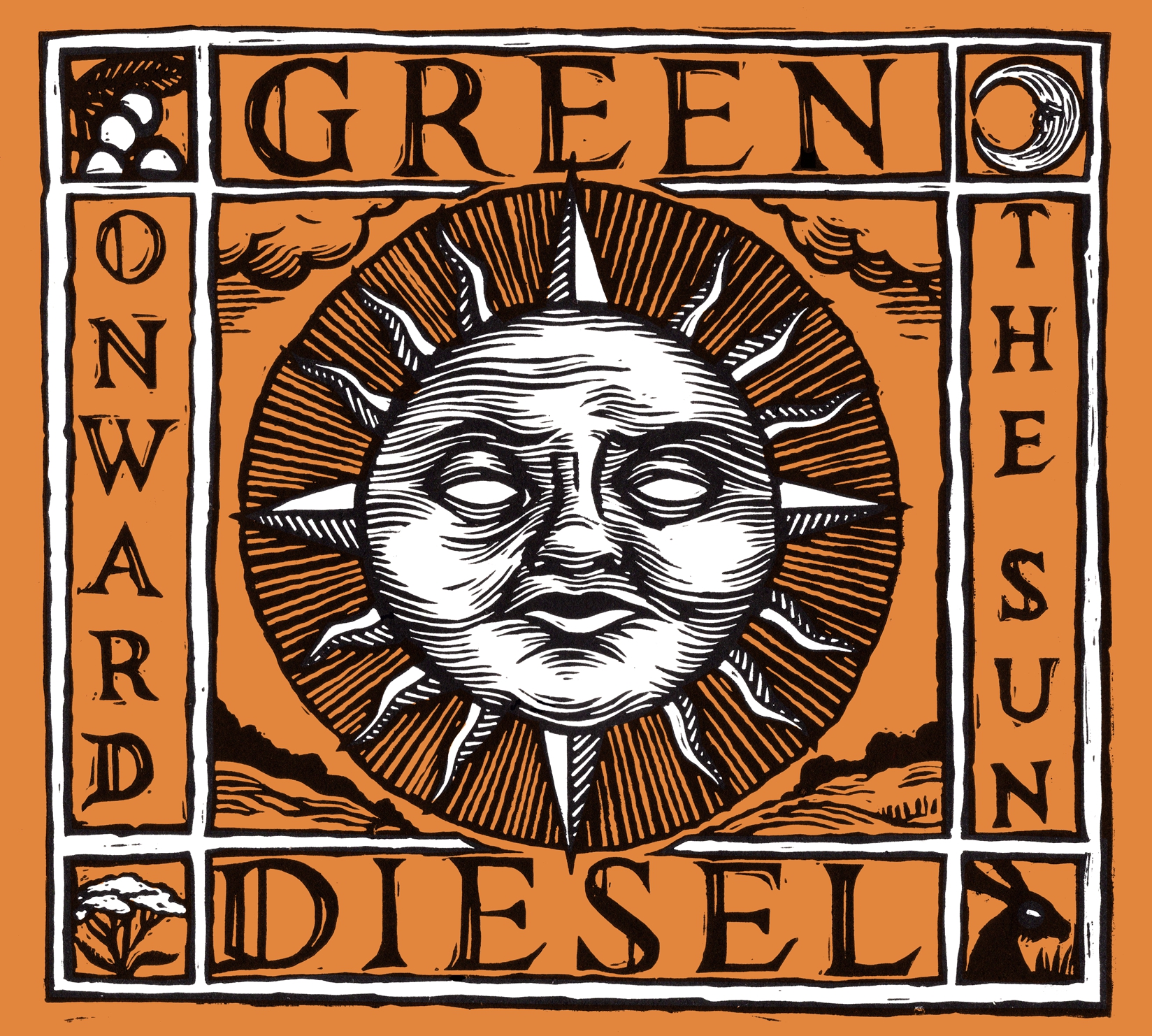
So, the album that we’re discussing is called Onward The Sun. It comes out on 25th of April. It’s going to be available digitally and on CD. That’s it at the moment. Who knows, if demand is there we might look at doing a vinyl version some way down the line. You can pre-order it. If you go to the website, which is greendieslefolk.com, you can order a copy there. It’s got a lovely front cover. It’s made by an artist based in Margate, which is not that far away from us, called Matt Pringle. And I think he’s really got the core of what we’re doing. So yeah, please check us out. We love to reach new people. If you do happen to be promoters for a slightly more mature folk rock band than you would have had a few years ago, then do get in touch because we always love to find new markets. But yeah, please give us a listen and I hope you enjoy it.
Following their critically-acclaimed 2021 album, After Comes The Dark, which saw Green Diesel pick up a slew of enthusiastic reviews for what became their best-selling release to date, the Kent-based folk rock band are finally back with a brand-new album.
Onward The Sun! is the band’s long-awaited fifth album and is scheduled for release on 25 April. The nine-track album features six newly-composed songs inspired by themes such humanity’s connections with the natural world, ancient folklore, the persecution of witches and Shakespeare’s Henry IV, as well as fresh interpretations of much-loved Morris tunes, a modern take on a traditional murder ballad and a cover of a Paul Giovanni composition from the cinematic soundtrack to The Wickerman.
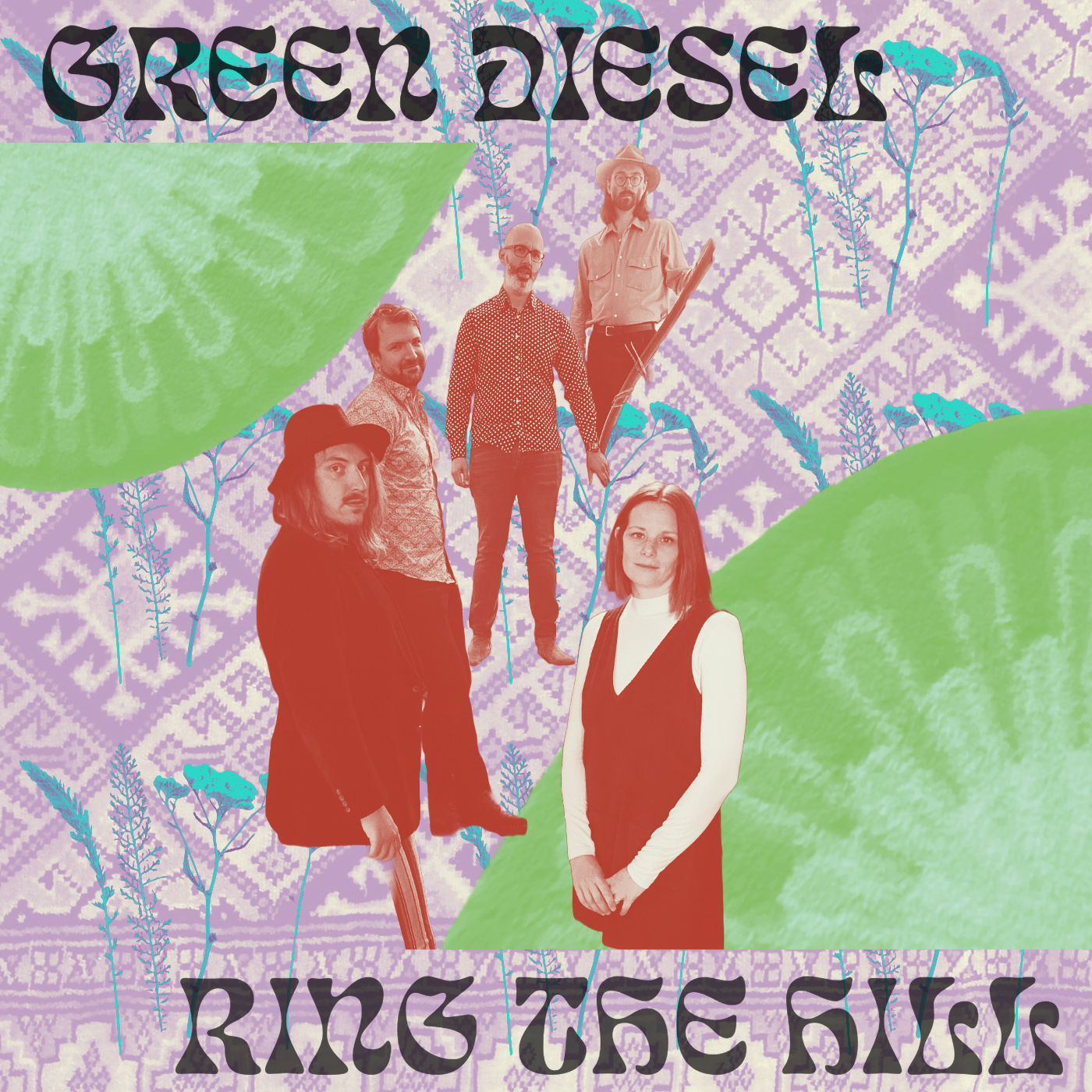
Discussing the single, ‘Ring The Hill’, guitarist, vocalist and multi-instrumentalist, Greg Ireland, comments:
“Based on the Cornish legend of the white hare. It is thought that the creature is the spirit of a broken-hearted lady determined to haunt her faithless lover to the grave. This also got me thinking about the historical connections between hares and witchcraft – the chorus lyrics are an adaptation of some of the words used by Isobel Gowdie at her trial (she was tried as a witch in Scotland in 1662 and her testimony survives). The song follows the progression of our heroine from broken-hearted to vengeful and it seemed appropriately prog to divide it into two parts. The tune for the second part is a variant of the traditional tune for Dives and Lazarus.”
Showcasing Green Diesel’s masterful distillation of folk, rock and psychedelic influences, together with their usual exemplary musicianship and trademark vocals, the album was recorded at Squarehead Studios in Newington, Kent with producer Rob Wilks (Smoke Fairies, Lianne La Havas, Story Books) once again at the helm.
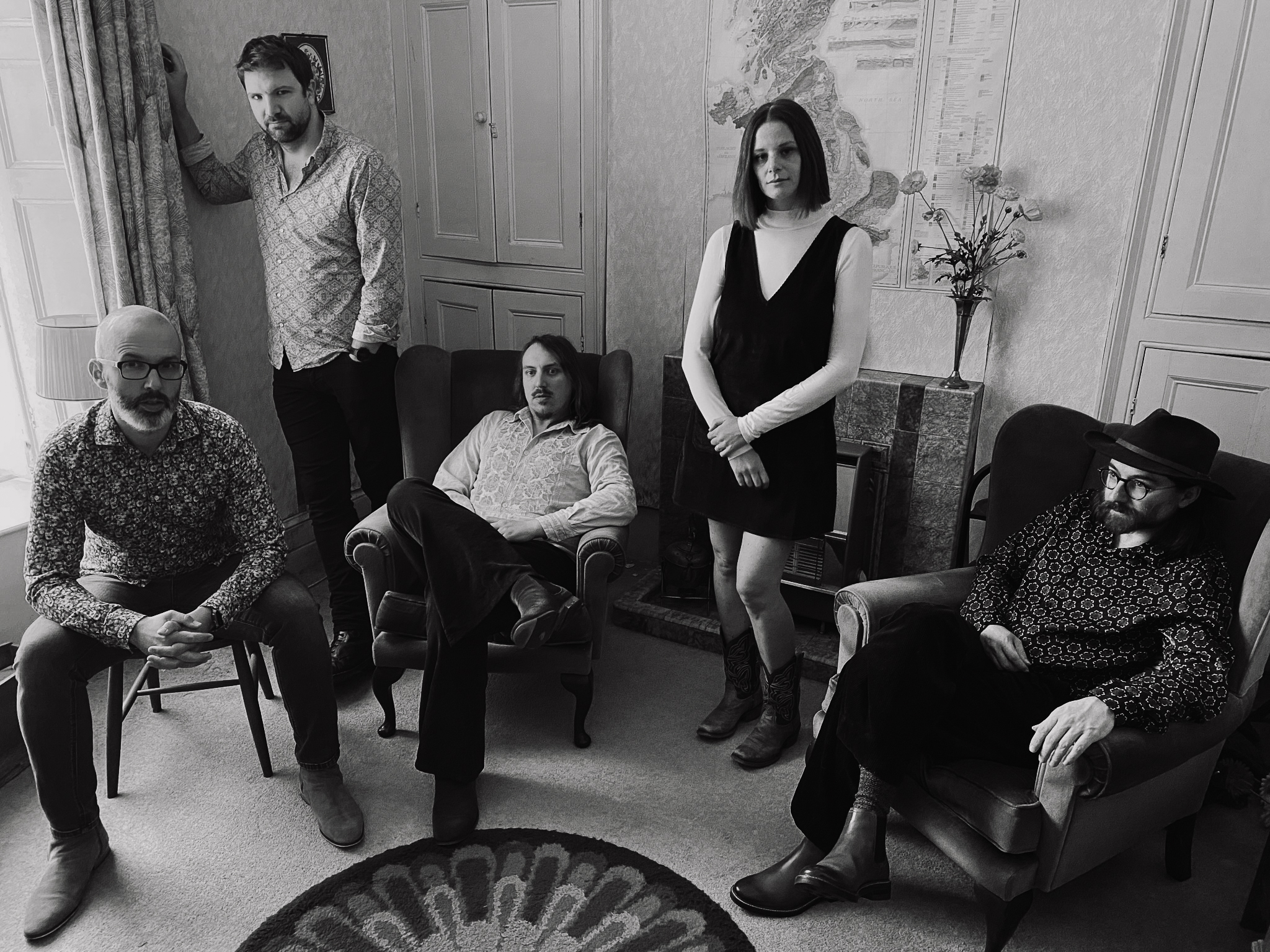
Green Diesel are:
Ellen Care – violin/vocals Matt Dear – lead guitar/vocals Ben Holliday – bass Greg Ireland – rhythm guitar/mandolin/dulcimer/vocals Ben Love – drums/percussion
About Green Diesel:
Hailing from Faversham in Kent, Green Diesel take their inspiration from the depths of English folk lore and legend, and the classic folk-rock sound of their predecessors: Fairport Convention and The Albion Band. Blending violin, mandolin and dulcimer with electric guitars and drums, Green Diesel’s sound is born from a love of traditional English music and a desire to bring it to a modern audience.
Green Diesel’s first three albums, Now Is the Time (2012), Wayfarers All (2014) and The Hangman’s Fee(2016) all won praise for the quality of song-writing and musicianship. A major turning-point, however, came with the band’s last album After Comes The Dark (2021). The album entered the UK Folk Top 40 on release and saw Green Diesel nominated for FATEA Music’s ‘Group/Duo of the Year’ award and also saw the band pushing their sound further, bringing in elements of psychedelia and progressive rock whilst remaining rooted in their folk upbringing.
Green Diesel – What They Say:
“A cornucopia of sounds that blends classic folk-rock, prog and elements of stately Early Music into their own distinctive style’” – R2 Magazine
“4/5 stars – ‘(Green Diesel bring) a psychedelic, progressive edge to their interpretations of both traditional and original material” – Shindig!
“Evocative of early Steeleye Span and veined with prog-rock and influences drawn from early Genesis and the 70s Canterbury scene’” – Folk Radio
“Green Diesel has skyrocketed into my top few bands” – FATEA
Following my ‘glam rock trilogy’ covering Slade, Sweet and Suzi Quatro, I now turn my attention to folk rock. I’m delighted to announce that my fourth book for Sonicbond Publishing will be coming out this summer. Steeleye Span 1970 to 1989 On Track: Every Album, Every Song will be out on 29 August 2025.
This latest book is part of Sonicbond’s ‘On Track’ series.
You can read the publisher’s blurb here:
When Ashley Hutchings broke away from Fairport Convention in 1969, he recruited two musical duos who didn’t seem to agree about very much at all. This fractious group imploded before their debut album was even released. Undeterred, two new musicians were enlisted and Steeleye Span carried on. Then Hutchings himself resigned. Rather than this being a disaster, however, it set in train what would become the band’s most commercially successful period. It was an extraordinary time for folk rock but it was not to last. The second half of the 1970s saw another change in line-up, disappointing album sales and a two-year hiatus. All was not lost, though, and the classic line-up reconvened at the start of the 1980s.
Covering a two-decade period, this book looks at every album from Hark! The Village Wait in 1970 to Tempted and Tried in 1989. The fascinating history behind the traditional songs on these albums is examined in detail, together with insights into how the band went about truly making them their own. Steeleye Span On Track is a meticulously researched celebration of the music of one the UK’s most important bands in the folk rock genre at the most crucial period in its history.
About the author:
A former politician, Darren Johonson spent many years writing about current affairs, but after stepping away from politics, he was able to devote time to his first love: music. His previous books for Sonicbond were The Sweet In The 1970s, Suzi Quatro In The 1970s and Slade In The 1970s. Following this glam rock trilogy, he now turns his attention to folk rock. A keen follower of both rock and folk, he maintains a popular music blog Darren’s Music Blog and has reviewed many albums and gigs over the past decade. He lives in Hastings, East Sussex.