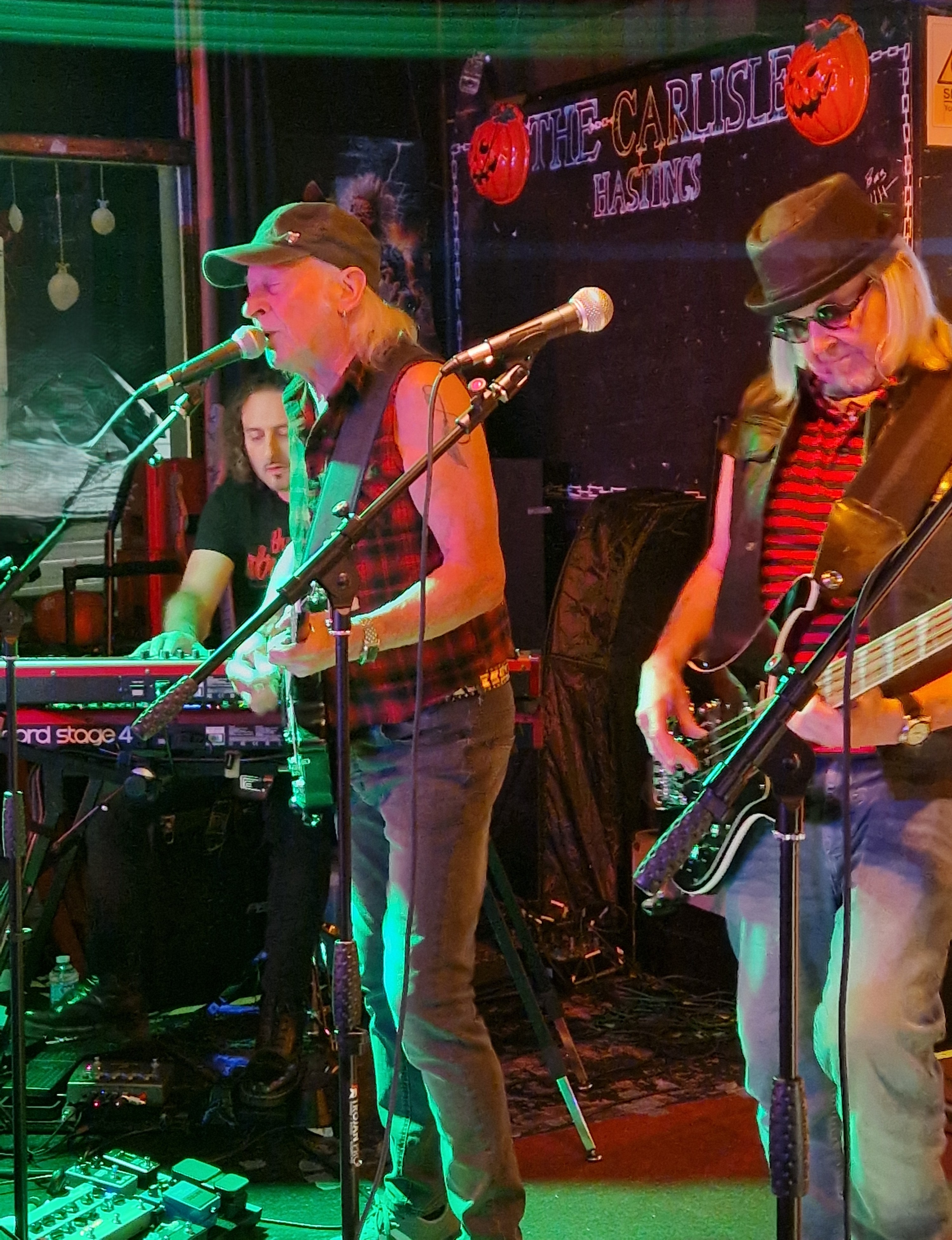
Stray are possibly not the only band of a certain vintage to have played Hastings Pier in their 1970s heyday and then returned to play to an enthusiastic crowd at the Carlisle rock pub down the road some fifty years later. But after a very successful gig last Autumn (which, sadly I missed because I was at the White Rock down the road for Dave Hill and Slade), the irrepressible Del Bromham and his band are back to rally the troops for another Hastings gig.
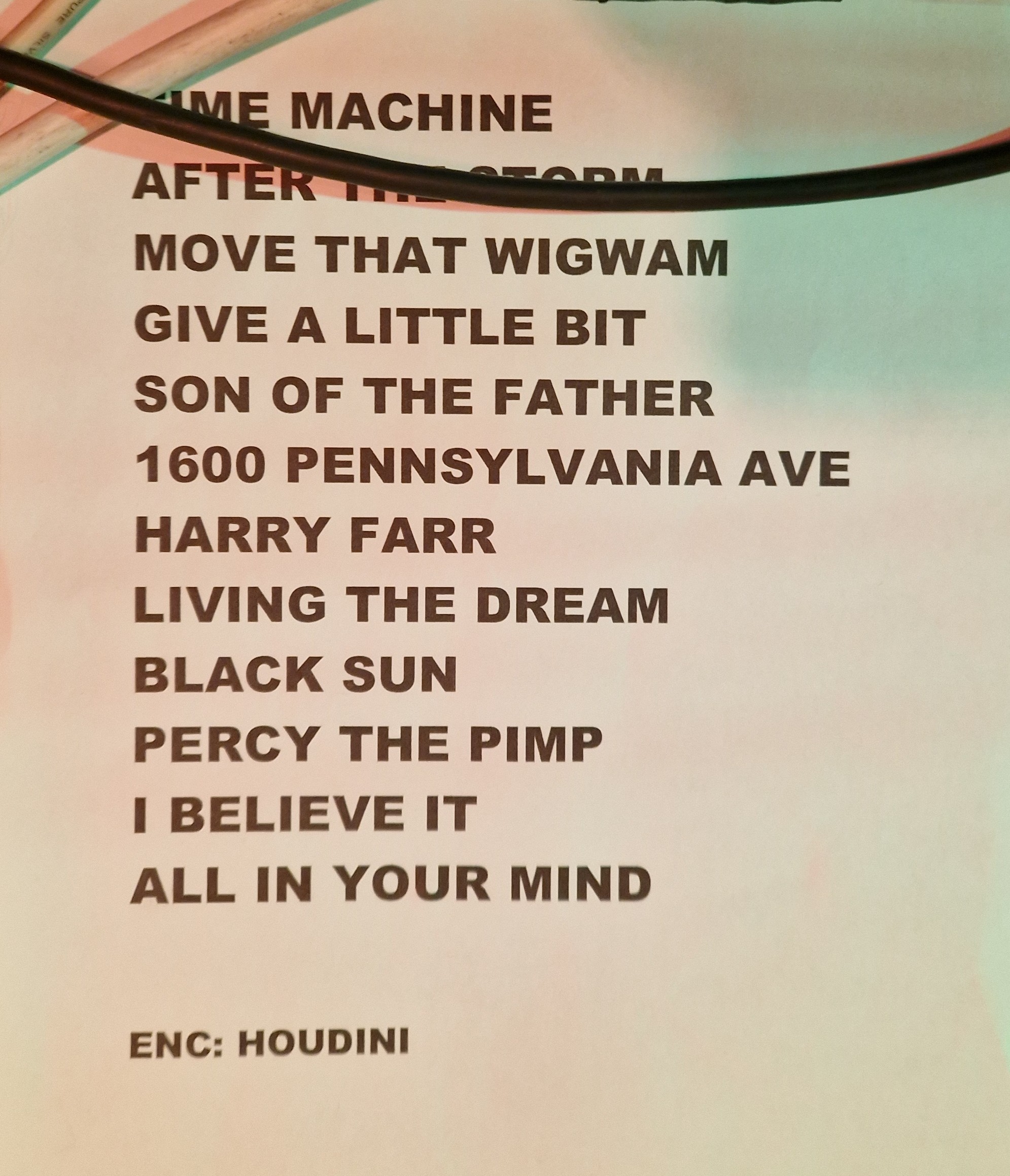
Following an impressive solo performance from guitarist Dylan Gers (son of Iron Maiden legend, Janick), Stray took to the stage and launched into an exhilarating ‘Time Machine’ from the band’s 1970 debut album. Although I was still too young to see Stray in the 1970s (at Hastings Pier or anywhere else for that matter), I have seen various incarnations of the band on the live music circuit and at various festivals over the years, going back to the early ‘90s.
This current formation, however, is made particularly special with the inclusion of second guitarist/vocalist, Pete Dyer (who originally joined the band in the mid ‘70s), as well as the addition of keyboardist, Simon Rinaldo, whose studied take on that classic 1970s-era Hammond-driven sound brings a whole extra dimension to Stray.
The set-list is a good mix of material from the classic early to mid ‘70s albums alongside a generous sprinkling of songs from their acclaimed late-period renaissance albums (Valhalla from 2010 and About Time from 2023).
Stray may not be one of the biggest names from the world of heavy rock but they are certainly one of the most resilient and tonight they delivered an absolute masterclass of a performance with powerful riffs, great melodies and classic songs. Well over 50 years since they first formed and well over 30 years since I first caught sight of them, Stray are one of those bands who just seem to keep on getting better and better each time I see them.
From Kent, and an established member of the modern English folk scene, James Kerry is well known for his passionate, rhythmic playing rooted in folk dance tradition. Having begun his musical journey at a young age he quickly progressed and has since played extensively in the Morris and ceilidh circuits and performed with many bands and groups including Foot Down, and the Hilltop Ceilidh Band, both of which he is a founding member of.
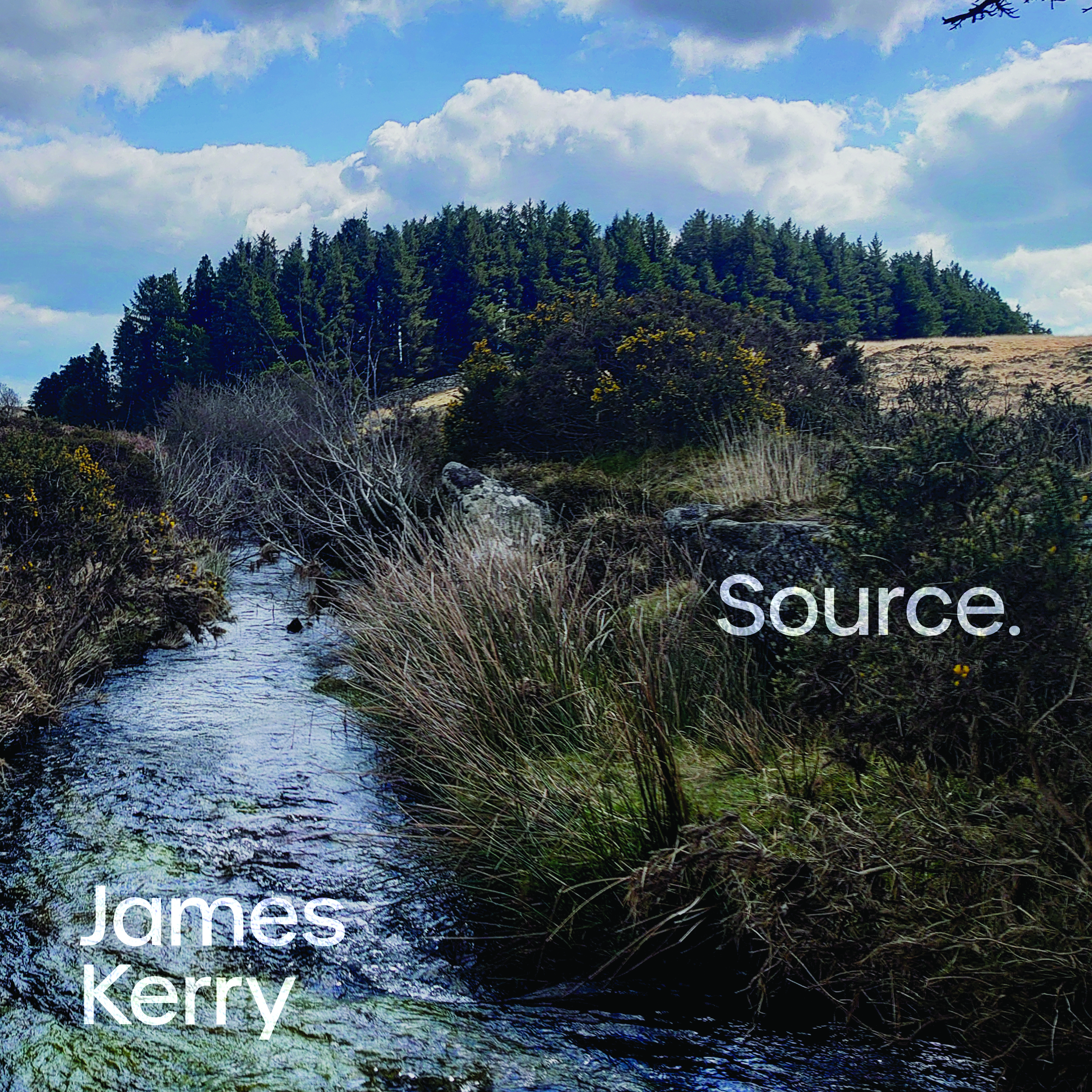
As was the case for so many of us, the Covid pandemic of 2020-21 saw Kerry with a fair degree of extra time on his hands. That opportunity gave rise to a creative burst where he was able to explore his own playing, writing and arranging and, ultimately, led to the release of his debut album – Source (reviewed here in 2023).
Inspired by a love of rivers and nature and the countryside, and given added impetus by a recent move to living on a boat, the name relates to the beginning of a river, of course, but also to the beginning of Kerry’s career as a solo artist. The rivers/waterways theme was then continued with the follow-up album, Tributaries which was released in October 2025.
Commenting on the release of Tributaries, James Kerry said:
“Tributaries is our second studio album, a follow-up to Source. This one draws from all sorts of places — old tunes I’ve loved for years, new ones I’ve written along the way, and everything in between. Some are wild and full of energy, others quieter and more reflective, but all of them are rooted in the folk tradition that continues to inspire me.”
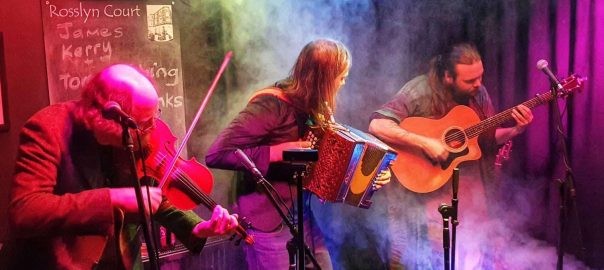
While Tributaries brings together two of the main contributors who played alongside Kerry on Source, that collaborative approach is consolidated with the project now formalised as a trio.
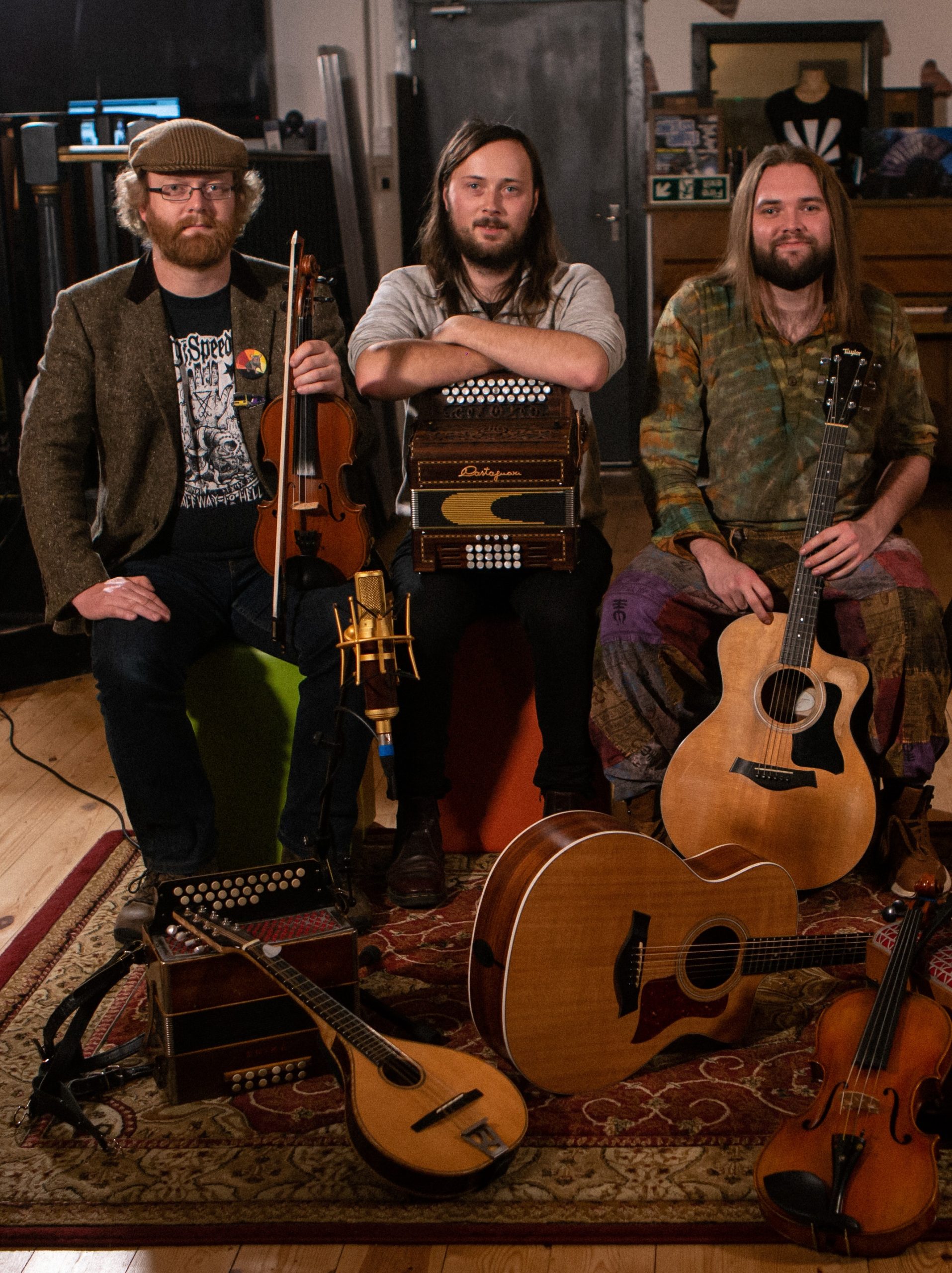
The James Kerry Trio are:
• James Kerry (Melodeon): Known for his rhythmic, dance-inspired style and deep roots in the English tradition, Kerry provides the melodic heart of the album. His original tunes on this record showcase a maturing compositional voice that respects tradition while pushing into contemporary territory.
• Tom Kitching (Fiddle & Mandolin): A powerhouse of the English folk scene, Kitching’s contribution is vital to the album’s texture. Bringing his signature “gritty and honest” style, his fiddle playing acts as a sophisticated counterpoint to the melodeon.
• Danny Tonks (Guitar): Providing the engine room for the trio, Tonks’ percussive fingerstyle guitar and nuanced harmonic foundations bind the melodic instruments together, creating a full, resonant ensemble sound.
While the trio remains firmly grounded in the English tradition, for this second album there is a greater emphasis on original material with a number of tunes composed by Kerry, alongside a couple from Kitching in addition to the trio’s own arrangements of traditional tunes as well as an adaption of a contemporary piece by Simon Care.
Fresh-sounding and exhilarating and bursting with energy, inventiveness and creativity, lovers of traditional tunes will find plenty to like in the James Kerry Trio’s Tributaries.
Originally commissioned by the organisers of the Folk By The Oak festival, the Spell Songs project was initially conceived as a one-off project but are now onto their third album.
Spell Songs brought together seven outstanding musicians and comprises Karine Polwart (tenor guitar/vocals), Julie Fowlis (whistles/vocals), Seckou Keita (kora/percussion/vocals), Kris Drever (guitars/bass/vocals), Rachel Newton (electroharp/viola/vocals), Beth Porter (cello/ukulele/vocals) and Jim Molyneux (piano/keyboards/drums/percussion/vocals).
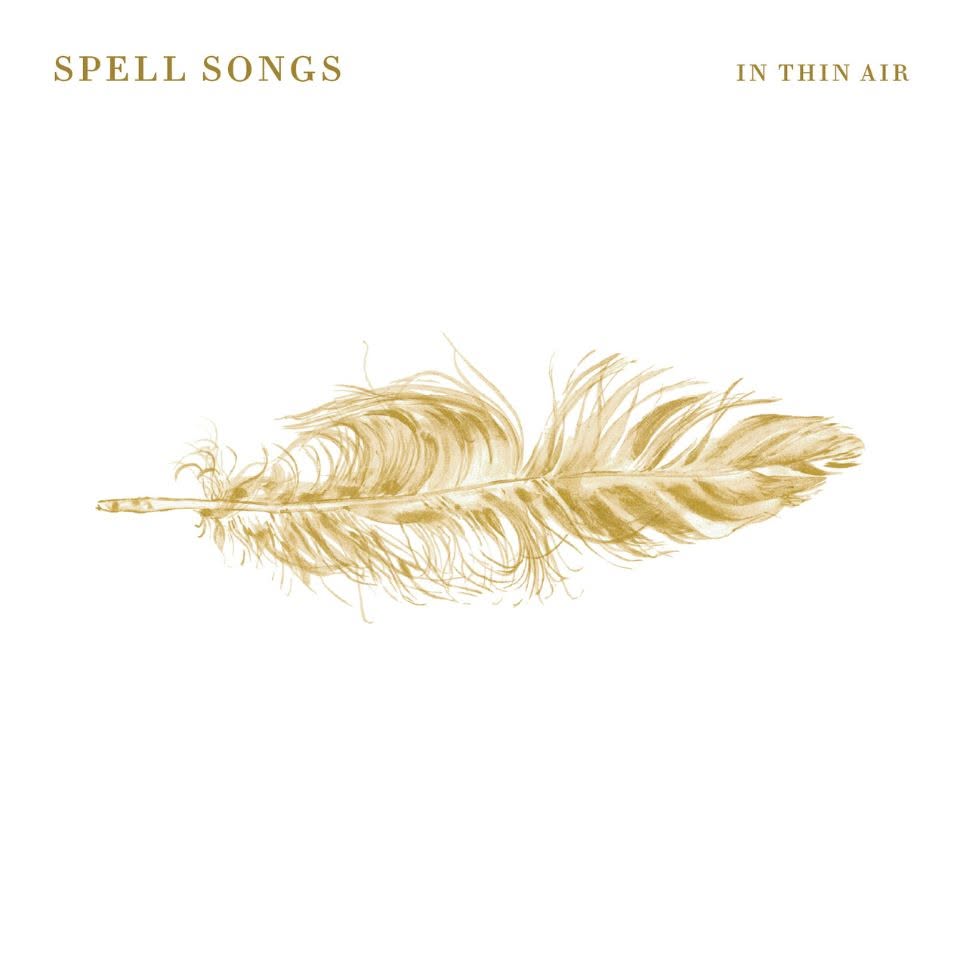
Following the success of the initial album The Lost Words Spell Songs in 2019 and its follow-up Let The Light In in 2021, In Thin Air is released as a musical companion to the acclaimed work by artist, Jackie Morris, and conservation writer, Robert Macfarlane, whose The Book of Birds was published earlier this year.
As I look onto our communal back-garden here on the south coast with its abundance of blackberries and newly-installed bird bath, I like to pride myself on how many feathered visitors we get in a typical day. Should that lull me into a false sense of security, however, both the book and the album are a timely reminder of the threats to our natural bird population and the 49 bird species it celebrates are all on the RSPB’s Amber or Red List. An enduring presence in folksong, as Polwart reminds us, birds inhabit “our languages and stories, our art and folklore, and our individual and cultural memories.” We lose them at our peril.
Featuring twelve tracks that lean heavily on the seven key themes in the book – nest, egg, beak, song, feather, flight and migration – the album is a stunning celebration of the life-cycle of the bird. Highlights include the title track which gently opens the album to the sound of birdsong and soft whisperings; ‘Najan (Nest)’ with its African rhythms and reminding us of the truly international flavour of some of our favourite avian visitors; and ‘Flight’ which takes us on a magical journey with its delicate melodies and sumptuous vocals.
An ambitious project that’s beautifully executed, and drawing on a captivating juxtaposition of musical influences, In Thin Air is another triumph for this hugely creative and talented seven-piece.
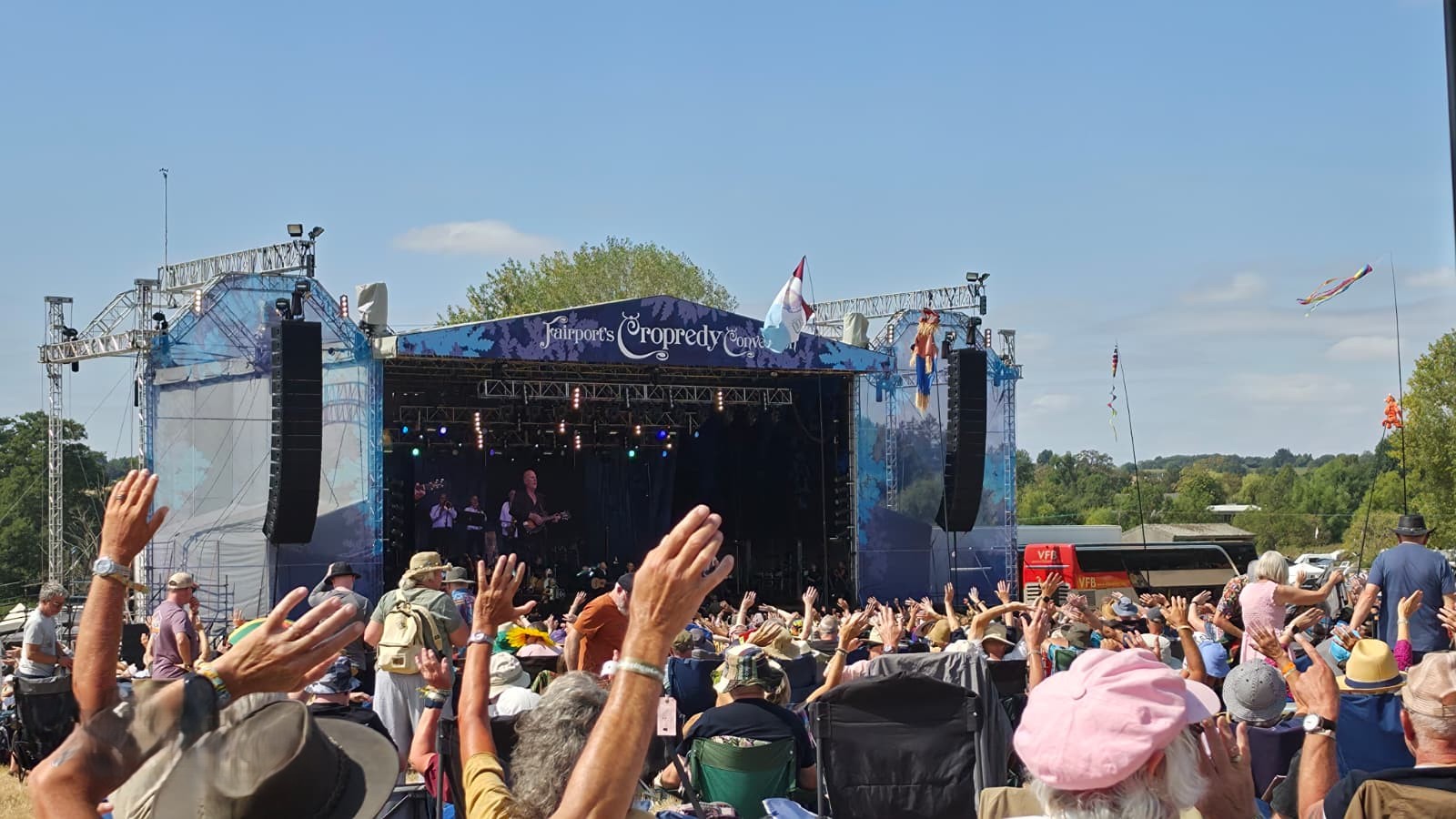
As we headed towards our usual rendezvous point in a Banbury layby so that our assembled group could drive in together and set up camp next to one another, there were two niggles on my mind. Would we cope with the heat during this latest heatwave? And would there be an easy Plan B in place if the new-fangled ticket app didn’t work on my phone in the middle of a field with poor mobile reception?
The latter proved to be a doddle. Although the ticket app wasn’t loading properly, I gave my order details to a special helpdesk at the wristband exchange and they printed off old-fashioned tickets for me so we could pick up our wristbands. Phew!
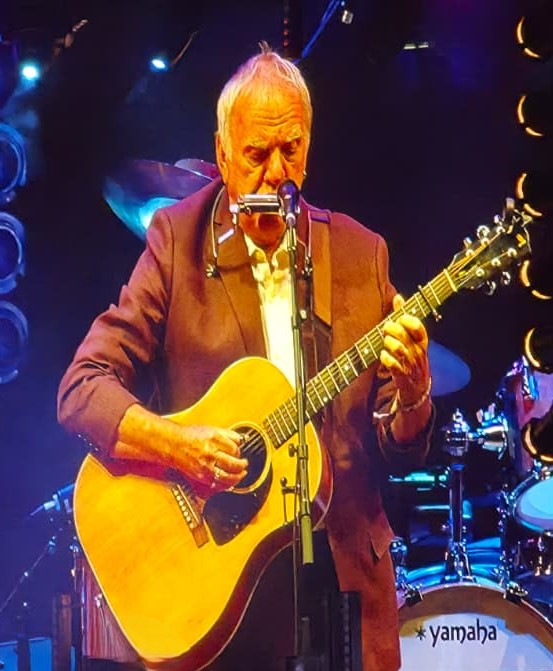
Cropredy 2026 (Photo credit: Simon Putman)
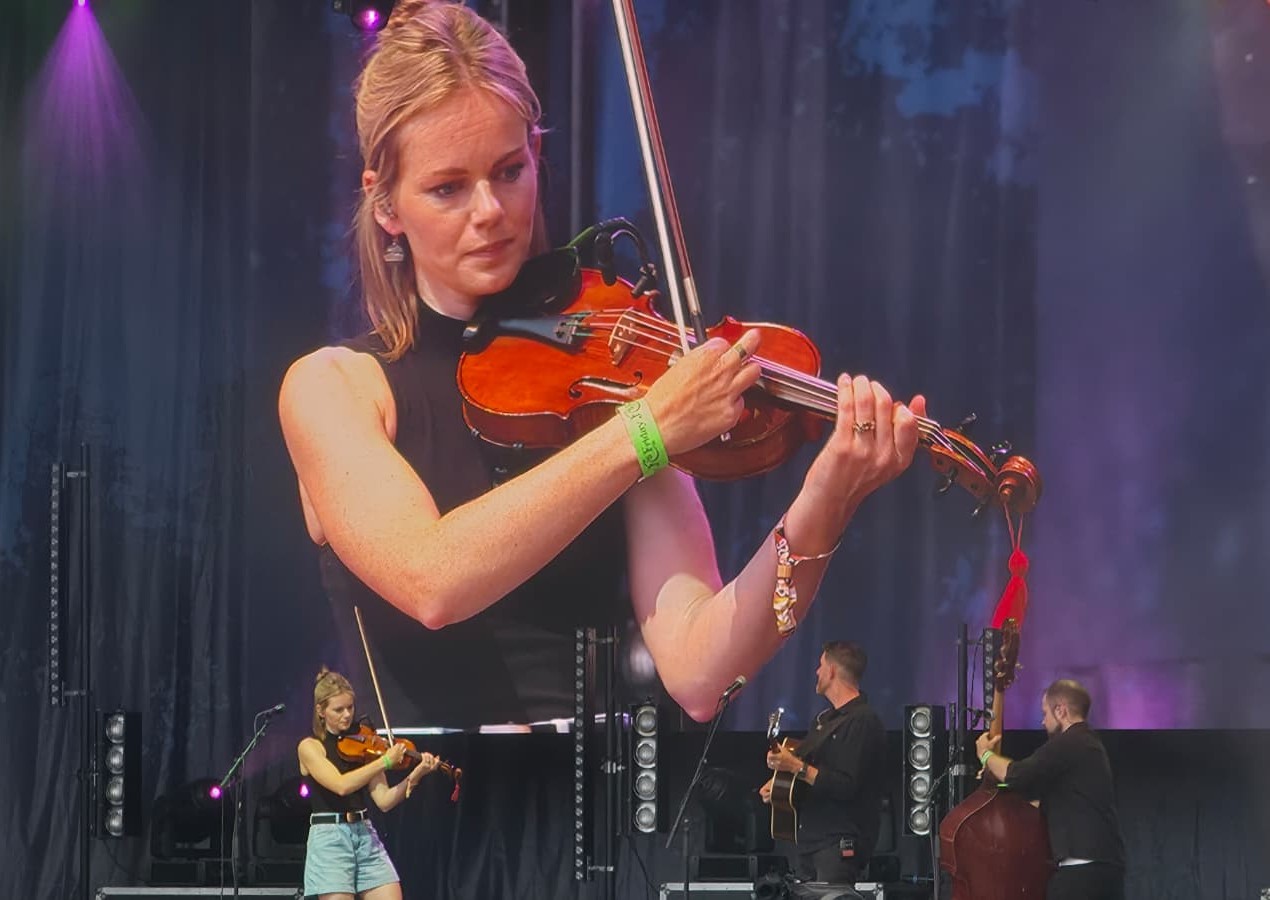
As for the heat. It was bloody hot. Even when I’m abroad laying by a pool I prefer to be ‘sun adjacent’ and avoid direct sunlight by finding myself a large sunshade and, ideally, a big cluster of palm trees to plonk myself under. There were none of those at Cropredy, of course. On the plus side, I think we’ve got better at adapting to life at the festival in the middle of a heatwave: copious amounts of fresh water alongside all the beer and cider, hats, umbrellas, Factor 50, time spent standing at the front by the stage (which was naturally in shadow throughout the day) and not being afraid of giving some of the acts a miss and heading back to the campsite to sit under the awning if it all got a bit too much.
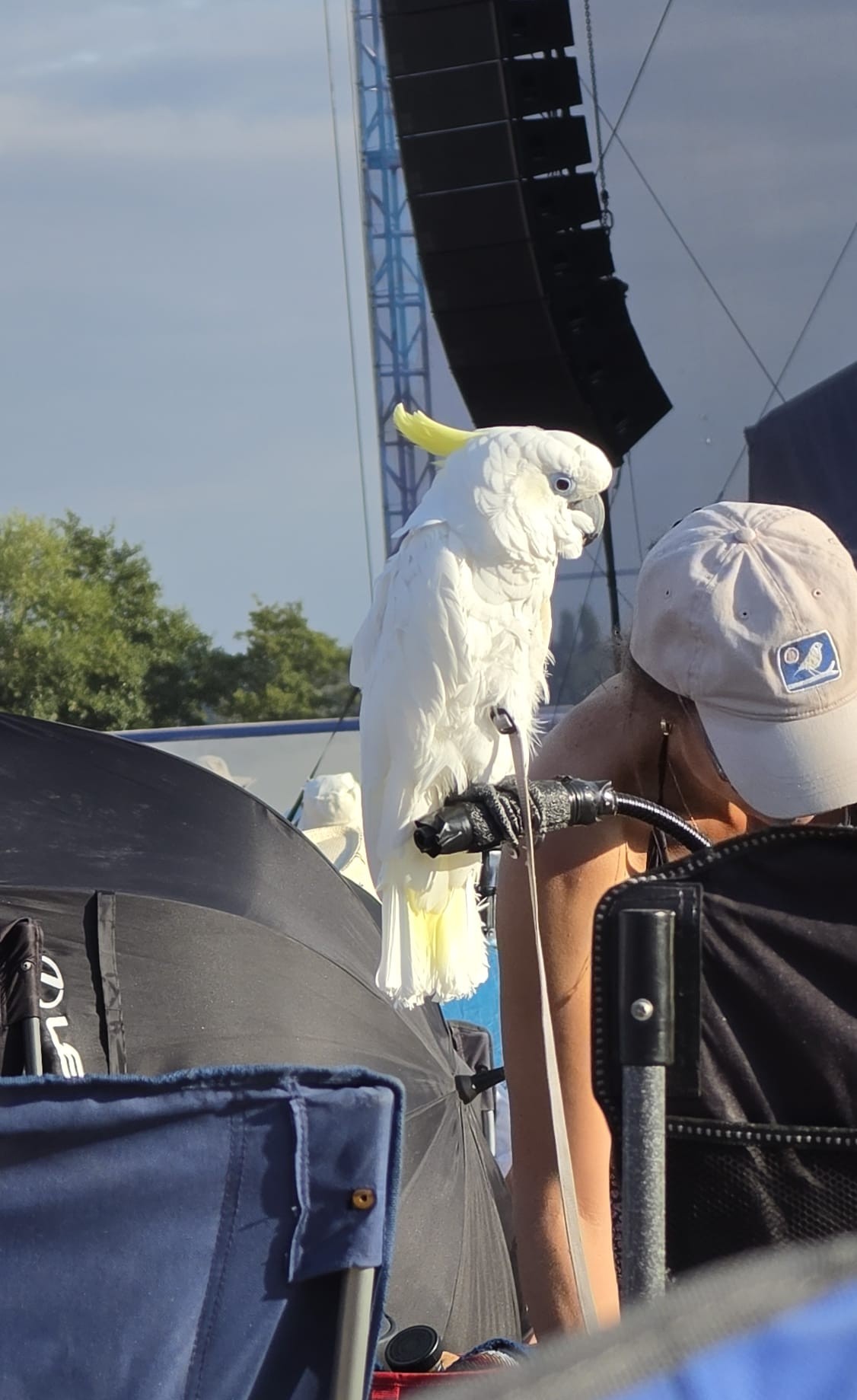
Fairport pride themselves on running a pet-friendly festival (Photo credit: Simon Putman)
This was the second year of the new slimmed-down version of Cropredy, now with a maximum cap of 6,500 on ticket sales and the line-up focused more on folk scene favourites and less on big-name headliners from the world of rock and pop. It’s working. There’s still a nice mix between the familiar and the not-so-familiar. Crucially, it’s ensured that the festival remains financially viable with a predictable income stream and a budget based around that.
Looking at the music, the new discoveries, for me, included the entertaining and highly energetic Banter; the rock-country-soul crossover band, Danny the Champions of the World (yes I know have been around almost 20 years now but it was my first time seeing them); and the Celtic folk band, The Haar, who performed breathtakingly unique version of traditional folk standards.
Danny the Champions of the World (Photo credit: Simon Putman)
More familiar favourites included Turin Brakes whose particular brand of laid-back, melodic, indie rock which went down so well when they last played Cropredy back in 2022 and was equally well-received this time. They’ve clearly built a special rapport with the Cropredy audience, partly because of the excellent music but also because of the lifelong connection to the festival that their drummer, Rob Allum, has – he told us been coming to Cropredy since he was a toddler.
Turin Brakes (Photo credit: Simon Putman)
Another set of familiar faces was the French Canadian Celtic folk group Le Vent Du Nord, who have never failed to woo the crowd with their fantastic musicianship and energetic performances at every festival I’ve seen them at over the years and Cropredy was no exception, as did Breabach.
Braebach (Photo credit: Simon Putman)
Hayseed Dixie, also made a welcome return to Cropredy with their tongue-in-cheek but hugely entertaining selection of Bluegrass arrangements of heavy metal classics.
Hayseed Dixie (Photo credit: Simon Putman)
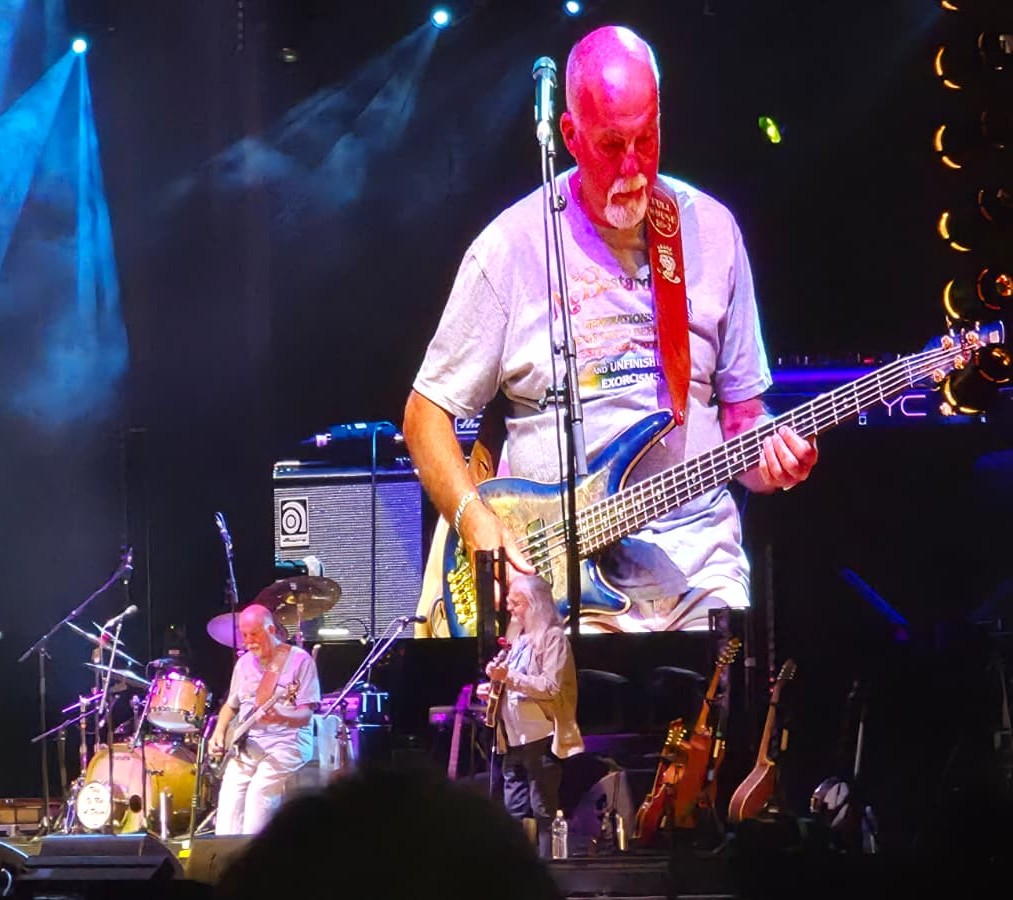
And then we get to the perennial Cropredy icons: Namely, Richard Thompson, who headlined on the Friday night with a stunning set of solo acoustic RT classics, followed by an equally stunning electric set with some of his old Fairport bandmates. And then, headlining on the Saturday, of course, Fairport Convention themselves.
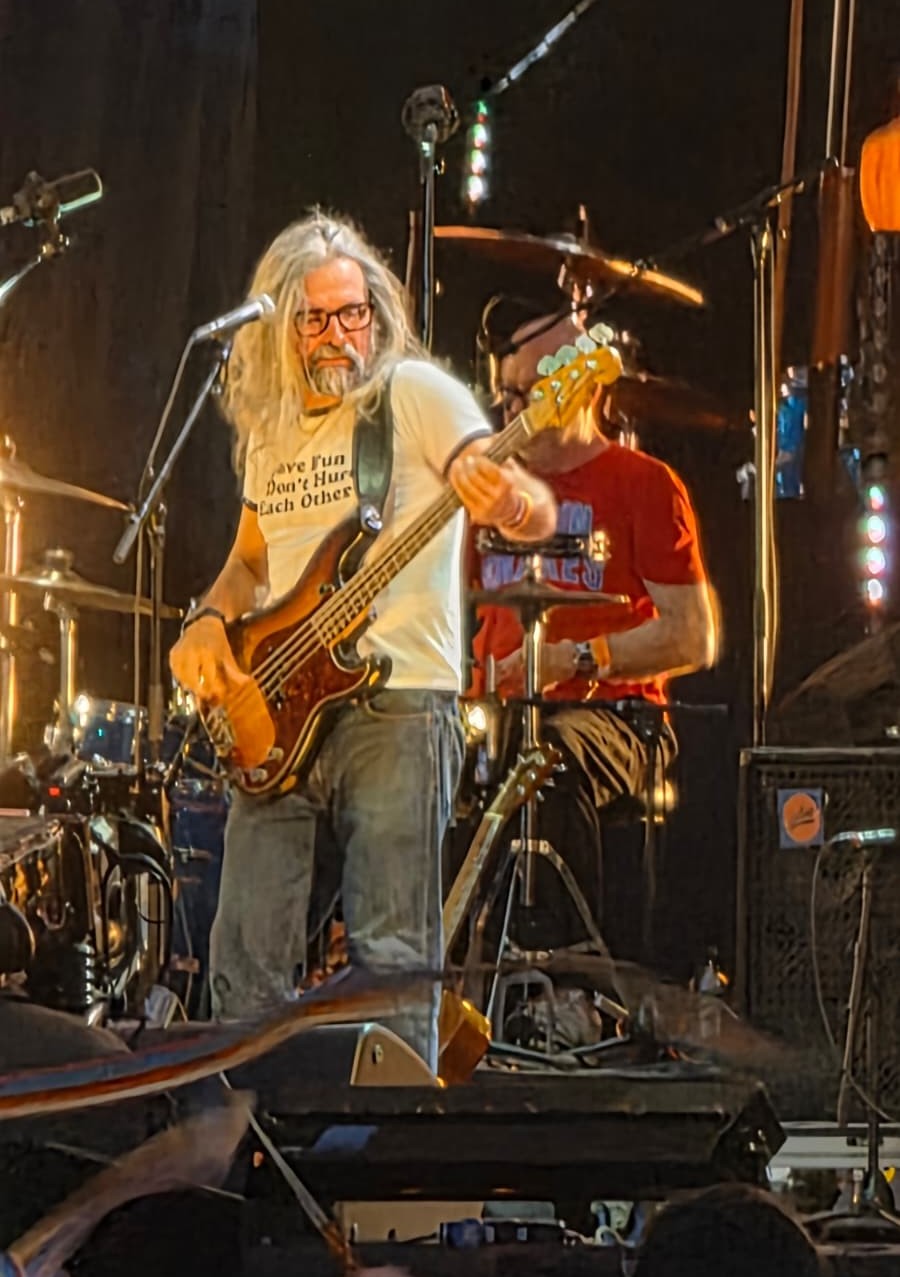
Fairport Convention – Dave Pegg (Photo credit: Simon Putman)
There has been no new studio album for some while now (2020’s Shuffle and Go) being the last. But the band’s huge back-catalogue of albums and total lack of Top 20 singles means there’s plenty of scope for varying the set-list. It was wonderful to hear a couple of songs from Rising For The Moon (the band’s final album with Sandy Denny) and Festival Bell (my favourite Fairport album of the modern era).
Ralph McTell (Photo credit: Simon Putman)
While it was a shame Richard Thompson wasn’t available to return the favour from the previous night and do a guest slot with his former bandmates, I’m sure we’ll be seeing plenty of him next year when it’s the band’s 60th anniversary.
Vikki Clayton (Photo credit: Simon Putman)
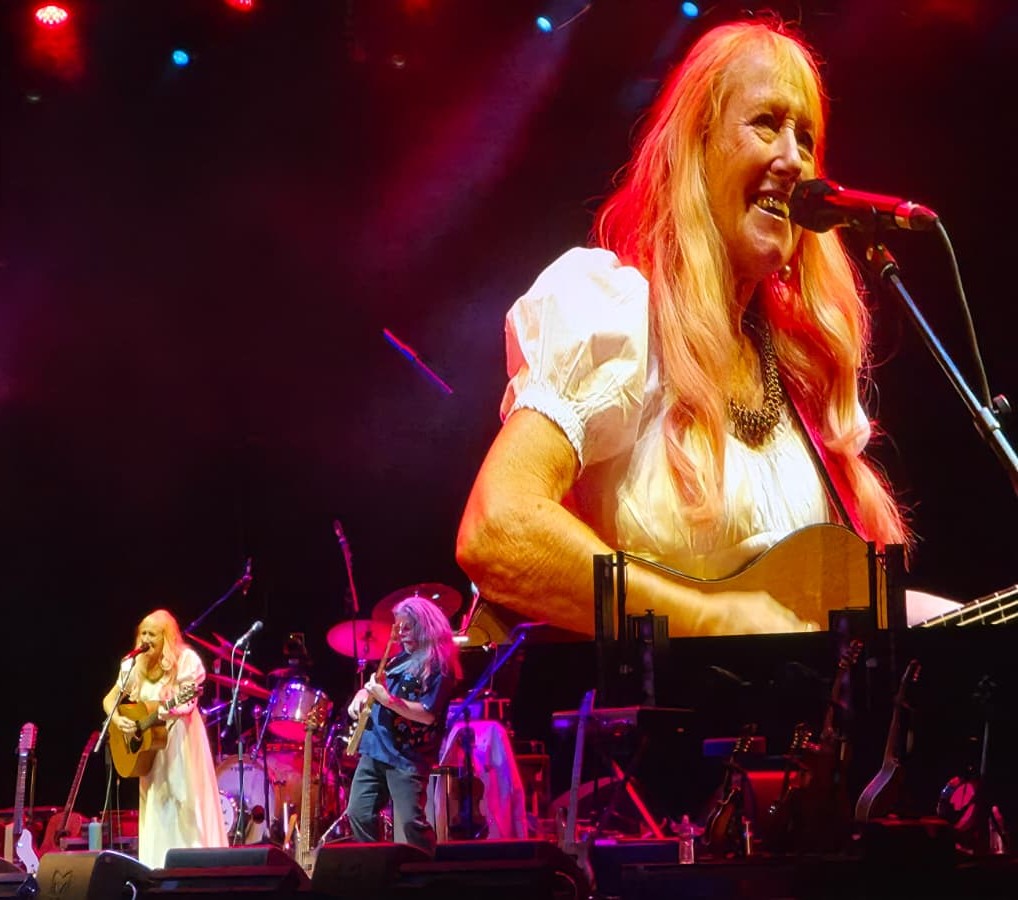
In the meantime, we had guest spots from Steve Ashley, Ralph McTell, Vikki Clayton, Jen Butterworth and Anna Ryder to enjoy and by the time ‘Matty Groves’ and ‘Meet on the Ledge’ came we’d had a wonderfully varied delve into Fairport’s eclectic back catalogue.
Til the same time next year!
Fairport Convention – Simon Nicol (Photo credit: Simon Putman)
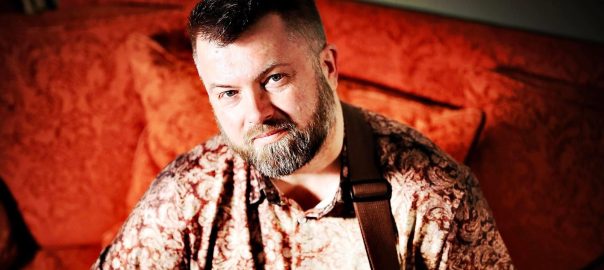
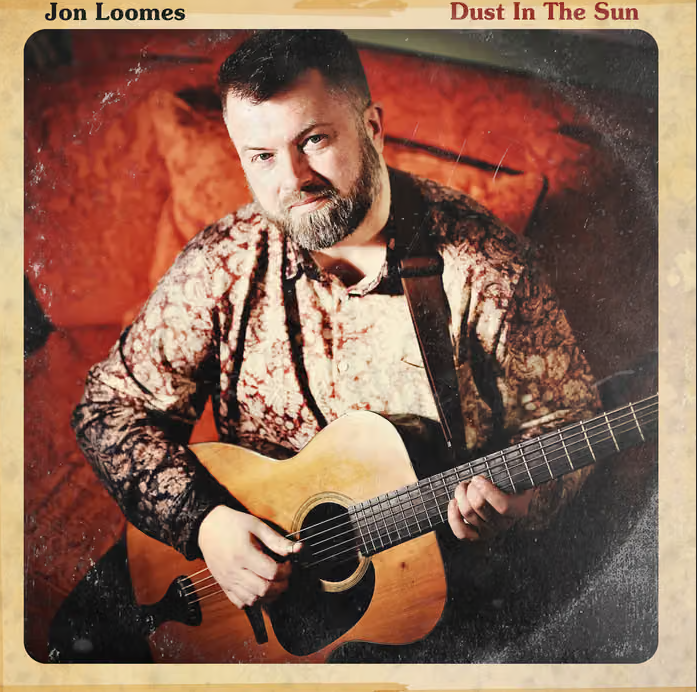
Dust in the Sun by Jon Loomes is presented as a ‘lost’ English folk album, recorded in the long hot summer of 1976.
According to the press blurb: “A troubled artist made a remarkable folk album whose creation was beset by difficulties. Almost immediately, the label collapsed into insolvency. A pressing plant fire destroyed almost the entire original run, after which the album slipped into rumour and half-memory, after which the album slipped into rumour and half memory. Dust in the Sun was long thought lost forever. Miraculously, a single copy arrived into the present day, and the album has now been reissued to mark its fiftieth anniversary.”
This is an all an elaborate scene-setting fiction, of course. Unlike yours truly I doubt Loomes was even old enough to be spending the summer of ’76 tearing around the streets on a chopper bike, let alone recording long lost folk albums.
What the album does do, however, is authentically capture the ambience and repertoire of some of the great folk albums of that era, with an affectionate nod to artists such as Martin Carthy and Nic Jones.
There’s plenty of tried and tested classics from the Trad. Arr. repertoire that seasoned folk fans will be more than familiar with (‘Bonnie Bunch of Roses’, ‘Maid on the Shore’ ‘The Female Drummer’ et al). Yet in spite of the luridly tongue-in-cheek nature of the album’s back-story there is a sincerity and a passion behind Loomes’ interpretations that immediately brings the songs, and their vivid story-telling, to life.
Add in some authentic period production, some beautiful accompaniment to Loomes’ vocals and guitar (Rachel Crowther – bass; Tom Kitching – fiddle; Trolsynx – side drum; Rakoczy – English pipes; recorder, concertina; Gill Loomes-Quinn – Dulcimer; and Becky Turner – Uillean pipes) and you have the makings of a genuinely compelling folk album. And for those who are intrigued to find out more about the album’s fictional back-story, there’s even an accompanying novel.
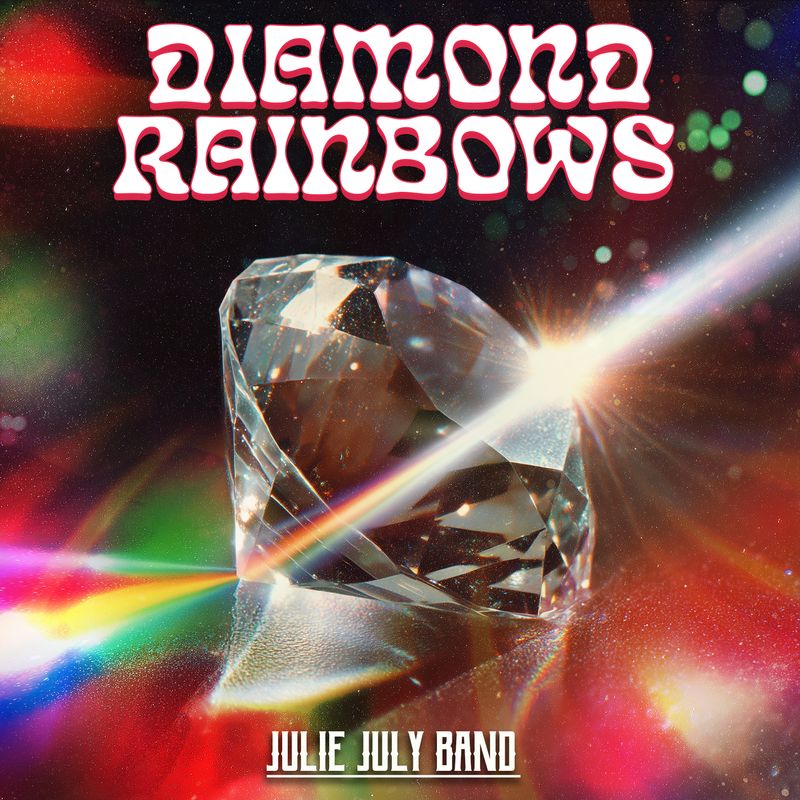
Diamond Rainbows is the fifth album from the Julie July Band and their fourth album of original material. Their first, back in 2018, was a tribute to the late Sandy Denny, representing a foundational plank of their live show. Although Denny herself drew on a much wider range of influences than the folk rock label usually given to her would imply, with each successive release the Julie July Band have been on a mission to broaden the palette of musical textures they draw from. The results have been consistently pleasing and Diamond Rainbows is no exception.
The joyfully optimistic ‘Sunny Day’ with its jaunty fiddle playing is a classic slice of English folk rock while opening track ‘Riverside’ has that lush West Coast feel from the golden age of introspective singer-songwriter albums. The Eagles-ish ‘Just a Little’ again picks up that West Coast vibe. Meanwhile, ‘Medicine Man’ with its energetic rhythms coupled with gorgeous vocal harmonies put me in mind of songs like Fleetwood Mac’s ‘The Chain’. Elsewhere on the album there’s some more ethereal prog-rock influences and even a touch of gypsy jazz.
In short, while the songs exude freshness and vibrancy, the influences are pleasingly familiar, without ever straying into the formulaic.
As the Julie July Band themselves put it: “Diamond Rainbows celebrates the excitement of hearing new songs for the very first time. Every classic song was once unknown. This collection is an invitation to rediscover that sense of musical discovery.”
Throw in some top-notch musicianship from seasoned players, crystal clear vocals, beautiful harmonies and great song-writing and you’ve got the perfect summer album. Diamond Rainbows is highly recommended.
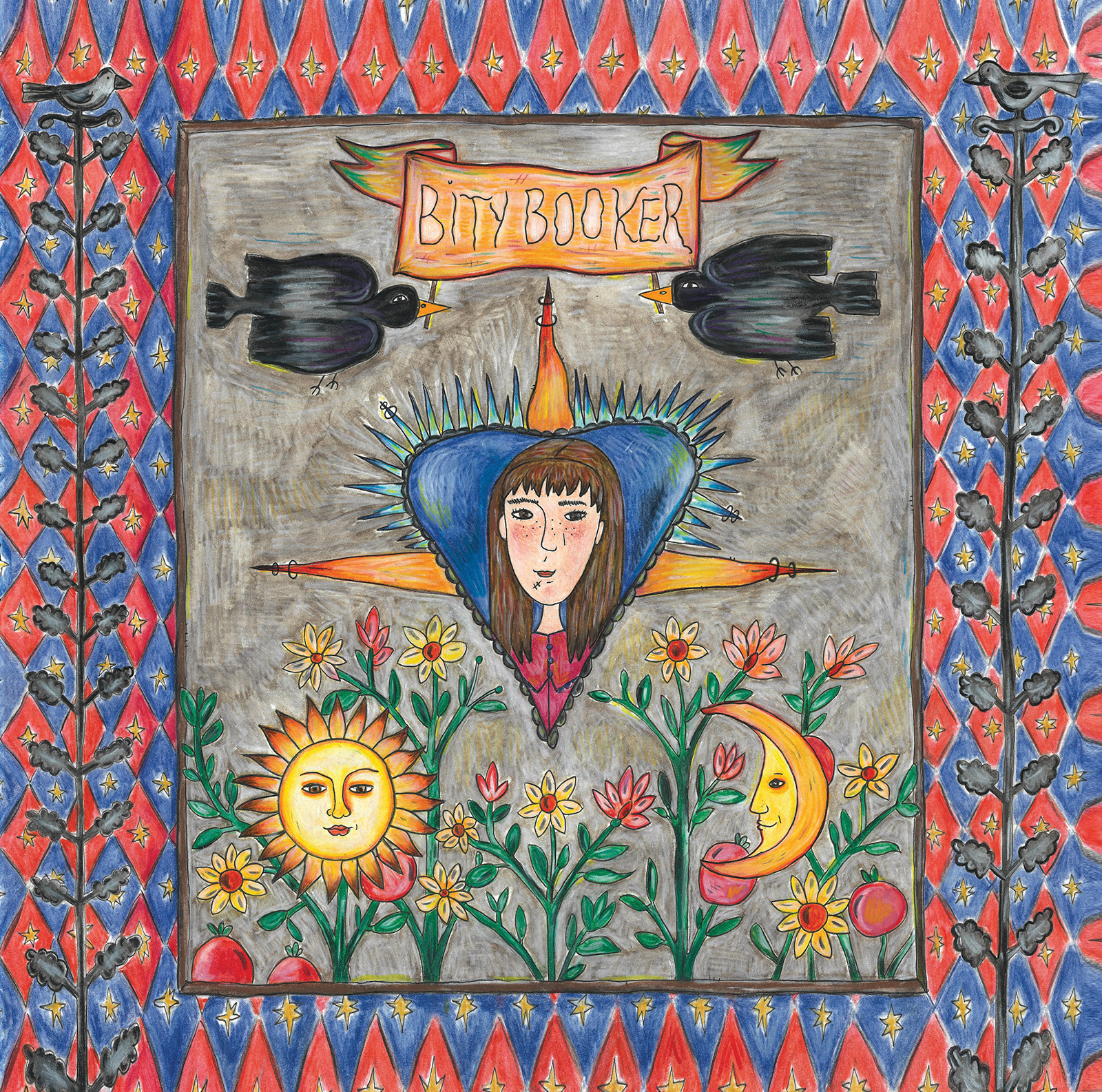
I first came across the delightful Bity Booker supporting Green Diesel in Brighton last summer. Describing her as “a London-based alt-folk singer-songwriter with beautiful songs, a sweet voice and some hilariously deadpan introductions” her performance certainly left an impression on me. Now she has an album out, which she refers to as her “first non-debut album”.
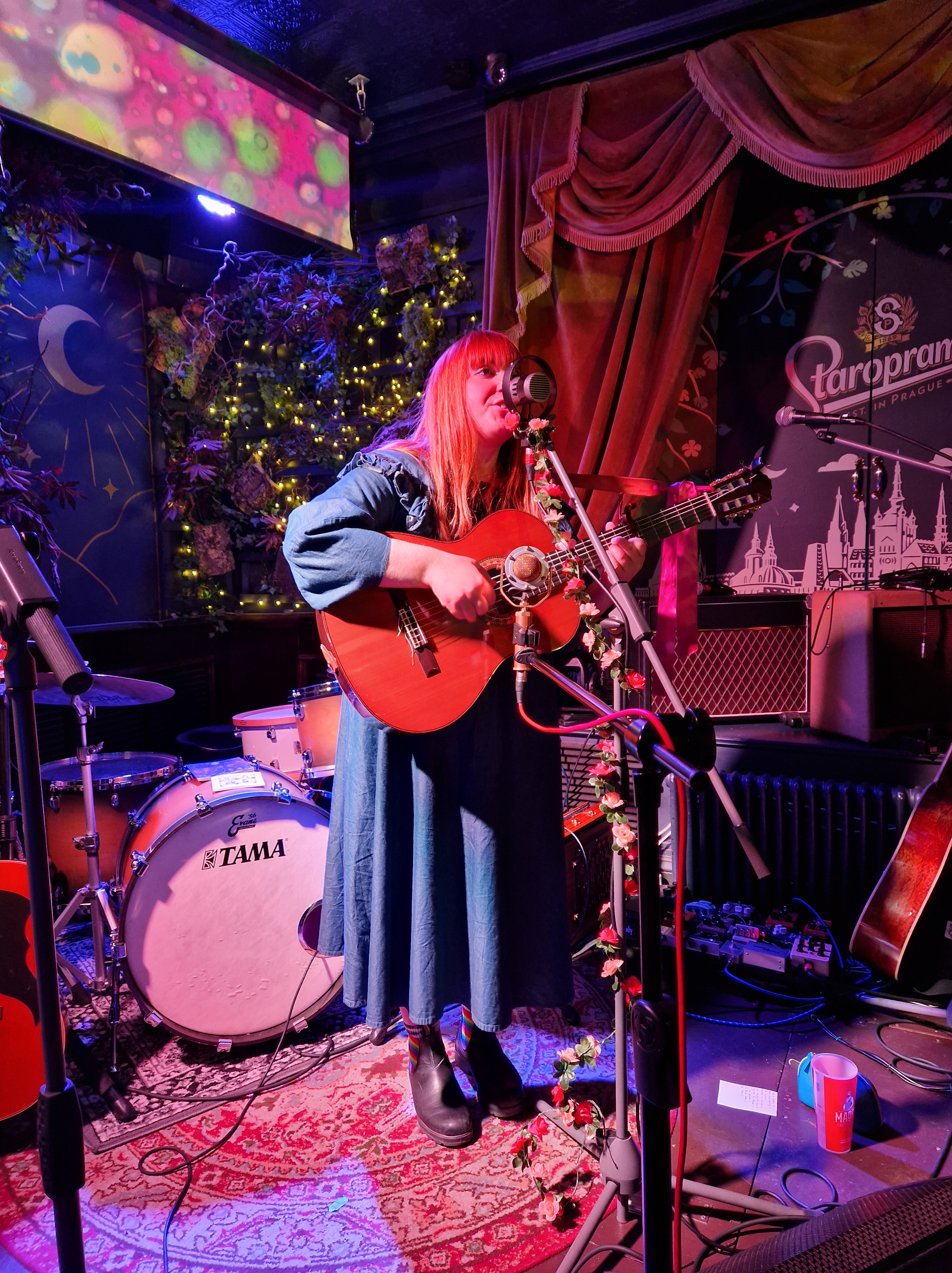
Bity Booker at the Folklore Rooms, Brighton – Photo credit: Darren Johnson
Bity Booker:“I call it a ‘non-debut album’ because I have long been making music in different forms, from death metal to alternative folk, so it feels strange calling it a ‘debut album’. It is the product of years of songwriting and performing solo as Bity Booker. I do take my time making things in a way that makes me happy, out of the commercial sphere and outside of norms and rules. I like to think of my creations as something organically formed and shaped by time, dreams, thoughts, rain and wind. These tape recordings feel very much alive, in the background you can hear sounds of birds, people, the sounds of London, all of which were in the room with me while recording.”
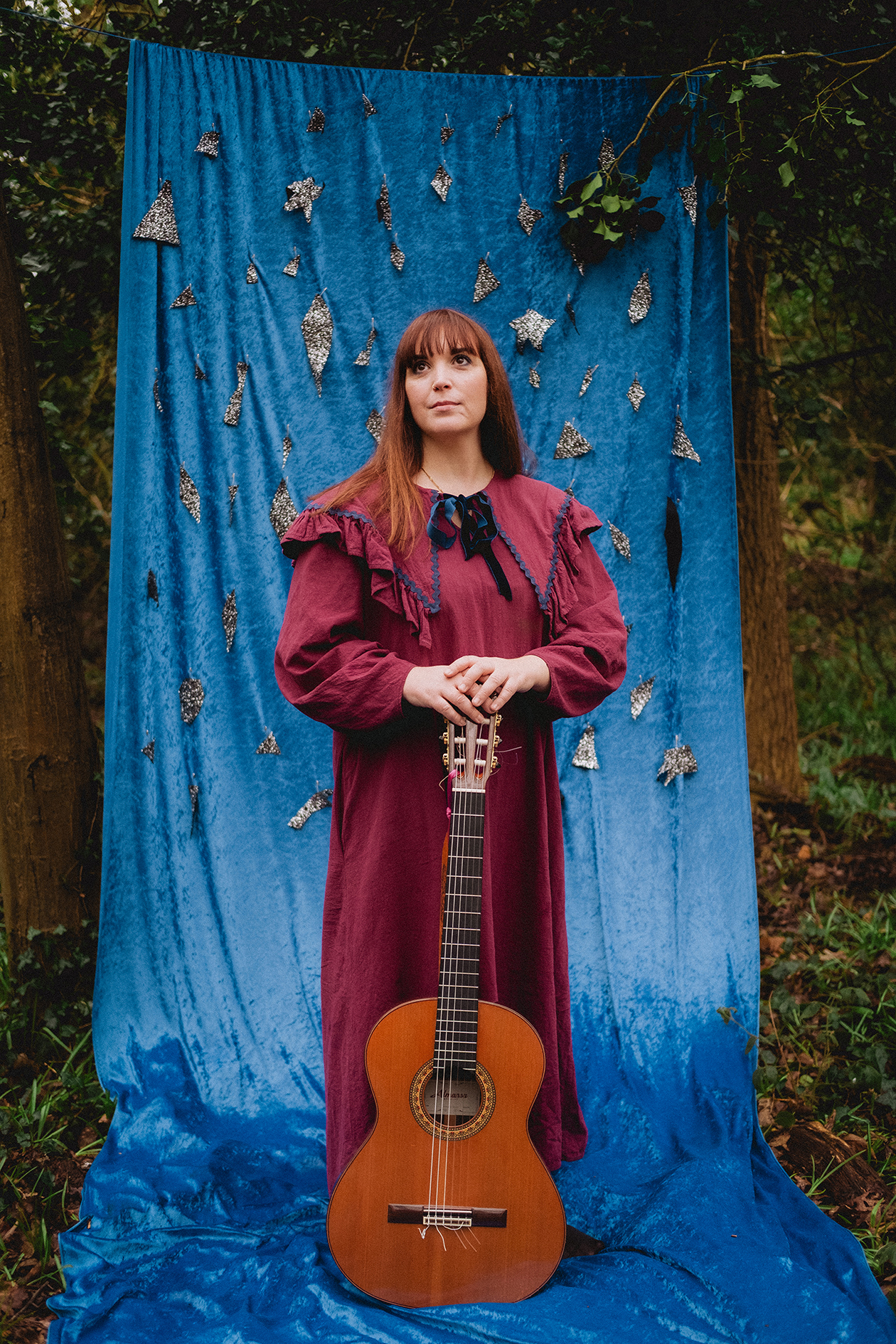
Photo credit: Stef Martin
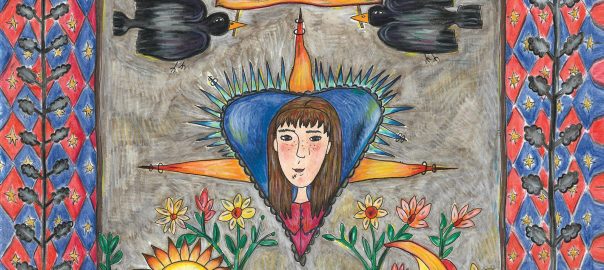
Featuring Booker’s magical voice, her classical guitar and nine of her unique and never less than utterly charming compositions, There’s No Song About a Stone was recorded at home on a four-track tape recorder over a three-year period in South London and Thanet.
The natural world is a recurring theme in Booker’s songs or, more accurately, the natural world as a metaphor for human emotions: love, hope, sadness and a sense of belonging. The latter is very much the sentiment behind ‘Parrots in London’, Booker’s delightful paean to the growing population of feral parakeets who have made London their home. The song never fails to raise a smile when performed live, with its knowing nod to one of the capital’s most enduring urban myths (‘Some say they escaped from Jimi Hendrix’s cage’).
It’s certainly not all light and whimsical though and darker themes are explored in songs like ‘The Ballad of Lost Town’ and ‘A Tear’. Whatever the subject matter, Booker’s beguiling honesty as a performer and natural gift as a storyteller shine through.
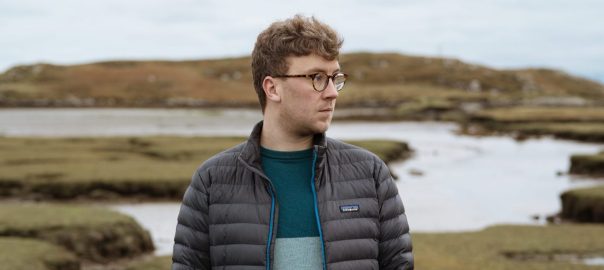
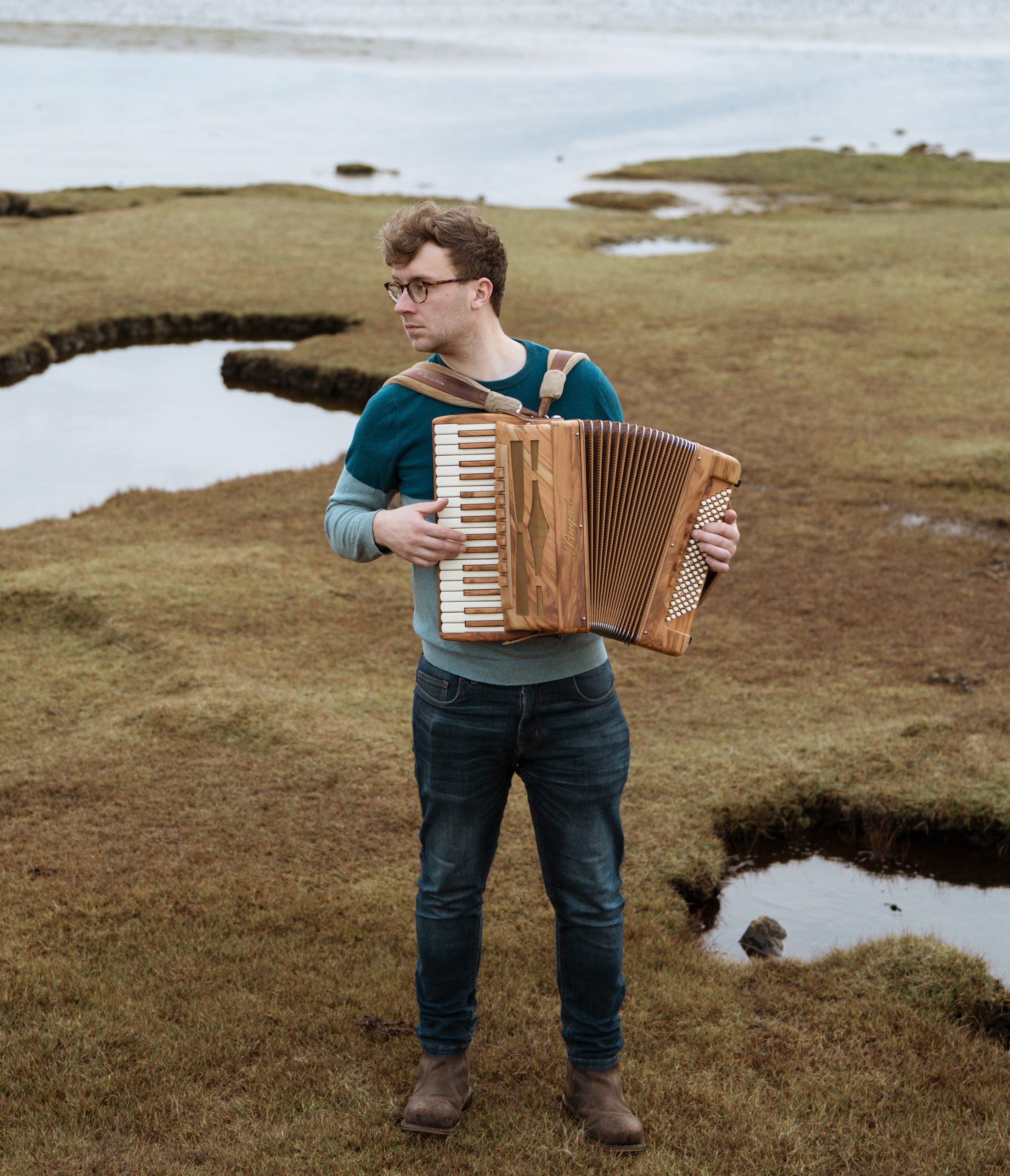
From the island of Grimsay, in Uist in the Outer Hebrides, Pàdruig Morrison is an acclaimed accordionist and composer. Performing around the country with fellow Uist musicians as part of Beinn Lee, the six-piece band have received many plaudits for their impassioned interpretations of traditional Gaelic music. Morrison himself was a finalist in the 2020 BBC Radio Scotland Young Musician of the Year and also picked up a Celtic Connections New Voices commission that same year.
Equally comfortable in the worlds of both classical and contemporary composition, Morrison has also written music for the National Trust for Scotland, St Magnus International Festival, Thirteen North string ensemble, Hebrides Ensemble, Hard Rain Soloist Ensemble, Edinburgh International Book Festival, members of the Scottish Chamber Orchestra and soundtracks for TV and radio. When he is at home and not performing or composing, he teaches accordion and piano and raises cattle and sheep on his croft in Grimsay.
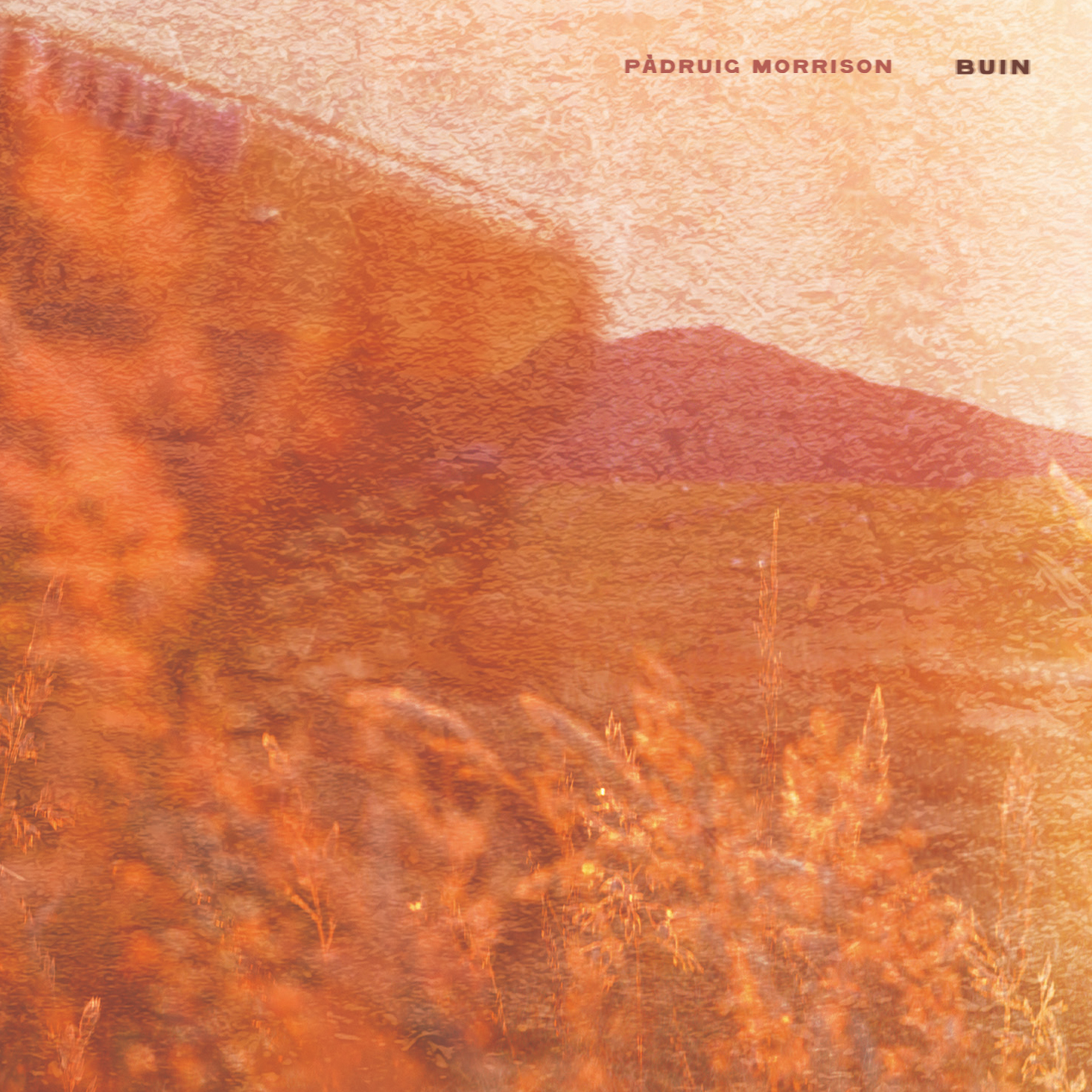
Buin is Morrison’s debut solo album and features an array of original tunes and four original Gaelic songs. Written over the past six or seven years, the music distils his aural assimilation of old Gaelic songs and pipe melodies, to produce original material with a much older flavour.
‘Buin’ means belong. Equally appropriate titles for this album could have been ‘buain’, meaning harvest, and ‘buan’, meaning long-lasting. All of the tunes and the songs on this album have some form of reflection on belonging to a place, a people, and a culture.
Pàdruig Morrison:“I feel it is important to understand and convey how Gaels have long been fighting both for our right to land on which we can live and feed ourselves, and for our language to be spoken by those who come after us, just as it was by those who came before. This history is not sufficiently taught to us and I hope that this album might act as a reminder of, and an insight into, some of that history.”
Beautifully packaged with extensive liner notes, this album is an enchanting celebration of the Gaelic tradition and a fine showcase for Pàdruig Morrison’s exceptional musicianship and highly accomplished composition and arrangement skills.
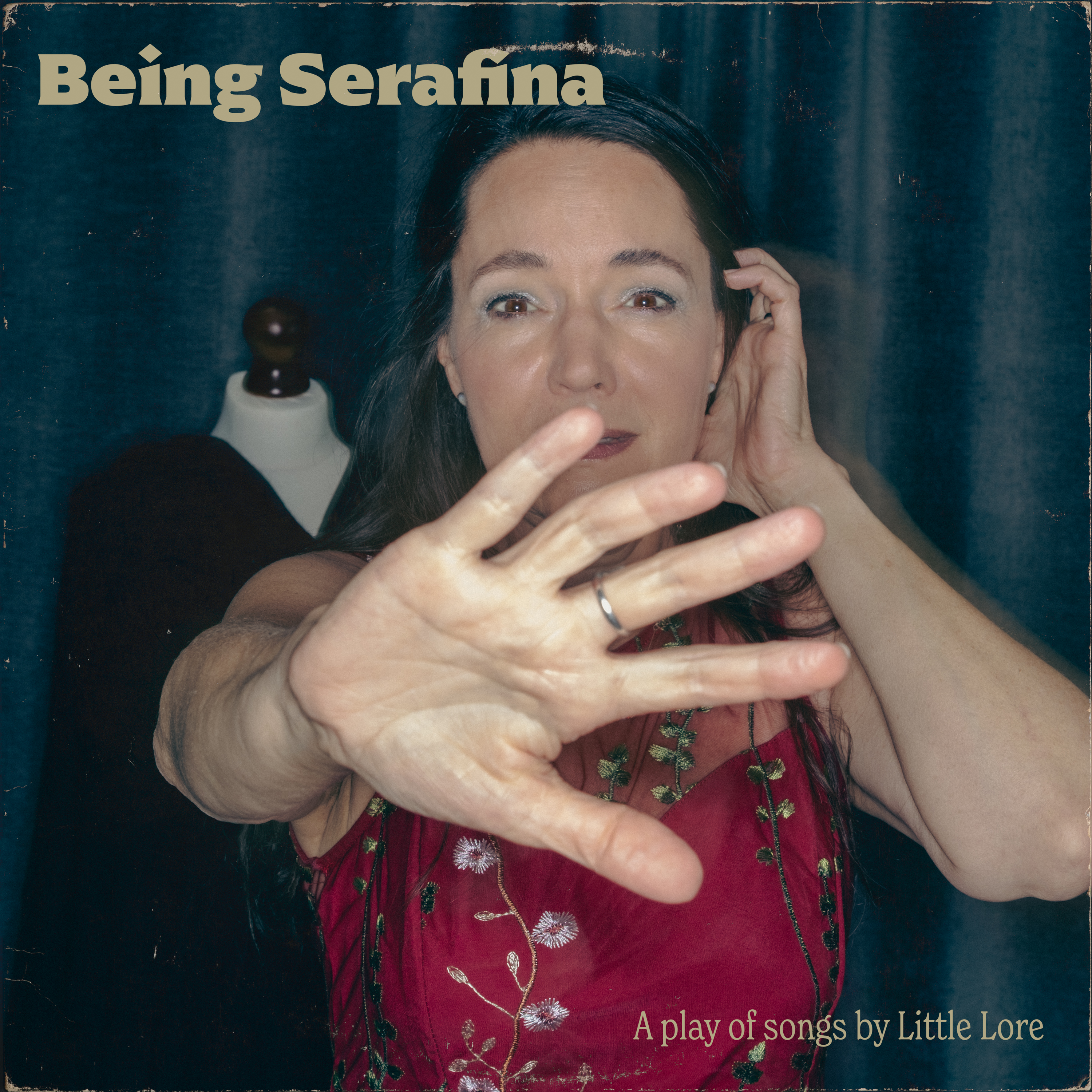
“In the 21st century it’s refreshing to know that there are still artists creating unique albums. The London-based Little Lore is a fine example of that and her latest release Being Serafina is a work that stretches the imagination and reveals a conceptual depth outside the normal approach.” – RnR magazine (5 stars)
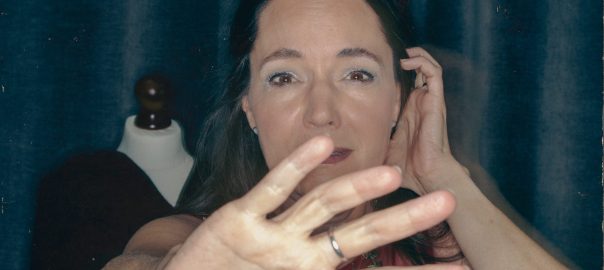
Being Serafina is the new musical project from acclaimed, London-based singer-songwriter, Little Lore aka Tricia Duffy. Released in June this year the albumis named after the central character in Williams’ celebrated play from the 1950s, The Rose Tattoo.
Little Lore:“Being Serafina began as an academic experiment. I wanted to explore whether method acting techniques could be used as a songwriting device. My initial idea was that I could use the Method to write a collection of songs from multiple different character perspectives, perhaps drawn from fiction or characters of my own invention. But projects have a habit of unfolding in unexpected ways. I signed up for method acting classes and to start the process purely, from an acting point of view, I selected a monologue from a play I loved. The Rose Tattoo, by Tennessee Williams. I have been obsessed by Williams’ writing since I was a teenager. I loved and admired his ability to capture such rich female characters.As a homosexual man born in 1911, he understood how it felt to be oppressed.”
“The project began and my first song arrived, written from the perspective of the main protagonist in The Rose Tattoo – Serafina. It’s a song called ‘Did You Exist?’ that sees Serafina questioning everything when she learns that her deceased husband, the love of her life, was having a long-term affair before he died. She is devastated and confused and as I ‘became’ her, I felt it all. And so began an intimate love affair of my own, with this beautiful, vulnerable, funny and flawed character, Serafina. I had a crazy notion that maybe I could go deeper into character and write an entire album from her perspective. Being Serafina is the result.The album draws on a wide range of genre influences from the folk Americana people know me for along with prog rock, punk and blues peppered into the creative process.”
A burgeoning presence on the UK Americana and singer-songwriter scene, Little Lore has received many plaudits, both for her astute, observational songwriting and for her warm, heartfelt vocals. Add into the mix the lush instrumentation and sumptuous production from her principal musical collaborator, Oli Deakin, and the result is nothing short of magical.
Renowned New York-based producer and multi-instrumentalist, Oli Deakin,(who records under the name of Lowpines) produced album and, as with previous Little Lore releases, provides much of the instrumentation.
1. Fair Weather:“Serafina is a central part of a close Sicilian community; she is the local seamstress. Williams describes the opening scene of the play with children playing, excitedly talking about the flags flying at the coast guard that indicate the weather will be fine. He describes the mothers calling the children home tenderly and musically. Serafina has set the table for a romantic dinner; she plans to tell her husband that she is pregnant with their second child. Her 12-year-old daughter is catching firebugs, and the scene is quite perfect. The song includes backing vocals from Bella Collins and Ella Tobin in the harmonies to enhance this sense of community, and introduces the use of a clarinet, a musical device used to characterise Rosario – Serafina’s husband. Attentive listeners may notice that the clarinet always pans to the right. A deliberate decision drawn from traditional pantomime, where the ‘baddies’ always enter from the right (or stage left). No spoilers … you will learn why later! A simple song that seems positive but with minor arrangement that offers a sense of foreboding and hints at what will unfold.”
2. Evil Eye: “Serafina is superstitious and prone to judgement. She believes that her neighbour is a ‘Strega’ or witch, with an evil eye that can put a curse on her and her daughter. The Strega is often watching throughout the play, offering useful commentary on what is unfolding. In the scene that inspired this song her menace of a goat has got into Serafina’s yard to eat her tomatoes. Serafina instructs her daughter to avoid looking at the Strega and to wash her face in salt water and throw it quickly away to prevent the Mallocchio: the curse of the evil eye. Her daughter, Rosa points out that the neighbour, far from being a witch, has a cataract and crooked hands caused by rheumatism. Musically Oli and I tried to garner a jaunty yet eerie feel, taking inspiration from the likes of Tom Waits. This superstition could be considered silly, but this moment is an indication of things to come. All is not well in Serafina’s world.”
3. Don’t Speak: “It is dawn and we find Serafina at her sewing machine, waiting. The table is still laid, but the food untouched. Her husband hasn’t come home. Outside she hears the low tones of the women in her community and the priest discussing how to tell her the news. Rosario is dead. Written as a real time unfolding of events, shock and denial are the primary emotions of this song. The devastating moment she learns that her husband has died but tries to hold back the knowing. Written in a deliberately high key – to offer the sensation of that high pitched quality we sometimes get in our voices when we are trying to deny something. The sparse music is uncomfortably dissonant with an off-key drone in the mix to give that sensation of the blood rushing in our ears as she experiences the shock. This was a harrowing song to write. Using the method acting techniques which includes the use emotional substitutions, I allowed myself to access the most significant and devastating losses of my life. I cried throughout the entire writing process. It was an emotional song to record.”
4. Trying not to Breathe: “At this point in the original play by Tennessee Williams Serafina is off stage. A necessary device for the momentum of the story because it is here that the audience learns that Rosario, the love of her life, was having a long-term affair for more than a year before he died. The doctor tells her friends that she has lost her baby and is trying not to breathe. He has given her morphine and leaves the group with a syringe to administer more drugs if she tries to get out of bed. As this album is written purely from Serafina’s perspective, I decided that I needed to live her experience of devastated intoxication. The world knows that Rosario was unfaithful, but Serafina remains in the dark. Leaning on prog rock devices to offer the sensation of this drug induced state, we hear her loss and confusion unfolding. There is a tension and a back and forth in this song as she goes in and out of her sedated state.”
5. Lock up your Daughters: “It’s been three years since Rosario died, and Serafina is still grieving. She fears for her now 15-year-old daughter Rosa’s innocence and has locked her clothes away to prevent her leaving the house. Rosa has fallen in love with a sailor. This song is relatable for any parent! That moment when they are growing up and stepping out on their own story. The musical quality of this song leans to pop, on one level it’s a straightforward cautionary tale to other parents, on another Serafina sees her wild husband’s eyes in her daughter and is forced to confront the fact that soon she will be left alone. Cut off from her community with no husband or child at home. She is becoming ever more isolated.”
6. He Wore Rose Oil in his Hair: “Serafina lives almost as if Rosario is still alive, talking to his ashes and fantasising about their love. She idolises his memory and gloats about their harmonious relationship. She talks indiscreetly about their sex life – how she gave him the ‘glory’ every night of their marriage. She knew that he was working for the mob and turned a blind eye. This is a pure love song; she loved him with every fibre of her being and enjoys remembering with pride about how he smelled and made her feel. I used a deep process of sense memory work to write this song, another method acting technique that had me returning to times in my life when smells have overwhelmed me or triggered significant memories. It is one of my favourites on the record. Those who know my work, will know that I am usually more comfortable with writing about death or loss than love! So, it was quite a tough one for me to create. The interplay with the clarinet that represents Rosario is like a love duet and the melody saws with love and reminiscing.”
7. Did you Exist? “The bubble has burst, for three years Serafina has lived with her grief, comforted only by the memory of her idealised marriage and now two careless girls have let it slip that Rosario was having an affair when he died. Not a fling, but a relationship that was going on for over a year with Estelle, the blackjack dealer at the club downtown. Serafina questions everything. She wants it to be a lie. She asks the urn of Rosario’s ashes, ‘Did you exist? Did we exist?’ And the clarinet responds. Sheepishly. The play is set in the early 1950s, and this song has an AABA form, typical of the music which would have been played on radio at the time. I enjoyed these musical nods to the era.”
8. Dummies:“Serafina becomes ever more isolated, taking comfort in the company of her dressmaker’s dummies rather than the women in her once close-knit community. Her dummies can’t tell her lies or call her names. For me, this is one of the saddest songs on the record. The chorus starts with an imaginary response from the dummies (there are several in the stage directions). In the middle chorus Serafina responds for them and in the last chorus that response doesn’t come, as Serafina faces the fact that she has lost her husband, her baby, her friends, the memory of her husband was false, her daughter finds her disgusting and her faith in the Virgin Mary has let her down. All she has left are these morbid mute dummies. The only co-written song on the record, created with long-time collaborator and friend Thiago Trosso (of Abraskadabra fame). Our close friendship was tested as Thiago bravely gave me permission to write in character as Serafina! The 6/8 time supports the choreographed stage directions regarding the dummies that is indicated by Tennessee Williams throughout the play.”
9. Atone: “Serafina moves through her second bout of shock and denial to anger! Punk beats underpin this driving forceful song of rage! Another direct tribute to Williams’ dramaturgy, the saturated toms are indicative of ice being chipped off stage. The song climaxes with a bell as Serafina throws her dead husband’s ashes across the room and the script notes tell us that a little boy who has been counting down for hide and seek shouts, ‘Coming ready or not!’ Serafina is coming for Estelle with a kitchen knife in her purse. A stranger, Alvaro, has entered her life and tries to talk her down with cool ice for her forehead and a drink. She is furious. She has never been angrier. She wants answers and atonement! Watch out!”
10. Lady Give Me a Sign: “More questions for Serafina, she is forced to accept that the rumours about Rosario are true, and she wants someone to blame. The stranger, Alvaro, has made gentle advances offering her comfort and so this song does several things. She is begging for mercy, while spitefully asking the Lady Madonna if she has ever loved her, but there is a second level in this song, she wants permission to sleep with Alvaro. He has a body that reminds her of her dead husband, and she has been a martyr to his memory for three years. She simultaneously rejects the Virgin Mary while also asking what to do. Musically, at the time I was writing this song I was down a bit of a research warren exploring archives to see if I could find the original score for the first Broadway production of the play. I didn’t find it, but I did learn that the score was composed by David Diamond, who I read was interested in chromaticism at the time. This led me to experiment with the chromatic shift you hear between the verse and the chorus (using the D sharp diminished chord for the musicians out there). The harmony was the first part of the song to be written; the words and melody followed.”
11. Love and Affection: “After her wrangling with the Virgin Mary, Serafina sleeps with Alvaro, who is offering her a little love and affection in a world that is lonely and cold. He’s no catch, he is the Grandson of the village idiot, has a bunch of elderly dependants and, as Serafina remarks, his ears stick out like the wings of a kewpie (or cupid). She also notes that despite his clownlike face, his body is reminiscent of her dead husband who was a god-like man. This song is another nod to the music of the time in the ‘50s a future-facing song, as Serafina starts to feel hope again. So, of course, I had to lean into some good ol’ rock ‘n’ roll.”
12. Strange Things: “Like all good stories, things come full circle and her ‘hero’s journey’ ends as Serafina returns to the ordinary world in much the same state as we found her at the start of this record. She has found hope and love again, she believes she has conceived another baby, and she can see a future for her with Alvaro. She returns to the community once more. The songs on this record have a sort of pairing quality, ‘Fair Weather’ and ‘Strange Things’ are bed-fellows. It is OK to believe in strange things and all is well. The clarinet that represents Rosario is there in the distance, as if releasing her from her grief.”
Release information:
All songs performed by Little Lore (AKA Tricia Duffy)
All songs written by Tricia Duffy except ‘Dummies’ written by Tricia Duffy and Thiago Trosso
Produced, engineered and mixed by Oli Deakin
Arranged by Oli Deakin
Drums: Morgan Karabel
Harp: Rebecca El-Saleh
Pedal Steel: Hamilton Belk
All other instruments: Oli Deakin
Backing vocals on ‘Fair Weather’: Bella Collins and Ella Tobin
Mastered by Katie Tavini
Photography and album cover art by Richard Cranefield
The Being Serafina project is inspired by the character of Serafina from The Rose Tattoo by Tennessee Williams. Presented by special arrangement with The University of the South, Tennessee, USA.
About Little Lore:
Little Lore is a London based, Indie-Americana singer-storyteller whose songs are both charmingly accessible and beguilingly challenging. You’ll want to listen twice. When you combine British wit and wordplay with cherished Americana roots, musical magic starts to happen. Based in Chiswick, West London, and originally hailing from Portsmouth, Tricia Duffy started her singing career as a teenager, which included a stint on cruise ships in the United States.
Tricia’s solo project Little Lore was created in 2020 during the pandemic. Her debut solo EP, Little Lore, was released in 2021 to glowing reviews. Two further EPs Seven Stories Part One and Seven Stories Part Two were released in late 2023 and early 2024, followed by the EP River Stories in April 2025. Little Lore has become a force to be reckoned with on the UK Americana scene, picking up a slew of enthusiastic reviews and extensive radio airplay – including BBC Radio Scotland, BBC Radio Ulster, Nashville Worldwide Country Radio and the International Americana Music Show. In her songs, Little Lore brings together an affection for the heart and heritage of Americana music, with an intelligence and maturity of storytelling that can sweep you away into new and unexpected emotional worlds.
An enthusiastic advocate for songwriters, she is the UK Chapter Coordinator for NSAI (Nashville Songwriters Association International), and a member of Ivors Academy and the Americana Music Association UK. She is especially passionate about creating opportunities for female, transgender and non-binary songwriters.
The double A-side ‘Lock Up Your Daughters’ / ‘He Wore Rose Oil in his Hair’ is the fifth and final single from the warmly-anticipated new album by London-based singer-songwriter, Little Lore aka Tricia Duffy. Inspired by the work of Tennessee Williams, the full album, Being Serafina, will be released in June this year andis named after the central character in Williams’ celebrated play from the 1950s, The Rose Tattoo.
Little Lore:“Being Serafina began as an academic experiment. I wanted to explore whether Method acting techniques could be used as a songwriting device. I signed up for Method acting classes and selected a monologue from a play I loved, The Rose Tattoo by Tennessee Williams. I have been obsessed by Williams’ writing since I was a teenager. I loved and admired his ability to capture such rich female characters. My first song arrived, written from the perspective of the main protagonist in The Rose Tattoo, and so began an intimate love affair of my own with this beautiful, vulnerable, funny and flawed character, Serafina. I had a crazy notion that maybe I could go deeper into character and write an entire album from her perspective. Being Serafina is the result.The album draws on a wide range of genre influences from the folk Americana people know me for along with prog rock, punk and blues peppered into the creative process.”
A burgeoning presence on the UK Americana and singer-songwriter scene, Little Lore has received many plaudits, both for her astute, observational songwriting and for her warm, heartfelt vocals. Add into the mix the lush instrumentation and sumptuous production from her principal musical collaborator, Oli Deakin, and the result is nothing short of magical.
Discussing ‘Lock Up Your Daughters’ the first track of the double A-side single, Little Lore explains:
“It’s been three years since Rosario died, and Serafina is still grieving. She fears for her now 15-year-old daughter Rosa’s innocence and has locked her clothes away to prevent her leaving the house. Rosa has fallen in love with a sailor. This song is relatable for any parent! That moment when they are growing up and stepping out on their own story. The musical quality of this song leans to pop. On one level it’s a straightforward cautionary tale to other parents, on another Serafina sees her wild husband’s eyes in her daughter and is forced to confront the fact that soon she will be left alone. Cut off from her community with no husband or child at home. She is becoming ever more isolated.”
Discussing the second track, ‘He Wore Rose Oil in his Hair’, she adds:
“Serafina lives almost as if Rosario is still alive, talking to his ashes and fantasising about their love. She idolises his memory and gloats about their harmonious relationship. She talks indiscreetly about their sex life – how she gave him the ‘glory’ every night of their marriage. She knew that he was working for the mob and turned a blind eye. This is a pure love song. She loved him with every fibre of her being and enjoys remembering with pride about how he smelled and made her feel. I used a deep process of sense memory work to write this song, another method acting technique that had me returning to times in my life when smells have overwhelmed me or triggered significant memories. It is one of my favourites on the record. Those who know my work, will know that I am usually more comfortable with writing about death or loss than love! So, it was quite a tough one for me to create. The interplay with the clarinet that represents Rosario is like a love duet and the melody saws with love and reminiscing.”
Renowned New York-based producer and multi-instrumentalist, Oli Deakin,(who records under the name of Lowpines) produced the single and the forthcoming album and, as with previous Little lore releases, provides much of the instrumentation.
Written and performed by: Little Lore AKA Tricia Duffy
Produced by: Oli Deakin
Mastered by: Katie Tavini
Drums: Morgan Karabel
Pedal Steel on ‘Lock Up Your Daughters’: Hamilton Belk
All other instruments: Oli Deakin
Artwork and Photography: Richard Cranefield
The Being Serafina project is inspired by the character of Serafina from The Rose Tattoo by Tennessee Williams. Presented by special arrangement with The University of the South, Tennessee, USA.
About Little Lore:
Little Lore is a London based, Indie-Americana singer-storyteller whose songs are both charmingly accessible and beguilingly challenging. You’ll want to listen twice. When you combine British wit and wordplay with cherished Americana roots, musical magic starts to happen. Based in Chiswick, West London, and originally hailing from Portsmouth, Tricia Duffy started her singing career as a teenager, which included a stint on cruise ships in the United States.
Tricia’s solo project Little Lore was created in 2020 during the pandemic. Her debut solo EP, Little Lore, was released in 2021 to glowing reviews. Two further EPs Seven Stories Part One and Seven Stories Part Two were released in late 2023 and early 2024, followed by the EP River Stories in April 2025. Little Lore has become a force to be reckoned with on the UK Americana scene, picking up a slew of enthusiastic reviews and extensive radio airplay – including BBC Radio Scotland, BBC Radio Ulster, Nashville Worldwide Country Radio and the International Americana Music Show. In her songs, Little Lore brings together an affection for the heart and heritage of Americana music, with an intelligence and maturity of storytelling that can sweep you away into new and unexpected emotional worlds.
An enthusiastic advocate for songwriters, she is the UK Chapter Coordinator for NSAI (Nashville Songwriters Association International), and a member of Ivors Academy and the Americana Music Association UK. She is especially passionate about creating opportunities for female, transgender and non-binary songwriters.