While someone banging out some half-decent AC/DC or Stones covers will invariably bring a smile to my face, when it comes to Pink Floyd you’ve either got to get the sound bang on or else it’s simply not worth bothering. And while I was never lucky enough to see the original Pink Floyd, I’ve seen a few Pink Floyd tributes over the years, from the internationally-renowned (Australian Pink Floyd) to the downright dodgy (remaining nameless to spare blushes).
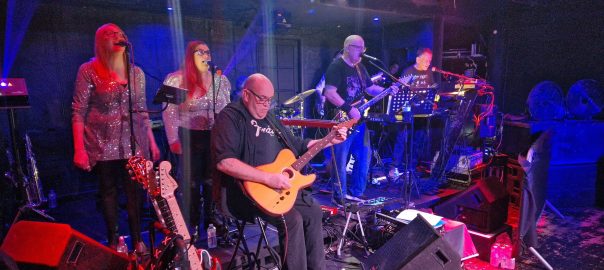
Formed in 2014 and hailed as one of the UK’s leading Pink Floyd tribute acts, proudly proclaiming their commitment to authenticity, I had high hopes for On Thin Ice and was not disappointed.
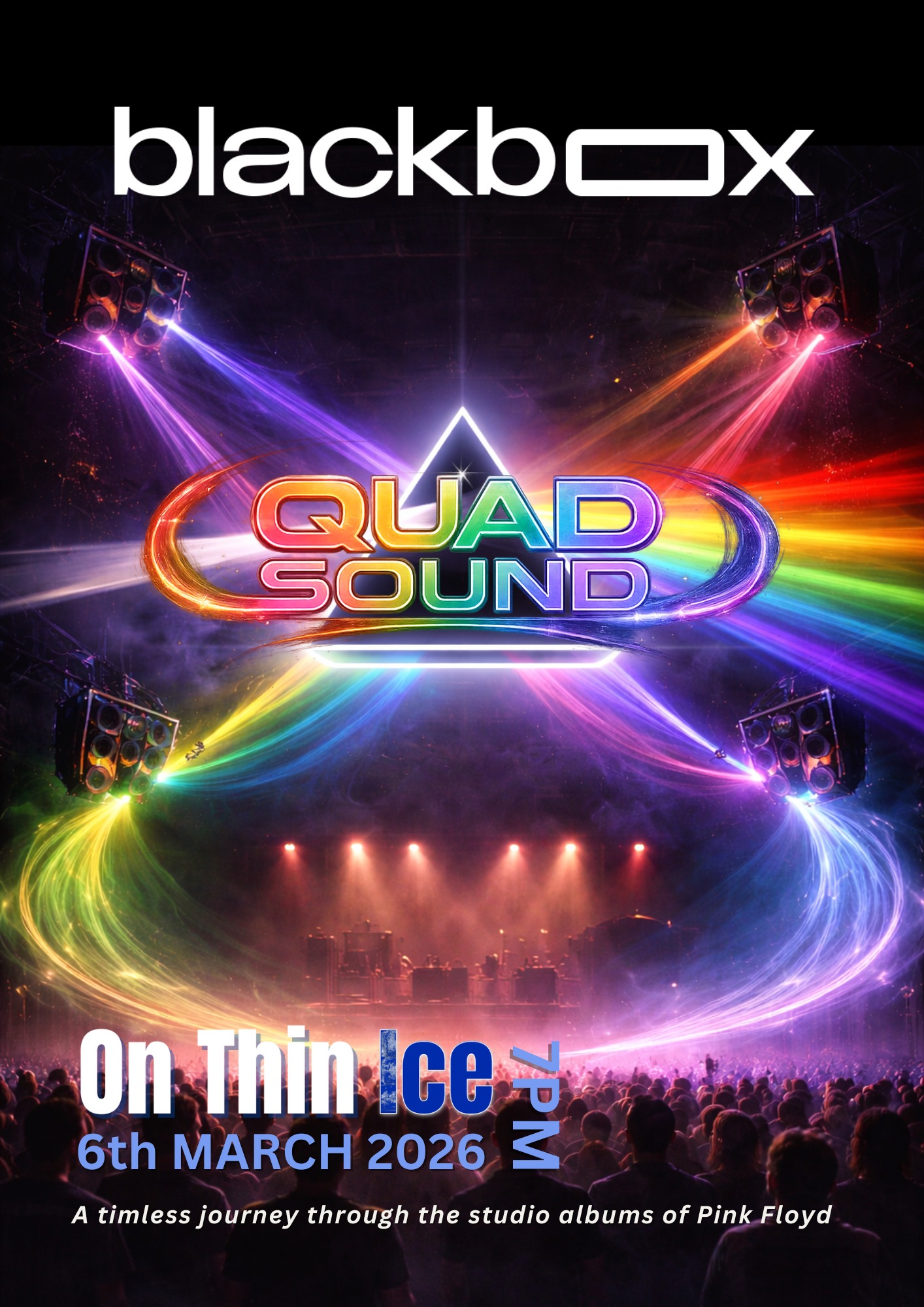
Performing three sets that delved into songs from across the band’s career, the first set began with a convincing selection of classics from the Syd Barrett-era Floyd, followed by a couple of tracks from Meddle before moving on to a mammoth rendition of songs from Dark Side of the Moon. It was all done in QUAD sound, too, with four channels of sound filling the room, echoing the original Pink Floyd tours of the late ‘60s and ’70s and ensuring maximum sonic impact in terms of those memorable special effects on albums like Dark Side.
Mish B, one of two female backing vocalists, did an absolutely incredible job taking on the lead vocal for ‘Great Gig in the Sky’ and received rapturous applause for her own take on that stunning, other-worldly performance which session singer, Clare Tory, will always be best remembered for (Tory’s second most memorable performance being the theme song for BBC’s Butterflies, for all you trivia fans out there.)
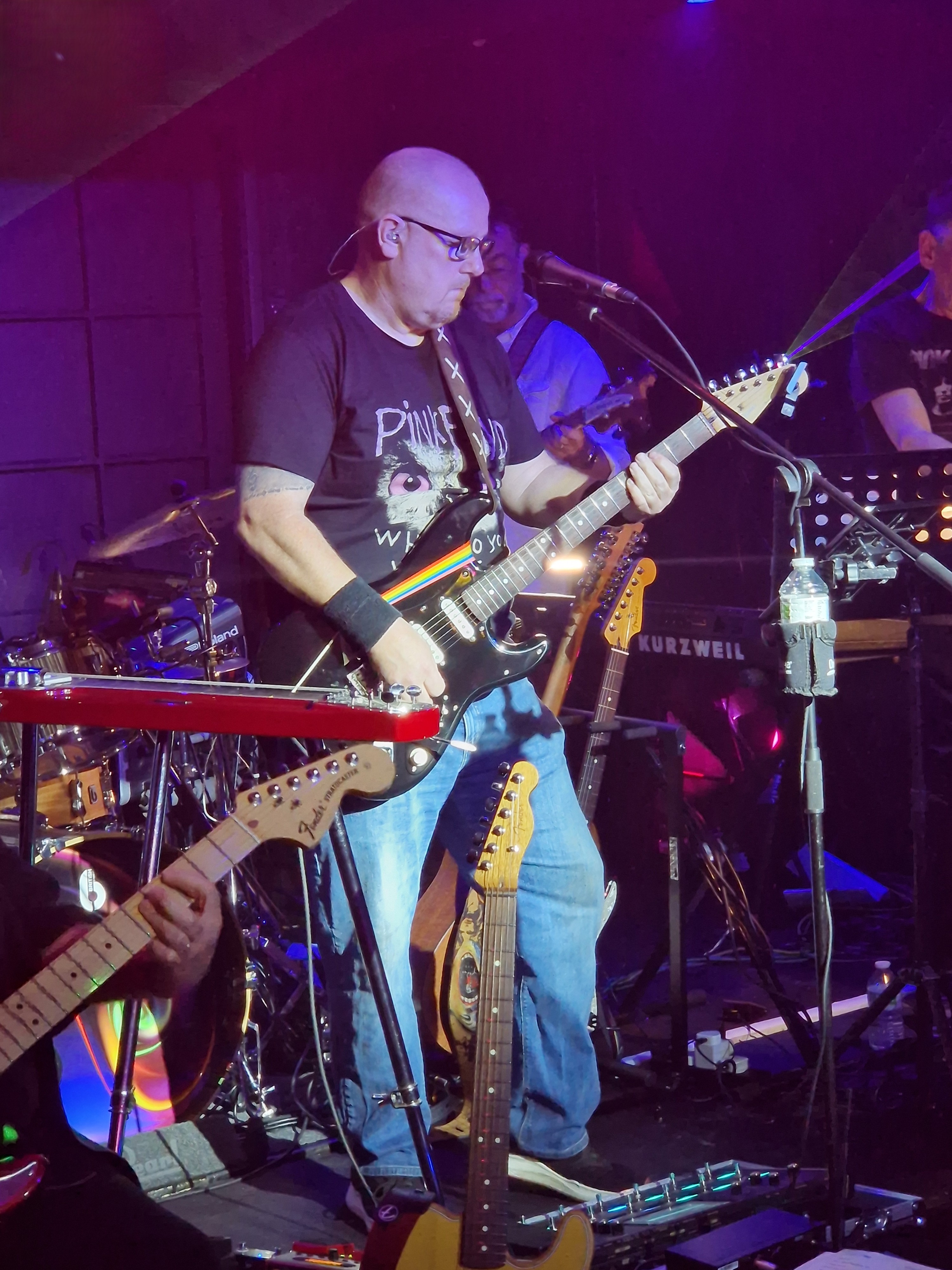
After a short break, we are into the second set, which is a celebration of the Wish You Were Here album that is every bit as good as their exploration of the Dark Side of the Moon, before ending in an epic performance of ‘Sheep’ from Animals. It’s great to see Hastings’ Blackbox back on the circuit. As a gig venue it pretty much does what it says on the tin, a long oblong box painted completely black with the stage at the front and the bar at the back. The sound is great, the guitars, keyboards, sax and vocals are mind-blowingly authentic and in a venue like this you can half close your eyes and mentally transport yourself to some huge stadium somewhere seeing the real thing.
After another short break the third and final set, focuses on the band’s later studio albums with a couple of tracks from The Wall, and a track apiece from the post-Roger Waters albums, A Momentary Lapse of Reason and The Division Bell, before drawing proceedings to a close with a stunning rendition of ‘Comfortably Numb’.
The guys (and gals) do put every ounce of effort into making themselves sound as close to Pink Floyd as humanly possible so if you are looking for a night of Pink Floyd classics in a live setting, On Thin Ice are absolutely worth checking out.
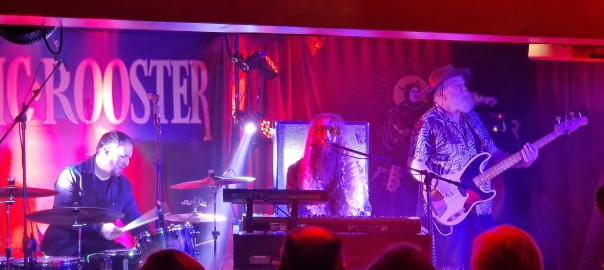
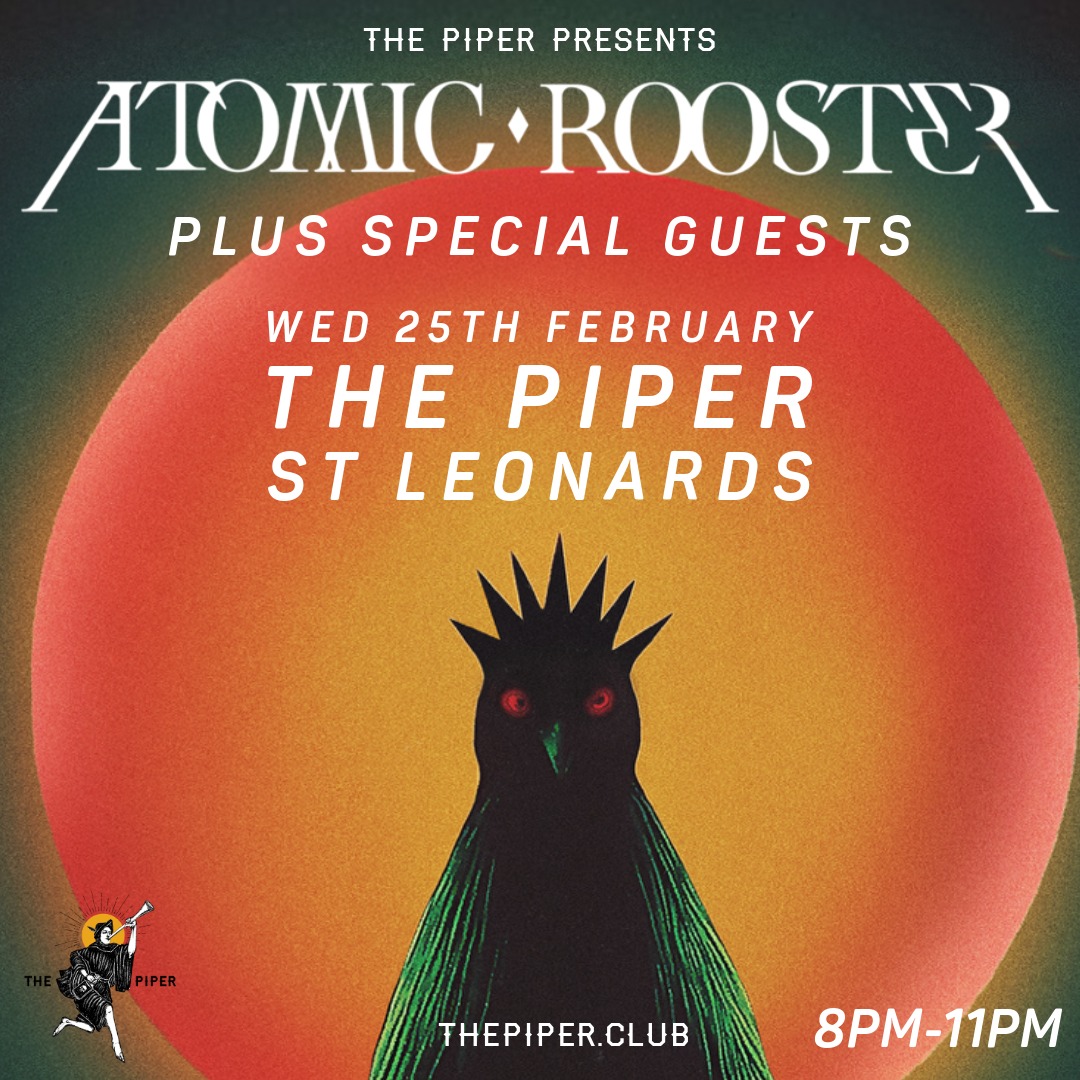
For many years Atomic Rooster were one of those bands whose name was well known to me through my voracious reading of rock history, but whose material I was barely familiar with. That changed back in 2018, at one of the Butlins Rock & Blues weekends where the band’s outstanding performance was a complete revelation to me. Before long I acquired a CD box set of all of all of their classic albums from the 1970s and became a firm fan of the band’s music.
Although all the original line-up led by Vincent Crane are sadly no longer with us, the band was reformed in 2016 by Pete French, who performed on the band’s third album and by Steve Boltz Bolton, who played on their fourth. However, since I last caught the band in 2022, there has been a change in line-up with French exiting. In other outfits this could have been a near-fatal blow, with the connections to the original band becoming even more tentative. But Adrian Gautrey, who has done a sterling job embodying the spirit of the late, great Vincent Crane on keyboards for much of the past decade, has now also taken on the role of lead vocalist. What’s more he’s an absolutely incredible singer and the band just goes from strength to strength.
The setlist is a mix of ‘70s-era Rooster classics and material from their excellent new studio album, Circle The Sun, which came out in 2025. With half the tracks on the latter penned by Bolton and half by Gautrey, the album really captures the essence of Atomic Rooster and most of the songs from the album are performed tonight. There’s still room for plenty of vintage Rooster, including blinding versions of ‘Can’t Take No More’, ‘Tomorrow Night’ and ‘Breakthrough’, as well as ‘Devil’s Answer’ the band’s surprise 1971 top five hit.
A formidable, driving rhythm, pounding Hammond and searing guitar, it’s one of those epic, small venue gigs that you’re not going to forget in a hurry. When it comes to a modern-day reboot of a legendary ’70s hard rock outfit, Atomic Rooster have undoubtedly become one of my firm favourites. There are few bands with as much energy as these guys on stage and I’m delighted to see that there’s also a recently-recorded live album to purchase from the merch stand, alongside copies of the excellent Circle The Sun. Highly recommended.
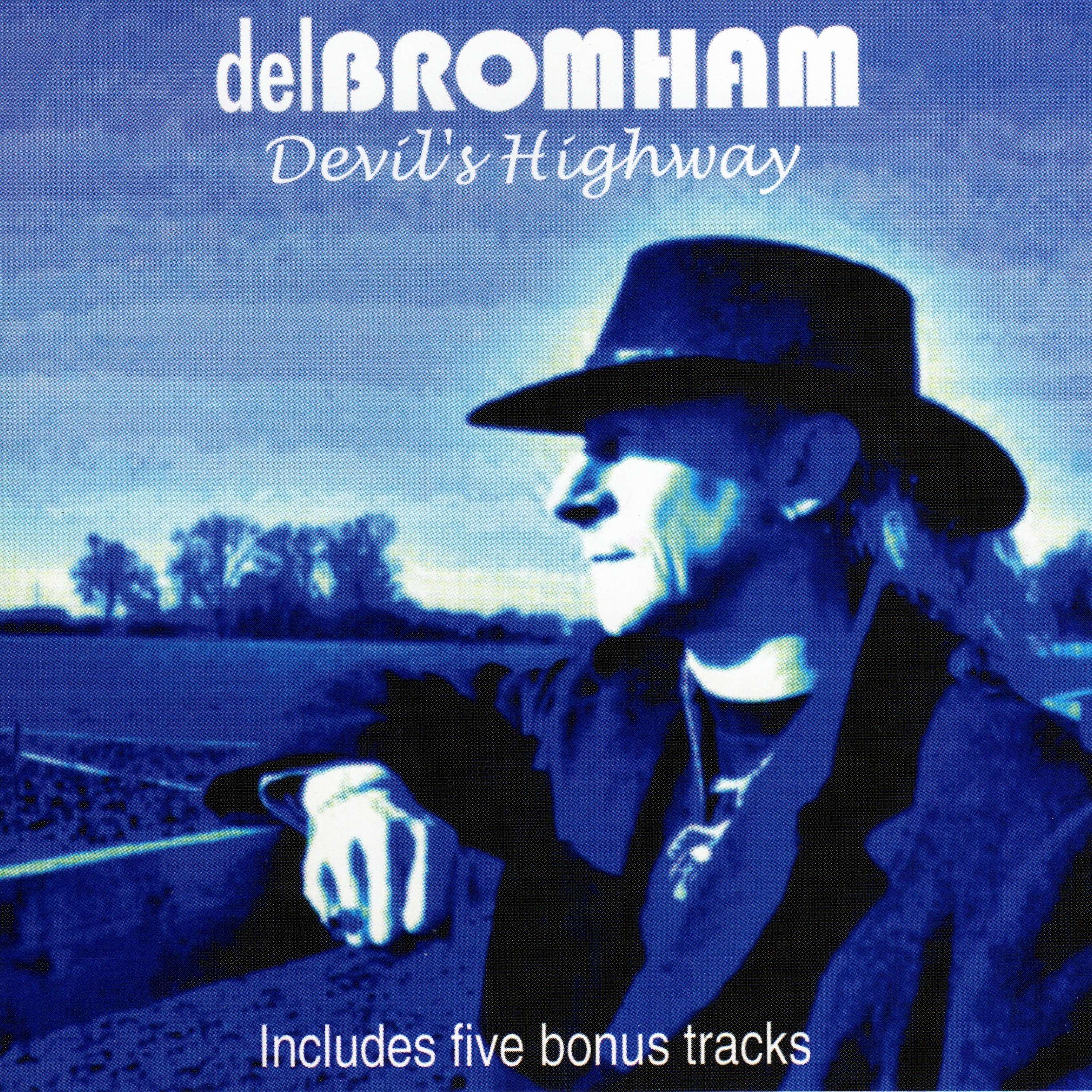
Following the re-release of his solo album Devil’s Highway on 2nd January, I catch up with guitar legend and founding member of Stray, Del Bromham. We talk about the making of the album, growing up in a home filled with music, the ups and downs of the music industry and why there’s been renewed interest in Stray, post-pandemic.
So firstly, I wanted to ask about the re-release of the solo album Devil’s Highway. As a solo work, that’s more pure blues rather than the bluesy hard rock that Stray is best known for. When you were a teenager growing up, were the traditional blues artists always important for you as well as the R&B bands like the Yardbirds and the Pretty Things?
I must admit, I have to say I was a bit of a late starter on it. Although, having said that, there’s a track on the Devil’s Highway album called ‘Careless Love’. Now, I had music in my house as a kid because my dad belonged to a record club and liked various music. And as I mentioned before, I think sometimes he would order these things. It was probably out of the back of the News of the World or something like that. And he’d have like two or three EPs turn up and it might be, you know, My Fair Lady, some obscure orchestra but one of them I remember as a kid, six or seven years old, was an EP by Big Bill Broonzy. And ‘Careless Love’ really stuck with me all the way through. So, when it came to recording the album, I thought, well, that’s my starting point. I’ll do that one.
But going back to your original question, You’re quite right. I mean, in the ‘60s, I was listening to the Yardbirds, the Pretty Things, the first Stones album. I remember I used to go around to my mate’s house, and his older brother had these so while he was at work, we’d play them. And then I got into John Mayall. And I guess it was through the British invasion, as it were, doing the blues, that I thought, well, where did they get this from? And then I slowly began to compile it in my head, if for want of a better word. Now, I was a bit of a late starter, so I wasn’t really into the authentic blues, probably not until 2000s when I actually started doing the album. And I started, like a journalist, doing research, as it were.
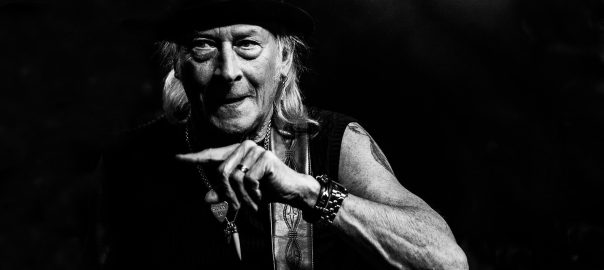
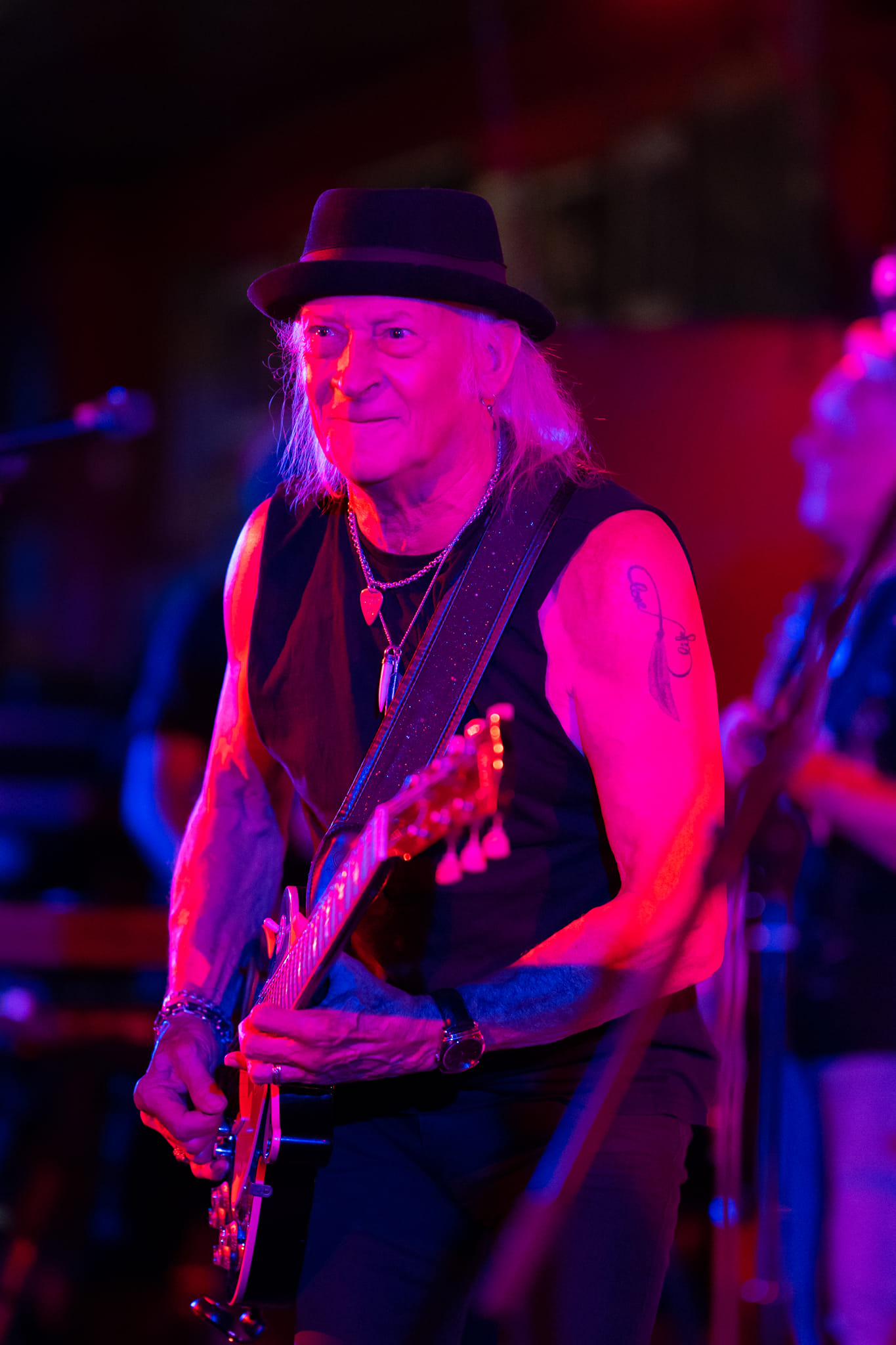
Del Bromham: publicity shot
And that was around the time you were touring with Leslie West, was it?
Well, I did it just before. I started thinking about it in 2003. And in 2004, I had actually done the album. And then my then tour manager, Paul Newcombe – I’d already done a couple of tours with Mountain – and he met Leslie on one of the tours I did with Stray. And then, of course, when I had the album ready, he suggested to Leslie that he come over and do a tour because he had his Blues to Die For album. And Leslie being Leslie said, “Yeah, great” And Paul said, “Just come over with acoustic guitar.” He said, “Just me and an acoustic guitar?” He said, “Yes. Tell your stories. Del does it.” He said, “Well, if Del will do it, I’ll do it!” So that’s how that happened.
So then, of course, we had the album, but no label. Paul’s little company at the time was called Trigger Happy Music so we put it out on Trigger Happy. It wasn’t a general release. It was to sell at gigs and then a little while after, because of the interest, I then got a deal with Angel Air Records, who did Nine Yards. And then the boss at Angel Air said, “Oh, you did another one before, didn’t you?” I said, “Yeah.” So, he said, “Well, have you got any extra songs we could put it out with bonus tracks on?” Then it came out again.
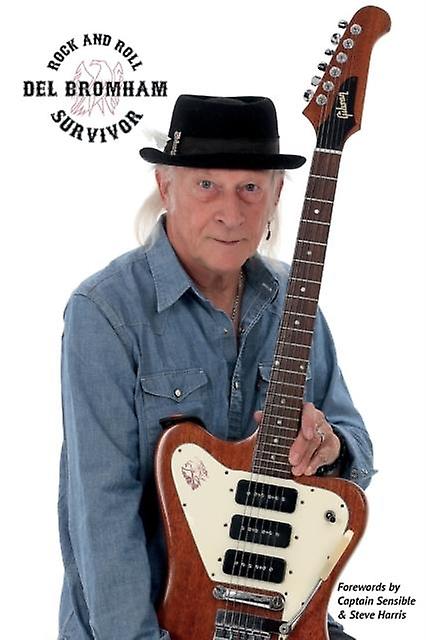
Well good luck with the album. I’ve been playing it and really enjoyed it. And you’ve mentioned it already – it’s a big theme in your autobiography, Rock and Roll Survivor – you talk very fondly about growing up in a house filled with music. That was clearly very important in shaping your direction in life, not only from your parents but from your brothers and so on.
Yeah. Yeah. Yeah. It’s surprising actually because I would recommend anybody to write their biography. I recommend it because it wasn’t really until I wrote it down and read it back. It was then I realized how important my family had been to me and music. I know I’ve written it, but it is difficult to put into words because, and there were various things, always having music in my house. Silly things like my mum going around the house singing and dusting at the same time. Playing in my brother’s group was a great thing to do, particularly as I was only about 14 years old. So, the family were very important to me and my brother was probably my biggest musical influence.
Obviously, things started to take off for Stray in the early ‘70s but by the late ‘70s, there’s repeated setbacks for the band. And you talk in your autobiography about your life as a musician becoming stressful, not pleasurable and then you went out and got a normal nine-to-five job. How frustrating was that at the time or was it just a matter of getting on with life and you deal with things as they come?
A little bit of both actually and I think it was once again down to my family. Winding the clock back, when I was 15, I didn’t want to stay on at school but myself and a couple of friends, we were all going to go to art college. That’s what we were going to do. And Pete Townshend up the road, he was going to art college as well. So, we thought, well, I’ll go to art college. But long and the short of it was that I didn’t get into art college and I was very disappointed. And I can vaguely remember the conversation. Well, you’re not going to art college. And my dad just sat there pontificating in his armchair. And he said, “Well, you’ll have to get yourself a job then, won’t you, boy?” I went, “Eh?” So, he promptly pulls out a copy of the local paper and goes all down the job vacancies there. But, you know, that was kind of, well, no-one owes you a living, you’ve got to go and do it yourself.
So then when it came to all the financial troubles we had at the end of 1977 into 1978 – I mean, it couldn’t have happened at a worse time really. Because my wife had just given birth to our first child, she was just coming up to a year old. And I’d sold my house in London, and I was moving to another house out of London in a little place called Bletchley. I was moving there. So, what I then found was because of the associations I’d had in the past, shall we say, nobody in the music business was interested. You know, it was like Stray was bad news. Don’t get involved with anything to do with Stray because something’s going to come back and bite you in the butt. Or even worse, you might have your legs or fingers broken. So, I had no choice. And to be honest with you, I was lucky because I’d never really, at 16, 17, I’d done like an office boy job. I’d never had a proper job.
And I was very lucky because where I was living in Bletchley, it was in years to come to become part of Milton Keynes. So, they were encouraging businesses to start up in Milton Keynes and giving them nice little incentives as it were. And as it turned out, Hammond organs decided to do this distribution. And I’d met up with Graham Sutton. I used to do Keith Emerson’s servicing for his Hammond. So great. I could play Hammond organs all day instead of just doing them in the studio. So, I ended up working for Hammond organs for a couple of years and I ended up doing the marketing for them. And then I went to work for somebody else doing the marketing, which in a roundabout kind of way, I believe, helped me in a way because when I got back into doing music, I had the other head about. Oh, that’s how you do that, is it?
So, you weren’t so reliant on record labels and management and the whole industry anymore. You could be far more self-sufficient after picking up all those skills, I suppose.
It wasn’t what I planned, but it just goes to prove to you how life can actually turn you into different areas, you know.
Del’s autobiography ‘Rock and Roll Survivor’ published in 2022
Stray’s legacy is starting to get the recognition it deserves, I think. And in the foreword to your autobiography, Steve Harris from Iron Maiden says Stray should have been as big as Black Sabbath or Deep Purple. Frustrating on one hand, but nice to read on the other?
Yeah, yeah. It is nice. I mean, I know of people from my era who just cannot get out of the ‘70s. But… stuff happens, you know. I’ve never let it drag me down. And I’m thinking about what could have been, you know. I mean, it was quite true at the time. I can remember hearing, say about 1971, 1972, “Oh, Stray, they’re going to be the next Led Zeppelin.” And then of course, the guy who managed us for a while, Wilf Pine, was to do with Worldwide Artists. And guess what? They had Black Sabbath. And so, he actually thought he was going to manage the next Black Sabbath. And I can always remember him. We’re listening back to the first album we made with him as manager and he said, “You know, I thought I was going to manage the next Black Sabbath, but I think I’ve got the Beatles here.” There were more songs. And then, of course, I think he wanted to be George Martin, so he then got an orchestra in. And that was the Mudanzas album. So that was a real change, you know, and we were disappointed because we were expecting things to step up, and it didn’t happen.
And then, of course, the management company we had at the time, I think, to be frank, they were upsetting various people in the music business, you know, with the way they acted. And then Worldwide kind of finished, and it left us out on a limb, really. And that’s kind of how it happened in brief.
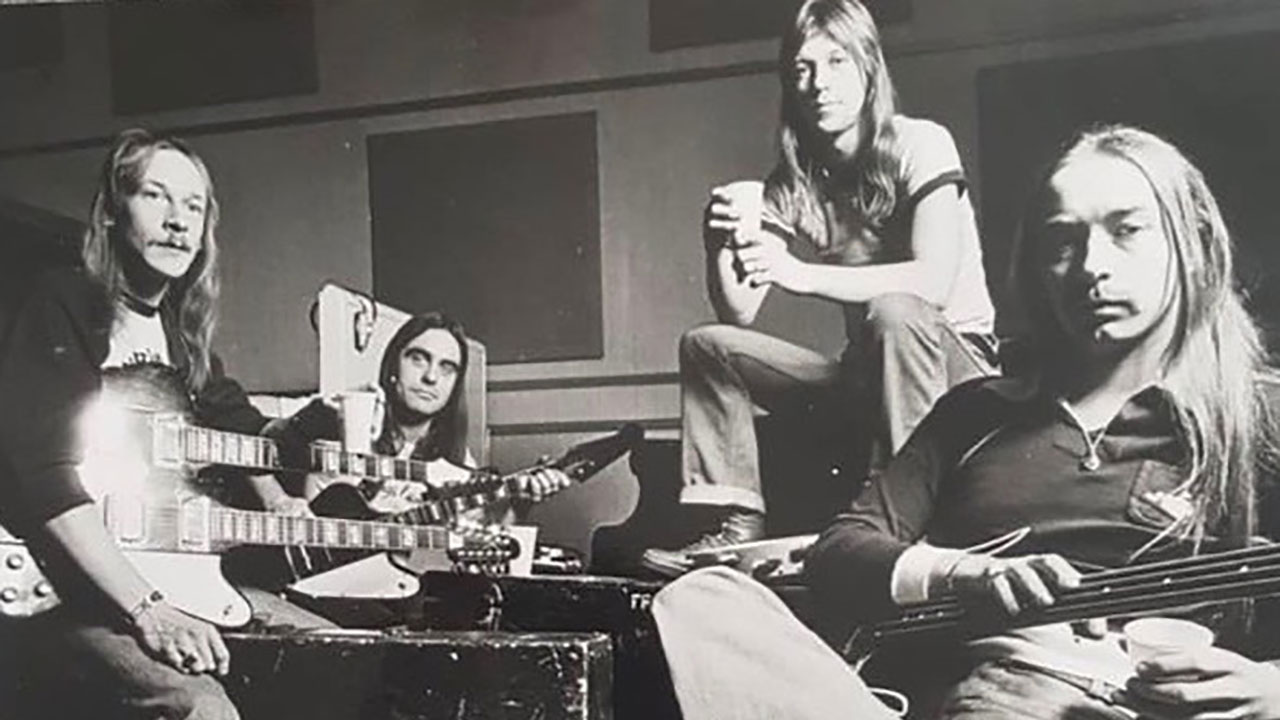
Stray in the ’70s
But against the odds, Stray is still going out there. So, my final question then, what next for both Del and for Stray?
Well, we never know what tomorrow is going to bring, do you? It’s funny, you possibly hinted at it but there does seem to have been in the last couple of years – probably since Covid when things got back to a kind of normality- there does seem to be a more of an interest in Stray than there was prior to that. We’ve just finished about a 20-day tour with British Lion, as you know. I mean, it wasn’t just down to us, but it was sold-out every night. And we had Maiden fans there, obviously Lion fans. We’ve also done a couple of metal festivals as well, which once upon a time you thought, well Stray’s not going to fit there. But it does seem that we’re getting accepted. Even our own shows, we’ve had sellout shows just straight on their own, you know. And different people coming back to see the band or people who’ve never seen the band before. Which I’m not bothered about because the more the merrier as far as I’m concerned. You know, it’s never too late.
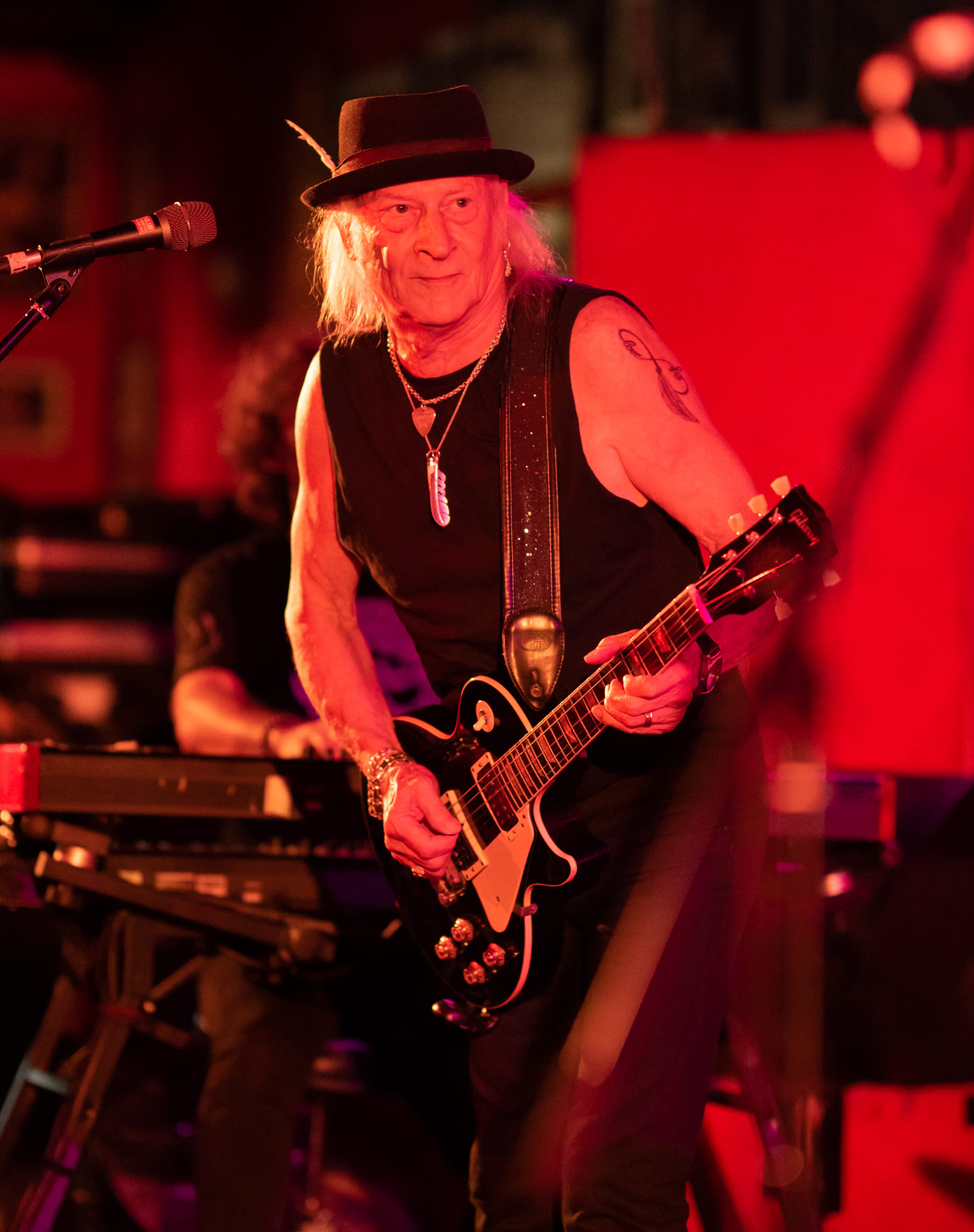
Del Bromham@ publicity shot
And you’re one of the original bands still out there, whereas many have fallen by the wayside, either because people are no longer with us or they’ve retired or whatever. So compared to a lot of your contemporaries, you’re still out there.
Well, it’s a strange paradox because all those years ago, bearing in mind we were only about 17, 18 years old when we were playing, the business at the time always used to criticize us. “Well, they can’t be that good because they’re too young.” And now here we are 50 years later and I’m one of the elder statesmen. And, of course, people said, “I didn’t know you were still going.” I said, “Well I’ve never stopped.” And the band I’ve got with me now, they’re very versatile. And they were fans of the original band as well. So, they’ve never tried to take over or do anything. So, it’s great because we’re just five mates who go out to enjoy ourselves and we happen to play instruments at the same time.
Going forward, before Christmas I was actually thinking about a new solo album. Obviously, the last About Time album by Stray was successful and it’s brought back a lot of people. We’re not on a label but for the purposes of touring we recorded a live show and that CD is called One for the Road and we sold bucket-loads of them. So, it does seem that it’s not beyond the realms of possibility that during the year I might be quite busy in the studio with a solo and another Stray album. You know I’ve thought with the last couple of Stray albums, I wonder if this is going to be the last one. But I woke up this morning de-de-de da-dum and that was a result!
Well, that’s a really nice, optimistic, forward-looking note to end on, unless there’s anything else you’d like to tell us?
Well, I haven’t really got any big scoops for you. It’s just going to be business as usual, which I’ve always done. I’ve never had any great expectations. You know, I just enjoy playing. I enjoy life and fortunately, touch wood, I’m quite heathy so long may it continue, I hope.
Thanks Del. Long may it continue!
Devil’s Highway (with bonus tracks) was released on 2 January 2026 by Singsong Music
A Happy New Year to all my readers and my sincere thanks to everyone who has visited Darren’s music blog during 2025. As well as 65 posts covering an eclectic musical mix of folk, prog, glam, heavy metal, punk, hard rock and britpop, I also managed to get my fourth book completed (Steeleye Span On Track 1970-89) which was published by Sonicbond this Summer.
To recap on the year, here are the top ten most viewed posts of 2025. Here’s to 2026!
1. Interview with Fairport Convention’s Dave Pegg
Ahead of Fairport Convention’s Winter Tour back in January, I caught up with Dave Pegg. We discuss the making of the Full House album, the crucial role that Jethro Tull played in Fairport’s resurrection, changes taking place at Cropredy this summer so that the festival remains financially viable and the forthcoming tour.
There are not many world-class rock acts still performing that remain to be ticked off on my own personal bucket-list but Santana definitely fitted into that category and prompted the first of two trips to the O2 this Summer. From the off it’s very much a give-the-audience-exactly-what-they-want greatest hits set, interspersed with nuggets of Woodstock-era exhortations in favour of love and peace and togetherness. “I’m a hippy!” explains Carlos Santana.
3. Live review: Alice Cooper and Judas Priest at the O2, London 25/7/25
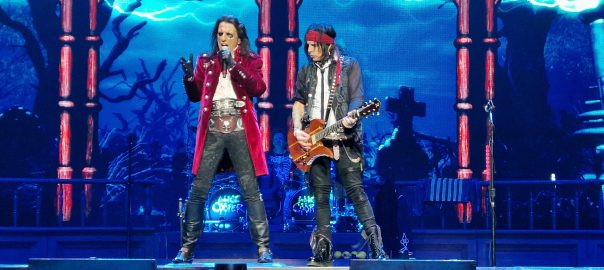
Kicking off with ‘Lock Me Up’, Alice Cooper’s set is as over-the-top and theatrical as ever. An exhilarating combination of blistering hard rock, glam-meets-horror showmanship and that unmistakeable, menacing vocal drawl, the hits come thick and fast.
Coming on stage to the strains of Black Sabbath’s ‘War Pigs’, Judas Priest launched straight into ‘All Guns Blazing’ from the Painkiller album. Released 35 years ago, songs from that much-celebrated album feature heavily in tonight’s set.
4. Live review: Uriah Heep / April Wine / Tyketto at De La Warr Pavilion, Bexhill 27/2/25
I was still a pre-schooler when Uriah Heep released their debut album in 1970, although this year does mark 40 years since I first saw the band at Manchester Apollo back in 1985. Tonight’s performance proves beyond doubt that my enthusiasm for the band remains undimmed. I’m relieved to hear this is not quite the finale just yet.
5. Live review: Fairport Convention at Union Chapel, London 22/2/25
It’s now 40 years since Sanders played on his first Fairport album – Gladys’ Leap. Ric Sanders tells the audience that he was phoned up by Dave Pegg who had asked him if he was interested in contributing fiddle to three tracks but initially he had no idea he was being asked to contribute to a Fairport Convention album.
6. Interview with Fairport Convention’s Ric Sanders
Ahead of this year’s Cropredy festival, I catch up with Fairport Convention’s Ric Sanders. We talk about first learning to play the violin at primary school, about getting his big break with Soft Machine and the invitation to play on Fairport’s Gladys’ Leap album forty years ago this year – and, of course, this year’s Cropredy line-up.
7. Live review: Supergrass at the Roundhouse, London 21/5/25
Given I spent the battle of Britpop firmly in the Blur camp, I passed up on the chance to buy tickets for the Oasis reunion when it was announced last summer. A couple of weeks later, however, when Supergrass announced that they would also be reforming to celebrate the 30th anniversary of I Should Co-Co, I was in the online queue as soon as tickets went on sale. Always my favourite band of the Britpop era, a chance to hear Supergrass’s debut album performed in full promised to be something rather special.
8. Live review: Sweet at the Shepherd’s Bush Empire 5/4/25
In the months and years to come, who knows how many more Sweet gigs there’ll be. Andy Scott shows every sign of wanting to continue for as long as he is physically able to walk on stage, pick up his guitar and perform. I hope there’ll be plenty more nights like this for the band and I hope I get to see a few more of them myself but I savoured every precious moment of this concert as if it were my last.
9. Live review: X Generation X at the Brunswick, Hove 9/11/25
Making light of the seeming incongruity of launching a UK tour on a Sunday, Westwood asked the happy but clearly refreshed crowd at one point if they all had to be up in the morning. “No!!” the crowd yelled back in unison. “They’re all retired!” quipped Steve Norman. That’s as maybe but for 75 glorious minutes it was 1976 all over again and here in this sweaty cellar bar the spirit of punk was recaptured in all of its incendiary glory.
10. Live review: Fairport’s Cropredy Convention August 2025
There was a heavy Fairport bias to this year’s list, with interviews and live reviews bagging four of the top ten most popular slots. Just making it into the Top Ten is my review of this year’s Cropredy Festival which featured a guest appearance from none other than Robert Plant.
I’ve always had a bit of a soft spot for early ‘80s Uriah Heep. Even though I would become totally besotted with the Hammond-pounding Hensley/Byron era, my entry point into the music of Uriah Heep was not through demons, wizards or magicians but rather through the Abominog album in 1982. And it was the Peter Goalby-fronted version of the band which I first saw live as a teenager.
Accordingly, I was delighted when two albums of archive solo material finally saw the light of day several decades after Goalby retired from the music business. These being Easy With the Heartaches (reviewed here) in 2021 and I Will Come Running in 2022.
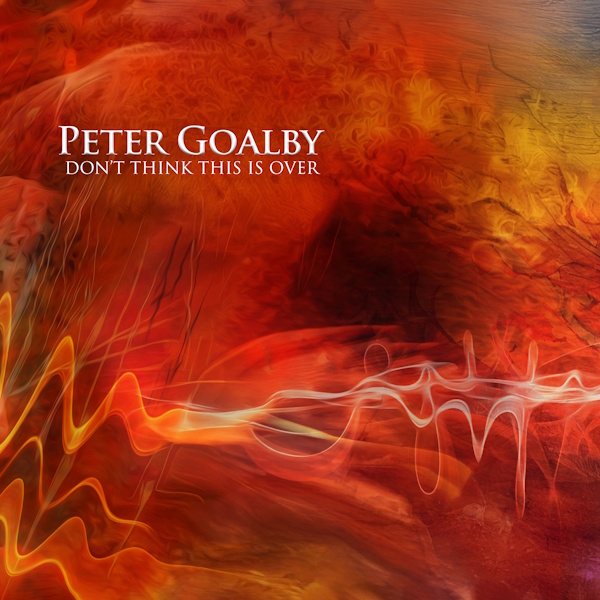
Just as we might have thought the archives were now well and truly empty, a third solo album has also just been released. Goalby originally recorded the album not long after leaving Uriah Heep. However, it was only when a poorly labelled DAT was spotted at a storage facility over 30 years later, that the lost album was rediscovered.
Peter Goalby:“In 1987 I was offered a recording and publishing contract with RAK Records just after I’d left Uriah Heep. I thought these songs would be very commercial in the 1980s and Smokie recorded Fallin’ Apart. I later found out the master tapes had been lost and I silently carried the disappointment that music I’d put my heart and soul into was gone forever. Never say never!”
The nine-track album was personally overseen (from tape transfer, mastering and artwork) by Goalby. What will be of particular fascination for Heep fans is that this lost album was only finally completed in 2025 when Goalby’s former Uriah Heep bandmates, Mick Box (guitar) and John Sinclair (keyboards), added the final overdubs to the tracks.
While it’s immediately obvious that this is an album that could only have been made in the 80s and contains many sonic motifs of the era, production-wise Don’t Think This Is Over is a very polished affair. It comes over as a fully-rounded album in every sense, not simply a collection of archive material. Songs like ‘I’ll Be The One’, ‘It’s Just My Heart Breakin’’ and the title track are all instantly catchy yet satisfyingly muscular AOR containing some great guitar licks and showcasing Goalby in very fine voice. Meanwhile, ‘Another Paper Moon’ and ‘Fallin’ Apart’ underscore his knack for turning out some great lighter-in-the-air (not phones – it’s still the ‘80s remember!) anthemic rock ballads.
Don’t Think This Is Over is essential listening for any fans of Peter Goalby / ‘80s Uriah Heep and is a very worthy companion both to his recently-released solo albums and to Abominog, Head First and Equator.
2025 marks the 50th anniversary of the founding of two iconic British bands: Motörhead, who need absolutely no introduction; and Painted Lady, who few will have heard of but who went on to have a huge impact on the UK’s rock and metal scene after they morphed into the much better-known Girlschool. The line-ups of both bands varied over the years but in at the start were the two founding bass-players-cum-lead vocalists, Lemmy Kilmister for Motörhead and Enid Williams for Girlschool.
Lemmy passed away in 2015, of course, but Enid Williams is still going strong and is one of a growing number of acclaimed rock musicians who’ve made Hastings their home. She’s been out of Girlschool for several years now but more recently bounced back fronting Planet Enid Collective, alongside Audrey M (bass) and Yair Katz (drums).
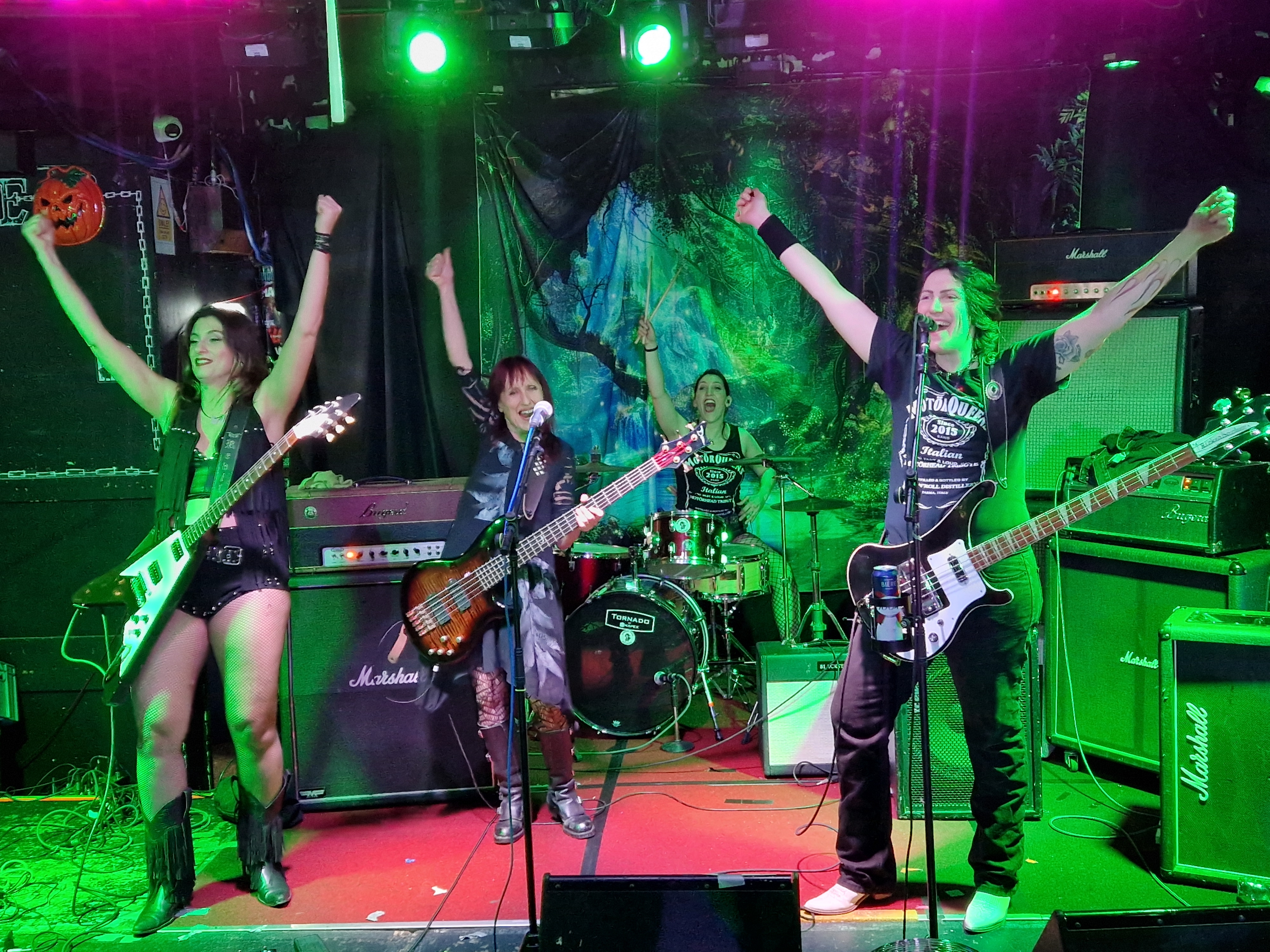
Italy’s Motörqueens, meanwhile, are Europe’s leading all-female Motörhead tribute act and what better way to celebrate the enduring legacy of both Girlschool and Motörhead than a double bill featuring both bands here at the Carlisle in Hastings.
Williams has enjoyed a rich and varied career between her two stints in Girlschool, running a vegetarian cuisine company, touring with the English National Opera, performing in West End musicals and working as a TV Astrologist. But tonight she’s in full-throttle rock and roll mode, alternating between lead and bass guitar and wowing the crowd with some vintage Girlschool songs.
As well as early Girlschool classics, like ‘Emergency’ and a revisit to the band’s much-celebrated covers of ‘Race with Devil’ and ‘Tush’, I’m particularly pleased to hear some of Williams’ material from her final album with Girlschool, 2015’s Guilty as Sin. These included the rousingly defiant ‘Come the Revolution’ and the starkly eco-themed ‘Treasure’, both of which combine hard, heavy riffing with powerful, thought-provoking lyrics. There’s guest spots aplenty, too, including some blinding lead guitar contributions from another local boy, Tino Troy of Praying Mantis, and Baz Roze of the Kent-based metal band, Black Roze. It’s all a bit of a NWOBHM dream!
Headliners, Motörqueens, deliver a high-octane, sassy and unbelievably powerful celebration of Motörhead’s music, even if the authentically Lemmy-esque rumble blasting from the amps sends the Carlisle’s famous, life-size cut-out of Lemmy flying off the side of the stage at one point. It’s a hugely entertaining tribute delivered with passion, conviction and true rock and roll grit.
An extra treat comes towards the end of the set when Williams is invited back on stage to play ‘Bomber’. As the curfew approaches, there’s time for one final song. Motorqueens and Enid blast out a gloriously raucous ‘Please Don’t Touch’ with the rest of musicians from the evening having a glorious time belting out the choruses. Suddenly it’s 1981, everyone’s singing along and we’re all 15 again. A superb finish to a fantastic evening.
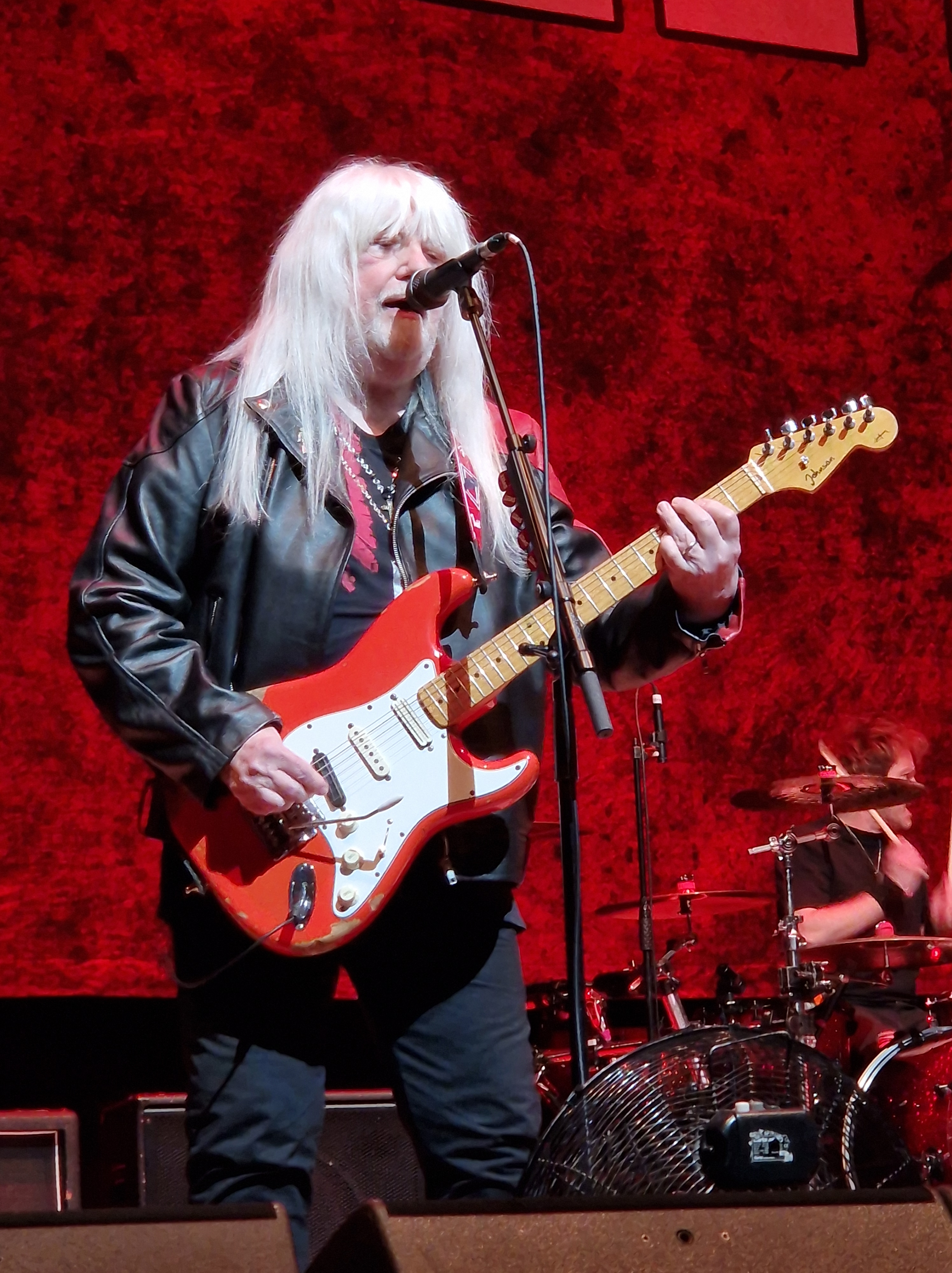
A rare occurrence for me but I missed Sweet on their tour last December. As it turned out, however, so did band-leader, lead guitarist and the last surviving member of the classic ‘70s foursome, Andy Scott. A fracture in his pelvis (on top of a debilitating long-term cancer diagnosis) left him completely unable to move so his place was ably taken by Jim Kirkpatrick. Never one to be kept down for long, however, Scott resumed touring in the Spring and as well as a hectic live schedule this year, there’s an impressive roster of European dates lined up for 2026, too.
On previous Christmas tours over the past few years I’ve tended to catch Sweet either in London or down here on the south coast at the De La Warr Pavilion. However, with nothing scheduled for the South East on this tour, I cunningly worked out I could spend a night in Birmingham en route to a pre-Christmas family get-together up in Preston. In fact, this is not the first time I’ve made the long trek to see Sweet in Birmingham. I was here back in 2017 to see Andy & Co. supporting Ritchie Blackmore’s Rainbow at the Genting Arena.
At the time, I expressed a slight degree of disappointment that the then line-up stuck to a tried-and-tested greatest hits setlist, rather than exploring some of the more hard rock-oriented deep cuts that were likely to have particularly appealed to an audience made up of hard-core Ritchie Blackmore devotees. It was only much later that Scott revealed to fans that he’d had to begin a gruelling course of chemotherapy that very week, obviously leaving no time to rehearse a revised setlist. I felt bad about making my disappointment known once we’d all learned the truth but there is absolutely no such complaint about the setlist tonight.
Ever since the current line-up was unveiled (fronted by ex-Cats in Space lead singer, Paul Manzi), there’s been a much greater emphasis on the album-oriented hard rock side of the band’s DNA, besides the more well-known glam-era big hits. Plus, there’s been an album of brand-new, hard-rocking material, too. Accordingly, we get an explosive set on this tour, featuring incendiary versions of tracks like ‘Lost Angels’, ‘Windy City’ and ‘Set Me Free’ and a couple of songs from the excellent new album, Full Circle, as well as all the well-known big hits.
After praising Scott’s incredible feats of endurance, Manzi summed up his current state of health as “85% back to full fitness” meaning he had to take a scheduled breather part-way through the set. Accordingly, the rest of the band remained on stage to deliver a sing-along medley of ‘ Co-Co’, ‘Funny Funny’ and ‘Poppa Joe’ while Scott caught his breath. Observant Sweet fans will already know that Scott never played on the studio versions of these early bubblegum hits anyway so it was the obvious place in the set for a well-earned break. Elsewhere, however, wherever Scott’s familiar signature guitar sound is heard on the original records, he’s up there on stage delivering those pounding Sweet riffs and searing Scott solos.
For anyone seeing them on this tour, it’s an incredible line-up of the Sweet performing these days. In my mind, even though 2002’s Sweetlife remains my absolute favourite post-Brian Connolly Sweet album, what we have on stage now is one the strongest live line-ups of Sweet since the demise of the classic foursome. Whatever life has thrown at him in recent years, Andy Scott shows no sign of giving up quite yet. Here’s wishing him a good few more tours!
My book ‘The Sweet in the 1970s’ is available from Amazon here
Setlist:
Action Hell Raiser Burn on the Flame Circus The Sixteens Don’t Bring Me Water Lost Angels Windy City Set Me Free Co-Co / Funny Funny / Poppa Joe Teenage Rampage Wig-Wam Bam / Little Willy Love Is Like Oxygen Fox on the Run Blockbuster The Ballroom Blitz
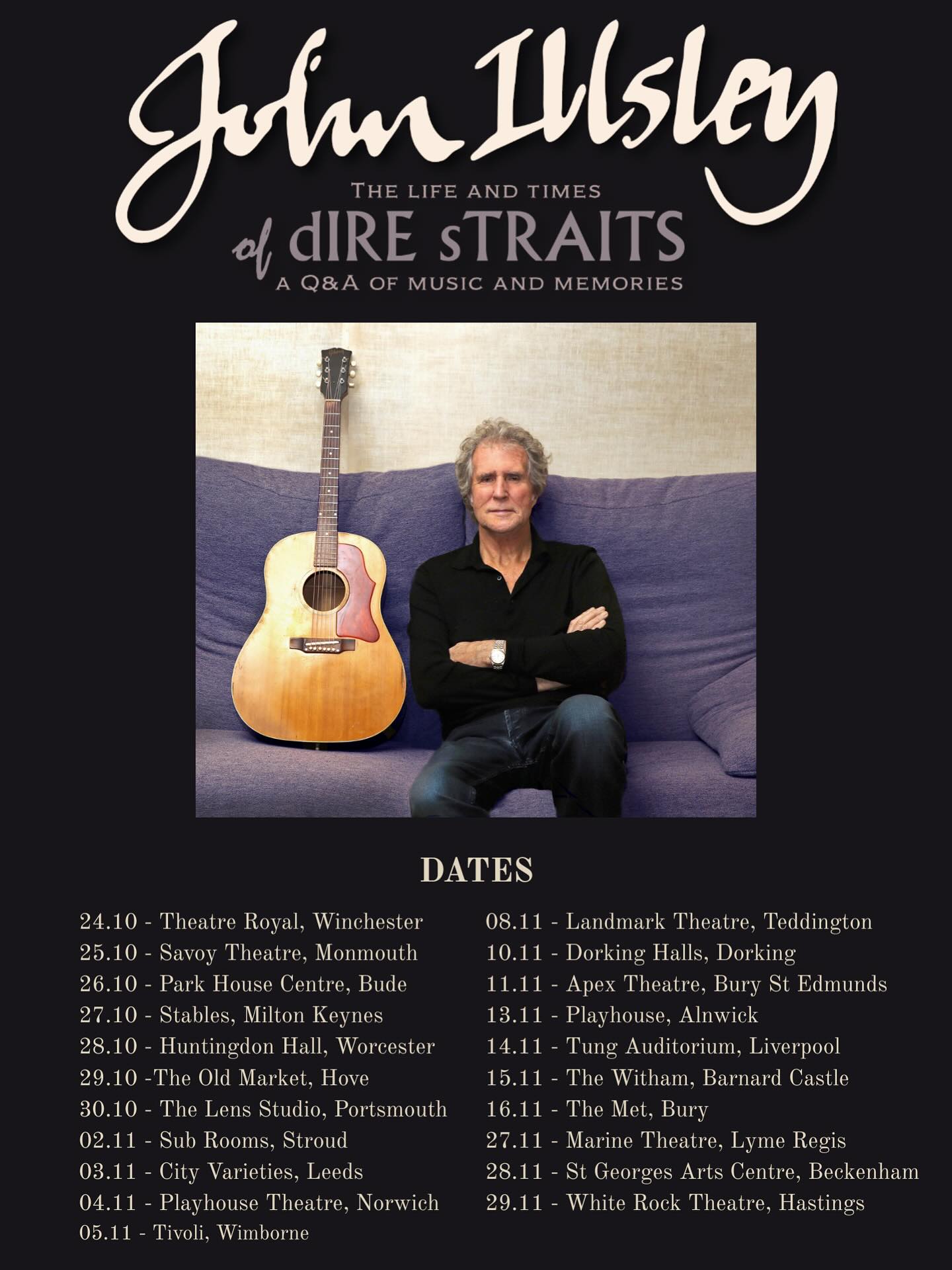
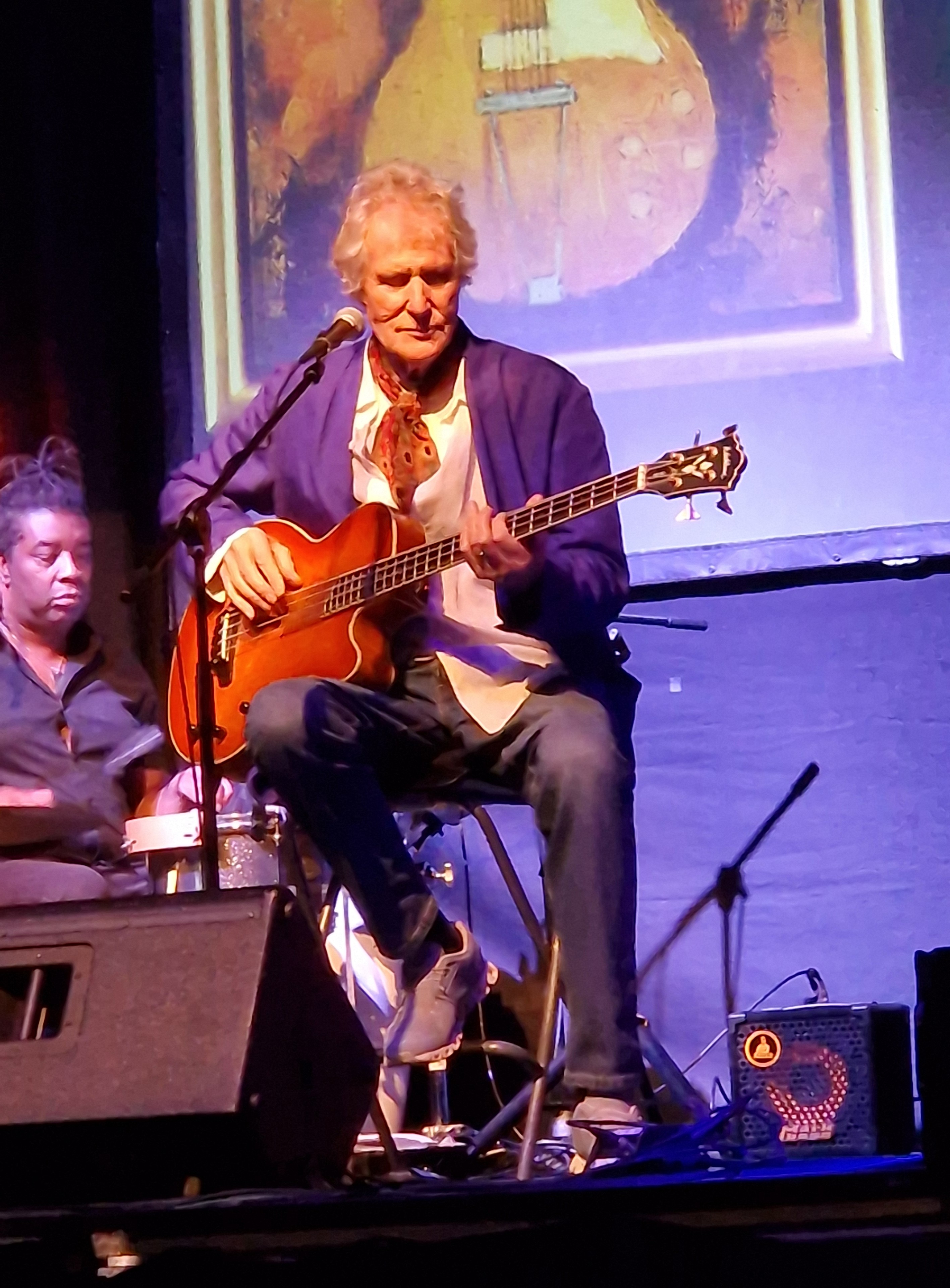
John Illsley, legendary bassist and Dire Straits co-founder, wound up a 21-date music and chat tour at the White Rock Theatre in Hastings. I never got to see Dire Straits back in the day, sadly. However, the fact that this was a chance to see John Illsley perform some Straits classics with a full band, as well as a chance to get a first-hand insight into his long career, made it too good an opportunity to pass over, even though (following Dave Hill and Slade the night before) it meant a second trip to the White Rock in the space of twenty-four hours.
A full two-hour show, the format was a Q&A session, with Illsley in conversation with long-time friend and former Dire Straits co-manager, Paul Cummins. This was followed by live music from the band then a short interval, followed by a further Q&A session and then more live music.
The first half of the show focused on the early part of his career, with the second part focusing on the Brothers In Arms days and beyond. Those early days and hearing about Illsley sharing a flat in Deptford with Mark Knofler’s brother, David, while studying at Goldsmiths held a particular fascination for me, as a former student of Goldsmiths myself who ended up spending twenty-odd years living in the Deptford area, not too far from the small council flat were Dire Straits was originally formed. An articulate, urbane and thoughtful man (even if he lived in what sounded like a filthy hovel at the time!) it was a fascinating insight into the early days of the band and the fairly swift pathway to their first hit single. The inspiration for that first hit came after an evening at a local pub, where Mark Knopfler heard a jazz band playing who called themselves ‘Sultans of Swing’. The rest is history…
The musical segment saw a clutch of songs from the first Dire Straits album, including the aforementioned ‘Sultans of Swing’ as well as a song apiece from Making Movies and Love Over Gold. The band are excellent and Illsley’s vocals are not a million miles away from Mark Knopfler.
After the interval it’s back to more chat, with a real focus on the story behind the astronomical success of Brothers in Arms. Illsley describes it as a perfect storm: Knopfler’s song-writing reaching another level, digital studio technology being newly available, Sony keen to push an album that could help propel sales of their new-fangled CD players, and MTV launching in Europe just a few months before the album’s release date. Both they and their US counterpart keen to give airtime to a single that name-checked them. Neither Illsley nor Mark Knopfler seemed particularly keen on the superstardom that followed, however, and in spite of monster world tours, Live Aid and Nelson Mandela’s 70th birthday gig at Wembley, there was to be only one more studio album.
Before long we’re back to more music. Unsurprisingly, songs from Brothers In Arms feature heavily. As well as the title track, there’s ‘So Far Away’, Walk of Life’ amd ‘Money for Nothing’ there’s also a song from Illsley’s most recent solo album. ‘It’s a Long Way Back’ is all about those early days in Deptford. Proceedings wrap up with ‘Where Do You Think You’re Going’ from the Communique album. Illsley and the band leave the stage to a well-deserved standing ovation.
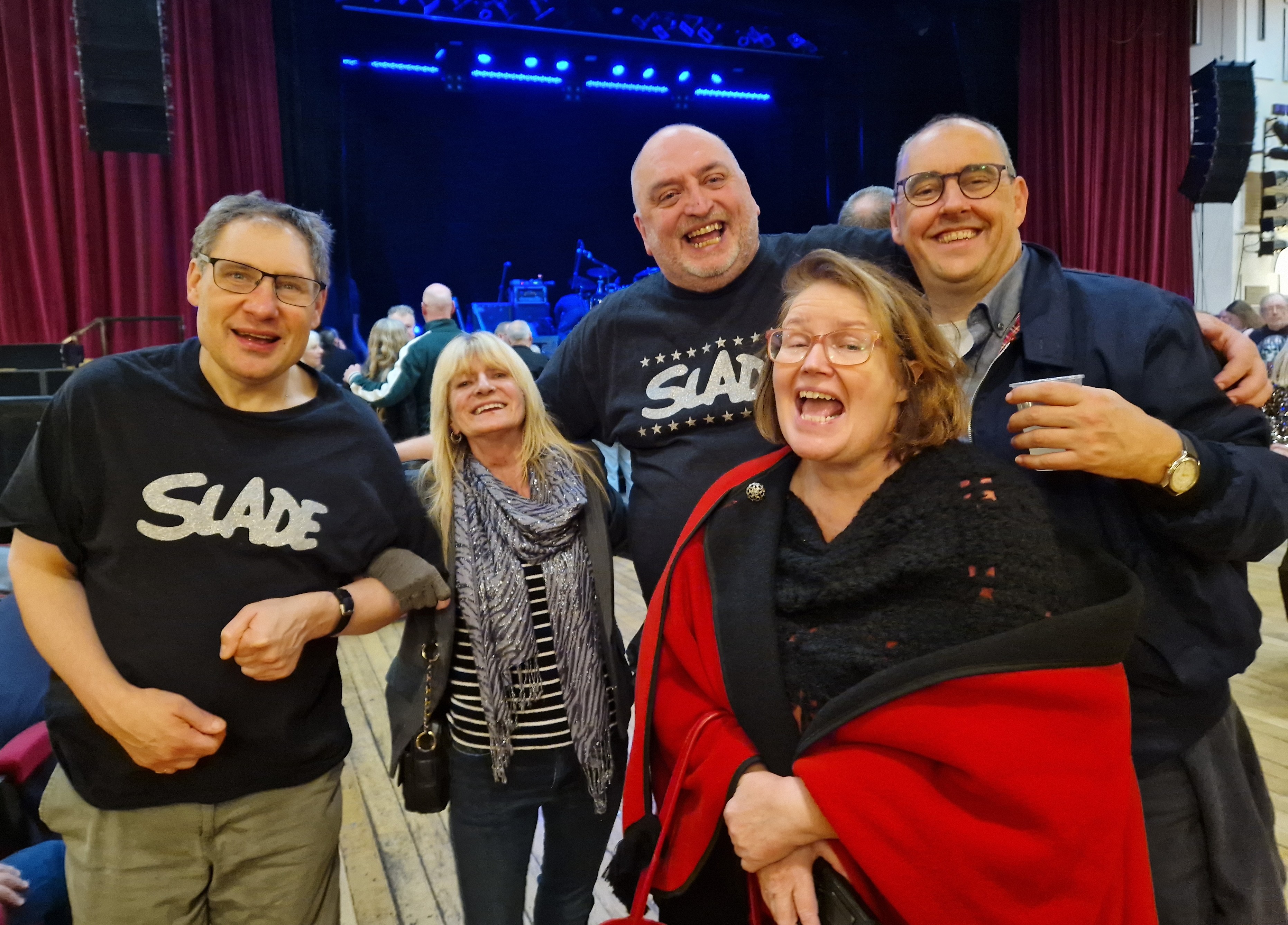
I was lucky enough to see the original line-up of Slade on one of their annual Christmas tours a couple of times back in the early 1980s. Then, after Dave Hill reformed the band with Don Powell in the early 1990s, seeing Slade every Christmas pretty much became an annual tradition. Health issues meant that Hill, now the only original remaining member, had to miss a couple of years in recent times. But now he’s back on the road for a ten-date UK tour. As he approaches his 80th birthday next April this has been advertised as the final ever Slade Christmas tour. They are not giving up playing live altogether, Hill reassures us all later on. There will still be the odd show, just not these big tours.
Yes, there’s no Noddy and Jim, the ones who actually wrote all of those Holder/Lea hits being blasted out tonight. Don departed some years ago amidst a certain amount of acrimony and so Dave with his ever-flamboyant stage-attire is the last man standing. But it’s a chance to see a bonafide ‘70s legend less than a mile from my front door and, most importantly, a chance to celebrate all those hits with as much communal stomping, swaying, singing and clapping as all of us can muster. I wouldn’t miss it for the world.
Looking forward to getting crazee with Slade!
It’s not exactly an unfamiliar set-list, either for long-time Slade fans or, indeed, almost anyone who had more than a passing acquaintance with the chart music of the 1970s and early ‘80s. Only three of the songs being played tonight came in below the Top Five in the UK singles charts! And the only things that may even slightly resemble anything like a ‘deep cut’ are ‘Lock Up Your Daughters’, a minor hit for the band the year after their post-Reading comeback; and ‘My Baby Left Me’, another minor hit recorded as a tribute to Elvis following the King’s death in 1977. Familiarity is what’s it’s all about tonight and kicking off with ‘Take Me Bak ‘Ome’ the big hits come thick and fast.
The classic Slade live format of lead guitar, rhythm guitar, bass and drums has been tampered with in recent years and rather than someone taking on Noddy Holder’s old role on second guitar, you now have Russell Keefe on keyboards. This works surprisingly well, especially given the prominence of the keyboards in so many of Slade’s mellower numbers, like ‘Everyday’, ‘My Friend Stan’ and ‘My Oh My’. What works less well is when Keefe takes lead vocal on several songs. Holder’s voice was gravelly but it was never gruff. In Slade’s glory days, Holder could yell louder than any of them but Tom Waites he was not.
Without trying to mimic Holder, Hill’s long-time bass-player, John Berry, does a much more sympathetic job on the songs where he sings lead. The other new-boy, Alex Bines, pounds away on drums as the audience clap and stomp along, and the soon-to-be-octogenarian Hill nails all those familiar, classic, guitar solos.
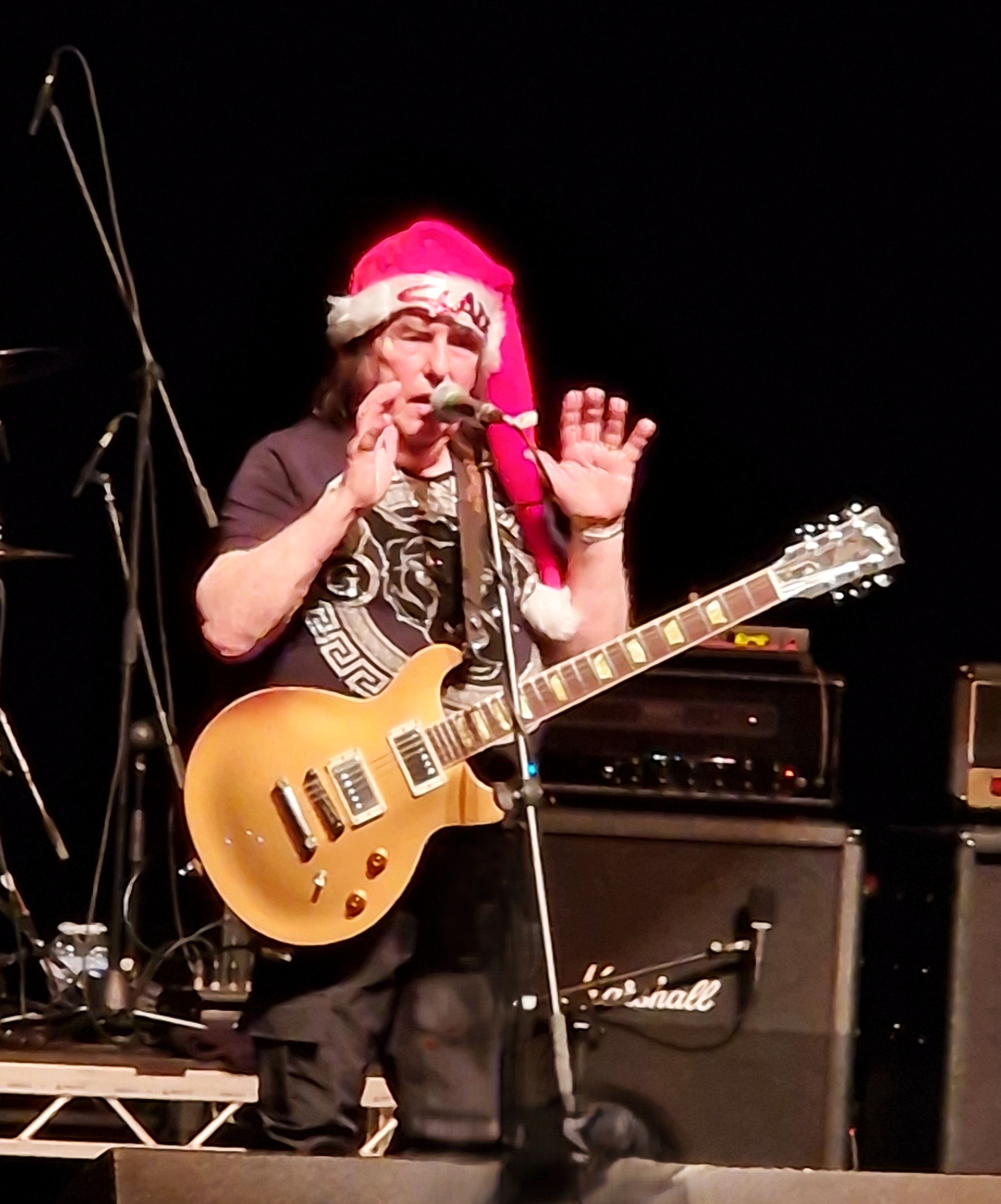
An impassioned Dave Hill imploring the crowd to look to the future
It’s the first night of the tour and towards the end Hill seems genuinely moved by the rabble-rousing response from the audience tonight. After a suitably crazy ‘Mama Weer All Crazee Now’ the band exit the stage but soon they are back for an encore with an epic singalong rendition of ‘My Oh My’, followed by a wonderfully raucous ‘Cum On Feel The Noize’.
But wait, it’s nearly December, it’s the start of the Slade Christmas tour and there’s obviously one song left to do. The roadies are on hand to distribute Santa hats, Dave Hill gives an impassioned plea about looking to the future, even though times might be right now, and soon we’re all yelling along to Merry Xmas Everybody’ at the top of our voices and leaving with a real spring in our step ready to face 2026.
Setlist:
Take Me Bak ‘Ome Lock Up Your Daughters Look Wot You Dun Everyday Coz I Luv You Run Runaway My Friend Stan Far Far Away The Bangin’ Man My Baby Left Me Gudbuy T’Jane Mama Weer All Crazee Now My Oh My Cum On Feel the Noize Merry Xmas Everybody
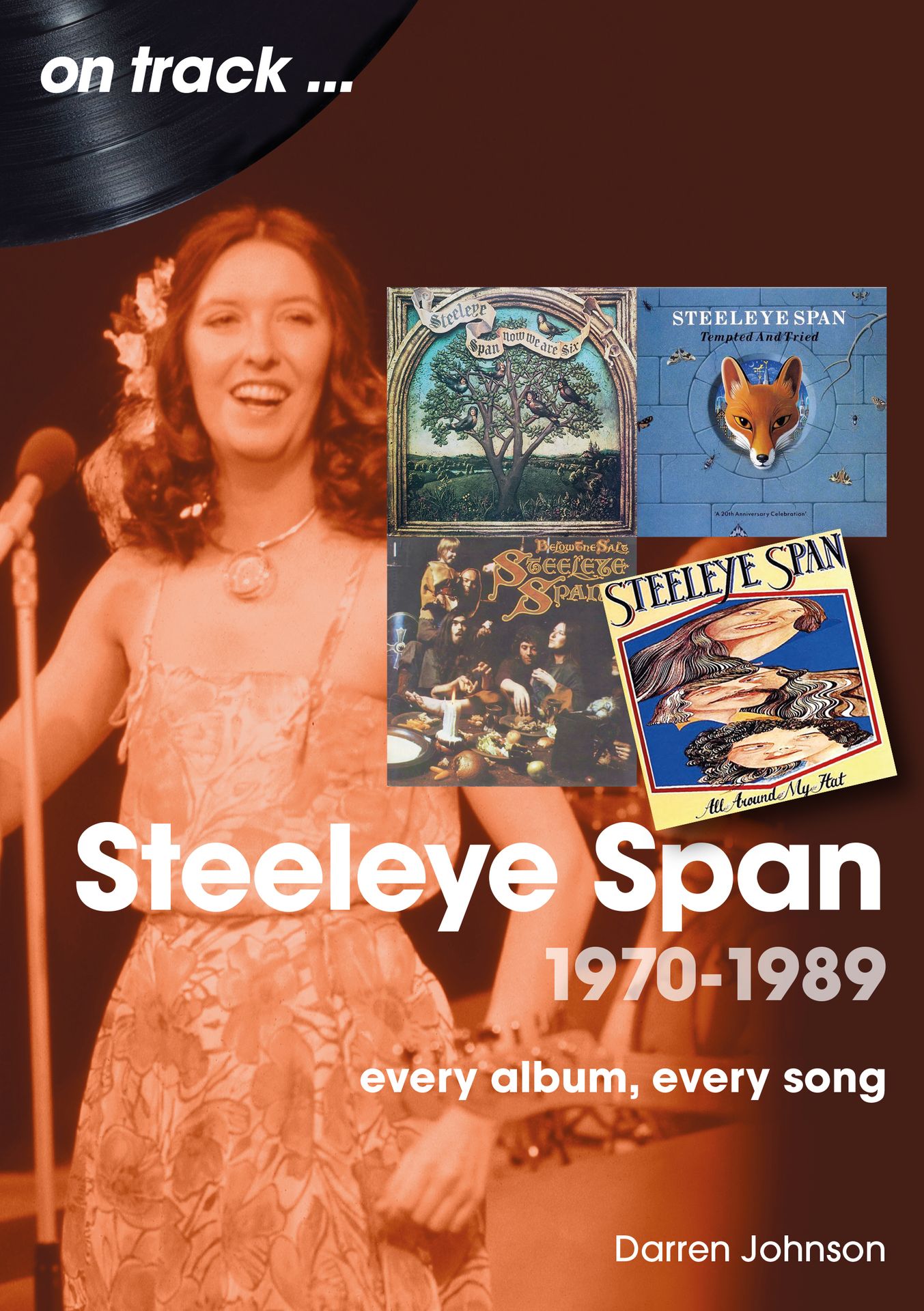
Following my ‘glam rock trilogy’ on Slade, Sweet and Suzi Quatro, my fourth book for Sonicbond Publishing came out in August 2025: Steeleye Span 1970-1989 On Track: Every Album, Every Song. I’ve been really heartened by the enthusiastic responses from readers so far (reaching Number 2 on Amazon’s Music Encyclopaedias Chart) and the many kind words from reviewers.
Darren Johnson
“Both satisfying and engrossing, what should’ve been a simple task to read and comment on, became a series of rabbit holes, as songs and entire albums had to be revisited or indeed investigated. Both for the purposes of research and pure enjoyment, as well as a degree of nostalgia.”Folk North West (read full review here)
“Darren Johnson has done a remarkable job in squeezing the details of fourteen albums into this slim volume” “Johnson’s research is thorough”RnR magazine
“I hadn’t heard some of these records for a very long time, but this deep dive into the band, their music and indeed the history behind some of the traditional songs they performed, caused me to listen again with fresh ears. Check it out if ‘The Span’ or indeed folk rock in general are your thing.” The Afterword (read full review here)
“The book though is very fair in recognizing it’s sources. It brings together a lot of info into a well written book – definitely recommended!” A Celebration of Steeleye Span (read full review here)
Steeleye Span 1970-1989 On Track can be purchased via Amazonhere as well as most other major book-sellers. And via the publisher’s own online shop at Burning Shedhere










 Darren's music blog