Formed in Blackwood, South Wales in 2019 the deliciously-named Revolution Rabbit Deluxe are Ant Gingell (vocals/guitar), Max Perera (vocals/guitar), Tim Lawley (bass) and Lee Titterrell (drums). The band-name was inspired by Gingell’s lifelong love of said furry friends with the random thought of one of them appearing on an iconic Che Guevara-style poster coming to him during a car journey discussing potential names one day. The ‘Deluxe’ part was then added to give a bit of extra sparkle.
The Pixies, Smashing Pumpkins and Feeder are all cited as influences, alongside the Beatles and XTC.
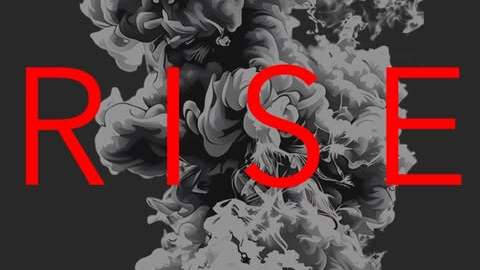
As the name might imply, Revolution Rabbit Deluxe are a band that certainly don’t shy away from strident political commentary in their music. The new album Rise addresses such themes as Elon Musk and Jeff Bezoz blowing money on their pet space projects while children die of hunger (‘Chapter 9’); the fashion for cheap, easy virtue-signalling while failing to address fundamental issues of corporate power and economic inequality (‘We’re So Woke – We Haven’t Slept in Years’); and standing up and being counted (‘Rise’).
While there’s certainly anger and angst (and why shouldn’t there be!), there’s also plenty of joy, optimism and bags and bags of catchy melodies to be found on this album. The shared male/female vocals also work extremely well and while Gingell takes the lead vocal on the songs already mentioned, Max Perera provides some light and shade on the album with her lead vocal contributions on tracks like the anthemic ‘Starlight’ and the more mellow, acoustically-driven ‘The Night The Stars Fell’ which closes the album.
With it’s catchy tunes, spiky lyrics and punky attitude, Rise is well worth a listen.
Psychedelic indie alt-rock band, Innocents Abroad, were formed in Liverpool by four students in the 1980s: Martin Malone (guitar), Peter Mills (vocals), Stuart Hilton (drums) and Steve Goodrich (keyboards). After recording two albums (Quaker City in 1986 and Eleven in 1988) the band went their separate ways and, like many other bands of that era that was seemingly the end of the story.
But improbably, they released their third album back in March of this year. Three of the four original members (Hilton, Malone and Mills) are back in the fold, each bringing their different musical perspectives and life experiences. These days, Hilton occupies the drum-stool for the band, Cult Figures, alongside running a degree course in animation; while Malone has pursued a solo career as well as recording with both Eskimo Chains and The Scaremongers and is also an award-winning poet. After spending time in Eastern Europe, meanwhile, Mills returned to the UK to teach music at English universities. Around ten years ago, they started occasionally playing together once again, with Malone and Mills eventually writing songs with one another and the bones of an album beginning to take shape.
With the addition of Jane Breed (bass/vocals) Late Spring weaves together the band’s love of jangly Rickenbacker rock with strands of European pop and folk music, Bossa Nova and cult movie soundtracks. Once memorably hailed by the Guardian as a “home-grown answer to REM”, the new album has picked up plenty of plaudits, with comparisons being made to the US Paisley Underground scene and bands like Hüsker Dü and 10,000 Maniacs. Listening to Late Spring there’s no shortage of home-grown comparisons to make either – and devotees of Merseyside legends like The Las and The Coral will find lots to love here.
With jangling Rickenbacker, soaring melodies and joy-infused, trippy vibes, Innocents Abroad have created a polished and confident album bursting with exquisitely-crafted indie-pop anthems.
When tickets for Cropredy 2025 went on sale, it was announced that there would be some changes to the festival this year, with far fewer tickets available. Interviewing Fairport’s Dave Pegg back in January, he explained the thinking behind the new approach as follows:
“Gareth Williams our CEO came up with several formulas for trying to make it pay. It’s always been such a gamble, the last couple of years especially. Because when you don’t know how many tickets you are going to sell, you can’t budget. You’re guessing about the number of people who are going to turn up. Gareth’s idea – we’re only going to sell 6,500 tickets and we’re only selling three-day tickets. Because we know we’ve got that lump of income and we can budget accordingly without the risk of going bankrupt.“
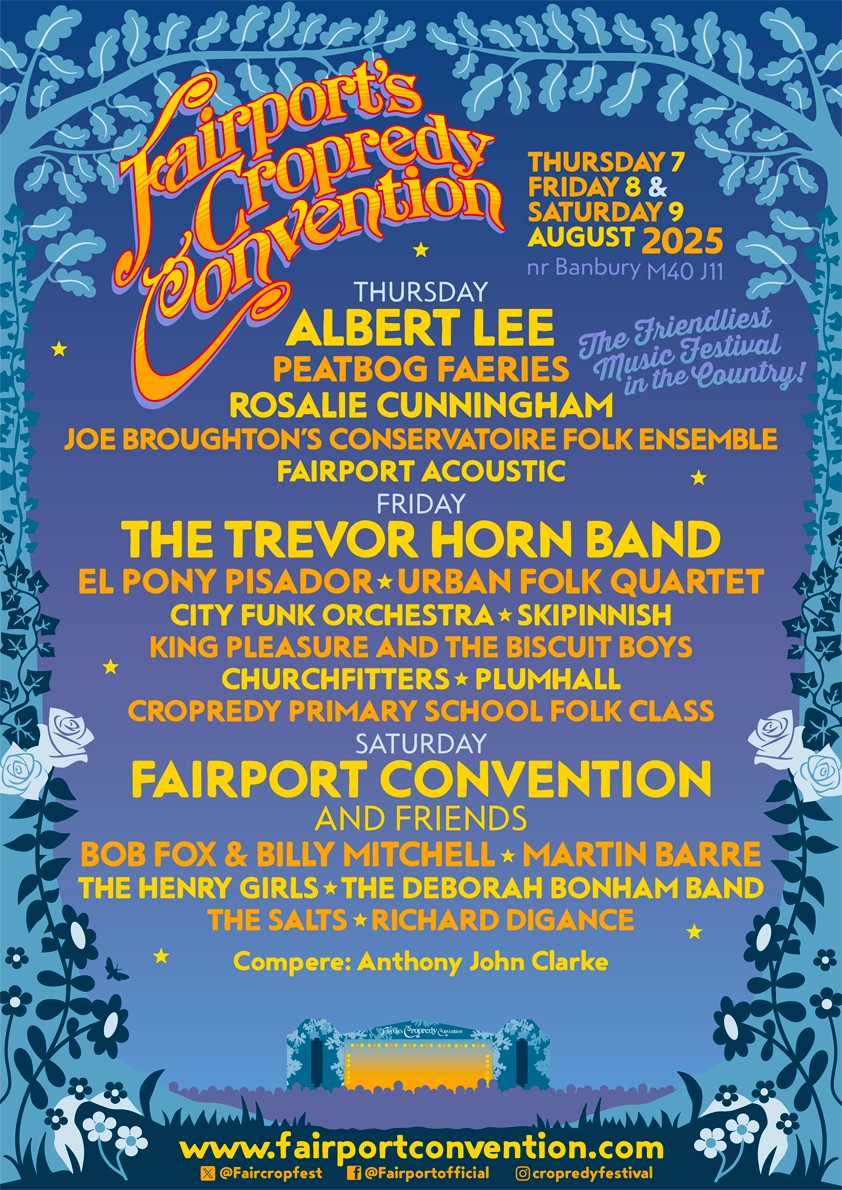
As well as fewer tickets, the festival line-up was to look somewhat different, too. The era of big-name headline acts like Chic and Madness and Alice Cooper, who had previously graced the Cropredy stage in a bid to widen the festival’s appeal and get more bums on (folding) seats, was over. Instead, there would be far more focus on acts that the festival organisers knew and had worked alongside.
The big question, therefore, is did this new formula work? Clearly, there was no problem shifting tickets, with the vast majority being snapped up by February and with the festival selling out well in advance. Arriving at the campsite on the Thursday afternoon, it didn’t feel much different, although a couple of fields previously used for camping had apparently been taken out of use.
The Cropredy crowd (Photo: Simon Putman)
I was also wondering whether the slimmed-down attendance would leave us all rattling around in the main arena field but it didn’t feel like that at all. Walkways had been rejigged, the big screens at either side of the stage had been replaced by a single screen at the back of the stage but overall it very much felt like the same old Cropredy I’d been going to for the past fifteen years.
Richard Digance up on the big screen (Photo: Simon Putman)
So, enough of the festival arrangements, what of the music? I must admit that one of the real attractions for me when I first started going to Cropredy in 2010 was the mix of folk, acoustic and classic rock acts. I loved having Status Quo and Rick Wakeman and Little Feat alongside Thea Gilmore and Breabach and Bellowhead. Unlike some of the diehard Cropredy goers, I was perhaps more worried about the potential for the new ‘Friends of Fairport’ formula to squeeze out some of the rockier elements. That didn’t happen at all though. I got my fix of both folk and classic rock, in some respects more than I could possibly have hoped for.
Joe Broughton’s Conservatoire Folk Ensemble join Fairport Acoustic on stage (Photo: Simon Putman)
On the folky side, obvious highlights for me included Joe Broughton’s Conservatoire Folk Ensemble, whose massed ranks begun their set by joining Fairport Acoustic on stage, for an epic rendition of ‘The Lark In The Morning’ instrumental medley from the Liege & Lief album. Scottish folk band Skipinnish were another highlight for me, with a thrillingly energetic set, my second time seeing them this summer as they also performed at the New Forest Folk Festival. A special mention, too, should go to the kids of Cropredy Primary School Folk Class who kicked things off at the festival. We only made it in time to hear their last couple of songs but what a wonderful idea to link the village and the festival this way and how lovely it was seeing the huge cheer for them as they made their way from the backstage area afterwards to a waiting gaggle of proud parents.
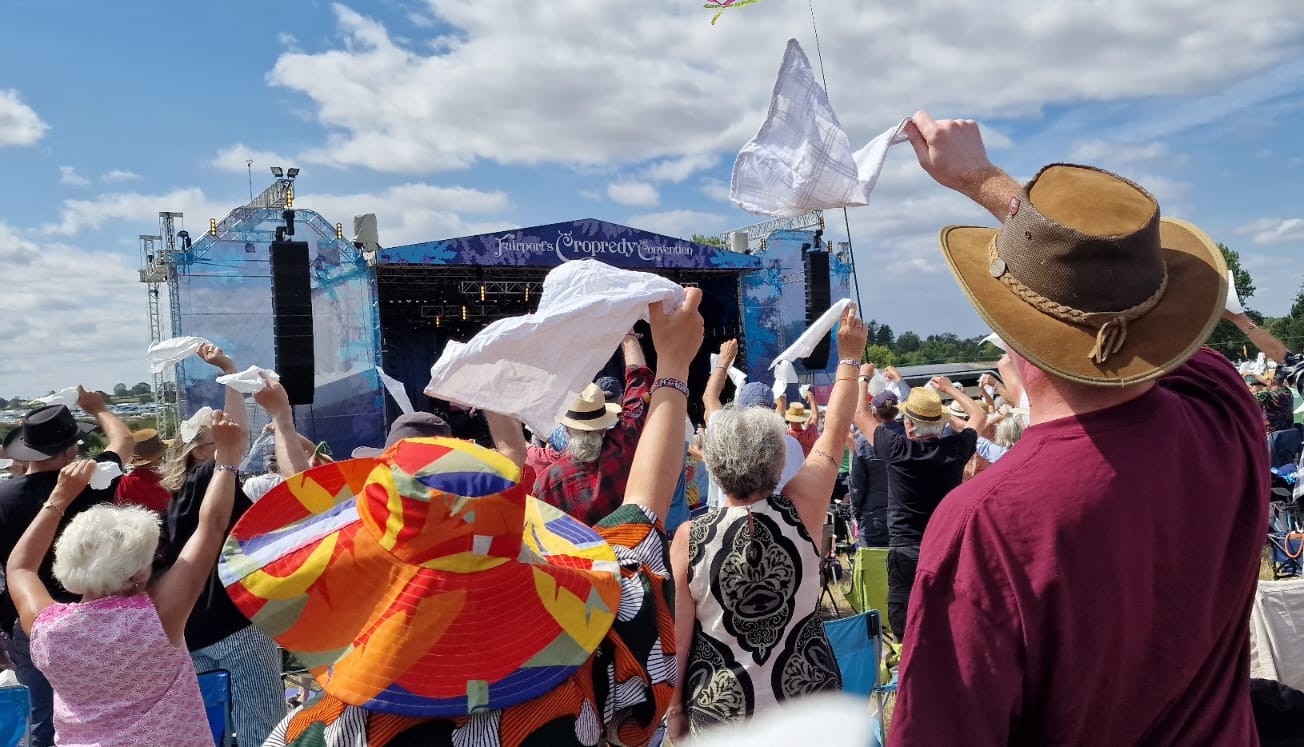
The traditional hanky waving during Richard Digance’s set (Photo: Simon Putman)
On the rock side, the festival organisers demonstrated that you didn’t need to be in the megabucks league to attract some decent classic rock acts. My many years of going to music weekends at Butlins showed me that it’s perfectly possible to line up some talented rock names without bankrupting yourself.
Trevor Horn (Photo: Simon Putman)
The Trevor Horn Band, making their third appearance at Cropredy, were hugely entertaining as ever, blasting out a deluge of hits that Horn had had a hand in, from Frankie Goes To Hollywood, to Buggles to Yes – with the added bonus of Lol Creme of 10CC on guitar and some Godley & Crème/10CC hits thrown in, too! They were originally booked under the old formula for the previous year, however, and had to reschedule because of illness so the situation was slightly different.
Martin Barre (Photo: Simon Pitman)
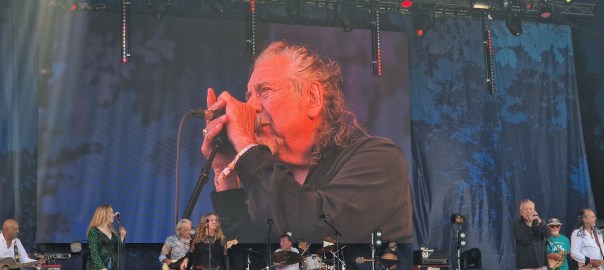
The same cannot be said for Martin Barre (ex-Jethro Tull) and Deborah Bonham (sister of Led Zep drummer, John) whose sets were clear highlights of the weekend, none more so than the latter whose special guest almost certainly provided the highlight of the weekend for many, with none other than Robert Plant stepping on to the stage to perform sizzling versions of ‘Ramble On’ and ‘Thank You’ from Led Zeppelin’s second album. It doesn’t get much better than that at Cropredy.
Robert Plant joins the Deborah Bonham Band on stage (Photo: Darren Johnson)
I didn’t get to see everyone who performed and there were acts (like Bob Fox & Billy Mitchell) I would have liked to have seen but didn’t. However, I’ve never spent the entire day in the field from mid-day to midnight. For me, time spent at the campsite, catching up with friends early in the evening and relaxing ahead of a late night finish, is as much part of the Cropredy experience for me as the music. Plus, in the last few years, our camping group has also chosen to spend a little bit of time at the Cream of the Crop festival in the adjoining field and this time we got there just in time for an explosive set by the excellent Burnt Out Wreck, the band fronted by former Heavy Pettin’ drummer, Gary Moat. No-one can say I didn’t get my fill of hard rock at Cropredy this year!
Burnt Out Wreck at Cream of the Crop next door (Photo: Simon Putman)
Fairport Convention, of course, rounded things off on the Saturday night with their usual mammoth set featuring a mix of familiar old favourites, revisited deep cuts, covers with guest artists (this time Ralph McTell and Danny Bradley) and more recent material penned by the band’s own Chris Leslie. While a couple of our camping group head back to the campsite before the end, missing ‘Matty Groves’ and ‘Meet On The Ledge’ is not something I could ever contemplate so we make our way to the front in time for a rousing ‘Matty’ (with accompanying animated video hilariously interpreting the storyline through the medium of Lego) and an always emotional ‘Meet on the Ledge’.
Ralph McTell is a guest during Fairport’s set (Photo: Simon Putman)
While it was the end of Cropredy for another year, it wasn’t quite the end of our camping trip as we had booked for several days at a lovely campsite ten miles away, just outside Barford St. Michael. The spirit of Cropredy was never far away though. The village of Barford St Michael, itself, was once home to Dave Pegg and the studio he established, Woodworm Studios, where Fairport recorded numerous albums. The studio is still in operation, although no longer owned by Peggy these days.
The Hook Norton Brewery (Photo: Simon Putman)
While camping, we also took a trip to the village of Hook Norton for a tour of the Hook Norton Brewery, who in recent years became the official suppliers for the Cropredy festival bar, taking over from Wadworth. It’s an absolutely fascinating tour of this historic nineteenth century site and our engaging tour-guide was himself a Cropredy regular who had spent many years working at the festival. If you are extending your stay in the Oxfordshire countryside and want to find out how the beer at the Cropredy bar is brewed and learn more about the history of the brewery, it’s well worth a visit!
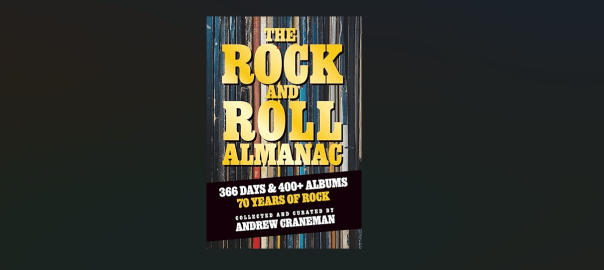
The Rock and Roll Almanac is a bumper compendium of facts, insights and snapshots in time covering events from the early days of rock and roll in the mid-1950s right up to the present day. Compiled by musician and music writer, Andrew Craneman, the book devotes a page to each day of the year, with every page containing a selection of historical rock snippets drawn from the past seventy years, along with notable births, notable deaths and a recommended single and album released on that same date.
It’s something you’ll dip into, rather than read in a single sitting but choosing a random selection of dates, I certainly got a feel for what the book has to offer.
Firstly, for my birthday (20th May) I’m interested to learn that on this day Bill Haley’s ‘Rock Around the Clock’ was first released in 1954, the Rolling Stones unveiled their forthcoming new single ‘(I Can’t Get No) Satisfaction’ on a US TV show in 1966, Joe Strummer of the Clash is arrested but later cleared following an altercation with an audience member in 1980 and Finish rock band Lordi won the Eurovision Song Contest in 2006.
Turning to today’s date (4th August) I find that the Kinks released ‘You Really Got Me’ on this day in 1964, Pink Floyd released the Piper at the Gates of Dawn album in 1967, Jim Morrisson got arrested for public drunkenness in LA in 1970 and Eagle, Don Henley, reached an out of court settlement with a US Republican candidate after the latter used parody versions of two of his songs without permission in 2010.
Craneman provides just enough background to each historical entry to keep you engaged and informed but the events detailed in the book will often encourage you to explore further, particularly if its something that you were completely unaware of before.
Keep it on your coffee table to look at each day on the relevant day in question. I’m sure I’ll be dipping in and out of it throughout the year.
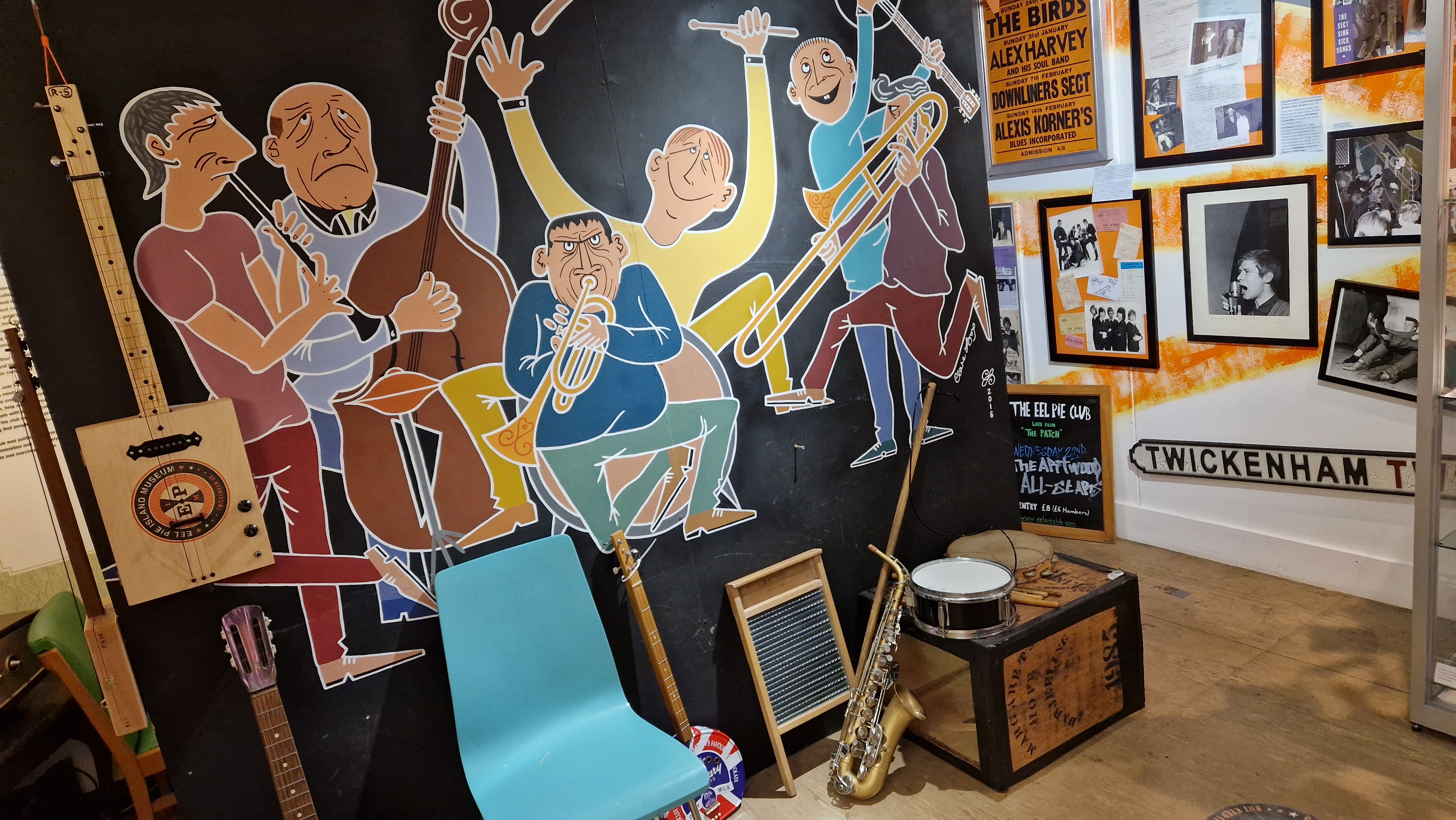
I’ve read so many books over the years documenting the early days of British rock, it’s impossible to ignore what a pivotal role the Eel Pie Island Hotel played in the formative years of the careers of many important UK artists. In the mid-1960s, the Rolling Stones, the Yardbirds, Rod Stewart and David Bowie were all regular performers there. Prior to the rhythm and blues boom, it had also played host to many jazz bands, when the run-down nineteenth century hotel and ballroom became a hugely-influential venue during the 1950s trad jazz boom.
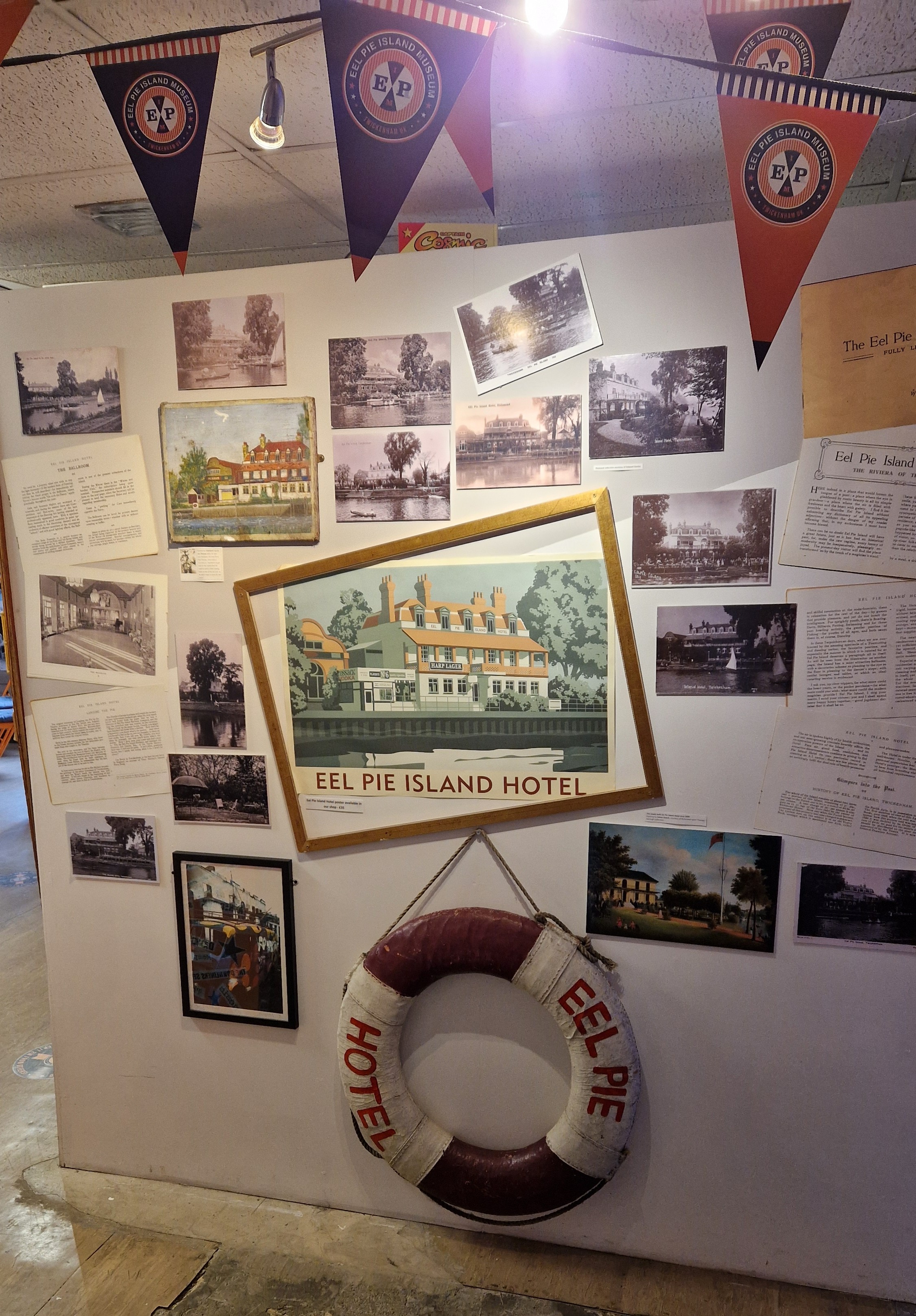
The nineteenth-century Eel Pie Island Hotel
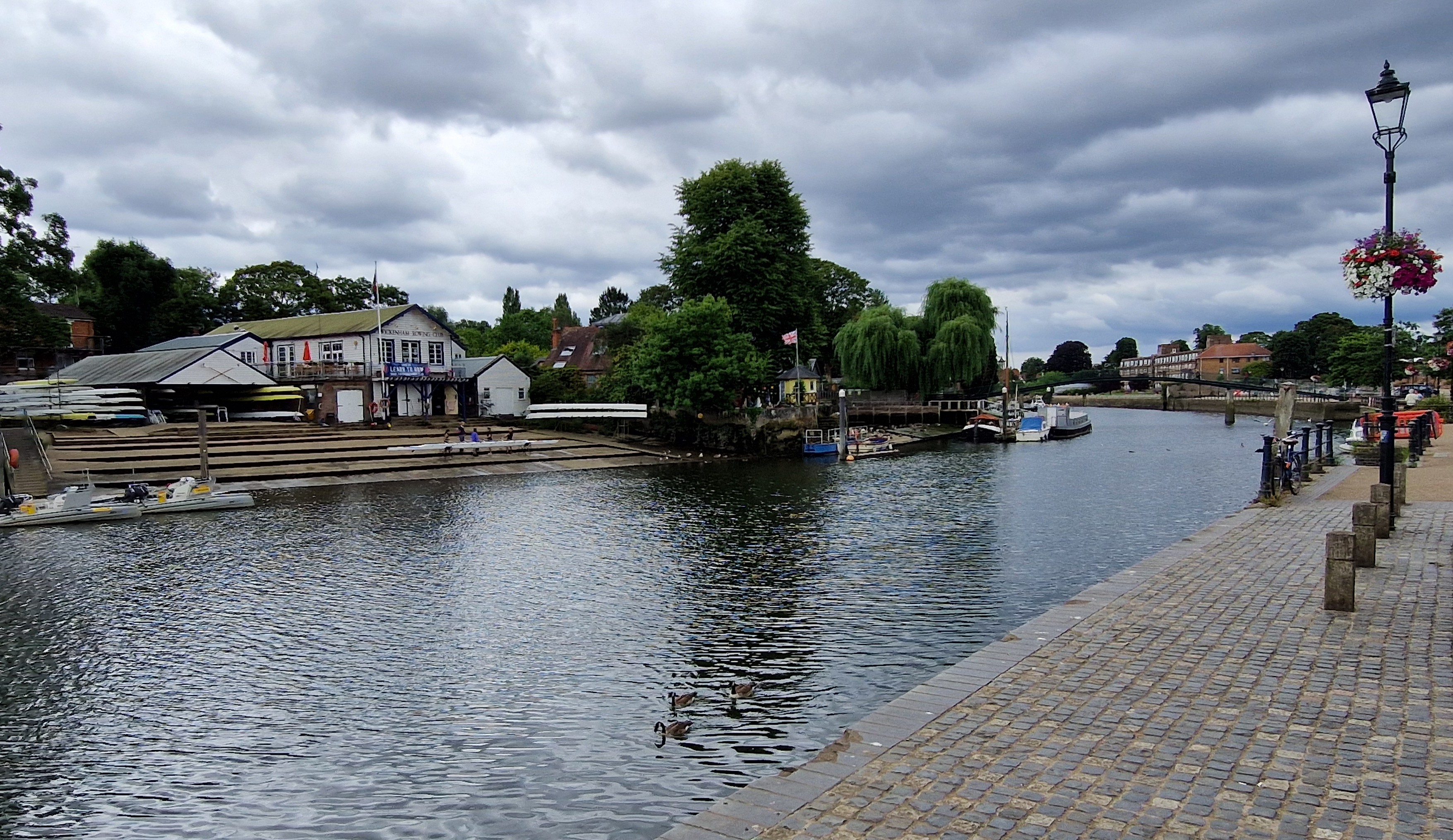
The hotel itself has long been demolished but the Eel Pie Island Museum opened its doors in 2018, celebrating the fascinating musical and boating history of this tiny 8.9 acre island in the River Thames. The museum, itself, isn’t actually on the island but just a short walk away from the banks of the Thames at Twickenham.
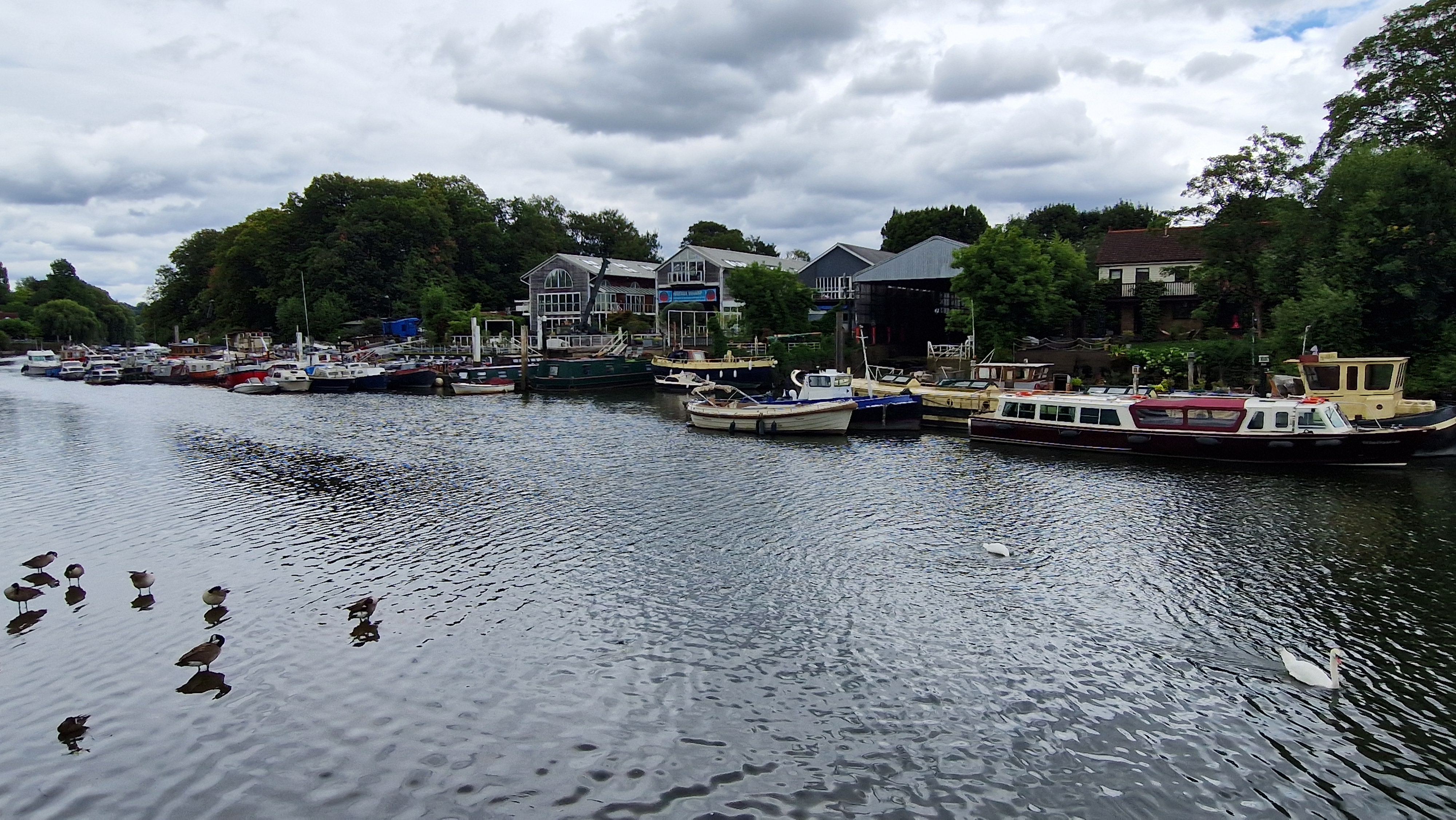
Eel Pie Island today
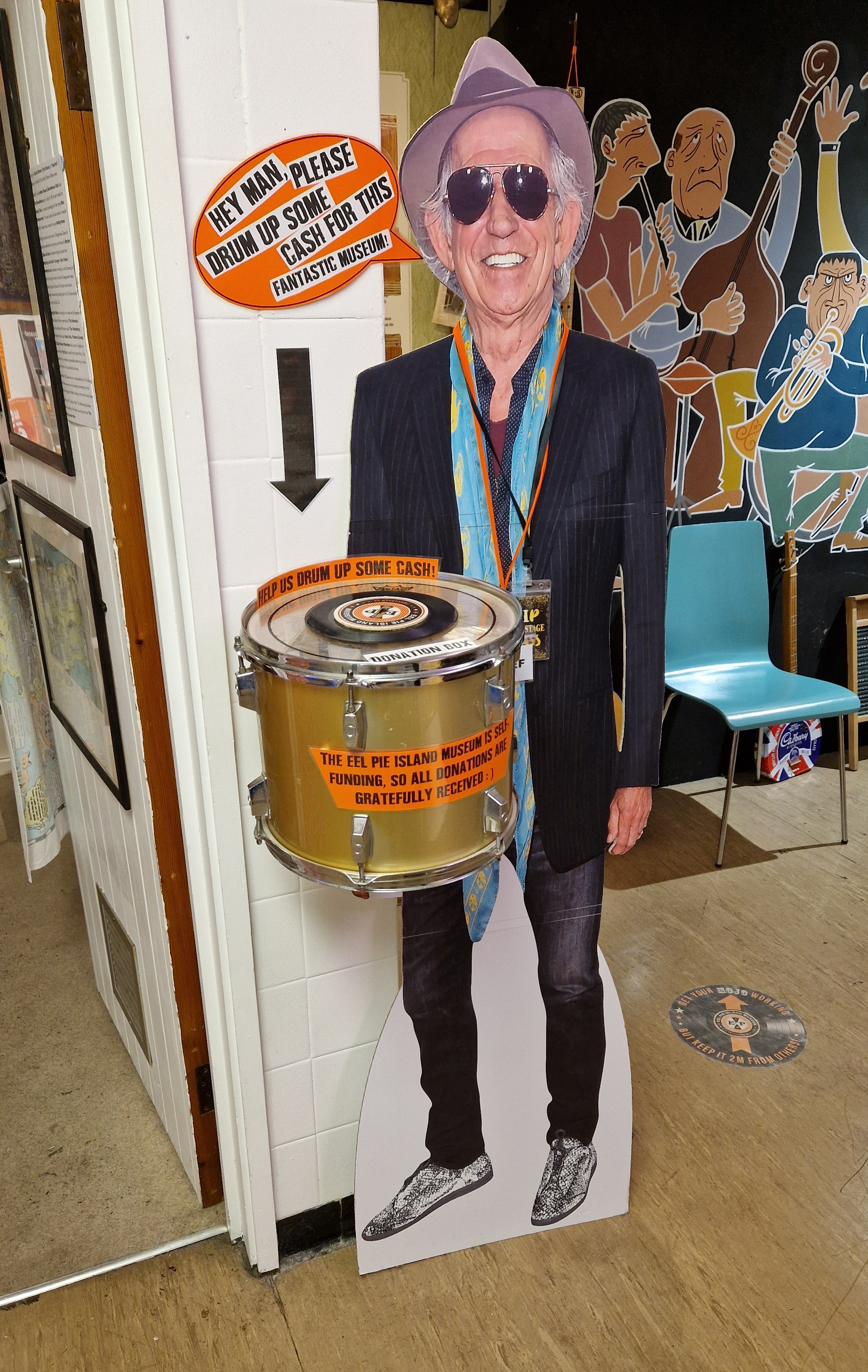
As I was staying in London overnight for a recent trip to the O2, I thought I would pay a visit to this small museum for the first time. Staffed by volunteers and costing just £5 to enter, it’s well worth a visit for any rock or jazz fan or indeed local history enthusiast.
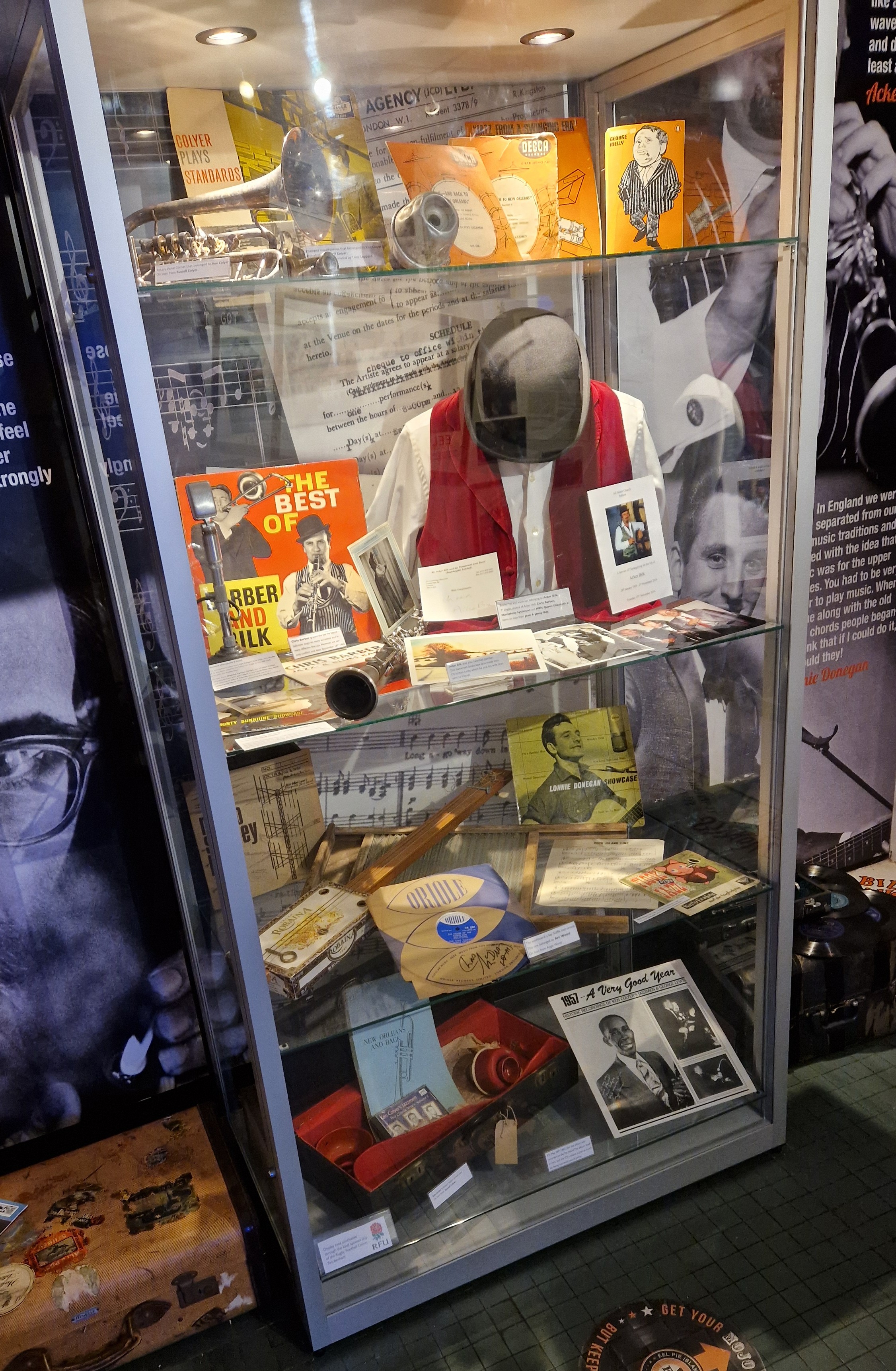
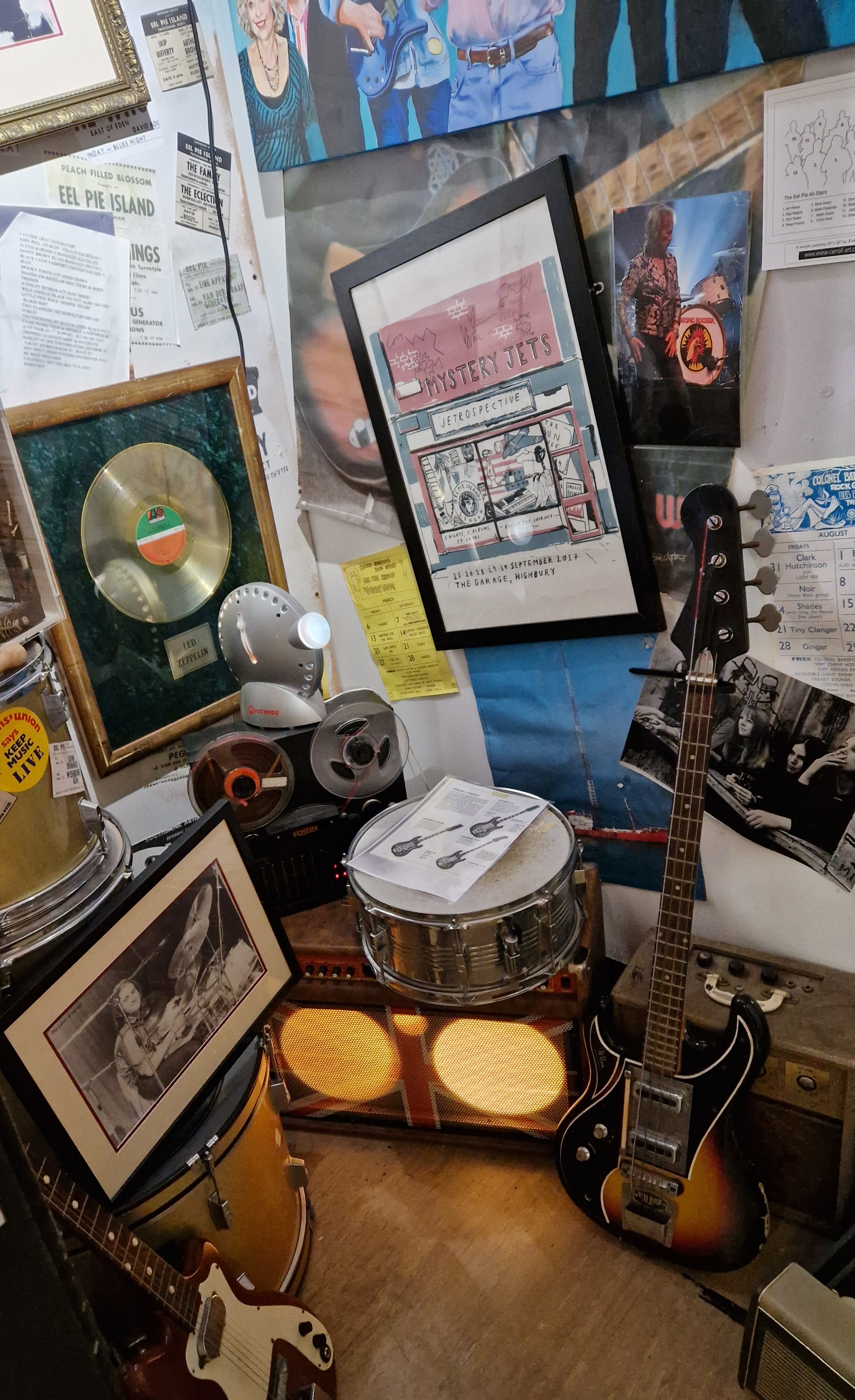
Display on the venue’s past as a jazz clubAcker Bilk’s iconic bowler hat and waistcoat in the jazz displayTrad Jazz gave way to rhythm & blues and rockDisplay of rock instruments and memorabilia at the museumThe Eel Pie Island roll call
There’s fascinating display of musical memorabilia and historical archives, as well as a roll call of all the celebrated artists who played there. It’s not just music either and there are also displays dedicated to the island’s boatyard history and its role as a place for artistic creativity and technical innovation, including being the birthplace of the clockwork radio, invented by the late Trevor Bayliss who had a home on the island.
Keith Richards touts for donations for the volunteer-run museum
Given the seismic roll that London has played in the history of popular music, the capital has been behind the curve somewhat in celebrating its world-class musical legacy – particularly in comparison to cities like Liverpool or Memphis. But I’m pleased to say that this is gradually being rectified and the Eel Pie Island Museum is an important addition to the capital’s music tourism scene.
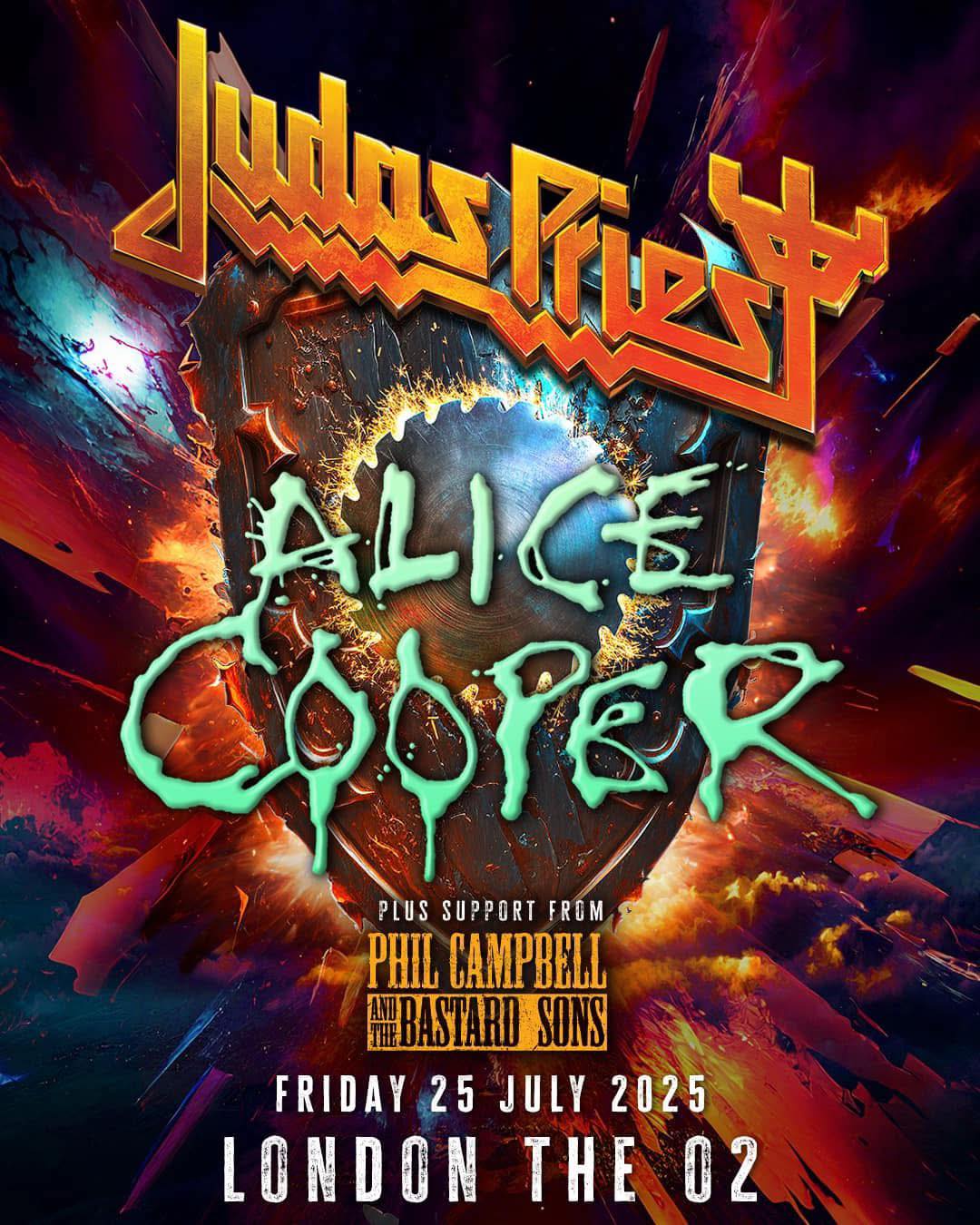
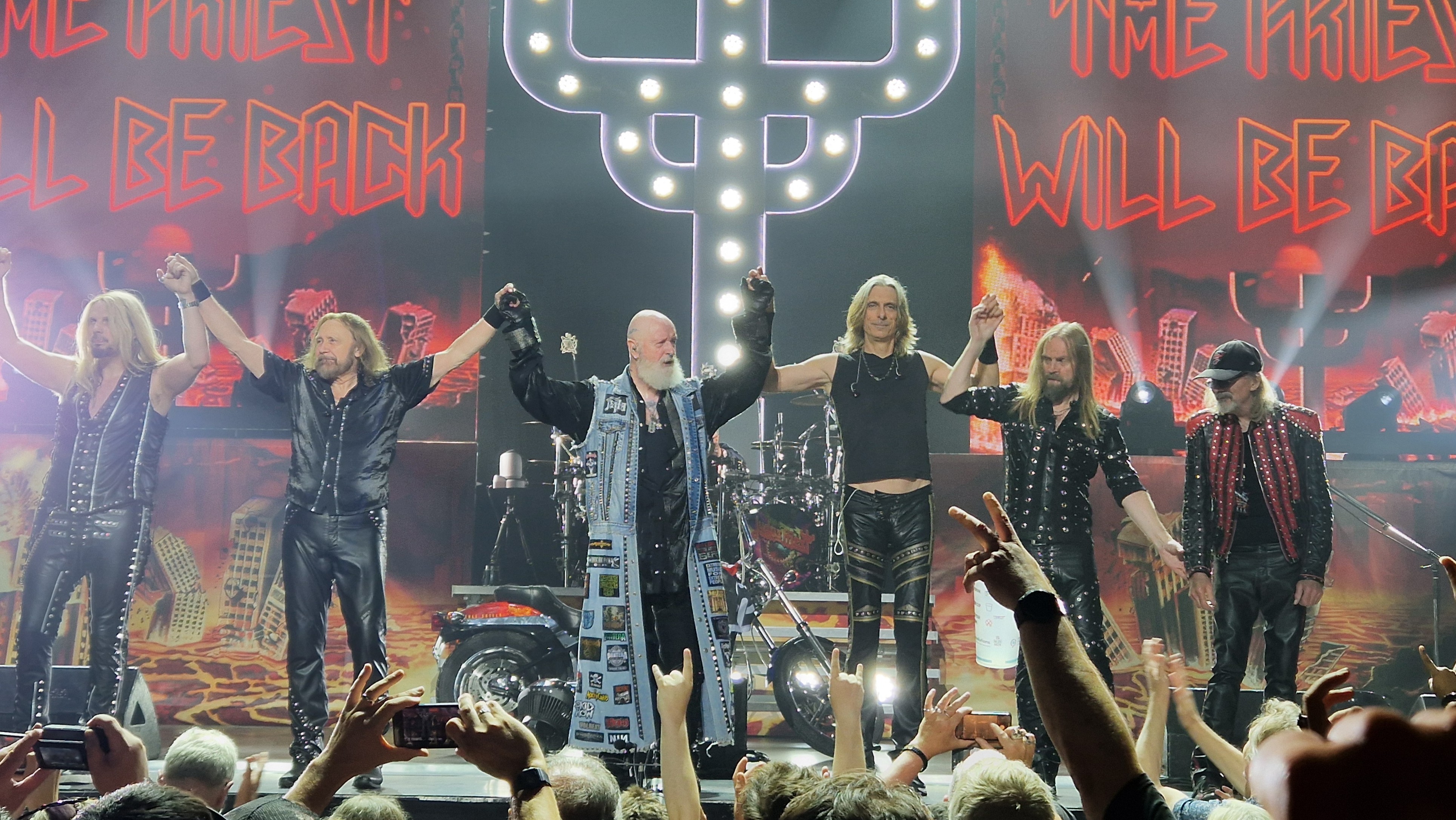
For the second of my O2 gigs this summer it was back ton London for a night of Alice Cooper and Judas Priest. Normally, if I’m heading off to the capital for a big arena gig these days it’s usually for a ‘bucket-list’ artist who I’ve never seen before (like Santana last month, Eagles in 2022 or Iggy Pop in 2023). I’ve seen both Alice and Priest previously so it’s not exactly bucket-list in the strictest sense but a double-headliner bill featuring these two legends proved impossible to resist.
At previous O2 gigs I’ve tended to find myself seated high up in the vertigo-inducing upper tiers right at the very back. Even though I didn’t fork out for a premium-price ticket, tonight I was delighted to find myself right at the front, just five rows from the middle of the stage with a magnificent view of the main action.
First up was a short but incendiary set from Phil Campbell & the Bastard Sons, the band formed by the former Motorhead guitarist following Lemmy’s 2015 death which brought to an end Campbell’s three-decade stint with Motorhead. Not owning any of the Bastard Sons albums I’m not massively familiar with the material, apart from the inclusion of two Motorhead covers. These were ‘Going To Brazil’ from the 1916 album which appeared early on the set and ‘Ace of Spades’ towards the end. The latter inevitably put a big smile on everyone’s faces in anticipation of what was to come. These guys certainly know how to pull off a great warm-up set.
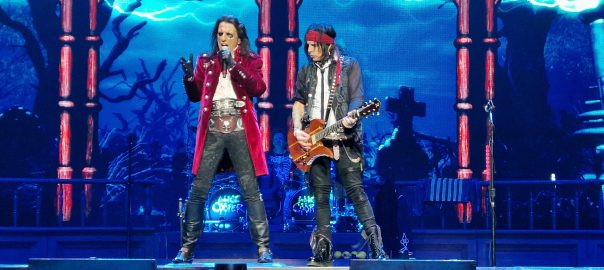
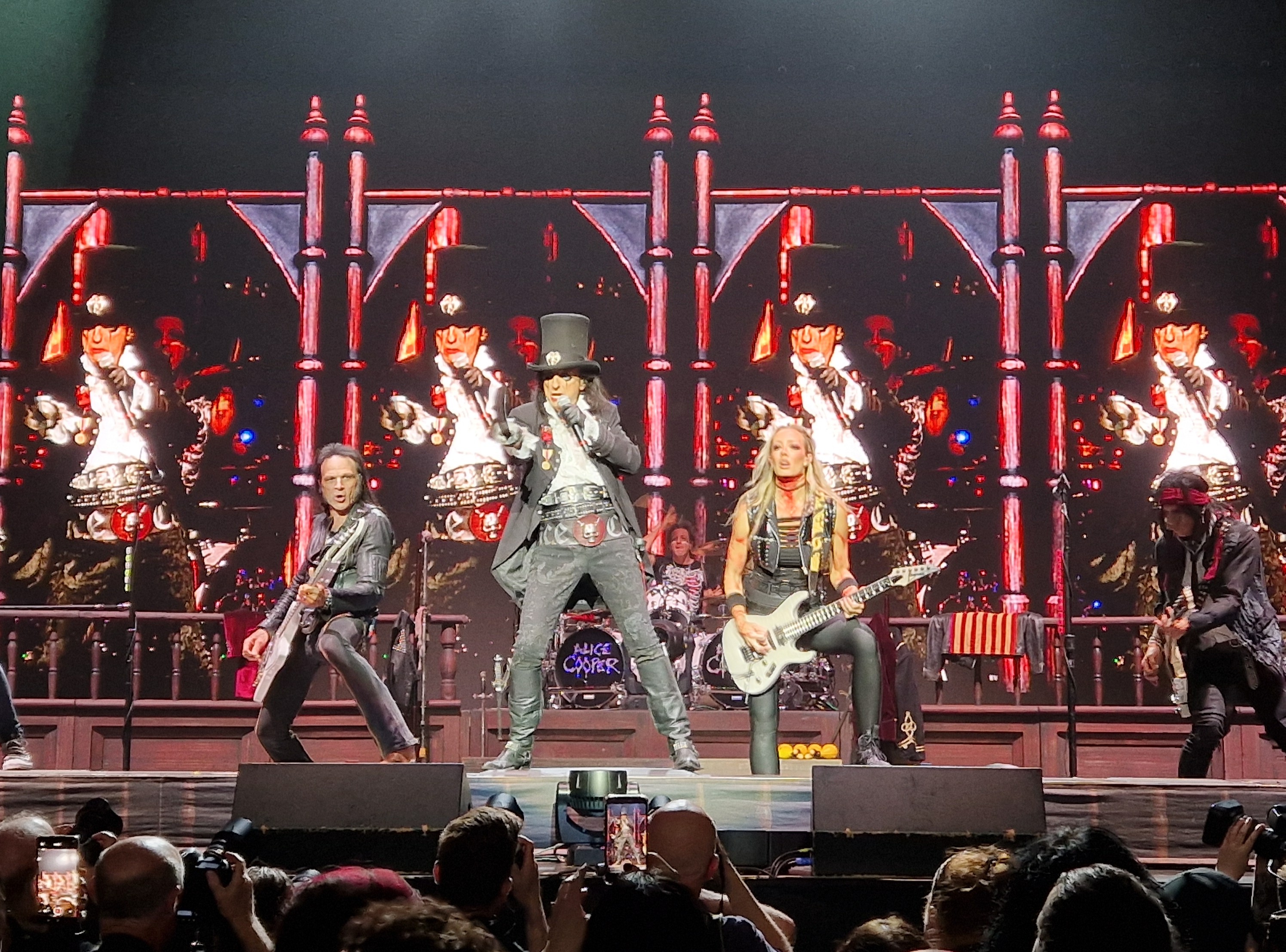
Kicking off with ‘Lock Me Up’, Alice Cooper’s set is as over-the-top and theatrical as ever. An exhilarating combination of blistering hard rock, glam-meets-horror showmanship and that unmistakeable, menacing vocal drawl, the hits come thick and fast – with the likes of ‘No More Mr Nice Guy’, ‘I’m Eighteen’, ‘Hey Stoopid’ and ‘Poison’ fired out one after another.
He may be doing this as a double headliner tour but just like the previous time I saw him (when he was a wonderfully incongruous addition to the line-up at Fairport Convention’s Cropredy festival back in 2013), there’s no skimping on the theatricals. A giant-sized Alice puppet dominates the stage with mock-horror excess during ‘Feed My Frankenstein’, the guillotine comes out for the traditional ritual execution during ‘Killer’ and there’s whippings and slashings galore. It was all huge fun and exactly what you expect from an Alice Cooper gig. But what came later on made everyone gasp.
Lemmy’s legacy may have been very apparent during Phil Campbell’s opening set but for the two headliners, it was very much the spirit of the much more-recently departed Ozzy Osbourne that stole the show. Both would pay tribute to Birmingham’s finest tonight.
Reappearing on stage wearing an Ozzy T-shirt, Alice roared out the lyrics to ‘Paranoid’ as the band blasted out that unmistakeable riff, joined by none other than Hollywood’s Johnny Depp. It was all genuinely surprising, touching and thrilling in equal measure.
There was just time for one more hit after that. And one more set of special guests, as original Alice Coopers members Michael Bruce, Dennis Dunaway and Neal Smith joined the band on stage for ‘Schools Out’. The horror show theatricals give way to a gloriously OTT end-of-term party as giant coloured balloons are hurled across the stage and stabbed by Alice to release explosions of confetti. What a blast!
Alice Cooper setlist:
Lock Me Up Welcome to the Show No More Mr. Nice Guy I’m Eighteen Hey Stoopid He’s Back (The Man Behind the Mask) Feed My Frankenstein Go to Hell Poison Black Widow Jam Ballad of Dwight Fry Killer I Love the Dead Paranoid School’s Out
Coming on stage to the strains of Black Sabbath’s ‘War Pigs’, Judas Priest launched straight into ‘All Guns Blazing’ from the Painkiller album. Released 35 years ago, songs from that much-celebrated album feature heavily in tonight’s set. Given it’s one of Priest’s most unrelentingly heavy albums, it gave tonight’s show an unrelentingly heavy edge, with songs like ‘Hell Patrol’, ‘Night Crawler’ and, of course, the title track blasted out at breakneck speed in a demonic-sounding wall of twin guitars, a thunderous rhythm section and Rob Halford’s unmistakeable roar.
The Painkiller album is rightly held in huge affection by many metal fans. My favourite era, however, will always be the Killing Machine/British Steel days because that was my entry point into the band’s music as a young teenager. It was great, therefore, to get a blast of ‘Breaking The Law’ fairly early on – a true shake-your-fists-shout-along-at-the-top-of-your-voices all-time metal classic.
The continuing high quality of Priest albums in more recent years has also been a real cause for celebration. So it was also a treat hearing ‘Gates of Hell’ and ‘Giants in the Sky’ from the excellent 2024 album, Invincible Shield. The latter song, celebrating the continuing legacy of fallen rock legends, is given added poignancy with the death of Ozzy Osbourne earlier in the week and we get a touching video on the big screen – now including images of Osbourne. It’s also provides incontrovertible proof that, over five decades on, this is still a band that can turn out bona fide rock classics.
This is followed by a blistering version of the aforementioned ‘Painkiller’ – a sign that things are beginning to draw to a close. Having such a clear front-section view, I catch a glimpse of polished chrome in the wings and know exactly what’s coming next. Sure enough, Halford rides out on that glistening Harley Davidson to deliver a raucous ‘Hell Bent for Leather’.
Following Alice Cooper welcoming the original surviving band members on stage for ‘Schools Out’, it was an even lovelier moment seeing veteran Priest guitarist, Glenn Tipton, being welcomed on stage for the final song of the evening. Although Parkinson’s has left him visibly frail, Tipton’s delight at being up there rocking with the band for ‘Living After Midnight’ was plain for all to see. A marvellous finale to a brilliant evening of rock and metal.
Judas Priest setlist:
All Guns Blazing Hell Patrol You’ve Got Another Thing Comin’ Freewheel Burning Breaking the Law A Touch of Evil Night Crawler Solar Angels Gates of Hell Between the Hammer and the Anvil Giants in the Sky Painkiller Hell Bent for Leather Living After Midnight
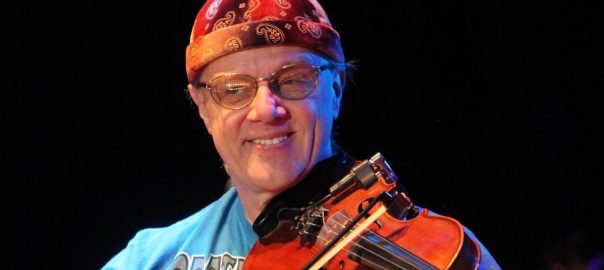
Ahead of this year’s Cropredy festival, I catch up with Fairport Convention’s Ric Sanders. We talk about first learning to play the violin at primary school, about getting his big break with Soft Machine and the invitation to play on Fairport’s Gladys’ Leap album forty years ago this year – and, of course, this year’s Cropredy line-up.
If we can talk about your very early days first, when did you first pick up a violin?
Well, I took it up when we were in junior school. The whole class had six weeks of being taught to play the violin. I mean, it’s nowhere near enough time. It was just six weeks and we had this teacher called Mr. Tunnicliffe. He’ll be long gone now but we used to call him Ten-ton Tunnicliffe because he was quite portly. But he played the violin and he taught us. He got the whole class playing a pattern on the open strings. And then with great bravura, Ten-ton Tunnicliffe would play this jig over the top of it. Very simple thing and most of the class didn’t get on too well with it. But after that third week, I could play the tune that Ten-ton Tunnicliffe was playing. I could just do it. I don’t know why. But I wasn’t interested because I wanted to be an astronaut or a scientist. So, when the six weeks ended – and I’ve never told this to an interviewer before – I forgot all about it. They weren’t our violins – they were provided by whoever – and then I forgot about it. In actual fact, seriously, I took up playing the violin again when I was 17. Because I was 17 in, I guess, the summer of love and I’d always liked the Beatles and the Stones and stuff.
Before that, my dad was an RAF radio operator. And he was stationed in Limavady in Northern Ireland during the war with the Americans, liaising with their radio people. That was his war gig. And he came back from the war festooned with nylons and chocolates and a whole stack of 78 records. Lots of the great jazz players, like Benny Goodman and Glenn Miller, Duke Ellington, Gene Krupa and all sorts, basically. And I started to hear this jazz and I kind of really liked that.
I have an elder brother, Mike, who would buy all the records. So, when there was the Trad Jazz boom, Mike bought all the Acker Bilk and Kenny Ball… Chris Barber Band, which was my favourite, because they really rocked. And then he bought all the Beatles and the Stones’ stuff. So, the first thing I ever had to buy using my own pocket money was in fact Magical Mystery Tour. But it was Sergeant Pepper and Magical Mystery Tour that made me think this is what I want to do for the rest of my life. I want to be a musician.
But I hadn’t got a guitar or a bass. I wouldn’t have taken up the drums because there’s too much to carry around. Or a keyboard. I hadn’t got any of those things but there was an old violin that my grandma had in the loft. So, I got it out of the loft, scraped all the varnish off it, polyurethaned it, filled it with cotton wool to stop feedback, and got a contact microphone that I bought from an advert in the back of the Melody Maker magazine. It cost me 19 and 6, and I strapped it to the fiddle with a few rubber bands. And I learned the riff from ‘Willie the Pimp’ by Frank Zappa on his Hot Rats album. And that was the start of it.
My mum and dad, they were hoping I was going to have some sort of academic career or be a doctor or a lawyer or a teacher or something. Quite understandable. But my mum was a good singer and my dad played. They come from a Salvation Army background so he played in the Salvation Army brass band and stuff. So, both my folks were musical and once I convinced them that I was really earnest about doing this, they were with me all the way.
And at that time, around about ‘68, ‘69, it was when you began to hear great fiddle players in the world of rock. And then, of course, I got into jazz as well and listened to Stephane Grappelli and Django Reinhardt. Stephane was a phenomenal violin player, one of the greatest ever. But I was also listening to David LaFlamme from It’s a Beautiful Day. And I was listening to Jerry Goodman from The Flock and then the Mahavishnu Orchestra. And Sugarcane Harris, who was amazing. He played on the Hot Rats album and played the violin like a blues harmonica, it sounded like. He was the bluesiest ever and was probably my main influence. Jean-Luc Ponty, of course, who may be the most high-profile modern jazz violinist, I guess.
And, also, I was listening to some great fiddle players in the UK. Of course, there was Dave Swarbrick. I play nothing like Dave Swarbrick. I can’t. Chris Leslie can. Chris Leslie can do an impression. He can even do the voice!
The first big band that I played in was with Stomu Yamashta, a Japanese avant-garde percussionist. Stomu Yamashta Red Buddha Theatre. I did a six-week European tour with him as a dep because his wife played the electric violin but she had to go back to Japan to visit her elderly parent.
So that was your first professional gig then?
Yeah, that was my first, Stomu Yamashta. I knew it was only a short-term thing and I went and auditioned for it in a room above a London pub. And there was a queue of violinists all around the block and somehow, I got the gig. And then the real big break in my life came joining Soft Machine. Because John Marshall, the drummer, got to hear me playing with Michael Garrick, the great jazz pianist who I’d written to. I’d sent him a cassette of me playing some Chick Corea tunes and said, “Can I come and see you for jazz harmony lessons?” And he said, “Better than that. Come and do a few gigs with us.”
So, I did. And John Marshall was the drummer on one of those gigs. And Soft Machine – their soprano saxophone player, Alan Wakeman, who’s Rick’s cousin, he’d left because he got a gig being musical director for David Essex. And they couldn’t find a replacement but the violin kind of occupies that same sonic range, not totally, but pretty much. And so, I got the gig in Soft Machine.
And then I’d also sent a tape to Ashley Hutchings. And having done Stomu’s thing, which was only short term, at the end of the 70s I found myself in the exciting position of being in both Soft Machine and the Albion Band, which, of course, included Ashley Hutchings, Simon Nicol and Dave Mattacks and Michael Gregory and Graham Taylor.
So that was your foot in the door into the world of folk rock then?
Yeah, and through that I met Andy Cronshaw and June Tabor and Martin Simpson and we used to play a lot together. I don’t consider myself a gifted folk player in the way that Dave Swarbrick was or the way Chris Leslie was. I’m basically a jazz rocker really and I play everything like it’s the blues. That’s my cunning secret. I play everything like it’s the blues.
But that was always part of Fairport’s DNA anyway it was never just a pure folk band.
That’s true. And, you know, Richard Thompson could play anything. And Simon Nicol he’s underrated as a guitarist. He is an incredibly good guitarist. People say that there’s been so many musicians in Fairport Convention. There’s been 29 musicians but that was all in the early days. I joined in 1985, my first album being ‘Gladys’ Leap’, which is what we’ll be celebrating because it’s the 40th anniversary. It’s my 40th anniversary as well. So, Richard guested on that album. I appeared as a guest. I recorded it in April ’85, I think and here I am 40 years later.
So how did it come about then, being invited to play on Gladys’ Leap?I think you did three tracks on that?
I did three tracks, yeah. And what had happened was that Fairport had been pretty inactive, really, except for the festival. There hadn’t been a Fairport band from, you know, 1980 to 85. And the three main members were Simon and Peggy and Dave Mattacks, or DM, as we call him. And they’d got a bunch of new material. And Peggy, was in Jethro Tull at the time which gave him the financial security to be able to build Woodworm Studios at his home in Barford St Michael. It’s no longer Peggy’s but Woodworm Studios is a great place and still is and that was where the album was recorded. And Peggy gave me a call because we go back a quite a long way because our dads knew each other.
So, it all kind of slotted into place and I never expected to be in Fairport because they’d got one of the most phenomenal fiddle players of all time, Dave Swarbrick. But Swarb didn’t want to do the Gladys’ Leap album because he wasn’t into the material. And he’d just formed Whippersnapper with Chris Leslie. I think Chris was in the frame for joining Fairport, but he declined because he’d just formed this band with Swarb and Chris is very loyal. And Fairport had been inactive for years and Whippersnapper had a full diary.
So, I got the next call. And when Peggy called, he said, “I want you to play on some recordings I’m doing. I’ll send you a cassette.” Peggy had this offshoot group – a fun outfit it was – and they were called Dave Pegg’s Cocktail Cowboys, of which Chris was a member as well. At this time, around about ‘85, I was just doing jazz gigs around the Midlands. Just going out, playing with different rhythm sections, like jazz musicians used to. And it wasn’t hugely lucrative, but I got by. Peggy sent me this tape and I thought he was asking me to play on a Cocktail Cowboys record because I had no idea that Swarb had decided that he didn’t want to carry on with Fairport. And so when the tape arrived and I listened to it, I thought, hello? Well, that’s Peggy playing the bass, obviously. That’s Dave Mattacks on drums. And that guitar I could tell straight away. And yeah, it turned out to be Gladys’ Leap. And I went along and my first day was just recording those three tracks that I did on the album. The standout track for me, and the one that stayed in the repertoire, is ‘The Hiring Fair’.
Yeah, and a real fan favourite alongside the older material.
It really is. Well, Ralph (McTell) has contributed hugely to our repertoire. Also, Dave Mattacks, apart from being one of the world’s greatest drummers, is a very accomplished keyboard player with an incredible ear for harmonies and the instrumental section is actually written and arranged by Dave Mattacks. Well, it was right up my street because it’s not overtly folky. And I just played like I would do if it was a jazz rock thing that I was doing. So, I think probably that track more than any other helped me get the gig.
And then Maartin Allcock was recruited and as I say there’s been many people in Fairport but since I joined, which is now 40 years ago, there have only been two changes of line-up really. Which is when Maartin Allcock decided to move on and is sadly no longer with us. And when DM moved to America because he was getting so many sessions, and Gerry Conway joined the band. And of course, Gerry passed away, which is very sad. He was with us for 25 years. But now we’ve got DM. We were kind of stuck, you know. What were we going to do on the winter tour and Cropredy? And so now DM comes over from America for the winter tour and for Cropredy, which is great.
Photo credit: Kevin Smith
So just going back to 1985, you didn’t play Cropredy that year because obviously Dave Swarbrick was still booked to perform at the festival.
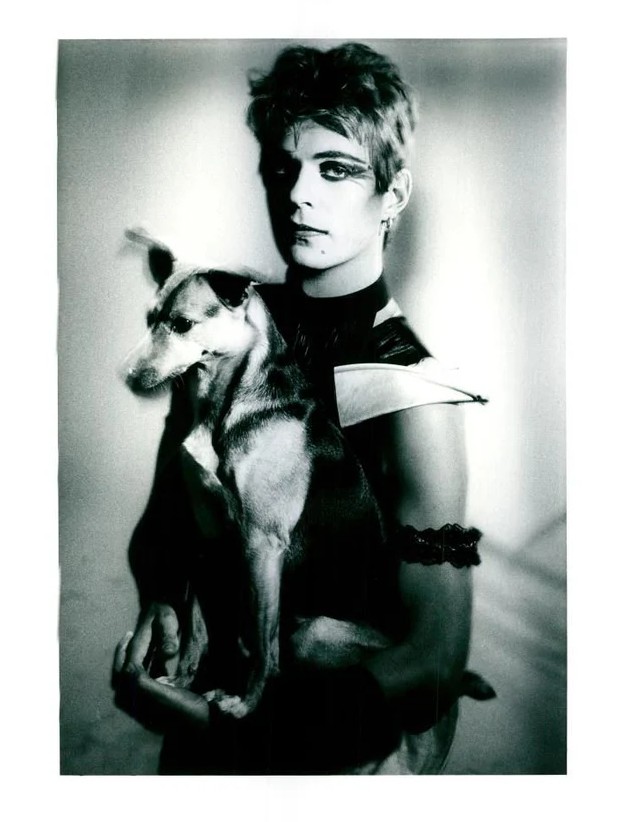
Yeah, I went on the Friday night. It was a two-day festival at the time. I couldn’t stay for the Saturday because I had to get up at the crack of dawn and go to Edinburgh because I was playing at the Edinburgh Festival with a dear friend of mine who I’ve just been recording with recently again, a guy called Phil Nicol. We did two weeks at the Edinburgh fringe and what our gig was, was playing half a dozen numbers at the end of a comedy cabaret. Some of Phil’s songs, and we also did ‘May You Never’ by John Martyn and we did ‘Every Breath You Take’ which had been big at that time. By the way, I should tell you that the main star of the comedy cabaret that we did in Edinburgh was Julian Clary, who was incredibly funny. And at that time, called himself the Joan Collins Fan Club featuring Fanny the Wonderdog.
The Joan Collins Fanclub (and Fanny): 1980s publicity shot
I remember because he was on Channel 4 a lot in those early days.
Yeah. He was great. I mean, you know, never heckle Julian. Never. And he would improvise. We would do two shows a day and the shows were different every time. And he’d do this thing where he’d go and find a lady’s handbag and go through it and improvise a routine from the contents. He was absolutely wonderful. Also, there was Jeremy Hardy, the late Jeremy Hardy. He was a great comedian. He was on that. So that was a great show. Yeah, that’s why I couldn’t go to the Saturday Fairport!
But soon after you did become a full-time member. What did it feel like taking over the fiddle player’s role in Fairport Convention from Dave Swarbrick?
Do you know, I wasn’t really that nervous about it. A little bit, I mean, I was nervous a little bit just because Swarb was not just such a great musician but such a such a great personality. His personality was stamped on Fairport. But actually, I get more nervous now than I did was when I was a kid because when you’re that young – I was only in my very early 30s when I joined Fairport – and I’d already played with some incredible musicians. Carl Jenkins, John Ethridge, Alan Holdsworth. I played with these guys. John McLaughlin, you know, I jammed with John McLaughlin. Toured with his group, Shakti. Not as part of his group but with Soft Machine and John McLaughlin doing a doubleheader tour of Europe. So, you know, I had the sort of cockiness of youth. I was young and I wasn’t too scared. I get more nervous now, actually. I’m 72 now. I thought when I got to this sort of an age, I’d be bulletproof but it’s been the reverse.
I remember the first concert that we did was at the Sir George Robey pub in London and from the word go, the Fairport audience were really good to me. And I’ve heard it said since – well Chris Leslie has said, “I wouldn’t have been the right person for the job because I would have sounded like Swarb at the time.” I mean, Chris has got his own style totally now. I was completely different because I couldn’t play like Swarb. I had to come at it from a completely different angle. So, I couldn’t be a replacement for Dave Swarbrick. It was something different.
Photo credit: Kevin Smith
Looking back over the last 40 years, what have been some of your favourite recordings in Fairport? You mentioned ‘Hiring Fair’ obviously.
I guess one of the things that I really love doing because I’m not a songwriter – Chris is a brilliant songwriter and has gone from strength to strength – but I write instrumentals. That’s what I do because that’s what I always did. And I’ve loved writing things like ‘Portmeirion’, which is my most well-known tune, I think, that people kind of like.
And another absolute standard that stands up so well alongside the older material.
Yeah, which is very gratifying. And ‘The Rose Hip’ and tunes like that. I’ve loved writing ‘Summer in December’ and stuff. They’re ballads that have got a folkish-type melody, but kind of jazzy in harmony ways. So that’s been really great to do. And, also, when I first started to write fast instrumentals for Fairport, I would just write imitation medleys. Because that was the pattern that was brilliantly done on Liege & Lief with ‘The Lark in the Morning’. When you take a jig and a reel and a hornpipe or whatever and you put three or four trad tunes as a kind of medley. So, you know, I wrote a number of those, a sort of imitation using the template of those tunes.
But then, around about Festival Bell time, I started to write instrumentals. The old way of writing, I’d write the tunes on the fiddle and then harmonise them. But then when you got to tunes like ‘Danny Jack’s Reward’ and ‘The Gallivant and ‘Steampunkery’, which is the one that’s in the repertoire at the moment, I would write those from the rhythm section up. I’d write the band part first, then find a melody to put over it. And I wasn’t sure if the band would go for that style of stuff, but that proved to be OK. One of my favourite things, which you can see on YouTube, is doing my tune ‘The Gallivant’ with the brilliant Joe Broughton and his Conservatoire Folk Ensemble, who are on the Thursday at Cropredy. Joe arranged the brass section for it. He’s a brilliant musician and I love working with him.
Is there anything else you want to tell us about Cropredy this year before we wrap up?
Well, we’ve got a great line-up. Thursday, Albert Lee, one of the world’s greatest guitarists. I’m sure he finishes his show with ‘Country Boy’. I don’t think they’d let him out of the venue alive if he didn’t finish with ‘Country Boy’. On Thursday, Peatbog Faeries, Joe Broughton with his Conservatoire Folk Ensemble, as I just mentioned. And of course, we kick it off on the Thursday with Fairport Acoustic, just a welcoming set. And then I think we’re going to get Broughton and co. to come on and do a number with us, to cross over. Also, the lovely Rosalie Cunningham is on Thursday. And I might be playing with her as well because I played on her last two albums. It’s kind of prog rock, you know, so it’s great. So that will be an exciting Thursday.
Photo credit: Sam Reynolds
And then we’ve got the Trevor Horn band on Friday. Last year, Trevor had to cancel because of illness so he’s headlining on Friday. And you never know who Trevor Horn’s going to turn up with, what style that he’s produced is going to show up.
Yeah, that’s always a hugely entertaining part.
I’m hoping he brings Holly Johnson some time. I’d love to see ‘Relax’ at Cropredy. It would be great. So, we’ve got Trevor Horn, Joe Broughton, again, in the Urban Folk Quartet. And some bands that I don’t actually know who they are. El Pony Pisador. Well, I don’t know that group. And City Funk Orchestra. And Skipinnish.
And then, of course, there’s King Pleasure and the Biscuit Boys. We’ve got the Church Fitters, Plumhall, who opened up for us, not this year, but the year before, which is great. And the day starts with the Cropredy Primary School folk class so that will be lovely. And then on the Saturday, we’ve got Richard Digance, of course. And the Deborah Bonham band, brilliant. Martin Barre from Jethro Tull. Bob Fox and Billy Mitchell, they’ll be brilliant. Who’s headlining? Oh, we are! Yeah. So, we have no doubt guests who I don’t know who….
So, there will be some surprises for us on the Saturday and some surprises for you by the sound of things!
Yeah, yeah. Chris Leslie and I don’t take much of a role in the organisation part, or DM. The triumvirate that runs the festival is Dave Pegg – of course, there wouldn’t be a festival, there wouldn’t be a Fairport without Peggy – and Simon Nicol and Gareth Williams, the festival director. So, they’re the guys in the driving seat. And I just, you know, turn up and play. Maybe tell a few jokes. But it’s great. I never in my life, for a minute, thought I would be in Fairport. I was always a fan, a massive fan of the group. And I knew pretty much all of the guys before I joined. But you know, Fairport is more than a band to me. It’s like my family as well. And we really have that feeling. We see so many bands fall apart and have arguments and whatever but it’s not like that with Fairport.
And occasionally I’ve been told by Simon and Peggy sometimes in the past I’ve played a little too jazzy and put in some scales that they don’t think were appropriate. They say, “Don’t do that!” And when they say that I think about it, and I think, “You know what they’re right, you know. No, you don’t need seven flat nines in ‘Walk Awhile.’ Just forget it!” So, yeah, it’s just a very happy band, really. And I don’t know how many years it will carry on. Until we drop, really, I think.
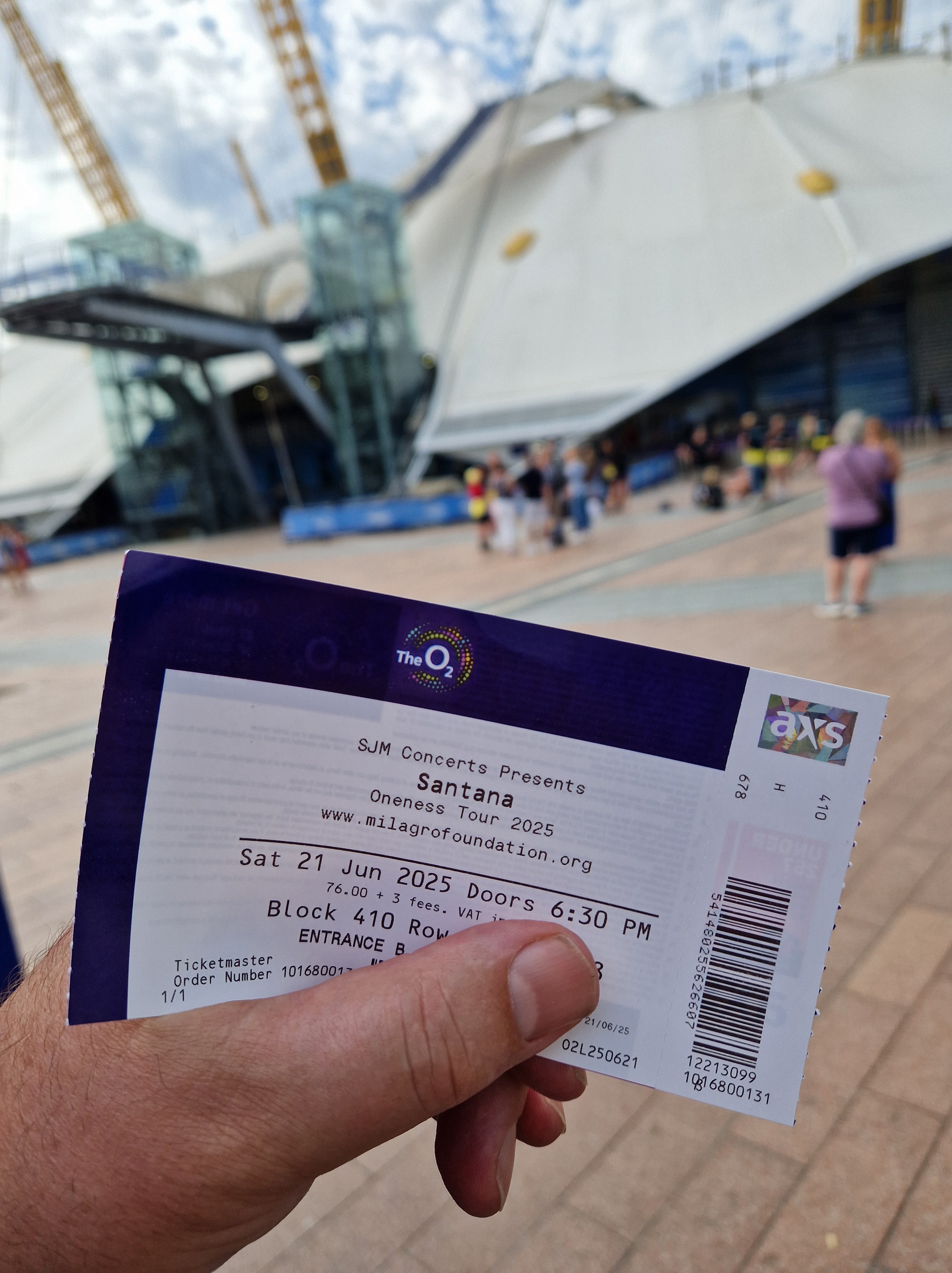
There are not many world-class rock acts still performing that remain to be ticked off on my own personal bucket-list but Santana definitely fit that category so it was off to London at the weekend for a night at the O2.
My phone doesn’t seem to like ticket apps for some reason. I frequently get blocked by app accounts which always makes me incredibly nervous in the run-up to a “your phone is your ticket” type gig. However, at least the O2 seem to be aware that ticket app technology is far from fool-proof. If you can’t access your ticket on your phone they have a Plan B in place: go up to the box office, show them your original confirmation email, show them some photo ID and they will happily print off an old-fashioned paper ticket for you.
With that drama over and after meeting up with friends for a pre-gig pizza, it was time for Santana. No support band, just two hours of pure Santana magic with a short interval mid-way through.
From the off it’s very much a give-the-audience-exactly-what-they-want greatest hits set, interspersed with nuggets of Woodstock-era exhortations in favour of love and peace and togetherness. “I’m a hippy!” explains Carlos Santana to the O2 crowd. What most surviving veterans of Woodstock cannot boast, however, is a multi-platinum-selling career-renaissance album from the late 1990s. Songs from 1999’s Supernatural album are thus well-represented throughout the set, alongside a heavy dose of material from the first three albums. Starting off with a wonderfully energetic ‘Soul Sacrifice’ to get us all into the Latin-rock-Woodstock- hippy vibe, that mix of late 60s/early 70s Santana standards alongside late 90s/early 00s renaissance classics works to perfection. In the first half, ‘Evil Ways’, Black Magic Woman’ and ‘Samba Pa Ti’ from the earlier era nestle alongside equally stunning renditions of ‘Maria Maria’ and ‘Foo Foo’ from the later one.
It’s not unusual for artists headlining arena gigs to have a huge entourage of touring musicians and, indeed, it’s a ten-strong band up on stage tonight. What’s impressive for such a full sound though is that beyond the two vocalists (Andy Vargas and Ray Greene) at the front and the array of percussionists dominating the back of the stage it’s a standard rock-band set-up of two guitarists, a bass-player, keyboards and drummer. The latter, Cindy Blackman Santana, is the wife of Carlos and an insanely-talented performer, with her powerhouse hard-rock drumming melding perfectly with the multiple layers of additional percussion to create that signature Santana sound.
Post-interval, as soon as the band are back on stage, it’s on to more magic. Kicking off with another instrumental ‘Batuka’, the second set is that familiar mix of Woodstock-era favourites and Millennium-era classics.
When the houselights are up, the hangar-like confines of the O2 will never be anyone’s idea of an intimate venue. But once those lights go down a performer like Carlos Santana can instantly make an emotional connection with the entire 20,000 capacity crowd. Indeed, I’m genuinely moved to tears by the hold-your-phones-in-the-air moment for ‘Put Your Lights On’ later in the set. And that’s only one of many highlights in the second half, including a beautiful ‘She’s Not There’.
Returning to the 1971 Santana III album for ‘Everybody’s Everything’ things start drawing to a close but not before there’s time for an encore of ‘Toussaint L’Ouverture’, a jaw-dropping extended drum solo from Cindy Blackman Santana and an everybody-out-of-their-seats finale so we could all to dance along to ‘90s mega-hit, ‘Smooth’. Exceptional musicianship and an incredible night.
Part 1: Soul Sacrifice Jingo Evil Ways Black Magic Woman / Gypsy Queen Oye Cómo Va Maria Maria Samba Pa Ti Foo Foo Hope You’re Feeling Better
Part 2: Batuka No One to Depend On She’s Not There The Game of Love (Da Le) Yaleo Put Your Lights On Corazón espinado Everybody’s Everything Toussaint L’Ouverture Smooth
“The album is about the quest to right wrongs, the search for inner peace, andthe reconnection with the land of my birth.” – Joe Hodgson
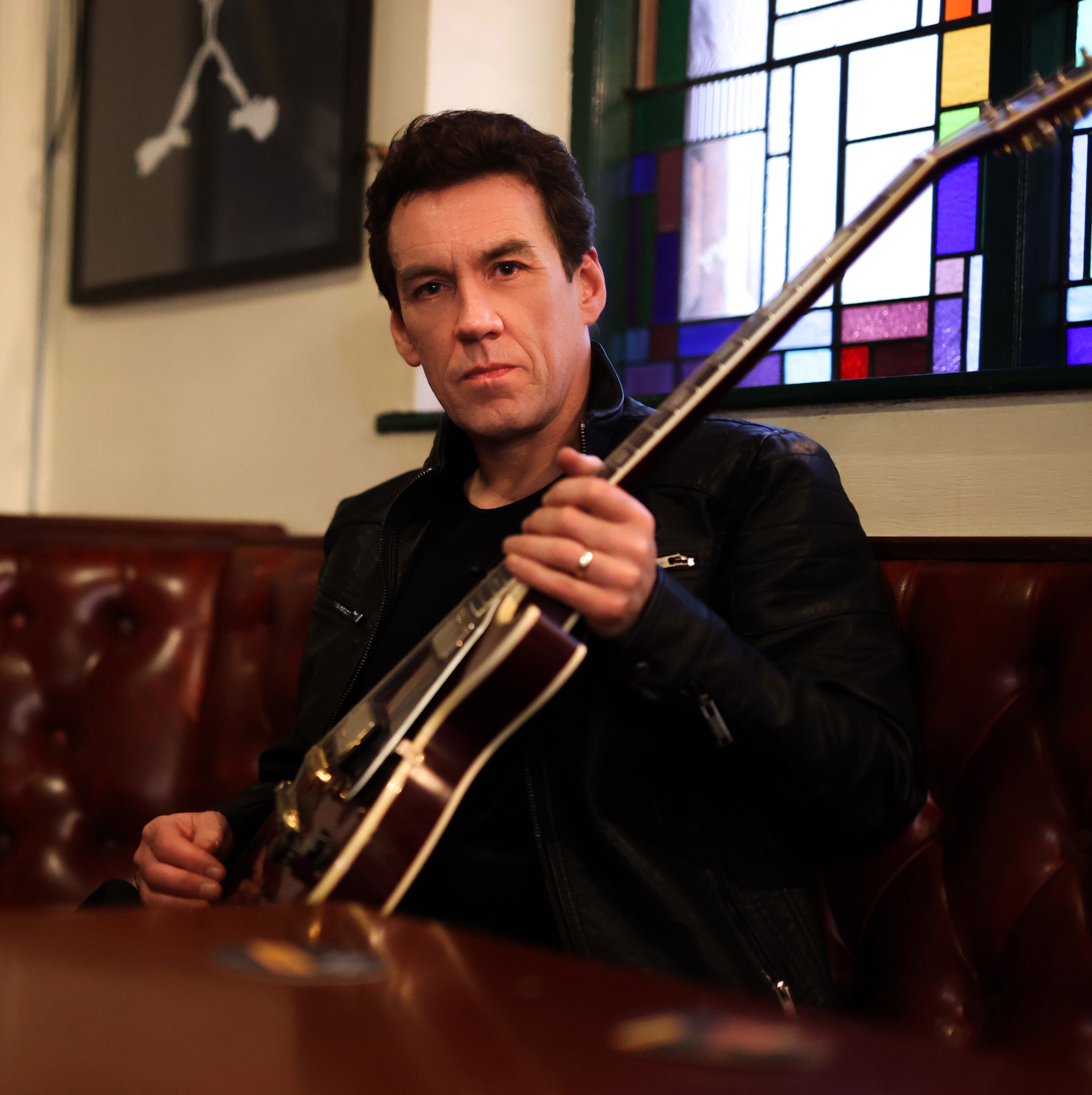
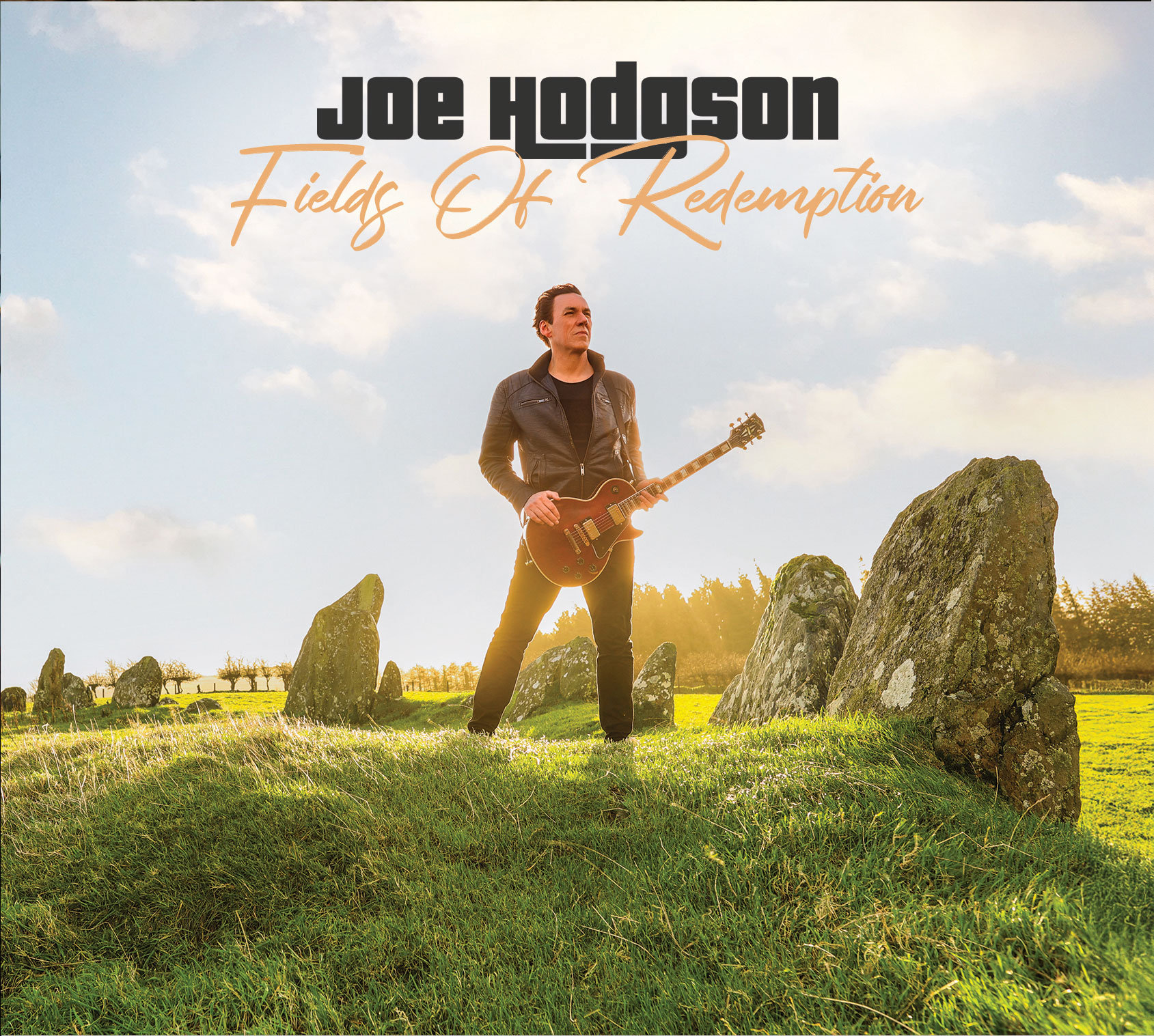
While firmly grounded in the rock and blues influences of his youth, Fields of Redemption sees Irish guitarist Joe Hodgson encompass a myriad of musical styles, which he blends and moulds to stunning effect. The result is an almost entirely instrumental album that is insanely diverse and refuses to fit neatly into any musical genre.
Hodgson explains:“You’ll find all my influences in there: rock, blues, jazz, classical, country, and even Irish traditional music. I also recorded two acoustic tracks, which was a first for me.”
Feelings of introspection and soul-searching pervade the record, but it also radiates brighter, less angst-ridden melodic explorations than its predecessor, Apparitions. The inspiration for the album came from an extended journey around his native Ireland with his new wife and his trusty Gibson Les Paul, soaking up the land of his birth.
Hodgson adds:“The album is fundamentally about reconnecting with my roots, reconciling with and embracing the past, while steadfastly looking to the future. It’s also about a journey to find inner peace, which for me is punctuated by laughter and a whole lotta fun. Overall, I think it’s a very uplifting record.”
The album is co-produced by Hodgson and Chris James Ryan (Keith Urban, Go West, The Church), and it features the Austrian rhythm section of Philipp Groyssboeck on drums and Vinzenz Benjamin on bass, both currently members of Go West and Cutting Crew. The nucleus of the band is completed by Otger Garcia on Hammond organ, Kelly O’Donohue on horns, João Paulo Drumond on percussion, and All-Ireland Champion bodhrán player, Paul McClure. Recording sessions took place in Ireland, England, Germany, Canada, the USA, and the Czech Republic.
For Joe, the most memorable recording session took place in Prague with the Czech Philharmonic, who appear on one of the album’s flagship tracks, “You I Think Of”. He describes this as “a spine-tingling moment”. Another highlight comes with the guest appearance of Irish singer Glen Harkin on “Since You Had a Hold on Me”. The album was mastered by Grammy Award-winning engineer Will Bowden (Gotye).
Fields Of Redemption is a big-sounding record, but not an over-produced one. It covers a wide range of emotions, moods, and styles, and it takes the listener on an epic journey. It is ambitious and brave, and the frequent twists and turns will keep listeners constantly on their toes. Despite the blending and blurring of musical genres, Fields of Redemption has a truly cohesive feel to it, and it is an album that is meant to be listened to from start to finish.
Read my feature-length interview with Joe Hodgson here
About Joe Hodgson:
Guitarist Joe Hodgson hails from the village of Ballymagorry in Co. Tyrone, Northern Ireland. His music, shaped by his upbringing during The Troubles, mirrors the fierce rain and winds of the Emerald Isle. It is both sweeping and intense, boldly blending rock, blues, jazz, and Irish traditions into finely crafted instrumentals, which reveal a multifaceted, emotive, and diverse performer.
After many years of playing and recording with London-based bands and touring throughout Europe, Joe returned to his birthplace in 2018. In 2020, he released his debut solo album Apparitions to wide critical acclaim. Guitar World called his playing “elite”. Prominent Canadian music journalist Steve Newton said he is “the best guitarist you’ve never heard of”. ANR Factory, meanwhile, described the album as “a modern-day masterpiece”.
On June 20th, 2025, Hodgson is set to release his second solo album, Fields of Redemption, an almost entirely instrumental collection of tunes which, in typical style, straddles, blends and bends musical genres. The album also features a guest appearance by Irish singer Glen Harkin. Three singles from the album have been released to date, garnering glowing reviews.
Guitarist, Joe Hodgson, hails from the village of Ballymagorry in Co. Tyrone, Northern Ireland. His music, shaped by his upbringing during The Troubles, mirrors the fierce rain and winds of the Emerald Isle. I catch up with Joe to talk about his musical heroes, his solo career and the release of his new solo album, Fields of Redemption, which comes out on June 20th.
For my first question, let’s go right back to the beginning. When did you first pick up a guitar?
I picked up the first guitar after my cousins in Dublin played me some Rory Gallagher, you know? I think it was the Stage Struck album, which was him at his most rocky and stuff. And then I just was totally sold on the guitar. And then I actually got tickets to see Rory Gallagher and I was just totally blown away. And from that moment on, it’s all I ever wanted to do, you know?
Was that your first concert then, Rory Gallagher?
No, my first gig I ever went to was Thin Lizzy, I think on the Renegade tour.
That tour was my first gig as well, how weird!
Yeah, I saw them in Dublin and yeah, they were great, you know. Snowy White was with them at the time. It was brilliant. But it was definitely Rory Gallagher who was the was my main reason for playing guitar. And then after it became Gary Moore – when I first heard him. Those two were my biggest influences. Two Irish guys just coincidentally.
Two iconic and very expressive guitar players, so obviously some of that has embedded itself in you from an early age.
Oh God, yeah. I was out for a few beers last night with my wife, and the guy put on Rory Gallagher on the video screen. And he was absolutely incredible. Amazing showmanship. He never messed up. He never got out of tune, never out of time. Raw. And that was amazing, you know. Brilliant.
If you want to talk about sort of the music that’s influenced me when I was growing up… as I say, Rory, and then Gary was definitely my biggest single ever. I’d say he was one of the greatest players of all time. But I was also into – and I still listen to – all the older, the English guys. Like, obviously, Eric Clapton’s a huge influence on me. Jimmy Page, Jeff Beck, Peter Green. Those four are still, to this day… you don’t get any better than them! And I still go back and listen to Clapton and Beck quite regularly, you know?
But in the ‘80s, ‘90s, I was heavily influenced by all the American players, you know. Van Halen, Randy Rhoads and Jake E. Lee and all those great players. But I was also into other music. Stuff like ELO and some quite melodic music, which probably has helped define me. Melodically, it’s given me that sense, I like to think, that my influence isn’t just from the hard rock. It’s from that kind of more pop rock as well. Fleetwood Mac and stuff like that. I love listening to that.
I think that’s something that really shines through in your own music.
So, from those early days, you went on to play in a number of bands. That was over in England. Did you want to tell us about that?
Well, it was a catalogue of almost-made-it type bands, you know. The band I suppose that came closest to cracking it was a band called Rime. At the time we released an album back in the mid-2000s. And we were about to be signed up by a major promoter in America. And at the last minute, just as the CDs had been printed, the singer walked out of the band. A French guy. It was unbelievable luck, you know? And we replaced him, but it was never the same when you replace a singer. The guy in this booking agency in America, he loved the singer, you know? So, when you replace the singer, it’s always difficult.
But I was in lots of different bands over there. And the last band I was in before I left was a band called Good Guy Dies. I was with a female singer from Latvia, and we did some BBC stuff. BBC Radio Kent and local stuff in and around London. And we toured all over the country but, again, that was a weird one because my background is Thin Lizzy, Rory Gallagher, Gary Moore, Led Zeppelin, all that. And her background was Tori Amos, Bjork. So, I thought it was a good idea to try and mix these, but it was like trying to mix oil and water, you know? So, it didn’t work in the end, I don’t think, musically. But I enjoyed playing that stuff and experimenting, you know?
And then you relocated back to Northern Ireland and released your debut solo album a few years later. Was that a conscious decision to move back to Ireland and launch a solo career, or did it just happen in the way sometimes things happen in life?
Yeah, the reason I came back here was that band Good Guy Dies broke up and I just wanted to get away from London for a while. Then my mum was diagnosed with motor neurone disease. So, I ended up back here and I nursed her in the last year of her life. She died here at home. I had no intention whatsoever of coming back here permanently but as the days went on, I thought I kind of like it here, you know. People talk to you here. It’s not like London, you know, and you go for a pint and people are going, “Hey Joe, how are you man? How you doing?” So, I felt just right at home again after a while. You couldn’t pay me now to go back to London, you know! I’m quite happy here.
Brilliant. I’m sorry to hear about your mum though. Although something very creative and very positive came out of a family tragedy.
Absolutely. It was always my dream to come back. This room where I’m in now, you can see all my guitars and stuff there. This is the room I learned to play guitar in. And I always had this sort of dream to come back here and record a solo album in this room which is what I did. I recorded all the guitars in here.
So yeah, it was always in the back of my mind to do something like this, you know, the solo stuff. I just found I really enjoyed the creative freedom. And I self-financed it all myself so there’s nobody breathing down my neck saying, “You shouldn’t be doing that.” I can experiment as much as I like. So that’s probably why you see quite a lot of different styles on the album. Because I’m the boss here of this little organisation, you know, and it’s really liberating. If I want to play a blues track, I’ll play a blues track, if I want to play a jazzy track, if I want to play some harder rock, I’ll do it, you know?
Yeah, those different styles certainly come out on the new album, and I know that’s been commented on in reviews.So, what do you want to tell us about the album Fields of Redemption that comes out on June the 20th?
Well, as I say, it’s very varied. It’s not like, say – and I’m not knocking them because I actually really like them – but you buy an Oasis album, you know what every track’s going to be. You know what it’s going to sound like before you even play it all. It’s great. But for me, that sort of approach is very limiting. So, I just wanted to be able to play whatever style I wanted at any given time, you know.
But also, the difference between this album and the last album was I got a co-producer on this album. A guy called Chris James Ryan. He’s Australian. He lives in Canada and he mixed Apparitions (Joe’s first solo album). That’s how I met him. But this time I wanted to widen the sound a bit and use orchestral elements and I wanted to bring in brass. And he was a great help with that. Communicating with these musicians along with me, you know? And we really went to town a bit more on the production this time – went really deep into getting the sounds right.
And, as I say, the guitars were recorded here in Northern Ireland, but the rest of it, like the drums and bass, were recorded in England. There were these two Austrian guys, Philipp Groyssboeck and Vinzenz Benjamin. And then I had musicians dotted all over the world. Like the horns were recorded in Germany by this Australian guy. I had a Brazilian percussionist. He was in Salvador. He recorded percussion over there.
Then one of the highlights for me was working with a guy called Paul McClure, who’s a bodhran player, the Irish drum. He was an ex-All-Ireland champion and he was phenomenal to work with. I did a couple of acoustic tracks. He’s on those, which is a first for me. I’ve never recorded an acoustic track from start to finish and I did two on this album so that was different.
It’s something I’m happy that I did, you know. Happy that I went so wide with the spectrum. But I would like to think that my guitar is the unifying factor, which brings it from start to finish and kind of makes sense of it, you know?
Oh yeah, absolutely. Your guitar shines throughout and your personality through that, I think. That’s definitely the unifying factor, isn’t it?
Yeah, and I also got to work with a singer who I’ve wanted to work with for a long time. A guy called Glen Harkin, who you heard on ‘Since You Had a Hold On Me’. Glen’s amazing. He’s probably the best male vocalist I’ve ever worked with, you know. You just turn on the mic, he was standing there behind me and I just let him open his mouth and sing. I’d say that track was done, his singing part in an hour, hour and a half.
His voice is perfect for that track. But as we say, it’s a mainly instrumental album. And I think with a lot of instrumental albums, they’re good at capturing abstract moods, but yours is actually telling stories, which I think is really, really fascinating. The music actually tells a story once you know the title. That’s quite a feat.
I’m really pleased you picked up on that because even though there’s maybe no words on the track, the tracks do mean things to me, you know? And there’s one track, that’s the very last track on the album. It’s the acoustic track, ‘The Ballad of Joe Clarke’. That’s quite a special track to me because it’s dedicated to a friend of mine who sadly died last year. And he was the person that brought me down to see Thin Lizzy in Dublin, you know? And he was a huge inspiration to me, because he played in local bands and he was a bit older than me, so I looked up to him. And I wanted to do this for him and his wife, Helena. That track means something to me, you know?
So finally, what next after this current album is released?
Next? Well, I would love to be able to tour this, you know, but it’s very, very difficult to do that with instrumental music. But if someone like a Robin Ford or a Joe Bonamassa said they want a support act. Yeah, count me in!
But looking further down the line with myself and Chris, we’ve already talked about the next album. And we actually want to go and do it in Nashville because he’s got quite a few contacts over there. Because you get these players in Nashville and they’re just unbelievable, you know. Probably do the ten songs, we’ll get the backing tracks done in a couple of days and then come back and work on the guitar. But that’s going to be a fair bit down the line, as I say, because all this is self-financed. So, it takes a while to get it together but that’s the next plan recording-wise.























 Darren's music blog