Following my ‘glam rock trilogy’ covering Slade, Sweet and Suzi Quatro, I now turn my attention to folk rock. I’m delighted to announce that my fourth book for Sonicbond Publishing will be coming out this summer. Steeleye Span 1970 to 1989 On Track: Every Album, Every Song will be out on 29 August 2025.
This latest book is part of Sonicbond’s ‘On Track’ series.
You can read the publisher’s blurb here:
When Ashley Hutchings broke away from Fairport Convention in 1969, he recruited two musical duos who didn’t seem to agree about very much at all. This fractious group imploded before their debut album was even released. Undeterred, two new musicians were enlisted and Steeleye Span carried on. Then Hutchings himself resigned. Rather than this being a disaster, however, it set in train what would become the band’s most commercially successful period. It was an extraordinary time for folk rock but it was not to last. The second half of the 1970s saw another change in line-up, disappointing album sales and a two-year hiatus. All was not lost, though, and the classic line-up reconvened at the start of the 1980s.
Covering a two-decade period, this book looks at every album from Hark! The Village Wait in 1970 to Tempted and Tried in 1989. The fascinating history behind the traditional songs on these albums is examined in detail, together with insights into how the band went about truly making them their own. Steeleye Span On Track is a meticulously researched celebration of the music of one the UK’s most important bands in the folk rock genre at the most crucial period in its history.
About the author:
A former politician, Darren Johonson spent many years writing about current affairs, but after stepping away from politics, he was able to devote time to his first love: music. His previous books for Sonicbond were The Sweet In The 1970s, Suzi Quatro In The 1970s and Slade In The 1970s. Following this glam rock trilogy, he now turns his attention to folk rock. A keen follower of both rock and folk, he maintains a popular music blog Darren’s Music Blog and has reviewed many albums and gigs over the past decade. He lives in Hastings, East Sussex.
Bristol-based Sons of Liberty have teamed up with Sunderland-based Thieves of Liberty for the unsurprisingly-named 12-date UK tour: The Tour of Liberty.
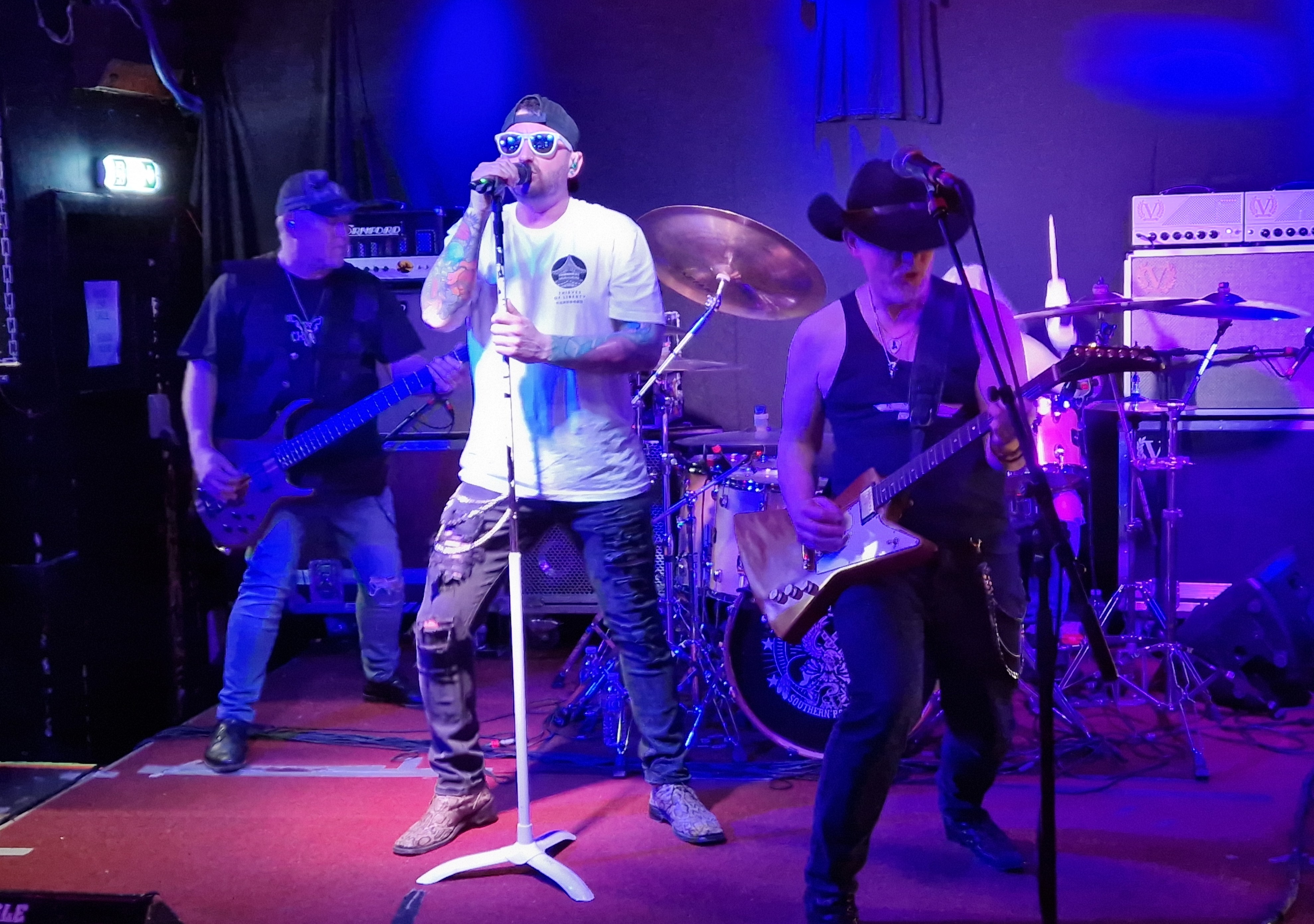
Thieves of Liberty opened proceedings with a set of high-energy hard-rock encompassing a spectacular twin-guitar assault from guitarists Kieran Wilson and Liam Lindsley, powerful vocals from frontman, James Boak, and delivering a slew of memorable songs off their debut album, Shangri-La. This young rock band have been garnering some rave reviews of late, with comparisons to mega-league rock institutions like Bon Jovi, Van Halen and Queen no less. That’s not all just hyperbole either. Though I haven’t seen them before they are well worth keeping an eye on.
Thieves of Liberty – photo: Darren Johnson
I first became familiar with the Southern Rock-inspired Sons of Liberty when they were Introducing Stage winners at Minehead Butlins back in 2019, returning to the main stage for a well-received performance the following year. Back then, they were fronted by Rob Cooksley (AKA Greyfox Growl), whose eccentrically charismatic stage persona was very much part of the overall SoL package. For me, however, the arrival of vocalist Russ Grimmett and the subsequent release of the band’s third album, The Detail Is in The Devil, marked a significant turning point. Grimmett is such a great singer with such a fantastic vocal range that Sons of Liberty have followed Deep Purple and Iron Maiden in being one of that select number of rock bands who go from strength to strength after replacing the frontman who helped give them their initial breakthrough. Never an easy feat to pull off, Grimmett is a superb fit for the band giving them greater depth and a more polished presentation, with the whole band creating some incredible music together. They are now in a whole different league.
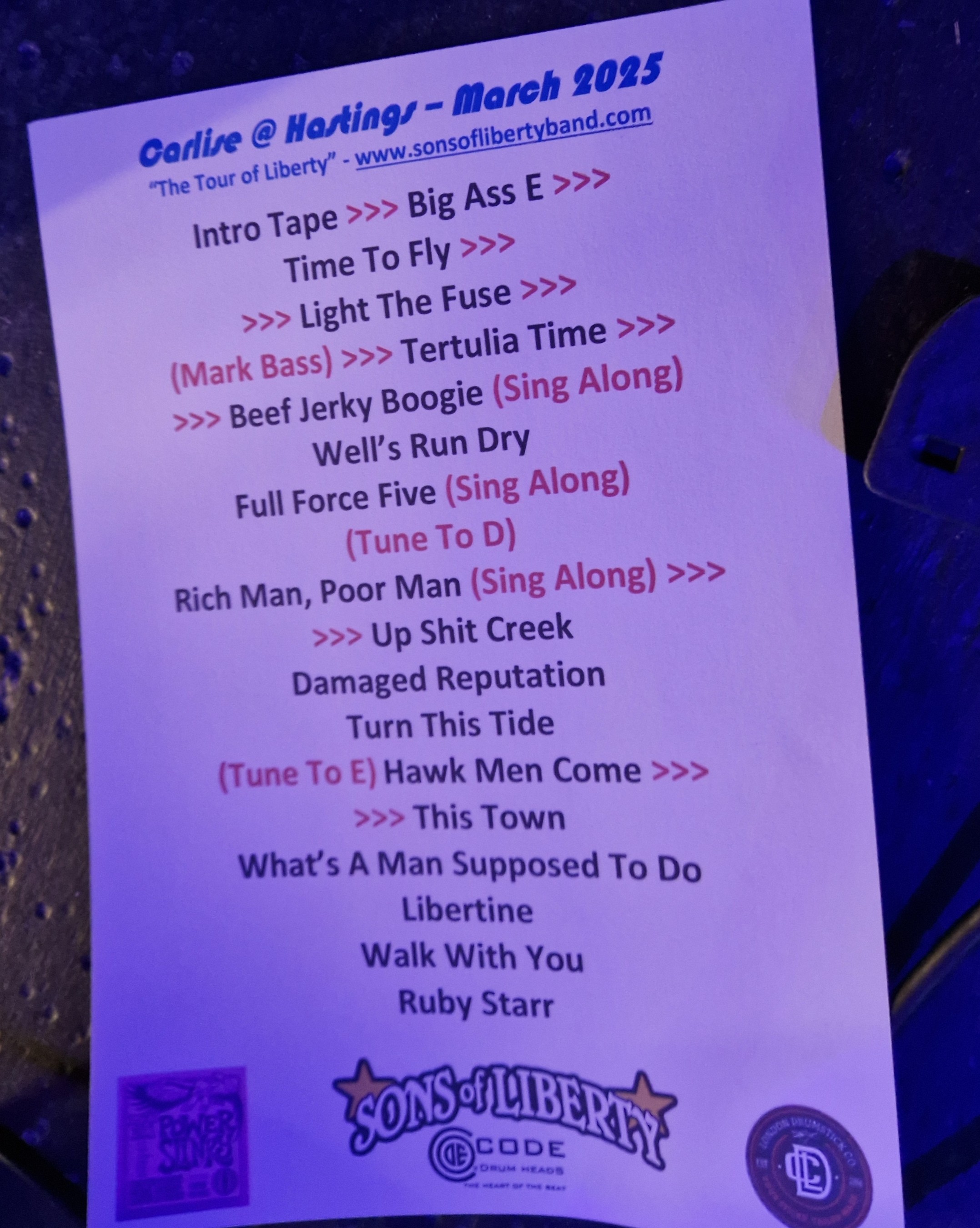
Indeed, while there’s a small clutch of songs from the band’s first two albums, it’s material from the band’s third album and their first with Grimmett that heavily dominates the set. Whether it’s because I’ve been playing it so much these past few months or simply that it’s a great album just rammed full of catchy, memorable tunes (probably a mixture of both to be fair!) these feel like songs that have been around for decades, not months. ‘Time To Fly’, ‘Light the Fuse’ and ‘Tertulia Time’ the three songs which open tonight’s set are all bonafide classics, the latter with a chorus like some long-lost ‘80s stadium rocker.
Photo: Darren Johnson
Huge riffs, unforgettable choruses, a monster rhythm section, stunning guitar solos and powerful vocals – all the ingredients are there for what I want from a truly great hard rock band.
This is a band that does light and shade though and one that draws from a wide palette of musical influences. There’s a change of mood and a change of pace, for example, with the semi-acoustic ‘Hawk Men Come’, the band’s powerful and moving hymn to the people of Ukraine.
As well as a smattering of earlier material like ‘Rich Man Poor Man Beggar Man Thief’ from the band’s debut album (which provides an opportunity for a crowd sing-along), there’s also an airing for a couple of new songs that didn’t originally make it to last year’s album. The unremitting wall of sound that is ‘Full Force Five’ and the defiant swagger of ‘My Town’ are ample evidence that these guys don’t look like they’ll be giving up on hitting us with plenty of great new tunes any time soon.
Photo: Darren Johnson
As proceedings start drawing to a close (and clearly demonstrating that Southern Rock was never just about whiskey-soaked hellraisin’ and over-confident displays of machismo) Grimmett introduces the very Skynyrd-ish and really rather lovely ‘Walk With You’, a touching anthem of solidarity for anyone struggling with their mental health. Then there’s just time for a blast of ‘Ruby Starr’, the band’s tribute to the female Southern Rock vocalist of that name, marking the end of another triumphant set from Sons of Liberty.
Following their critically-acclaimed 2021 album, After Comes The Dark, which saw Green Diesel pick up a slew of enthusiastic reviews for what became their best-selling release to date, the Kent-based folk rock band are finally back with a brand-new album.
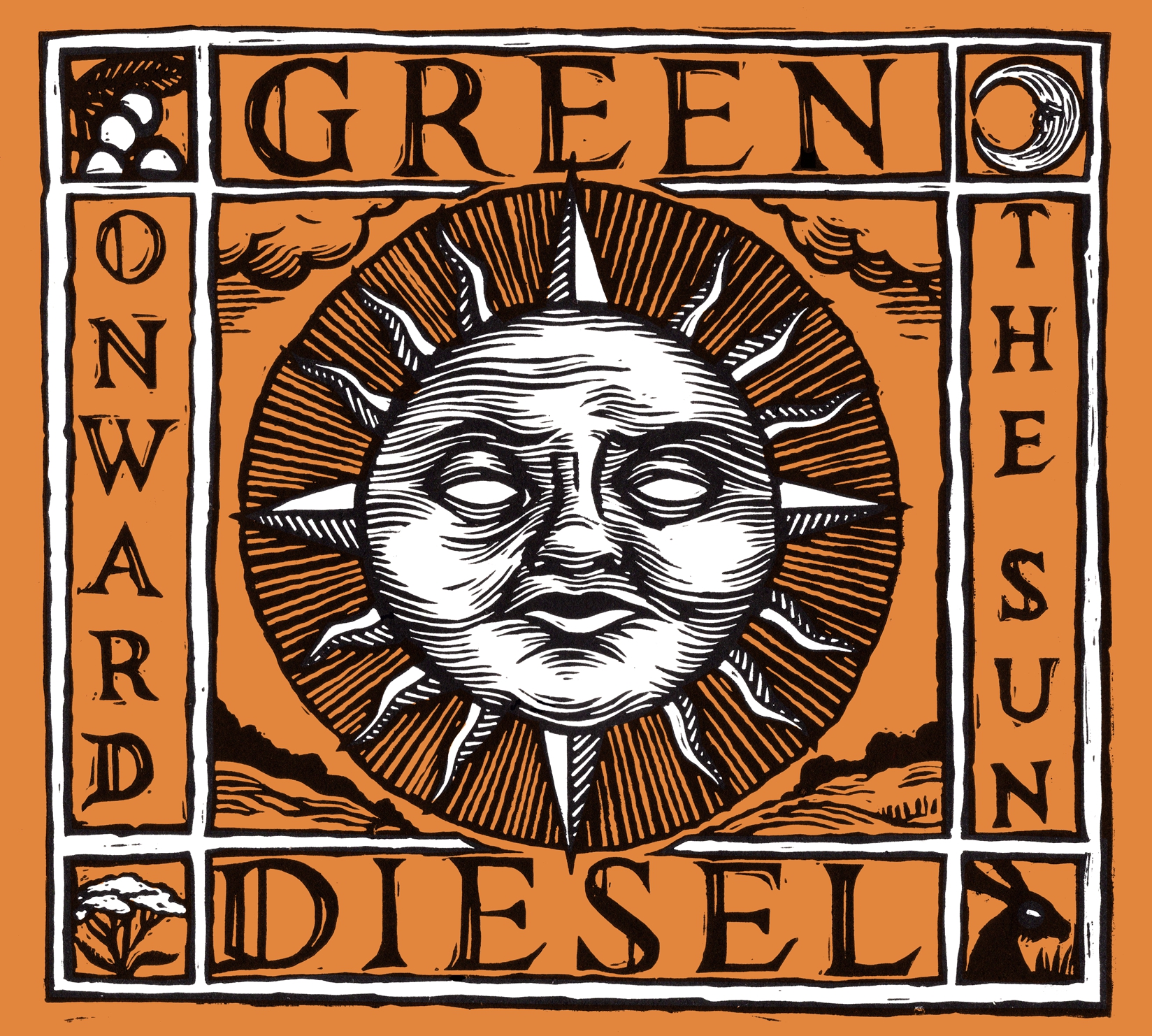
Onward The Sun! is the band’s long-awaited fifth album and is scheduled for release on 25 April. The nine-track album features six newly-composed songs inspired by themes such humanity’s connections with the natural world, ancient folklore, the persecution of witches and Shakespeare’s Henry IV, as well as fresh interpretations of much-loved Morris tunes, a modern take on a traditional murder ballad and a cover of a Paul Giovanni composition from the cinematic soundtrack to The Wickerman.
Showcasing Green Diesel’s masterful distillation of folk, rock and psychedelic influences, together with their usual exemplary musicianship and trademark vocals, the album was recorded at Squarehead Studios in Newington, Kent with producer Rob Wilks (Smoke Fairies, Lianne La Havas, Story Books) once again at the helm.
Guitarist, vocalist and multi-instrumentalist, Greg Ireland, comments:
“This is an album born out of playing together a lot! Most of the pieces were developed through a lot of sessions together and really stretching out the jams into some of those elongated pieces we play live. We then recorded the main tracks all live together in one room, no click tracks. It’s really a celebration of what this band is and the sound we make together.”
Green Diesel are:
Ellen Care – violin/vocals Matt Dear – lead guitar/vocals Ben Holliday – bass Greg Ireland – rhythm guitar/mandolin/dulcimer/vocals Ben Love – drums/percussion
About Green Diesel:
Hailing from Faversham in Kent, Green Diesel take their inspiration from the depths of English folk lore and legend, and the classic folk-rock sound of their predecessors: Fairport Convention and The Albion Band. Blending violin, mandolin and dulcimer with electric guitars and drums, Green Diesel’s sound is born from a love of traditional English music and a desire to bring it to a modern audience.
Green Diesel’s first three albums, Now Is the Time (2012), Wayfarers All (2014) and The Hangman’s Fee(2016) all won praise for the quality of song-writing and musicianship. A major turning-point, however, came with the band’s last album After Comes The Dark (2021). The album entered the UK Folk Top 40 on release and saw Green Diesel nominated for FATEA Music’s ‘Group/Duo of the Year’ award and also saw the band pushing their sound further, bringing in elements of psychedelia and progressive rock whilst remaining rooted in their folk upbringing.
Green Diesel – What They Say:
“A cornucopia of sounds that blends classic folk-rock, prog and elements of stately Early Music into their own distinctive style’” – R2 Magazine
“4/5 stars – ‘(Green Diesel bring) a psychedelic, progressive edge to their interpretations of both traditional and original material” – Shindig!
“Evocative of early Steeleye Span and veined with prog-rock and influences drawn from early Genesis and the 70s Canterbury scene’” – Folk Radio
“Green Diesel has skyrocketed into my top few bands” – FATEA
Onward The Sun! – Track-By-Track:
1. Venus Tree (Ireland): ‘Yarrow (the ‘pretty flower of Venus’ tree) is an interesting plant…! The song is perhaps a slightly twisted take on a love song, based around some of the ways in which yarrow can be used for what you might call ‘love divination’ whereby sprigs of yarrow would be placed under the pillow of a young woman who would then dream of her true love to be. One popular rhyme for instance reads:
‘Yarrow sweet yarrow, the first that I have found And in the name of sweet Jesus, I pluck it from the ground As Joseph loves sweet Mary and took her for his dear So in a dream this very night my true love will appear!’
Like all good folk stories there’s a twist in the tale of course. The yarrow plucked must be plucked from the grave of a young man dead before his time…’ Greg
2. Hotspur (Holliday): ‘Hotspur is the nickname given to Henry Percy, who was the 2nd Earl of Northumberland and led a rebellion against Henry IV. This rebellion culminated at the Battle of Shrewsbury, which is depicted in Shakespeare’s Henry IV. The night before the Battle, Hotspur is told that his various allies who agreed to fight alongside him aren’t turning up, but (in the play) he still delivers a fiery speech and declares they will go ahead and attack the ‘usurper’ Henry IV no matter what. The song tries to capture his mental state at night before the battle – he can’t sleep, he’s scared, but he knows he has to ‘front up’ and be the brave, fearless, fiery Hotspur that everyone knows.’ Ben
3. Huntress Moon (Dear): ‘This song is a spell of transformation. I’d been reading about Paracelsus, the history of alchemy, the occult, and the persecution of witches during the Reformation. I wanted to write something that drew on this symbolism, using the language of magick to craft a lament, an impossible dream, a transcendent fiction.’ Matt
4. Princess Royal/Dribbles of Brandy (trad arr Green Diesel): ‘Two English folk tunes learnt from our trusty companion Pete Cooper’s book of English Fiddle Tunes. I’ve played Princess Royal with my dad for years – there’s actually two different versions of this tune: one in a minor key and one in a major key. The minor one seemed to fit our style better! The second tune is called Dribbles of Brandy and was one we used to have on setlists during our wild misspent youth before it took a quiet retirement. It seemed time to resurrect! This one always puts me in mind of late night gigs at Broadstairs Folk Week fuelled by too many ciders…’ Ellen
5. Hymn For The Turning Year (Ireland): ‘Written in the depths of the Covid winter of 2020 when, amidst all the chaos in the human world, the Earth was just doing the same thing it does every year. The verses are individual snapshots of things I witnessed on my mandated solo walks and a reflection on ultimately how powerless we are against the natural world, a feeling which seemed to be mirrored on a human level by the situation in the world at the time.’ Greg
6. Maypole (Paul Giovanni): ‘A cover of one of Paul Giovanni’s compositions from the soundtrack to The Wickerman. The soundtrack has long been a favourite of mine, it was and remains a big influence on my songwriting. This song always struck a chord with me, and I’d always wanted to develop it into a longer song. It seemed to encapsulate my morbid attraction to the Summerisle cult, a return to a cyclical view of time, death and life entwined.’ Matt
7. Onward The Sun! (Ireland): ‘In some ways the sister song to Hymn… a frequent walking route of mine was up Golden Hill in Harbledown, just outside Canterbury. There’s a particular bench there where you can just sit and look across the hills. The sun is such a part of folklore and folk imagery and I suppose that was in my mind on some of these walks – musing on our temporary status in the world. We’ll all shuffle off sooner or later but the sun will go on and on. Hopefully…’ Greg
8. Ring The Hill (Ireland): ‘Based on the Cornish legend of the white hare. It is thought that the creature is the spirit of a broken-hearted lady determined to haunt her faithless lover to the grave. This also got me thinking about the historical connections between hares and witchcraft – the chorus lyrics are an adaptation of some of the words used by Isobel Gowdie at her trial (she was tried as a witch in Scotland in 1662 and her testimony survives). The song follows the progression of our heroine from broken-hearted to vengeful and it seemed appropriately prog to divide it into two parts. The tune for the second part is a variant of the traditional tune for Dives and Lazarus.’ Greg
9. Wild Wild Berry (trad arr. Green Diesel): ‘A traditional song that appears to share similarities with the Lord Randall ballad. Collected from the traditional singer Ray Driscoll who apparently learned it in Shropshire after being evacuated there during the war. My own introduction to the song came from the version by the Furrow Collective. I particularly liked the way that this version distils the essence of the long Lord Randall ballad into three powerful verses. And, of course, I love the poetic ending of the murderer being hanged with the deadly nightshade entwined in her hair! Musically I had been listening to a lot of drone-based composers like Alison Cotton and John Cale and wanted to try and extract the maximum mileage we could from one chord on this one’. Greg
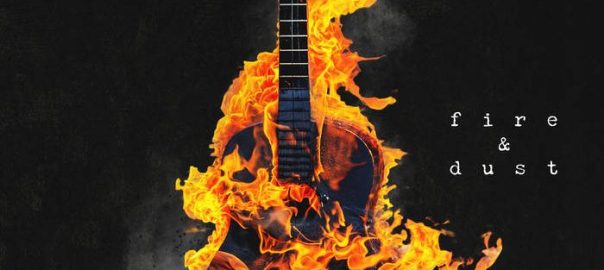
A project commissioned and produced by The Who’s Pete Townshend, that’s built around the music of veteran British folk singer-songwriter, Reg Meuross, and is all about celebrating the life and times of who many consider to be America’s greatest ever folk-singer, Woody Guthrie, Fire & Dust certainly ticks plenty of boxes in the legends stakes.
Featuring twelve original songs penned by Meuross alongside four of Guthrie’s own songs, Townshend approached Meuross convinced that he was the right choice tell Guthrie’s story and, in Townshend’s own words: “draw a direct line from Woody, through Bob Dylan, to Reg Meuross.”
That notion of a baton being passed from Woody Guthrie to Bob Dylan, is reflected in the album’s final track, ‘Gypsy Singer’.
Reg Meuross:“It was because of Dylan’s visits to Woodie, his mimicking of his songs and singing, his hobo style, and his courage that I – and probably many more contemporary music fans – became interested in Woody. I already knew some of his folk songs, in fact my very first gig I played two of them. But Dylan drew my attention to the side of Woody for which he has since become famous: the compassionate, flawed and fiery fighter for freedom and equality, the protest balladeer, the Gypsy Singer.”
Joining Meuross (vocals, guitar, harmonica, banjo) a host of top-notch guest musicians (including Phil Beer, Marion Fleetwood, Gerraint Watkins and Simon Edwards) each work their magic. Townshend, himself, also contributes keyboards and bass guitar on two of the tracks
Pete Townshend: “Reg’s terrific songs tell Woody’s life story with respect and affection, but also truth.”
Highlights include the anthemic title track, the ‘Fire’ aspect representing the family tragedies that marred Guthrie’s personal life and the ‘Dust’ aspect representing the dust storms that forced millions, including Guthrie, to flee their homes in 1930s America. A change of tempo comes with the beautiful poignant ‘Woody Come Home’, written from the perspective of Guthrie’s wife. Among the Guthrie covers is, of course, Meuross’s rousing interpretation of that perennial protest anthem, ‘This Land is Our Land’. As the US of today descends into increasing authoritarianism, it’s a timely inclusion.
Throughout his career, Reg Meuross has been writing and performing songs brimming with passion, empathy and defiance. Probably no contemporary folk artist in Britain was better placed to make an album celebrating the life and music of Woody Guthrie – the protest singer’s protest singer. Fire & Dust is an outstanding project featuring an incredible set of songs.
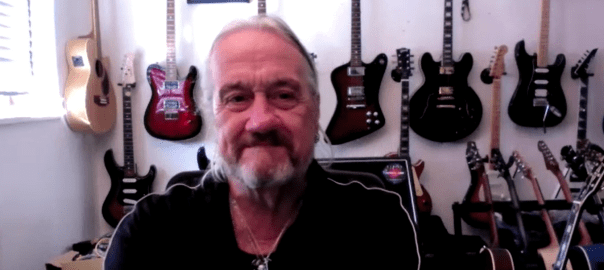
Back in the early 70s, David Smith formed a band with a former school-mate called Steve Harris, better known as the man who went on to create heavy metal icons, Iron Maiden. I catch up with David to talk about those early days playing with Steve in Gypsy’s Kiss, about reforming the band back in 2018 and about the enthusiastic response from both fans and reviewers to the band’s live gigs and recent album.
So back to the very early days. Steve Harris was a schoolfriend. When did you decide that you both wanted to be in a band together?
The middle of ’73 – when the world was in sepia, Darren! I had left Leyton County High School for Boys. Steve was also a pupil there but the year below me… And we met up after we left school – accidentally, I would say in the middle of 1973, because we knew each other and we had mutual friends. Our interests were aligned. We were both fanatical West Ham supporters. We loved football. We both loved rock music and, interestingly, we’ll come on to this – the influences for Steve and myself at the time were not always what you might think. They were obviously rock – but tons of prog and lots of other things.
It was a great time for music across all genres!
If you looked at an albums chart or even a singles chart between ’72 and ’74 you would be amazed that it’s the music people still listen to today. Because it’s so damned good. So, we became good friends. We’d see each other three or four times a week, we’d go to the pub together. We’d talk about music. We’d talk about football. We’d share the bands we liked and we’d go and see a lot of gigs together. And then it would seem natural… “Why don’t we form a band?”
I played guitar for about two years before that. Steve wanted to be a drummer but couldn’t get drums in his nan’s living room which is where we rehearsed. Where he lived in Steele Road about half a mile from where I lived. And so, you get that lightbulb moment: “I think I’ll be a bass-player…” Well, there you go. And that’s what he wanted to do so he and I went to – I wish I could remember the shop we went to – and he bought a Telecaster copy bass. And I taught him the rudiments because I could and then he took it from there.
And then, we must form a band! This band was just he and I for a month or two but we still rehearsed and we did mostly covers but not all because we were writing stuff, as you’re probably aware. Stuff that we’re still playing now and Steve references quite a lot. And so, we were doing that and we looked at other guitarists and we looked for drummers and eventually we decided to have only one guitarist which was me. And then we found a drummer. His name was Alan – I can’t remember anything more about him and there were, essentially, three of us in Influence [original band name prior to the adoption of the name Gypsy’s Kiss].
And for reasons why bands evolve, particularly when you’re only 19, we brought in Paul Sears on drums. And Paul is still one of my very best friends today. And then we rehearsed quite a bit and rehearsed in front of family and friends and did sort of pseudo-shows. I then wanted to concentrate on playing guitar more and I found singing and playing guitar a bit of a distraction so we brought in Bob Verschoyle and Influence became Gypsy’s Kiss.
Gypsy’s Kiss in 1974 (reproduced from Gypsy’s Kiss website)
And it became really clear – and the reason Gypsy’s Kiss dissolved away I would say in the summer of ’75 – was because Steve was a workaholic. He just wanted to rehearse and rehearse and rehearse. Like he is today. Rehearse and rehearse and play and play. And you know, “We can’t go out for a drink. We’ve got to rehearse this song”, “Oh, we’ve got to write that.” Paul and I had enough of it really at 20 years old and then Steve moved on. And when I saw him recently, I always reference his work ethic which he’s got right now.
You obviously saw the work ethic; did you get an impression from Steve early on at that stage that here was a Bonafide rock star in the making?
No. Because I wouldn’t know what one of those looked like to be honest. I saw them on album sleeves and at gigs and on TV. No, what he had and still has was a drive. I don’t think his ambition was to be the greatest rock bassist ever – but he’s in that league isn’t he? I think he wanted to be a professional musician. That’s what he wanted to be. And he wanted to be a good professional musician. And if you look from when Iron Maiden was formed in ’75 and, without being harsh, they didn’t do much for five years. Honing the craft, getting better, doing gigs.
But the thing about that period – and I played in other bands – is that there were so many places to play. And every place wanted an original band. Chuck in a few covers if they didn’t have enough of their own material. And so Iron Maiden and other up and coming bands, gigged and gigged and gigged and gigged. And they got so good at playing that the rest naturally followed. So, the long answer. Did I think he was going to be a rock star? I don’t think so – maybe he did. But he certainly had drive and that’s the most important thing.
So, Gypsy’s Kiss ran through ’74 and into ‘75. You were playing a mixture of covers and writing original songs. Did the drive to write original songs come from yourselves because you had that ambition or was it more that this is what the venues were expecting?
No. This is what we wanted to do. I don’t know if bands are the same now but bands who want to – not make it – but just wanted to do well and perform to audiences, we always wanted to write our own songs. In fact, we were writing stuff, or I was at first, and playing that. And when we started to get gigs after that it was, “God, we’ve only got half an hour. We’ll have to do something else.” So, we threw in… you know good covers. Ones that everyone was doing and a few that they weren’t doing and it filled out our hour-and-a-half set. So, then the set was based on the originals and there were about six or seven covers that we used to fill.
So, yes – our ambition was to write and record our own stuff. Steve’s done thousands of interviews. You’ve already read many of them. But one of them came up quite recently… and Steve said that when Gypsy’s Kiss folded, he joined Smiler. And the reason he left? Because they were doing too many covers. He wanted to write and do his own stuff.
When Gypsy’s Kiss came to an end did you always carry on playing in bands after that or was it just a matter of getting on with life and focusing on the day job and stuff?
Probably always in a band. You have some years where you lay off doing it and then go back. But when Gypsy’s Kiss came to an end, oddly, I was invited to join a country and western band. And I joined – you know Stetson hats and bootlace ties and satin trousers – and I was 20! And I played bass, by the way, which is even more weird! But it was twenty-five quid a night for me which in the mid-70s was actually quite a lot of money. So, I did that and then I went with other bands. I played in a band with Doug Sampson who was in Iron Maiden for a bit. And then I did other bands, other things, years off here and there. Yes, so pretty much all the time. I’ve probably been whatever full-time means now, i.e.: doing it constantly since the mid-90s.
So, let’s move on to the band today then. You reformed in 2018 for the charity gig, Burrfest. That was initially just as a one-off. How soon after that did you decide to make things permanent?
I’d been asked to reform Gypsy’s Kiss – out of Iron Maiden fans’ curiosity. I’d say more with an explosion of information online. Lots of people became curious and I was asked a number of times to reform some version of Gypsy’s Kiss. And I didn’t want to. Because I thought it was yesterday and it wasn’t right. Bizarrely, I was in a covers band from 2010 to 2017 – quite a reasonable one. And we played a gig in Gidea Park in Essex and without going through the boring details all of the original Gypsy’s Kiss members – including Steve – were there. He came to see us. Along with Teddy Sherringham, the footballer, for some bizarre reason. And during that gig, at the end of it, I said, “We’ve got friends here from my musical past. Do you mind if they come up and busk a song with me?” The band I was in didn’t mind. So, I got Paul on drums and Bob to sing – and I didn’t invite Steve to come up and play bass. The reason being it was already full of people filming. I thought, this is the last thing he wants. Everybody loved it. I’m sure it’s online somewhere. Steve came over to me at the end and he went, “I’m upset you didn’t ask me!”
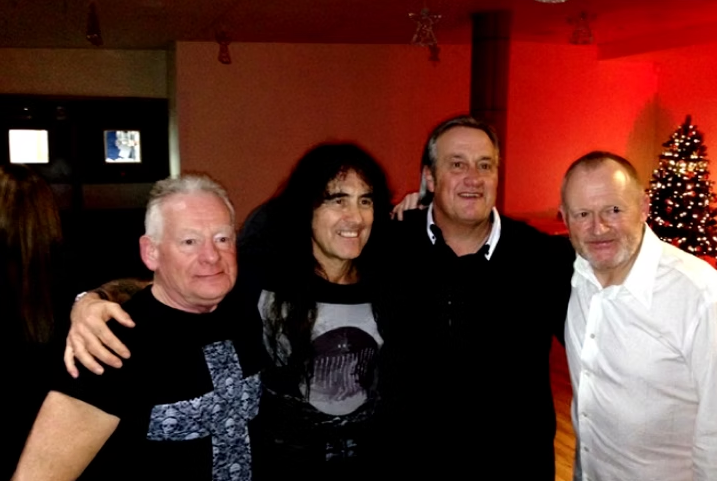
The original members of Gypsy’s Kiss meet up in 2013 (Photo reproduced from Gypsy’s Kiss website)
And you were trying to give him a quiet life!
I was trying to not put him in an online spot. So that was 2013. And I’d been asked a number of times. Darren. I just didn’t want to do it. However, I buckled to the pressure in 2017. And it was, “Would you play Burrfest?” I think it was in the March 2018 and I went, “OK.” I asked Paul to play drums. He didn’t feel up to it at the time. I asked Bob to come and sing. And, again, I didn’t ask Steve – and he’s moaned at me about that since!
So, using musicians I knew locally and whatever, I put the band together. A real one-off. And it was such a great gig. The audience’s reaction to this thing that they wanted to see – and they wanted to hear some of the original songs that Steve had played on – was just amazing. And I sort of thought, well this is a bit silly , not to do this again.
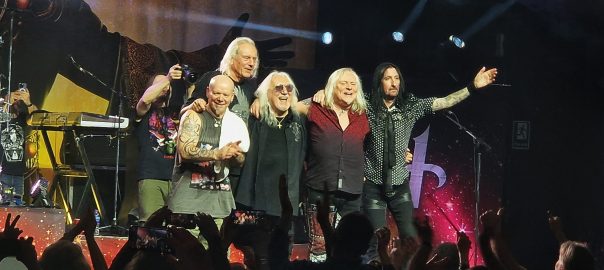
Gypsy’s Kiss at Minehead, Butlins 2025 (Photo: Darren Johnson)
Obviously, our fanbase such as it is was Iron Maiden fanatics. Probably still is. But we’ve worked really hard to try and widen that and maybe we have. You’ve probably seen – and I still use it when I find it helps – our tagline ‘top of the Iron Maiden family tree’. And if we’re doing something specialist, we do occasionally play some Iron Maiden songs. The early songs. We’ll do one or two of those if the audience is clad in Iron Maiden t-shirts. It seems a bit churlish not to, doesn’t it?
And no way would I ever forget the past because it’s why the band exists but you try and move on. In saying that, I got very, very friendly with Paul [Di’Anno – former Iron Maiden singer] again about five years ago. Because we had the same interests – rock music. He was born just up the road from me. We went to the same school. We knew the same people. And we met up – I went round to his flat – and we chatted for ages about stuff. And Paul and I became really, really good friends. And we did gigs with him and, you know, his loss was enormous. He was such a nice guy. And when we did some gigs with him it was huge fun. And his passing – his funeral was a bit of a celebration really, as it should be. At the service Maiden songs were played which was quite touching. And the point I’m getting to now is, I sang a few tribute shows as Paul after that. I really enjoyed it… So, I’ve not completely forgotten the past but we do try and shuffle on.
I think if you’d had a grand plan for all this over a fifty-year period, you chose a good time to reform in many ways, with a renaissance for classic rock on the live gig circuit.
What I’m most grateful for is the period I was born and grew up in which was just so changing, so iconic, so wonderful – for me anyway – from the flow of music from the ‘60s to the ‘70s. You know, in my formative years I was able to grow up with some of the most fantastic music and great influences. That’s what I’m really grateful for.
And then, as you say, as you get into your dotage, if you reform there’s been a resurgence in classic rock. And what we’ve tried to do – I hope we’ve succeeded in a small way – is to take that fantastic genre and to slightly update it. Without losing its heart. And so, you give the audiences what they want but something a little extra. And we certainly have elements of prog in our songs. Our third album is coming out this summer – it’s not quite finished – which I’m really pleased with.
But I think essentially, we are a live band. You know, we ham it up a lot on stage. We swear a lot. We’re involved with the audience. That’s what I think we are – a live band but we try to bring out our diverse musical influences, based on classic rock.
You must be pleased with the reaction to the 74 album which I think very much stands up on its own terms, regardless of any historical Iron Maiden connection.
That’s very kind of you and, interestingly, a lot of reviews said the same. If I’d have gone back to 1974 and thought, one day, David, your album will be reviewed in Classic Rock and people will say what you’ve just said – it’s not a curiosity of Maiden, it’s a stand-alone band – I’d have thought, well that will be good. I’ll take that as a pinnacle of one’s career!
Yeah, we were really pleased with 74 and I still am. And it’s the basis of our set for the new album – which hopefully will be out in July. There’s some of the past in the style of music. We can’t do an album that doesn’t have a gallop in it somewhere because that’s how it all happened. So, there’s, what I would say, more retro songs and some that I think are probably more up to date. But you know we’ll see. I just enjoy playing stuff live to be honest… I would say that’s why any musician wants to do what they do because there is nothing like standing on a stage in front of a number of people – it doesn’t mater if there’s twenty or thousands – and you enjoying what you’re doing. And if you get one person in the audience who looks like they’re having fun I find that great.
In some of our earlier Gypsy’s Kiss gigs, once we’d been a few years in. I still found it quite odd that people in the audience were singing back the lyrics that I’d written probably knowing them better than I do. And I still find that quite a sensation.
I think that’s also testimony to the skill of writing really catchy songs that instantly grab people’s attention. That is a skill.
That’s very kind. You’ve probably heard in our music – and it’s where Iron Maiden evolved down a parallel track – is that I was brought up on Wishbone Ash and Thin Lizzy. You know, guitar bands, harmony guitar bands. And like Iron Maiden, we are three guitars doing guitar harmonies and rock riffs. I get asked, “Who do you think you’re like?” Well, I think we’re like ourselves. But I hear in our writing and playing, bits of Wishbone Ash and Thin Lizzy, bits of Uriah Heep. And I’m not ashamed of that at all. That’s the music I grew up on.
So, what next for Gypsy’s Kiss then?
It crossed my mind, thinking of age and circumstances that last year was our 50th year which we did quite a lot on and it went really well. And I did wonder whether the 50th was a good time to stop doing it – and we’ll see what Iron Maiden do after 1975. But I said, “Ok, we’ll do another year.” So, this is out 51st anniversary tour and we’ve got a lot of gigs already confirmed.
I enjoy festivals more than anything because I can listen to other bands and you just enjoy the vibe and you meet all the people there so we’ve got quite a number of festivals. The album coming out in July, I hope. Gigs start in April and run through until end of November so we’ll be here there and everywhere. And I’m looking forward to it. The live stuff is what we all look forward to and we’re three times this year back at our spiritual home. I say the Cart & Horses is actually the birthplace of Gypsy’s Kiss rather than Iron Maiden.
Well, you came first!
We did our very first gig there. We’ve got three gigs there. You’re probably aware, we’re playing at a midnight show at the Cart & Horses after the Maiden gig fifteen minutes up the road – which sold out in about fifteen minutes. It was really quite odd! But we’ve got other gigs at the Cart & Horses and we’re doing a short tour with Soulweaver. We’re doing about five or six gigs with them because we get on well and the music’s complementary, I think. And we’re doing a few gigs with a prog band called Ruby Dawn who are really, really good. So yeah, we’ll be here there and everywhere, with an album to flog in the middle of the year.
“We were spellbound by her ability to highlight unique perspectives with her songwriting” – Maverick magazine
Released on 7 March, ‘The River’ is the second single from the forthcoming EP by London-based Americana singer-songwriter, Little Lore. A burgeoning presence on the UK Americana scene, Little Lore has received many plaudits, both for her astute, observational songwriting and for her warm, heartfelt vocals.
‘The River’ is one of six songs that will appear on the brand-new Little Lore EP, River Stories, which comes out in April. From rivers, to boats, to canals, to swimming, all six songs on the EP are inspired in some way by the theme of water. The concept for the EP came about following an invitation for Little Lore to become songwriter in residency on Johnson’s Island, an artists’ community set on a tiny island on the Grand Union Canal and the River Brent in West London.
A gentle, reflective song with gorgeous instrumentation, sumptuous vocals and beautiful harmonies ‘The River’ reminds us that rivers can be beautiful, tranquil places but can also be very powerful forces that can wreak great devastation.
Little Lore:“This song was inspired by two enormous storms that battered the UK in November 2023 causing great damage and floods. I had been invited to become songwriter in residence on Johnson’s island- an artists’ studio located in the mouth of the Grand Union Canal and the River Brent. A week before the residency the whole island was flooded including the artist’s room I was due to use. When I got the call letting me know that it was looking 50/50 for the residency to go ahead, I sat on the sofa with my guitar and I thought – damn that river has two sides. And the song came from there, with that phrase and the little guitar riff coming first, unusually for me as I am almost always a lyrics-first kinda gal.”
“The song reflects on the incredible beauty of the river and the destruction it can reap when the right combination of high tides, gravitational pull from the moon and storms collide. I love how Oli interpreted the song – and the addition of violins and cello really evoke the feelings of the water.”
Renowned New York-based producer and multi-instrumentalist, Oli Deakin, (who records under the name of Lowpines) is Little Lore’s principal musical collaborator and again produced the single and the forthcoming EP and provides much of the instrumentation.
Written and performed by: Little Lore AKA Tricia Duffy Produced by: Oli Deakin Violin: Francesca Dardani Cello: Sasha Ono Drums: Morgan Karabel All other instruments: Oli Deakin Artwork: Afiya Paice
About Little Lore:
Little Lore is a London based, Indie-Americana singer-storyteller whose songs are both charmingly accessible and beguilingly challenging. You’ll want to listen twice. When you combine British wit and wordplay with cherished Americana roots, musical magic starts to happen. Based in Chiswick, West London, and originally hailing from Portsmouth, Tricia Duffy started her singing career as a teenager, which included a stint on cruise ships in the United States. She began writing and performing her own material with Americana duo Duffy & Bird and they released a well-received album 5 Lines in 2017 and a follow-up EP Spirit Level in 2019.
Tricia’s solo project Little Lore was created in 2020 during the pandemic. Her debut solo EP, Little Lore, was released in 2021 to glowing reviews. The singles, ‘Shallow’, ‘Brown Liquor John’ and ‘Birds’ were released in 2022 to similar acclaim, followed by another equally well-received single ‘Normal’ in January 2023. Two follow-up EPs Seven Stories Part One and Seven Stories Part Two were then released in late 2023 and early 2024 to enthusiastic reviews and extensive radio airplay. Little Lore has become a force to be reckoned with on the UK Americana scene, picking up a slew of enthusiastic reviews and extensive radio airplay – including BBC Radio Scotland, BBC Radio Ulster, Nashville Worldwide Country Radio and the International Americana Music Show. In her songs, Little Lore brings together an affection for the heart and heritage of Americana music, with an intelligence and maturity of storytelling that can sweep you away into new and unexpected emotional worlds.
An enthusiastic advocate for songwriters, she is the London Chapter Coordinator for NSAI (Nashville Songwriters Association International), and a member of Ivors Academy and the Americana Music Association UK. She is especially passionate about creating opportunities for female, transgender and non-binary songwriters.
Prior to this tour, the existence of New York-based band, Tyketto, had completely passed me by. This is despite lead singer, Danny Vaughn, once fronting Pete Way’s post-UFO outfit, Waysted, for a period. I’m impressed. Accessible, melodic, AOR-tinged hard rock with a nice line in instantly-appealing riffs and catchy choruses, by the end of the set I feel I’ve known them for years. They deservedly go down extremely well.
The next band, of course, I do know. Britain might have had Last of the Summer Wine but Canada has April Wine. Formed in Halifax in Nova Scotia in 1969, the band enjoyed huge success in Canada but began finding favour with the New Wave of British Heavy Metal crowd in the early 80s. Certainly, as a young teenager I remember taping a few of my dad’s April Wine albums. With the death of lead vocalist/guitarist, Myles Goodwin, in 1969 there are now no original members left in the modern-day line-up but guitarist/vocalist, Brian Greenway, has been with them since 1977, providing a clear link back to the classic era. When my tape collection evolved into a CD collection, the April Wine albums somehow never made the transition but there’s several songs that I instantly recognise tonight and I make a mental note to rectify the lack of April Wine CDs in my collection and see what I can hunt down.
I suspect that for many in the audience, the band have remained a distant memory, albeit a warmly-regarded one. We are told that the last time the band toured the UK was back in the early 80s but they have clearly encountered an enthusiastic response on this tour. New lead vocalist/guitarist, Marc Parent, is an excellent frontman and the band work well together. Songs from the band’s 1981 album, The Nature of The Beast, which make up a sizeable chunk of the set, together with perennial crowd-pleasers like ‘I Like To Rock’, which the band open with, all go down extremely well. Indeed, I’m sure April Wine would find an enthusiastic audience should they decide to tour the UK a little more frequently – and not leave it for another forty years next time.
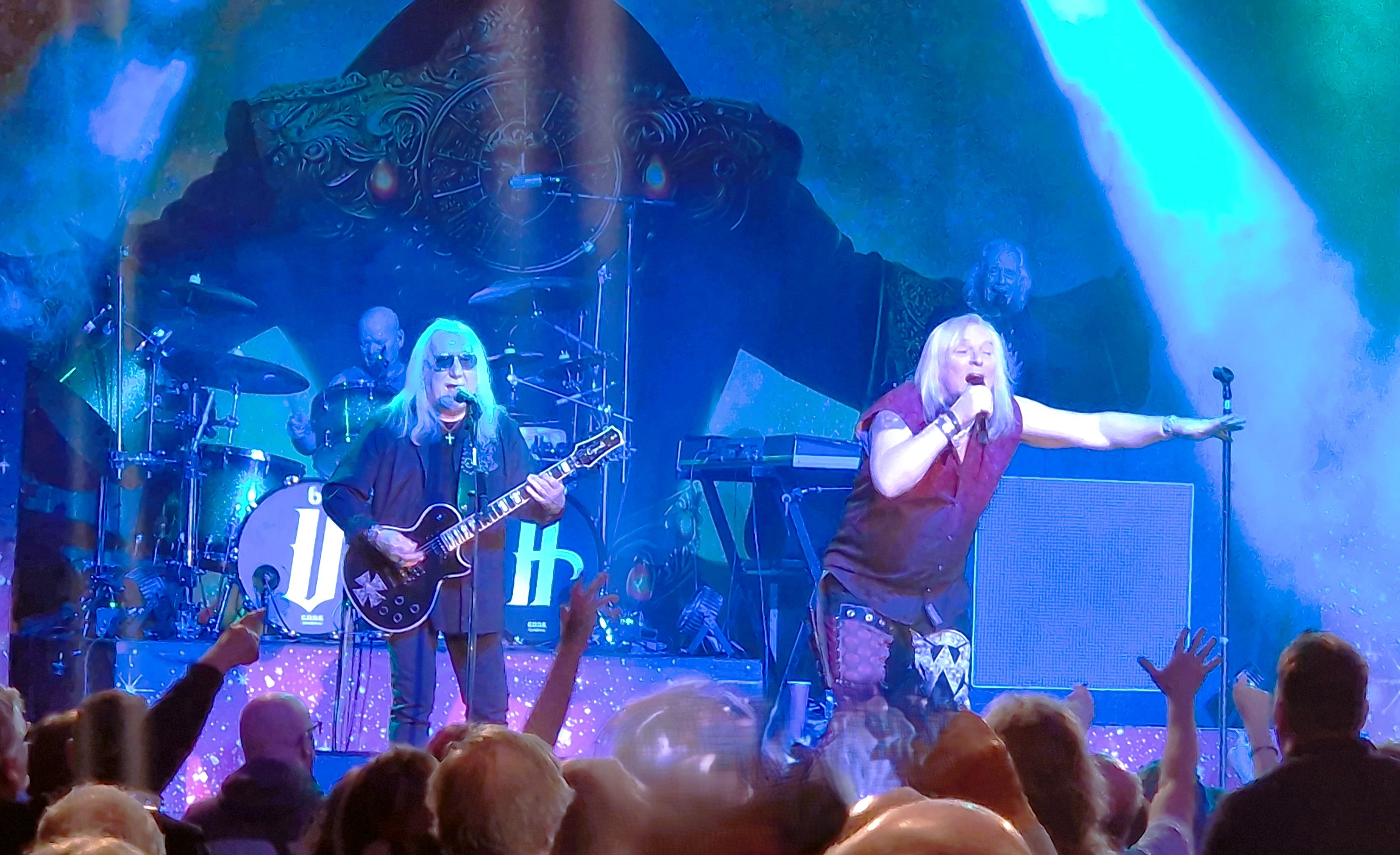
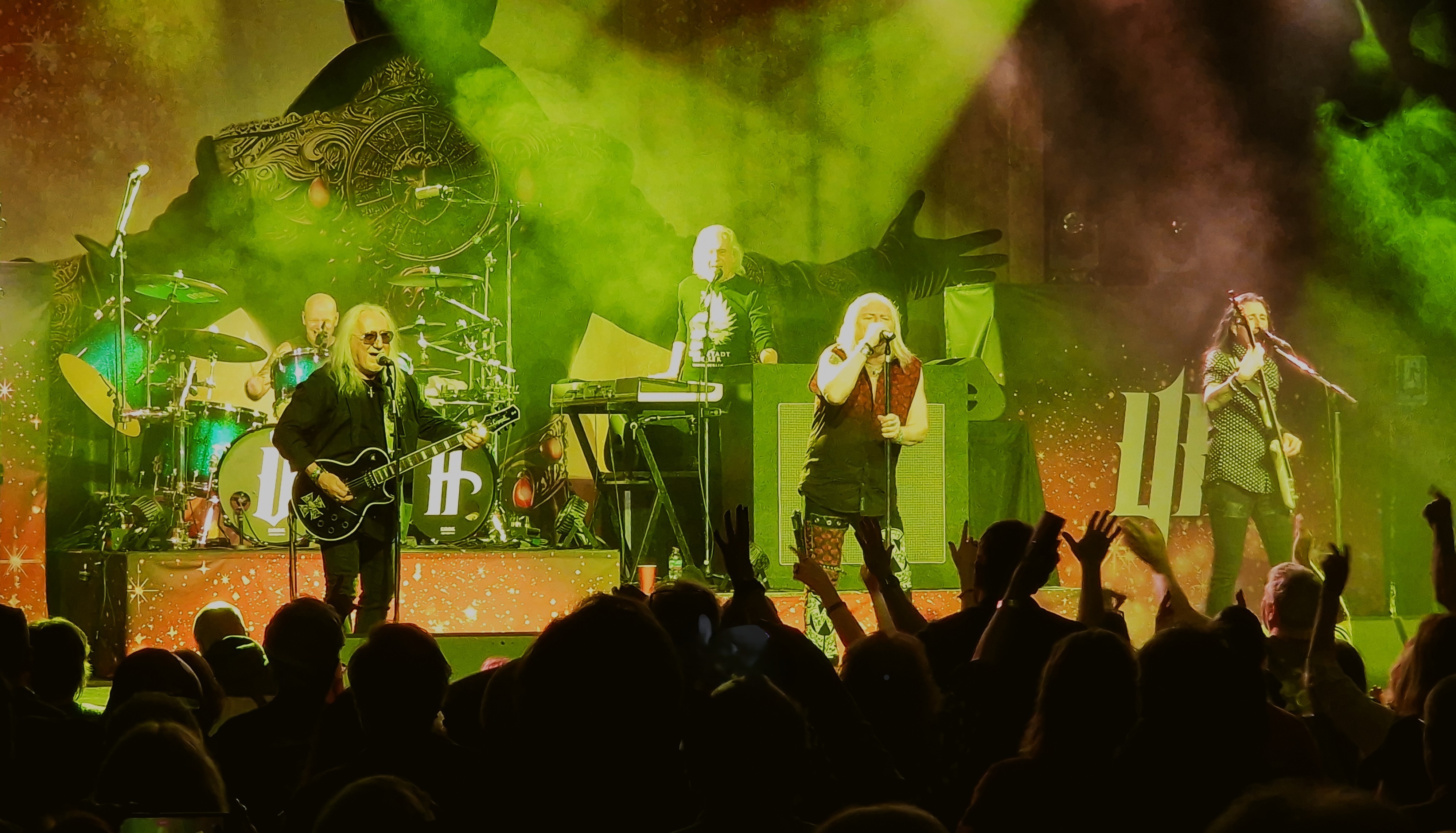
Regardless of whether your idea of the classic Uriah Heep line-up is Box/Byron/Hensley/Kerslake/Thain orBox/Bolder/Hensley/ Kerslake/Lawton, only one of those musicians is now still with us – the guitar legend and that ever-present force of nature, Mick Box. Since the late 1980s, albeit that circumstances have forced them to gradually evolve, Heep’s line-up has been blessed by a remarkable degree of stability, however. What’s more, the current configuration of Mick Box, Phil Lanzon, Bernie Shaw, Russell Gilbrook and Dave Rimmer have been together for well over a decade now. And not only do they treat Uriah Heep’s esteemed musical legacy with integrity and panache, they’ve also served up some excellent new music in the process, too.
It’s right, therefore, that the early part of the set is devoted to some of the band’s more recent material: ‘Grazed by Heaven’ from 2018’s Living The Dream, ‘Save Me Tonight’ from 2023’s Chaos and Colour and ‘Overload’ from 2008’s Wake The Sleeper. Sadly, there’s nothing from Outsider, my favourite of the ‘recent’ albums, but that’s a small niggle. As Bernie Shaw points out before the band move on to some of the older material, the big challenge has been to condense “fifty-five fucking years of Uriah Heep into ninety minutes”.
Then, with Phil Lanzon pounding the keys for the distinctive, grandiose intro of ‘Shadows of Grief’ from the Look AtYourself album, we are into the classic era. Gems like ‘Stealin’, ‘The Wizard’ and ‘Free ‘n’ Easy’ all follow. This tour has been dubbed The Magician’s Farewell and so, unsurprisingly, the 1972 Magician’s Birthday album is well-represented. This includes ‘Sweet Lorraine’ (about the band’s partying days back in the early 70s, according to Box, when an enthusiastic female fan called Lorraine coined the phrase that became the band’s chorus: ‘let the party carry on’), together with the title track itself and, later on in the proceedings, the epic ‘Sunrise’.
Shaw also does his best to reassure us that, in spite of the ‘Farewell’ bit in the tour’s title, this is not the end of Heep. The mammoth world tours may be coming to an end, but Uriah Heep are not quitting performing altogether and they still have plenty of new music in them, he tells us.
The pomp of those pounding keyboards, Box’s trademark wah-wah guitar, the sweet-sounding vocals, the immensely-powerful rhythm section, and of course, all those classic songs, I’m given everything that I want from a Uriah Heep gig and it’s an incredible celebration of the band’s career. Soon, however, things start drawing to a close. After a thunderous ‘Gypsy’ from the band’s debut album, we are on to the familiar opening strains of ‘July Morning’ and a stunning rendition of the band’s most celebrated song.
Curfew time is fast approaching so there’s just time for an encore with a majestic treatment of the aforementioned ‘Sunrise’ and, of course, the pure unalloyed joy that is ‘Easy Livin’’
I was still a pre-schooler when Uriah Heep released their debut album in 1970, although this year does mark 40 years since I first saw the band at Manchester Apollo back in 1985. Tonight’s performance proves beyond doubt that my enthusiasm for the band remains undimmed. I’m relieved to hear this is not quite the finale just yet.
Setlist:
Grazed by Heaven Save Me Tonight Overload Shadows of Grief Stealin’ Hurricane The Wizard Sweet Lorraine Free ‘n’ Easy The Magician’s Birthday Gypsy July Morning Sunrise Easy Livin’
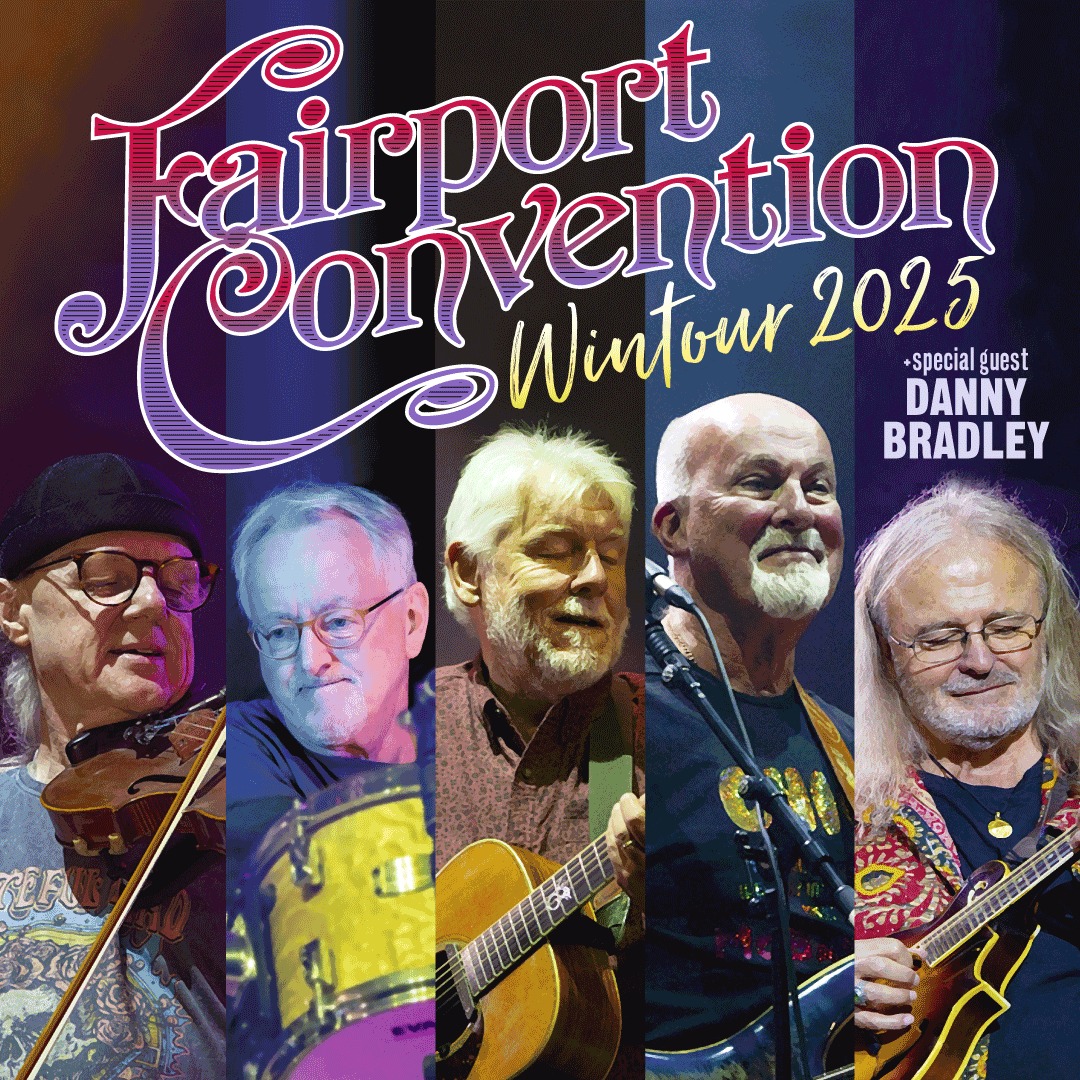
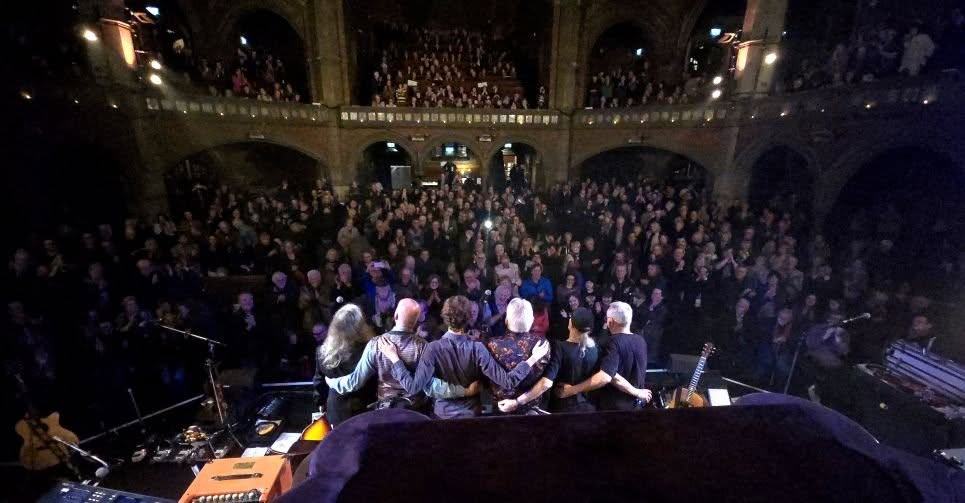
Both at their summer Cropredy Festival and on many of their winter tours, Fairport Convention have long striven to provide a platform for newly-emerging artists. This current tour is no exception. Support, this time, is the Liverpool-based singer-songwriter and finger-style acoustic guitarist, Danny Bradley, whose debut album Small Talk Songs has just been released. With a fine voice, some mesmerising finger-work, a great set of songs and some wryly, self-effacing stage patter (“This is the first time I’ve been on the bill with anyone that my dad’s heard of”) and he opens proceedings very nicely indeed. As is traditional on their winter tours, the Fairport guys join Bradley on stage to act as his backing band for the final song of his set, before launching into their own.
Fairport themselves then kick things off with a rousing rendition of ‘Come All Ye’ from their genre-defining 1969 folk-rock masterpiece Liege & Lief. “An opening song that’s had a few decades off” is how Simon Nicol put it. They then stick with the Sandy Denny era for a version of Denny’s ‘Fothingay’, with beautiful twin fiddles courtesy of Ric Sanders and Chris Leslie. In fact, with the band revisiting a couple of band-composed tracks from the post-85 Fairport, we are almost coming to the end of the first set before we hear anything that can be properly considered a folk song but an equally rousing ‘Claudy Banks’ finally inserts a bit of trad. arr. into the setlist.
That’s followed by Chris Leslie’s own ‘Banbury Fair’ before the band delve back into the early days once more and round off the first half with a magnificently sprawling, brooding version of ‘Sloth’ from the much-celebrated Full House album. As I was soaking up Dave Mattacks’ wonderfully-atmospheric drumming, such an integral part of that song’s epic status on the original album, I’m reminded that with the return of Mattacks (following the retirement and subsequent untimely death of long-time drummer Gerry Conway), we now have three of the five players from that classic 1970 album performing as part of the band’s regular touring line-up. There aren’t many bands who made an album fifty-five years ago who can still claim that sort of on-stage quota!
After a short interval, the second set kicks off with another trad. arr. offering in the form of ‘The Hexhamshire Lass’. When I interviewed Dave Pegg last month ahead of this tour, he told me that the band were prompted to include the song in the set-list for this tour as they would be playing Hexham on Valentine’s night – even though “it’s quite a complicated arrangement”! No matter, even without the legend that was Dave Swarbrick, they do have the incredible musical talents of Sanders and Leslie to draw on for a superb rendition.
Photo credit Kevin Smith
Indeed, as he shares with us when introducing the next tune, it’s now 40 years since Sanders played on his first Fairport album – Gladys’ Leap. Sanders tells the audience that he was phoned up by Pegg who had asked him if he was interested in contributing fiddle to three tracks but initially he had no idea he was being asked to contribute to a Fairport Convention album. Until he heard the tracks, and the distinctive drumming of Dave Mattacks, he assumed he was merely being asked to contribute to one of Pegg’s side projects. Sanders added his fiddle sounds, of course, and the rest is history. So to mark the anniversary of that significant moment in the Fairport chronicles, the band revisit the instrumental medley from Gladys’ Leap, along with a beautifully-evocative version of ‘Hiring Fair’ with some gorgeous keyboard flourishes from Mattacks. Written for them by Ralph McTell, it’s a song that has rightly become a fan favourite over the past four decades.
Back in 2011, the band revisited the whole of their 1971 concept album, Babbacombe Lee, the tale of the convicted murderer who was condemned to death but given a reprieve after the gallows failed three times in succession. Unlike other past albums it’s not usually one where odd tracks are performed live but here we get two, the contemplative ‘Cell Song’ and the exhilarating, death-defying ‘Wake Up John (Hanging Song)’. Just as he did back in 2011 when the band performed the full album live, Leslie does a fine job singing Swarbrick’s original lyrics.
The second set is beginning to draw to a close at this stage but there’s still time for a couple more numbers before the band finish proceedings with the inevitable show-closers. There’s a joyous rendition of ‘Rising For The Moon’, Sandy Denny’s celebration of the simple pleasures of touring and performing. And, after marking Sanders’ induction to the Fairport ranks earlier in the set, we are then reminded that it’s coming up to almost three decades since Chris Leslie joined. It was his second album with the band where he really started coming into his own as the band’s principal contemporary songwriter and they revisit the title track of that album, ‘The Wood and the Wire’, Leslie’s impassioned paean to coveting, cherishing and learning to play a stringed instrument.
As we come up to curfew time there’s normally three things that happen around this point. Firstly, a sales pitch from Simon Nicol about the band’s Cropredy festival in August, followed by two perennial crowd-pleasers ‘Matty Groves’ and ‘Meet On The Ledge’. This year, there’s less of a need for the sales pitch as the now reduced-capacity festival (a financial necessity in the current climate) is very close to selling out. So, after a brief exhortation to check the website in the coming days for the final few tickets, it’s banjo-at-the-ready and time for all nineteen verses of ‘Matty Groves’, some heartfelt applause from an appreciative audience and the inevitable ‘Meet On The Ledge’. Me and my group of camping friends got in nice and early with our Cropredy ticket purchases for this year so I’ll be looking forward to singing along to it once more, as midnight approaches on 9th August. It all comes round again.
Photo credit: Kevin Smith
Setlist:
First set:
Come All Ye Fotheringay I’m Already There The Rose Hip Claudy Banks Banbury Fair Sloth
Second set:
The Hexhamshire Lass Instrumental Medley ’85 The Hiring Fair Cell Song Wake Up John (Hanging Song) Rising for the Moon The Wood and the Wire Matty Groves Meet on the Ledge
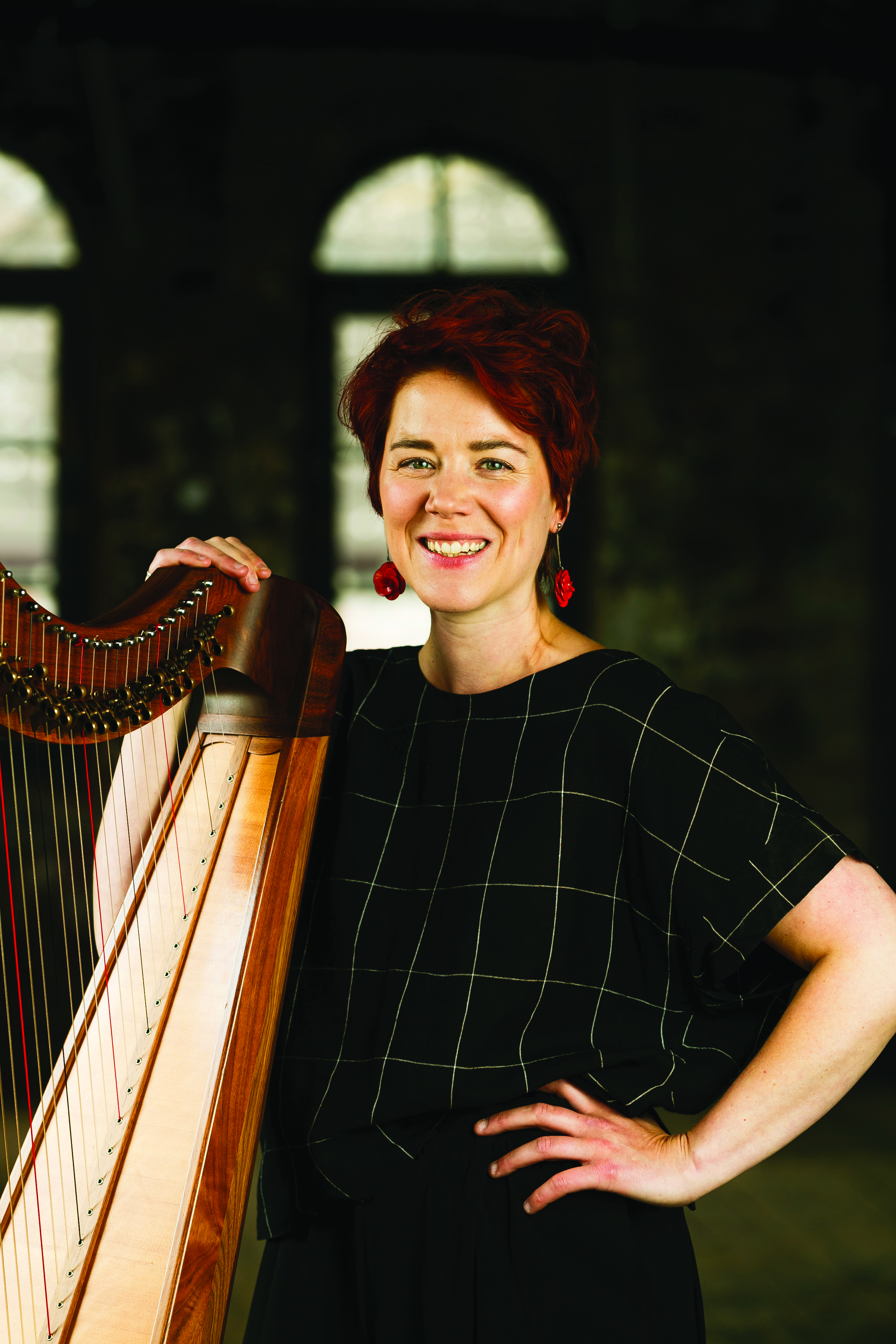
Pippa Reid-Foster is a contemporary Scottish harp player who began her professional career after graduating from Scotland’s Royal Conservatoire. Not only is she an accomplished performer and composer but, through her teaching work, she is also passionate about passing on her skills to a new generation of musicians and composers, covering everything from classical to traditional to modern pop.
Her debut album, Driftwood Harp, retained strong roots to her Scottish heritage, but her minimalist compositional style and her desire to innovate was already apparent and she would take that a step further with her next release.
Undercurrents is her second and most recent album, released in September 2024. It was borne of a wish to perform music on her chosen instrument, the Scottish lever harp, that one might not typically expect to hear from such an instrument. Comprising ten original compositions and interpretations of three additional pieces by Max Richter, Phillip Glass and Alexandrea Hamilton-Ayres, the emphasis is very much on creating contemporary music that’s infused with minimalist elements to create an album of exquisite musical soundscapes.
Pippa Reid-Foster:“The album is a collection of musical soundscapes meant to evoke strong feelings, uplift the spirit, and provide moments of reflection within the hectic world that humans have created.”
Touchingly, Undercurrents is dedicated to the surgeon who helped save her career. Whilst surfing she snapped the ligaments in her wrist and suffered excruciating pain and problems playing for two years. She was referred to Dr Iain McGraw, Consultant Hand and Orthopaedic Trauma Surgeon at the Royal Alexandra Hospital in Paisley, who successfully carried out a rare and delicate operation which could have left her unable to use her hands for good if it didn’t work.
Pippa Reid-Foster:“I simply cannot thank Dr McGraw and everyone else involved enough. This album only happened because of their skill and belief that mine was a musical career worth saving.”
That uplifting tale will surely put anyone in the right mood as they sit down to enjoy this equally uplifting album.
David Mitchell is a Somerset-based classical and folk guitarist whose debut album, Contours, came out in October. He describes his guitar playing as “Folk-Classical fingerstyle” and combines elements of both genres to create his own unique interpretations of well-known classical pieces and traditional folk tunes, as well performing his own original compositions.
Besides his solo work he has been involved in various collaborations with other musicians, including performing in a duo with multi-instrumentalist, Rupert Kirby, and being part of the Monkey See Monkey Do Ceilidh Band.
In addition to being a talented musician, Mitchell trained as a luthier (the traditional name for a craftsperson who makes stringed instruments) at Newark and Sherwood College. On the album he plays a classical guitar that he crafted himself.
Contours is an instrumental album made up of tunes from the folk and classical world alongside original compositions.
David Mitchell:“A lot of the tunes and sets relate to the landscape and natural world, particularly the high and the low places, so ‘Contours’ seemed appropriate as a title to bring this collection altogether.”
A beautiful album of incredible virtuoso playing, David Mitchell brings together his love and knowledge of both folk and classical to create something truly special with Contours.