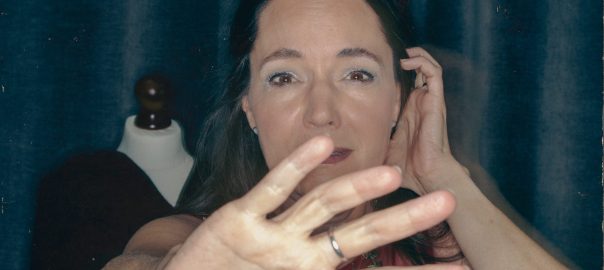
Released: 12 June 2026
“In the 21st century it’s refreshing to know that there are still artists creating unique albums. The London-based Little Lore is a fine example of that and her latest release Being Serafina is a work that stretches the imagination and reveals a conceptual depth outside the normal approach.” – RnR magazine (5 stars)
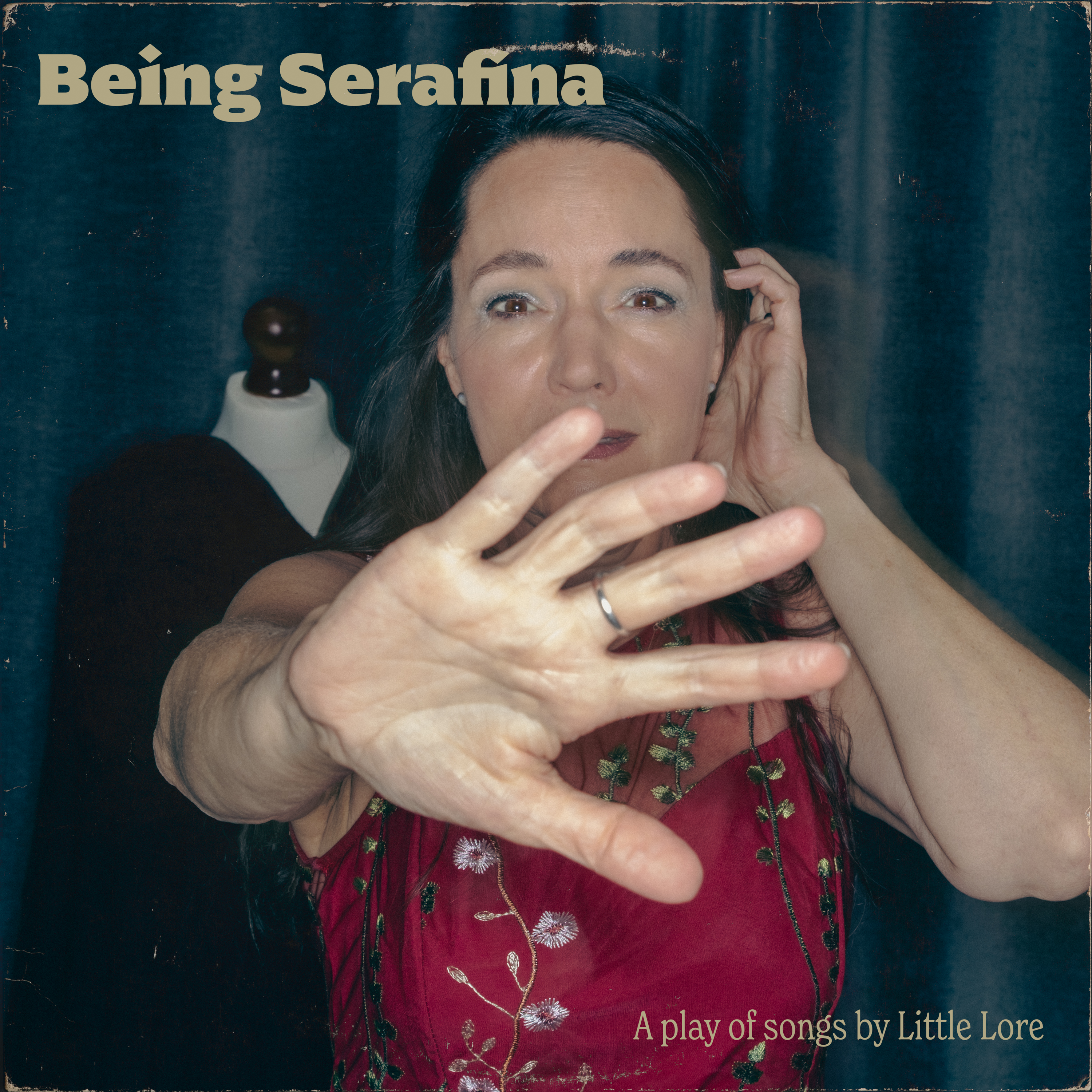
Being Serafina is the new musical project from acclaimed, London-based singer-songwriter, Little Lore aka Tricia Duffy. Released in June this year the albumis named after the central character in Williams’ celebrated play from the 1950s, The Rose Tattoo.
Little Lore: “Being Serafina began as an academic experiment. I wanted to explore whether method acting techniques could be used as a songwriting device. My initial idea was that I could use the Method to write a collection of songs from multiple different character perspectives, perhaps drawn from fiction or characters of my own invention. But projects have a habit of unfolding in unexpected ways. I signed up for method acting classes and to start the process purely, from an acting point of view, I selected a monologue from a play I loved. The Rose Tattoo, by Tennessee Williams. I have been obsessed by Williams’ writing since I was a teenager. I loved and admired his ability to capture such rich female characters. As a homosexual man born in 1911, he understood how it felt to be oppressed.”
“The project began and my first song arrived, written from the perspective of the main protagonist in The Rose Tattoo – Serafina. It’s a song called ‘Did You Exist?’ that sees Serafina questioning everything when she learns that her deceased husband, the love of her life, was having a long-term affair before he died. She is devastated and confused and as I ‘became’ her, I felt it all. And so began an intimate love affair of my own, with this beautiful, vulnerable, funny and flawed character, Serafina. I had a crazy notion that maybe I could go deeper into character and write an entire album from her perspective. Being Serafina is the result. The album draws on a wide range of genre influences from the folk Americana people know me for along with prog rock, punk and blues peppered into the creative process.”
A burgeoning presence on the UK Americana and singer-songwriter scene, Little Lore has received many plaudits, both for her astute, observational songwriting and for her warm, heartfelt vocals. Add into the mix the lush instrumentation and sumptuous production from her principal musical collaborator, Oli Deakin, and the result is nothing short of magical.
Renowned New York-based producer and multi-instrumentalist, Oli Deakin,(who records under the name of Lowpines) produced album and, as with previous Little Lore releases, provides much of the instrumentation.
Being Serafina will be released in vinyl, CD and digital formats on 12 June 2026 via: https://littlelore.bandcamp.com or can be pre-saved via: https://distrokid.com/hyperfollow/littlelore/being-serafina?ref=release
Being Serafina – track by track:
1. Fair Weather:“Serafina is a central part of a close Sicilian community; she is the local seamstress. Williams describes the opening scene of the play with children playing, excitedly talking about the flags flying at the coast guard that indicate the weather will be fine. He describes the mothers calling the children home tenderly and musically. Serafina has set the table for a romantic dinner; she plans to tell her husband that she is pregnant with their second child. Her 12-year-old daughter is catching firebugs, and the scene is quite perfect. The song includes backing vocals from Bella Collins and Ella Tobin in the harmonies to enhance this sense of community, and introduces the use of a clarinet, a musical device used to characterise Rosario – Serafina’s husband. Attentive listeners may notice that the clarinet always pans to the right. A deliberate decision drawn from traditional pantomime, where the ‘baddies’ always enter from the right (or stage left). No spoilers … you will learn why later! A simple song that seems positive but with minor arrangement that offers a sense of foreboding and hints at what will unfold.”
2. Evil Eye: “Serafina is superstitious and prone to judgement. She believes that her neighbour is a ‘Strega’ or witch, with an evil eye that can put a curse on her and her daughter. The Strega is often watching throughout the play, offering useful commentary on what is unfolding. In the scene that inspired this song her menace of a goat has got into Serafina’s yard to eat her tomatoes. Serafina instructs her daughter to avoid looking at the Strega and to wash her face in salt water and throw it quickly away to prevent the Mallocchio: the curse of the evil eye. Her daughter, Rosa points out that the neighbour, far from being a witch, has a cataract and crooked hands caused by rheumatism. Musically Oli and I tried to garner a jaunty yet eerie feel, taking inspiration from the likes of Tom Waits. This superstition could be considered silly, but this moment is an indication of things to come. All is not well in Serafina’s world.”
3. Don’t Speak: “It is dawn and we find Serafina at her sewing machine, waiting. The table is still laid, but the food untouched. Her husband hasn’t come home. Outside she hears the low tones of the women in her community and the priest discussing how to tell her the news. Rosario is dead. Written as a real time unfolding of events, shock and denial are the primary emotions of this song. The devastating moment she learns that her husband has died but tries to hold back the knowing. Written in a deliberately high key – to offer the sensation of that high pitched quality we sometimes get in our voices when we are trying to deny something. The sparse music is uncomfortably dissonant with an off-key drone in the mix to give that sensation of the blood rushing in our ears as she experiences the shock. This was a harrowing song to write. Using the method acting techniques which includes the use emotional substitutions, I allowed myself to access the most significant and devastating losses of my life. I cried throughout the entire writing process. It was an emotional song to record.”
4. Trying not to Breathe: “At this point in the original play by Tennessee Williams Serafina is off stage. A necessary device for the momentum of the story because it is here that the audience learns that Rosario, the love of her life, was having a long-term affair for more than a year before he died. The doctor tells her friends that she has lost her baby and is trying not to breathe. He has given her morphine and leaves the group with a syringe to administer more drugs if she tries to get out of bed. As this album is written purely from Serafina’s perspective, I decided that I needed to live her experience of devastated intoxication. The world knows that Rosario was unfaithful, but Serafina remains in the dark. Leaning on prog rock devices to offer the sensation of this drug induced state, we hear her loss and confusion unfolding. There is a tension and a back and forth in this song as she goes in and out of her sedated state.”
5. Lock up your Daughters: “It’s been three years since Rosario died, and Serafina is still grieving. She fears for her now 15-year-old daughter Rosa’s innocence and has locked her clothes away to prevent her leaving the house. Rosa has fallen in love with a sailor. This song is relatable for any parent! That moment when they are growing up and stepping out on their own story. The musical quality of this song leans to pop, on one level it’s a straightforward cautionary tale to other parents, on another Serafina sees her wild husband’s eyes in her daughter and is forced to confront the fact that soon she will be left alone. Cut off from her community with no husband or child at home. She is becoming ever more isolated.”
6. He Wore Rose Oil in his Hair: “Serafina lives almost as if Rosario is still alive, talking to his ashes and fantasising about their love. She idolises his memory and gloats about their harmonious relationship. She talks indiscreetly about their sex life – how she gave him the ‘glory’ every night of their marriage. She knew that he was working for the mob and turned a blind eye. This is a pure love song; she loved him with every fibre of her being and enjoys remembering with pride about how he smelled and made her feel. I used a deep process of sense memory work to write this song, another method acting technique that had me returning to times in my life when smells have overwhelmed me or triggered significant memories. It is one of my favourites on the record. Those who know my work, will know that I am usually more comfortable with writing about death or loss than love! So, it was quite a tough one for me to create. The interplay with the clarinet that represents Rosario is like a love duet and the melody saws with love and reminiscing.”
7. Did you Exist? “The bubble has burst, for three years Serafina has lived with her grief, comforted only by the memory of her idealised marriage and now two careless girls have let it slip that Rosario was having an affair when he died. Not a fling, but a relationship that was going on for over a year with Estelle, the blackjack dealer at the club downtown. Serafina questions everything. She wants it to be a lie. She asks the urn of Rosario’s ashes, ‘Did you exist? Did we exist?’ And the clarinet responds. Sheepishly. The play is set in the early 1950s, and this song has an AABA form, typical of the music which would have been played on radio at the time. I enjoyed these musical nods to the era.”
8. Dummies: “Serafina becomes ever more isolated, taking comfort in the company of her dressmaker’s dummies rather than the women in her once close-knit community. Her dummies can’t tell her lies or call her names. For me, this is one of the saddest songs on the record. The chorus starts with an imaginary response from the dummies (there are several in the stage directions). In the middle chorus Serafina responds for them and in the last chorus that response doesn’t come, as Serafina faces the fact that she has lost her husband, her baby, her friends, the memory of her husband was false, her daughter finds her disgusting and her faith in the Virgin Mary has let her down. All she has left are these morbid mute dummies. The only co-written song on the record, created with long-time collaborator and friend Thiago Trosso (of Abraskadabra fame). Our close friendship was tested as Thiago bravely gave me permission to write in character as Serafina! The 6/8 time supports the choreographed stage directions regarding the dummies that is indicated by Tennessee Williams throughout the play.”
9. Atone: “Serafina moves through her second bout of shock and denial to anger! Punk beats underpin this driving forceful song of rage! Another direct tribute to Williams’ dramaturgy, the saturated toms are indicative of ice being chipped off stage. The song climaxes with a bell as Serafina throws her dead husband’s ashes across the room and the script notes tell us that a little boy who has been counting down for hide and seek shouts, ‘Coming ready or not!’ Serafina is coming for Estelle with a kitchen knife in her purse. A stranger, Alvaro, has entered her life and tries to talk her down with cool ice for her forehead and a drink. She is furious. She has never been angrier. She wants answers and atonement! Watch out!”
10. Lady Give Me a Sign: “More questions for Serafina, she is forced to accept that the rumours about Rosario are true, and she wants someone to blame. The stranger, Alvaro, has made gentle advances offering her comfort and so this song does several things. She is begging for mercy, while spitefully asking the Lady Madonna if she has ever loved her, but there is a second level in this song, she wants permission to sleep with Alvaro. He has a body that reminds her of her dead husband, and she has been a martyr to his memory for three years. She simultaneously rejects the Virgin Mary while also asking what to do. Musically, at the time I was writing this song I was down a bit of a research warren exploring archives to see if I could find the original score for the first Broadway production of the play. I didn’t find it, but I did learn that the score was composed by David Diamond, who I read was interested in chromaticism at the time. This led me to experiment with the chromatic shift you hear between the verse and the chorus (using the D sharp diminished chord for the musicians out there). The harmony was the first part of the song to be written; the words and melody followed.”
11. Love and Affection: “After her wrangling with the Virgin Mary, Serafina sleeps with Alvaro, who is offering her a little love and affection in a world that is lonely and cold. He’s no catch, he is the Grandson of the village idiot, has a bunch of elderly dependants and, as Serafina remarks, his ears stick out like the wings of a kewpie (or cupid). She also notes that despite his clownlike face, his body is reminiscent of her dead husband who was a god-like man. This song is another nod to the music of the time in the ‘50s a future-facing song, as Serafina starts to feel hope again. So, of course, I had to lean into some good ol’ rock ‘n’ roll.”
12. Strange Things: “Like all good stories, things come full circle and her ‘hero’s journey’ ends as Serafina returns to the ordinary world in much the same state as we found her at the start of this record. She has found hope and love again, she believes she has conceived another baby, and she can see a future for her with Alvaro. She returns to the community once more. The songs on this record have a sort of pairing quality, ‘Fair Weather’ and ‘Strange Things’ are bed-fellows. It is OK to believe in strange things and all is well. The clarinet that represents Rosario is there in the distance, as if releasing her from her grief.”
Release information:
All songs performed by Little Lore (AKA Tricia Duffy)
All songs written by Tricia Duffy except ‘Dummies’ written by Tricia Duffy and Thiago Trosso
Produced, engineered and mixed by Oli Deakin
Arranged by Oli Deakin
Drums: Morgan Karabel
Harp: Rebecca El-Saleh
Pedal Steel: Hamilton Belk
All other instruments: Oli Deakin
Backing vocals on ‘Fair Weather’: Bella Collins and Ella Tobin
Mastered by Katie Tavini
Photography and album cover art by Richard Cranefield
The Being Serafina project is inspired by the character of Serafina from The Rose Tattoo by Tennessee Williams. Presented by special arrangement with The University of the South, Tennessee, USA.

About Little Lore:
Little Lore is a London based, Indie-Americana singer-storyteller whose songs are both charmingly accessible and beguilingly challenging. You’ll want to listen twice. When you combine British wit and wordplay with cherished Americana roots, musical magic starts to happen. Based in Chiswick, West London, and originally hailing from Portsmouth, Tricia Duffy started her singing career as a teenager, which included a stint on cruise ships in the United States.
Tricia’s solo project Little Lore was created in 2020 during the pandemic. Her debut solo EP, Little Lore, was released in 2021 to glowing reviews. Two further EPs Seven Stories Part One and Seven Stories Part Two were released in late 2023 and early 2024, followed by the EP River Stories in April 2025. Little Lore has become a force to be reckoned with on the UK Americana scene, picking up a slew of enthusiastic reviews and extensive radio airplay – including BBC Radio Scotland, BBC Radio Ulster, Nashville Worldwide Country Radio and the International Americana Music Show. In her songs, Little Lore brings together an affection for the heart and heritage of Americana music, with an intelligence and maturity of storytelling that can sweep you away into new and unexpected emotional worlds.
An enthusiastic advocate for songwriters, she is the UK Chapter Coordinator for NSAI (Nashville Songwriters Association International), and a member of Ivors Academy and the Americana Music Association UK. She is especially passionate about creating opportunities for female, transgender and non-binary songwriters.
Website: https://littlelore.uk
X: https://twitter.com/littleloremusic
Facebook: https://www.facebook.com/littleloremusic
Instagram: https://www.instagram.com/littleloremusic
Related posts:
River Stories – the new six-track EP from acclaimed Americana singer-songwriter Little Lore
The gripping tale of Little Lore: interview with Americana singer-storyteller, Tricia Duffy
Little Lore: the magical new project from UK Americana singer-storyteller Tricia Duffy

