Sons of Southern Ulster have teamed up with The Boomtown Rats’ Pete Briquette on a new EP collaboration. The Turf Accountant Schemes EP, featuring four tracks remixed by Briquette, is out on 27th August. A single from the EP ‘Polaris’ was released on 2nd July.
Formed around the song-writing partnership of Justin Kelly and David Meagher, Sons of Southern Ulster released their well-received debut album Foundry Folk Songs back in 2016. Many of their songs reflect the experience of growing up in a small southern border town, Bailieborough in Ireland’s County Cavan. This was long before the internet and the country’s “Celtic Tiger” rapid growth period. They explore themes of regret and disappointment, interspersed with moments of light and insight.
“The first music I ever bought was the ‘Like Clockwork’ single by the Boomtown Rats when I was twelve or thirteen. I was obsessed with The Rats so when Pete Briquette reached out to ask if he could remix a few tracks from our ‘Sinners and Lost Souls’ album, we were absolutely shocked. Apparently, a mutual friend has passed the album on to him and he was suitably intrigued. Pete also grew up in County Cavan, so he’d get a lot of the references and the tone. Lyrically the songs are very “Cavan” in that they are on the surface often quite harsh but contain a lot of dark humour,” says Justin Kelly.
“I remember when the Boomtown Rats broke through. At that time it was highly unusual for an Irish band to make it in Britain. But for a Cavan man to be there!!! That was just bizarre. Cavan men were made to be farmers – not No.1 pop stars.”
The Turf Accountant Schemes EP features four tracks from the band’s second album Sinners and Lost Souls which was released in 2020. Each of the tracks is re-imagined and re-mixed by Briquette.
“In Sons of Southern Ulster, we took a very conscious decision to sing songs about Cavan as it was always a bit underserved, not just in music but in infrastructure and resources. In many ways, the Irish government ignored us and left us to our own devices – for better or worse. I think Pete picked up on that,”says David Meagher.
‘Polaris (Pete Briquette Remix)’ is out July 2. On August 27, the ‘Turf Accountant Schemes’ EP will be released across online platforms, including Apple Music and Spotify, as well as on vinyl. It can already be pre-ordered via Bandcamp.
Formed in Chicago almost thirty years ago Sons of the Never Wrong are an alt-folk trio with a signature sound of soaring harmonies and lush acoustic arrangements built around of thoughtful, witty song-writing.
Their ninth studio album, Undertaker’s Songbook is something of a celebratory release as the band approach their 30th anniversary.
Founder members Bruce Roper (vocals, guitar) and Sue Demel (vocals, guitar, djembe, dulcimer) along with long-time member Deborah Lader (vocals, banjo, guitar, mandolin) who joined the trio in 1998, replacing original member Nancy Walker, are joined by a range of musical guests and spoken word collaborators for this special release. Guests include Marc Kelly Smith, Karen Savoca, Anne Harris and Pete Heitzman helping bring colourful texture to Sons of The Never Wrong’s trademark blend of folk, jazz, pop and rock influences.
Opening track, the gorgeous gospel-tinged, soul-flavoured ‘Muddy, Muddy River’ with guest, Bob Long, on organ and piano is clearly destined to be a centre-piece of future live performances and is a modern-day classic in the making – absolutely gorgeous.
Elsewhere on the album, the melancholic, ecologically-themed piano and vocals number ‘Shorebird’ is another stand-out track, along with the Indie-ish anthem ‘Om Not This Time’. Tracks like ‘Everyone’s In The House’, meanwhile, take us into more classic folk singer-songwriter territory, evoking the genre’s golden age.
Beautifully presented with hand-painted cover art from Lader, Undertaker’s Songbook is a fine album to mark the trio’s thirtieth anniversary.
When I came to review Called Back the latest album from Scottish singer-songwriter John Hinshelwood recently, on checking out his biog I was struck by the high regard he held for the Byrds and the influence that they were to have on his own music. Moreover, it went beyond mere musical influences. As well as sharing a stage with Roger McGuinn, he was involved in putting together a tribute to ex-Byrd and ex-Burrito, Gram Parsons, and actually came to record with former Byrd, Gene Parsons, who was with the band in its latter period, playing on five albums from Dr Byrds & Mr Hyde in 1969 to Farther Along in 1971.
I mentioned all this in my review and said it was certainly recommendation enough for me that this was going to be an album worth exploring. After I published my review, John got in touch. This led to a more detailed chat about how the Byrds came to have such a profound effect on his career and how he came to record with Gene Parsons.
I have already talked about my own particular Byrds journey here. There was clearly a meeting of minds between John and myself and he very kindly sent me a copy of his album on which Gene Parsons appeared.
Titled Holler Til Dawn the album was released in 2002. Recorded in various locations, including Scotland, Tennessee and California the album features eleven Hinshelwood originals, plus three covers: Kathy Stewart’s ‘Your Secret Love’, Lowell George’s and Keith Godchaux’s ‘Six Feet of Snow’ and Gram Parsons’ and Chris Hillman’s ‘My Uncle.’
The album boasts an impressive line-up of guest musicians and singers including, Rab Noakes, Cathy Stewart, Colin Macfarlane and Cathryn Craig as well as the aforementioned Gene Parsons, who plays on two tracks.
So how did he go about getting Gene Parsons to play on his album? John fills me in on how the two came to connect:
“I got to know Gene through Chrissie Oakes in Bristol, who used to run the Byrds Appreciation Society. I have known her since the early 70s and have kept in touch with her right up to the present. She contacted me back in 1995 to ask if I would be interested in organising a gig for Gene in Glasgow as part of his UK tour. Despite never having promoted a gig before, I agreed, and indeed had him back again a few years later. On both gigs, we did support, and agreed that on his next tour we would do some stuff together. Unfortunately, that tour has never happened, but I still live in hope.”
Prior to going on to record with Gene Parson, John was also able to bag himself a support slot for none other than Byrd’s founder, Roger McGuinn:
“The McGuinn gig came about as part of a roots festival in Glasgow in the late 90s. I knew the promoter, the late Billy Kelly, who was a great and genuine guy. I was really chuffed when he asked me to do an opening spot, not least because a lot of much better-known folk were desperate to do it. He knew how much it would mean to me as a Byrds fan, and he kept his word and gave me the gig. I must admit that it was somewhat surreal to be sitting in the dressing room pre gig, and listening to McGuinn practising ‘Eight Miles High’ next door!”
Reflecting on Gene Parsons contributing to the Holler Til Dawn album, Johns notes:
“As is the case with lots of recording nowadays, I wasn’t actually present when Gene added his contributions to the two tracks on Holler Til Dawn. Things have even changed a lot since 2001 when ‘Holler’ was recorded. Today, it is done by emailing files back and forth, but then I had to send the tracks by post to California where Gene recorded his parts, then posted them back to me!”
“The first track we did was the Gram Parsons/Chris Hillman song ‘My Uncle’ which appeared on the Flying Burrito Brothers debut album “The Gilded Palace of Sin” in 1969. The basic tracks of Alasdair Kennedy (mandolin), Tim Clarke (acoustic bass), and myself on acoustic guitar and lead vocal were done in Glasgow, then sent to California where Gene added two banjo tracks and two vocal harmonies.”
“The second track was one of my own songs “We’re all in this together” and has just myself and Gene on it. I play acoustic guitar and sing lead and harmony vocals, and Gene did banjo, acoustic guitar and harmony vocals. Again, I recorded in Glasgow and Gene in Albion, California.”
“Recording in this way requires a lot of trust, as I could not be present to direct and produce, but with Gene’s track record and wonderful musicianship, I was confident that all would work out well, and that did indeed prove to be the case.”
Our respective Byrds journeys
As a non-musician with no discernible musical ability whatsoever I can’t really claim anything so grand as ‘musical influences’. However, the Byrds were certainly had a big influence on me in terms of expanding my musical tastes and interests. I explained in my own post here about how listening to the Byrds as a teenager led me to start exploring the words of American folk-rock and English folk-rock and eventually English folk as well as Americana and country.
John chips in his own two-penneth:
“Your Byrds story is interesting, and I can relate to much of it. I also love Fairport and have seen them more times than any other band. The Byrds also got me listening to folk music, and a lot of our gigs are in folk clubs. It was also “Sweetheart of The Rodeo” that got me interested in country music which, like most ‘rock’ fans I thought I hated. I have, in fact, been in quite a few country and country rock bands over the years, including The City Sinners, which played the music of Gram Parsons.”
Holler Til Dawn is a fine album of first-rate Americana and picked up many favourable reviews at the time. Whether you’re a Gene Parsons fan specifically or a lover of Americana more generally it is well worth checking out.
‘Johnny’s Gone to Hilo’ is a second single from composer and folk artist Roly Witherow ahead of a forthcoming EP set for release later this year. Roly’s rendition is a characteristically inventive yet mournful interpretation of the traditional sea shanty. The single also features guest backing vocals from celebrated East Anglian folk singer, Nick Hart.
Check out ‘Johnny’s Gone to Hilo’ on Spotify here
A prolific composer in the world of film, TV, and theatre, Roly’s credits have included Channel 4’s On The Edge, 2015 BIFA nominated film Gregor and David Hare’s The Permanent Way. His debut folk album ‘Ballads and Yarns’ attracted a slew of highly favourable reviews in the UK media and beyond.
As a folk musician and singer, Roly’s influences include Pete Seeger, Ewan MacColl, Peggy Seeger, A.L. Lloyd, Richard Thompson, Nic Jones, Pete Bellamy, John Martyn, Shirley Collins, Dick Gaughan, Lisa O’Neill and Will Pound.
Of the new single Roly says:
“Johnny’s Gone to Hilo is a sea shanty originating from the sailors of the nitrate trade off the Pacific coast of South America in the 19th century. Hilo likely refers to the Peruvian port of Ilo, and whilst the tone of the shanty varies a great deal in all its different versions and iterations – from drinking song to lament, I thought the melody of the song lent itself best to a sorrowful arrangement with guitar, harmonium and two voices. The backing vocals are provided by acclaimed local folk singer Nick Hart of the Nest Collective, who, raised in a family of morris dancers, is renowned for his evocative voice that is rooted in the folk tradition.”
“The recording of the harmonium with all its noisy stops, billows and pipes was a particular challenge for producer Joe Garcia, but, with some ingenious microphone placement, he managed to capture the instrument’s unique and idiosyncratic sound with tremendous accuracy and warmth.”
Speaking on his five-track EP, set to be released in Winter 2021, Roly added:
“The forthcoming album is a very new direction for me. If my first album, ‘Ballads and Yarns’ had an experimental bent, stemming from my experience as a film composer and combining traditional songs with electric instrumentation, spoken word and elements of world music, this new album has a “back to basics” approach, focussing on the song itself in its most minimal form. The vast majority of the songs are for just acoustic guitar and voice, and the recordings have a very live feel to them, realised in large part by the expert production of Joe Garcia of Joe’s Garage, in Bristol.”
“This new album also has quite a playful, innocent and childlike quality to it, influenced in part by the children’s songs of Pete Seeger, Ewan MacColl and A.L. Lloyd, but also by my experience of recently becoming a father. One of the songs on the album ‘Ernie’s Song’ is dedicated to my son. The album is a combination of traditional songs from the British Isles and further afield, and originals, such as this first single ‘The Bird and the Frog’. There are also some collaborations on the album, including with renowned local folk singer Nick Hart. The album in general touches on themes of rural vs urban life, family and growing up, love and love lost, nature and animals, industrialisation & mechanisation, death and religion.”
What they say:
“Witherow’s resonant voice sits beautifully against a spacious guitar arrangement”– The Times
“mixes up art-rock, atmospherics and folk on his personal project” – The Guardian
“a modern yet classic celebration of the art of folk music” – Folk Radio UK
Guitarist/vocalist/songwriter Ryan O’Donovan, is a Sussex-based musician who has built up a solid reputation through the learning disabled music scene. Whether it’s providing backing vocals and guitar for Beat Express, vocals and lead guitar for Zombie Crash (both bands of which are managed by Brighton-based charity Carousel that facilitate learning disabled people in the arts), lead vocals for Lost Asylum or venturing place to place solo, as his favourite saying goes, he is always out to rock out.
During the past year or so through lockdown, Ryan has attracted a significant following through a variety of online events, hosted by the likes of Carousel, Gig Buddies and, most recently, Electric Umbrella – as well as his own regular ‘Rockin at Home With Ryan’ online gigs.
I caught up with Ryan recently to discuss his musical background, influences and what inspires his song-writing.
How I got into music:
The way I got into music was rather extraordinary. I did terribly at it in school and college, I’ve never done a good job of reading musical notation or scores, yet I always seemed to be able to pick up sounds, pitches and keys by ear and identify them that way, which made me a very projective type when using my voice. I can still remember one or two examples of feedback from teachers highlighting how I put the most effort in to singing during nativity plays (I was in a Church of England primary school). According to my mum, as a baby I was even able to sing back (or more so hum at that age) a tune on the radio in perfect key with it! I grew up seeing my dad’s guitars on the walls here and there and hearing him practice; around the time I was born, he had a short-lived stint as the lead vocalist of a band called Blue Parish, though he only got as far as one gig with them where he was plagued by stage fright and never performed in another gig. Still, it would later be an influence, as well as my mum’s brothers being guitar players in their own time. I even later on heard that my great-grandmother (mother to my paternal grandma) was involved in theatre.
As well as those influences, the music of Busted made me want to pick up a guitar all the more, as well as seeing the cast of Rock School get going as a group (albeit temporary) under the coaching and guidance of Kiss’s Gene Simmons. With a few pointers on the tuning of whatever guitar I could borrow from my dad, I started playing songs I knew when I was 15; not by looking up any tabs or scores, but by remembering what key the songs were in and played the notes from there. Anything else I learned in pointers here and there over the years to come.
My musical influences:
My influences as they are now depend on which band, or any kind of group capacity, that I’m active with. As a solo artist, my influences (in alphabetical order so that I don’t miss anyone significant) include the likes of Alanis Morrisette, Alter Bridge, Avril Lavigne, Black Stone Cherry, Busted, Def Leppard, Fightstar, Fozzy, Godsmack, Guns N’ Roses, Kid Rock, Linkin Park, Nickelback, Nirvana, Pearl Jam, Puddle of Mudd, Saliva and Queen. It was music I grew to love that typically involved heavy guitar playing to varying degrees – and made me want to be more and more of the sort myself.
What inspires me to write:
Aside from the musical influences of artists I’ve talked about as well as my family’s influence, there are varying inspirations for me to write songs. I started by writing an abstract collection of songs that had more fun with whatever was on my mind at the time. Then I wrote songs reflecting my insecurity with being a single man, in varying tones of looking at where I was both in a positive and negative light. Now I write about my own personal acknowledgements towards seasonal traditions, when not writing about my main life experiences in hindsight. But most of all, my main inspiration is how far I’ve come along, especially now that I’ve been playing guitar for half my life and only developed along the way as a musician, performer and individual. This IS my life’s main worth, as nothing else has stood the test of time with me like my way as a musician. And I have nothing else in mind other than to live this lifestyle to the full and make the most of it all. That’s why my saying is “Always out to rock out”.
The farewell tour of glam hero and Glitter Band founder, John Rossall, due to kick off in Blackpool on 4th July, has sadly had to be pulled on health grounds.
Following a hugely well-received comeback album in 2020 John shared news with fans earlier this year that his condition was terminal but vowed to say a special goodbye to fans with a final farewell tour.
In an update shared on his Facebook page today, however, John Rossall’s backing band made the following announcement:
“We all travelled up to Manchester to rehearse John Rossall’s Farewell Tour yesterday. Very sadly it has become apparent that John is not well enough for the upcoming shows. It has been a difficult decision for us all, it is with deep regret and sadness that all shows are now cancelled. You should hear from the venues regarding refunds but please contact them directly if not. We are sure you will, like ourselves, send your love and very best wishes to John, Julia and his family at this very difficult time.
Thank you for your continued support. Dave, Chris, Bob and Corrie”
It’s desperately sad that John can’t say goodbye to fans in the way that he had hoped but he can be very proud of his contribution to UK popular music and in particular taking critics by surprise and going out on such a high point with the incredible Last Glam In Town album last year.
As I said in my review last Autumn it was genuinely the first great glam rock album since the 1970s.
“All tribal beats, honking brass, fuzzed-up guitar, sing-along choruses and enough handclaps and chants of ‘Hey’ to last you a lifetime, The Last Glam In Town is a modern masterpiece of the genre.”
When I interviewed John last year he was immensely touched by the swathes of positive reviews: “It’s like I’ve written them myself almost! It’s a surprise. The reviews everywhere – it’s been beyond my wildest dreams really.”
Best wishes to John and his family and thank you for the music you’ve given us.
During the late 1960s, Mike Frankel was one of the most sought-after photographers for musicians of the era, his photographic style capturing the cultural essence of the decade. Images from Frankel’s extensive archive are set to be released to the public for the first time.
Frankel worked closely with bands like Eric Clapton, Jethro Tull, Pink Floyd, The Grateful Dead, Alice Cooper, Joe Cocker, Frank Zappa, David Bowie, and many others. Most notably, Frankel was also the personal photographer for Jefferson Airplane. In addition, he worked with Bill Graham at the Fillmore East, photographing some of the most iconic images from the rock’s golden age as well as capturing iconic images from Woodstock.
Grace Slick and good friend, Sally Mann, at Woodstock
Photographer, Jim Marshall, who, like Frankel, enjoyed extensive access to many musicians throughout the 1960s said of Frankel: “Mike was the photographer that brought art to our profession.”
A book of Frankel’s images is set for publication towards the end of the year. An additional volume showcasing his Beatles photos is also in the planning stages.
Grace Slick and Bill Graham at Woodstock
Four Corners Framed Art in Independence, Missouri, USA is hosting an in-person meet and greet with the legendary photographer Mike Frankel on Friday, 22nd October from 5 pm to 9 pm. The event is free, open to the public, and will be held in conjunction with the Englewood Arts District’s third Friday art walk.
“This is truly a rare opportunity to meet a living legend,” said Joseph Crownover, Owner/Gallery Director of Four Corners Framed Art. “This will be only the third time Mike Frankel’s work has ever been shown or made available to the public since the photos were taken over 50 years ago.”
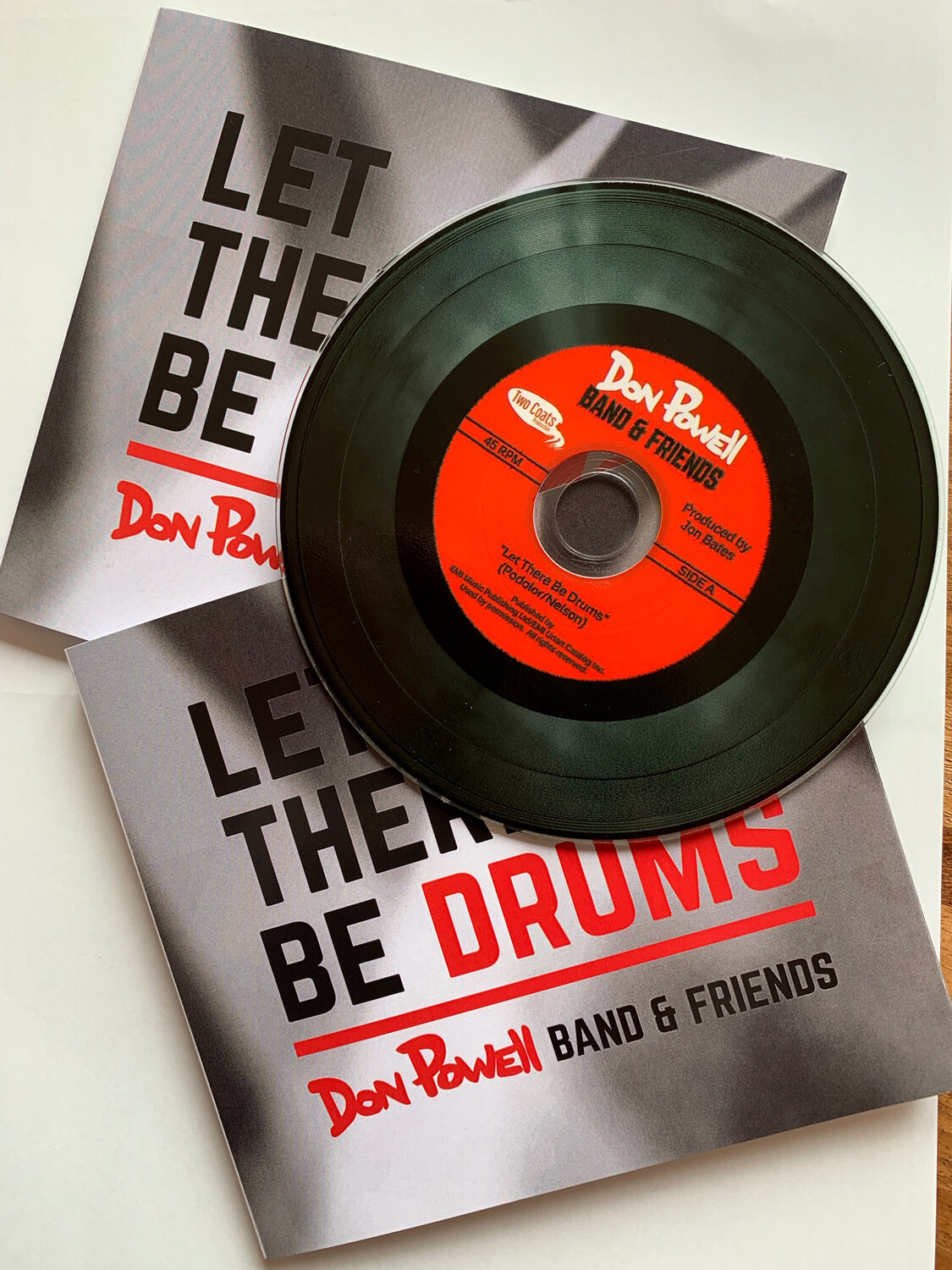
I catch up with founding member of Slade and drumming legend, Don Powell. Don’s band have just released a brand new single, a cover of the instrumental classic ‘Let There Be Drums’ featuring eighteen of the UK’s leading drummers with all profits going to We Make Events, raising money for crew, engineers and technicians hit by the pandemic and the cancellation of live gigs. Via Zoom in Don’s home in Denmark we talk about the new single, about the old Slade days, about working with Suzi Quatro and Andy Scott, about recovering from a stroke and much, much more besides.
DJ: I want to talk first about the new single ‘Let There Be Drums’ the cover of the old Sandy Nelson instrumental which was released just last week. It’s already made quite a splash I believe. Can you just say a bit about how that all came about?
DP: I tell you what, Darren, it’s funny how these things stick with you. It was before I was actually playing drums it was like in my youth club days when it was first released in ’61. So, I’d be 14/15 then and it was like the youth club. You know playing table tennis and we used to have the old Dansette record player and some of the older members of the club brought this record down and it just freaked me out. I’d never heard a drumming record before – just a solo drumming record. And I thought, blimey, this is incredible. It sort of stuck with me.
DJ: Were you already drumming by then?
DP: No, no, no.
DJ: So that’s what got you into the drums then?
DP: Maybe, I was playing drums in the boy scouts. But it just freaked me. It floored me when I heard it because I’d never heard a drumming record before. Anyway, it’s always been in the back of my mind. Then Craig Fenney, who was the bass-player with Slade when we went back on the road in 91/92, me and him were talking about it. It came up in conversation. I think it was Craig who brought it up in conversation. I said, “Actually, Craig…” What I did I recorded drums – do you remember that solo artist Jona Lewie? He had a couple of hits – ‘You’ll Always Find Me in the Kitchen at Parties’ and ‘Don’t Stop the Cavalry’. Well, he’s got a 48-track recording studio at his house. And he invited me down and I started playing around and I recorded one or two drum tracks. And when Craig brought it up, I said, “Actually Craig, I have got some recordings of the drum track.” Because the way technology’s gone sky-high, I got the old 24-inch master-tapes and had them transferred digitally. And then it was Craig’s idea who said, “Why don’t we try and get lots of guest drummers. Let’s throw some names in between us and do like a cover version.” I said, “That’s a great idea.”
And we started throwing names about and I mentioned Brian Bennett from the Shadows. Because about three or four times a year about 35-40 of us have a lunch in London – like musicians, actors and people like that. And Brian’s always there so we made contact like that. And he said straight away, “No problem.” And the idea was, Darren, was for them to record about fifteen seconds – and also film it so we could put it all together like a montage-type thing. And there was Bev Bevan who was originally from the Move, and then ELO and he did a stint with Black Sabbath. Everybody was so gracious and then we decided to donate all this to charity – for all the road crews and technicians who’ve really suffered with the pandemic catastrophe. And it just came together really quickly, Darren. They all put their oar in and got themselves filmed while they recorded it and sent it to us. And we just put it all together and we’ll just see what happens with it, mate.
‘Let Their Be Drums’ limited edition CD
DJ: Well it’s a great track and it’s a great cause so let’s hope it’s going to be a real success.
DP: I don’t think people really realise the work that these guys do. I mean without these guys the show wouldn’t go on.
DJ: Hopefully, when things do go back to normal we’ll start to appreciate them more – as ordinary punters.
DP: Can you see light at the end of the tunnel yet? There are a few concerts in the offing but we’re just going to have to wait and see, Darren.
DJ: It’s been quite an exciting time for you because you formed the Don Powell Band last year. You had the project with Suzie Quatro and Andy Scott a few years ago. There seems to have been a burst of new projects that you’re involved in these days.
DP: Yeah. I’ve been pretty lucky really, Darren. The Suzi Quatro and Andy Scott one was quite nice because what it was there was Slade, Sweet and Suzi Quatro band did a few shows together and Suzi, Andy and myself are sitting in the hotel restaurant one day and Andy Scott said, “Now this will make a good band.” And everybody’s sort of yeah, I wonder, I wonder… And we kept on mentioning it and it came about and we said let’s get together and do some recordings. And so what we did we went down to Peter Gabriel’s place. He’s got a massive studio complex over in the west country. And so we went down there and what we did you live there – sort of live, eat and record there. And that’s when we did the album really. We had a great time doing it. And then it got released by Sony in Australia and it charted. So we went over and tour there. Because what we did, Suzi Quatro goes over there every year anyway and she has done for the last thirty years. And we were the opening act. Andy, Suzi and myself were the opening act. It was a great tour. And it helped with the album really.
Quatro Scott Powell album
DJ: So all these new things that you’ve been doing – was it starting to get a little bit frustratingbefore? Because I know you went out with Dave Hill for a good twenty-odd years. Was it starting to get a bit frustrating just going out there and doing the hits? Were you starting to feel that you wanted to do some new things?
DP: In a way yes. Apart from doing the Slade material with Dave Hill – but that’s what people wanted to see. It’s like with any band that’s had an amount of success, it’s hard to get out of that hole that you dig yourself into. I mean, we had it with the original line-up with Noddy and Jim – what do we play or what do we leave out? It’s a hard thing to try and decide. Everyone’s got different ideas or different choices you know but we all have to try and find out or work out what the audience want really. But we came to an end in a way. Noddy Holder didn’t want to tour anymore so it was just a matter of looking for things and Dave Hill and myself were still keen on touring which we did. And actually it was great because we went to a lot of territories like Russia and the old Eastern Bloc which we couldn’t do in the 70s.
DJ: The world opened up more I suppose?
DP: Oh yes. We had some great shows in Russia. It was incredible. And it’s not until you go there that you realise how big that place is.
DJ: You were massive there but at the time you could never really get there.
DP: No, we couldn’t get there. There was no record deal. We hadn’t got a clue what was going on release-wise you know, for obvious reasons. And it’s amazing when you realise – we flew from Moscow to Dal’niy Vostok on the east coast and it’s like thirteen hours. That’s like flying from Los Angeles. It’s incredible – but we’ve had some great times there, Darren.
DJ: Yes, I only saw the original band three times in the early 80s but then I saw you and Dave many, many times after that. But there seemed to be a time, only a year or two ago when it all seemed to be going wrong for you. You had the email sacking you from Dave Hill. That was after your serious tendon injury that put you out of action for a while. And then to cap it all after that, you had a stroke. It all seemed to be going wrong for you?
DP: Yeah. It was a weird thing. There was no reasoning for it. With the stroke it was strange. I was here at home. We all were here at home, and I was just watching TV and I went to sort of grab my cup of tea and I couldn’t get the cup. I couldn’t grab the cup or hold the cup. I had to hold my hand and then I came downstairs to speak to my wife, and it was a problem coming down the stairs and luckily our daughter is a doctor. And she said, “You’ve had a stroke. You need to go to the hospital. Because my speech is a bit blurred sort of thing.
DJ: I thought that was just the Wolverhampton accent!
DP: Oh no! Or it could be my drinking days! That would have been normal then. If it was my drinking days I would understand – but that’s all gone! But we just sent for an ambulance, and they hooked me up to some machines and checked me out and they said, “You’ve had a stroke. We’ve got to take you to hospital.” And that’s what it was. It was just a small stroke, and I was at the hospital. Luckily, it was our daughter who said, being a doctor, who said, “If you were my husband I would send you to the hospital.” Anyway, it was all sorted out and everything was ok. Apparently, it wasn’t that serious but I’m glad I got the advice. So yep, everything’s ok.
DJ: Because there was like a twelve-month period where just everything was going wrong for you. There was your tendon, then there was the Dave Hill thing, then there was your stroke. Was there a time when you just thought about packing it all in and knocking it on the head?
DP: No. No.
DJ: You always stayed positive?
DP: I was very positive. Actually, that came from my wife as well, Darren. My wife, Hanne, she was great you know. She made me practice going upstairs and I had a practice kit and she made me get on that and she said, “I love to hear you play.” And that was ok, actually. It was strange. There was no problem playing drums or anything. And it was just a matter of this little minor stroke happened if you like – and that was it. I’m on tablets for the rest of my life but apparently that’s just like the norm these days. But it’s ok. It was a bit scary at the time.
Watch our full Zoom chat on Youtube here
DJ: And a high point last year, it must have been really nice for you after all these years seeing Slade back in the album charts?
DP: Yeah incredible. You see, I looked at the CD and I thought, “Blimey. It ain’t bad is it? A nice bit of history there.” But also, when it went back in the charts I thought everybody had got this stuff, you know! How much further can you go, you know. It is incredible but I tell you what people always talk about the – we call it ‘that song’ – the Christmas song. No matter where we go around the world, no matter what time of year – they wanna hear that song.
DJ: But do you think this has helped broaden people’s memories and recollections of the band now? I mean, that compilation must have helped.
DP: Oh I think so. I think the general comments I’ve been getting, Darren, is people saying, “Oh, I didn’t realise you had so many hits. Oh, I forgot you had that one. Oh yeah and that one.” I mean I do myself as well. I’m looking thinking, wow I forgot about that. So it’s nice compliments and it’s nice bit of history on the CD really.
DJ: The hit that really got everything going for me in terms of Slade – because I was like 6 or 7 when ‘Cum On Feel The Noize’ and those hits came out and I was more into the Wombles than Slade at that age – but by the time I was 14 ‘We’ll Bring The House Down’ came out. That was your big comeback single. That was the one that really turned me into a lifelong Slade fan.
DP: That was a great record. Obviously, with Nod’s lyrics that’s how it came about. It’s all about a concert. And what we did, when we recorded that I just went to the toilet and I made a loud cough and I thought, “Ooh, that’s a nice echo in here.” And I thought, “I wonder, how would it be if we put the drums in here.” Because it was all tiled and everything and it was like a thunderous sound in the toilet – absolutely incredible. But we never thought – I was halfway through this incredible take and the automatic flush went off. I thought, “Oh shit!” you know. And we had to turn the water off – it’s those things you don’t think about. It was a great comeback record that, though. It was a nice record to come back with actually.
DJ: It must be a brilliant record for a drummer, too, because the drums are so centre-stage.
DP: Oh yes. It’s great to play on stage, Darren. Because the thing is I can just keep on playing while the other guys just talk to the audience and just mess around and all that. It’s a great stage song, especially for me anyway.
DJ: As a drummer which is your favourite Slade song to play?
DP: Oh, there’s a couple really. I mean ‘Cum On Feel The Noize’ I always love playing and ‘My Oh My’. If you listen to that at the start it’s basically just bass drum and snare drum. And I come in with the drum fills afterwards. It was a great song to play and also ‘Cum On Feel The Noize’ is one of my favourites as well.
DJ: Definitely. That would be one of my favourites as well.
DP: It’s incredible. There’s another one when you think, Darren. We released that in the States at the same time in ’73 and it never saw the light of day – nothing. And then Quiet Riot recorded it and it goes to number 1.
DJ: And then gave your career a boost because you started having hits for the first time ever in America as well.
DP: Oh, that’s what happened there. It gave us a boost. All these record companies over there were after us and we signed with CBS. And MTV had just started as well, Darren, which helped a lot. That video was on MTV all the time.
DJ: The ‘Run Run Away’ video?
DP: Yep. ‘Run Run Away’ was released first because they used that castle as the back-drop. Of course, like typical Americans they all thought that’s where we lived.
DJ: Slade’s castle!
DP: They thought it was our house.
DJ: That’s even more bizarre than Vic Reeves really.
DP: Yes. We just played along with that one, so it was quite good.
DJ: Well, yeah, every rock band in Britain has their own castle.And if we can go back to the very, very early days of Slade now. In the early days you actually wrote quite a bit for Slade at the start but when the hits started coming you stopped. I think that was a shame, personally, because while I could see your lyrics were not hit single material, I would have thought for album tracks they would have been perfect.
DP: I’ve started writing again now but the thing is Noddy Holder and Jim Lea started writing and they were doing it like that [clicks fingers] and they were coming out with the hits, and it was so easy for them, Darren, so I just let them carry on with it.
DJ: Oh right, you just thought let them get on with it.
DP: Yeah.
DJ: They didn’t actually tell you to stop writing or discourage you?
DP: Oh no, nothing like that. They were coming up with this great material, so I just thought, you know, “Let them carry on with it. They’ve got the formula now so great just let them do it.” But I’ve started writing again over the last few years for the solo stuff I’ve been doing so we’ve just got our fingers crossed with the Don Powell Band really when we start doing some more recordings. But then again, Darren, it’s amazing how technology’s changed. Because of this pandemic crap, you know, I haven’t been able to travel. The rest of the guys have been recording stuff in England and sending the files to me and I just go to the studio I use over here, put the drums on and send it back. It’s not the same as all being in the studio at the same time because there’s that rapport you have that sort of feeds itself when you’re all playing together. But at least we can do something while this is going on around us, you know?
DJ: It’s something really positive to focus on.
DP: Yes, there’s a guy in Australia who I met when I toured there with Andy and Suzi a few years ago and he was doing some solo stuff and he asked me to play drums on it and I said yes. And he’s doing the same. He’s sending the files over from Australia. I’m waiting for them. And I’ll put drums on and send it back.
DJ: So can we expect an album from the Don Powell Band then?
DP: Oh yes. For sure. For sure…
DJ: And when..?
DP: Hopefully – they’re all writing stuff, which is all of us – as soon as possible really, Darren. At the moment with this pandemic, as I said, at least they can send me material, I can put drums on and send it back, you know. But it’ll be nice when we can all get in the studio together at the same time. A great bunch of guys and they’re great fun to be with. We only had two rehearsals together before all this lockdown came.
DJ: So you know each other better on Zoom than you do in real life!
DP: Exactly! It’s strange it is.
DJ: Although, obviously, you and Craig (Craig Fenney – bass player) go back many years.
DP: Oh yes. We go back even before we were back on the road – Dave and myself when Craig was in the band – I’ve known Craig even before then. So it’s not like we were total strangers so that’s good.
DJ: And still just on Slade, I’m not going to dwell on the Dave Hill thing, but do you still hear from the other two members of the band – Noddy and Jim?
DP: Yeah, occasionally we speak and like I said we’ve got one coming up in September. There’s like 35-40 of us have a lunch together in London. There’s like musicians, drummers. And it’s great. There’s like Bruce Welch from the Shadows and Brian Bennett. I mean there’s Clem Cattini. I don’t know whether you know of him, Darren?
DJ: Oh yes, big session player – yes.
DP: Oh you know – and he’s such an unassuming guy because you know he started with ‘Telstar’ from the Tornadoes, that’s how it started with him. And he went into studio work and do you know he’s played drums on over 200 hit records? 55 number ones he’s played drums on.
DJ: That’s more than you!
DP: Yeah. It’s phenomenal.
DJ: I mean you’ve not done too bad playing on number ones.
DP: The thing is when you’re talking to Clem, Darren, you talk about records and, “Yeah, I played drums on that. Yeah, I did that one as well. Yeah, and that one.” He was telling us he never knew where he was going in those days. He’d have a contact. Go to so-and-so studio. He said on one day he did ‘Lilly The Pink’ in the morning by Scaffold and in the afternoon he packed his drums away and went to Decca studios and then he did ‘It’s Not Unusual’ by Tom Jones. So he did two number ones in one day. And he got something like sixty quid. [laughs] But that’s what it was then.
DJ: It’s more the legacy than the money.
DP: Yeah, course it is. He’s got some great stories though. And it’s why I like talking to Bruce Welch as well because I asked, and I didn’t know whether Cliff Richard and The Shadows actually toured America – but they did. Back in the very early ‘60s they were on one of those package things with people like Dion and the Belmonts, all those kind of people. But then again, travelling on a greyhound bus. No private jets then. It was just travelling on a bus. But yes, it’s great talking to those people. And those people I look up to those people.
DJ: And Noddy and Jim, do you still hear from them?
DP: Well, as I say, Nod’s always at the lunches.
DJ: So you keep up with Nod.
DP: And Jim – Jim’s not on email. Jim never bothers with email or mobile phones or anything like that.
DP: Oh good. I mainly contact Jim through his brother now. His brother’s on email so I make contact like that through his brother. So I’ll see Nod – if the lunch goes ahead in September, Darren, I shall see Nod there. We always have a good laugh you know. The thing is no-one knows what we’re talking about. We’re just on our own talking and killing ourselves laughing. And no-one knows what we’re talking about. Well when you think, when we’ve been together so long – like I’ve always said I probably knew the rest of the band Nod, Dave and Jim better than I knew my own brother.
DJ: Because you saw a lot more of them.
DP: Oh, just in the back of the van and sharing bags of chips and things like that. I mean we went through so much together really and that can never go away.
DJ: Yes, and that’s a really nice note to end the Slade memories on. And just looking to the future now what next for the Don Powell Band?
DP: Well like I said, it’s all frozen with this pandemic that’s going on but hopefully, as you know, because we’re recording at least we can do some recording. Like I said they send the files to me and I put drums on and send it back. So, hopefully, when all this clears we can get together. We only had two rehearsals together before all this started. So, hopefully, we can just get things sorted when all this pandemic stuff’s done.
DJ: And you are planning a tour then?
DP: Well we would like to, but we will see how it all sort of channels out really. So it’ll be nice. It will be the usual thing. They be asking for ‘that song’. Merry Christmas!
DJ: Presumably, you are going to do a mix of new material and Slade classics?
DP: Oh, I suppose we’ll have to do. Because one of the guitarists is Bob Wilson from Steve Gibbons Band. So we’ve started rehearsing some of Steve Gibbons’ stuff as well. So there’s a lot of material to choose from, Darren.
DJ: And if I can ask one final favour as well. I work for a learning disability charity called Stay UpLate and what we do is help people with a learning disability get out to gigs.
DP: Oh nice! I do that kind of thing over here, Darren.
DJ: Yeah, I knew you did. And one of our participants Daniel is a massive Slade fan, so if you can give a message of support to our charity Stay Up Late that would be brilliant.
DP: Hi there people. This is Don Powell from the Don Powell Band and I’m sending a message to the Stay Up Late people just keep on trucking and keep on going guys. It’s going to be fantastic.
John Hinshelwood is a Scottish singer-songwriter from Lanakshire. As a teenager in the 1960s the likes of The Beatles and Bob Dylan made a big impact and he was also profoundly influenced by those US West Coast bands, like The Byrds. Indeed, as well as sharing a stage with Roger McGuinn, Hinshelwood has actually recorded with late-period former Byrd, Gene Parsons, as well as putting together a tribute to ex-Byrd and ex-Burrito, the late Gram Parsons.
That was certainly going to be recommendation enough for me and I was anxious to check out Hinshelwood’s latest album. With a long career he’s got a number of albums to his back catalogue, both individually and as collaborations, mostly in the folk/country/Americana vein where he’s built his reputation.
This latest album Called Back, is something of a departure. Lyrically, the album adapts the writings of nineteenth century American poet, Emily Dickinson and transforms them into fourteen songs. Poetry adaptations into songs is not particularly unusual in the folk/singer-songwriter genre – and I’ve reviewed plenty such examples here. Where Hinshelwood attempts something really ambitious and fairly unique, however, is in deploying a range of very different musical styles across different genres with the aim of creating music that matches the sentiment of each particular poem. We therefore get a lovely range of styles from bluegrass and Americana through to jazz and traditional folk.
The album definitely benefits from repeated listens as there is always something more that reveals itself to the listeners each time. He’s put together a fantastically diverse bunch of musicians to see him through this project, too, from members of his own regular touring band, to veteran LA session percussionist, Steve Foreman, to BBC Young Musician of The Year, David Bowden, plus many more.
An ambitious project, brilliantly executed and well worth a listen. Fans of country-tinged, folky Americana will love this album but there’s much, much more besides.
With a name like that, various 70s glam heroes cited as key influences and an album due out in July entitled Rock ‘n’ Roll Glitter Suit it’s probably not too much of a coincidence that the paths of Darren’s Music Blog and Velvet Insane would eventually cross.
The Swedish-based band were formed in 2013 by guitarist Jesper Lindgren and describe themselves as a three-piece gang of rockers that reinvented glam rock by mixing the pop harmonies of the 70’s with the heavy sound of today. There have been changes in personnel and switches in record companies along the way but the band’s fortunes received a significant boost when they signed to a deal with Wild Kingdom/Sound Pollution earlier this year.
On the record deal the band commented:
“It feels inspiring and exciting to have signed a deal with Wild Kingdom. After working our asses off for years jumping around on different record companies it feels like we finally found our home. Wild Kingdom got the distinct rock ’n’ roll vein that we all love. Together we have made this glammy high energy rock ’n’ roll album that we feel very proud of. A wam bam beat that will knock you of your feet.”
An initial single and video, the wonderfully-titled ‘Backstreet Liberace’, from the forthcoming album was released back in May to great acclaim. All pounding piano keys, big handclaps, infectious riffs and catchy choruses there’s plenty to love about this.
‘Backstreet Liberace’ was then followed up with a second single from second single and music video ‘Sound of Sirens’ released 11th June. With a change of pace here they define it as 60’s pop gem made for the modern day.
Of the latest single the band say:
“We feel very proud about this catchy singalong pop gem and that it shows a slightly different side of Velvet Insane. Strongly influenced by The Beatles and 60’s pop music it gives you shivers and shows our passion and love for all kinds of music. A song we really looking forward to playing live and feel the energy from the audience in the future. With the video, we want to celebrate where we come from: the 70’s. Kiss, ABBA, Slade and glam rock/pop in general have meant so much to us in our musical upbringing. 1970’s influences in pictures and music but with the sound of today.”
The track is written by the legendary Sulo Karlsson of the Diamond Dogs who also produced and wrote the tracks together with the band on the upcoming album.
The album Rock ’n’ Roll Glitter Suit will be released via Wild Kingdom on 16th July and can be pre-ordered via: https://orcd.co/sound-of-sirens











 Darren's music blog