Although their first album seemed to pass me by at the time I instantly became a fan of the Faversham-based folk rock band, Green Diesel, when I was asked to review their second album, Wayfarers All, back in 2014. They are currently promoting their fifth album,Onward The Sun, which came out in April and which was recently described by Shindig! magazine as “folk rock at its finest.” I couldn’t agree more which is why I headed over to Brighton to catch the band live.
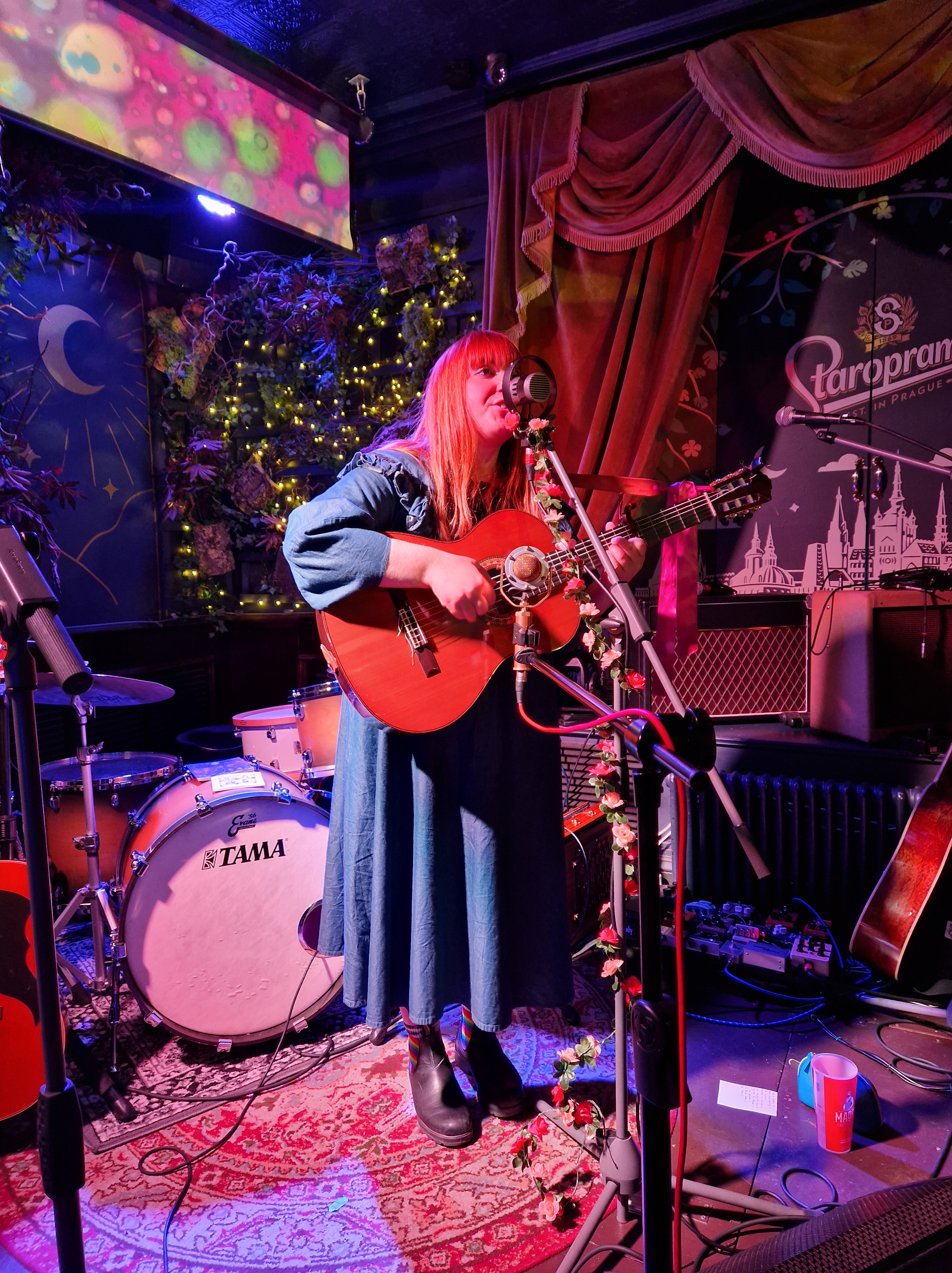
Performing at the charmingly elegant Folklore Rooms above the Quadrant pub, the band were supported first by Bity Booker, a London-based alt-folk singer-songwriter with beautiful songs, a sweet voice and some hilariously deadpan introductions. And by Brighton’s own The Witchcraft & Vagrancy Act, who delve into the macabre side of folk to come up with their own fabulous folk horror interpretations of traditional songs – think Cecil Sharp had he spent his time hanging around with Bauhaus and Alice Cooper.
Bity Booker
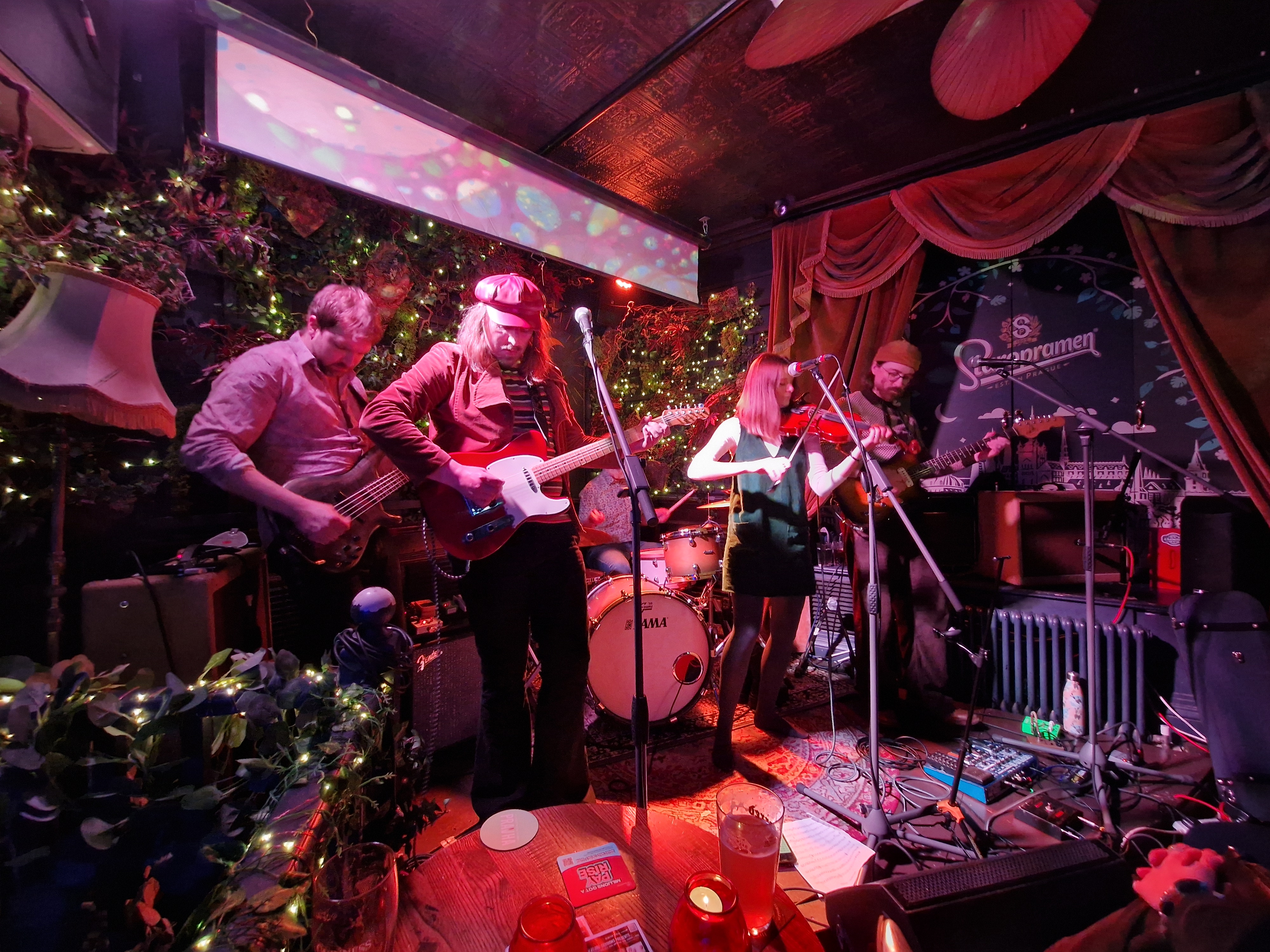
For Green Diesel, the evening provides a welcome opportunity to showcase material from the new album alongside some older favourites. There’s well-received renditions of ‘Onward the Sun!’ the album’s title track, and ‘Ring The Hill’ another superb song from the album. Ellen Care’s vocals are utterly perfect for material of this type, combining just the right amount of sweetness and menace as she lets these folklore-inspired stories unfold, backed by some psych-folk guitar-wizardry, a powerful rhythm section and her own stunning fiddle playing.
Green Diesel have never been averse to a bit of folk horror themselves, of course, and tonight’s set includes the band’s cover of ‘Maypole’ from The Wicker Man soundtrack, sung by lead guitarist, Matt Dear, and given a suitably-ominous sounding Green Diesel makeover. The band even throw in a couple of Morris tunes which comprise the instrumental segment of the new album, again given the Green Diesel treatment: heavied up and performed in minor key. Superb stuff!
Green Diesel
Green Diesel just seem to get better and better with each year that passes. And with two impressive support acts it made the trip to Brighton and the never-knowingly-reliable late train back to Hastings well worthwhile.
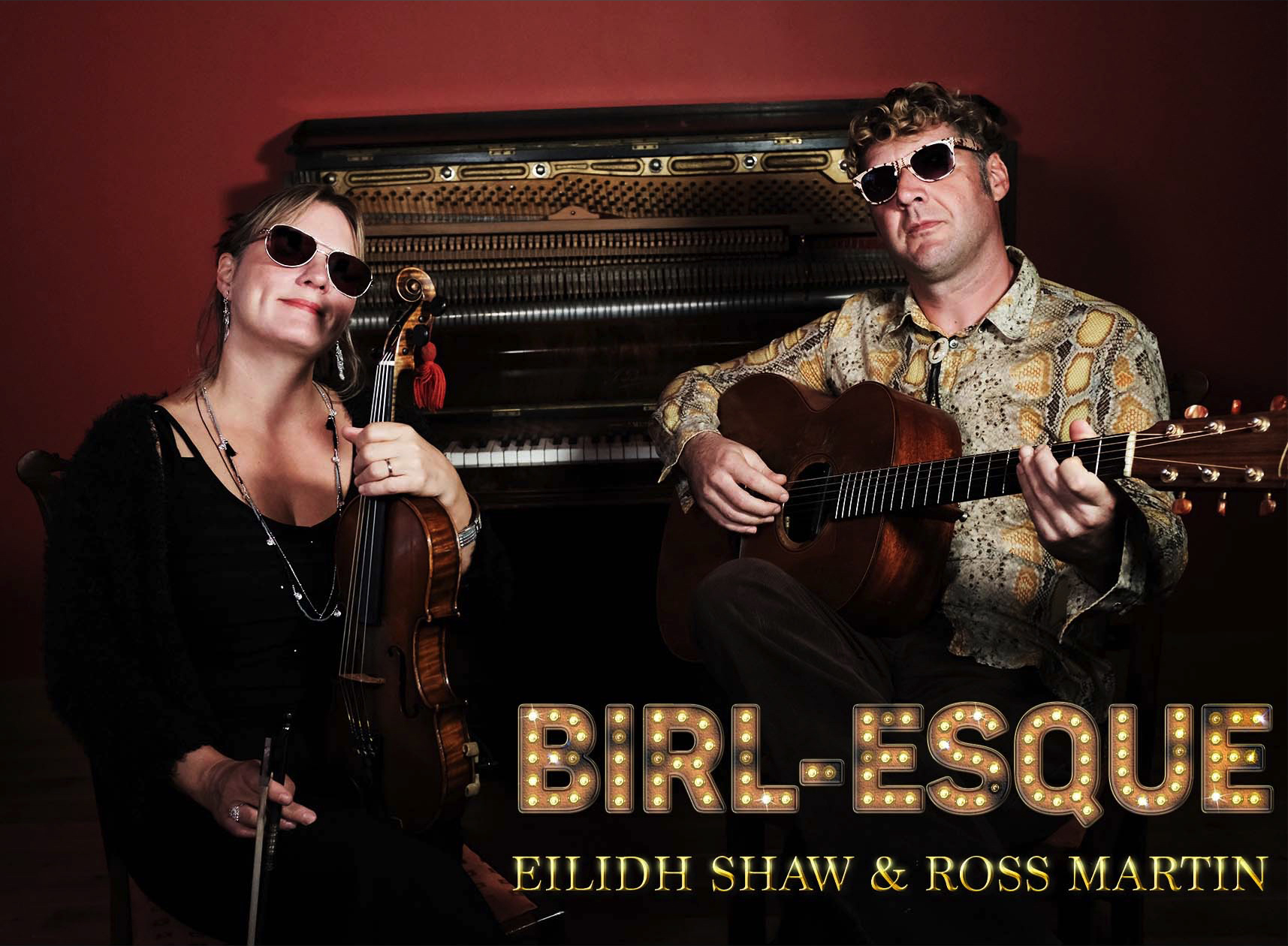
Eilidh Shaw (fiddle and vocals) and Ross Martin (guitar) are best known for their work with two leading Scottish traditional bands. Shaw for her work with The Poozies and Martin with Daimh. Between them they have spent over two decades touring with both their own bands and as guest artists with an vast array of top performers, including Julie Fowlis, Bonnie Prince Billy, Tony Christie and Arnaud Ciapolino.
Performing under the name Birl-Esque, Stay Here All Night is their second album as a duo. Born out of the long musical winter of lockdowns and cancelled gigs, the obvious choice faced by many couples was to either order another case of wine or build a home studio. Eilidh Shaw and Ross Martin did both of these things. The resulting album is a festival of creativity, full of the style and character that the duo has become known for.
Eilidh Shaw’s fiddle takes the lead on the instrumentals, such as ‘Swimmy Tunes’ above. The duo comment: “Two tunes written by Eilidh after a glorious west coast summer swimming in the sea around Arisaig. No swimming in this video as, although still very beautiful, it was a very cold day in January. The beautiful islands of Eigg and a snow-capped Rum in the background.”
New compositions such as this sit alongside old Highland classics like the ‘Thief of Lochaber’ and ‘Paddy’s Waltzes’, a set of Gaelic waltzes taken from her father’s home-made music book.
The four songs on the album include covers of contemporary Scottish writers such as ‘Stoned Again’ by Sandy Wright and ‘Better Off Dead’ by Willie MacAskill while the title track ‘Stay Here All Night’ showcases Shaw’s own songwriting.
Ross Martin’s consummate guitar arrangements tie the album together while the whole project is further decorated by a star-studded list of guest musicians that happened to be either passing the duo’s Highland home in Morar or had made the same decision during the dark days of covid and contributed from their own home studios.
With a combined total of 74 years of gigging experience and over 100 album appearances between them this dazzling duo seamlessly blur the lines between the traditional and the contemporary with a uniquely mischievous style.
Those who felt a Show of Hands-shaped hole in their lives, since the acclaimed west country duo went on indefinite hiatus last year, didn’t have to wait too long for new material featuring those warm, impassioned, familiar tones of vocalist, Steve Knightley.
First there was last Autum’s solo album, The Winter Yards (“poignant, tender, thought-provoking and rousing, in turn…”) and equally quick-off-the-mark came a follow-up in the Spring, Positively Folk Street: Dylan, Carthy & Me. While the former was very much a showcase for Knightley’s continuing brilliance as a songwriter and passionate observance of the world around him, this latter release is all about returning to his formative influences: back to when the young Knightley first tentatively dipped his toes into the world of acoustic folk.
Steve Knightley: “When I first picked up an acoustic guitar in my mid-teens, my repertoire was very limited – and then I discovered ‘The Freewheelin’ Bob Dylan’. That album was a revelation. At the time, I had no idea Dylan had drawn so deeply from our own folk traditions to shape many of his songs.Later that summer, I found myself at Sidmouth Folk Festival, where I saw martin Carthy perform live for the first time. Another moment of discovery.“
“This album is a tribute to those formative influences. Across these twelve songs I revisit the worlds of Bob Dylan and martin Carthy – two artists who shaped my musical journey and set me on a path I’m still working.”
Containing six Dylan songs and six trad. arr. compositions from the repertoire of Carthy, it’s rare to come across a contemporary folk release these days where one is quite so familiar with the material. But Knightley applies his characteristic verve, passion and singularity and breathes new life into a beautifully-chosen set of songs. A must-buy for any Show of Hands and Steve Knightley fans, giving an insight into the songs and artists that helped shape his own career.
When Norwich-based folk duo, Christina Alden & Alex Patterson, released their debut album, Hunter, back in 2021 I found it a highly enjoyable listen and was struck by the duo’s lovely melodies, heart-warming vocals and charming story-telling.
We’ve had a while to wait but now they are back with a brand-new album, Safe Travels, featuring ten original songs and a duo-composed instrumental.
Recorded at the couple’s home studio in the centre of Norwich, they outline the genesis of the album as follows:
“We began making this album at the start of 2022 as the world was emerging from the global pandemic and just before the birth of our daughter, Etta. Some of these songs are like old friends that have travelled many miles with us, while others came about in the final stages of production. This is a collection of songs and tunes that feel as if they have grown and changed with us over the years. Those keen listeners among you may even hear some of our home life; our old cat pottering and meowing around the house; our daughter talking in the background or the sound of city life just beyond the city walls. We are so proud of this album and it’s been a real pleasure creating the music together.”
A number of the songs on the album are highly personal, such as the lovely ‘Etta’s Song’ (above) celebrating the birth of the couple’s baby daughter; the charmingly infectious ‘Our House’ which recalls Alden’s memories of growing up in a home filled with music; and the poignant ‘A Hundred Years Ago’ which, rather than being an epic historical folk tale, is all about recalling momentous events in one’s own life. However, as with the previous album, songs celebrating the beauty of the natural world also feature heavily and, as in the case of the ecologically-themed ‘The Mountain Hair’, the threat that the effects of man-made climate change poses to our natural landscape.
Both Alden and Patterson are accomplished multi-instrumentalists and finger-picked guitar interwoven with beautiful string arrangements make for a gentle yet versatile backdrop for Alden’s crystal clear lead vocal and Patterson’s warm harmonising. As with the debut album, pleasing melodies and heart-warming story-telling is the order of the day.
After a four-year journey Safe Travels has finally reached its intended destination and it’s an album that’s been well worth the wait.
After a five-year gap since their last album, Emergency Lullabies, Merry Hell are back with a brand-new, full-length studio release.Rising of the Bold is very much the Wigan folk-rockers’ ‘getting-it-together-in-the-country’ album, when the eight-strong band converged at a country house in Shropshire to assemble material for this latest release.
That idyllic pastoral setting may have had an influence some the eventual output because, overall, this comes across as a more varied and slightly more sophisticated take on the trademark Merry Hell template. It’s still effortlessly catchy folk rock, packed with bags of rhythm and memorable melodies but the quota of sing-along, festival-friendly anthems seems to have been dialled down a tad in favour of a little more light and shade.
It makes for a compelling set of songs. From the pounding folk rhythms of album opener ‘Pick Yourself Up and Dance’, to the defiant storytelling of the Levellers-esque ‘Vagaband Army’, to the darker, brooding sound textures of ‘Changing Times’, to the breezy, jangling, Byrds-like aura of ‘Changing Just The Same’, to the joyful optimism of ‘Singing in the Morning’ (which rounds off the album) there’s certainly no shortage of highpoints. It all manages to remain unmistakably Merry Hell, however, and their personalities both as songwriters and as performers shine through.
New fiddle player Simon Swarbrick, nephew of the late folk legend himself, gets to make his mark across the album with some fine playing. Moreover, in true Swarbrick fashion he gets to contribute a jaunty, foot-tapping fiddle-led instrumental in the shape of ‘Lizard On A Log’.
Don’t fret. The sing-along communal anthems haven’t been banished entirely, the centrepiece of which is the self-explanatory ‘Peace Can Be Louder Than War’, with accompaniment from the Thousand Voice Choir.
Merry Hell’s status as a perennial festival attraction was never in any doubt but this latest release is proof that the band continue to deliver on the album front, too.
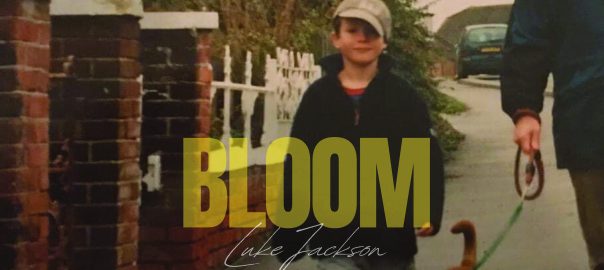
I first encountered Luke Jackson reasonably early on his career, when I wrote back in 2016 that he “gives a rootsy, acoustic blues feel to the contemporary singer-songwriter genre and is an immediate hit with the Cecil Sharp audience.”
His career has gone from strength to strength since then, with a hefty back-catalogue of critically-acclaimed albums, support slots for the likes of Jools Holland, and performing at the Royal Albert Hall. Released towards the end of last year, BLOOM is the latest album from the Kent-based singer-songwriter, his first full-length album in five years and one that’s been several years in the making.
Luke Jackson: “This album is a reflection of the last five years of my life. I’ve poured an awful lot into these songs, drawing from the highs and lows throughout my twenties, being a touring musician, and from the incredible people I’ve met along the way. BLOOM is about growth, change and continuing to find beauty in the journey, even through the challenging times.”
Accompanying Jackson (vocals, guitars, piano), the album features regular trio collaborators, Elliott Norris (drums, percussion) and Sam Mummery (bass) with Andy Sharps contributing bass to several tracks; as well as guest appearances from Amy Wadge and Edwina Hayes, who each contribute their distinctive vocals to a track apiece.
The result has certainly been worth the wait with a clutch of autobiographical songs where Jackson bares his soul on relationships, friendships and the challenges facing a late twenty-something as he contemplates growing up and settling down.
As is typical of a singer-songwriter who refused to be pigeon-holed by anything that might limit his ability to tell his own story, there’s bags of variety on this album and a refreshing refusal to be pinned down to a single musical genre. From the lush Americana, singer-songwriter vibe of ‘Woman’, to the old-time gospel-flavour of ‘Trouble Now’, to the fragile acoustic elegance of ‘Rubber & Magic’ (performed with Amy Wadge), to the exhilarating rockabilly of ‘Curse The Day’, Luke Jackson takes us on a magical journey with BLOOM. Superb songwriting, compelling vocals and deft musicianship, this album represents another leap forward in an already impressive career.
Ahead of the release of their fifth album Onward The Sun! which comes out on 25th April, I talk to Greg Ireland of Faversham-based folk rock band, Green Diesel.
We’ll move on to the new album in a bit but let’s start right at the beginning. Tell us how Green Diesel came about.
Well, it seems like a very long time ago now. I think we’ve probably graduated away from being a young new folk band. So, I guess in some ways it’s a continuation of the band I was in when I was at school. I played in a band with some of the guys who are still in the band today. It’s a completely different group, but it had the same name. And that kind of fell apart as school bands do. And we would just do an occasional gig here and there, where this ever-revolving cast of characters would play some covers that we liked at a local festival. And we could never think of another name, so we just kept going! And then I guess around 2009, that sort of time, I’d kind of gone fairly heavily down a kind of Fairport-esque path.
So, was that a departure from the original incarnation of Green Diesel then?
Well yes and no. We’d always kind of played vaguely rootsy music. So, we did some blues stuff, we did Neil Young-style songs and The Band. So, it wasn’t a complete 180 – but certainly the idea of doing music based around traditional music had been something that had been percolating in my head. And I managed to convince the other guys, again for one of the local festivals: “Oh, let’s get a violin player and as one of our numbers, we’ll do a set of tunes in the kind of classic Swarbrick style.” Which they were on board with. I think I’d dragged them along to a couple of Cropredies by this point, so they weren’t completely against the idea. So, we got Ellen (Care) in to do that and that went well and I took that as a good jumping-off point: “Oh, let’s go down this path.” And that became more of a serious band. And I started writing songs. A couple of the others had started bringing things in. We took the plunge and we got found on the street by Roger Cotton, who was a producer who liked us and said, “Do you guys want to come and make a record?” And so we did and that was our first album, Now Is The Time. And somehow – there have been quite a few people in and out of the door over that time – we’re still here today.
And when you first put the band together then, did you have a clear idea of the sound you wanted to go for from the very start? Because let me just share this. I’ve got a theory about folk rock in that while the folk element can be fairly timeless, delving back centuries, the rock element usually reflects what’s contemporary at the time in terms of rock music. That was certainly the case with Fairport in the late 60s and early 70s. I would argue bands like Oysterband as well very much reflected the post-punk era in the rock element. But clearly you didn’t go for a sort of millennium-era indie vibe or anything like that. You delved back.
I think we’d always had that kind of retro taste in music. So, certainly there was always elements of that kind of late ‘60s, vaguely psychedelic rock. But I think when we started off, we were playing much more acoustic music. Not always but I rarely played an electric guitar. And although we probably weren’t vibing off what they now call indie sleaze (and at the time I called ‘horrible music without a tune’) – there were a lot of bands around at the time, like the Decemberists who were a huge influence on us. And early Arcade Fire. We just caught the beginnings of what came to be termed ‘new folk’ and so there was an element of that in there as well.
So, I wouldn’t say it was completely “we just want to go retro”. But then, equally, I grew up listening to Britpop-type music, which always had that very ‘looking-back’ element to it. So, I guess we were the start of that musical generation who just sort of had everything – who grew up listening to their parents’ music and then had their own music. And the big genrefication that really lasted up to the early ‘90s was just starting to break down a bit. I think you see it more today with younger people who will listen to everything, you know, encompassing Disney soundtracks, to Steely Dan, to actual contemporary pop stars – which you’ll have noticed I haven’t been able to name any of! But I think guys our age were maybe at the beginning of that kind of change in music consumption that we see today, possibly.
Yeah, I think I think that’s fair. I think I did my own sort of 1980s teenage version of a Spotify playlist, which was just going to second-hand shops and buying ‘60s and ‘70s albums incredibly cheaply and discovering music that way. So, yeah, I think that’s right.
And then moving on, there’s been quite a gap between this new album, Onward The Sun, and the previous album, After Comes the Dark. Can you give us a quick update on what’s been happening in Green Diesel since the last album came out?
Yeah, in some ways it’s an even bigger gap than it might seem now. Because although After Comes the Dark came out in 2021, it was predominantly written and recorded in late 2019/early 2020 and then got stuck by COVID so we could never finish it. The material on that album feels very old, not necessarily in a bad way, but it really feels very different. So, I guess quite a lot has happened since then. Ellen’s had two children, which has somewhat made progress perhaps run a bit slower than it might otherwise have done. We’ve got a new drummer in. We had Paul (Dadswell) on the last album, circumstances took him elsewhere in life. We were very lucky to very quickly find Ben Love, who is on duties for this album and he’s been a fantastic addition. So, there was a lot of just gathering together of material. And I think one of the big things about this record that maybe is different to some of the others, it grew a lot more out of just jamming and playing around with ideas. I think in the past, it’s very much been the writer – be it me or one of the others – coming in with a song and, not everything charted out note for note, but a pretty good idea of “this is how I want it to end up”.
But this one, partly because we had long periods of time where Ellen wasn’t able to participate directly for children reasons, basically the four of us were bored. We quite liked to play something even if we weren’t able to get out and gig as much as we might have wanted to. And particularly that post-COVID period where you were able to do things again, it was a nice novelty to get together in a room and just make some noise.
So, there’s quite a few songs on this record that have grown more out of that. They’re kind of longer and a bit looser, maybe structurally. And then Ellen had a second child so we had the backings of the songs down and then we took a break. What I call her maternity leave. Then came back to it. So, it’s just a lot of playing. And I think it was particularly good when Ben Love came in on drums because it meant very quickly, we sort of found our groove, literally. It gave us a really good chance to work up that material. And I should say as well, Paul put in a lot of work on some of the songs. There were, I think, two or three that have been part of our live set now for two or three years. So, it’s very much been a group effort in that sense, which I really like about it.
So that accounts for some of the longer instrumental sections in some of the songs, which I know you’ve really gone for on this album?
Yeah. I think, jumping back to one of your earlier questions, we’ve got a lot heavier as a band over time. And that sort of lends itself to that kind of sonic exploration and just jamming it out a bit. And partly the way that our tastes have gone. I think still rooted around songs that work as songs. We write in a very hook-led way. But yeah, just that bit of freedom to keep going, I quite like.
Yeah, I like what you’ve done and, as you say, without losing the essential element of the song. I mean, some bands can jam so much that the actual purpose of the song is lost. You haven’t done that.
Yeah, we haven’t got to Grateful Dead so far. Who knows what comes next!
What do you want to tell us about the new album and some of the songs on the album?
So it’s nine tracks this time and there’s a couple of traditional pieces on there, but they’re predominantly from within the band. I’ve written some, Ben Holiday on bass wrote one, Matt on guitar has written one and we’ve got a cover as well. There’s a cover of ‘The Maypole’ song from The Wicker Man soundtrack, which Matt bought in. That was quite good fun to work on.
It does seem a very good fit for Green Diesel.
Yeah, that soundtrack as a whole has always been a big, big influence for us. So, it kind of seemed right to go there. We haven’t done a lot of covers, traditionally, so it was quite an interesting challenge.
Yeah, so there’s a good variety of writers there. I wouldn’t say there’s a theme to the album, but it kind of builds on where we were going with After Comes the Dark. Although the majority of the songs are original, they’re very much rooted in a traditional folk idiom. And there’s a lot of folk-lore. The weirder end of folklore but I suppose the term that’s popular at the moment is folk horror. And that kind of really ticks quite a lot of our boxes. So, there’s some bits about witchcraft in there and some of the traditions around potion-making. And while I say it’s darker, I think there’s a kind of optimism there as well. Very rooted in the natural world and what we see and what we experience. And then we’ve finally managed to do our Moris On bit because the instrumentals are two Morris dance tunes, which is something that me and Ellen have both been keen to do for a while. And we’ve done that in our own way. It kind of wanders off a bit in the middle and, you know, bringing some of our – those of us who have them – slightly proggish leanings. So just to really, really sell it to the hipsters, it’s Morris dance music mixed with progressive rock – because obviously that’s a pretty big thing!
They’re so evidently Morris tunes from the moment you hear them, but yeah, they’ve been given the Green Diesel treatment so it definitely fits in with the album as a whole.
Yeah, I think I’d probably describe it as quite a confident album. It’s the album of a band who kind of know who they are. That partly comes from just playing together a lot, but there’s a real core strength there. I suppose it’s the one I feel, so far, that we’ve done that sounds most like us. It feels very much like everything’s been developing up to this point to, to get to where we are in 2025.
And on the live front, you’ve got some gigs coming up in Kent and Sussex. And I’m hoping to get to the Brighton one. But where I would really like to see you would be on the main stage at Cropredy. I think you’d go down a storm. And when I interviewed Dave Pegg, he told me that they’re not able to have the really big names, the Brian Wilsons and the Alice Coopers that they’ve had, because of the financial constraints that they’re now facing. They have downsized the festival to make it more financially viable so it could be the perfect opportunity. I think you would go down an absolute storm.
That’s what I’d love to think. So, if Dave’s watching this, then come and get me! Back when my brother was still in the band and we were at I think the 2007 Cropredy, that was always the goal. Unfortunately, the goal was to do it by 2014 so we’ve missed the mark a little bit there. But we’re always open to offers!
Well, let’s see, it would be good. Because you have played the fringe, haven’t you?
Yeah, we’ve done the fringe a few times. That’s always good fun. I mean, generally, just, just being able to play to people who are open to listening to what we do is always good. The reality of being where we are in our lives means, unfortunately, we’re not in a position at the moment that we can all jump in the van and go around the country for three weeks. So, we have to be, I suppose, more, selective. And partly financial realities as well. I’d love to go to Europe, but to make it pay – or at the very least cover costs – it’s much more challenging now. And that’s just the reality of it. But, you know, and it’s probably what keeps us going, to be honest, there’s something about that kind of response from people who are listening to music that you’ve created. And it might be the first time they’ve heard it. They might have come to every show. Either way, there’s just a real kind base-level thrill to that.
Fantastic. Is there anything else you want to tell people before we wrap up?
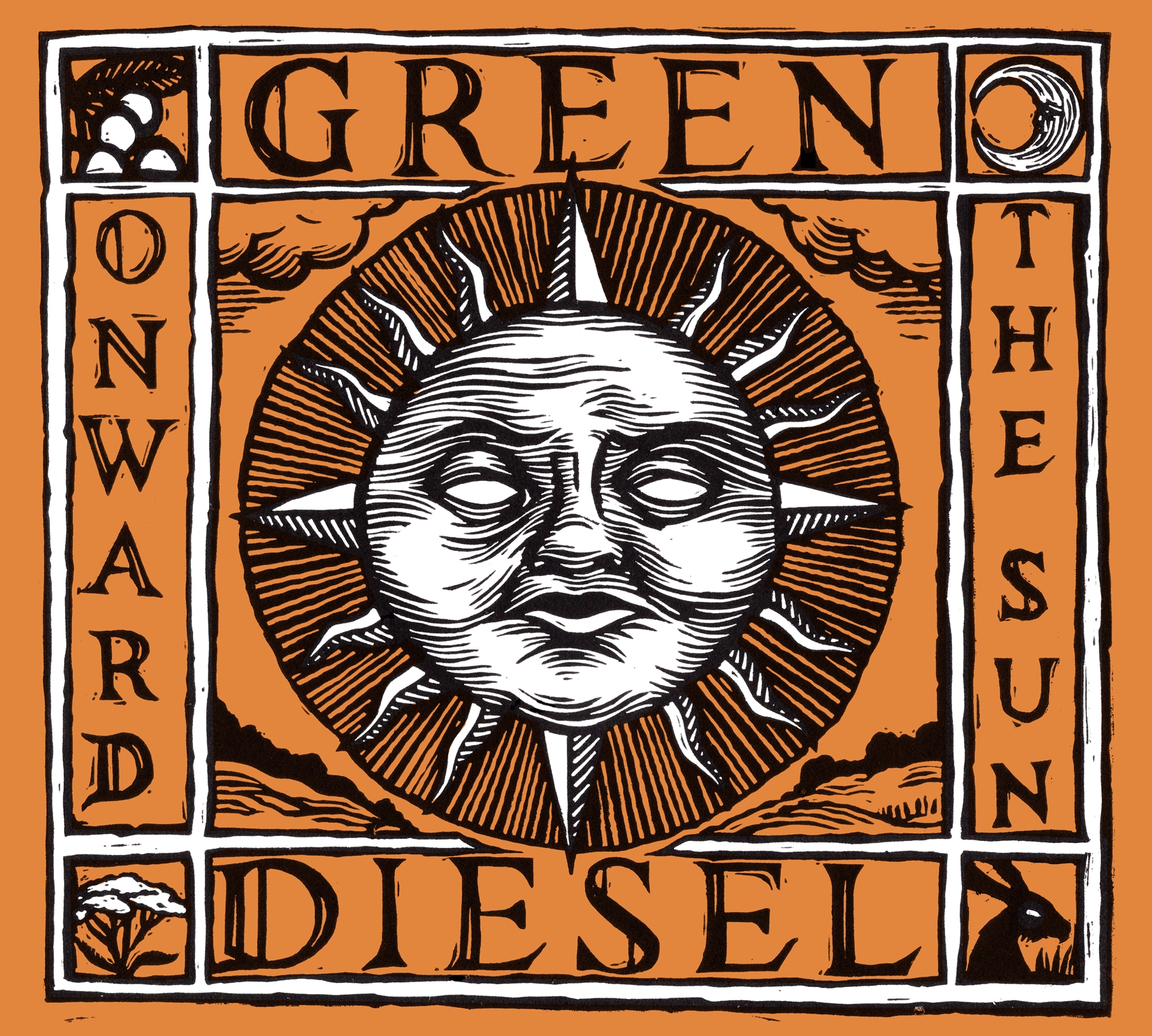
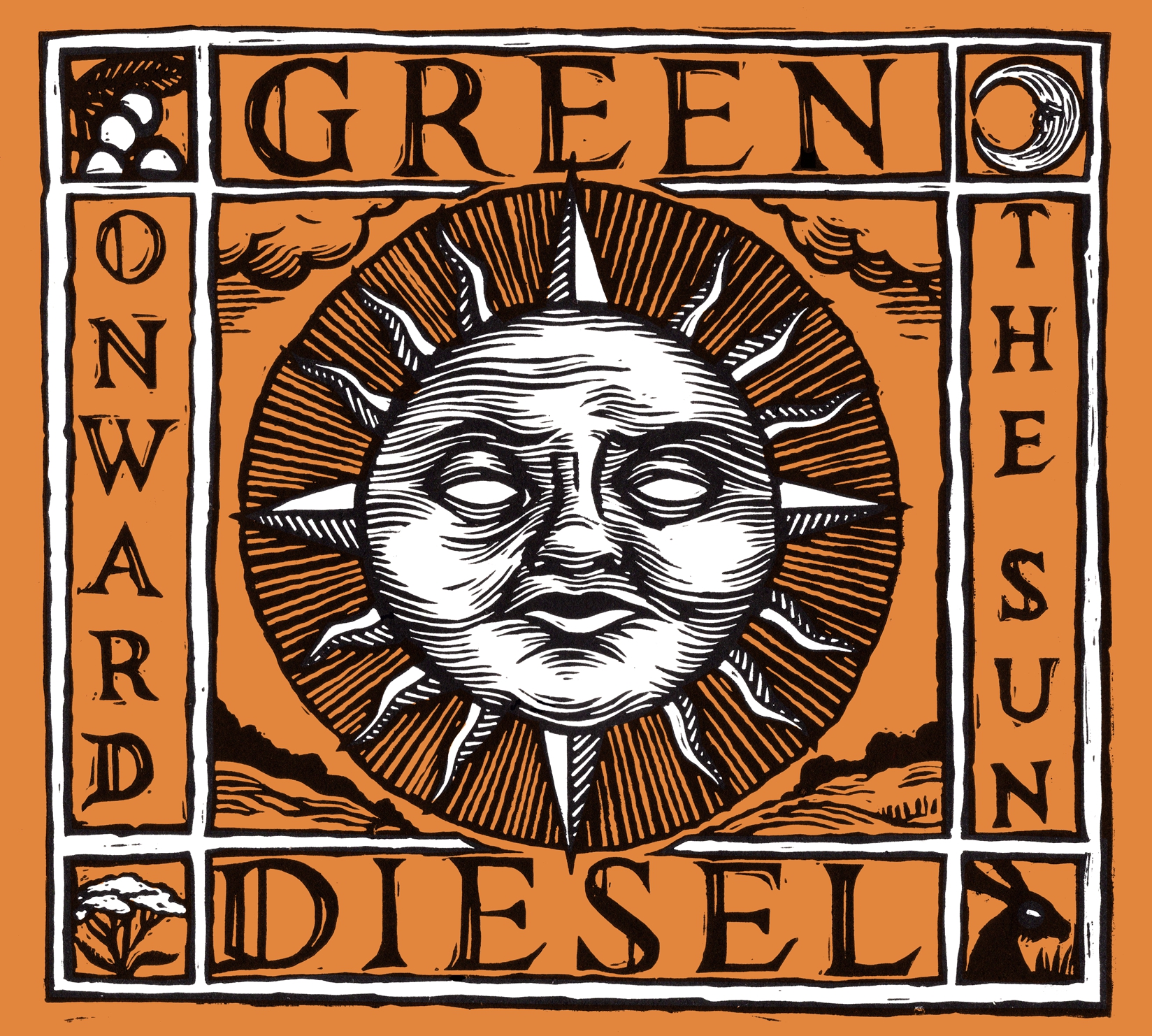
So, the album that we’re discussing is called Onward The Sun. It comes out on 25th of April. It’s going to be available digitally and on CD. That’s it at the moment. Who knows, if demand is there we might look at doing a vinyl version some way down the line. You can pre-order it. If you go to the website, which is greendieslefolk.com, you can order a copy there. It’s got a lovely front cover. It’s made by an artist based in Margate, which is not that far away from us, called Matt Pringle. And I think he’s really got the core of what we’re doing. So yeah, please check us out. We love to reach new people. If you do happen to be promoters for a slightly more mature folk rock band than you would have had a few years ago, then do get in touch because we always love to find new markets. But yeah, please give us a listen and I hope you enjoy it.
Following their critically-acclaimed 2021 album, After Comes The Dark, which saw Green Diesel pick up a slew of enthusiastic reviews for what became their best-selling release to date, the Kent-based folk rock band are finally back with a brand-new album.
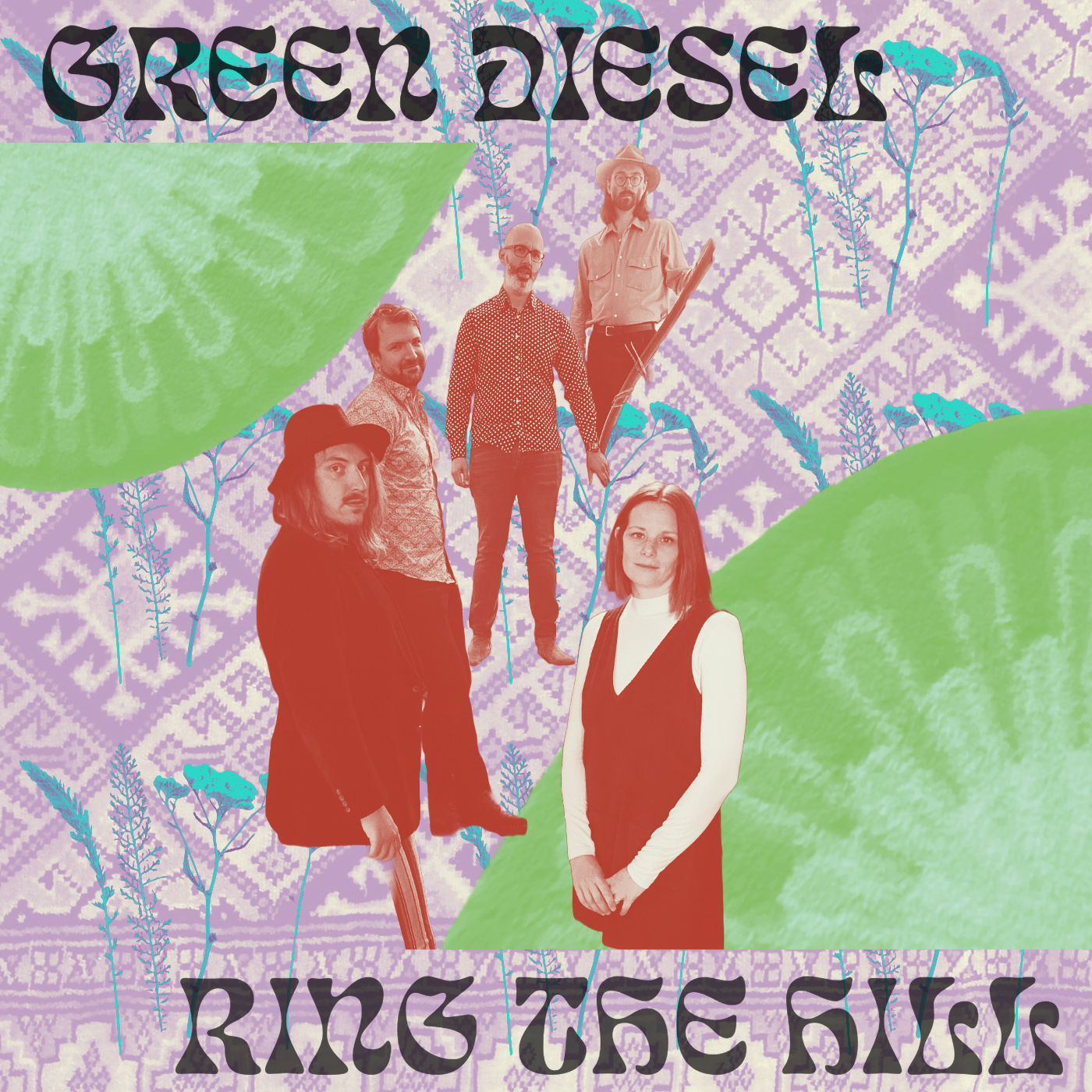
Onward The Sun! is the band’s long-awaited fifth album and is scheduled for release on 25 April. The nine-track album features six newly-composed songs inspired by themes such humanity’s connections with the natural world, ancient folklore, the persecution of witches and Shakespeare’s Henry IV, as well as fresh interpretations of much-loved Morris tunes, a modern take on a traditional murder ballad and a cover of a Paul Giovanni composition from the cinematic soundtrack to The Wickerman.
Discussing the single, ‘Ring The Hill’, guitarist, vocalist and multi-instrumentalist, Greg Ireland, comments:
“Based on the Cornish legend of the white hare. It is thought that the creature is the spirit of a broken-hearted lady determined to haunt her faithless lover to the grave. This also got me thinking about the historical connections between hares and witchcraft – the chorus lyrics are an adaptation of some of the words used by Isobel Gowdie at her trial (she was tried as a witch in Scotland in 1662 and her testimony survives). The song follows the progression of our heroine from broken-hearted to vengeful and it seemed appropriately prog to divide it into two parts. The tune for the second part is a variant of the traditional tune for Dives and Lazarus.”
Showcasing Green Diesel’s masterful distillation of folk, rock and psychedelic influences, together with their usual exemplary musicianship and trademark vocals, the album was recorded at Squarehead Studios in Newington, Kent with producer Rob Wilks (Smoke Fairies, Lianne La Havas, Story Books) once again at the helm.
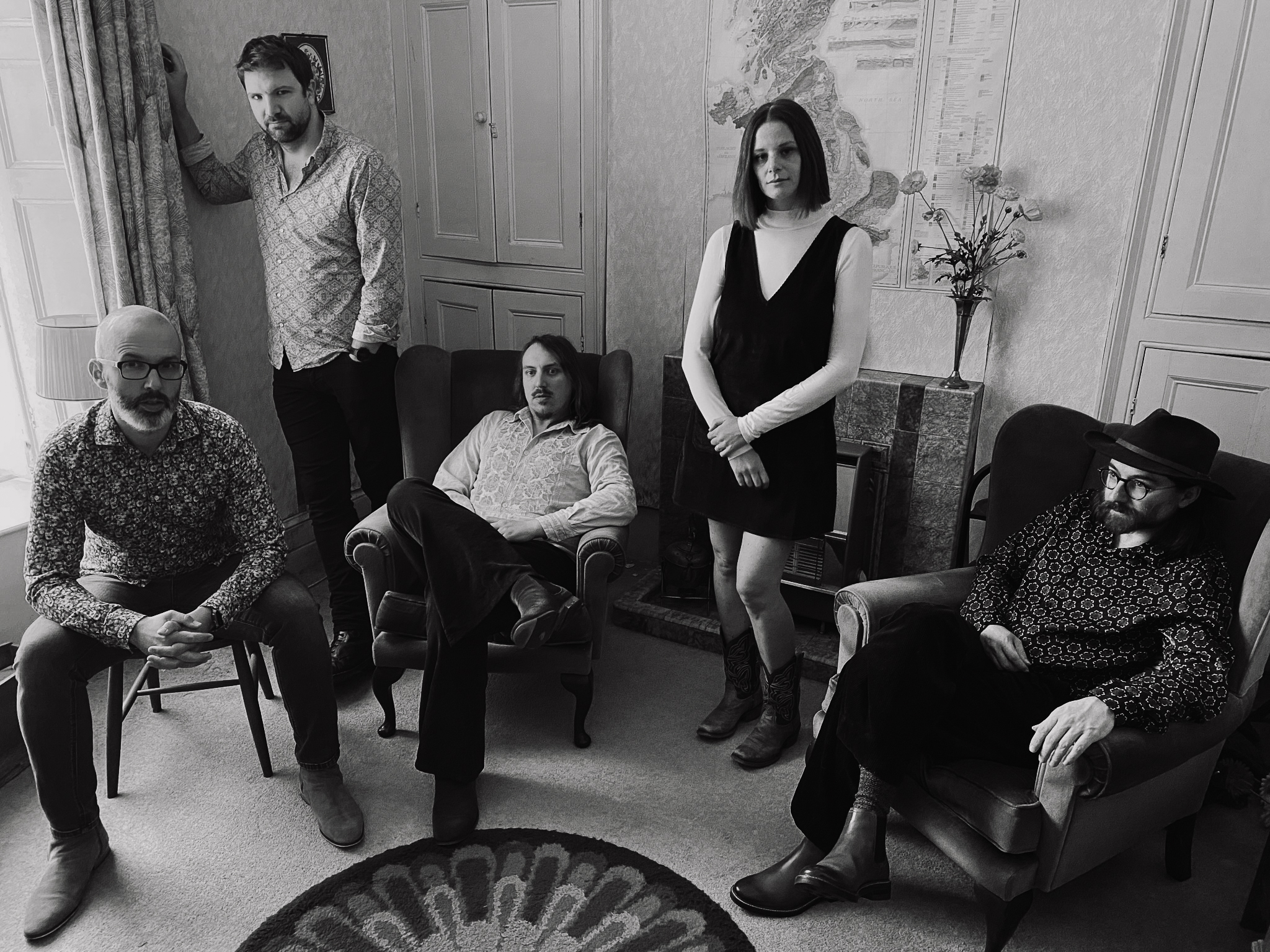
Green Diesel are:
Ellen Care – violin/vocals Matt Dear – lead guitar/vocals Ben Holliday – bass Greg Ireland – rhythm guitar/mandolin/dulcimer/vocals Ben Love – drums/percussion
About Green Diesel:
Hailing from Faversham in Kent, Green Diesel take their inspiration from the depths of English folk lore and legend, and the classic folk-rock sound of their predecessors: Fairport Convention and The Albion Band. Blending violin, mandolin and dulcimer with electric guitars and drums, Green Diesel’s sound is born from a love of traditional English music and a desire to bring it to a modern audience.
Green Diesel’s first three albums, Now Is the Time (2012), Wayfarers All (2014) and The Hangman’s Fee(2016) all won praise for the quality of song-writing and musicianship. A major turning-point, however, came with the band’s last album After Comes The Dark (2021). The album entered the UK Folk Top 40 on release and saw Green Diesel nominated for FATEA Music’s ‘Group/Duo of the Year’ award and also saw the band pushing their sound further, bringing in elements of psychedelia and progressive rock whilst remaining rooted in their folk upbringing.
Green Diesel – What They Say:
“A cornucopia of sounds that blends classic folk-rock, prog and elements of stately Early Music into their own distinctive style’” – R2 Magazine
“4/5 stars – ‘(Green Diesel bring) a psychedelic, progressive edge to their interpretations of both traditional and original material” – Shindig!
“Evocative of early Steeleye Span and veined with prog-rock and influences drawn from early Genesis and the 70s Canterbury scene’” – Folk Radio
“Green Diesel has skyrocketed into my top few bands” – FATEA
It’s over fifteen years ago now that the Gigspanner template was firmly established, when their debut album Lipreading the Poet was released: compelling world music rhythms that veer as far away from the category marked “typical English folk” as it’s possible to get, the trademark sound of Roger Flack’s wonderful acoustic-electric guitar-playing, and, of course, the unmistakeable fiddle of Peter Knight. Whether it’s his virtuoso playing with a bow or him playing pizzicato, his style is so distinctive you know instantly it’s Peter Knight.
Importantly, that basic template has been embellished and tweaked and adapted to different formats over the years. In contrast to the first album, for example, the second saw the addition of Knight’s equally-recognisable vocals. In the ensuing years we’ve had other musicians entering the fray to herald the launch of the Gigspanner Big Band, and there’s even been a spoken-word theatrical-style collaboration.
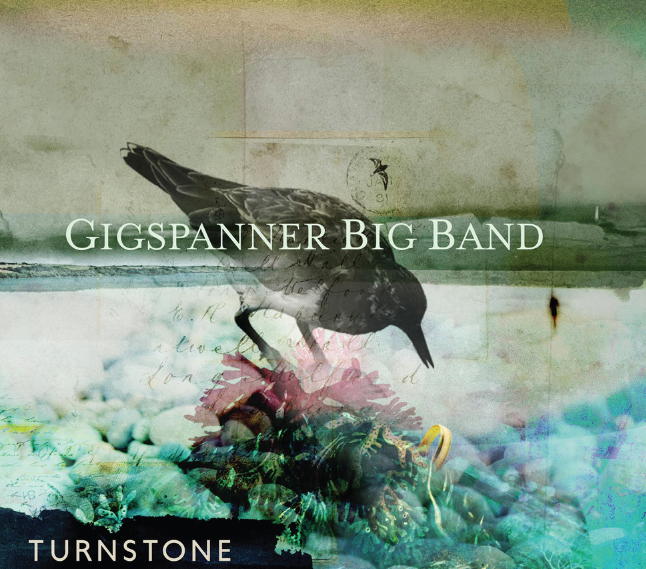
This latest album, Turnstone is another ‘big band’ release which, once again, sees Phillip Henry, Hannah Martin and John Spiers joining the trio nucleus of Peter Knight, Roger Flack and Sacha Trochet. It’s the third album in the expanded ‘big band’ format and was recorded during their Autumn 2024 tour.
Hannah Martin explains the title as follows:“The turnstone is a coastal migratory bird who overturns stones, worn smooth with use and the water of time in its search for treasure – and so it is with the folk tradition, with songs similarly worn smooth over time travelling to us but when turned, yielding new secrets and possibilities.”
It’s an apt description. Comprising ten traditional songs and concluding with an exhilarating live tune-set it’s a masterclass in innovation, experimentation and exemplary musicianship while still being anchored firmly to the world of traditional folk.
The mix of male and female vocals is one of many things about the album where the expanded big band format allows for so many extra layers of musical texture.
In many ways that represents a nod back to those pioneering days of English folk rock, whether in the Sandy Denny-era Fairport Convention or, indeed, Knight’s own former band, Steeleye Span. From Martin’s exquisite vocal on the opening track, ‘Suffolk Miracle’; to Knight’s characteristically gentle vocal on the penultimate track ‘Hard Times Come Again No More’ (which serves to act as a nice companion piece from across the other side of the Atlantic to that perennial Steeleye Span / Gigspanner favourite, ‘Hard Times of Old England’); to the beautiful harmonising of both Martin and Knight on second track, ‘Sovay’, the vocals are faultless. Throw into the mix those mesmerising rhythms, some blinding guitar work and Spiers’ undisputed mastery on the melodeon and concertina and you’ve got so something very special indeed.
Whatever the format, a new Gigspanner album is always something to look forward to but Turnstone is one of their best yet – an absolute masterpiece.
Following my ‘glam rock trilogy’ covering Slade, Sweet and Suzi Quatro, I now turn my attention to folk rock. I’m delighted to announce that my fourth book for Sonicbond Publishing will be coming out this summer. Steeleye Span 1970 to 1989 On Track: Every Album, Every Song will be out on 29 August 2025.
This latest book is part of Sonicbond’s ‘On Track’ series.
You can read the publisher’s blurb here:
When Ashley Hutchings broke away from Fairport Convention in 1969, he recruited two musical duos who didn’t seem to agree about very much at all. This fractious group imploded before their debut album was even released. Undeterred, two new musicians were enlisted and Steeleye Span carried on. Then Hutchings himself resigned. Rather than this being a disaster, however, it set in train what would become the band’s most commercially successful period. It was an extraordinary time for folk rock but it was not to last. The second half of the 1970s saw another change in line-up, disappointing album sales and a two-year hiatus. All was not lost, though, and the classic line-up reconvened at the start of the 1980s.
Covering a two-decade period, this book looks at every album from Hark! The Village Wait in 1970 to Tempted and Tried in 1989. The fascinating history behind the traditional songs on these albums is examined in detail, together with insights into how the band went about truly making them their own. Steeleye Span On Track is a meticulously researched celebration of the music of one the UK’s most important bands in the folk rock genre at the most crucial period in its history.
About the author:
A former politician, Darren Johonson spent many years writing about current affairs, but after stepping away from politics, he was able to devote time to his first love: music. His previous books for Sonicbond were The Sweet In The 1970s, Suzi Quatro In The 1970s and Slade In The 1970s. Following this glam rock trilogy, he now turns his attention to folk rock. A keen follower of both rock and folk, he maintains a popular music blog Darren’s Music Blog and has reviewed many albums and gigs over the past decade. He lives in Hastings, East Sussex.











 Darren's music blog