My review was originally published by Bright Young Folk here
The dramatic piano introduction that opens A Delicate Game instantly tells the listener that this is going to be something slightly different to the numerous, admittedly excellent, début albums that are coming out of the Scottish folk scene these days.
Aside from the fresh, engaging voice of Claire Hastings, who won Radio Scotland’s Young Traditional Musician of the Year in 2015, the piano of Tina Jordan Rees is very much the dominant sound on A Delicate Game.
It gives this young female foursome, and the album itself, a very distinct identity. Hastings and Jordan Rees are joined by fiddler Gráinne Brady, with Heather Downie on the clàsrsach, the Gaelic triangular harp.
Material-wise the album is dominated by covers, including some very well-known ones, with a couple of traditional songs and two originals thrown in. In terms of covers they don’t beat about the bush, choosing iconic songs like Leonard Cohen’s Everybody Knows and Richard Thompson’s 1952 Vincent Black Lightning.
While the tune and lyrics of the latter are always going to be instantly recognisable, transforming the guitar maestro’s famous vintage motorcycling death-disc into a pacey, keyboard-driven track is an ambitious and genuinely interesting treatment that works well.
Other covers include Andy M. Stewart’s Ramblin’ Rover, while the traditional material includes The False Bride.
Of the two original tracks, one is by Heather Downie and her brother Alasdair, in what the sleeve-notes reveal to be their first foray into writing together. Called Jeannie and the Spider it’s a tongue-in-cheek look at relationships and the roles each partner plays within them. While it’s perhaps not the most memorable song on the album it is fair to say it is up against some stiff song-writing competition. It has a catchy, easily likeable melody and shows promise for song-writing that captures the spirit of the tradition.
The other original track, 10 Little Men, is Hastings’ re-imagining of the old nursery rhyme, and offers something a little different from the band’s usual style with electronic percussion and swirly atmospheric soundscapes. This track does, however, also offer an opportunity for Brady’s beautiful fiddle playing to really shine.
This is a band who have established a sound and a clear musical identity for themselves. At the same time they are not afraid to experiment and as a début A Delicate Game is an excellent showcase for the combined talents of the Top Floor Taivers.
Folk singer Daria Kulesh, Russian-born but British-based, has not chosen an easy subject matter for her newly-released solo album Long Lost Home, which is being formally launched at Cecil Sharp House tonight. But it’s an absolutely fascinating one and, as we find throughout the performance of all twelve songs from the album tonight, it is also a deeply moving one.
Long Lost Home tells the story of Ingushetia (or the Ingush Republic). It is now a republic within the Russian Federation, bordering Chechnya, but it’s one with a dark and tragic history. On 23 February 1944 (exactly 73 years ago from tonight’s performance) Ingush civilians were falsely accused of collaborating with the Nazis and the entire population were either deported or shot under the orders of Stalin. Ingushetia was the lost homeland of Kurlesh’s maternal grandmother. And it was through her grandmother that Kulesh was to learn so much of her ancestral home and the tragedies within it but also the everyday lives and loves of some of her ancestors, a number of whom are brought movingly to life once more in Kulesh’s songs.
Possessing a beautiful clear voice that is both powerful and pure, Kulesh is immediately able to connect emotionally with her audience as the lives of the characters in her songs unfold. Musically, she’s supported by a fine cast of musicians, both on the album and on stage. Kulesh herself plays the shruti box (Indian drone instrument) but we also have a rich tapestry of sounds from traditional Russian/Kulesh stringed instruments through to the dulcimer and the double bass and even, for one song, the Scottish bagpipes.
Yes, much of the subject matter has a darkness to it. However, as Kulesh herself emphasises there’s also a spirit of hope and humanity and kindness to these songs. The last song of the album Only Begun ends on a very optimistic note. It’s not quite the end though. Kulesh and her colleagues are called back on stage for an encore. As an added bonus, Timur Dzeytov, a traditional Ingush musician who accompanies Kulesh on the album and here tonight, also plays a couple of Ingush dance numbers, complete with some impromptu Ingush dancing, to round off the launch of Long Lost Home.
Daria Kulesh can be proud of what she’s achieved here, both through her very unique contribution to the UK folk scene and through this perfectly fitting and timely celebration of Ingush culture and history.
My review was originally published by Bright Young Folk here
Two’s Company are a duo from Sheffield and Go Together is their debut album. Alice Baillee and David Jenkinson have been playing together since meeting at university several years ago and have clocked up a number of festival appearances as well as support slots for the likes of Martin Simpson and Phil Beer.
Their sound is built around Jenkinson’s guitar and cello-mandolin and Baillee’s flute, with lead vocals alternating between the contrasting voices of the two. The album is apparently representative of their live set and contains a nice mix of traditional songs and original material, with a couple of tunes thrown in, too.
Songs like Bobby, telling the tale of a little boy whose musical promise when he is not engaged in child labour is cut shut when his fingers are crushed in a loom, showcase Baillee’s talents for writing lyrics that evoke the folk tradition and effortlessly take us back to a different age.
The Grove is another original, a gentle song inspired by a small piece of wilderness on the edge of a village that has since given way to a housing estate. Baillee’s voice handles such mournful themes well.
Of the traditional songs, they do a pleasingly reflective version of Will You Go, Lassie, Go? with the duo sharing lead vocal duties. All Among The Barley, this time with Jenkinson on vocals, is another nice interpretation of a traditional song.
Of the tunes Winterfall, a tune-set of two pieces composed by Michael Raven, allows for some lively interchanges between Baillee’s flute and Jenkinson’s strings and is one of the musical highlights on the album.
While their overall approach is not wildly different from many other male/female folk duos Go Together is a solid debut that has allowed Two’s Company to begin carving out an identity for themselves and to contribute some fine songs. This is a welcome start to a recording career.
My review was originally published on The Stinger independent music website here
Rounding off an outstanding year of Folk acts at St Mary in the Castle this year we had Maddy Prior and The Carnival Band. ‘Folk’ is a bit of a misnomer, however, in a set that embraced American gospel, Shakespeare. medieval tune sets, eighteenth century carols, jazz swing and a Latin-American cha-cha-cha – in Latin (!) – to name but a few.
Maddy Prior will be known to many as lead singer of folk-rockers, Steeleye Span.
But for a good number of years now she has joined forces with early music specialists, The Carnival Band, for what they term ‘Carols and Capers.’
While there is never any shortage of carol concerts and festive sing-alongs in Hastings, three things make an evening with Maddy Prior & The Carnival Band particularly special.
Firstly, there is the sheer range of songs and tunes covered. While there are some obvious Christmas favourites, like ‘While Shepherd’s Watched Their Flocks’ and ‘Ding Dong Merrily On High’ and ‘I Saw Three Ships’ many less well-known numbers and historical gems are unearthed, like ‘The Boar’s Head’ a 16th century English carol, as well as original material like ‘Bright Evening Star.’
Secondly, there is the huge range of weird and wonderful instruments in use. There are violins and guitars and drums and a lovely deep double bass, of course. But there’s also the sound of medieval bagpipes, shawms (a horn-like reed instrument popular in renaissance music) and many other authentic replicas from our musical past.
Finally, there is the amazing amount you learn about music, history and culture during the course of the evening. Each of the players has a very evident passion for the history and background to the music they play. Did you know, for example, that the reason why ‘While Shepherds Watched Their Flocks’ became so well-known was because the 17th century Anglican church would only permit a small number of biblically-approved passages to be sung during services, and this was the only Christmas number on the list?
All this and the unique, instantly recognisable and still-beautiful voice of the great Maddy Prior. Although it was de-consecrated as a place of worship several decades ago, St Mary in the Castle still makes for a wonderfully apt setting for a Christmas celebration like this, even for a hardened non-believer like myself.http://www.maddyprior.co.uk/http://www.carnivalband.com/
While I mainly write about established artists on here I do like to focus on some less well-known emerging talent from time to time. One such artist I catch up with is singer-songwriter Josiah Mortimer playing a support slot in The Monarch in Camden for Southampton-based rising star, Seán McGowan.
Mortimer is first on the bill tonight but pretty soon he has the audience on side with a good selection of songs which combine angry social commentary with sensitive and empathetic delivery and some nice acoustic guitar-playing.
He’s a talented songwriter but throws in a couple of well-chosen covers, too. Clearly, this is a young man who has been on many, many demos and so the choice of ‘We Shall Overcome’ may not be a huge surprise but his gently defiant delivery gives it a freshness and a potency that makes it more than just another obvious staple from the protest anthem songbook.
Another cover is far more of a surprise. I’ve long been familiar with the lefty, pro-environmental credentials of ‘Jerusalem’ ever since our school history teacher, Mr Holden, told us the back-story to it some time in the early 80s. Mortimer, too, is also well aware of the song’s provenance and, keen to “rescue it from the Tories”, he’s transformed Blake’s words from stirring, patriotic hymn to thoughtful, reflective ballad.
The song that really gets the audience joining in loudly and enthusiastically tonight, though, is one of Mortimer’s own. Written just last month ‘Letter To America’ is a musical riposte to Donald Trump’s election victory. The sing-along chorus “build a wall, build a wall, around the White House” is a sentiment the audience don’t need much encouragement to sign up to.
Mortimer tells me he’s been writing songs since he was 13 and that they “started getting pretty good” by the time he began performing in public at 16. He has recorded three EPs and successfully crowdfunded his first professional release Luddite Ballads in 2015.
Beginning his musical career in Cornwall originally, he’s now based in London. Working full-time for a major national pressure group, heaps of political activism on top and a part-time journalism course to fit in as well, you may wonder how he finds the time to write, record and gig. But somehow he does and his Soundcloud page reveals an impressive selection of songs. If you want to hear some biting political commentary from an intelligent and eloquent singer-songwriter then Josiah Mortimer is well worth checking out.
Josiah Mortimer was playing the Monarch in Camden on 13/12/16
My review was originally published by Bright Young Folkhere
The Ange Hardy Christmas single is becoming a much-anticipated annual tradition in the contemporary folk work. In 2014 we had The Little Holly Tree, followed by When Christmas Day is Near in 2015. Now, for 2016, we have The Quantock Carol.
Hardy presents us with two tracks this Christmas: The Quantock Carol and Mary’s Robin. Both are self written, self-produced, unaccompanied vocal performances, yet Hardy has a knack for writing Christmas songs that sound like long-forgotten but recently unearthed Victorian carols.
The Quantock Carol was written for a world in which “peace seems more important and less certain than ever,” Hardy reveals in the sleeve-notes. It was inspired by the landscapes of the Quantock hills where she resides, with the hope that such serenity may be something the whole world comes to experience. It’s a short song, just one minute 22 seconds, but it resonates with peace and goodwill to all and is sung in the rich, warm, clear voice that we have come to expect.
The second track, Mary’s Robin, is based on a Gaelic nativity legend, about how the robin came to get its red breast. Again, it’s beautifully sung and wouldn’t sound at all out of place at any festive concert, alongside more traditional carols.
With such a beautiful collection of seasonal songs being built up over the past few years, we surely look forward to an Ange Hardy Christmas album before too long.
My review was originally published on The Stinger independent music website here
Having been warmed up very nicely by the support acts, Felix Hagan & The Family and Esmee Patterson, the place is absolutely throbbing when Frank Turner comes on stage.
“I believe first impressions count,” declares Turner a couple of songs in. And bang – he certainly achieves that. Opening with ‘I Knew Prufrock Before He Got Famous’ from his 2008 album ‘Love Ire and Song’ he combines anger, affection, passion, celebration and wry humour – and that’s all in the space of a single song. In terms of delivery and audience response it’s more like an encore than an opening song but that level of energy is maintained song after song after song.Six albums into his solo career, it has only been the two most recent that have made it into the top five and his singles have hardly ever troubled the charts. Yet he’s built up an absolutely devoted fan-base. Deservedly so, from tonight’s performance.Turner and his excellent band pack in many highlights from his solo career in a two-hour set, including a good smattering of songs from his latest album ‘Positive Songs For Negative People’, in addition to an old Million Dead song ‘Smiling at Strangers on Trains’ as part of his encore.
From a well-connected, well-to-do family, Turner’s libertarian brand of politics has attracted strident criticism in some quarters, and he’s been notably hammered as a right-winger in the Guardian. I can’t pretend I’ve analysed Turner’s philosophical beliefs in great detail but of his between-song interventions tonight three could be described as vaguely ‘political’ in one way or another.
The first was a plea urging support for the charity War Child, an undeniably worthy humanitarian cause. The second was a passionate speech in support of the Safe Gigs for Women campaign, highlighting the unacceptable nature of the harassment and abuse that far too many women are forced to endure while trying to enjoy a live gig. And the third was pretty much a theme that ran through his chat throughout the course of the evening; namely the very collectivist ideal of urging the audience to look out for one another and to take some of that spirit away with them into the outside world.
Indeed, the only performer I’ve seen place a similar degree of emphasis on that whole ‘audience-as-community-thing’ was the avowedly-socialist, veteran folk singer, John Tams. What Tams never did was follow that through with stage-diving into the audience and being transported from one side of the hall to the other by a rapturous sea of fans, but you get the point…
A passionate advocate for live music, Turner tells us that tonight is his 1,995th solo gig. Judging by tonight’s performance one suspects there will be many thousands more, and he’s promised to come back to Bexhill soon.
The greatest voice on the contemporary music scene? Probably not. One of the most charismatic and compelling performers of his generation? Almost certainly.
Setlist:
I Knew Prufrock Before He Got Famous
The Next Storm
I Still Believe
Losing Days
Try This at Home
Long Live the Queen
Glorious You
Polaroid Picture
Silent Key
Plain Sailing Weather
Wessex Boy
Mittens
Cleopatra in Brooklyn
The Way I Tend to Be
The Opening Act of Spring
The Road
If Ever I Stray
Out of Breath
Photosynthesis
Smiling at Strangers on Trains
Recovery
Get Better
Four Simple Words
My review was originally published by Bright Young Folk here
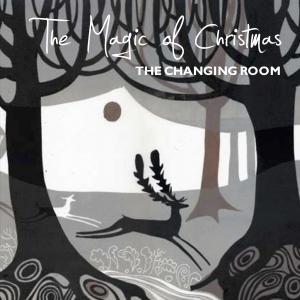
It’s been quite a year for The Changing Room, the Cornish-based folk duo of Tanya Brittain and Sam Kelly. Kelly picked up the Horizon prize at the BBC Folk Awards, the duo’s second album Picking Up the Pieces was released in the summer and there was also a collaboration project with The Lost Gardens of Heligan. So what better way to round of the year than with a Christmas EP.
Though neither originate from Cornwall (Brittain is originally from Sheffield and Kelly from Norfolk) they have undoubtedly helped give a greater profile to the Cornish language in folk music. Once formally classified “extinct” by UNESCO, Cornish has undergone a remarkable cultural renaissance in recent decades, thanks in no small part to the musical contributions of outfits like The Changing Room.
From June Tabor and Oysterband’s cover of Love Will Tear Us Apart to Richard Thompson’s spirited cover of Britney Spears, there have been some great folk makeovers of rock and pop classics in recent years. This EP continues that tradition with a cover of The Pretenders 1980s seasonal hit 2000 Miles, in Cornish, of course.
Even if one never learns or understands a word of Cornish it’s a beautifully expressive language and Kelly’s vocals, as fresh and contemporary-sounding as we have come to expect, handle the song equally beautifully.
The second track is Brittain’s own. Her ethereal Enya-like vocals give depth and beauty to this moodily atmospheric piano and vocals track, this time in English, all about the magic, brightness and calm of Christmas eve.
For the final track, the duo present their take on Silent Night. Anyone thinking they have quite enough versions of this song amongst their Christmas folk CDs already, can be reassured that this is something quite special. Again sung in Cornish, Kelly’s vocals are set against a mandolin backing that is as warm and melodic as a set of Christmas chimes, without a trace of overdone Christmas cheesiness or seasonal cliche.
For those looking for something striking, fresh and a just little different for their seasonal folk playlist this year The Magic of Christmas EP from this talented duo is well worth a punt.
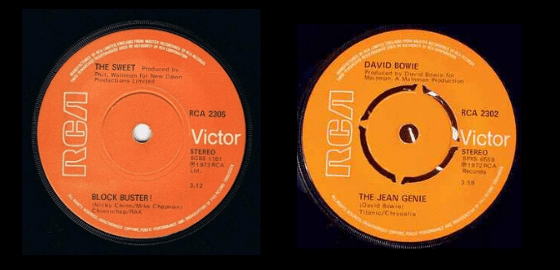
In January 1973 at the height of the glam rock craze, two singles with instantly memorable but remarkably similar riffs were both enjoying chart success: The Sweet’s ‘Blockbuster!’ and David Bowie’s ‘The Jean Genie’, each released by RCA records. Which came first? Were they both dreamt up independently? Did one copy off the other? Or did they both draw on influences from somewhere else?
In the folk world songs have always been adapted, evolved and passed on. In the rock world that sort of behaviour is more likely to get you involved in lengthy court cases and costly lawsuits. But in folk there has been over a century of legitimate and rigorous study looking into the often murky origins of traditional songs and tunes. A simple question therefore is: can the principles of studying folk in determining song origins also be applied to glam rock?
We start with the song ‘Blockbuster!’ written by The Sweet’s then songwriting team of Mike Chapman and Nicky Chinn, recorded on 1st November 1972 in London and released in January 1973. In Dave Thompson’s Sweet biography ‘Block Buster’, The Sweet’s Steve Priest recalls Chapman playing his idea for a new song on an acoustic guitar while they were backstage at the BBC waiting to go on Top Of The Pops to perform ‘Wig Wam Bam’ (most likely their appearance on 14th September 1972).
The riff was remarkably similar to David Bowie’s ‘The Jean Genie’ recorded on 6th October 1972, released in November 1972 and in the charts at the same time. “While en route to Tennessee, ‘The Jean Genie’ was developed from an impromptu tour bus jam,” in September 1972 recounts the Mick Ronson biography, ‘The Spider With The Platinum Hair’ by Weird & Gilly. This would have been just prior to the band’s gig in Memphis which is recorded as taking place on 24th September 1972, several days after Mike Chapman strummed the riff for Blockbuster to Steve Priest on the other side of the Atlantic.
Both sides have always denied copying one another and given both ‘Blockbuster’ and ‘The Jean Genie’ were recorded and released around the same time it seems unlikely that either would have had time to secretly copy the other, then get it recorded and released, all within the confines of the same record company, RCA.
What is far more likely is that they were both influenced by the Yardbirds’ 1965 hit ‘I’m a Man’.
Alwyn Turner’s website Glitter Suits & Platform Bootsquotes The Sweet’s Andy Scott as follows: “And then, you wouldn’t believe this, before our release we were in the office of the guy who was our contact at RCA and he played us the new David Bowie record, he played us ‘Jean Genie’. And I went, ‘That’s the same guitar riff,’ and he went, ‘Is it?’ This is a record company guy and I’m saying, ‘Haven’t you noticed?’ And he went, ‘No.’ I was horrified, I was thinking: that’s coming out first, and we’re coming out a week behind it, on the same label, it’s got the same guitar riff. I said: well, we don’t stand a chance of being #1. That was my thought. And within three weeks we were #1 and he was #2. I’ve since spoken to Trevor Bolder, the bass-player, and he said, ‘Remember “I’m A Man”?”
Here is that Yardbirds’ version of ‘I’m A Man’.
Interestingly, Iggy Pop and The Stooges also recorded a version of ‘I’m A Man’ during the sessions for the Raw Power album in early 1972. Bowie was involved in remixing this album and although ‘I’m A Man’ doesn’t appear on the album, he would certainly have been familiar with the Stooges cover version. Could this have had an influence on Bowie’s ‘The Jean Genie’ later that year?
We can hear Iggy & The Stooges version of ‘I’m A Man’ here.
Both recordings are, of course, cover versions of a 1955 original version of ‘I’m A Man’ by Bo Didley.
Bo Didley’s song is itself influenced by a song Willie Dixon wrote for Muddy Waters‘Hoochie Coochie Man’ recorded in 1954
The blues of Bo Didley, Muddy Waters et al can be traced back through the early electric blues of the 1940s to the acoustic blues of the 1920s, through the slave trade, plantations and back to African origins, where a number of the elements that would come to define key features of the blues could be traced back to.
But it’s worth specifically going back to that Bo Didley tune. The riff in ‘I’m a Man’ is significantly changed from that played by Muddy Waters in Dixon’s ‘I’m A Man’. Didley has adapted the tune as a simple repetitive four note riff repeated throughout the entire song, making it notably different.
So although it was influenced by an earlier blues song I think we can safely say that the riff that appears in ‘Blockbuster!’ and ‘Jean Genie’ first emerged in a Bo Didley song in 1955.
Thanks also to Michael Duthie for pointing me towards the Mickie Most video (below) and to Josh Beeson for pointing me to the Iggy & The Stooges version of ‘I’m A Man’.
Another fascinating release from the 60s that could have played an influential role in the later 70s glam releases was Mickie Most’s 1964 version of ‘Money Honey’.
Unlike earlier versions of Money Honey by Elvis and previously The Drifters, the Mickie Most version utilises that same Bo Didley riff. Most would go on to be a towering figure in glam rock as mentor and producer for Suzi Quatro and as RAK Records boss, home to the likes of Quatro and Mud. He knew Mike Chapman very well and could have helped plant some of the creative seeds for that Blockbuster riff, further strengthening those glam rock links back to blues history.
With the likes of Gigspanner, Eliza Carthy and (very soon) Maddy Prior, St Mary in the Castle has hosted some top-class folk acts throughout 2016. Tonight it’s the turn of Cara Dillon, whom Mojo Magazine once described as having “what may well be the world’s most beautiful female voice.”
Although it’s still November, in the world of gig programmes and band touring schedules that means it’s almost Christmas. And there’s two musical genres that really know how to do Christmas. The first is glam rock, of course, which was just made for tinsel and all things glittery; but when it comes to putting on a good festive gig folk, too, can give Slade, Roy Wood and co a good run for their money.
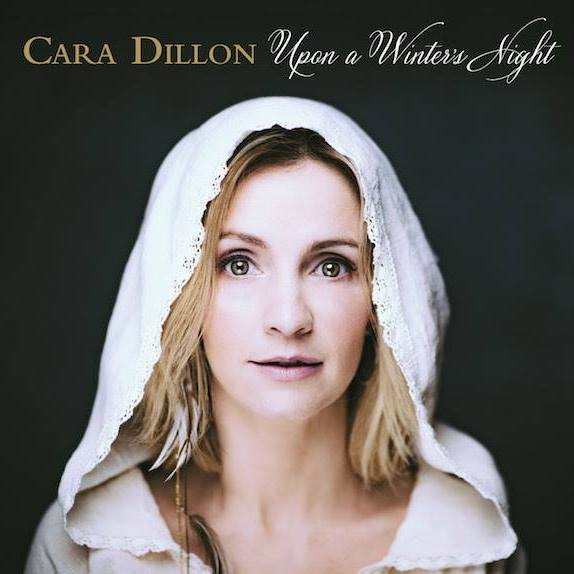
Derry-born Dillon and her band deliver a special seasonal set that they have just begun touring. The first half is the more spiritual half which is mainly traditional carols like ‘O Come, O Come ‘Emmanuel’ as well as ‘Mother Mary’ which is a brand new Christmas song Dillon and her musical partner (band-member and husband, Sam Lakeman) wrote themselves. Mary in the Castle is the perfect atmospheric setting for Dillon’s stunning vocals, backed with gentle, haunting piano and beautiful fiddle, acoustic guitar and accordion. The songs in the set are to be found on Dillon’s brand new album Upon a Winter’s Night.
A break, some brisk CD sales, a costume change and Dillon is back for the second half which takes on a more celebratory festive tone; with songs like ‘Standing By My Christmas Tree’, another Dillon/Lakeman original, and a lovely cover of The Pretenders’ 80s Christmas hit ‘2000 Miles’. Normally, when an artist announces they are going to perform an obscure version of a well-known song and a completely different tune starts up to the one your brain is all geared up for, my heart always sinks a little. But the less well known “Cornish version” of ‘The Holly and The Ivy’ really is superior to the better known “Somerset version”. It’s a great end to the set but the polite and attentive Mary in the Castle audience become very, very animated at this point and we get Dillon back on stage for an encore.
She also canvasses opinion on whether people would come again next year, explaining that the specially designed festive stage props set them back quite a bit and she’d love the chance to get a bit more use out of them. She gets an enthusiastically positive response so, who knows, this might become a regular feature. It would certainly be good to see Cara Dillon and co back at the Castle before too long.
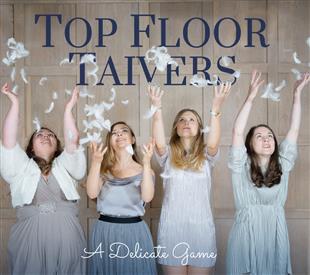


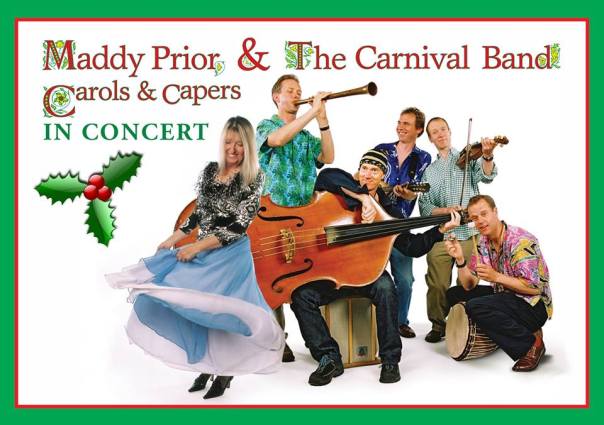

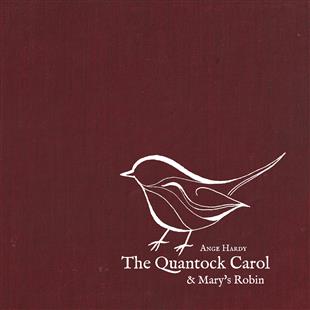

 Photo credit: official tour publicity