I really enjoyed Taking Flight, the 2023 album by San Francisco-based folk singer, Amelia Hogan, praising her distinctive vocal style and the album’s beautiful musical accompaniment when I reviewed it two years ago. It wasn’t just me who thought that either. The album picked up many favourable reviews and made the top ten of the Folk Alliance International chart in the month it was released. Now Hogan is back with a brand-new album, Burnished.
Like Taking Flight there’s one song that’s a self-composed original which is written in a traditional style, with the remaining thirteen tracks being a mixture of traditional numbers and Hogan’s own interpretations of songs by more contemporary songwriters.
Amelia Hogan: “The album highlights familiar, often overlooked folklore about real places, sharing the hidden magic found in connecting with the natural world and its spirits of place, or Genius Loci. It also reflects on the emotional impact of remembering an animist perspective (what happens when we act as if everything around us is conscious?), where we share our space with everything around us-both seen and unseen. Through this, I encourage us to approach our relationships mindfully – with people, nature, and the world we co-inhabit.”
Highlights include the self-composed opening track, ‘Rolling in the Gold’ – a lovely song with both Americana and Celtic influences and described as ‘a love-song to California’. The traditional material includes a poignant version of ‘Wayfaring Stranger’ a seventeenth century American spiritual with roots back in England; as well as a lively, uplifting version of ‘Dh’eirich Mi Moch Madainn Chetein’ – a traditional Gaelic song originally sung by textile workers in the Scottish highlands as they treated wool in the process of making tweed.
Other material on the album includes a heartfelt rendition of the Irish singer, Dominic Behan’s ‘Patriot Game’. Originally written in the 1950s reflecting on the Troubles in Ireland, Hogan gives it renewed potency as a warning of the dangers of blind patriotism and manipulation by unscrupulous political leaders.
With Hogan’s characteristically distinctive vocals, intuitive feel for emotive story-telling and gorgeous instrumentation, Burnished is a worthy follow-up to Taking Flight.
Travelling North is the debut album from this Edinburgh-based folk trio. Curmudgeon is made up of Donald Gorman, Laurie Brett, Donald Gorman and Andrew Macintyre
Donald Gorman is a highly rated Edinburgh-based fiddle player specialising in traditional Scottish music. He also plays mandola and adds accompanying vocals on the album.
Laurie Brett, meanwhile, is the band’s lead singer and guitarist and although originally from Essex, he’s spent the last four decades based in Scotland.
The third member of the trio, Andrew Macintyre, is a familiar figure on the Edinburgh folk session scene and a teacher of small pipes and highland pipes. In the band he plays Scottish small pipes and various whistles as well as providing vocals.
Photo: Caitlynn Neil
The ten-track album features five songs interspersed with five tune-sets. The songs are drawn from the trad. arr. canon with a couple of contemporary folk-scene favourites thrown in, including a reworking of the Richard Thompson classic ‘Beeswing’. Meanwhile the tune-sets feature a charming array of traditional jigs, airs, reels and hornpipes originating from Scotland and the north of England.
There’s a quiet, gentle dignity about the trio’s music but no shortage of creativity. The arrangements are built around the wonderful musical interplay between the three musicians. The warm, engaging vocals of both Brett and Macintyre bring empathy and sincerity to the storytelling in each of the songs and informative liner-notes provide insightful background information on the origins of each of the compositions.
Regardless of the name, it’s clear the trio have been anything but curmudgeonly in the way they’ve approached the making of Travelling North. A lovely debut.
Growing up in Glasgow, Frances Morton is a much celebrated flute-player with familial roots in both Scotland and Ireland. Learning piano at a young age, she later took up whistle and flute, winning several All-Ireland medals and becoming immersed in the session scenes in both Scotland and Ireland.
Since then, Morton has performed at festivals and concerts across Europe and the USA and has appeared in programmes for the BBC and TG4. Now living in Ireland, she has been active in the session scenes in Belfast, Galway and Donegal, playing alongside local musicians.
Sliocht is Morton’s debut solo album. Meaning ‘trace’ or ‘lineage’, it celebrates Morton’s Scottish and Irish musical heritage where, from her extensive repertoire, she has curated a selection of jigs, reels, strathspeys and marches that have held a particular meaning for her throughout her life, all accompanied by an extensive set of liner notes, tracing the origins of the traditional tunes and explaining where she first learned them.
Produced by guitarist, Eamon McElholm, the album features a number of the top-flight traditional musicians Morton has collaborated with over the years, including fiddle-player, Ciarán Tourish; singer, Doimnic Mac Giolla Bhríde, on the one vocal track; Mark Maguire and Seamus O’Kane playing bodhrán on several tracks; and Ryan O’Donnell and Malcolm Stitt on bouzouki. Julie Langan, fiddle player from Mayo, also plays on one track.
From lively jigs to mighty reels to graceful airs, this album is packed full of majestic tunes and equally majestic playing, immediately transporting the listener from wherever they may be to the bars, community halls and timeless rugged landscapes of Scotland and Ireland. Dedicated to the memory of her late father, Sliocht celebrates Frances Morton’s musical heritage in style and does her forebears proud.
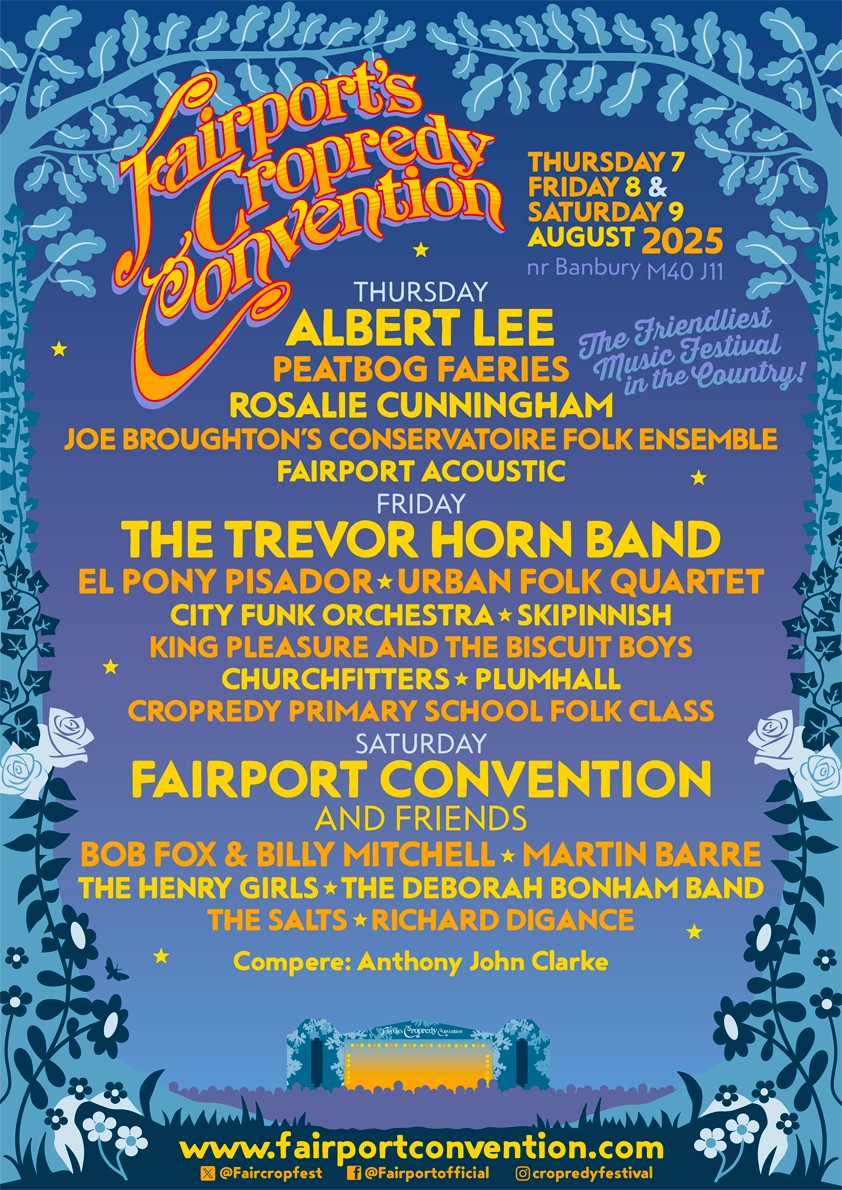
When tickets for Cropredy 2025 went on sale, it was announced that there would be some changes to the festival this year, with far fewer tickets available. Interviewing Fairport’s Dave Pegg back in January, he explained the thinking behind the new approach as follows:
“Gareth Williams our CEO came up with several formulas for trying to make it pay. It’s always been such a gamble, the last couple of years especially. Because when you don’t know how many tickets you are going to sell, you can’t budget. You’re guessing about the number of people who are going to turn up. Gareth’s idea – we’re only going to sell 6,500 tickets and we’re only selling three-day tickets. Because we know we’ve got that lump of income and we can budget accordingly without the risk of going bankrupt.“
As well as fewer tickets, the festival line-up was to look somewhat different, too. The era of big-name headline acts like Chic and Madness and Alice Cooper, who had previously graced the Cropredy stage in a bid to widen the festival’s appeal and get more bums on (folding) seats, was over. Instead, there would be far more focus on acts that the festival organisers knew and had worked alongside.
The big question, therefore, is did this new formula work? Clearly, there was no problem shifting tickets, with the vast majority being snapped up by February and with the festival selling out well in advance. Arriving at the campsite on the Thursday afternoon, it didn’t feel much different, although a couple of fields previously used for camping had apparently been taken out of use.
The Cropredy crowd (Photo: Simon Putman)
I was also wondering whether the slimmed-down attendance would leave us all rattling around in the main arena field but it didn’t feel like that at all. Walkways had been rejigged, the big screens at either side of the stage had been replaced by a single screen at the back of the stage but overall it very much felt like the same old Cropredy I’d been going to for the past fifteen years.
Richard Digance up on the big screen (Photo: Simon Putman)
So, enough of the festival arrangements, what of the music? I must admit that one of the real attractions for me when I first started going to Cropredy in 2010 was the mix of folk, acoustic and classic rock acts. I loved having Status Quo and Rick Wakeman and Little Feat alongside Thea Gilmore and Breabach and Bellowhead. Unlike some of the diehard Cropredy goers, I was perhaps more worried about the potential for the new ‘Friends of Fairport’ formula to squeeze out some of the rockier elements. That didn’t happen at all though. I got my fix of both folk and classic rock, in some respects more than I could possibly have hoped for.
Joe Broughton’s Conservatoire Folk Ensemble join Fairport Acoustic on stage (Photo: Simon Putman)
On the folky side, obvious highlights for me included Joe Broughton’s Conservatoire Folk Ensemble, whose massed ranks begun their set by joining Fairport Acoustic on stage, for an epic rendition of ‘The Lark In The Morning’ instrumental medley from the Liege & Lief album. Scottish folk band Skipinnish were another highlight for me, with a thrillingly energetic set, my second time seeing them this summer as they also performed at the New Forest Folk Festival. A special mention, too, should go to the kids of Cropredy Primary School Folk Class who kicked things off at the festival. We only made it in time to hear their last couple of songs but what a wonderful idea to link the village and the festival this way and how lovely it was seeing the huge cheer for them as they made their way from the backstage area afterwards to a waiting gaggle of proud parents.
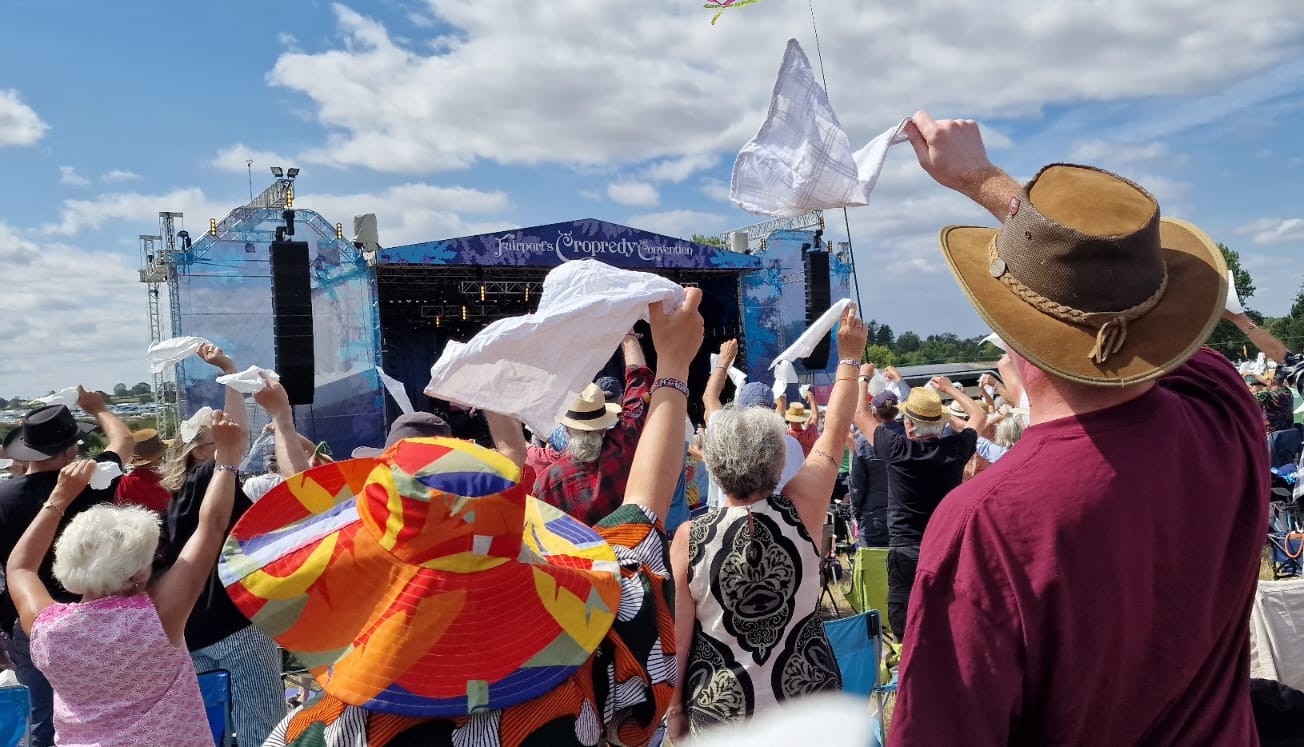
The traditional hanky waving during Richard Digance’s set (Photo: Simon Putman)
On the rock side, the festival organisers demonstrated that you didn’t need to be in the megabucks league to attract some decent classic rock acts. My many years of going to music weekends at Butlins showed me that it’s perfectly possible to line up some talented rock names without bankrupting yourself.
Trevor Horn (Photo: Simon Putman)
The Trevor Horn Band, making their third appearance at Cropredy, were hugely entertaining as ever, blasting out a deluge of hits that Horn had had a hand in, from Frankie Goes To Hollywood, to Buggles to Yes – with the added bonus of Lol Creme of 10CC on guitar and some Godley & Crème/10CC hits thrown in, too! They were originally booked under the old formula for the previous year, however, and had to reschedule because of illness so the situation was slightly different.
Martin Barre (Photo: Simon Pitman)
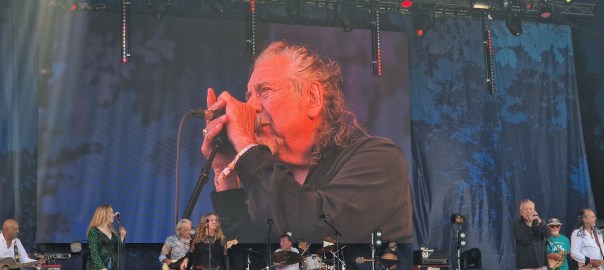
The same cannot be said for Martin Barre (ex-Jethro Tull) and Deborah Bonham (sister of Led Zep drummer, John) whose sets were clear highlights of the weekend, none more so than the latter whose special guest almost certainly provided the highlight of the weekend for many, with none other than Robert Plant stepping on to the stage to perform sizzling versions of ‘Ramble On’ and ‘Thank You’ from Led Zeppelin’s second album. It doesn’t get much better than that at Cropredy.
Robert Plant joins the Deborah Bonham Band on stage (Photo: Darren Johnson)
I didn’t get to see everyone who performed and there were acts (like Bob Fox & Billy Mitchell) I would have liked to have seen but didn’t. However, I’ve never spent the entire day in the field from mid-day to midnight. For me, time spent at the campsite, catching up with friends early in the evening and relaxing ahead of a late night finish, is as much part of the Cropredy experience for me as the music. Plus, in the last few years, our camping group has also chosen to spend a little bit of time at the Cream of the Crop festival in the adjoining field and this time we got there just in time for an explosive set by the excellent Burnt Out Wreck, the band fronted by former Heavy Pettin’ drummer, Gary Moat. No-one can say I didn’t get my fill of hard rock at Cropredy this year!
Burnt Out Wreck at Cream of the Crop next door (Photo: Simon Putman)
Fairport Convention, of course, rounded things off on the Saturday night with their usual mammoth set featuring a mix of familiar old favourites, revisited deep cuts, covers with guest artists (this time Ralph McTell and Danny Bradley) and more recent material penned by the band’s own Chris Leslie. While a couple of our camping group head back to the campsite before the end, missing ‘Matty Groves’ and ‘Meet On The Ledge’ is not something I could ever contemplate so we make our way to the front in time for a rousing ‘Matty’ (with accompanying animated video hilariously interpreting the storyline through the medium of Lego) and an always emotional ‘Meet on the Ledge’.
Ralph McTell is a guest during Fairport’s set (Photo: Simon Putman)
While it was the end of Cropredy for another year, it wasn’t quite the end of our camping trip as we had booked for several days at a lovely campsite ten miles away, just outside Barford St. Michael. The spirit of Cropredy was never far away though. The village of Barford St Michael, itself, was once home to Dave Pegg and the studio he established, Woodworm Studios, where Fairport recorded numerous albums. The studio is still in operation, although no longer owned by Peggy these days.
The Hook Norton Brewery (Photo: Simon Putman)
While camping, we also took a trip to the village of Hook Norton for a tour of the Hook Norton Brewery, who in recent years became the official suppliers for the Cropredy festival bar, taking over from Wadworth. It’s an absolutely fascinating tour of this historic nineteenth century site and our engaging tour-guide was himself a Cropredy regular who had spent many years working at the festival. If you are extending your stay in the Oxfordshire countryside and want to find out how the beer at the Cropredy bar is brewed and learn more about the history of the brewery, it’s well worth a visit!
Greenshanks is the alter-ego of Will Boyd-Wallis from Strathspey in the Scottish Highlands. He gained recognition performing at Glasgow’s Celtic Connections in 2023 where he was a finalist at the Danny Kyle Open Stage. Stormbird is his debut EP and after forty years of playing and writing music, this is the first time any of his songs have been officially released.
The five-track EP features a stellar cast of notable musicians from the Scottish contemporary folk scene. As well as Boyd-Wallis (vocals, guitar, guitalele), Stormbird boasts Hamish Napier (harmonium, organ, piano); James Lindsey (double bass, electric bass): James Mackintosh (percussion); Ross Ainslie (low whistle); Becky Doe (viola, violin); and Iain Forrest (slide guitar).
Will Boyd-Wallis:“This EP has been a long time coming. The first track Fistful of Sand has been growing in me ever since I was a boy when my mother told me that my great-great-grandfather was born on the Isle of Rum on the West Coast of Scotland. He was evicted and sailed to Nova Scotia, eventually settling in New Zealand. This story led me to move to the Highlands in my early twenties with a vow to put something back. I dedicate this EP to my mother Maha, great-granddaughter of John Mòr McLean.”
Putting that something back has, for Boyd-Wallis, resulted in him dedicating the past thirty years to working in caring for woodlands, moorlands, mountains and coasts in hard-to-reach places in the Highlands and Islands of Scotland and he adds:
“All of the other songs have been inspired by the many people, places and creatures I have met on my daily life and work with the National Trust for Scotland. I am grateful to all of them – animal, plant and mineral – for all the joy and comfort they have given me.”
From the aforementioned ‘Fistful of Sand’, which immortalises the pain and suffering of the Rum islanders as a result of the clearance of 1826; to ‘Sandstone’, described as a modern-day Selkie song; to the title track which outlines a life-enhancing encounter with a storm petrel chick on the island of Hirta in St Kilda, the Stormbird EP reveals Boyd-Wallis to be a fine storyteller and songwriter. The songs are sung with passion and conviction but also genuine tenderness. Along with some seriously good musicianship and some lovely cover art and beautifully-written liner notes, it makes for a highly impressive recording debut.
Reviewing Odette Michell’s debut album for the much-missed fRoots magazine back in 2019, I wrote that The Wildest Rose was “one of the stand-out debuts of 2019”. Lots of commentators expressed similar levels of enthusiasm and she soon found herself on many people’s ‘one to watch’ lists that year.
Since then, Michell has performed alongside the likes of Show of Hands, as well as opening for folk luminaries like Martin Carthy, Phil Beer, Reg Meuross and Ninebarrow amongst others. She’s also recently begun performing with Karen Pfeiffer and Daria Kulesh in a new trio formation: Michell, Pfeiffer & Kulesh. However, it’s been quite some wait for a follow-up solo album – but finally it’s here.
Comprising ten original songs, The Queen of the Lowlands features an impressive line-up of guest musicians, including Chris Leslie, Phil Beer, Lukas Drinkwater, Vicki Swann and Stu Hanna (who also produced); alongside additional vocal contributions from Daria Kulesh, Calum Gilligan and the duo, Ninebarrow.
Reviewing Michell’s debut album I noted she had a “knack for writing songs that could easily have been collected over a hundred years ago”. A similar approach is clearly evident on this latest album, as Michell herself acknowledges.
“My approach to songwriting is to try to be as authentic as possible while keeping a foothold in the folk tradition – it’s a balancing act but every song is personal to me at some level.”
Highlights include the gentle nature-themed opening track ‘The Woodlark and the Fieldfare’ with vocal contributions from the equally nature-loving Ninebarrow; the more contemporary-sounding but no less gorgeous ‘Hourglass’, dedicated to Michell’s father and sung as a duet with Callum Gilligan; and the jaunty fiddle-driven closing track ‘All The Bonny Ships’, written about Michell’s Polish grandparents who got separated during WW2 but were miraculously reunited in Britain at the end of the war.
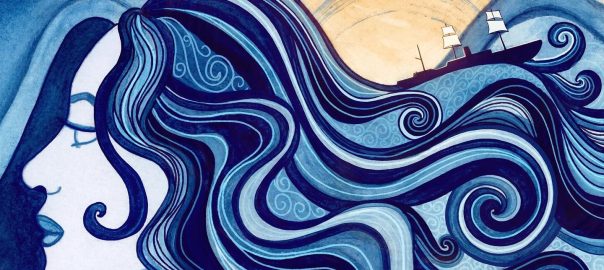
Title track ‘The Queen of the Lowlands’, meanwhile, (which features some characteristically spell-binding fiddle from Fairport’s Chris Leslie) is not about Queen Wilhelmina, the former Dutch monarch, but rather the ship named after her that played a heroic role in the First World War, transporting US troops safely back home. It’s one of several nautical-themed songs on the album, hence the striking cover art.
Following her hugely-impressive debut album, here Odette Michell has gone on to deliver an absolutely stunning follow-up. Infused with her deep appreciation and obvious knowledge of traditional song, The Queen of the Lowlands is a beautiful album with gripping storytelling, crystal-clear vocals and first-class musicianship.
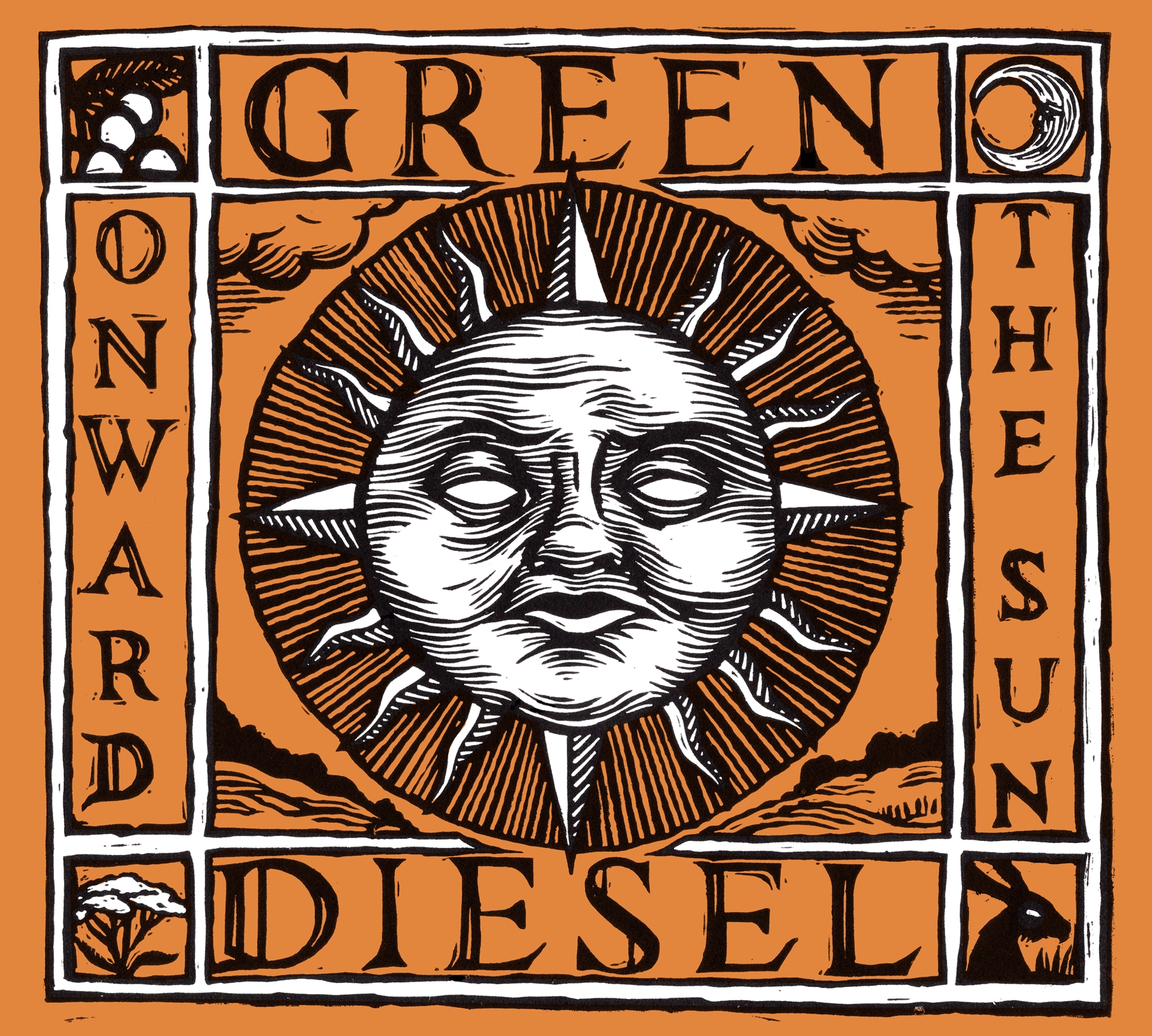
Although their first album seemed to pass me by at the time I instantly became a fan of the Faversham-based folk rock band, Green Diesel, when I was asked to review their second album, Wayfarers All, back in 2014. They are currently promoting their fifth album,Onward The Sun, which came out in April and which was recently described by Shindig! magazine as “folk rock at its finest.” I couldn’t agree more which is why I headed over to Brighton to catch the band live.
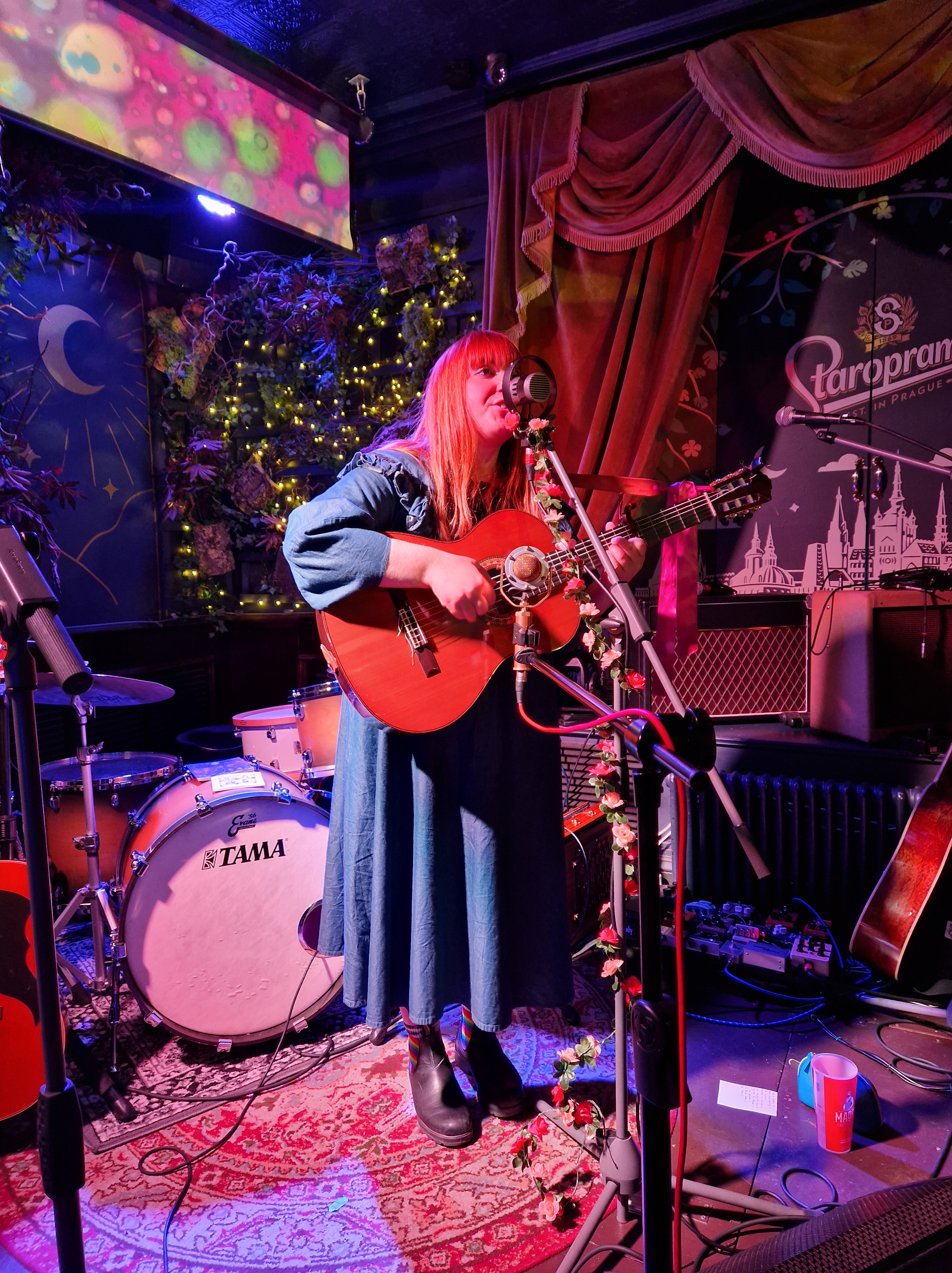
Performing at the charmingly elegant Folklore Rooms above the Quadrant pub, the band were supported first by Bity Booker, a London-based alt-folk singer-songwriter with beautiful songs, a sweet voice and some hilariously deadpan introductions. And by Brighton’s own The Witchcraft & Vagrancy Act, who delve into the macabre side of folk to come up with their own fabulous folk horror interpretations of traditional songs – think Cecil Sharp had he spent his time hanging around with Bauhaus and Alice Cooper.
Bity Booker
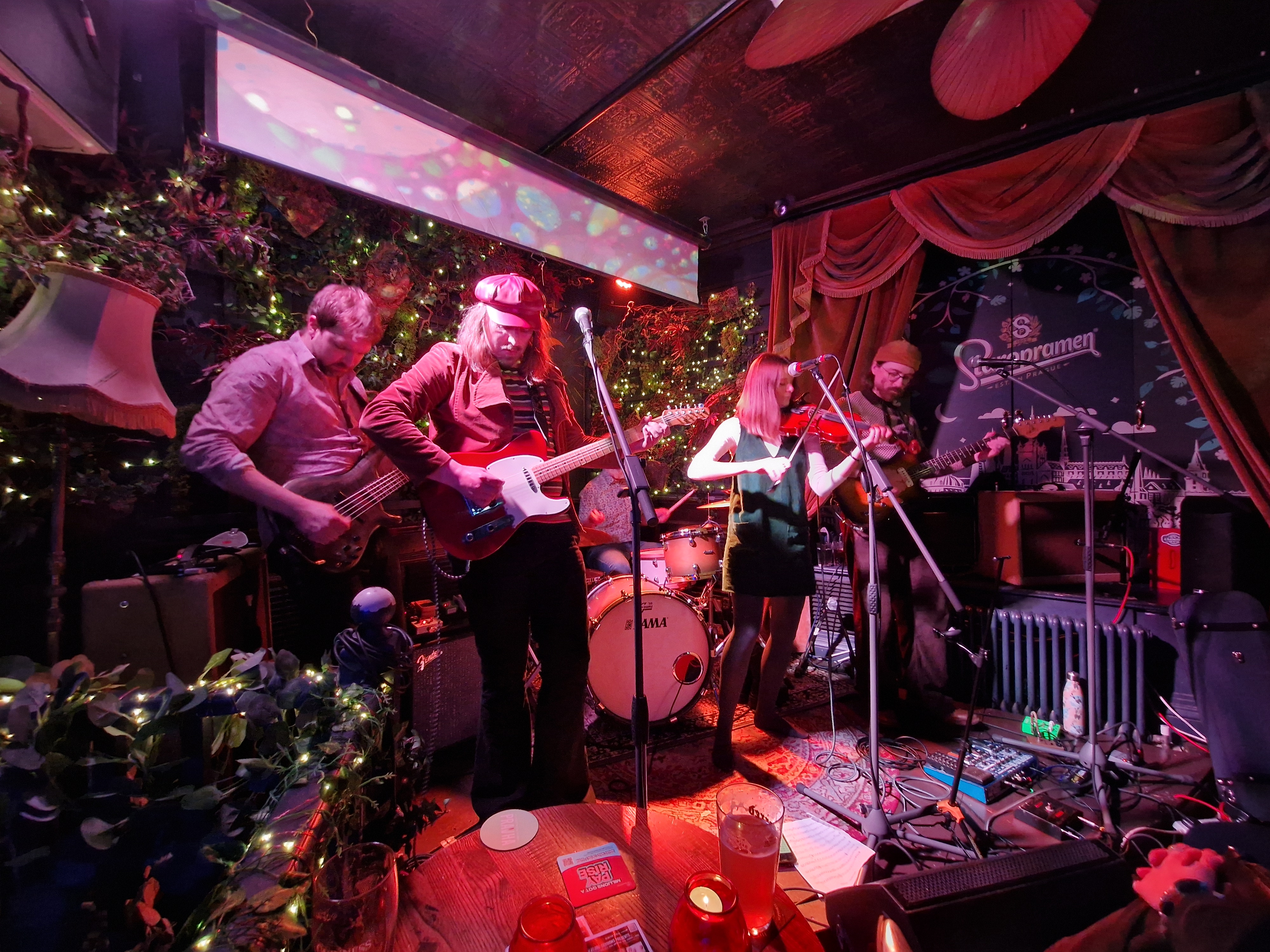
For Green Diesel, the evening provides a welcome opportunity to showcase material from the new album alongside some older favourites. There’s well-received renditions of ‘Onward the Sun!’ the album’s title track, and ‘Ring The Hill’ another superb song from the album. Ellen Care’s vocals are utterly perfect for material of this type, combining just the right amount of sweetness and menace as she lets these folklore-inspired stories unfold, backed by some psych-folk guitar-wizardry, a powerful rhythm section and her own stunning fiddle playing.
Green Diesel have never been averse to a bit of folk horror themselves, of course, and tonight’s set includes the band’s cover of ‘Maypole’ from The Wicker Man soundtrack, sung by lead guitarist, Matt Dear, and given a suitably-ominous sounding Green Diesel makeover. The band even throw in a couple of Morris tunes which comprise the instrumental segment of the new album, again given the Green Diesel treatment: heavied up and performed in minor key. Superb stuff!
Green Diesel
Green Diesel just seem to get better and better with each year that passes. And with two impressive support acts it made the trip to Brighton and the never-knowingly-reliable late train back to Hastings well worthwhile.
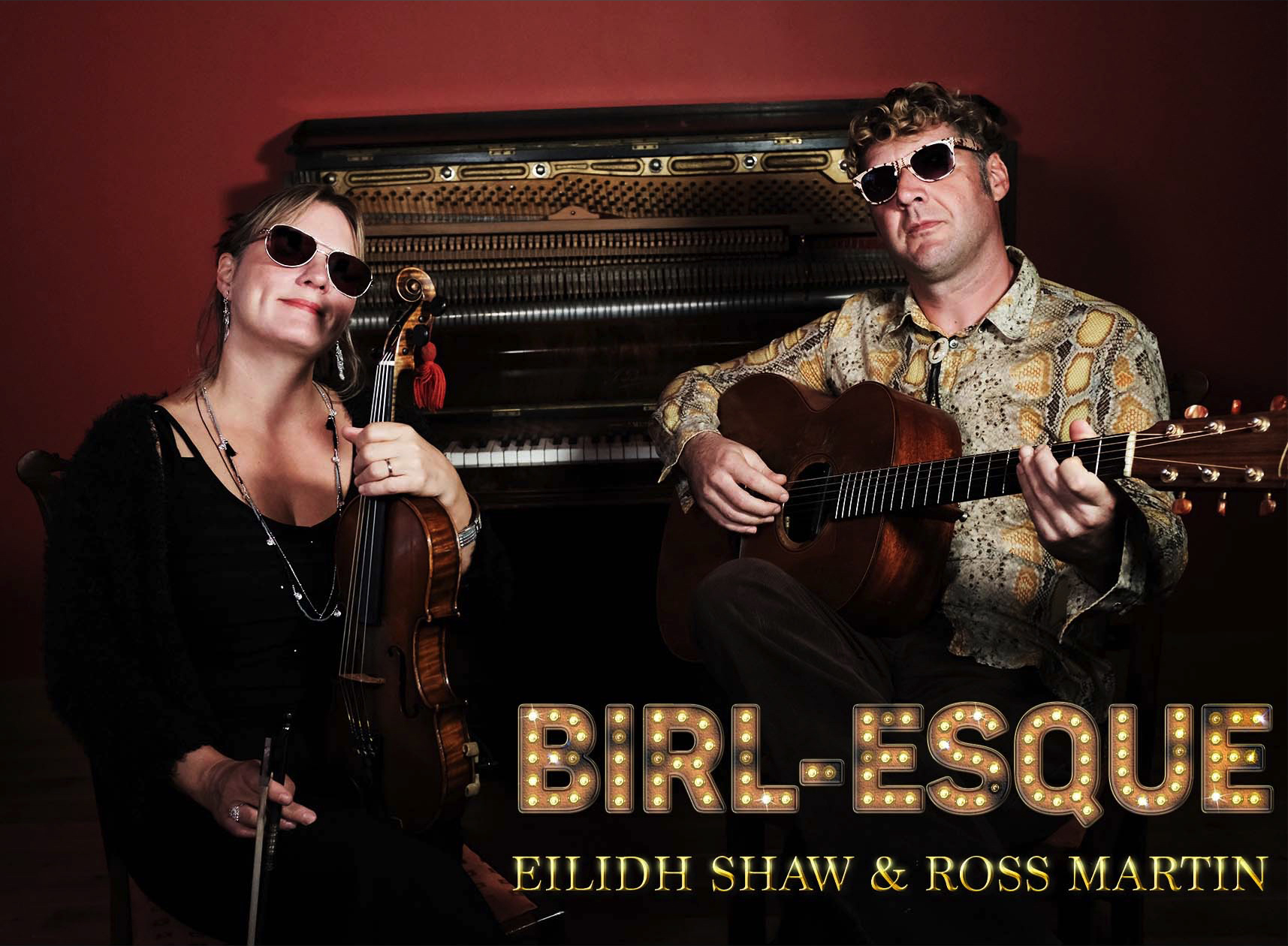
Eilidh Shaw (fiddle and vocals) and Ross Martin (guitar) are best known for their work with two leading Scottish traditional bands. Shaw for her work with The Poozies and Martin with Daimh. Between them they have spent over two decades touring with both their own bands and as guest artists with an vast array of top performers, including Julie Fowlis, Bonnie Prince Billy, Tony Christie and Arnaud Ciapolino.
Performing under the name Birl-Esque, Stay Here All Night is their second album as a duo. Born out of the long musical winter of lockdowns and cancelled gigs, the obvious choice faced by many couples was to either order another case of wine or build a home studio. Eilidh Shaw and Ross Martin did both of these things. The resulting album is a festival of creativity, full of the style and character that the duo has become known for.
Eilidh Shaw’s fiddle takes the lead on the instrumentals, such as ‘Swimmy Tunes’ above. The duo comment: “Two tunes written by Eilidh after a glorious west coast summer swimming in the sea around Arisaig. No swimming in this video as, although still very beautiful, it was a very cold day in January. The beautiful islands of Eigg and a snow-capped Rum in the background.”
New compositions such as this sit alongside old Highland classics like the ‘Thief of Lochaber’ and ‘Paddy’s Waltzes’, a set of Gaelic waltzes taken from her father’s home-made music book.
The four songs on the album include covers of contemporary Scottish writers such as ‘Stoned Again’ by Sandy Wright and ‘Better Off Dead’ by Willie MacAskill while the title track ‘Stay Here All Night’ showcases Shaw’s own songwriting.
Ross Martin’s consummate guitar arrangements tie the album together while the whole project is further decorated by a star-studded list of guest musicians that happened to be either passing the duo’s Highland home in Morar or had made the same decision during the dark days of covid and contributed from their own home studios.
With a combined total of 74 years of gigging experience and over 100 album appearances between them this dazzling duo seamlessly blur the lines between the traditional and the contemporary with a uniquely mischievous style.
Those who felt a Show of Hands-shaped hole in their lives, since the acclaimed west country duo went on indefinite hiatus last year, didn’t have to wait too long for new material featuring those warm, impassioned, familiar tones of vocalist, Steve Knightley.
First there was last Autum’s solo album, The Winter Yards (“poignant, tender, thought-provoking and rousing, in turn…”) and equally quick-off-the-mark came a follow-up in the Spring, Positively Folk Street: Dylan, Carthy & Me. While the former was very much a showcase for Knightley’s continuing brilliance as a songwriter and passionate observance of the world around him, this latter release is all about returning to his formative influences: back to when the young Knightley first tentatively dipped his toes into the world of acoustic folk.
Steve Knightley: “When I first picked up an acoustic guitar in my mid-teens, my repertoire was very limited – and then I discovered ‘The Freewheelin’ Bob Dylan’. That album was a revelation. At the time, I had no idea Dylan had drawn so deeply from our own folk traditions to shape many of his songs.Later that summer, I found myself at Sidmouth Folk Festival, where I saw martin Carthy perform live for the first time. Another moment of discovery.“
“This album is a tribute to those formative influences. Across these twelve songs I revisit the worlds of Bob Dylan and martin Carthy – two artists who shaped my musical journey and set me on a path I’m still working.”
Containing six Dylan songs and six trad. arr. compositions from the repertoire of Carthy, it’s rare to come across a contemporary folk release these days where one is quite so familiar with the material. But Knightley applies his characteristic verve, passion and singularity and breathes new life into a beautifully-chosen set of songs. A must-buy for any Show of Hands and Steve Knightley fans, giving an insight into the songs and artists that helped shape his own career.
When Norwich-based folk duo, Christina Alden & Alex Patterson, released their debut album, Hunter, back in 2021 I found it a highly enjoyable listen and was struck by the duo’s lovely melodies, heart-warming vocals and charming story-telling.
We’ve had a while to wait but now they are back with a brand-new album, Safe Travels, featuring ten original songs and a duo-composed instrumental.
Recorded at the couple’s home studio in the centre of Norwich, they outline the genesis of the album as follows:
“We began making this album at the start of 2022 as the world was emerging from the global pandemic and just before the birth of our daughter, Etta. Some of these songs are like old friends that have travelled many miles with us, while others came about in the final stages of production. This is a collection of songs and tunes that feel as if they have grown and changed with us over the years. Those keen listeners among you may even hear some of our home life; our old cat pottering and meowing around the house; our daughter talking in the background or the sound of city life just beyond the city walls. We are so proud of this album and it’s been a real pleasure creating the music together.”
A number of the songs on the album are highly personal, such as the lovely ‘Etta’s Song’ (above) celebrating the birth of the couple’s baby daughter; the charmingly infectious ‘Our House’ which recalls Alden’s memories of growing up in a home filled with music; and the poignant ‘A Hundred Years Ago’ which, rather than being an epic historical folk tale, is all about recalling momentous events in one’s own life. However, as with the previous album, songs celebrating the beauty of the natural world also feature heavily and, as in the case of the ecologically-themed ‘The Mountain Hair’, the threat that the effects of man-made climate change poses to our natural landscape.
Both Alden and Patterson are accomplished multi-instrumentalists and finger-picked guitar interwoven with beautiful string arrangements make for a gentle yet versatile backdrop for Alden’s crystal clear lead vocal and Patterson’s warm harmonising. As with the debut album, pleasing melodies and heart-warming story-telling is the order of the day.
After a four-year journey Safe Travels has finally reached its intended destination and it’s an album that’s been well worth the wait.















 Darren's music blog