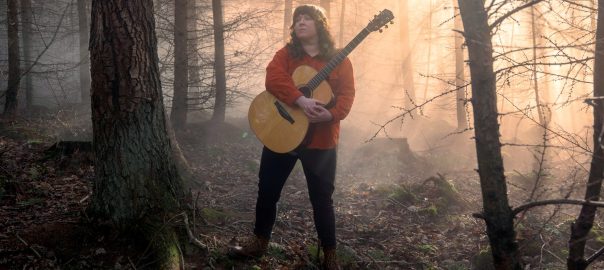
A singer and guitarist who’s been making waves on the folk scene in recent years, Cumbria-born Holly Clarke has performed alongside the likes of Nancy Kerr & James Fagan, Daoiri Farrell and Queer Folk. Appearing at festivals and venues such as, Sidmouth Folk Festival, Bromyard Folk Festival, Tiree Music Festival and The Glasshouse International Centre For Music, between 2019 and 2020 she was Artist in Residence at the latter, specialising in Traditional Folk Song and Ballads.
As well as performing solo, Holly has a duo with George Sansome (Granny’s Attic), The powerhouse band RE:VULVA (Amy Thatcher, Janice Burns, Cathy Geldard) and she also gigs with the trio, Holly and the Reivers, reviewed here back in 2024.
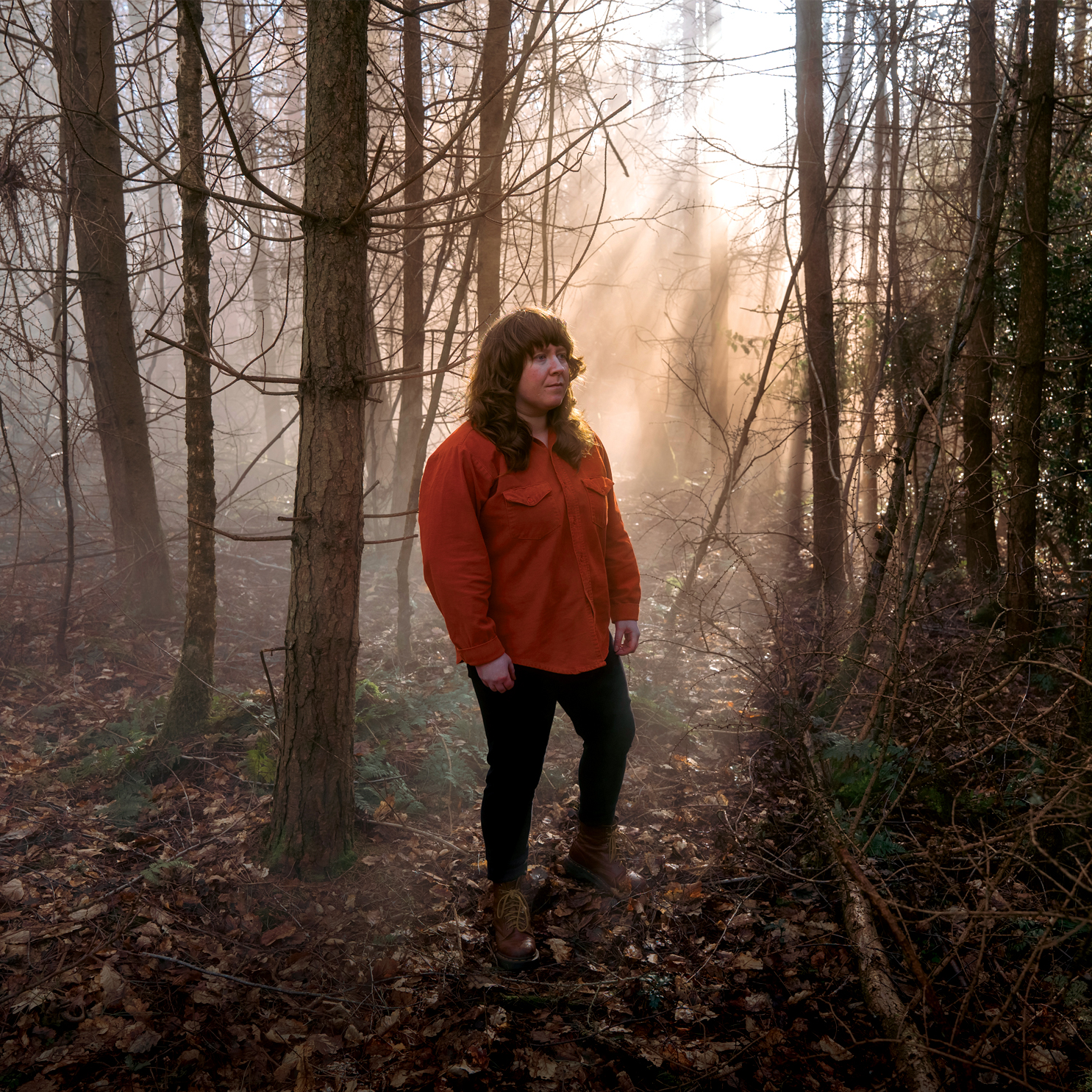
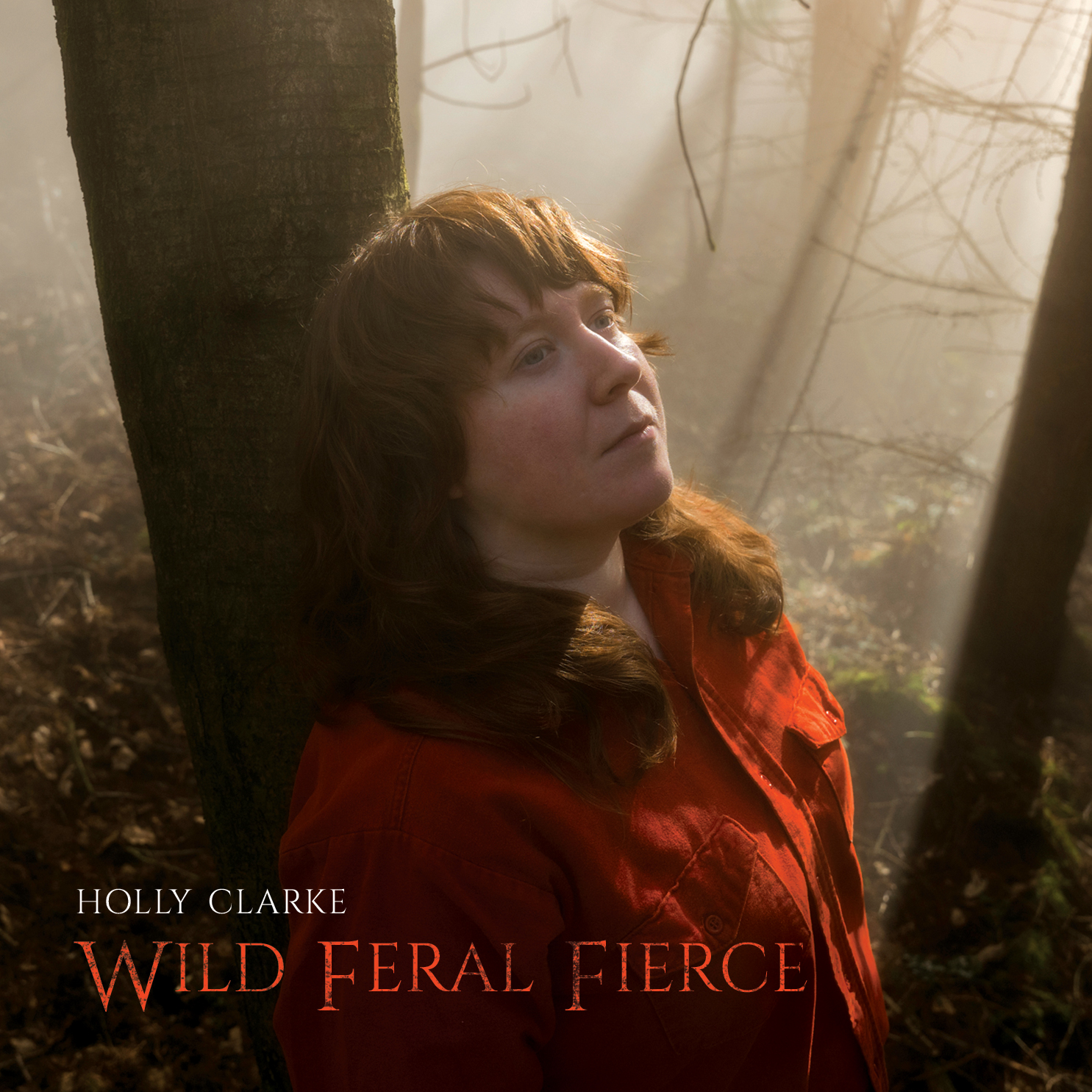
Wild Feral Fierce is Clarke’s debut solo album. Across ten tracks which mix interpretations of traditional ballads with original material, it’s an album that’s deeply rooted in folklore, myth and metaphor.
Holly Clarke: “The tracks on this record summon visions of the macabre, the supernatural and iconic figures from folklore and myth. This album is an unearthing of themes that aren’t just found lying dormant in the furrows of the land, they are alive and more relevant than ever.”
Traditional songs include beautifully atmospheric interpretations of well-known classics like ‘The Spectral Stag’ and ‘John Barleycorn’. However, like the late, great Bob Johnson of Steeleye Span, who had a similar fascination with such other-worldly themes, Clarke doesn’t just look to the British Isles for inspiration but also delves deep into the folk myths from Scandinavia where they’ve long excelled at this stuff over many centuries. ‘The Maiden Hind’, a classic Danish shapeshifting ballad, and ‘Sir Aage and Lady Elselil’, which has its roots in old Norse texts are two such tracks on this album.
Alongside her passion for adapting traditional ballads, Clarke is also a talented songwriter. The self-composed title track of the album, is a song where shape-changing is a metaphor for the joy that comes from self-acceptance and positive transformation.
Joining Clarke on the album is a core band featuring Anna Hughes (of Salthouse & Watersmeet) and fiddle and viola; Amy Thatcher (of Kathryn Tickell & The Darkening & The Shee) on accordion and synth; and John Pope (of Archipelago & MeLostMe) on double bass. The album also features a guest appearance from Kathryn Tickell on Northumbrian pipes.
Haunting and ethereal, with compelling storytelling and captivating vocals, Wild Feral Fierce is a wonderful slice of trad. arr. inspired folklore.
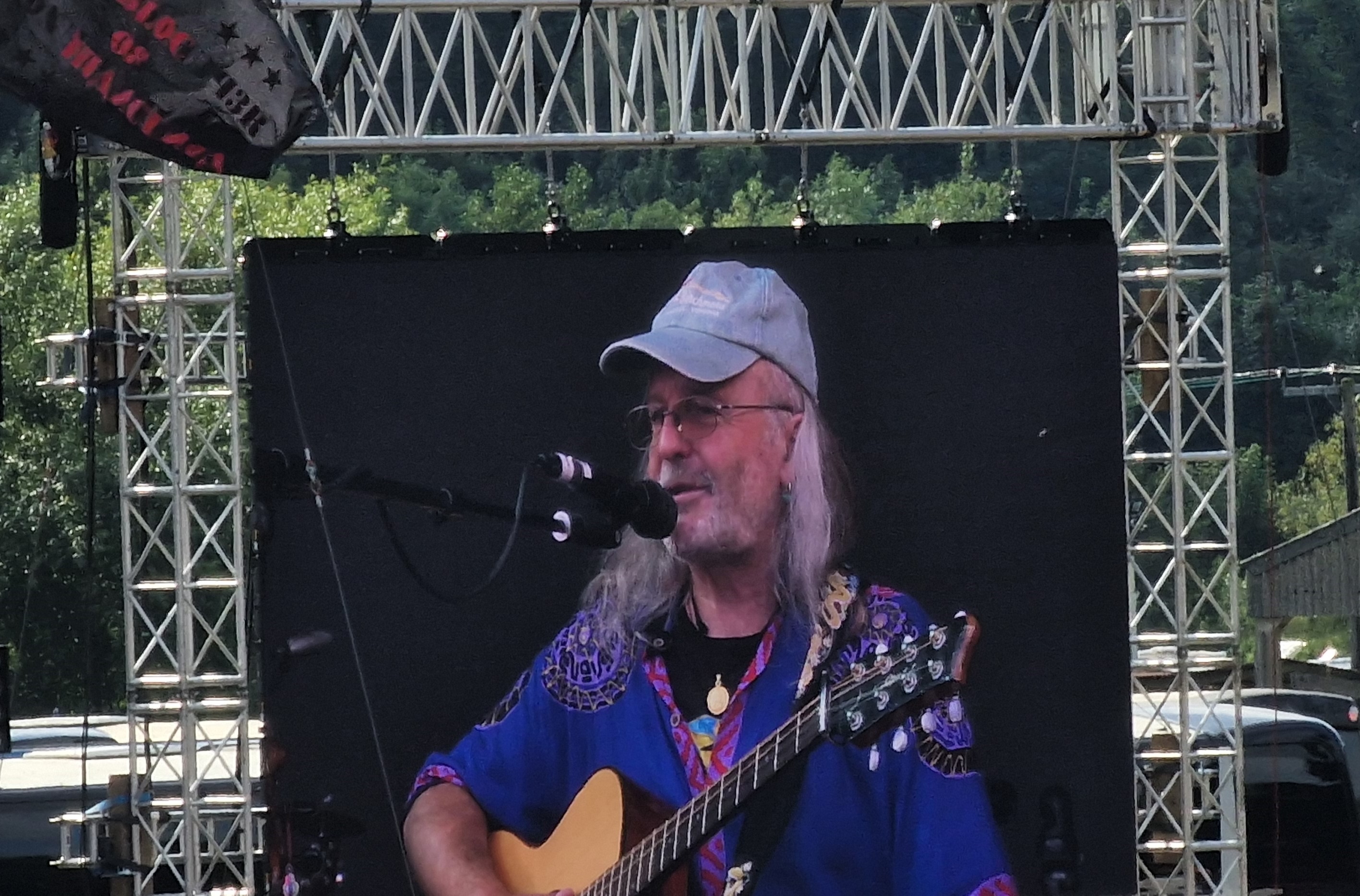
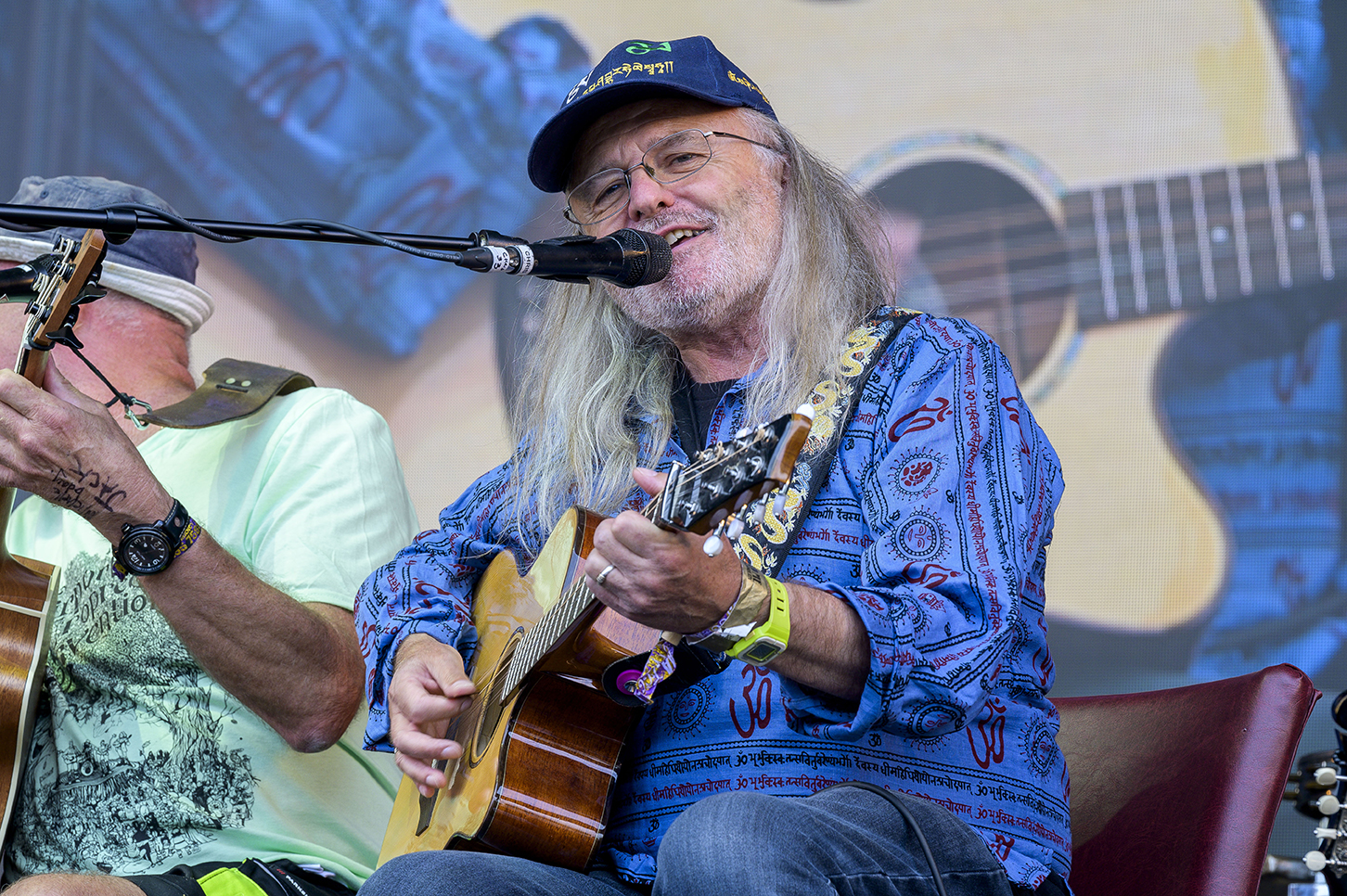
Ahead of the band’s 2026 Spring Tour, I catch up with Fairport Convention’s Chris Leslie. We discuss how he fell in love with the band’s music as a teenager, getting to know the band members socially, working with them and – thirty years ago this December – becoming one of their members.
Let’s go right back to the early days, long before you joined the band, what were your initial impressions of Fairport Convention?
Well, I have to give a big thanks, as I always do when we chat, to my brother, John, who got me into that kind of area of music. He’s five years older than me and he latched on by buying an album in Smiths in Banbury. And he was into all kinds of music up to that point, but not folk music. And he just saw a Martin Carthy & Dave Swarbrick album, I think, on the Hallmark label. Anyway, he brought it home and he loved it.
And during the next two or three years, he was bringing albums home in this newfound music. You know, things like Steeleye Span, Martin Carthy, Dave Swarbrick, the Dransfields, Fairport. All those things were coming into the house and I loved it, too. And John was always very generous when I was younger. Being five years younger, it’s quite a gap at that stage. And he just said, “Yeah, come and listen to it.” You know, we’d sit and listen to it on the record player and all that kind of stuff. And I particularly fell in love with the sound of the fiddle. That was what really drew me in even more.
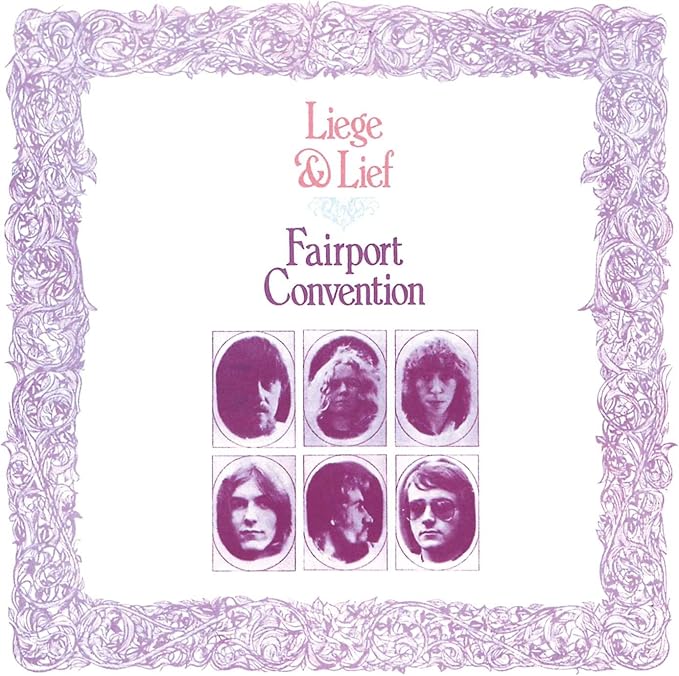
I think Liege & Lief was probably the first Fairport album John came across, which I obviously got to hear. Then he was backtracking to Unhalfbricking and What We Did On Our Holidays. And so that was my first impression of Fairport. And there was something about it that really got me. I really, really loved the band instantly. It was instant! I loved Sandy’s voice. I loved the fiddle. It was just music that touched my heart. It was almost like rediscovering something that had always been there, but I didn’t know about.
And so, yeah, it was through those albums. And then luckily when I was older, I got to my mid to late teens – 17 kind of age – and Fairport, a couple of the members moved in nearby. I couldn’t believe it. You know, Swarb and Peggy moved into Cropredy. And I was at that time in the village where we are, Adderbury. I was part of the Morris that was being revived in the village. You have a tradition in the village of Morris dancing, which has now grown, I have to say, to three sides in the village, which is fabulous. But at the time I was a young, enthusiastic fiddle player playing for the Morris.
And I remember we played once. We danced out at the Brazenose in Cropredy. And who should come along to watch us, but Peggy? He’s always such a generous character. He’s so friendly and he’s such a gregarious character. And we didn’t actually speak that day, but he was giving me winks and nods. And so, Peggy was watching us dance. And then who should come along ten minutes later, but Swarb? Cigarette in mouth. And came and watched. So that was fabulous. And then it wasn’t long after that, that my brother, John, again, met Peggy in a park in Banbury, the People’s Park, where there was a little music festival going on. And John went up and said hi. By that time, we were in a local duo. Banbury John & Fiddler Chris was our name. And anyway, Peggy and John chatted and Peggy invited us over to his cottage, in Cropredy. To go over one night, bring our instruments. And the friendship’s been there ever since, you know. Wonderful.
Photo credit: Simon Putman
And so not only did I get into the band, but in my very formative years, I actually met them. And then through that, I think I met Simon very soon after. Because there used to be a session over in one of the local villages every Sunday. And the Fairports would take their instruments over and have a knock sometimes with whoever was there. And I was always there then with my fiddle. So, the whole thing grew very organically but in a way I could never have dreamt of.
And from that whole period before you joined the band, would you say Liege & Lief was your favourite Fairport album?
In a way it was. I mean, it was amazing, actually, because there was that beautiful gatefold cover of Liege & Lie and when I opened it, they obviously had that idea of mixing their own contemporary writing for that album with some ballads and traditional songs. And what’s amazing throughout that album is that they blend so well. I don’t think there’s ever been an album where it’s done more successfully.
It is so seamless, isn’t it? Because if you didn’t know the history of the songs, you would be hard pushed to know which were traditional and which were written by the band.
You absolutely would. But then, of course, there are great tracks like ‘A Sailor’s Life’ (From Unhalfbricking). I’d never heard anything like that before. I was still at school and I remember taking that to a friend of mine. Every year has a visionary in the school, I think. And our visionary was a guy called Mark Bradley. But we’d play each other music and he’d play me things like John McLaughlin, My Goals Beyond and all those kinds of really, really far out albums. Which I loved, again because there was a fiddle player, Jerry Goodman. Wonderful, wonderful. And I’d play him things like ‘A Sailor’s Life’, you know, with the wonderful atmosphere of it. And then when the track goes off into a kind of into kind of a jam at the end. Richard’s playing and Swarb’s playing, weaving around each other.
So, I was going around all the albums. I couldn’t get enough of it. I still can’t, actually – of music. You know, just always playing music.
Yeah. It’s just the backdrop to life as far as I’m concerned.
I mean, obviously, there are other ways to live a life, of course. But I can’t imagine having a life without music. And some people that’s their life. They have other things that fulfil that space but, you know, music’s really important to me.
Photo credit: Simon Putman
So now moving forward a bit, your first full tour as a member of the band, I think, was 30 years ago this this year.
Yeah, it’s been 30. December 96, I joined.
But you’d been in the in the band’s orbit for some years before that, as you’d mentioned. I think you’d already deputised for Ric at Cropredy one year. So, you sort of eased your way into the circle, I suppose?
I’ve been so kind of fortunate in my journey through all this, because there’s no better way to join a band, I think, than if you already know them socially, which was the case with Fairport. Peggy and I were great friends. And Simon, of course, as well. We’d worked on projects up until then. Steve Ashley did a wonderful album called The Family Album which Peggy produced. And that was with Simon Nicol, Peggy, Bruce Rowland. who was the drummer of Fairport at the time, and myself and various other musicians brought in for the album. So, I’d kind of worked with them before, recorded with them, I’d become friends socially with them.
And so when I got the call, I remember it so well. I was in the Albion Band at the time with Chris While and Julie Matthews and Ashley Hutchings. And I was washing up with my marigolds, looking down the garden and the phone rang. And I answered the phone and it was Peggy and he said, “Maartin Alcock’s decided to leave. He’s off doing other things. And your name came up. How do you fancy joining the band?” There’s an instant voice in my head that said yes. So, my immediate reaction was, “Yes, I’d love to join the band.”
And then there was a pause and I said, “But what am I going to do?” Because up to that point in all the bands I’d been in, everybody I’d worked with, I’d been the fiddle player. That was my ‘seat’ in everything. And Peggy said, “Well, you play some mandolin, don’t you?” And I said, yeah, I did. And at that time, Simon Mayor and Hilary James, had a mandolin quartet and I’d been part of that together with Maartin Alcock. I don’t know how long that that lineup lasted. Just say it was ten months, I don’t remember. But during those ten months, I spent my time rehearsing and gigging, sat between Maartin Alcock on mandolin and Simon Mayer on mandolin. So, my mandolin proficiency curve took a steep rise. I was learning so much and I always played a bit of mando. But that like a boot camp, a mandolin boot camp.
And so, I said, “Yeah, I play some mandolin.” And literally two months before that phone call, I was with the Albion band playing at the Fylde Folk Festival, I think it was. And Fylde Guitars were there. They had a stall and I went to have a look, as I do at instrument stalls. And there was a bouzouki hanging up and it was a reduced offer because the front had a split in the growth and he had to repair it. So, it was cheaper than a model without that.
And so, of course, I picked it up and I played it and it sounded fantastic. It was really great. And I said, “I want this, you know, I’ll get this.” I’d never played bouzouki before. But little knowing that two months down the line, that bouzouki would come in really handy initially because I had something else I could play.
I remember going over to Ric’s and Ric said, “Don’t worry, man, just come and play fiddle on everything. That’ll be fine. We’ll have two fiddles, you know.” And I knew it kind of wouldn’t. I felt it wouldn’t work for the audience as much as anything. So, I said, “Why don’t I just play the mandolin and bouzouki and then on certain numbers I’ll pick the fiddle up and we can have two fiddle things.” Which is what we did and that’s how it worked out.
Photo Credit: Tracey Welch
And, of course, replacing someone like Maartin Alcock is impossible. He was such a fantastic multi-instrumentalist with such great musical ideas. And he was something I’m definitely not. I mean, I grew up through the folk scene. That’s my background. That’s where I’m at. That’s where I’m comfortable. It’s where my influence, my inspiration comes from – my main inspiration. I listen to everything. I’m inspired by everything. But my root is in roots music. Acoustic. Whereas Maartin had that incredible facility of keyboards, he could play Hammond organ, he could play electric guitar, as well as playing great bouzouki and great mandolin. He had a very wide palette.
But I guess what I had, I was definitely a vocalist, a singer. Used to singing, being the main singer of songs. And also, the fiddle, I had the fiddle and I did play some whistles and stuff. And when I initially joined, I remember I got myself built an electric bouzouki. Solid body bouzouki. I got myself two built, one a five-string tele one and one four string double.
And to be honest, I stuck with them for a while. And then when you join something so important and as big a thing as Fairport was for me, it’s how you’re going to build your nest. How are you going to find what your input is to the band? And it can’t be done instantly. Well, I couldn’t do it instantly. So, I was playing these solid instruments and just not feeling seated with them. You know, people who play electric instruments, they understand. It’s a weird thing to say but they understand the acoustic properties of it, although it doesn’t have any essentially acoustic properties, but through pedals and amps and using pickups, they have a quality that you have to bring out. Anyway, I stopped using those quite soon after I joined and I went back to the acoustic bouzouki, mandolin, fiddle. Things that were me, you know.
And in terms of my writing, I was very fortunate that the band have always been very supportive of my writing. I mean, as an occasional songwriter. I know people who are who are songwriters. There are loads of them who that’s what they do. That’s how they see the world. They see the world through writing songs.
Whereas I love songwriting and I have moments where I’m touched by something that writes a song. And it has a credibility so I’ll take those whenever they come. But generally, I’m equally as interested in fiddle tunes, in mandolin music, in other aspects of what I do. And I don’t see the world through songwriting, put it that way.
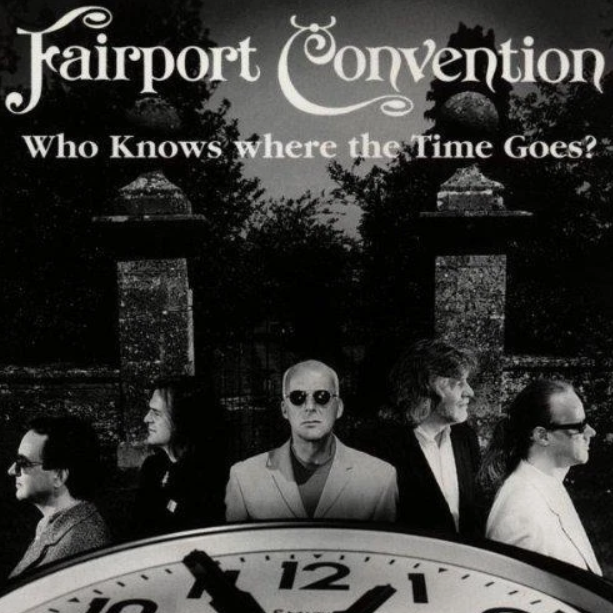
But I did have that to offer and Fairport were about to record an album, the title of which was Who Knows Where the Time Goes. And Dave Mattacks was still in the in the lineup then. And I had a song called ‘John Goudie’ which had been written in my Whippersnapper days, the band that I was in with Dave Swarbrick and Martin Jenkins and Kevin Dempsey. And so, I brought that into the recording and that kind of instantly stamped a part of me. That could bring a song into Fairport and it be a good part of what the band does.
So, from that moment, Fairport’s always been very supportive of my songwriting. And like all writers of anything, you have songs you know aren’t suitable for the band. And I do a few solo gigs and they’ll come into that, or some I know will probably really work with the band and some that are just not songs I want to do anyway. So, getting back to your question, joining the band, I was able to bring that aspect of myself into the band and build my nest.
Obviously, ‘John Goudie’ has remained a staple for the band ever since.It’s a wonderful song. And on the next album after that, I think that’s when you really began to make your presence felt in terms of writing, because you had that one contribution on your first album and then on The Wood and the Wire, it’s quite a lot of Chris Leslie credits on there. Did your writing really begin to flourish then after you joined the band? And did you find you were writing a lot more than previously?
The Wood and the Wire is a very interesting album to look back on because I’d got a few songs bubbling over that I was about to finish when we were about to look to the next album. And Peggy came up with a great suggestion. He said, “How do you fancy getting together with another writer and see what songs you could come up with for the next album?”
And he suggested Nigel Stonier. And that was quite a moment because I thought, “Yeah, that would be a great idea.” And then, of course, what bubbles to the surface for me was all my inadequacies that I felt. Imposter syndrome, I think it’s called. “Can I really sit with a guy who writes and produces albums and sit and let things come out?” Anyway, I thought this is a lovely idea, actually. So, we got in touch with Nigel and he said, “Yeah, let’s do it.” So, we’re in this very room I’m talking in now. We sat together for… something like ten days over a fortnight period.
And what was lovely was Nigel was so lovely. He’s great to work with. I really enjoyed the process. And up to that point, I was a writer that had only written by myself. So, I only had my own ideas about how to be creative – writing. With instruments it’s different because you sit next to people, if you’re in a session or something and you hear things you like. Or if you’re in a band, you’re always getting feedback or input or inspiration from what’s around you. But songwriting for me up to that point had been very lonely. Not that I thought of it like that. It’s just what it was, you know.
So, Nigel would come over. He’d come over at 10 in the morning. We’d get our instruments out, sit head to head. And just throw out ideas, be they lyrically, be they instrumentally, be they riff-wise, be they chord sequence-wise. And for me, it allowed me to kind of open up in front of somebody. Because how musicians work is very interesting. How they tick, I’ve found completely fascinating. And more so the older I get, the more it fascinates me. Because everyone’s coming from their own life, really. Everyone’s coming from their own filter, their own experience, their own inadequacies, their own positivity.
For instance, most things I do, I do completely by ear. So, because that’s what I do, I’ve got quite a good ear… I hear quite sophisticated things within what I do but I can hear it. But some musicians can just say, “Well, you want a C7 with something on the bass there.” And that’s just communicated instantly. Some people can just pick up a piece like a chord chart and they’re there. Peggy can do it. Simon can do it. Ric can do it. I’ve never done that. I can hear it and I can do very basic chord charts, you know, G, C, D, F. But when it gets stretched, I’m having to rely on my ear.
And so, sitting down in front of Nigel that first time, I really had to just open up and just be who I was. And he didn’t bat an eyelid, of course. Of course he didn’t. He wouldn’t. It’s all in your own head, isn’t it? But what I’m trying to say is that that those ten days really gave me something that opened me up in many ways.
And Nigel was such an experienced creator. He has just little nuggets of what, for me, were nuggets of gold. You know, like you don’t have to consider a song finished until you actually record it… You can change it. It’s your song. And I suppose the thing he gave me more than anything was a feeling of freedom in writing. Let everything come through. Let any ideas happen.
So, what I’m getting to is The Wood and the Wire, quite a few songs on that are co-writes. The ‘Wood and the Wire’ (title track) is one and I love that song. I think I came up with the riff. I came up with that and the groove. And then I think Nigel came up with the first line. And then we both contributed to the lyrics and he’d think about another chord and we’re going somewhere. And that’s how we worked. It was the only time we worked together, not for any other reason than that’s just how it was. I really enjoyed working with him and he contributed a lot to that album as well.
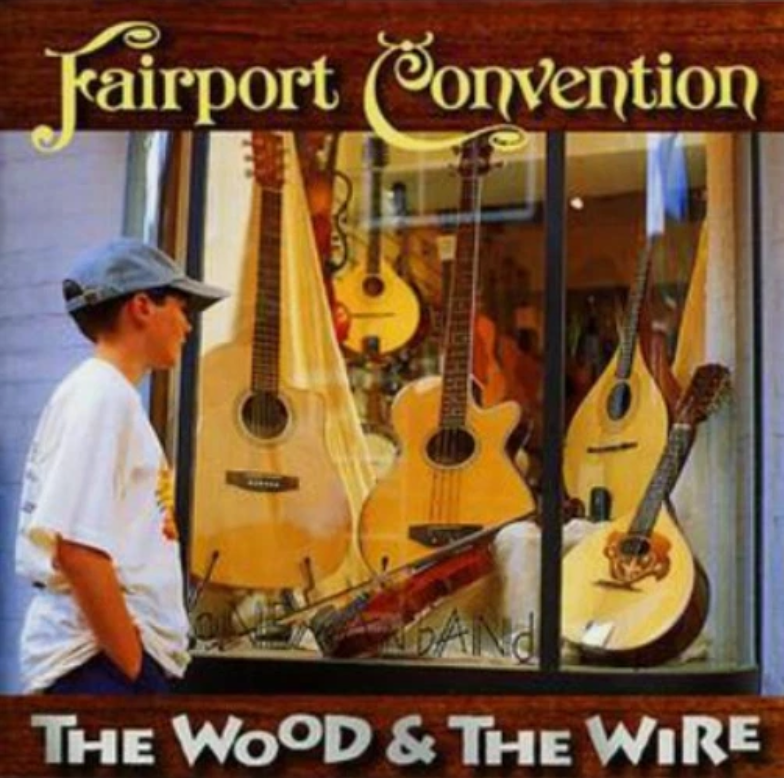
And lovely – the front cover is our son, Sam, looking in the music shop window. And literally this last week we had our grandson down, Taylor, who’s five. And he’s looking at a little Sam on that cover.
You’ll have to try and get him a slot on Fairport’s next album cover!
Yes, that would be great, wouldn’t it?
Photo credit: Kevin Smith
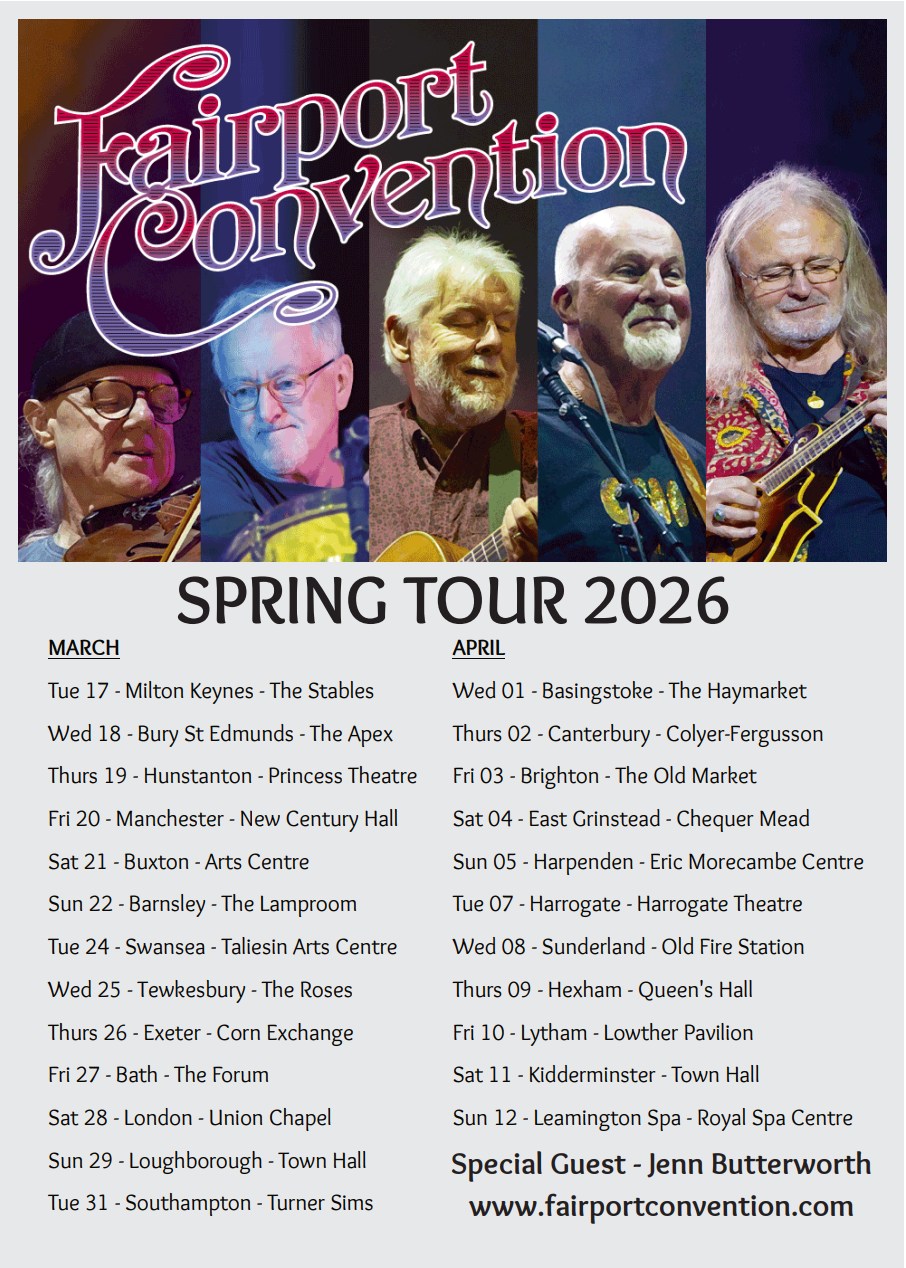
What do you want to tell us about the forthcoming spring tour then starting 17th of March?
Well, the first thing I’ll say is we’ve got the absolutely fabulous Jen Butterworth. She’s a wonderful singer, wonderful writer, wonderful guitarist, wonderful musician. And I’ve just been listening to her latest album. And it’s fabulous. And as always happens, she will do an opening set of about 20 minutes and then we’ll come on stage and join her for a song, which is always very exciting. And I’m really looking forward to being on stage with her for a song.
Jenn Butterworth – Photo Credit: Matthew Arthur Williams
We’ve pulled in some songs from our new album. We’ve got a new live album out for the tour. It’s called Roadworks. And I think it’s the first album we have Dave Mattacks back on the disc for a long time as an album, a complete album. I think I’m right in saying that. Because, of course, we lost dear Jerry Conway a few years ago, which is very sad. But like all these things that come around, DM was the perfect person to come back in. Totally known, totally loved and that’s gone well.
So, we’ve got this new album called Roadworks. We’re very pleased with it. All recorded live from the five-piece tour last year. And we’ll be doing numbers picked from that. We’re going back quite a long way with the repertoire.
About 24 dates, I think. And yeah, we’re all very excited. We’re all very up as a band. We’re all very up for it. And please come along.
Tour dates can be found on Fairport’s website here
Before we wrap up, is anything else you want to you want to tell us?
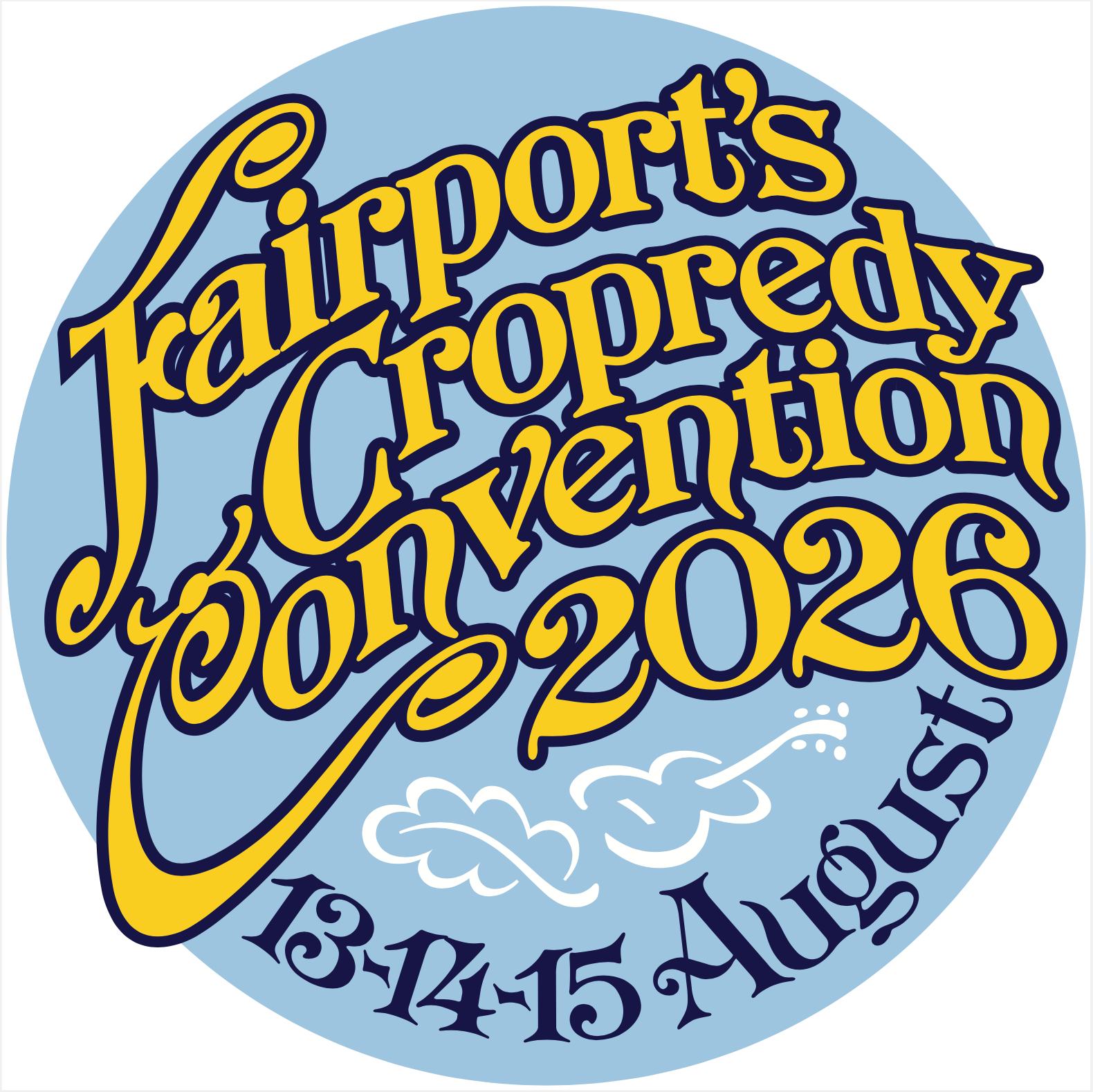
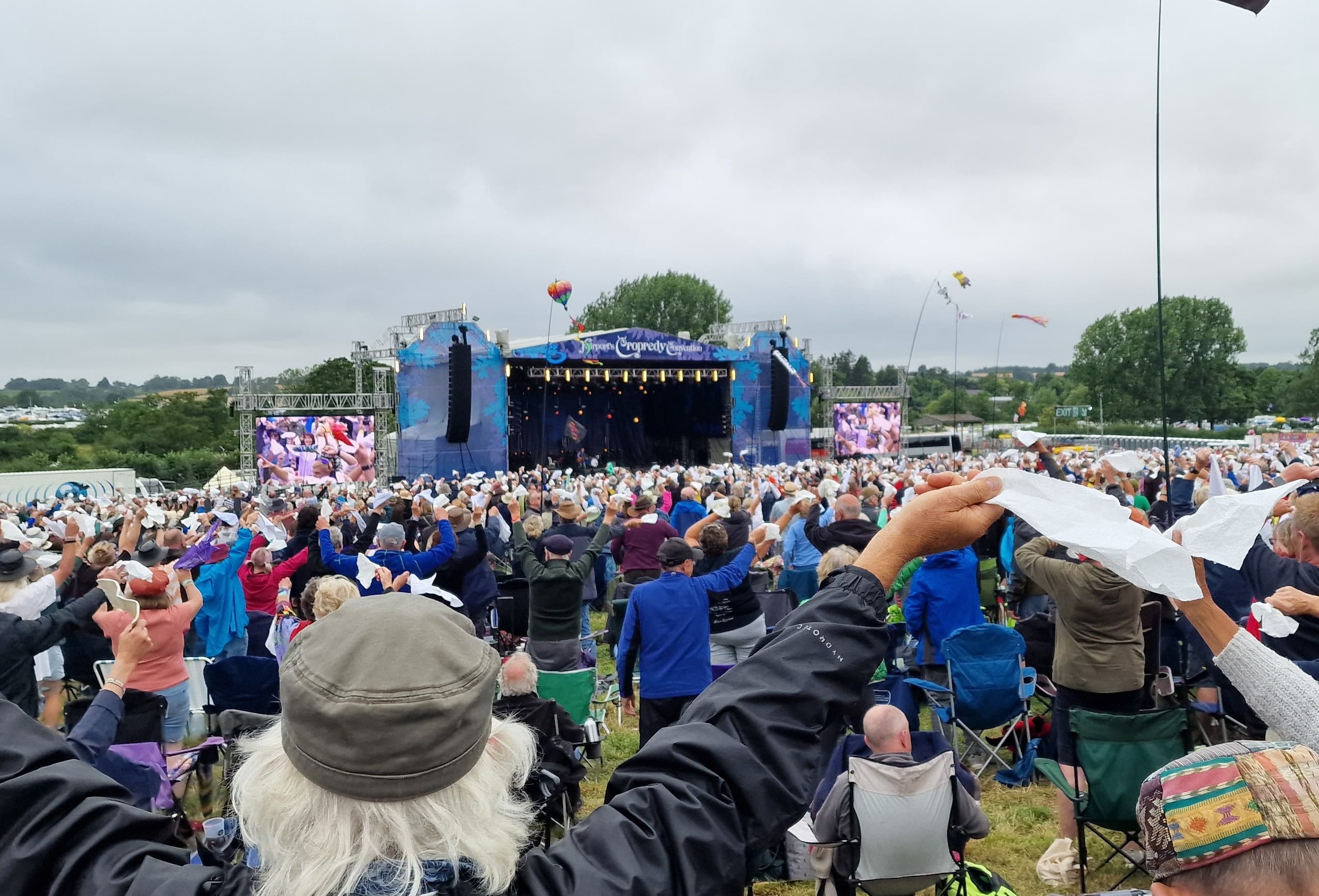
Well, I’ll also mention our wonderful Cropredy Festival, which is on the 13th, 14th and 15th of August. Great lineup. Again, look at the website for the details. But if I put the just headliners. A few bands, Le Vent du Nord on the Thursday night. They’re headlining, which will be fantastic. Turin Brakes that night as well. And we open up the afternoon. To anyone who hasn’t been to Cropredy, we do an acoustic spot when the festival opens just to welcome everyone onto the site, onto the field and then off it goes.
Friday night, I’m going to say Spooky Man’s Chorale. I’m going to say Braebach. I’m going to Celtic Social Club. Danny Bradley. Richard Thompson finishing off the night, together with Zara Phillips and, one of my favourite bands behind him, consisting of Simon Nicol, Dave Mattacks and Dave Pegg! That’ll be wonderful.
Fairport’s Cropredy Convention – Photo Credit: Simon Putman
And then on the Saturday I’m going to shout out Hayseed Dixie. Amazing mandolin player and incredible versions of modern music in a bluegrass heavy style. Fabulous. I’m going to mention Jerry Colvin Big Band. Will Pound. Jen Butterworth. And we’re going to finish off that night with some friends coming up to play with us. If you haven’t been before, it’s so friendly. It’s such a great site and it’s just the one stage so don’t miss anything. Fabulous stalls. Come along!
Wonderful. Well certainly, I’ll be there again. Hopefully, a weekend in the sun but not too hot.
The sun is booked! Whether it comes along is another thing but it’s booked!
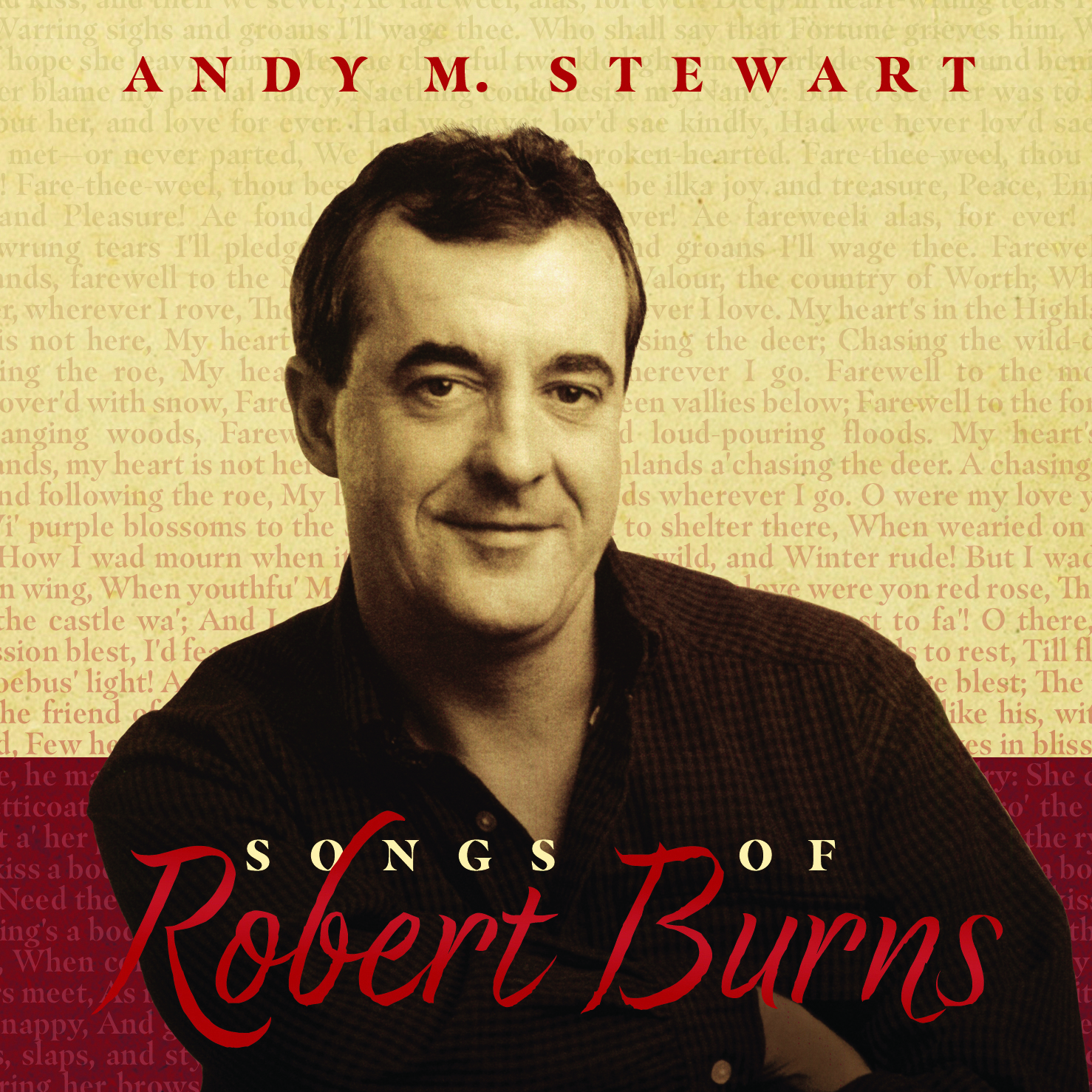
No, not the tartan-bedecked Andy Stewart of ‘Donald Where’s Your Troosers’ fame but Andy M. Stewart, former lead singer Scottish folk band, Silly Wizard, who went on to enjoy a successful solo career before succumbing to a tragic premature death in 2015.
A number of his self-penned songs have entered the folk canon and been widely performed by artists around the world but Stewart was also an adept interpreter of traditional material as well and was particularly fond of the work of Robert Burns.
Back in 1989, Stewart was approached by a German record label, Wundertute, to record an album of Burns’ songs. Accompanied by Mánus Lunny (guitar and bouzouki), Charlie McKerron (fiddle) and Donald Shaw (accordion and keyboards) the album proved to be a wonderful celebration of Scotland’s national bard but for one reason or another it suffered from a distinct lack of promotion at the time and failed to attract the attention it deserved. Now, almost four decades later, Stewart’s son, Donald, and his former Silly Wizard bandmate, Martin Hadden, have remastered the album and made it available through Hadden’s own Birnam CD enterprise.
This rediscovered lost gem is a genuinely delightful album. From the rousing rendition of ‘Rantin’ Rovin’ Robin’ which opens the album to the sombre beauty of ‘Green Grow the Rashes, O’ it’s a wonderful showcase for both Stewart’s extraordinary talent as an interpreter of traditional material and for Burns’ timeless genius as a poet and lyricist.
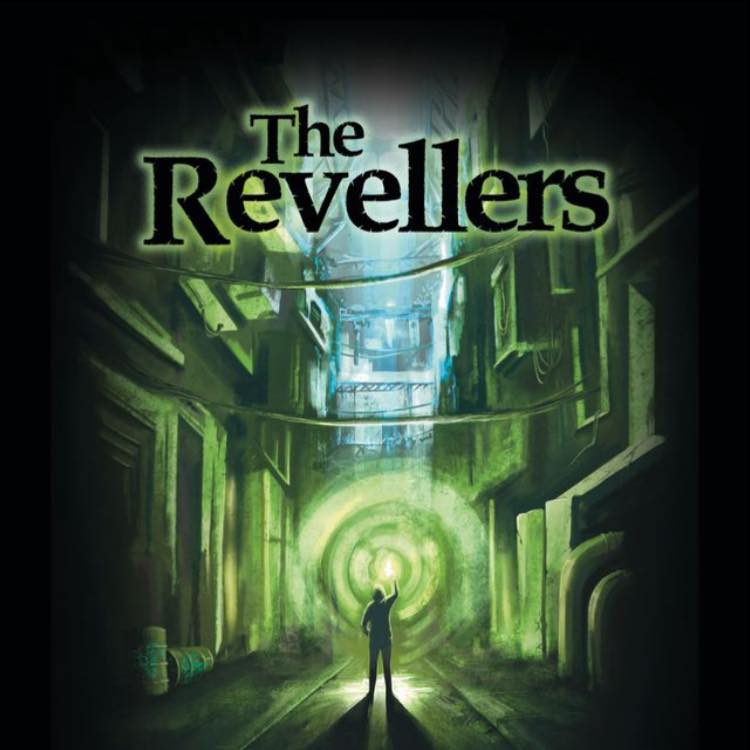
Following a gap of nine years since their previous release, popular Shetland indie folk rock band, The Revellers, are back with their third album, Reactors. The Revellers are Michael Anderson (lead guitar), Magnus Bradley (lead vocals, guitars), Daniel Gear (fiddle), John William Halcrow (drums, vocals), Erik Peterson (mandolin, vocals). Lewie Peterson (banjo, mandolin, tenor guitar, vocals) and Adam Priest (electric and double bass).
Often described as ‘heavy folk music’, The Revellers are seven musicians brought up on a typical millennial musical diet of alt rock, punk and metal that’s combined with a love and reverence for traditional music that’s an intrinsic part of any Shetland upbringing. The result is an explosive mix of soaring melodies, searing guitar riffs and energetic fiddle, mandolin and banjo.
From reflections on the challenges and contradictions of modern life (‘The Reflector’) to standing up for what’s right (‘Stand Up and Fight’) there are themes that wouldn’t be out of place on any typical indie rock album, but this being a band with traditional influences at its heart there’s also material like a reworking of Rhoda Butler’s poem ‘Clearances’ in the Shetland dialect and the song ‘Republic of Vinland’ which celebrates Shetland’s Norse heritage.
An album fizzing with energy and verve, it’s one that will appeal to ardent rock fans as much as dedicated folkies. Highly recommended.
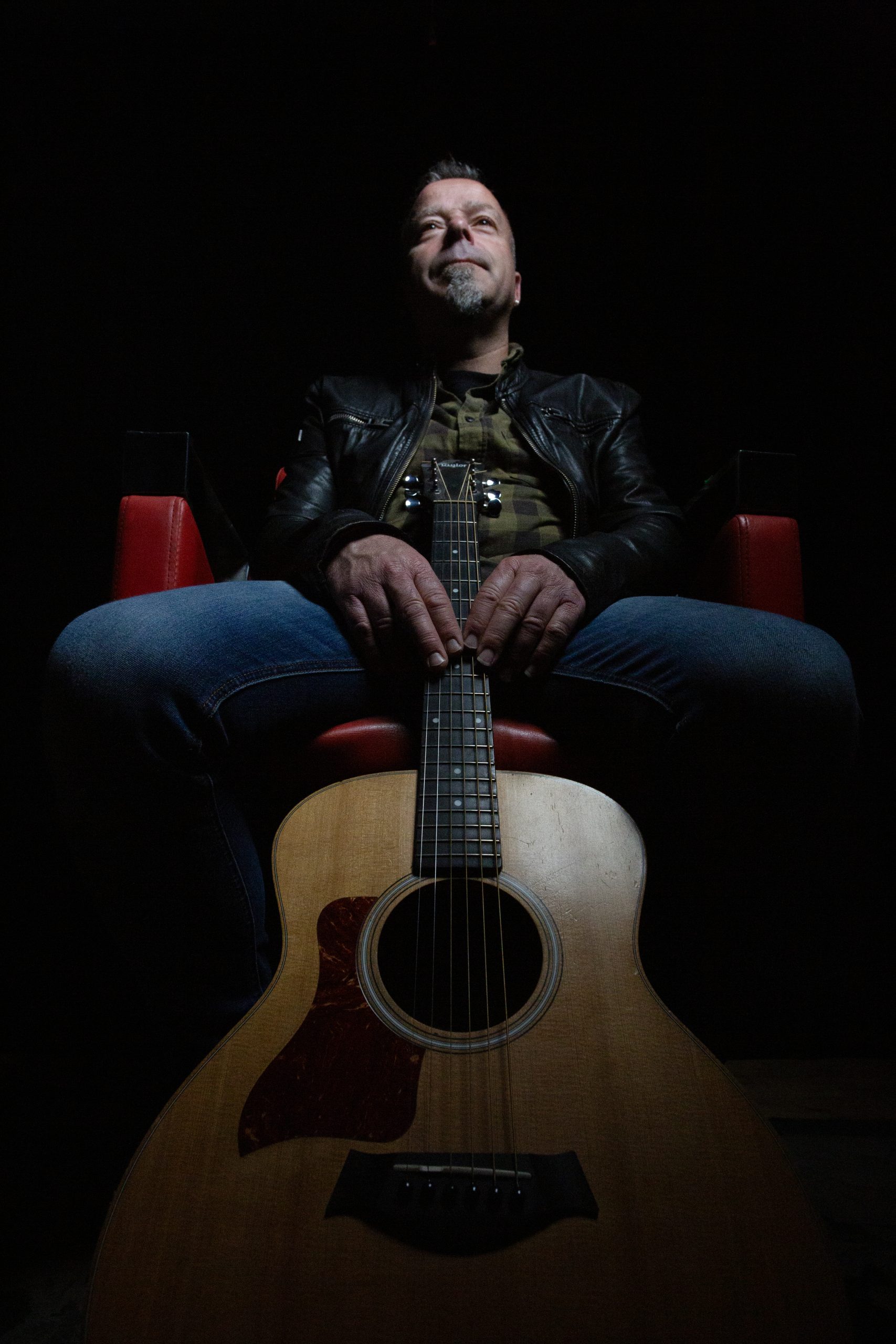
Stuart ‘Mick’ Macfarlane is a Scottish singer, songwriter and guitarist based in the Glasgow area. He has performed his folk-flavoured acoustic songs across Scotland, holding long-running residencies at venues including Jinty McGuinty’s in Glasgow and The Drovers Inn near Loch Lomond. Alongside his solo achievements, Macfarlane is a core creative force in Glasgow’s respected progressive rock band, Abel Ganz. His song ‘Thank You’, featuring special guest performances by Runrig’s Malcolm Jones and Fairport Convention’s Jerry Donahue on the group’s acclaimed self-titled album, has become an enduring live favourite among audiences.
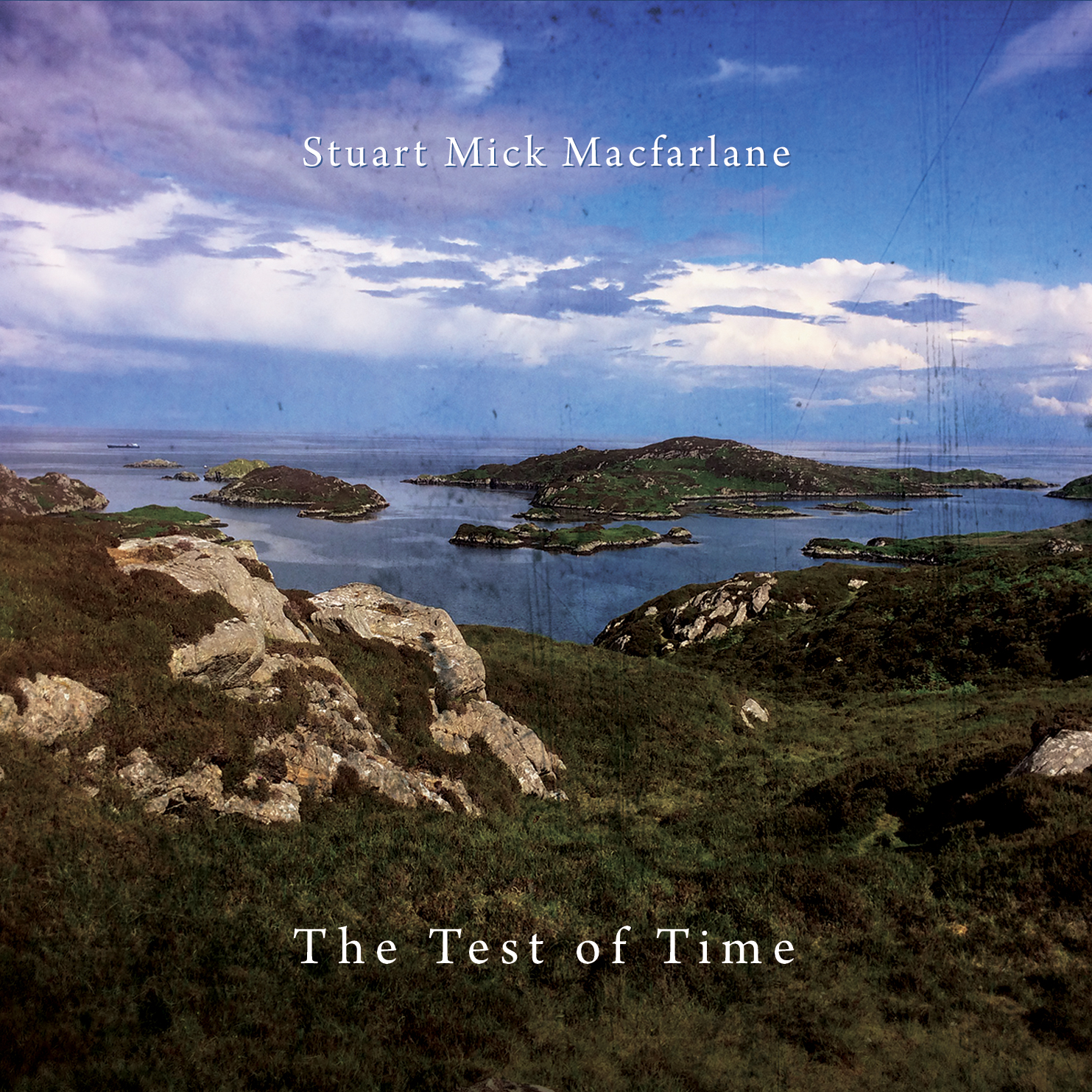
Although Macfarlane’s compositions have frequently been covered by other artists, The Test of Time is his first solo album to receive a commercial release.
Stuart ‘Mick’ Macfarlane: “These songs mean so much to me. I’m delighted this album is finally out. I hope they resonate with people on an emotional level, as they’re all honest and heartfelt pieces of music that I’m very proud of.”
The themes explored on the album range from the highly personal to themes around environmental degradation and homelessness, and draw on traditional Scottish folk, classic singer-songwriter and progressive rock influences.
Beautifully produced by long-time collaborator, Colin Johnson, at Glasgow’s Audio Lounge, the album features Macfalrlane on electric and acoustic guitars and vocals, Johnson on drums, Fiona Cuthill on fiddle, Stevie Lawrence on bouzouki and percussion, and a special guest vocal appearance from Macfarlane’s own daughter, Ceitidh, on the title track.
Showcasing some fine songwriting, lovely melodies and thought-provoking themes, The Test of Time is an engaging album that’s worth checking out.
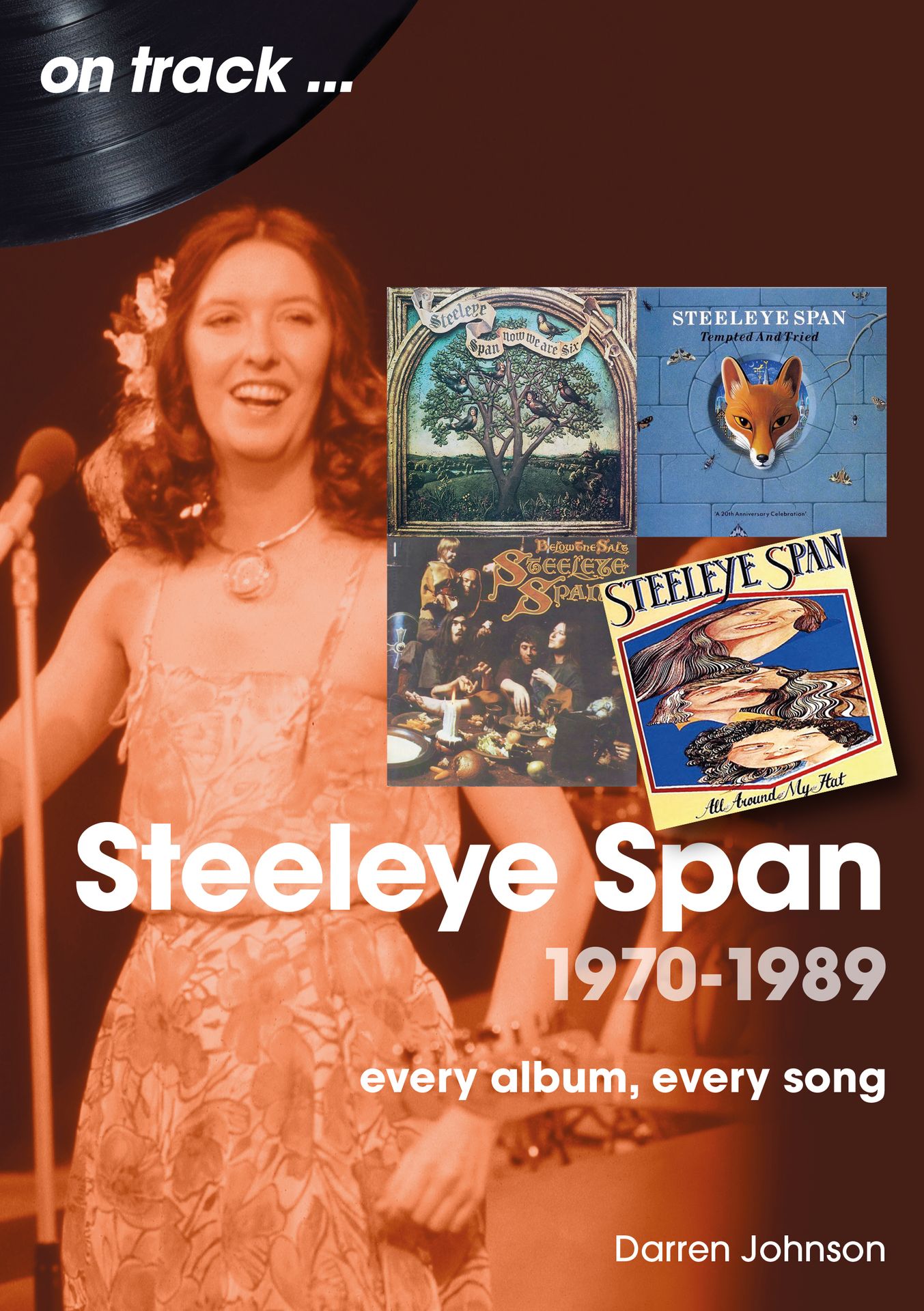
Following my ‘glam rock trilogy’ on Slade, Sweet and Suzi Quatro, my fourth book for Sonicbond Publishing came out in August 2025: Steeleye Span 1970-1989 On Track: Every Album, Every Song. I’ve been really heartened by the enthusiastic responses from readers so far (reaching Number 2 on Amazon’s Music Encyclopaedias Chart) and the many kind words from reviewers.
Darren Johnson
“Both satisfying and engrossing, what should’ve been a simple task to read and comment on, became a series of rabbit holes, as songs and entire albums had to be revisited or indeed investigated. Both for the purposes of research and pure enjoyment, as well as a degree of nostalgia.”Folk North West (read full review here)
“Darren Johnson has done a remarkable job in squeezing the details of fourteen albums into this slim volume” “Johnson’s research is thorough”RnR magazine
“I hadn’t heard some of these records for a very long time, but this deep dive into the band, their music and indeed the history behind some of the traditional songs they performed, caused me to listen again with fresh ears. Check it out if ‘The Span’ or indeed folk rock in general are your thing.” The Afterword (read full review here)
“The book though is very fair in recognizing it’s sources. It brings together a lot of info into a well written book – definitely recommended!” A Celebration of Steeleye Span (read full review here)
Steeleye Span 1970-1989 On Track can be purchased via Amazonhere as well as most other major book-sellers. And via the publisher’s own online shop at Burning Shedhere
The exotically-titled Metagama Ensemble take their name from the SS Metagama, a ship whose voyage across the Atlantic in the 1920s, marked the beginning of a mass emigration scheme from the Hebrides to Canada.
The Metagama Ensemble explain the aim of Metagama: An Atlantic Odyssey as follows:
“Movingly commemorating and celebrating the lives of the young emigrants, from the heartache of homesickness and separation, the emotional poignancy of tragedy and loss, to the lively fun of cèilidh tunes on the dance floors of North America, this album gives voice to the experiences of those who left and those who were left behind, telling the story of an important but little-known period in Hebridean history, the devastating impact of which is still felt in the islands today.”
Originally conceived as a live show, Atlantic Odyssey began life as a Creative Scotland-supported tour of the Highlands and Islands in 2023. Since then, the Metagama Ensemble project has grown exponentially. Interest in the project and the stories around the mass emigration, has been widespread, with capacity audiences throughout the tour, followed by a sell-out show at Celtic Connections in 2024.
Countless requests for a recording of the concert prompted the Ensemble to release an album. It was recorded in Black Bay Studio on Great Bernera and in The Wee Studio on the Isle of Lewis, while also including several live tracks from Celtic Connections and Eden Court Theatre.
Across thirty-six tracks, a mixture of traditional Gaelic songs, brand-new songs performed by the ensemble in English, original instrumental pieces and spoken-word segments, the album features writer and poet, Donald S Murray; pianist/singer-songwriter, Liza Mulholland; Gaelic actor and 7:84 Theatre Company co-founding performer, Dolina MacLennan; Gaelic singer and piper, Calum Alex Macmillan; fiddler, Charlie Mackerron; singer-songwriter, Willie Campbell; and cellist Christine Hanson.
Poignantly commemorating the lives of the Hebridean migrants and of those left behind, Metagama: An Atlantic Odyssey is a gripping collection of beautifully-performed music and compelling storytelling.
Dubbed a ‘banjo bromance’ following two highly successful albums, Damien O’Kane and Ron Block are now back with a third.
The pair’s USP is all about fusing the equally distinctive sounds of the five-string banjo (that highly rhythmic sound prominent in American bluegrass) and the tenor banjo (heard in countless renditions of traditional Irish jigs and reels).
Northern-Ireland born Damien O’Kane (with an enviable CV as a musician working in the traditional sphere and husband of folk singer Kate Rusby) plays the latter; while California-born Ron Block (with a slew of Grammy awards and best known for his work with Alison Kraus & Union Station) plays the former.
As with the previous Banjophonics album released in 2022 (reviewed here), Banjovial is a mainly instrumental album that showcases their unique and highly infectious style across an array of equally inventive tunes.
The duo don’t write together. Each of the tunes on the album are written by one or the other but the individual labours of each are often paired together in some imaginative tune-sets. Block’s beautifully mellow ‘Shabby and Cookie’, for example, (inspired by a couple of easy-going black cats who showed up when his children were young) is coupled with O’Kane’s much more frenetic ‘St. Patrick’s Day’ (so titled because he wrote it on St. Patrick’s Day).
Both Block and O’Kane also contribute a song a piece, with Block taking lead vocal on the genuinely lovely ‘Love Is Like That’ – written as a tribute to his mother; and O’Kane taking the lead on ‘The Loudest Word’ – a charming paean to the power of music and kindness.
As with its two predecessors, Banjovial showcases stunningly adept musicianship, both from the two main protagonists with their respective banjos, and from the talented cast of long-time collaborators and special guests. Yet again, they take us on a captivating journey across a range of musical styles, moods and tempos, proving once more that the humble banjo continues to attain new heights of cool in the hands of these two.
Two Boats Under the Moon is the solo song debut of Scottish musician and musical instrument inventor and builder, Donald WG Lindsay.
Writing in the accompanying album notes, the Scottish folk musician Alasdair Roberts observes:
“Donald WG Lindsay is rightly renowned as a piper of considerable skill, and many will be aware of his innovative work as the inventor of the novel extended-range chanter system which bears his name. However what many piping aficionados (as well as more general listeners) might not know is that he is also a very fine singer, guitarist and writer of songs.”
“It might seem confounding that it’s taken Donald until now, in his late forties, to release his first full-length album of songs (following the 2003 Album of pipe tunes To the Drum of the Sea). But he’s a careful, patient man; one surmises that he’s been quietly and diligently serving out a very thorough apprenticeship, emerging when he feels the time is right as a fully-formed master craftsman. And, as if making up for lost time, he’s generously bestowed upon the world a long-awaited double album, spanning some ninety-one minutes over fourteen tracks.”
Two Boats Under the Moon is a two-disc collection of 14 live-in-the-studio recordings, made during December 2024 at Watercolour Music in Ardgour, in the Scottish Highlands.Lindsay sings, plays guitar, and plays on his own Lindsay System Scottish smallpipes. Roo Geddes plays fiddle, and on three numbers, piano.
The first disc is themed as a disc of original songs, including ‘Casuarina’ inspired by the casuarina trees Lindsay encountered during his three-year stay on Ascension Island in the South Atlantic. They are also known as the whistling tree, after the distinctive shushing or whispering sound made by its pines when even a light breeze blows through them. The title track ‘Two Boats Under the Moon‘ is another song Lindsay wrote during his stay on Ascension Island. This first disc also includes a setting of a Scots poem by Vale of Leven poet Hugh Caldwell to an original tune he wrote a few years ago, and a rendition of a little-sung number by Allan Ramsay ‘An Thou Were My Ain Thing’.
The second disc is themed as a disc of traditional, mainly Scots, songs from a variety of sources and directions. These are songs that have held their seat in Lindsay’s repertoire for many years – in most cases for many decades. This second disc also includes two instrumental sets, pairing Roo’s fiddle with Donald’s Bb Lindsay System Scottish smallpipes.
Released back in May, the album has received numerous plaudits from reviewers as well as attracting warm reactions from fellow musicians as diverse as singer-songwriter, Tom Brosseau; piper and composer, Matthew Welch; and rock and roll legend, Iggy Pop.
With a voice rich in character, poignant songwriting and inspired interpretations of traditional material, Donald WG Lindsay’s Two Boats Under The Moon is a delightful album with beautifully-evocative musical accompaniment.
After twelve years performing together and five extremely well-received studio albums, the folk duo Ninebarrow revisit some favourite songs with reworkings of material from their back catalogue. All of the key components you would expect from a Ninebarrow release are present and correct here: the lovely vocal harmonies of Jon Whitley and Jay LaBouchardiere, the intuitive connection to the natural world around us and the innovative adaptation of traditional material combined with compelling original songwriting.
However, the extra magical ingredient that is sprinkled throughout this collection are the stunning choral accompaniments, with Whitley’s and LaBouchardiere’s own harmony vocals joined by over forty others, courtesy of two locally-based choirs: Hart Voices from Hampshire and Chantry Singers from Surrey.
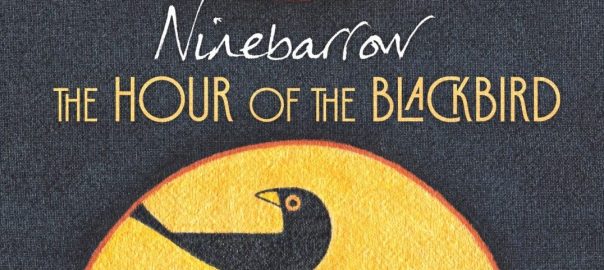
The genesis of the project can be traced back to the Covid lockdown, when the moratorium on live performances gave rise to a plethora of online concerts, Zoom choirs and sundry charity fundraising singles, the latter ranging in quality from the genuinely breath-taking to the frankly bizarre. But while we can safely assume that few people now sit at home listening to Captain Tom’s rendition of ‘You’ll Never Walk Alone’, Ninebarrow’s own charity single for MIND, ‘The Hour of the Blackbird’, certainly does stand up artistically. What’s more, it convinced the duo that there was further mileage yet in such an approach.
Jay LaBouchardiere:“The response to that blew us away with people making donations from all over the world and we thought if one song can sound this good recorded through phones and laptops imagine what a studio collaboration could sound like.”
The result is simply stunning, with the thirteen tracks on The Hour of the Blackbird showcasing some truly spellbinding choral arrangements which take Ninebarrow’s elegant, understated, trademark magic to new heights. From the ethereal qualities of ‘Names In The Sky’ to the heart-warming optimism of the title track to the jaunty defiance of live favourite ‘The Weeds’, to the fresh take on folk perennial ‘John Barleycorn’, there’s plenty to marvel at here. A wonderfully uplifting album.









 Darren's music blog