Category Archives: Rock music

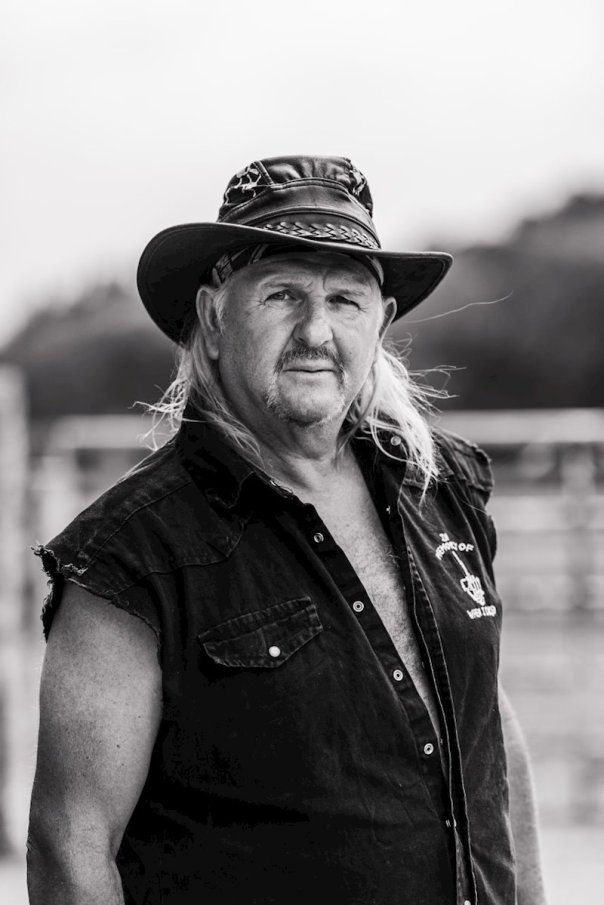
Interview with former UFO bass supremo Pete Way

This interview was published by Get Ready to Rock here

It wasn’t that long ago that the only news we’d be reading about Pete Way was in connection with his various ongoing health battles. But now, following a well-publicised autobiography in 2017, he’s back on the road performing. A UK tour begins later this month and a new album ‘Walking On The Edge’ is due out at the end of January. Always a charismatic stage presence in his UFO days (the archetypal motionless bass-player mode was never one for him) one of rock’s most colourful characters and, improbably, one of the great survivors of to-the-limits rock ‘n’ roll excess is now back as front-man of his own Pete Way Band.

What can fans expect from the tour?

Wild rock – with a couple of ballads. For the shows there’s stuff from the album, stuff from The Plot – the album with Michael Schenker, there’s the Amphetamine album, I do a little bit from Waysted and I do the obvious songs, the ones that everyone remembers, from UFO. You know people buy a ticket and they want them. I was talking to Phil (Mogg) recently and he said the same: ‘you have to do them’.

Out of all the classics that you had a hand in for UFO which are the ones you are most proud of?

Oh that’s difficult to say really. We do ‘Shoot Shoot’. We do ‘Too Hot to Handle’, ‘Doctor Doctor’…

And so you’ve been getting a good response from audiences so far then?

Oh incredibly so, yes. I mean we go out of our way to do that. There’s no indulgent excess but people come along for a guitar show. I mean there’s a lot of lead guitar. Playing in UFO or Waysted there was also a lot of guitar. The thing is there’s nothing too egotistical. We just play the songs.

Do you play bass throughout the show or is it just certain songs?

Here and there. I could be 100% vocals or I could be 100% bass and get another singer in. But, you know, I wrote all the words when I wrote these songs. Apart from, obviously, the UFO songs where it was with Phil. You would have to give Phil a very precise melody and he would write the words as he saw it to fit – but I would give Phil the melody.

On the tour you have Burnt Out Wreck supporting you – another band with musician- turned-frontman in the form of former Heavy Pettin drummer, Gary Moat.

Yeah Gary is very talented. I mean, yes, I see the AC/DC influence but they write all their own songs. They compliment what we do. All my songs are about my experiences in life which is a bit like something from a Quentin Tarantino film. They balance that out with what they do.

You’re clearly still in touch with Phil. Could you imagine sharing a stage with UFO now?

Nah. My main focus now is on vocals. Everybody says to me you’ve got character in your voice and, you know, it seems to work so I’ve got to get on with it. My heroes are not the vocalists who sound like opera singers. They are people like Bon Scott and Bob Dylan.

Your autobiography ‘A Fast Ride Out of Here’ in many ways is that familiar tale of middle-class suburban kid becoming wild rock star. But the wildness started fairly early on didn’t it? You say in the book you first smoked heroin at 13, for example.

When I first met Phil I was, like, 15. The people we hung out with were the people who were older. It’s like David Bowie said – we did things that other people thought incongruous. But I felt comfortable in that role and in going into things with that attitude to life. But, of course, the icing on the cake was actually getting to America. Suddenly, we’d got money, you know. But we were professional in that we always gave a good show. Because if you’re in a shambles it’s always easy to mess up. But we were totally focused on the show and it was only afterwards when we’d get fucked up. It really was a journey. I could blow half a million in a year but, you know, we always gave a good show.

In your book Joe Elliott of Def Leppard is quoted as saying: “If you threw Keith Richards and Ronnie Wood in a bucket and mixed them up you’d end up with Pete.” Is that a fairly accurate description of you?

Oh, Joe and I go back a very long way. Myself and Ross Halfin are always having a bit of a laugh at Joe and, you know, he would say anything about people to go (adopts mock Yorkshire accent) ‘I’ll fucking get him back for that’.

After all the health battles you went through: addiction, cancer, heart attacks – there must have been times when you thought you wouldn’t be performing on stage again. What does it feel like to be out on the road again?

Great. It was three or four minor heart attacks but the prostrate cancer was the main thing. And you don’t know you’re ill until you find out from a professional. For me if I was feeling a bit under the weather I’d just have another drink or do another line or something but it gets to that point where you have to get checked out. It took me a long time to grow up. I still haven’t really grown up. And so it was a health battle of my own making. And now, ironically, I have to take medication because of all the drugs I used to take. But I’ve written some good songs and I’m looking forward to getting the album out there and getting out there with the show.

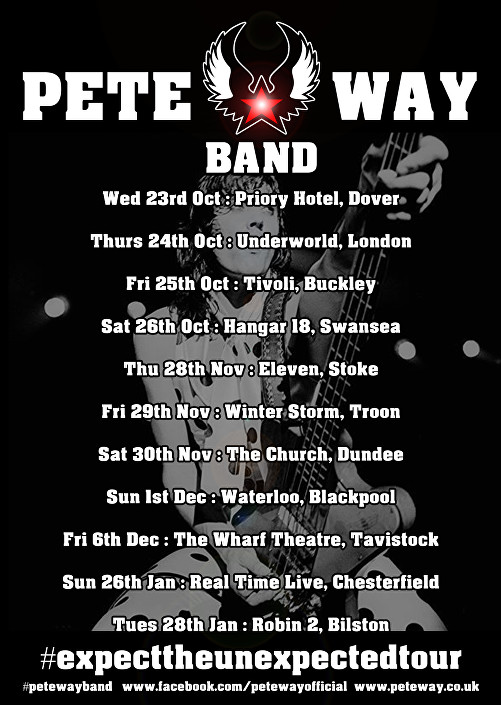
The Pete Way Band’s #ExpectTheUnexpected UK tour begins on October 23rd. Full tour dates here: http://www.peteway.co.uk/tour-dates/4594565419

4636473938_501x705

Related posts:

Review: UFO at Shepherds Bush Empire 2018

Review: Michael Schenker at Shepherds Bush Empire 2017

News: All change at The Sweet

Vocalist/multi-instrumentalist, Tony O’Hora, has left The Sweet. In a statement put out by the band on social media the musician is said to have left for “personal family reasons”. Led by Andy Scott, one of the two surviving members of the classic-era foursome, the band’s line-up had been stable for a  good number of years and attracted many favourable reviews for the sheer professionalism and quality of their live shows. However, lead singer/bass-player, Pete Lincoln, left earlier in the year and is now followed by O’Hora. Old Sweet hand, Steve Mann, is stepping in once again to assist the band on their remaining 2019 dates. Lee Small comes in as a permanent member playing bass.

The band’s full statement is reproduced here:

“Tony has left Sweet. A month ago Tony handed in his notice to quit Sweet citing personal family reasons. We were unsure how to deal with his request as it had happened previously. This time however it was serious and though difficult, we have had to make changes to move forward. We respect his decision and wish him well for the future. So with the future in mind I can now reveal how the band will look going forwards to 2020. Let me start by saying that having to replace two members in quick succession is not something I would recommend to anyone but it gives one great satisfaction when it comes together. Steve Mann will be rejoining Sweet for all dates in November and December including the “Still Got the Rock Tour UK”. Our last show in Kelbra in September featured Steve and it was brilliant to have him on stage with us again. Our “newbie” is Lee Small. He will play bass and add another brilliant voice to the band. To say I am very pleased is an understatement. Paul Manzi will now be the Frontman, lead vocals and occasional guitar. Anyone who saw us perform at Kelbra will have seen him in full flow. So there it is – Sweet – looking forward to the future and seeing you at one of the 34 shows in November and December. Not forgetting our Australian fraternity and our upcoming appearance on Rock the Boat 2019 departing Sydney 19th October.”

I’ll be catching the band on their 2019 UK winter tour – watch this space for a review.

15665419_1172245969537558_7242702935148297652_n

Tony O’Hora (right) with Andy Scott (left)

Related posts:

Interview with Andy Scott
Sweet 50th anniversary concert in Berlin
Sweet in London and Bilston 2017
The Sweet versus Bowie: the riff in Blockbuster and Jean Genie

Folk-rock: DVD review – Merry Hell ‘A Year In The Life of Merry Hell’

Evolving out of an ad-hoc reunion of 90s folk-punk band, the Tansads, Wigan-based folk rockers, Merry Hell, have been making a decisive impact on the UK’s folk and festival scene over the past nine years. With several albums under their belt they now come at us with a DVD. Titled ‘A Year In The Life of Merry Hell’ it’s a documentary that follows the band between February 2018 and February 2019 – and when we say documentary it is very much a carefully-crafted film worthy of the name rather than a video of concert footage with a few dressing room interviews tacked on to the end.

Made by the band themselves and produced, directed, filmed and edited by Merry Hell fiddle player, Neil McCartney, it’s a fascinating insight into this tightly-knit band of close family members and long-term friends.

We see the band on the road – at festivals and backstage at various venues – but we also see individual members at home, in pubs or visiting some of their favourite places. We get to hear about musical influences (punk, Susan Vega, Nick Drake and hymn melodies…) but we also get to hear about literary influences, too. Orwell looms large, and not just for Wigan Pier, either.

Engaging, funny, moving, and highly personal, as band documentaries go ‘A Year In The Life of Merry Hell’ stands head and shoulders above many films about far, far more famous musicians. In fact, I’d go so far as saying that even if you’d never heard of Merry Hell and you had zero interest in folk rock, this documentary would still be compulsive viewing for the warm and very human portrayal of its subject matter.

Released: September 2019 

http://www.merryhell.co.uk/

documentary-cover

Related reviews:

Album review: Merry Hell ‘Anthems To The Wind’

EP review: Merry Hell ‘Bury Me Naked’

EP review: Merry Hell ‘Come On England!’


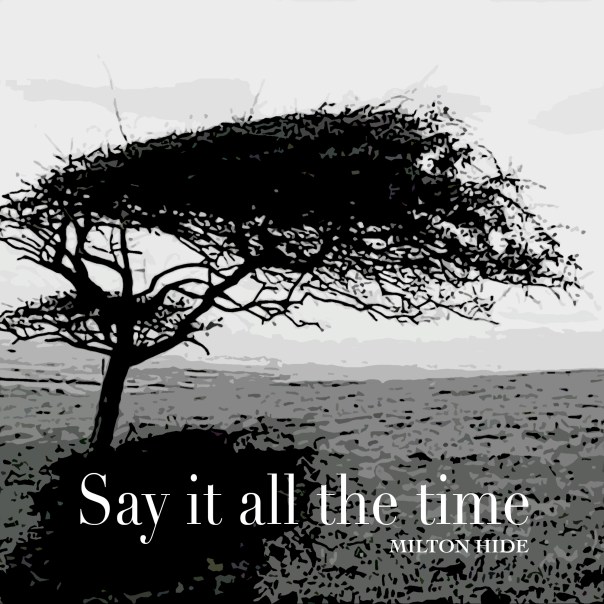
News: ‘Say It All The Time’ – East Sussex duo Milton Hide release fund-raising single to raise awareness of male suicide

Released: 10th October 2019 (World Mental Health Day) in digital formats

Prompted by a bleak mood that came over him during a walk on the South Downs one day and the subsequent death of a musician friend who had tragically taken his own life, East Sussex-based singer-songwriter, Jim Tipler, was inspired to write a song putting all those feelings into words. Recording it with his wife and musical partner, Josie, the duo joined forces with acclaimed producer and musician, John Fowler, and talented local film-maker, Alex Thomas. Proceeds from sales of the single will go to CALM – the Campaign Against Living Miserably. CALM is leading a movement against suicide, the single biggest killer of men under 45 in the UK. They run a confidential advice line seven days a week.

Milton Hyde’s Jim Tipler comments:
“The inspiration for Say It All The Time was in fact a short film called ‘Black Tuesday’ which I made for a competition entry a couple of years ago. It was a three-minute long movie of a walk on the South Downs. I was in a very bleak mood and I just started filming what I saw and then came up with a script. I’ve never felt ‘suicidal’ but on that day, for no apparent reason, my mood was very dark. I don’t usually write songs about feelings. They tend to be more kind of story or situation-based but the lyrics of this song tie in quite closely with the script of the movie and speak of how many of us, particularly men, hide our feelings, when actually the ‘brave’ thing to do is to share them. I came up with the idea for turning the script into a song shortly after the shocking news that a fellow musician and friend that I had only recently got to know had taken his own life. This was only a few months after a member of my extended family had done the same.”

“I’m really hoping the record and video boost awareness of what can only be described as an epidemic of male suicide and will maybe raise some money towards running a helpline that could save a life or make life a little more bearable for those who have lost loved ones this way. CALM seemed like a great fit. Josie, my wife and bandmate, and I have three grown-up sons so we are only too painfully aware of the terrible statistics around male suicide.”

Simon Gunning, CEO of the Campaign Against Living Miserably (CALM), said:
“As an organisation that has always worked closely with the music community, we’re delighted that Milton Hide have chosen to support CALM with their new single. Music can be a powerful forum for conversation and expression, so it’s great to see the band sharing such a positive message and using their platform to raise awareness of the issue of suicide and of the services that are available to anyone who may be going through a tough time.”

Reflecting on the process of recording the song and filming the accompanying video, Jim, comments:
“John Fowler’s treatment of the song is incredible. He is such an amazing musician and producer. He discussed what he wanted to do with it in terms of giving it an epic sound whilst retaining the dreamy ethereal quality of Josie’s voice. He did most of the instrumentation, with me doing my acoustic guitar thing and backing vocals. those people that have heard Milton Hide before might be a little surprised but we are so excited by what he’s achieved. Independently of that, a talented film-maker friend of ours, Alex Thomas, said he really wanted to do a video of it. We thought it churlish to refuse both of these generous offers and thought that we could repay that generosity by helping a charity. We roped in loads of mates to help depict a party scene where the host is the centre of attention but feels isolated. A brilliant way of showing the loneliness we can all experience in a crowd.”

Information about CALM (Campaign Against Living Miserably) can be found at: https://www.thecalmzone.net/

Milton Hide is Jim Tipler and Josie Tipler

Website: https://www.miltonhide.com

Say It All The Time cover image

Live review: Slade at Concorde 2, Brighton 21/9/19

Put together in the early 90s following the demise of the original band, Dave Hill and Don Powell’s version of Slade has now been around even longer than the twenty-five years that the classic Noddy Holder-fronted line-up managed. The band are at Brighton’s Concorde 2 for a rescheduled date following a cancellation last Christmas when drummer, Don Powell, was hospitalised after his legs gave way and both tendons snapped.

Since their last gig at this venue in 2016 there’s been a few changes. Don Powell is absent tonight. He’s making a good recovery, Dave Hill tells us, but is still under doctor’s orders not to resume work behind the drum-kit just yet. Stand-in drummer, Alex, does an admirable job filling in. The more lasting change, however, is that former lead singer and rhythm guitarist, Mal McNulty, has gone – to be replaced by keyboard player/vocalist, Russell Keefe. This has had a significant impact on the band’s sound and set-list.

On the plus-side it means that several of the hit singles that were built around Jim Lea’s piano-playing can be performed in a way that’s a far closer approximation to the original recordings. The likes of ‘Look Wot You Dun’, My Friend Stan’, ‘Everyday’ and ‘My Oh My’ do sound far, far better on stage with keyboards. On the minus side Keefe is really not a very appealing singer at all. Noddy Holder had a famously gravelly vocal delivery but there was a warmth to Holder’s voice and there was a fantastic range. Keefe’s voice is gravelly alright but has none of the latter and very little of the former.

The good news, however, is that Keefe only performs lead vocals for around half the set. Bass-player, John Berry, whose vocals began taking on a more prominent role in Slade’s stage-set during the latter period of McNulty’s years, takes lead vocals on many of the slower numbers. Keefe, meanwhile, is left to murder the out and out rockers, singing on the likes of ‘Gudbuy ‘T Jane’, ‘Bangin’ Man’ and ‘Get Down and Get With It’. My advice to Dave Hill is this: get John Berry doing vocals on everything. He’s got a great voice, he’s been a loyal member of the band for a good number of years now and while he never pretends to sound like Noddy Holder he’s got an authentic delivery and a passion to his vocals that suits Slade’s style.

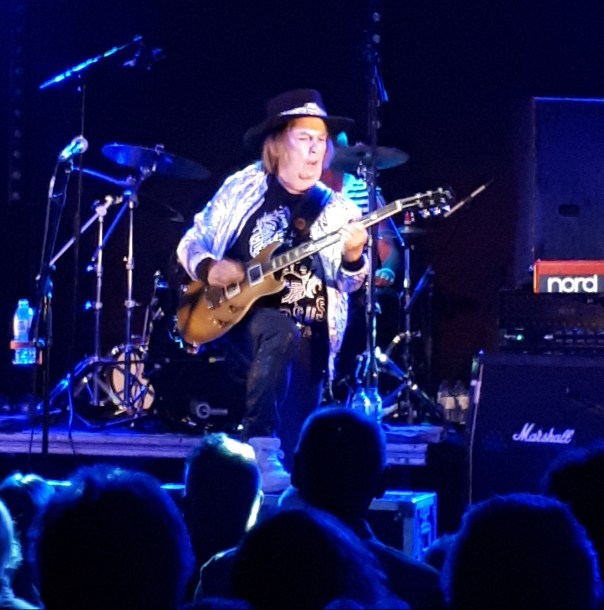
Dave Hill is, of course, Dave Hill. Eccentrically-dressed as ever: a diminutive figure bouncing all over the stage, delivering the familiar solos and holding the whole thing together. The crowd respond accordingly. Both he and they genuinely look to be having a really great time. I am delighted he’s still out on the road and still giving his all to Slade. Hopefully, both Dave Hill and a returning Don Powell have a few more years of Slade left in them yet. I do just hope that they get to rethink the situation with the vocals somewhat.

https://www.slade.uk.com/

20190921_203716.jpg

Related posts:

Jim Lea For One Night Only – At The Robin
Interview with Jim Lea
Slade at Donnington 1981
Slade, strikes and the three-day week: the greatest Christmas record ever made
Slade at White Rock Theatre, Hastings 2015
Giants of Rock, Minehead 26-29 January 2018

Live review: Justin Hayward at De La Warr Pavilion, Bexhill 18/9/19

Strolling along the seafront earlier this summer I spot a poster advertising a Moody Blues tribute band at Hastings’ White Rock Theatre and a few paces along I spot another poster advertising Justin Hayward doing a solo gig at Bexhill’s De La Warr Pavilion. Hmm a difficult one – £22.50 for a tribute or £39.50 for the lead singer of the real thing. Unsurprisingly, I forked out the extra seventeen quid and plumped for the latter.

It’s a stripped-down but not quite acoustic set from My Hayward tonight. With the man himself on vocals and guitar he’s accompanied by young guitar virtuoso, Mike Dawes, keyboard player, Julie Raggins, and flautist, Karmen Gould. Hayward’s voice is a deeper register than the one we know on the classic recordings but it’s still in very, very good shape and still instantly recognisable.

At one point in the proceedings he talks about being haunted by a ghost – the ghost of Justin Hayward, young singer of the Moody Blues between 1967-1973 – as he contends that every media interview he does, after a few pleasantries about what he’s up to these days, immediately moves on to extensive questioning about what exactly was going through his mind in great detail at very precise moments during those heyday years. A cardboard cut-out of the young ‘ghost’ in question is brought on stage to emphasise the point. Though Hayward confesses he struggles to recall much of the period, it doesn’t stop him from giving us a few choice anecdotes. And of course, it doesn’t stop him from delivering some gorgeous versions of many of those classic songs. This ‘All The Way Tour’ promised an extensive look-back at Hayward’s back catalogue and, indeed, delivers.

‘Tuesday Afternoon’, ‘Voices In The Sky’ and, of course, ‘Nights in White Satin’ among many others from the Moody Blues catalogue, ‘Who Are You Now?’ from his recording work with John Lodge, not to mention ‘Forever Autumn’ from Jeff Wayne’s War of the Worlds. Even in more stripped-back mode without a full electric rock band behind them the songs are still lush and beautiful and highlight what a fearsomely talented song-writer Hayward is.

Coming back on stage for an encore he picks up his red electric for a wondrous rendition of ‘Blue Guitar’. It’s back to the acoustic for ‘The Story In Your Eyes’ and ‘I know You’re Out There Somewhere’ and Hayward and his band-mates leave the stage to rapturous applause.

Set-list:

Who Are You Now?
Dawning Is the Day
Tuesday Afternoon
Voices in the Sky
The Actor
Are You Sitting Comfortably?
Haunted
The Western Sky
Forever Autumn
Never Comes the Day
Your Wildest Dreams
Question
Nights in White Satin
Blue Guitar
The Story in Your Eyes
I Know You’re Out There Somewhere

http://www.justinhayward.com/

Hard rock: album review – Big River ‘Redemption’

It’s been a long time coming and they’ve whetted our appetite with a handful of singles along the way but Kent-based hard rock outfit Big River have finally released their debut album.

Meaty guitar, soulful vocals, catchy hooks, great solos and chugging rhythm, not to mention some nice touches of harmonica, Redemption has a pleasingly retro feel to it with echoes of some of the great hard rock albums of the early to mid 70s.

Recorded over a two-year period at Rochester’s Ranscombe Studios in Kent under the guidance of producer Jim Riley, close to thirty songs were written for the album but they’ve narrowed it down to nine (ten if you buy the CD which includes a bonus track). Stand-out tracks include Blues Blood Baby, ‘Hometown Hustler’ and ‘Blackened Rain’ – all previously released as singles – alongside the anthemic ‘You Are My Sun’ and the soulful ‘Who Do You Want Me to Be’.

Big River are: Adam Bartholomew (vocals), Damo Fawsett (guitar), Ant Wellman (bass) and Joe Martin (drums). Guitarist, Damo Fawsett, comments: “To capture the energy and chemistry in every track, we record it live, we’re all in the same room playing the songs & that really does make for something special, no click tracks, no gimmicks and very minimal overdubs. What you hear on the recordings is how we sound live on stage.”

Redemption is available in two formats: 10-track CD which includes a CD-only bonus track and as a 9-track album on all digital platforms.

Fans of genuinely classic-era classic rock will find plenty to like on this album.

Released: 16th August 2019 on Trouserphonic

www.facebook.com/bigriverblues

Big River

Related review:

Dave “Bucket” Colwell at Leo’s Red Lion, Gravesend 2016

Live review: Pouk Hill Prophetz – charity gig for Dementia UK, St John’s Wood, London 15/6/19

Named after a piece of ruggedly inclined open space in the West Midlands and the title of an early Slade song, the Pouk Hill Prophetz got together and began to perform the occasional gig through a shared love of all things Slade. Tonight the three musicians, Nigel, Martin Brooks and Trevor West, get together to put on a charity gig – celebrating the 70th birthday of Slade’s Jim Lea with all money raised going to Dementia UK.

The gig tonight is just a stone’s throw from the historic Abbey Road studios and meant I had to cross that very famous street in order to get to the venue. Feeling a bit too embarrassed to use the zebra crossing along with all the tourists I thought I’d walk down a bit and make my own way across. I wasn’t concentrating properly, however, and almost got run over. That’ll teach me.

I get to the gig in one piece though. As usual, there’s a lot of Slade in the set-list – and it’s not just the well-known hits of the glory years, either. These guys like to dust down some of the very early material from Slade’s pre-glam days as well as the glam classics. And it’s not just about Slade either, with songs from Sweet, Queen and T-Rex thrown in for good measure. And while their stage-wear might suggest they are every inch the glam tribute act, their delivery is very much their own and draws on much broader rock influences. The absolute highlight of the evening, however, is not a cover version at all but an original. ‘Old New Borrowed and Blue’ is a poignant, bitter-sweet piano and vocal ballad that pays tribute to Wolverhampton’s finest, celebrating the Slade story with as much love and affection as ‘Saturday Gigs’ celebrates the Mott The Hoople story, albeit written from the fans’, rather than the band’s, point of view.

Some raucous glam classics, some poignant acoustic numbers and the first public performance of the aforementioned self-penned tribute, Pouk Hill Prophetz celebrate Mr Lea’s 70th birthday in fine fashion and raise a tidy sum for one his favourite charities in the process.

https://www.facebook.com/Pouk-Hill-Prophetz-852856794762299/

20190615_211042

Related:

Slade Convention 2016

Pouk Hill Prophetz raise thousands for brain tumour research

Folk-rock: album review – Julie July Band ‘Lady of the First Light’

The Julie July Band and their reinterpretation and celebration of the music of Sandy Denny have been proving quite a hit on the festival and live folk circuit in recent years. So much so that last year they released a tribute album ‘Who Knows Where The Time Goes?’ – an album that certainly caught my attention along with other reviewers.

However, as extensive as Sandy Denny’s back catalogue is and as impressive as Julie July and her band’s interpretations are I doubt that there is an entire recording career to be built around simply recording more and more of her past material. The question then comes as to what form a follow-up album would take. Would it be covers of traditional songs that are given a suitably Sandy-esque treatment? Would the band seek inspiration from other singer-songwriters of that era? Would there be some new material, perhaps?

In fact, the band have opted for the latter approach with Lady of the First Light presenting eleven originals, each penned by various members of the band. Musically, it’s probably more within the vibe of Denny’s early to mid 70s solo singer-songwriter albums than, say, the more overt folk rock from her time with Fairport Convention and Fotheringay. However, it’s worth stressing that this is far more than simply a Sandy Denny pastiche or a North-Star-Grassman-and-the-Ravens-by-numbers. The Sandy influence is there, of course (and why not she remains one of the greatest singer-songwriters this country has ever produced) but it’s an influence rather than a straitjacket. There’s some quality songwriting here and, combined with Julie July’s beautifully clear voice and the strength of the band’s musicianship, the album more than stands up in its own right.

Title track, the upbeat ‘Lady of the First Light’ is an absolute stunner. More rockier than some of the other material with some gorgeous lead guitar and Julie July in fine voice, it’s not impossible to imagine a parallel universe where it’s a recently-discovered track from Fairport’s Unhalfbricking sessions. Likewise, ‘The Ballad of Rory Starp’ could equally have come from some long-lost session for the Liege & Lief album. These provide a nice contrast to the more sombre and reflective, yet no less gorgeous, material like the opening number ‘Broken Wing’. The end result is a lovely palette of contrasting textures, emotions and influences. The anthemic ‘Shine Together’ finishes the album in a pleasingly celebratory mood.

If the last album was a gorgeous tribute to the songs of Sandy Denny then this one is very much a celebration of the influences that combined to make the late 60s and early 70s such an incredibly exciting, vibrant and creative time for British music. Buy it!

Released: June 2019

https://juliejuly.co.uk/

Lady-of-the-First-Light-cd-cover

Previous review:

Julie July Band – Who Knows Where The Time Goes?

Book review: ‘Roots, Radicals & Rockers – How Skiffle Changed the World’ by Billy Bragg

For far too long the 50s skiffle boom was seen as a context-free curio and a bit of a novelty rather than as a vital component of Britain’s rock ‘n’ roll history. To be honest that was never my understanding. My dad had been a huge Lonnie Donegan fan before gravitating to the world of rock. I remember being ill in bed with measles aged 6 or 7 and him bringing his record player up so I’d have something to listen to in bed. This would have been around 1972/73. He obviously wasn’t going to trust me with his latest Stones album but I do remember playing a stack of Lonnie Donegan 45s that he brought up to me. My dad retained a lifelong affection for Donegan and even as a kid it was drilled into me that this man had been a huge inspiration to many of today’s rock stars.

Billy Bragg’s book basically sets out, in meticulously-researched detail what my dad tried to impress upon me while I was still at primary school. No stone is left unturned in exploring the roots of the movement, both in terms of how it emerged out of Britain’s post-war trad-jazz scene to how the songs that inspired the British skiffle boom themselves originated. He takes right back to America’s blues and folk scenes, tracing back songs like ‘Rock Island Line’ through a myriad of permutations in what is a really fascinating and inspiring read. The word skiffle originally emerged from piano-based music found at urban rent-parties in the States in the 20s and how it came to be used by the guitar, tea-chest, and washboard ensembles of late 50s Britain was largely a matter of chance as this new musical movement was grasping around for a name.

Bragg paints a vivid picture of the stultifying drabness of the immediate post-war years and what the advent of both American rock ‘n’ roll and American-inspired British skiffle represented in terms of colour, excitement and youthful rebellion. Parallels between the birth of skiffle in the UK and the birth of rock ‘n’ roll in the US at around the same time continue to be made and the styles of music that influenced both. Indeed, in the same month Elvis Presley was recording his breakthrough song That’s Alright, Lonnie Donegan was recording his breakthrough song Rock Island Line.

While the skiffle boom soon died out, Bragg devotes a considerable chunk of the final part of his book examining its legacy: from the bands that evolved out of skiffle outfits such as The Beatles, Gerry & The Pacemakers and The Who to individual musicians who first cut their teeth playing in home-grown skiffle bands such as Dave Davies, Rod Stewart and Ian Hunter. He also illustrates how skiffle played a part in fermenting the British folk revival of the early 60s as many aspiring musicians began to look at their own country’s traditional roots, not just those of the States.

The book is not perfect. When he discusses the English folk revival he is in danger of stereotyping the Edwardian folk collectors like Cecil Sharp while painting the second generation revivalists like A,L. Lloyd and Ewan MacColl as knights in shining armour. The reality is both generations made a major contribution and both had significant flaws, something that most studies acknowledge these days. Nevertheless, Roots, Radicals & Rockers is an extremely well-researched and well-referenced book and Bragg’s affection for the DIY anyone-can-do-it approach of skiffle is as for a very similar DIY youth movement that came along some twenty years that Bragg himself played a part in.

First published in 2017

51GuPZM4omL._SX323_BO1,204,203,200_

Related posts:

Visit to the birthplace of British rock ‘n’ roll – the 2i’s coffee bar, Soho

Peter Donegan: interview with Americana singer-songwriter and son of skiffle legend, Lonnie Donegan