Category Archives: Music culture & history

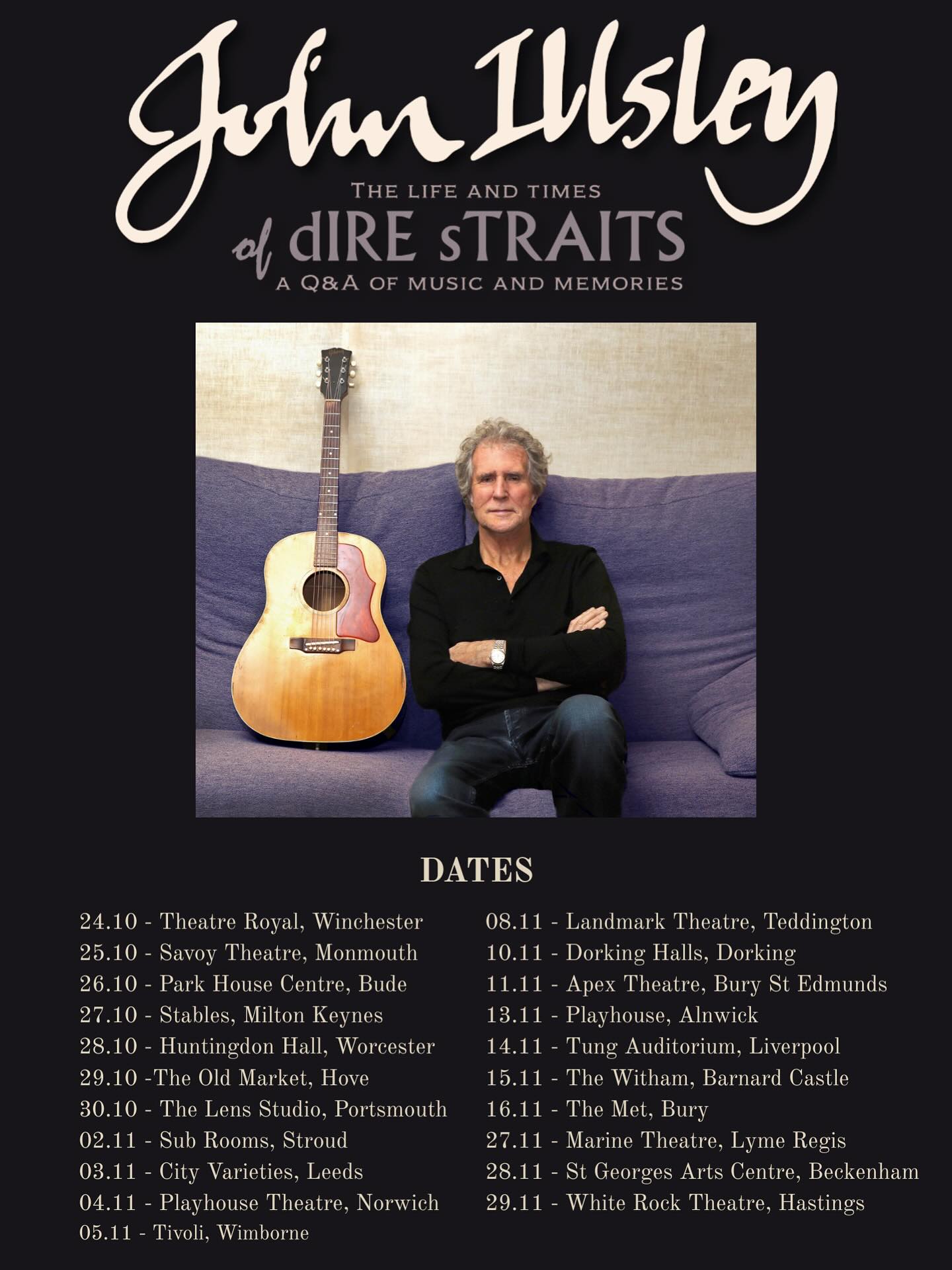
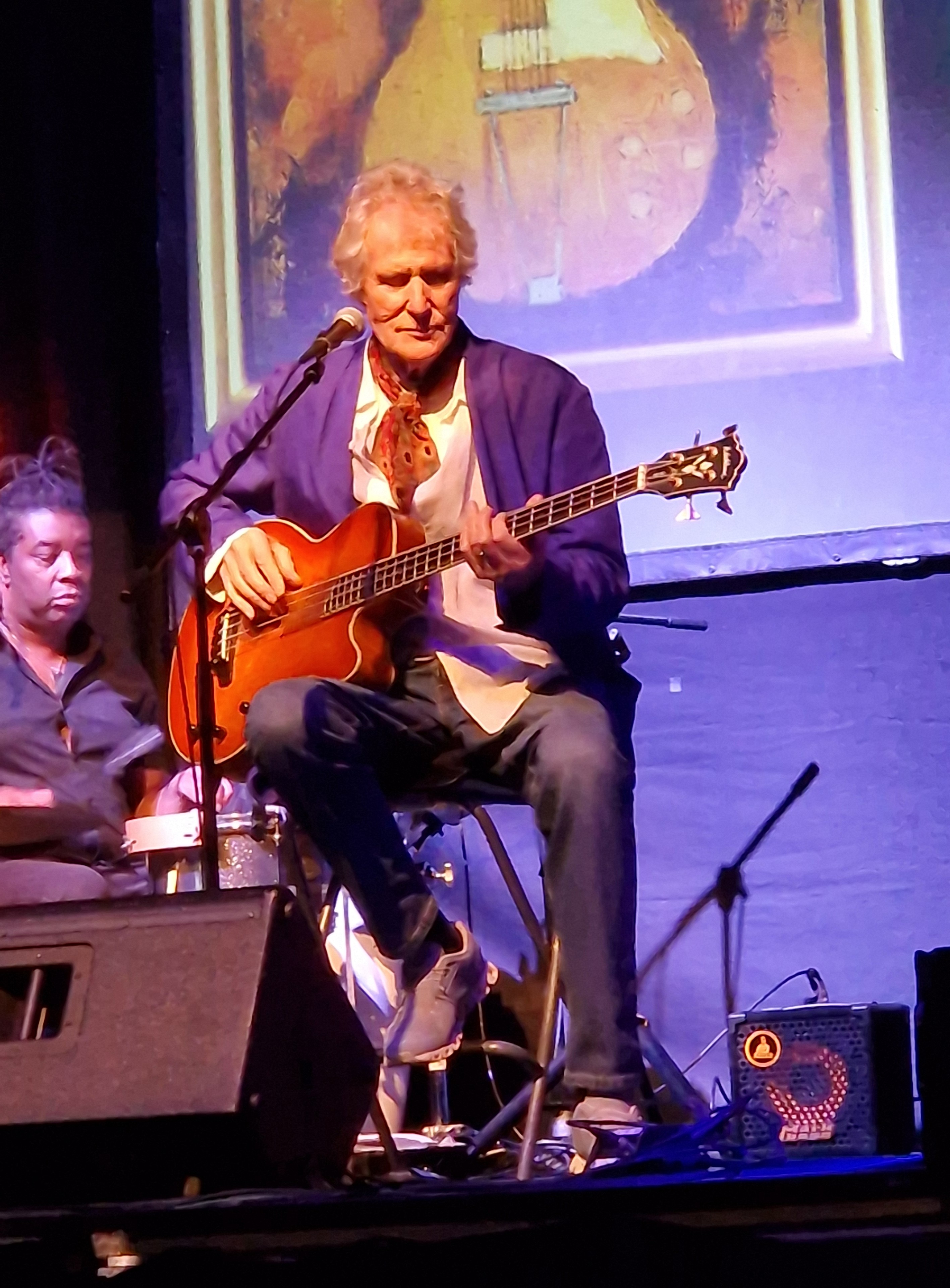
Live review: John Illsley – The Life & Times of Dire Straits at White Rock Theatre, Hastings 29/11/25

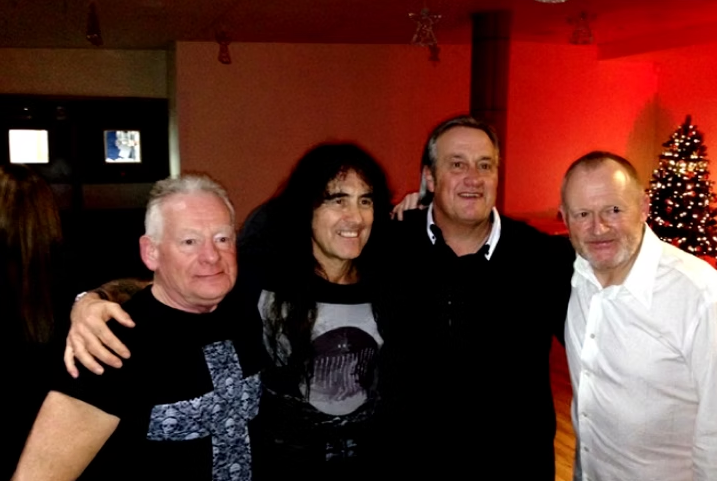
John Illsley, legendary bassist and Dire Straits co-founder, wound up a 21-date music and chat tour at the White Rock Theatre in Hastings. I never got to see Dire Straits back in the day, sadly. However, the fact that this was a chance to see John Illsley perform some Straits classics with a full band, as well as a chance to get a first-hand insight into his long career, made it too good an opportunity to pass over, even though (following Dave Hill and Slade the night before) it meant a second trip to the White Rock in the space of twenty-four hours.

A full two-hour show, the format was a Q&A session, with Illsley in conversation with long-time friend and former Dire Straits co-manager, Paul Cummins. This was followed by live music from the band then a short interval, followed by a further Q&A session and then more live music.

The first half of the show focused on the early part of his career, with the second part focusing on the Brothers In Arms days and beyond. Those early days and hearing about Illsley sharing a flat in Deptford with Mark Knofler’s brother, David, while studying at Goldsmiths held a particular fascination for me, as a former student of Goldsmiths myself who ended up spending twenty-odd years living in the Deptford area, not too far from the small council flat were Dire Straits was originally formed. An articulate, urbane and thoughtful man (even if he lived in what sounded like a filthy hovel at the time!) it was a fascinating insight into the early days of the band and the fairly swift pathway to their first hit single. The inspiration for that first hit came after an evening at a local pub, where Mark Knopfler heard a jazz band playing who called themselves ‘Sultans of Swing’. The rest is history…

The musical segment saw a clutch of songs from the first Dire Straits album, including the aforementioned ‘Sultans of Swing’ as well as a song apiece from Making Movies and Love Over Gold. The band are excellent and Illsley’s vocals are not a million miles away from Mark Knopfler.

After the interval it’s back to more chat, with a real focus on the story behind the astronomical success of Brothers in Arms. Illsley describes it as a perfect storm: Knopfler’s song-writing reaching another level, digital studio technology being newly available, Sony keen to push an album that could help propel sales of their new-fangled CD players, and MTV launching in Europe just a few months before the album’s release date. Both they and their US counterpart keen to give airtime to a single that name-checked them. Neither Illsley nor Mark Knopfler seemed particularly keen on the superstardom that followed, however, and in spite of monster world tours, Live Aid and Nelson Mandela’s 70th birthday gig at Wembley, there was to be only one more studio album.

Before long we’re back to more music. Unsurprisingly, songs from Brothers In Arms feature heavily. As well as the title track, there’s ‘So Far Away’, Walk of Life’ amd ‘Money for Nothing’ there’s also a song from Illsley’s most recent  solo album. ‘It’s a Long Way Back’ is all about those early days in Deptford. Proceedings wrap up with ‘Where Do You Think You’re Going’ from the Communique album. Illsley and the band leave the stage to a well-deserved standing ovation.

https://www.johnillsleymusic.com/

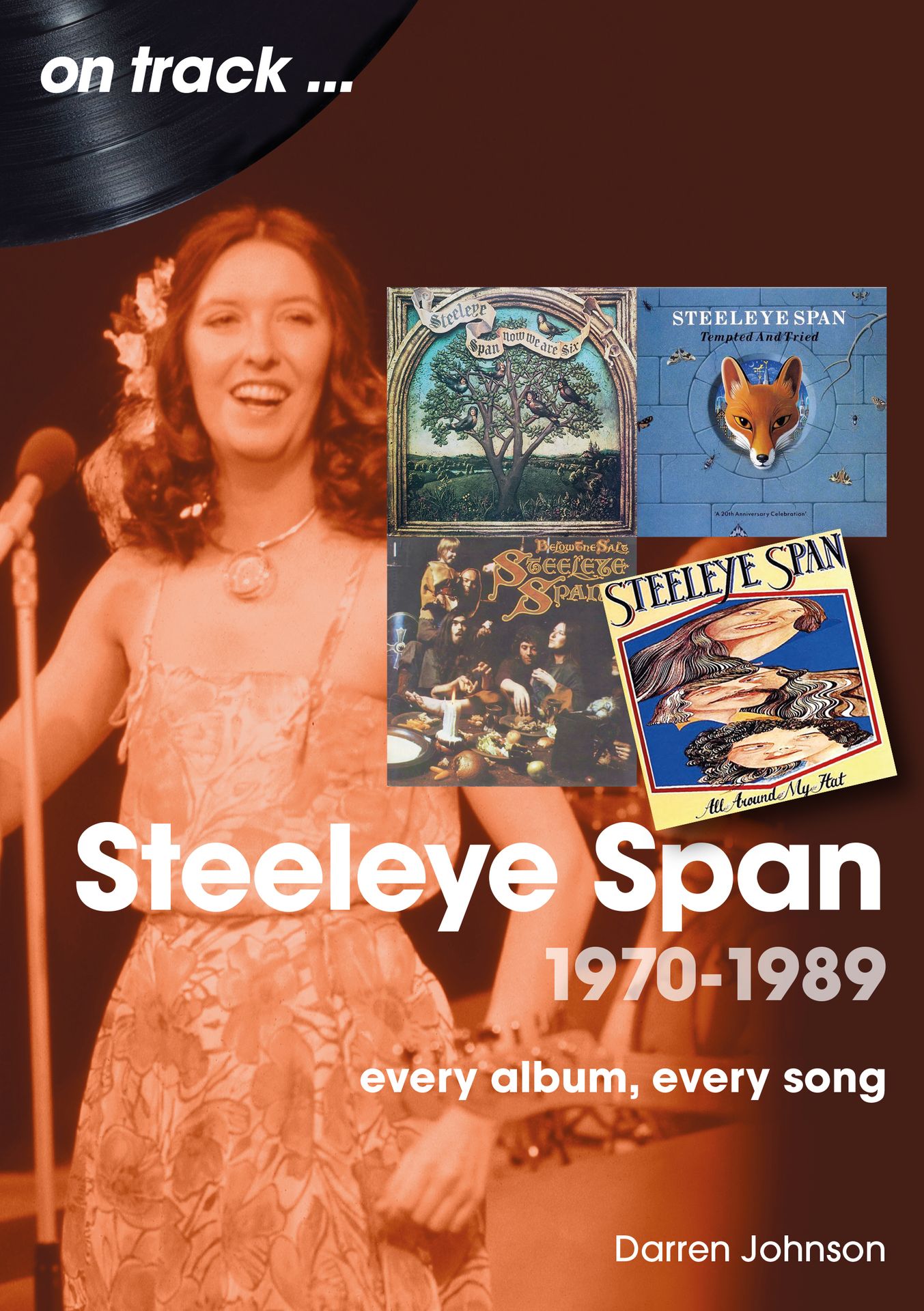
‘Steeleye Span 1970-1989 On Track: Every Album, Every Song’ – Book reviews round-up

Following my ‘glam rock trilogy’ on Slade, Sweet and Suzi Quatro, my fourth book for Sonicbond Publishing came out in August 2025: Steeleye Span 1970-1989 On Track: Every Album, Every Song. I’ve been really heartened by the enthusiastic responses from readers so far (reaching Number 2 on Amazon’s Music Encyclopaedias Chart) and the many kind words from reviewers.

Darren Johnson

“Both satisfying and engrossing, what should’ve been a simple task to read and comment on, became a series of rabbit holes, as songs and entire albums had to be revisited or indeed investigated. Both for the purposes of research and pure enjoyment, as well as a degree of nostalgia.” Folk North West (read full review here)

“Darren Johnson has done a remarkable job in squeezing the details of fourteen albums into this slim volume” “Johnson’s research is thorough” RnR magazine

I hadn’t heard some of these records for a very long time, but this deep dive into the band, their music and indeed the history behind some of the traditional songs they performed, caused me to listen again with fresh ears. Check it out if ‘The Span’ or indeed folk rock in general are your thing.The Afterword (read full review here)
“The book though is very fair in recognizing it’s sources. It brings together a lot of info into a well written book – definitely recommended!” A Celebration of Steeleye Span  (read full review here)

Steeleye Span 1970-1989 On Track can be purchased via Amazon here as well as most other major book-sellers. And via the publisher’s own online shop at Burning Shed here

Related posts:

Reviews: ‘Slade in the 1970s’ reviews round-up

Reviews: ‘Suzi Quatro in the 1970s’ – reviews round-up

Reviews: ‘The Sweet in the 1970s’ reviews round-up

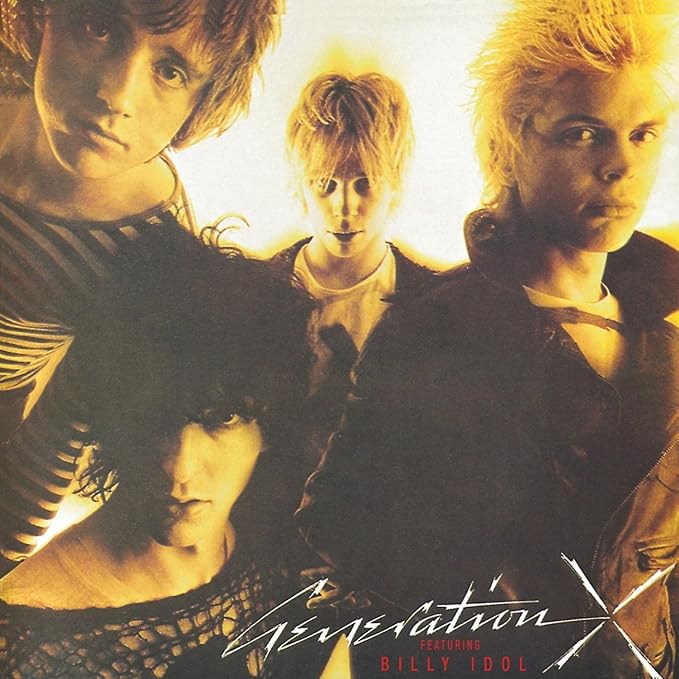
Interview with Mark Laff – X Generation X

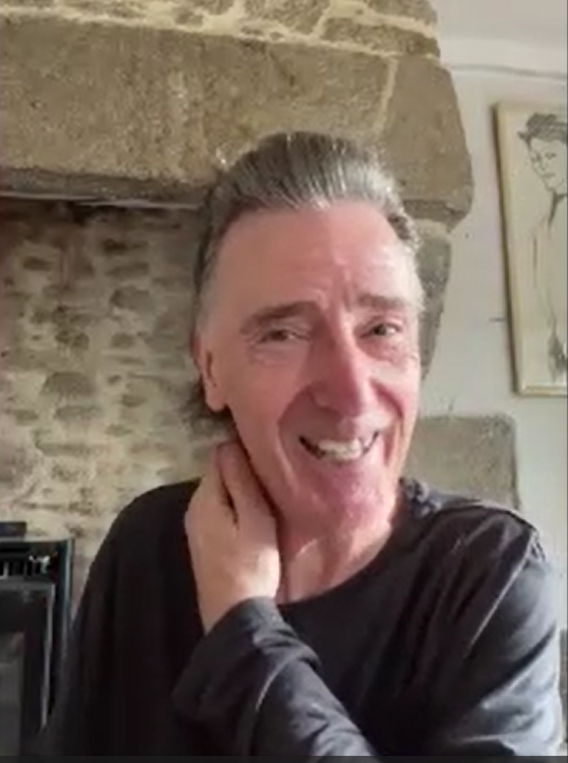
In November, Generation X drummer, Mark Laff, tours with his new project X Generation X – featuring Mark, alongside Westworld’s Elizabeth Westwood on vocals, Spandau Ballet’s Steve Norman on guitar and Vice Squad’s Michael Giaquinto on bass. I catch up with Mark to discuss the emergence of punk, the rise and fall of Generation X and the forthcoming UK tour.

So, the first question: we’ll go right back to the beginning. It’s coming up to 50 years, what are your reflections on the emergence of the punk scene in the UK in ’76?

For me, at the time, it was a situation whereby you felt with the bands that you liked, they had stepped across a great divide. And you really were not connected anymore. So, when the punk rock thing came you had an opportunity to get involved or not. I took the chance to get involved.

The emergence of it was incredible for me. I was a big fan – I still am a big fan – of the Sex Pistols. All the bands to me were making a statement, which I felt I could connect to and was, most importantly, really exciting.

Mark Laff – Photo Credit: Olga Rozewin Photography 

After playing with Subway Sect, as punk was taking off, you then got a call to join Generation X in time to make their first album. How did that come about, moving from Subway Sect to Generation X?

Well, I won’t pass this one lightly because I’m eternally grateful to all the members of Subway Sect and The Clash camp for almost parental guidance, really. Subway Sect was a wonderful opportunity and great guys.

I think what’s important to say, just for the record also, is that I auditioned for The Clash the same day as Topper Heaton did. And Topper got it. I didn’t. And they liked what I was doing and offered me back to another situation, which I initially was told was with a guitar player, Keith Levine. But over the weekend, the Subway Sect drummer had left to join the army. So, I did the audition with the guys. Really liked it, went upstairs to Bernard (Rhodes – Clash/Subway Sect manager). And he said, “What do you think?” I said, “Yeah, let’s do it”. And he said, “Have you got a passport? I said, “No.” He said, “Well, can you get one by Wednesday? We’re going to Paris on Thursday.”

So, it was a dream come true from playing the drums at a really early age. And to be thinking those things maybe aren’t possible. To be in that situation where somebody says, “Get a passport, you’re going to Paris.” I’d never been abroad, Darren!

It was incredibly exciting. You had the Buzzcocks. You had the Jam on some of the dates. You had the Slits. You had the Subway Sect, and of course the Clash. This was like watching the future happen all on one night!

So, hearing the Generation X tape, I thought I really like that. So halfway through the tour, I was at Dingwalls in London. And who was there? John Ingham, who was the manager of Generation X. And we got chatting, and he said, “Why don’t you come down?” So, there was a little gap in the middle. I went for an audition. I didn’t hear anything back and I was just pleased that I went really because I was making myself available. I decided within myself that I probably wasn’t going to stick with the Subway Sect for a period much longer than the tour. And it really was just a musical thing. I wanted a bit more chaos. So, the tour started, I think, in St Albans and Tony James came up to me and said, “You’ve got the job.”

So, I finished the tour and literally we finished at Dunstable – California Ballroom. The drum kit came off the stage into the manager’s car and we were off. It was a seamless transition from one band to another.

And you toured with Generation X and then you made the first album?

Well, there were some rehearsals to be done and… actually the first few dates weren’t too successful. We were falling a little bit flat. And as it happened we ended up at Dingwalls and it all clicked. And record companies were there and the interest started. And yes, the rest is music history, I suppose.
We tried to stick with our first plan, which was to work with high-end engineers who knew their stuff. And we went in to do ‘Your Generation’, which was always gonna be the first single. I really liked that song. And ‘Day By Day’ was the B-side. And it didn’t work in the studio. We kind of realized, everybody realized, that the song was just falling a little bit short. We kind of thought, well where do we go with this? So, in discussions with the record company, Chrysalis Records, we decided to go with a guy called Phil Waiman who had, at the time, a real notable resume.

Yes, Sweet, Mud, Bay City Rollers and all that from the glam era a few years before.

And he was a drummer and he knew what he was doing. And we got to record… four songs, three and a half really. Well, we did some more but it just wasn’t clicking. It wasn’t clicking, I don’t think, with Billy and Tony with Phil. Probably a little bit too sweet-sounding.

So, we ended up with Martin Rushent. I don’t mean that to sound as a failing, Martin was fantastic in creating ‘the room’. He was like almost the fifth member of the band in terms of conversation and making sure everyone was happy. Just getting it to feel good in the room because, you know, we were young guys then, 18, 19. Tony was a lot older, but we were still young people and a little bit naïve. Wet behind the years with it all. So, he created a great feeling. And I think that’s the feeling that people really like after all these years on the first album.
It absolutely stands up as a classic rock and roll album. Absolutely.
Thank you very much.

And then looking at the second Generation X album, I believe you clashed with producer, Ian Hunter, in the studio. Ian is one of my all-time musical heroes so I will be fascinated to hear a little bit about this (laughs). But was that a frustrating album to make and was that the beginning of the end in terms of your involvement?

Yes, yes and yes are the short answers. But I will colour it in for you. I should say that we arrived at that situation with Ian Hunter because we’d released ‘Your Generation’, which did well but it didn’t chart in the Top 30. And we went with ‘Wild Youth’ – which again did well, but it didn’t chart Top 30. You’ve got to understand we signed a very big record deal that year. I think it was the biggest record deal of the year.

Then we stuck out ‘Ready Steady Go’, which did well again, got a lot of radio play. It was a real fans’ favourite, but it didn’t chart particularly well. We were aiming for Top 30. All of these got Top of the Pops performances so the record company dug deep and suggested that we go with somebody that we liked. Tony and Billy were all over the Mott The Hoople thing. I thought they were okay. It wasn’t my favourite band. I had a couple of records but I understood the process there.

We were all asked who should produce it. I went out on a limb and said I think Jimmy Page should produce us because he’ll make it sound incredibly different and very, very rock and roll.

You could already feel that commerciality was coming onto the table. “We’ve got to get commercial. We have to have hits to pay back the debt so that we can blah blah blah…” And especially America. So, Ian came in, and it was a rehearsal room in Camden, Chalk Farm I think. Atlantic rehearsal rooms.

And we worked a song. Ian didn’t like my drum kit. It was a Premier drum kit, and he said, “This is shit. You need a Ludwig.” Because his drummer had a Ludwig and they obviously sounded much, much better than mine. And Ludwig drums do sound rather sweet, especially the maple ones. So, he said, “Get yourself a Ludwig kit.” And, of course, I didn’t have the money for that. Ludwig drums are an absolute fortune, so it was a very difficult situation for me. We had to record the drum track three times. So, I had to layer it, layer it, layer it. You’ve got to understand here, I’m 18, 19. This is all too much for me, you know? It would have been too much for Phil Collins! Plus getting the right feel and not playing together was a different dynamic to control for me and for everybody else.

So anyway, we came out with ‘King Rocker’, which was a hit record. Very successful. So, everybody suggested that we move forward with Ian and go again. We did a second single called ‘Valley of the Dolls’. I was under pressure again. He wanted this four-on-the-floor, with a drum machine. There were no proper drum machines at the time, so I had to listen to this bossa nova beat and try and play a straight rock beat over that. So, it was a hellish experience, once again. I really like that song, I really like both those songs, ‘King Rocker’ and ‘Valley of the Dolls’. Playing with the drum machine was a bridge too far for me at the time.

We got it done. I was happy with it. He didn’t like the fact that it was taking that amount of time to do it. We got it done in an afternoon, but he wanted it done in three takes. So, I was at home one night. I think we’d been just rehearsing and I got a call very late in the evening about a band meeting. I think it was like one o’clock in the morning. Ridiculous you know. I went across and I was told that Ian had said, “Look, there’s a deal on the table for you here. We want you to seriously think about this.” Ian’s take on it was he didn’t want to spend that amount of time on the drums. I understand that. He felt that  time was better spent on Billy’s vocals, and certainly the guitar playing. I get that. The deal was three takes. If you’re not done in three takes, we need somebody else to come in and do it very quickly. So, I was under pressure again to do this. I was given a choice of either Clive Bunker from Jethro Tull…

…and listen, punk rock fans don’t like to hear it, but I like Jethro Tull. I really do. Some of the songs, they are fantastic, especially the early stuff…

So, I had the choice of either Clive or Paul Thompson – Roxy Music. I don’t think Paul was available so Clive came in and was very, very supportive. He saw the pressure. He understood the situation and it was a pleasant working relationship with him and me. So, I think I did all the tracks and Clive did some tracks, and we did some tracks together.

And I was in a strange situation, Darren, because I’d be playing the drums, with Clive over there playing, and I’m thinking, “This is nuts! Why is he recording two drummers?” It was a bizarre situation. What really threw me off was that I was very emotionally involved in terms of influence with a drummer called Keith Moon and I think within the first week of doing the album he passed away. And it was a shocking experience for me. I was really, really upset. It was like, I hadn’t lost a close family member but it felt like the removal of someone very, very special – the whole thing you’re never going to see them again.

We’d just recently been rehearsing and Billy was at one function –  I think it was Paul McCartney’s – I can’t remember what it was. Anyway, Billy very kindly brought Keith Moon down to the rehearsal room to see me. He came with Graham Chapman from Monty Python. So, I’m at the back of the rehearsal room, and in through the door I could see it’s down there, you know. I thought, oh my God it’s Keith!  It’s all the crazy stuff that you feel, you know. And Graham Chapman walked in and Keith sat at the drum kit, and they did three songs with the band. It was absolutely incredible. He broke the bass drum pedal. Fantastic! He wasn’t in great shape, bless him, at the time. You could see he was suffering badly and he was only 33, I think. And it was kind of sad to see. And he was bloated, and there was obviously medication going on there which wasn’t helping.

And for Keith to die at that period was, well, it’s the death knell for me. I lost a lot of enthusiasm for doing that album, and it became a chore to me. But we got it done and it was well received to a point.

It was a transition process. We all knew that. That it was going to move away. We weren’t going to do the first album – part two. For Bob Andrews, it was a direction in the wrong direction, in that his influence on that record was not recognised copyright-wise. Neither was mine. I think he’s only one credit, which is ‘Running With The Boss Sound’. Which is shocking, really, because Billy and Tony should have sat down with the two of us and said, “Look, this is what we’ll do.” Come up with some arrangement.

The band was polarised anyway, and this is important, in that there was a class divide. Myself and Bob, you’d have to say, were working class. I came from a council flat, albeit a very posh one, Darren! Bob was from a working-class family, and Billy and Tony were middle class. So, there was a university divide there, if you will.

So that created a problem in itself as time went on and I think, possibly, Bob pressed the mute button. Became silent, non-responsive. And had he spoken up, he would have got what he wanted because I think what’s important to tell you here, Darren, is that Bob Andrews was by far the best guitarist in town at the time. 17, 18 years old, playing that stuff. Incredible. There was no one around to touch him, not within the punk rock thing, and he’d wiped the floor with a lot of notable guitar players. And I’m not blowing his trumpet. I don’t need to. That’s how it was.

But he pressed the mute button and went further into reclusive behaviour. And it was a divide of me and him, and Billy and Tony. And it made things a little bit uncomfortable to the point you could feel it. You could feel it where it was going to break and it eventually did break after a period. A very short period after the album. We did tour that album, and it was fun. The irony here is that that was meant to introduce us to America. We never went to America, sadly. Billy went on a promotional visit, but that was it. During this time, also, there were very uncomfortable managerial problems. We lost John Ingham because he had an argument with Tony James. And Tony wasn’t going to be listening to any of that so John had gone.

Time went on I think in ’79 and Bob decided to leave and I thought well that’s probably it. I can’t remember that period too much, other than speaking to him and he’s saying, “It’s not happening… blah blah blah.” All the usual suspects of why a group splits up. You know somebody in a band that you don’t like at all wants to bring in the influence. You’re thinking, “Well this is not where I want to go.”

Also, it must be said that we were still growing up at that time. 18, 19. You’re not fully formed. And Tony, being six years older than us, he was ahead of the game. And was using that to his advantage, I think.

In fairness they went to Bob and said, “Look, come on. We can probably sort this out.” And he decided to come back. And we went to Japan and tried to do a third album. We went into Olympic Studios in Barnes with an engineer again. We’d reverted back to the initial idea. What was coming through the speakers wasn’t sounding great. There were some good songs there. ‘Dancing with Myself’ was there. We’d done that. Done enough stuff for an album which we’d had rehearsed. We’d all gone away for a week to Banbury in Oxfordshire. All being together and trying to make it up, if you will, which kind of worked. At this time, I think Billy was finding the frustration of the non-communication and the lack of response to his ideas not working.

It was uncomfortable for us to be together. And Bob decided to go again. We came into the end of the year. I thought, “Well, I’m just going to have to wait for the call here and see what happens.” Rather than throw the hat in. So, I went to Chrysalis Records one day only to find Billy and Tony in a management meeting with the record company. I thought, “Well, that’s it. It’s done.” So, it was done. It wasn’t a big surprise but there was some hurt there that it could have been done a lot better than that. So that was it.

Unfortunately, matters got worse with the band in that Billy and Tony decided to hang on to the equipment. Made us all sign the disclaimers for God knows what. And we parted company. And then, as you know, Billy and Tony recruited Terry and James for a tour. Then, I’m told from Tony that he found out that Billy was on his way to New York without saying goodbye. So, there you have it.

Billy obviously went on to stratospheric levels of success as a solo artist. Are there regrets that it wasn’t Generation X having that kind of success and longevity? Or do you just feel that there were so many personality differences, musical differences or whatever, that it could never have worked anyway?

I think the latter really, Darren. I still had this yearning for craziness. And we were going down the big commercial route now. We were trying to find formulas. And with the influence I had, that was all getting quashed. And Bob felt the same. It was all getting a bit – and this isn’t a slant on Billy – it was all getting a bit ‘Mony Mony’. I mean, I’ll go on record as saying I think Billy’s Rebel Yell would have been the album that Bob and I wanted Generation X to do.

Interesting, yeah. I can see that.

That’s what we would have loved to have done. It’s a fantastic record, as you know, with those songs. And so it’s ironic that Billy would have to go to America. I mean, he tried with ‘Mony Mony’. Please don’t think this is me having a go, and I’m very pleased for his success. He tried with ‘Mony Mony’, which wasn’t a particularly good hit. Met Steve Stevens via the Kiss manager, Bill Aucoin. Hugely influential in Billy’s career, it must be said. Bill Aucoin introduced him to so many different aspects of how to be a star, and you can see that he became the Billy Idol that people know him for today. It certainly wasn’t the Billy Idol that was in Generation X. So, a total change of character, if you will, to meet the American market.

The Americans love guitar bands. A pop thing could be very momentary, so for longevity the big rock thing – which Rebel Yell really is  – a big rock album with some great commercial songs on it. And you know the following one Whiplash Smile I thought was really good. He tried to go into a more European feel with Keith Forsey, with the big drum machines all going on – but still with a big rock guitar with some great tunes on there.

And it must be said that for anyone that doesn’t know, Tony wrote the words and Billy came in with tunes, you know, or chords I should say. And some songs. And it was all coloured in by the band. So, I think Billy felt frustrated at the time that we were together because the journalism at the time was vicious, to say the least. If they wanted to kill you off, they would. You had some notable people at the NME, Charles Shaar Murray, who wasn’t shy in saying what he felt, Tony Parsons, Nick Kent. I think Nick Kent liked us, actually, but we were savaged in the press. I think because of the Pistols having their facial was totally different to a Generation X facial. It was a pretty boy thing versus ‘don’t bring that boy home’, you know? Yeah, so there was frustration in the press as well, but we would have got around that.

I think had we gone to America, it would have broadened our horizon. We would have understood a lot more about how it should be, but it didn’t happen, Darren. You know it was meant to be the way it was meant to be. So, I would have to say I blame that on management, who’d have another story to tell but we should have gone to America. Everyone had gone to America. The Damned had gone, the Clash had gone, Pistols had gone famously and ended up in San Diego. Susie had gone. We hadn’t, you know. Went to the Isle of Man!

Credit: Olga Rozewin Photography 

So, to bring things right up to date now, what do you want to tell us about the X Generation X tour in November?

Well really for me, it’s wanting to be a part of the 50th anniversary of Punk Rock. I wanted to do something in 2019 with Bob Andrews and another group that I was in, Twenty Flight Rockers. And obviously we know what happened in 2020. So, two, two and a half, three years ago, I thought, what should I do? And I thought, well, we’ve got this anniversary coming up. It’s going to take me a while to find the right people to launch it.

And there is nobody going out there doing Generation X songs. I think it’s the right time for me to do that. And I think people will appreciate seeing it. There’s no Billy Idol. I’ve chosen female singers to front it. I think the comparison would be too difficult. I think Billy Idol’s shoes – although a small foot – probably a nine – they’re probably still too big to fill, you know. To get a guy in. So, I see this as a rolling thing of maybe working with different musicians in the X Generation X thing over the next few years and just trying to enjoy it really. And I feel that it’s very relevant today. The way things are in the UK at the moment is there are similarities to be drawn on, with the political side of things which are happening.

X Generation X – Photo Credit: Olga Rozewin Photography 

Absolutely, yeah. A blast of punk could do us all the world of good! I actually think this kind of template you’ve got with the band is a is a great way forward for celebrating the music of iconic bands. You’re not a tribute band. You’ve still got a connection to the original band. You’ve got great professional musicians who come with their own CV and their own admirable track record. No one is dressing up, pretending to be Billy Idol or whoever. So, I think that’s a really good template for authentically celebrating the music of an iconic band like Generation X.

That’s very kind of you to say so, Darren, and it gives me a lot of inspiration to hear that It’s very hard to be in a band these days because the music industry, the way it is, everybody’s so busy in other projects. So, I’m left with no choice but to use other musicians in the future, really, because people aren’t available. We’re lucky to have all of us available at this time to be able to do it. So, Steve’s particularly busy with his own career; has been for some time. Elizabeth is incredibly busy. And Michael is seeking employment— I’m kidding! Probably the nicest guy in the band, actually, Michael. Why does he have the most ribbing? I don’t know. No, Michael’s fabulous. He makes me sound good, so I really appreciate what you said there. Are you going to be able to come to any of the shows?

Yeah, I’m going to be at Hove. Because I’m based on the south coast in so I’m going to be at Hove on the first night and very much looking forward to it. Is there anything else you want to say before we wrap up?

Hey, listen, come and check it out. This might be the only time you see these four people do this this which is exciting in itself. Makes it sound a little bit like a theatre production but it’s not at all, it’s really a rock and roll thing. But it’s going to be exciting. It’s going to be loud. Thunderous. Angry. And yeah, I hope people enjoy it!

Tickets and tour dates via: https://www.xgenerationx.com/

Live review: Mott Fest 2025 at the Corn Exchange, Ross on Wye 3-4 October 2025

Mott The Hoople were a band I happened upon quite by chance as a young teenager in the early 1980s while I was flipping through the second-hand album racks in Preston’s Action Records. Even though I’d never heard of Mott The Hoople (and with the name reminding me a bit of the fictitious Monty Python band, Toad The Wet Sprocket), I was somehow drawn to the bright pink cover of the Mott album and decided it was worth a punt. Getting it home, I was immediately transfixed by songs like ‘All The Way From Memphis’, ‘Violence’ and ‘I Wish I Was Your Mother’ and a lifelong love affair with the band began.

Mott The Hoople had been defunct for several years by then, of course, but in the years that followed I avidly followed Ian Hunter’s solo career, saw the band on each of the three Mott reunion tours and attended the previous Mott The Hoople convention in 2016.

Ross on Wye on the Herefordshire/Welsh border is quite some journey from Hastings but I thought I’d make a mini-Autumn break of it and so found myself a holiday apartment for four nights so I could do a little exploring of the local area as well as enjoying Mott Fest on the Friday evening and all day Saturday.

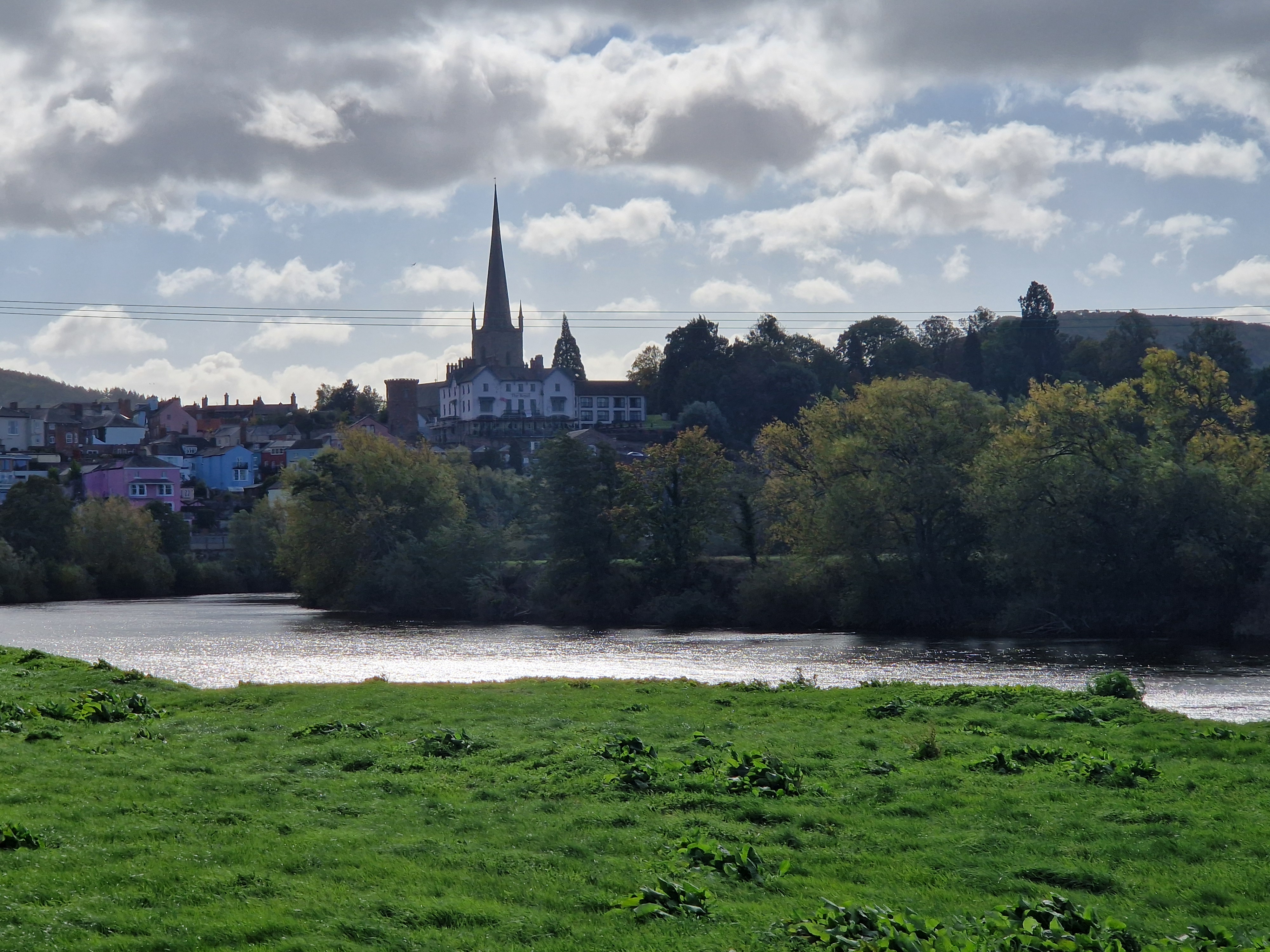
Ross on Wye from the banks of the River Wye

Friday

With the expectation that this would almost certainly be the last gathering of its kind, the historic but compact Corn Exchange venue was absolutely packed out. The acoustics of this high-ceilinged building, combined with the excitable background chitter-chatter of long time Hoople devotees reconnecting with one another meant that I struggled to understand a word of any of the spoken-word bits. Plus things were late getting started and the video screen wasn’t working. It was all promising to be a bit different from the previous convention nine years earlier, but from these ramshackle beginnings (not unlike the history of Mott The Hoople itself, as some wags may have put it!) the magic began to shine through.

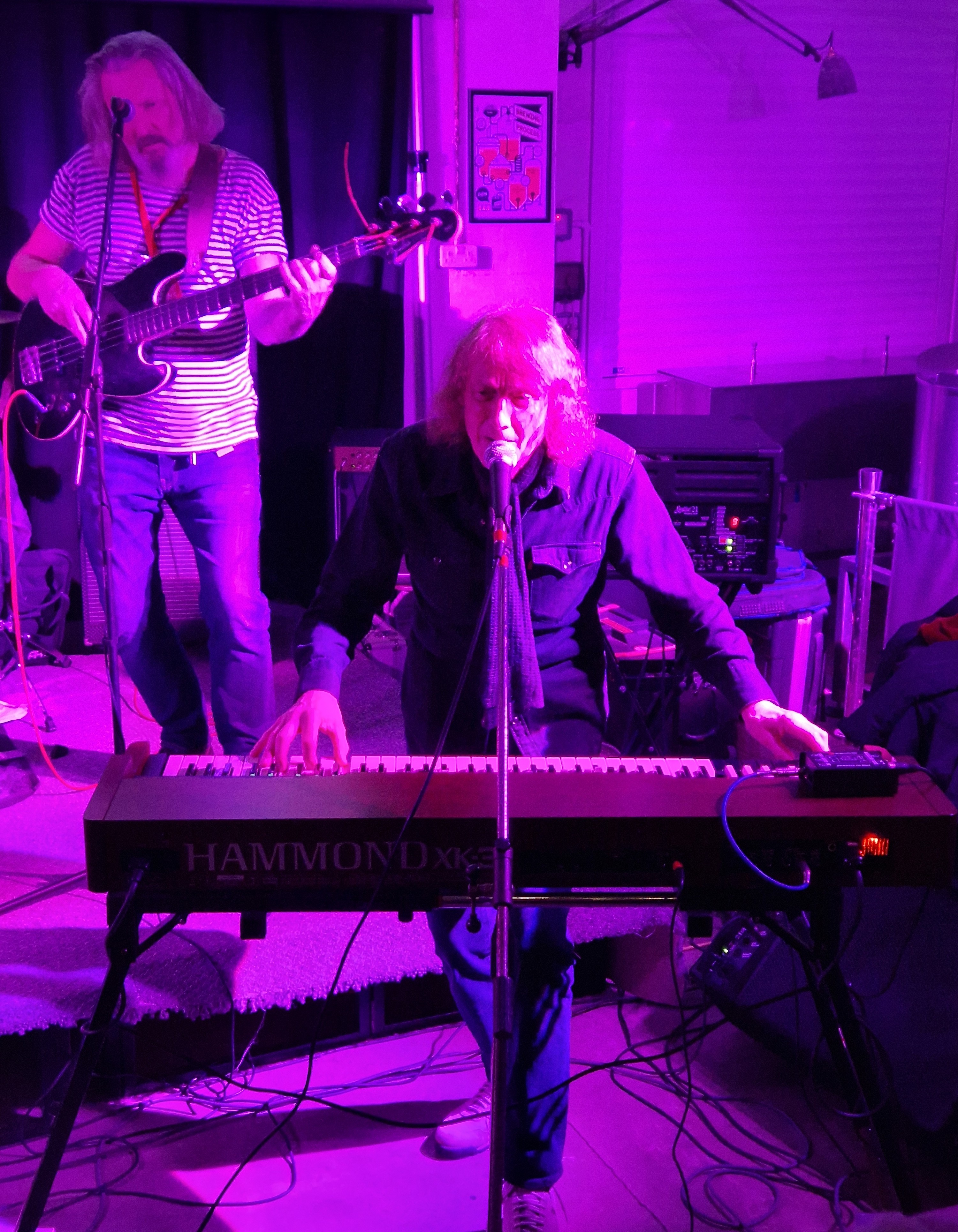
Verden Allen performing on the Friday evening

The highlight of the Friday night was the live set from Verden Allen and The Worried Men, with whom Allen had worked with on his Soft Ground album. The set, with a mix of Mott The Hoople classics and material from his solo career, absolutely made the evening. It was just sublime to hear the familiar pounding of that distinctive Hammond in an intimate venue like this.

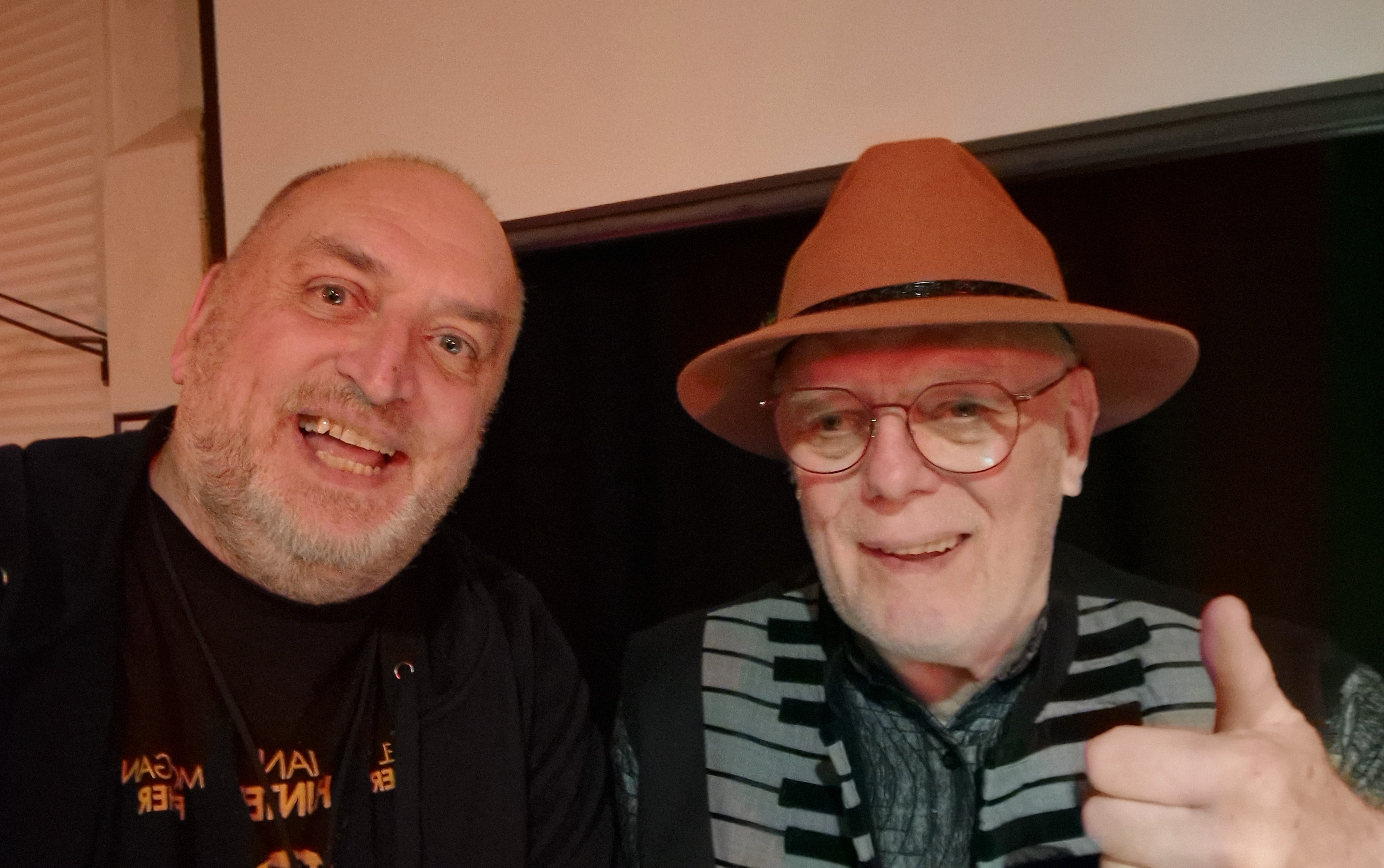
Selfie with Verden Allen
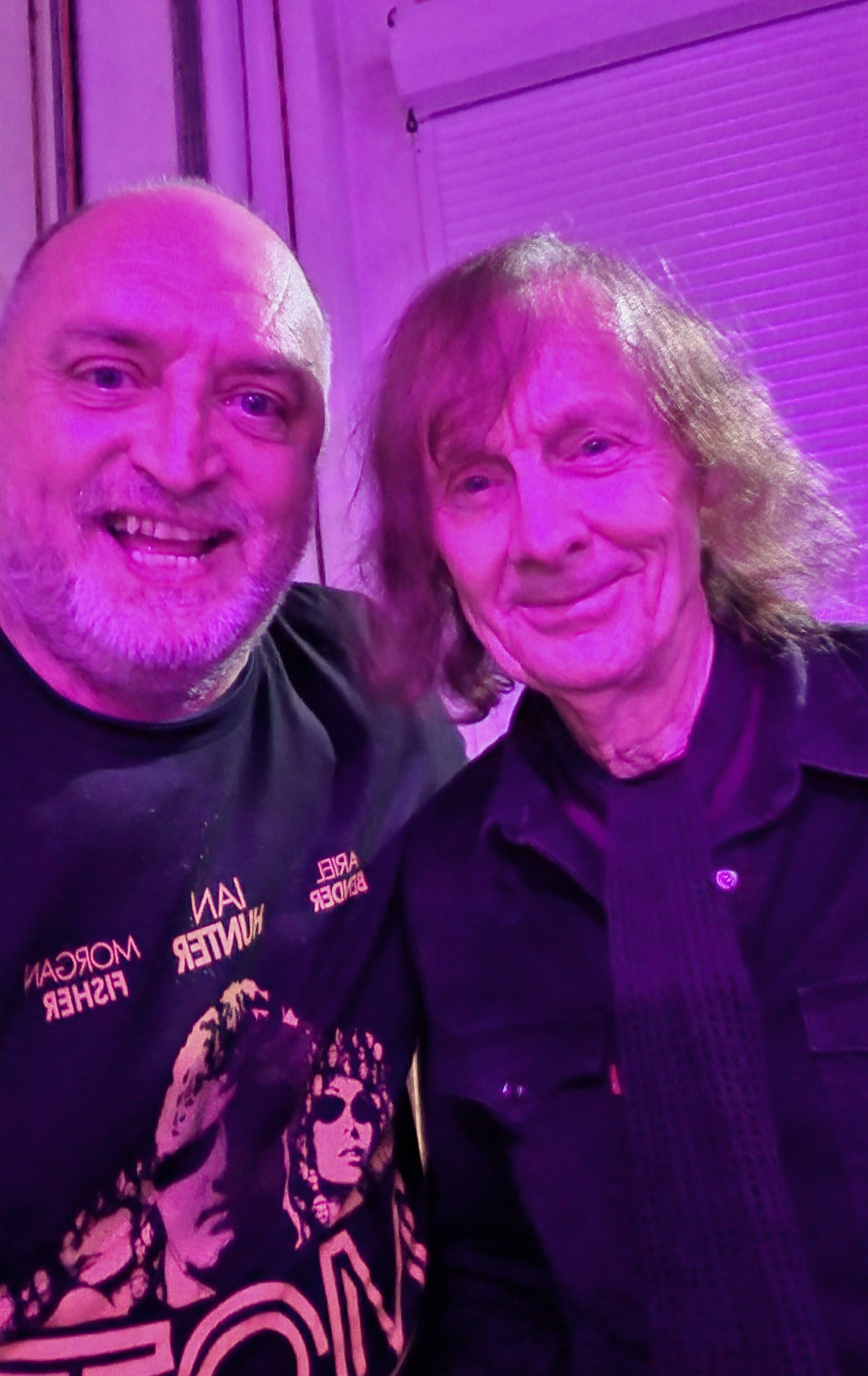
With Luther Grosvenor (Ariel Bender)
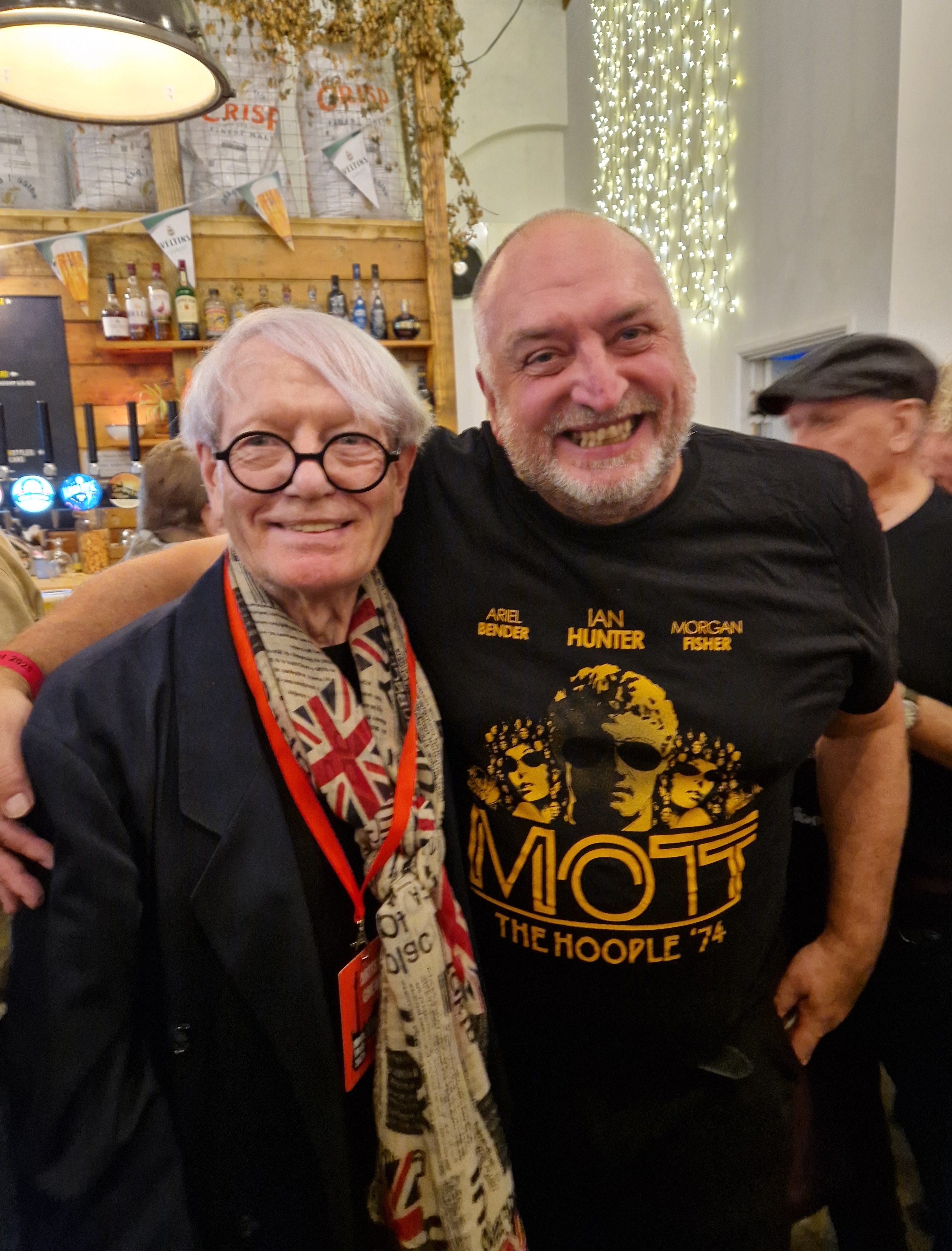
Selfie with Morgan Fisher

Saturday

Whether it was due to a better sound balance, improved audience discipline or my hearing starting to get used to the acoustics (probably a mixture of all three to be fair), the spoken word parts of Saturday’s line-up were much easier to follow and I could finely make out what was being said. Plus the video screen was now up and running!

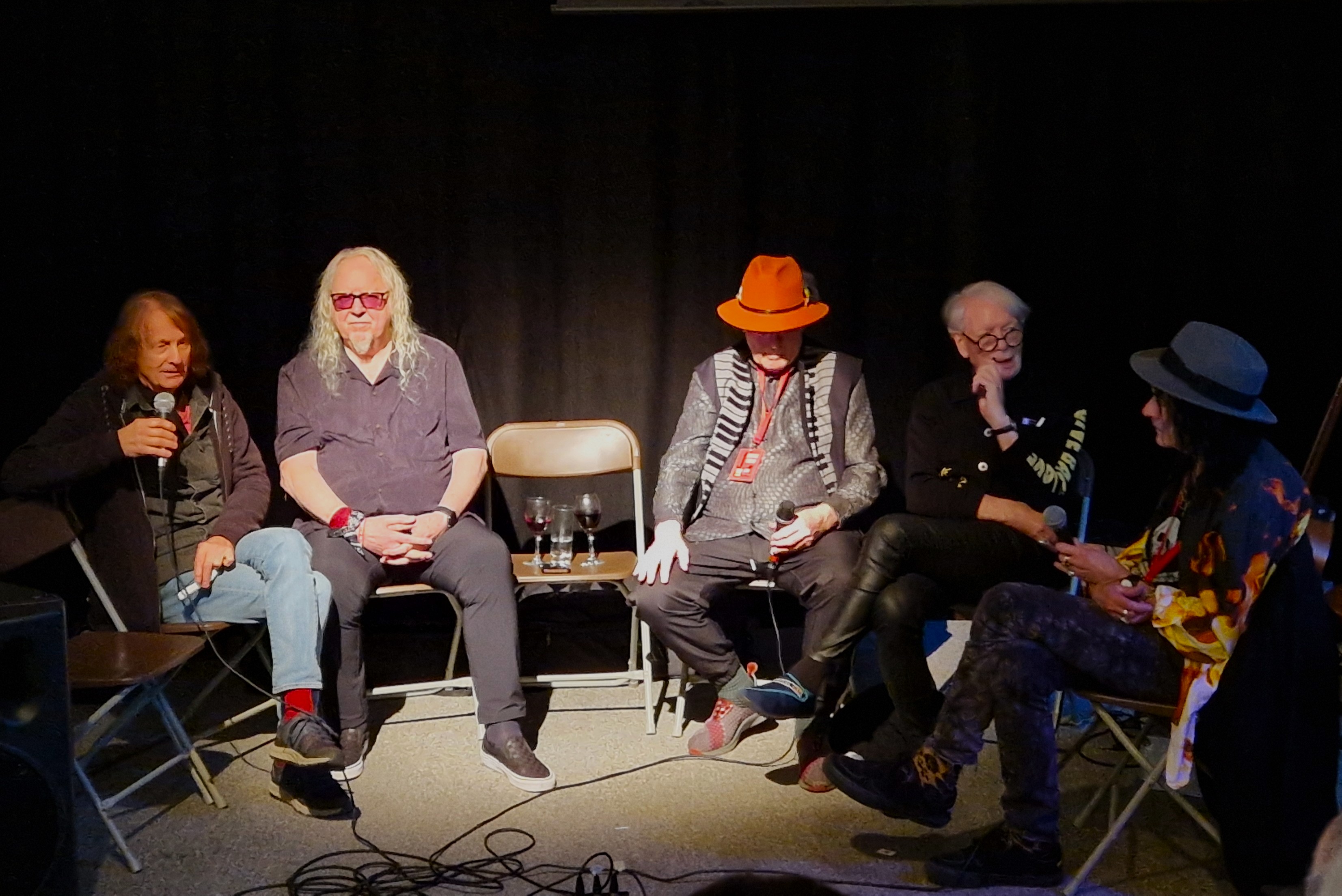
Mott The Hoople/British Lions alumni in conversation with Kris Needs

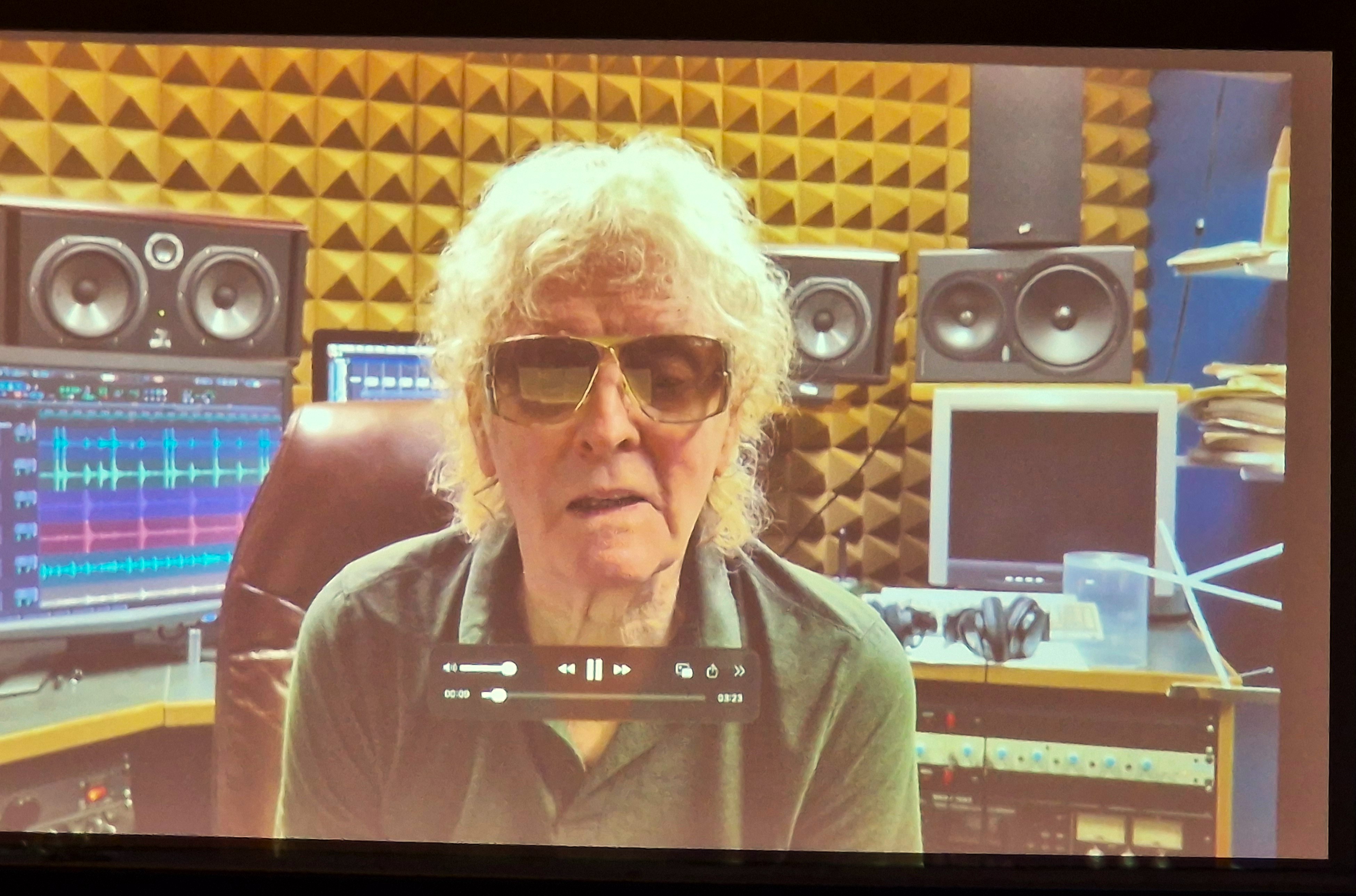
After a panel discussion of Mott fans sharing their early memories of the band with veteran fan club founder and long-time music writer, Kris Needs, there was a similar panel featuring all of the surviving musicians who were present from Mott The Hoople and its Mott and British Lions offshoots (namely Verden Allen, Ariel Bender, Morgan Fisher and John Fiddler), as well as various short film segments, including a video message from Ian Hunter, now the only other surviving member.

Ian Hunter sends a video message to Mott Fest 2025

The afternoon also saw a charity auction for St. Michael’s Hospice and the Alzheimer’s Society. After being outbid for an original gold disc marking sales of the ‘Roll Away The Stone’ single, I ended up splashing out £40 on a band publicity shot signed by Overend Watts and Dale Griffin – the only two Mott The Hoople members who I never got to meet to ask for an autograph in person!

Luther Grosvenor (Ariel Bender)

Then it was over to the live music, with sets from Luther Grosvenor (Ariel Bender) featuring acoustic material from his recent solo albums and accompanied by Morgan Fisher on piano; from British Lions frontman, John Fiddler, accompanied by Dave Bucket Colwell (the man who played alongside and then subsequently replaced none other than Mick Ralphs in Bad Company); and from Morgan Fisher who also took on the role of Musical Director for the weekend.

John Fiddler and Dave ‘Bucket’ Colwell

The highlight of this latter set, and indeed the most moving and poignant moment of the whole weekend, was Fisher’s rendition of ‘Rest In Peace’ accompanied by a video montage featuring images of Dale Griffin (who passed away in 2016), Overend Watts (who passed away the following year) and Mick Ralphs (who died in June this year). Definitely a not-a-dry-eye-in-the-house-moment.

Morgan Fisher

The evening closed with a gloriously ramshackle finale, giving all of us present a chance to yell along to ‘All The Young Dudes’ and ‘Saturday Gigs’ at the top of our voices and featuring on stage Morgan Fisher, Ariel Bender, John Fiddler, Dave ‘Bucket Colwell, Kris Needs, John Otway and Dale Griffin’s brother, Bob, alongside key members of the festival organising team.

The grand finale

Sunday

This wonderful weekend of all things Mott rounded off on the Sunday with family members unveiling a memorial bench dedicated to Dale Griffin and Overend Watts and with the Mayor of Ross on Wye unveiling a blue plaque commemorating the location where the pair performed their first gig. A fitting end to a fantastic weekend.

Overend Watts’ sister Jane and Dale Griffin’s brother Bob at the memorial bench
Bench plaque
Crowds gather for the unveiling of the blue plaque
The Mayor of Ross on Wye unveils the plaque
The Mott The Hoople plaque

Related posts:

Live review: Mott The Hoople ’74 at Shepherds Bush Empire 2019

Ian Hunter at Shepherds Bush Empire 2016

Ian Hunter at Shepherds Bush Empire 2014

Ian Hunter at Giants of Rock 2016

Mick Ralphs Blues Band at Minehead 2016

Mick Ralphs Blues Band at Minehead 2015

Interview with former Mick Ralphs vocalist– Adam Barron

Mott The Hoople Fan Convention 2016

Mick Bolton: 1948-2021

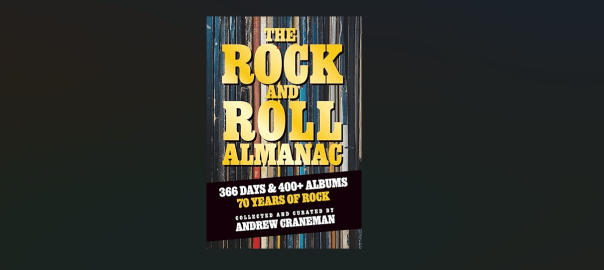
Book review: ‘The Rock and Roll Almanac’ by Andrew Craneman

The Rock and Roll Almanac is a bumper compendium of facts, insights and snapshots in time covering events from the early days of rock and roll in the mid-1950s right up to the present day. Compiled by musician and music writer, Andrew Craneman, the book devotes a page to each day of the year, with every page containing a selection of historical rock snippets drawn from the past seventy years, along with notable births, notable deaths and a recommended single and album released on that same date.

It’s something you’ll dip into, rather than read in a single sitting but choosing a random selection of dates, I certainly got a feel for what the book has to offer.

Firstly, for my birthday (20th May) I’m interested to learn that on this day Bill Haley’s ‘Rock Around the Clock’ was first released in 1954, the Rolling Stones unveiled their forthcoming new single ‘(I Can’t Get No) Satisfaction’ on a US TV show in 1966, Joe Strummer of the Clash is arrested but later cleared following an altercation with an audience member in 1980 and Finish rock band Lordi won the Eurovision Song Contest in 2006.

Turning to today’s date (4th August) I find that the Kinks released ‘You Really Got Me’ on this day in 1964, Pink Floyd released the Piper at the Gates of Dawn album in 1967, Jim Morrisson got arrested for public drunkenness in LA in 1970 and Eagle, Don Henley, reached an out of court settlement with a US Republican candidate after the latter used parody versions of two of his songs without permission in 2010.

Craneman provides just enough background to each historical entry to keep you engaged and informed but the events detailed in the book will often encourage you to explore further, particularly if its something that you were completely unaware of before.

Keep it on your coffee table to look at each day on the relevant day in question. I’m sure I’ll be dipping in and out of it throughout the year.

Published 4th April 2025 – order from Amazon here

Visit to the Eel Pie Island Museum, London

I’ve read so many books over the years documenting the early days of British rock, it’s impossible to ignore what a pivotal role the Eel Pie Island Hotel played in the formative years of the careers of many important UK artists. In the mid-1960s, the Rolling Stones, the Yardbirds, Rod Stewart and David Bowie were all regular performers there. Prior to the rhythm and blues boom, it had also played host to many jazz bands, when the run-down nineteenth century hotel and ballroom became a hugely-influential venue during the 1950s trad jazz boom.

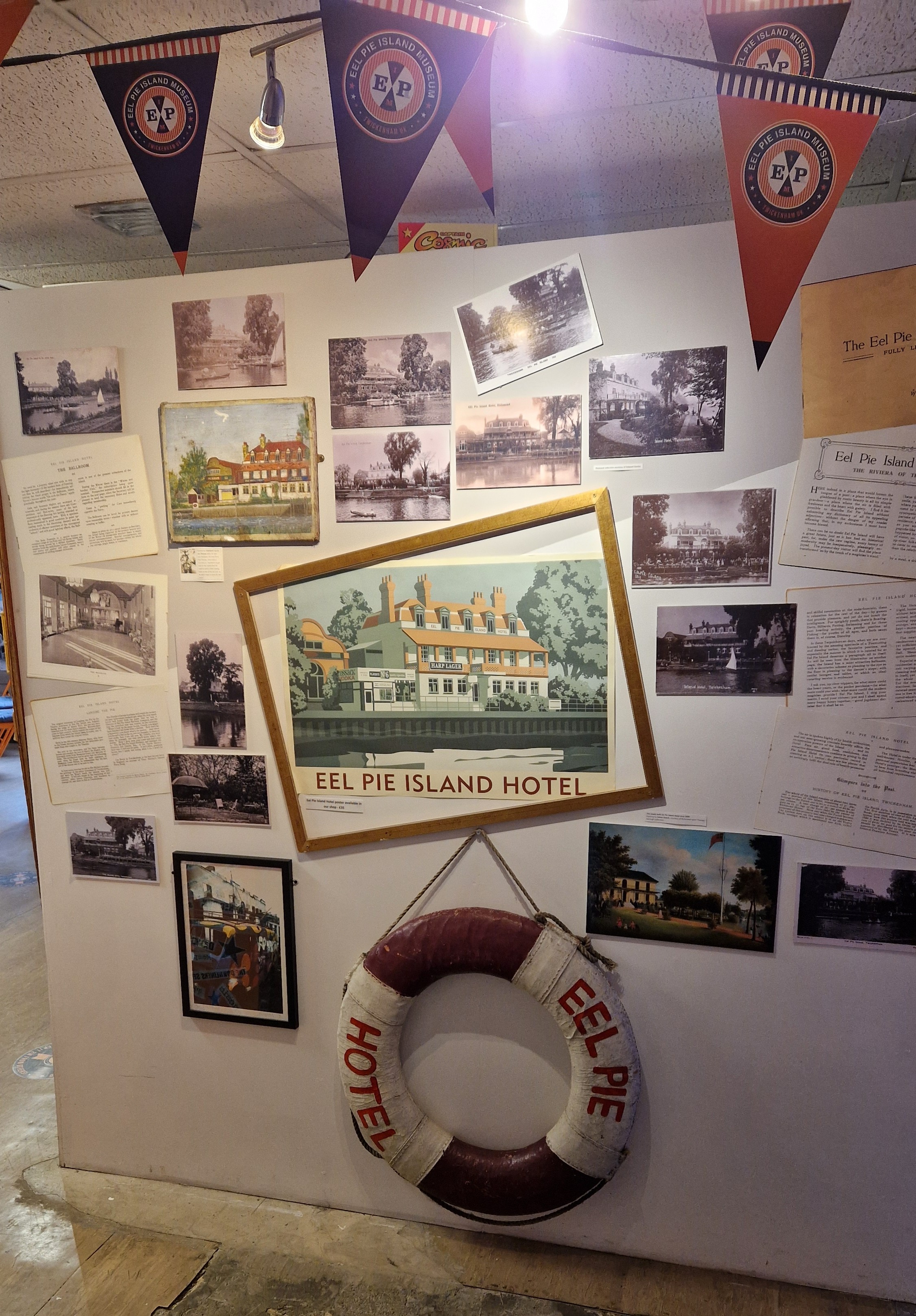
The nineteenth-century Eel Pie Island Hotel

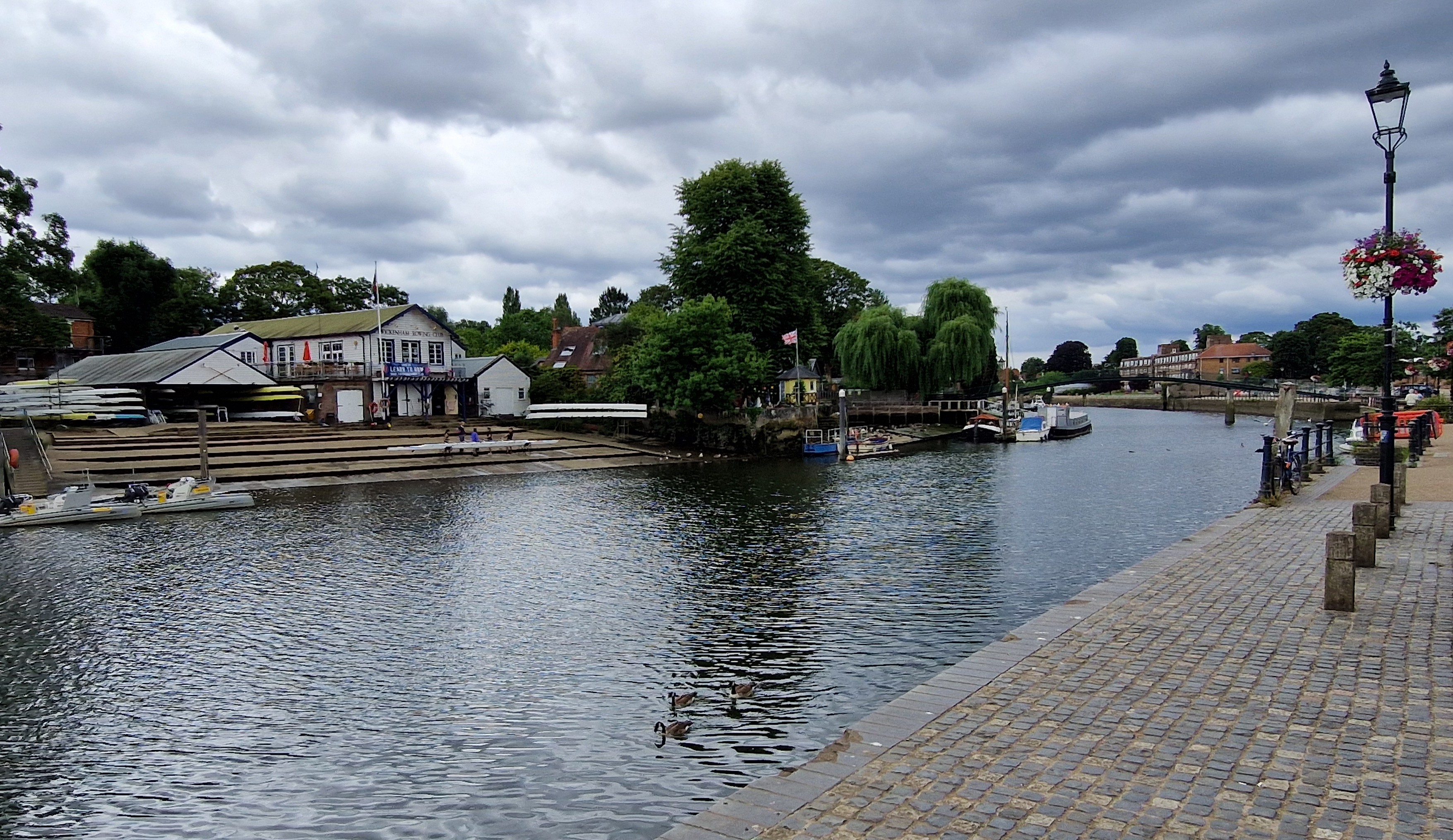
The hotel itself has long been demolished but the Eel Pie Island Museum opened its doors in 2018, celebrating the fascinating musical and boating history of this tiny 8.9 acre island in the River Thames. The museum, itself, isn’t actually on the island but just a short walk away from the banks of the Thames at Twickenham.

Eel Pie Island today

As I was staying in London overnight for a recent trip to the O2, I thought I would pay a visit to this small museum for the first time. Staffed by volunteers and costing just £5 to enter, it’s well worth a visit for any rock or jazz fan or indeed local history enthusiast.

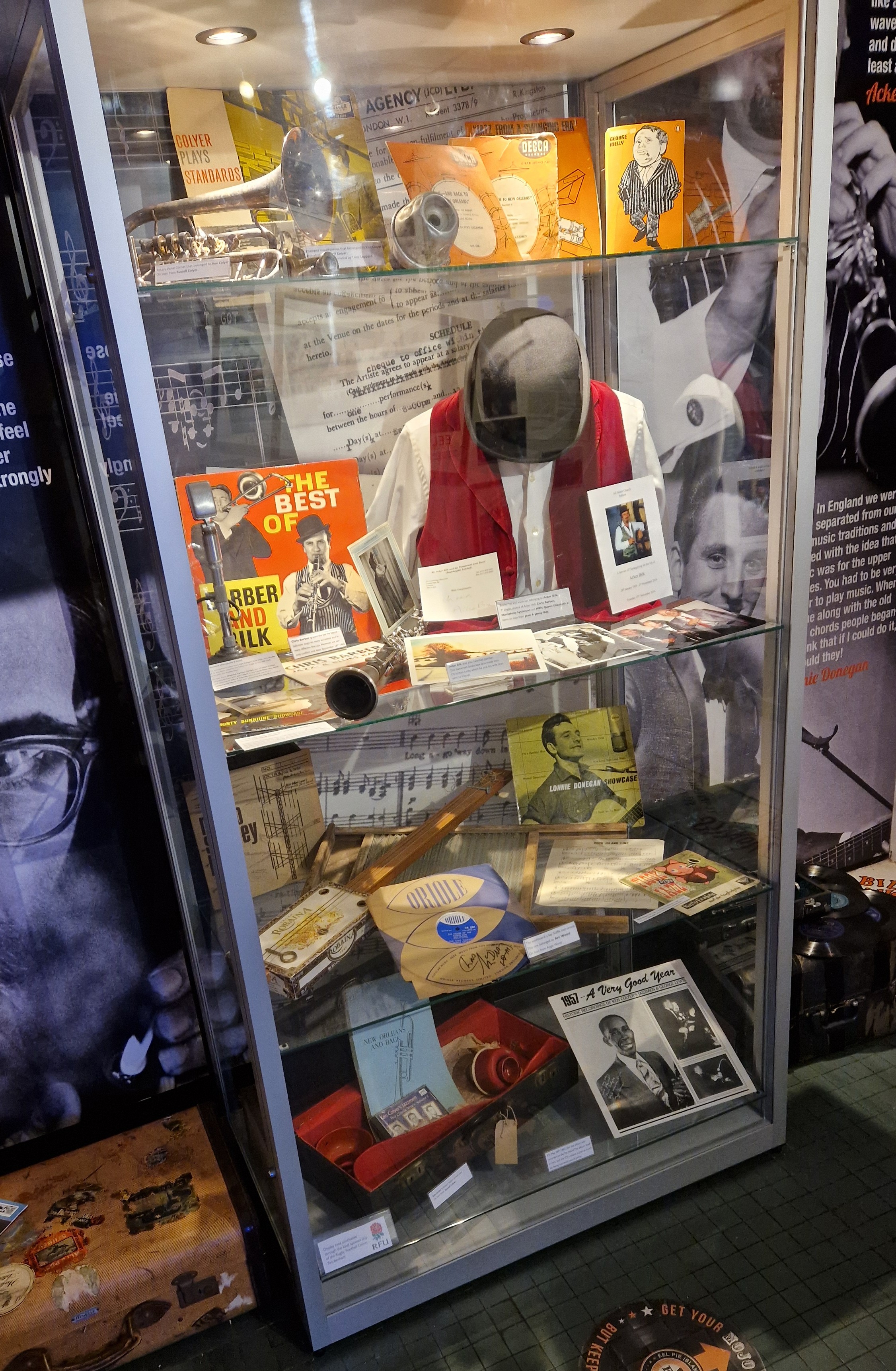
Display on the venue’s past as a jazz club
Acker Bilk’s iconic bowler hat and waistcoat in the jazz display
Trad Jazz gave way to rhythm & blues and rock
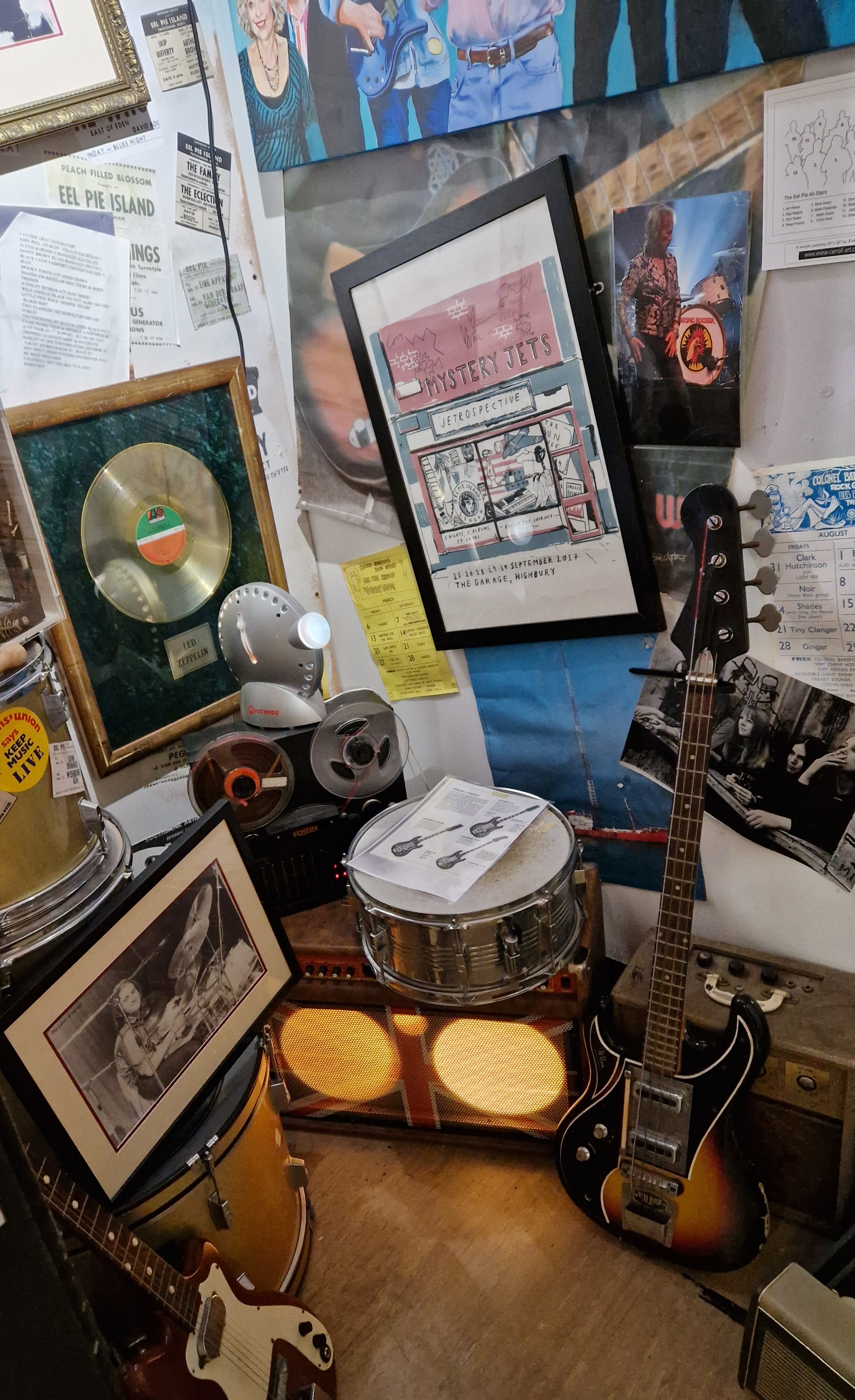
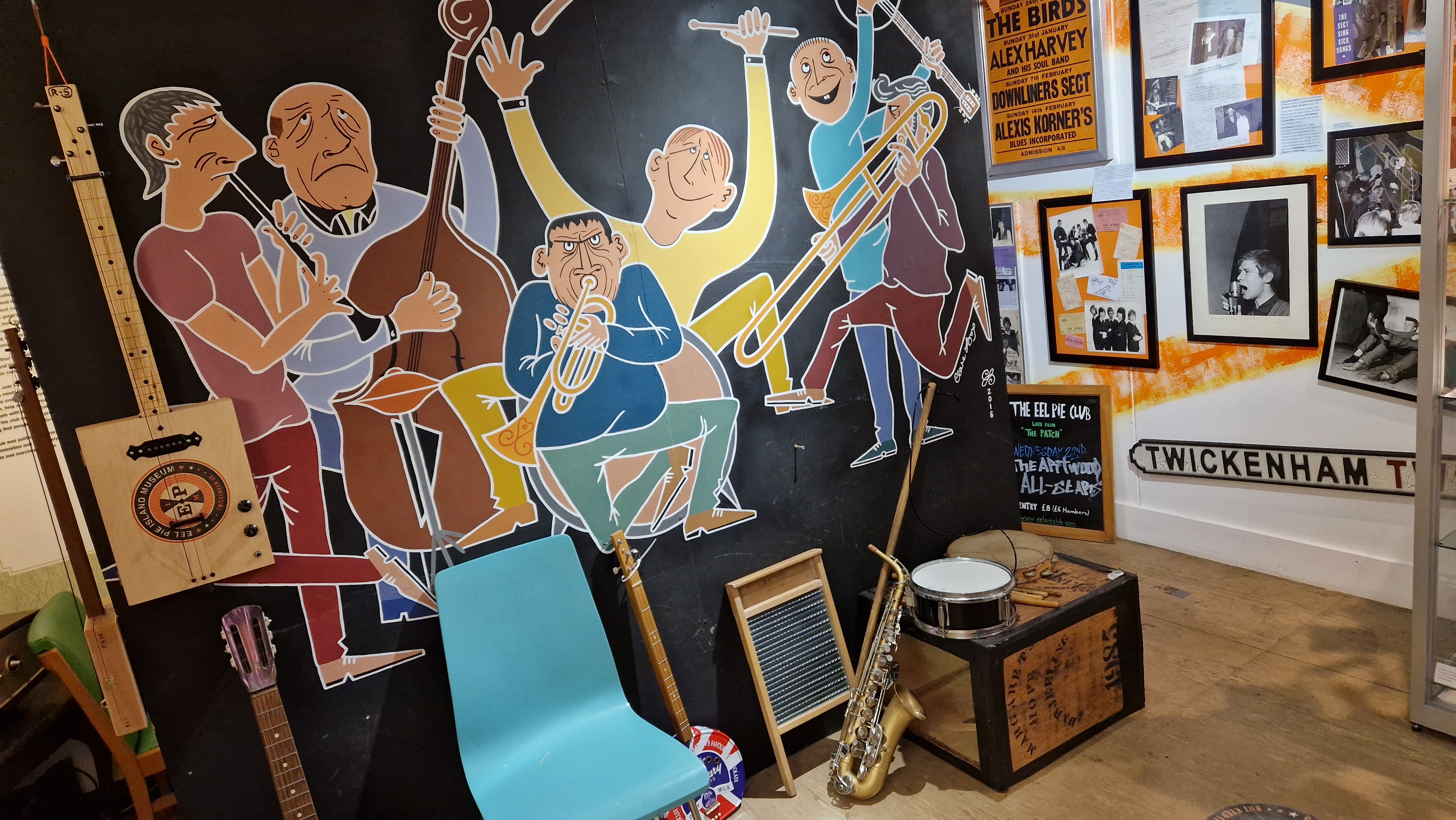
Display of rock instruments and memorabilia at the museum
The Eel Pie Island roll call

There’s fascinating display of musical memorabilia and historical archives, as well as a roll call of all the celebrated artists who played there. It’s not just music either and there are also displays dedicated to the island’s boatyard history and its role as a place for artistic creativity and technical innovation, including being the birthplace of the clockwork radio, invented by the late Trevor Bayliss who had a home on the island.

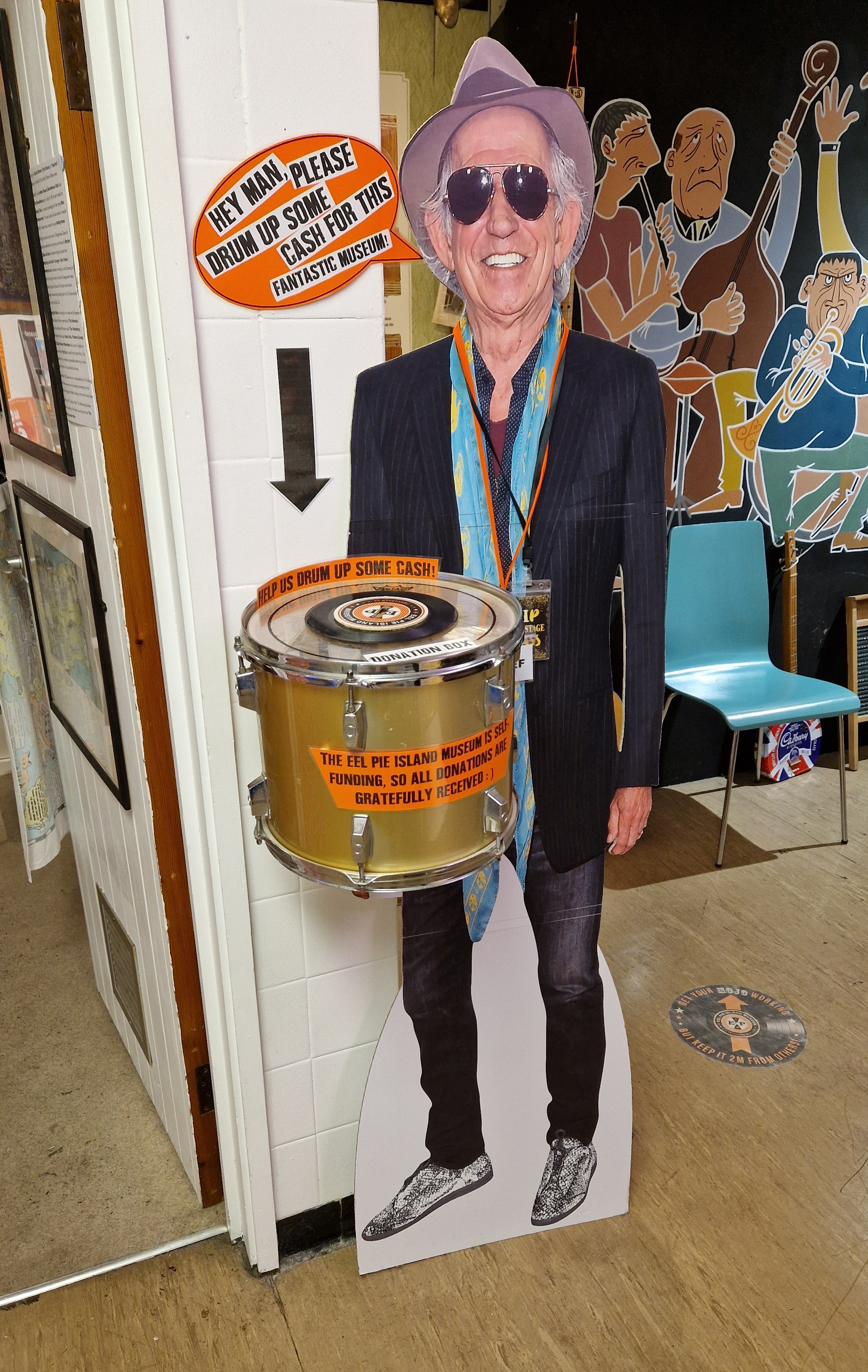
Keith Richards touts for donations for the volunteer-run museum

Given the seismic roll that London has played in the history of popular music, the capital has been behind the curve somewhat in celebrating its world-class musical legacy – particularly in comparison to cities like Liverpool or Memphis. But I’m pleased to say that this is gradually being rectified and the Eel Pie Island Museum is an important addition to the capital’s music tourism scene.

For more information visit: https://www.eelpiemuseum.co.uk/

Related posts:

Visit to the birthplace of British rock ‘n’ roll – the 2i’s coffee bar, Soho

Visit to the Hendrix Flat, London

Visit to the legendary Sun Studios, Memphis

Interview with Greg Ireland of folk rock band, Green Diesel

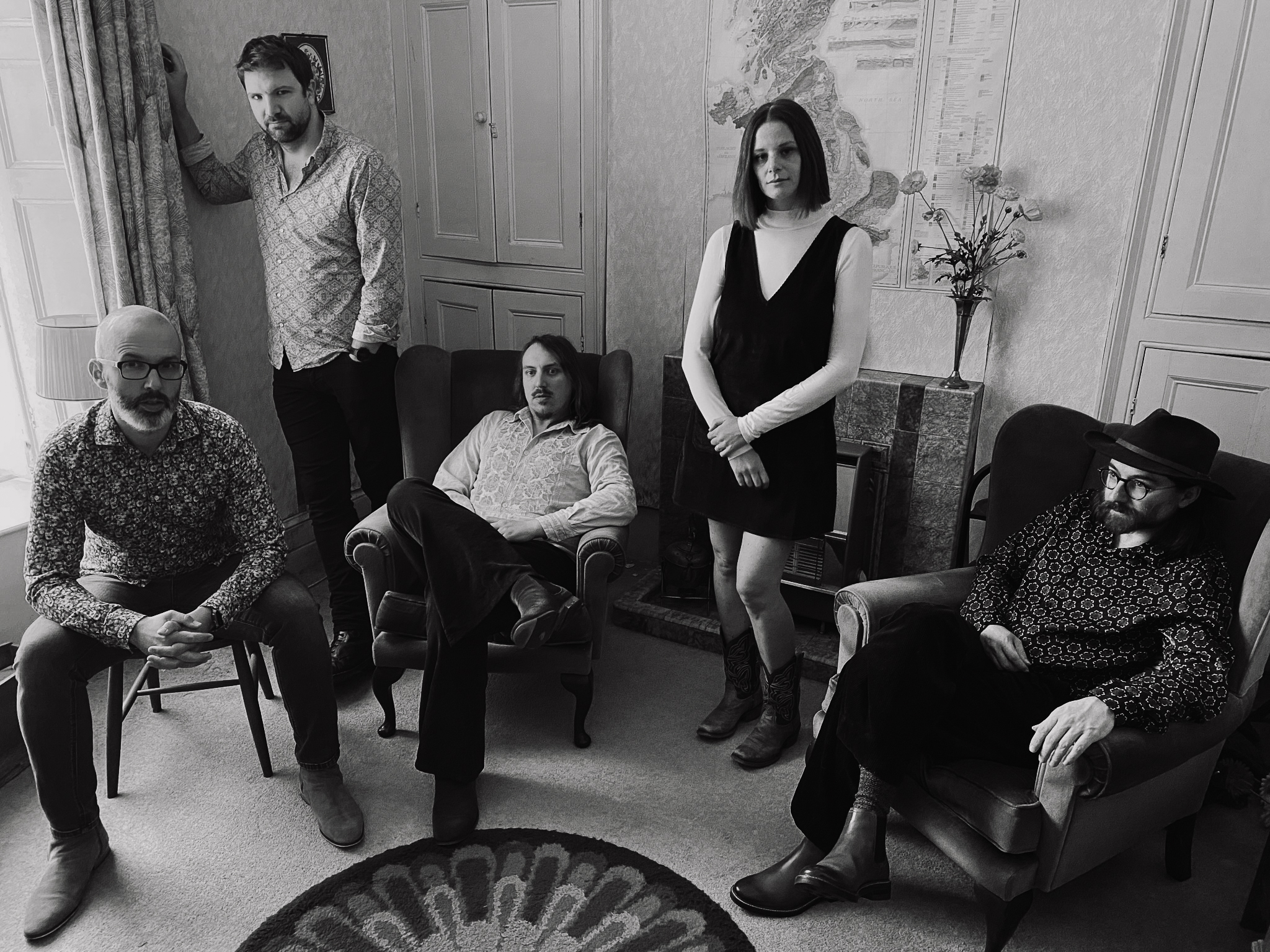
Ahead of the release of their fifth album Onward The Sun! which comes out on 25th April, I talk to Greg Ireland of Faversham-based folk rock band, Green Diesel.

We’ll move on to the new album in a bit but let’s start right at the beginning. Tell us how Green Diesel came about.

Well, it seems like a very long time ago now. I think we’ve probably graduated away from being a young new folk band. So, I guess in some ways it’s a continuation of the band I was in when I was at school. I played in a band with some of the guys who are still in the band today. It’s a completely different group, but it had the same name. And that kind of fell apart as school bands do. And we would just do an occasional gig here and there, where this ever-revolving cast of characters would play some covers that we liked at a local festival. And we could never think of another name, so we just kept going! And then I guess around 2009, that sort of time, I’d kind of gone fairly heavily down a kind of Fairport-esque path.

So, was that a departure from the original incarnation of Green Diesel then?

Well yes and no. We’d always kind of played vaguely rootsy music. So, we did some blues stuff, we did Neil Young-style songs and The Band. So, it wasn’t a complete 180 – but certainly the idea of doing music based around traditional music had been something that had been percolating in my head. And I managed to convince the other guys, again for one of the local festivals: “Oh, let’s get a violin player and as one of our numbers, we’ll do a set of tunes in the kind of classic Swarbrick style.” Which they were on board with. I think I’d dragged them along to a couple of Cropredies by this point, so they weren’t completely against the idea. So, we got Ellen (Care) in to do that and that went well and I took that as a good jumping-off point: “Oh, let’s go down this path.” And that became more of a serious band. And I started writing songs. A couple of the others had started bringing things in. We took the plunge and we got found on the street by Roger Cotton, who was a producer who liked us and said, “Do you guys want to come and make a record?” And so we did and that was our first album, Now Is The Time.  And somehow – there have been quite a few people in and out of the door over that time – we’re still here today.

And when you first put the band together then, did you have a clear idea of the sound you wanted to go for from the very start? Because let me just share this. I’ve got a theory about folk rock in that while the folk element can be fairly timeless, delving back centuries, the rock element usually reflects what’s contemporary at the time in terms of rock music. That was certainly the case with Fairport in the late 60s and early 70s. I would argue bands like Oysterband as well very much reflected the post-punk era in the rock element. But clearly you didn’t go for a sort of millennium-era indie vibe or anything like that. You delved back.

I think we’d always had that kind of retro taste in music. So, certainly there was always elements of that kind of late ‘60s, vaguely psychedelic rock. But I think when we started off, we were playing much more acoustic music. Not always but I rarely played an electric guitar. And although we probably weren’t vibing off what they now call indie sleaze (and at the time I called ‘horrible music without a tune’) – there were a lot of bands around at the time, like the Decemberists who were a huge influence on us. And early Arcade Fire. We just caught the beginnings of what came to be termed ‘new folk’ and so there was an element of that in there as well.

So, I wouldn’t say it was completely “we just want to go retro”. But then, equally, I grew up listening to Britpop-type music, which always had that very  ‘looking-back’ element to it. So, I guess we were the start of that musical generation who just sort of had everything – who grew up listening to their parents’ music and then had their own music. And the big genrefication that really lasted up to the early ‘90s was just starting to break down a bit. I think you see it more today with younger people who will listen to everything, you know, encompassing Disney soundtracks, to Steely Dan, to actual contemporary pop stars – which you’ll have noticed I haven’t been able to name any of! But I think guys our age were maybe at the beginning of that kind of change in music consumption that we see today, possibly.

Yeah, I think I think that’s fair. I think I did my own sort of 1980s teenage version of a Spotify playlist, which was just going to second-hand shops and buying ‘60s and ‘70s albums incredibly cheaply and discovering music that way. So, yeah, I think that’s right.

And then moving on, there’s been quite a gap between this new album, Onward The Sun, and the previous album, After Comes the Dark. Can you give us a quick update on what’s been happening in Green Diesel since the last album came out?

Yeah, in some ways it’s an even bigger gap than it might seem now. Because although After Comes the Dark came out in 2021, it was predominantly written and recorded in late 2019/early 2020 and then got stuck by COVID so we could never finish it. The material on that album feels very old, not necessarily in a bad way, but it really feels very different. So, I guess quite a lot has happened since then. Ellen’s had two children, which has somewhat made progress perhaps run a bit slower than it might otherwise have done. We’ve got a new drummer in. We had Paul (Dadswell) on the last album,  circumstances took him elsewhere in life. We were very lucky to very quickly find Ben Love, who is on duties for this album and he’s been a fantastic addition. So, there was a lot of just gathering together of material.  And I think one of the big things about this record that maybe is different to some of the others, it grew a lot more out of just jamming and playing around with ideas. I think in the past, it’s very much been the writer – be it me or one of the others – coming in with a song and, not everything charted out note for note, but a pretty good idea of “this is how I want it to end up”.

But this one, partly because we had long periods of time where Ellen wasn’t able to participate directly for children reasons, basically the four of us were bored. We quite liked to play something even if we weren’t able to get out and gig as much as we might have wanted to. And particularly that post-COVID period where you were able to do things again, it was a nice novelty to get together in a room and just make some noise.

So, there’s quite a few songs on this record that have grown more out of that. They’re kind of longer and a bit looser, maybe structurally. And then Ellen had a second child so we had the backings of the songs down and then we took a break. What I call her maternity leave. Then came back to it. So, it’s just a lot of playing. And I think it was particularly good when Ben Love came in on drums because it meant very quickly, we sort of found our groove, literally. It gave us a really good chance to work up that material. And I should say as well, Paul put in a lot of work on some of the songs. There were, I think, two or three that have been part of our live set now for two or three years. So, it’s very much been a group effort in that sense, which I really like about it.

So that accounts for some of the longer instrumental sections in some of the songs, which I know you’ve really gone for on this album?

Yeah. I think, jumping back to one of your earlier questions, we’ve got a lot heavier as a band over time. And that sort of lends itself to that kind of sonic exploration and just jamming it out a bit. And partly the way that our tastes have gone. I think still rooted around songs that work as songs. We write in a very hook-led way. But yeah, just that bit of freedom to keep going, I quite like.

Yeah, I like what you’ve done and, as you say, without losing the essential element of the song. I mean, some bands can jam so much that the actual purpose of the song is lost. You haven’t done that.

Yeah, we haven’t got to Grateful Dead so far. Who knows what comes next!

What do you want to tell us about the new album and some of the songs on the album?

So it’s nine tracks this time and there’s a couple of traditional pieces on there, but they’re predominantly from within the band. I’ve written some, Ben Holiday on bass wrote one, Matt on guitar has written one and we’ve got a cover as well. There’s a cover of  ‘The Maypole’ song from The Wicker Man soundtrack, which Matt bought in. That was quite good fun to work on.

It does seem a very good fit for Green Diesel.

Yeah, that soundtrack as a whole has always been a big, big influence for us. So, it kind of seemed right to go there. We haven’t done a lot of covers, traditionally, so it was quite an interesting challenge.

Yeah, so there’s a good variety of writers there. I wouldn’t say there’s a theme to the album, but it kind of builds on where we were going with After Comes the Dark. Although the majority of the songs are original, they’re very much rooted in a traditional folk idiom. And there’s a lot of folk-lore. The weirder end of folklore but I suppose the term that’s popular at the moment is folk horror. And that kind of really ticks quite a lot of our boxes. So, there’s some bits about witchcraft in there and some of the traditions around potion-making. And while I say it’s darker, I think there’s a kind of optimism there as well. Very rooted in the natural world and what we see and what we experience. And then we’ve finally managed to do our Moris On bit because the instrumentals are two Morris dance tunes, which is something that me and Ellen have both been keen to do for a while. And we’ve done that in our own way. It kind of wanders off a bit in the middle and, you know, bringing some of our – those of us who have them – slightly proggish leanings. So just to really, really sell it to the hipsters, it’s Morris dance music mixed with progressive rock – because obviously that’s a pretty big thing!

They’re so evidently Morris tunes from the moment you hear them, but yeah, they’ve been given the Green Diesel treatment so it definitely fits in with the album as a whole.

Yeah, I think I’d probably describe it as quite a confident album. It’s the album of a band who kind of know who they are. That partly comes from just playing together a lot, but there’s a real core strength there. I suppose it’s the one I feel, so far, that we’ve done that sounds most like us. It feels very much like everything’s been developing up to this point to, to get to where we are in 2025.

And on the live front, you’ve got some gigs coming up in Kent and Sussex. And I’m hoping to get to the Brighton one. But where I would really like to see you would be on the main stage at Cropredy. I think you’d go down a storm. And when I interviewed Dave Pegg, he told me that they’re not able to have the really big names, the Brian Wilsons and the Alice Coopers that they’ve had, because of the financial constraints that they’re now facing. They have downsized the festival to make it more financially viable so it could be the perfect opportunity. I think you would go down an absolute storm.

That’s what I’d love to think. So, if Dave’s watching this, then come and get me! Back when my brother was still in the band and we were at I think the 2007 Cropredy, that was always the goal. Unfortunately, the goal was to do it by 2014 so we’ve missed the mark a little bit there. But we’re always open to offers!

Well, let’s see, it would be good. Because you have played the fringe, haven’t you?

Yeah, we’ve done the fringe a few times. That’s always good fun. I mean, generally, just, just being able to play to people who are open to listening to what we do is always good. The reality of being where we are in our lives means, unfortunately, we’re not in a position at the moment that we can all  jump in the van and go around the country for three weeks. So, we have to be, I suppose, more, selective. And partly financial realities as well. I’d love to go to Europe, but to make it pay – or at the very least cover costs – it’s much more challenging now. And that’s just the reality of it. But, you know, and it’s probably what keeps us going, to be honest, there’s something about that kind of response from people who are listening to music that you’ve created. And it might be the first time they’ve heard it. They might have come to every show. Either way, there’s just a real kind base-level thrill to that.

Fantastic. Is there anything else you want to tell people before we wrap up?

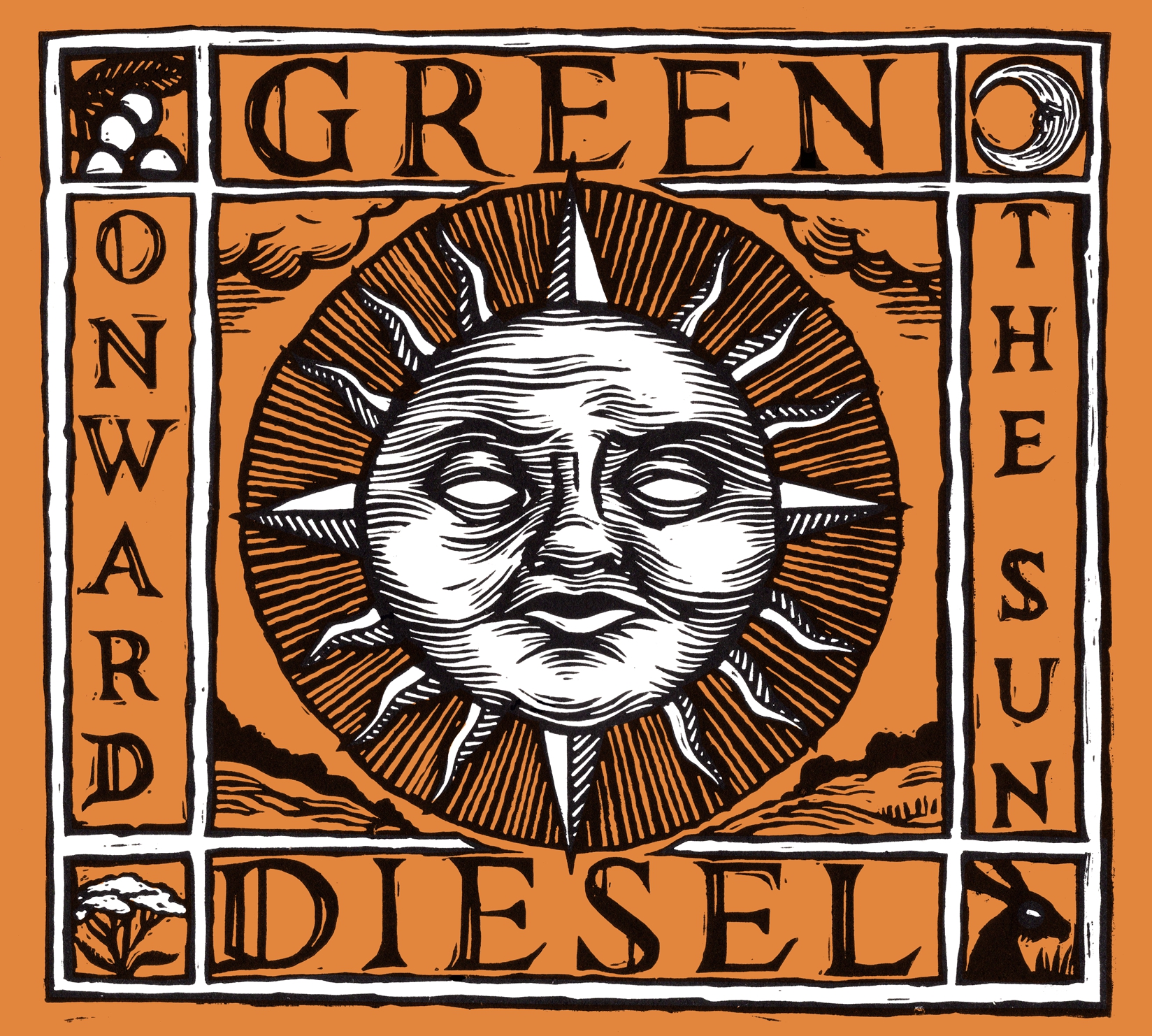
So, the album that we’re discussing is called Onward The Sun. It comes out on 25th of April. It’s going to be available digitally and on CD. That’s it at the moment. Who knows, if demand is there we might look at doing a vinyl version some way down the line. You can pre-order it. If you go to the website, which is greendieslefolk.com, you can order a copy there. It’s got a lovely front cover. It’s made by an artist based in Margate, which is not that far away from us, called Matt Pringle. And I think he’s really got the core of what we’re doing. So yeah, please check us out. We love to reach new people. If you do happen to be promoters for a slightly more mature folk rock band than you would have had a few years ago, then do get in touch because we always love to find new markets. But yeah, please give us a listen and I hope you enjoy it.

You can watch the full interview on YouTube here.

Onward The Sun! is released on 25th April by Talking Elephant https://greendiesel.bandcamp.com/album/onward-the-sun-2

Related posts:

Celebrated folk rock band Green Diesel back with long-awaited fifth album: Onward The Sun!

After Comes The Dark: new album from Green Diesel promises folk in glorious technicolor

Green Diesel at The Albion, Hastings 2017

Green Diesel album review – Wayfarers All

Green Diesel at Lewisham 2016

New book out this summer: ‘Steeleye Span 1970 to 1989 On Track: Every Album, Every Song’ by Darren Johnson

Following my ‘glam rock trilogy’ covering Slade, Sweet and Suzi Quatro, I now turn my attention to folk rock. I’m delighted to announce that my fourth book for Sonicbond Publishing will be coming out this summer. Steeleye Span 1970 to 1989 On Track: Every Album, Every Song will be out on 29 August 2025.

This latest book is part of Sonicbond’s ‘On Track’ series.

You can read the publisher’s blurb here:

When Ashley Hutchings broke away from Fairport Convention in 1969, he recruited two musical duos who didn’t seem to agree about very much at all. This fractious group imploded before their debut album was even released. Undeterred, two new musicians were enlisted and Steeleye Span carried on. Then Hutchings himself resigned. Rather than this being a disaster, however, it set in train what would become the band’s most commercially successful period. It was an extraordinary time for folk rock but it was not to last. The second half of the 1970s saw another change in line-up, disappointing album sales and a two-year hiatus. All was not lost, though, and the classic line-up reconvened at the start of the 1980s.

Covering a two-decade period, this book looks at every album from Hark! The Village Wait in 1970 to Tempted and Tried in 1989. The fascinating history behind the traditional songs on these albums is examined in detail, together with insights into how the band went about truly making them their own. Steeleye Span On Track is a meticulously researched celebration of the music of one the UK’s most important bands in the folk rock genre at the most crucial period in its history.

About the author:

A former politician, Darren Johonson spent many years writing about current affairs, but after stepping away from politics, he was able to devote time to his first love: music. His previous books for Sonicbond were The Sweet In The 1970s, Suzi Quatro In The 1970s and Slade In The 1970s. Following this glam rock trilogy, he now turns his attention to folk rock. A keen follower of both rock and folk, he maintains a popular music blog Darren’s Music Blog and has reviewed many albums and gigs over the past decade. He lives in Hastings, East Sussex.

You can pre-order the book on Amazon here

It will also be available from the publisher’s online bookstore and other retailers in due course.

https://www.sonicbondpublishing.co.uk/

Related posts:

‘Slade in the 1970s’ by Darren Johnson – reviews round-up

‘The Sweet in the 1970s’ by Darren Johnson – reviews round-up

‘Suzi Quatro in the 1970s’ by Darren Johnson – reviews round-up

Interview with David Smith of Gypsy’s Kiss

Back in the early 70s, David Smith formed a band with a former school-mate called Steve Harris, better known as the man who went on to create heavy metal icons, Iron Maiden. I catch up with David to talk about those early days playing with Steve in Gypsy’s Kiss, about reforming the band back in 2018 and about the enthusiastic response from both fans and reviewers to the band’s live gigs and recent album.

So back to the very early days. Steve Harris was a schoolfriend. When did you decide that you both wanted to be in a band together?

The middle of ’73 – when the world was in sepia, Darren! I had left Leyton County High School for Boys. Steve was also a pupil there but the year below me… And we met up after we left school – accidentally, I would say in the middle of 1973, because we knew each other and we had mutual friends. Our interests were aligned. We were both fanatical West Ham supporters. We loved football. We both loved rock music and, interestingly, we’ll come on to this – the influences for Steve and myself at the time were not always what you might think. They were obviously rock – but tons of prog and lots of other things.

It was a great time for music across all genres!

If you looked at an albums chart or even a singles chart between ’72 and ’74 you would be amazed that it’s the music people still listen to today. Because it’s so damned good. So, we became  good friends. We’d see each other three or four times a week, we’d go to the pub together. We’d talk about music. We’d talk about football. We’d share the bands we liked and we’d go and see a lot of gigs together. And then it would seem natural… “Why don’t we form a band?”

I played guitar for about two years before that. Steve wanted to be a drummer but couldn’t get drums in his nan’s living room which is where we rehearsed. Where he lived in Steele Road about half a mile from where I lived. And so, you get  that lightbulb moment: “I think I’ll be a bass-player…” Well, there you go. And that’s what he wanted to do so he and I went to – I wish I could remember the shop we went to – and he bought a Telecaster copy bass. And I taught him the rudiments because I could and then he took it from there.

And then, we must form a band! This band was just he and I for a month or two but we still rehearsed and we did mostly covers but not all because we were writing stuff, as you’re probably aware. Stuff that we’re still playing now and Steve references quite a lot. And so, we were doing that and we looked at other guitarists and we looked for drummers and eventually we decided to have only one guitarist which was me. And then we found a drummer. His name was Alan – I can’t remember anything more about him and there were, essentially, three of us in Influence [original band name prior to the adoption of the name Gypsy’s Kiss].

And for reasons why bands evolve, particularly when you’re only 19, we brought in Paul Sears on drums. And Paul is still one of my very best friends today. And then we rehearsed quite a bit and rehearsed in front of family and friends and did sort of pseudo-shows. I then wanted to concentrate on playing guitar more and I found singing and playing guitar a bit of a distraction so we brought in Bob Verschoyle and Influence became Gypsy’s Kiss.

Gypsy’s Kiss in 1974 (reproduced from Gypsy’s Kiss website)

And it became really clear – and the reason Gypsy’s Kiss dissolved away I would say in the summer of ’75 – was because Steve was a workaholic. He just wanted to rehearse and rehearse and rehearse. Like he is today. Rehearse and rehearse and play and play. And you know, “We can’t go out for a drink. We’ve got to rehearse this song”, “Oh, we’ve got to write that.” Paul and I had enough of it really at 20 years old and then Steve moved on. And when I saw him recently, I always reference his work ethic which he’s got right now.

You obviously saw the work ethic; did you get an impression from Steve early on at that stage that here was a Bonafide rock star in the making?

No. Because I wouldn’t know what one of those looked like to be honest. I saw them on album sleeves and at gigs and on TV. No, what he had and still has was a drive. I don’t think his ambition was to be the greatest rock bassist ever – but he’s in that league isn’t he? I think he wanted to be a professional musician. That’s what he wanted to be. And he wanted to be a good professional musician. And if you look from when Iron Maiden was formed in ’75 and, without being harsh, they didn’t do much for five years. Honing the craft, getting better, doing gigs.

But the thing about that period – and I played in other bands – is that there were so many places to play. And every place wanted an original band. Chuck in a few covers if they didn’t have enough of their own material. And so Iron Maiden and other up and coming bands, gigged and gigged and gigged and gigged. And they got so good at playing that the rest naturally followed. So, the long answer. Did I think he was going to be a rock star? I don’t think so – maybe he did. But he certainly had drive and that’s the most important thing.

So, Gypsy’s Kiss ran through ’74 and into ‘75. You were playing a mixture of covers and writing original songs. Did the drive to write original songs come from yourselves because you had that ambition or was it more that this is what the venues were expecting?

No. This is what we wanted to do. I don’t know if bands are the same now but bands who want to – not make it – but just wanted to do well and perform to audiences, we always wanted to write our own songs. In fact, we were writing stuff, or I was at first, and playing that. And when we started to get gigs after that it was, “God, we’ve only got half an hour. We’ll have to do something else.” So, we threw in… you know good covers. Ones that everyone was doing and a few that they weren’t doing and it filled out our hour-and-a-half set. So, then the set was based on the originals and there were about six or seven covers that we used to fill.

So, yes – our ambition was to write and record our own stuff. Steve’s done thousands of interviews. You’ve already read many of them. But one of them came up quite recently… and Steve said that when Gypsy’s Kiss folded, he joined Smiler. And the reason he left? Because they were doing too many covers. He wanted to write and do his own stuff.

When Gypsy’s Kiss came to an end did you always carry on playing in bands after that or was it just a matter of getting on with life and focusing on the day job and stuff?

Probably always in a band. You have some years where you lay off doing it and then go back. But when Gypsy’s Kiss came to an end, oddly, I was invited to join a country and western band. And I joined – you know Stetson hats and bootlace ties and satin trousers – and I was 20! And I played bass, by the way, which is even more weird! But it was twenty-five quid a night for me which in the mid-70s was actually quite a lot of money. So, I did that and then I went with other bands. I played in a band with Doug Sampson who was in Iron Maiden for a bit. And then I did other bands, other things, years off here and there. Yes, so pretty much all the time. I’ve probably been whatever full-time means now, i.e.: doing it constantly since the mid-90s.

So, let’s move on to the band today then. You reformed in 2018 for the charity gig, Burrfest. That was initially just as a one-off. How soon after that did you decide to make things permanent?

I’d been asked to reform Gypsy’s Kiss – out of Iron Maiden fans’ curiosity. I’d say more with an explosion of information online. Lots of people became curious and I was asked a number of times to reform some version of Gypsy’s Kiss. And I didn’t want to. Because I thought it was yesterday and it wasn’t right. Bizarrely, I was in a covers band from 2010 to 2017 – quite a reasonable one. And we played a gig in Gidea Park in Essex and without going through the boring details all of the original Gypsy’s Kiss members – including Steve – were there. He came to see us. Along with Teddy Sherringham, the footballer, for some bizarre reason. And during that gig, at the end of it, I said, “We’ve got friends here from my musical past. Do you mind if they come up and busk a song with me?” The band I was in didn’t mind. So, I got Paul on drums and Bob to sing – and I didn’t invite Steve to come up and play bass. The reason being it was already full of people filming. I thought, this is the last thing he wants. Everybody loved it. I’m sure it’s online somewhere. Steve came over to me at the end and he went, “I’m upset you didn’t ask me!”

The original members of Gypsy’s Kiss meet up in 2013 (Photo reproduced from Gypsy’s Kiss website)

And you were trying to give him a quiet life!

I was trying to not put him in an online spot. So that was 2013. And I’d been asked a number of times. Darren. I just didn’t want to do it. However, I buckled to the pressure in 2017. And it was, “Would you play Burrfest?” I think it was in the March 2018 and I went, “OK.” I asked Paul to play drums. He didn’t feel up to it at the time. I asked Bob to come and sing. And, again, I didn’t ask Steve – and he’s moaned at me about that since!

So, using musicians I knew locally and whatever, I put the band together. A real one-off. And it was such a great gig. The audience’s reaction to this thing that they wanted to see – and they wanted to hear some of the original songs that Steve had played on – was just amazing. And I sort of thought, well this is a bit silly , not to do this again.

Gypsy’s Kiss at Minehead, Butlins 2025 (Photo: Darren Johnson)

Obviously, our fanbase such as it is was Iron Maiden fanatics. Probably still is. But we’ve worked really hard to try and widen that and maybe we have. You’ve probably seen – and I still use it when I find it helps – our tagline ‘top of the Iron Maiden family tree’. And if we’re doing something specialist, we do occasionally play some Iron Maiden songs. The early songs. We’ll do one or two of those if the audience is clad in Iron Maiden t-shirts. It seems a bit churlish not to, doesn’t it?

And no way would I ever forget the past because it’s why the band exists but you try and move on. In saying that, I got very, very friendly with Paul [Di’Anno – former Iron Maiden singer] again about five years ago. Because we had the same interests – rock music. He was born just up the road from me. We went to the same school. We knew the same people. And we met up – I went round to his flat – and we chatted for ages about stuff. And Paul and I became really, really good friends. And we did gigs with him and, you know, his loss was enormous. He was such a nice guy. And when we did some gigs with him it was huge fun. And his passing – his funeral was a bit of a celebration really, as it should be. At the service Maiden songs were played which was quite touching. And the point I’m getting to now is, I sang a few tribute shows as Paul after that. I really enjoyed it… So, I’ve not completely forgotten the past but we do try and shuffle on.

I think if you’d had a grand plan for all this over a fifty-year period, you chose a good time to reform in many ways, with a renaissance for classic rock on the live gig circuit.

What I’m most grateful for is the period I was born and grew up in which was just so changing, so iconic, so wonderful – for me anyway – from the flow of music from the ‘60s to the ‘70s. You know, in my formative years I was able to grow up with some of the most fantastic music and great influences. That’s what I’m really grateful for.

And then, as you say, as you get into your dotage, if you reform there’s been a resurgence in classic rock. And what we’ve tried to do – I hope we’ve succeeded in a small way – is to take that fantastic genre and to slightly update it. Without losing its heart. And so, you give the audiences what they want but something a little extra. And we certainly have elements of prog in our songs. Our third album is coming out this summer – it’s not quite finished – which I’m really pleased with.

But I think essentially, we are a live band. You know, we ham it up a lot on stage. We swear a lot. We’re involved with the audience. That’s what I think we are – a live band but we try to bring out our diverse musical influences, based on classic rock.

You must be pleased with the reaction to the 74 album which I think very much stands up on its own terms, regardless of any historical Iron Maiden connection.

That’s very kind of you and, interestingly, a lot of reviews said the same. If I’d have gone back to 1974 and thought, one day, David, your album will be reviewed in Classic Rock and people will say what you’ve just said – it’s not a curiosity of Maiden, it’s a stand-alone band – I’d have thought, well that will be good. I’ll take that as a pinnacle of one’s career!

Yeah, we were really pleased with 74 and I still am. And it’s the basis of our set for the new album – which hopefully will be out in July. There’s some of the past in the style of music. We can’t do an album that doesn’t have a gallop in it somewhere because that’s how it all happened. So, there’s, what I would say, more retro songs and some that I think are probably more up to date. But you know we’ll see. I just enjoy playing stuff live to be honest… I would say that’s why any musician wants to do what they do because there is nothing like standing on a stage in front of a number of people – it doesn’t mater if there’s twenty or thousands – and you enjoying what you’re doing. And if you get one person in the audience who looks like they’re having fun I find that great.

In some of our earlier Gypsy’s Kiss gigs, once we’d been a few years in. I still found it quite odd that people in the audience were singing back the lyrics that I’d written probably knowing them better than I do. And I still find that quite a sensation.

I think that’s also testimony to the skill of writing really catchy songs that instantly grab people’s attention. That is a skill.

That’s very kind. You’ve probably heard in our music – and it’s where Iron Maiden evolved down a parallel track – is that I was brought up on Wishbone Ash and Thin Lizzy. You know, guitar bands, harmony guitar bands. And like Iron Maiden, we are three guitars doing guitar harmonies and rock riffs. I get asked, “Who do you think you’re like?” Well, I think we’re like ourselves. But I hear in our writing and playing, bits of Wishbone Ash and Thin Lizzy, bits of Uriah Heep. And I’m not ashamed of that at all. That’s the music I grew up on.

So, what next for Gypsy’s Kiss then?

It crossed my mind, thinking of age and circumstances that last year was our 50th year which we did quite a lot on and it went really well. And I did wonder whether the 50th was a good time to stop doing it – and we’ll see what Iron Maiden do after 1975. But I said, “Ok, we’ll do another year.” So, this is out 51st anniversary tour and we’ve got a lot of gigs already confirmed.

I enjoy festivals more than anything because I can listen to other bands and you just enjoy the vibe and you meet all the people there so we’ve got quite a number of festivals. The album coming out in July, I hope. Gigs start in April and run through until end of November so we’ll be here there and everywhere. And I’m looking forward to it. The live stuff is what we all look forward to and we’re three times this year back at our spiritual home. I say the Cart & Horses is actually the birthplace of Gypsy’s Kiss rather than Iron Maiden.

Well, you came first!

We did our very first gig there. We’ve got three gigs there. You’re probably aware, we’re playing at a midnight show at the Cart & Horses after the Maiden gig fifteen minutes up the road – which sold out in about fifteen minutes. It was really quite odd! But we’ve got other gigs at the Cart & Horses and we’re doing a short tour with Soulweaver. We’re doing about five or six gigs with them because we get on well and the music’s complementary, I think. And we’re doing a few gigs with a prog band called Ruby Dawn who are really, really good. So yeah, we’ll be here there and everywhere, with an album to flog in the middle of the year.

New album – Piece by Piece out in July

Forthcoming Gypsy’s Kiss gigs here

https://www.gypsyskiss.net/

Related posts:

Live review: Gypsy’s Kiss / Praying Mantis at the Carlisle, Hastings 2024

Live review: British Lion at Blackbox, Hastings 2024

Behind the mask: interview with Thunderstick’s Barry Graham Purkis

2024 in Darren’s music blog – the ten most popular posts of the year

A Happy New Year and thanks to everyone who has visited Darren’s music blog during 2024. As usual, we have a nice eclectic mix of musical genres featuring in this year’s top ten most viewed posts: folk-rock, prog rock, glam rock and much more besides. Here’s to 2025! 

1. Live review: Saving Grace with Robert Plant & Suzi Dian, White Rock Theatre, Hastings 23/3/24

Of all the ‘70s rock gods, Robert Plant is perhaps the one who has most has steadfastly refused to be pigeon-holed in the superannuated, stadium heritage rock act persona. It’s meant he’s continued to surprise and delight with new musical ventures. And it’s meant I could stroll along up the road to see him and his band perform an intimate gig in my local theatre.

Read full review here

2. Interview with Fairport Convention’s Simon Nicol

Ahead of Fairport Convention’s 2024 Winter Tour, I caught up with Simon Nicol. We discuss Dave Mattacks’ return to the Fairport fold, the forthcoming tour, this Summer’s Cropredy and why he won’t be retiring any time soon.

Real full interview here

3. Farewell Frank Torpey – the last surviving original member of The Sweet

Frank Torpey’s role in the history of The Sweet was a small one but, nevertheless, an important one. Moreover, as well as continuing to play and record, he was always happy to engage with fans about The Sweet’s very early days. My tribute to Frank, who died in March this year.

Read full obituary here

4. Live review: Fairport’s Cropredy Convention August 2024

As things drew to a close with the familiar rendition of ‘Matty Groves’ prior to ‘Meet On The Ledge’ Simon Nicol confirmed that he’d been given permission by the ‘powers that be’ to throw in his usual ‘same time next year?’ invite, in spite of the festival’s future looking extremely precarious earlier this year. Phew! It will be going ahead in 2025 then. I’ll be there…

Read full review here

5. Bowie backing vocalist to reprise iconic ‘shopgirl’ role on ‘Absolute Beginners’

‘Oh, and I need to find a girl singer who sounds like a shopgirl,’ he said.

‘My sister Janet sings a bit, and she works in Dorothy Perkins,’ I ventured.

‘Great,’ he laughed. ‘Get her in.’

Read full article here

6. Live review: Oysterband & June Tabor, De la Warr Pavilion, Bexhill 5/10/24

It was almost exactly ten years ago when I last saw June Tabor and Oysterband at the De La Warr Pavilion, my first time visiting this stunning piece of 1930s architecture. I wasn’t even living down here yet but a friend had a spare ticket going and I came down for the weekend. So, when Oysterband announced their ‘Long Long Goodbye’ farewell tour with June Tabor, once again, as their very special guest I booked a ticket straight away.

Read full review here

7. Beckenham, Bowie, the Spiders and glam: interview with Suzi Ronson

Suzi was a small-time hairdresser in Beckenham before being swept up in a world which saw her become stylist for David Bowie and the originator of the iconic Ziggy Stardust hairdo as well as falling in love with the late Spiders From Mars guitar icon, Mick Ronson, who she would go on to marry.

Read full interview here

8. Live review: Tubular Bells – the 50th anniversary celebration at White Rock Theatre, Hastings 30/10/24

From the familiar opening bars of part one of Tubular Bells, through every second that followed the who thing was just a magical, mesmerising and utterly unforgettable experience. For something that was so clearly conceived as a studio project, to see it transformed into a live performance piece in this way will stay with me a long time. Hats off to Robin A. Smith for pulling together such a stunning interpretation of one of the all-time classic instrumental albums.

Read full review here

9. Live review: Martin Turner ex Wishbone Ash – White Rock Theatre, Hastings 6/9/24

Performing two hour-long sets with a short half-hour interval in the middle, it’s a superb night packed full of Wishbone classics. I won’t say I haven’t enjoyed Andy Powell’s ‘official’ version of the band when I’ve seen them live but, for me, what gives Turner’s outfit the edge is being able to hear the original voice behind many of Wishbone Ash’s most famous songs live on stage. And his bass-playing is as majestic as ever.

Read full review here

10. Live review: Justin Hayward at De La Warr Pavilion, Bexhill 16/10/24

With the death of Mike Pinder earlier this year, none of the original ‘Go Now’ line-up of the Moody Blues are still with us. And only Justin Hayward and John Lodge now remain from the classic ‘prog-era’ post-1967 line-up. But the music they leave remains with us and Justin Hayward does a hugely impressive job in celebrating the band’s legacy with affection, panache and good humour, along with some incredible musicianship on stage beside him.

Read full review here

2023 in Darren’s music blog

2022 in Darren’s music blog

2021 in Darren’s music blog

2020 in Darren’s music blog

2019 in Darren’s music blog