Category Archives: Music culture & history

Deep Purple’s Smoke On The Water: so who actually was the “stupid with a flare gun”?

As most rock fans know, Deep Purple’s most famous song ‘Smoke On The Water’ was based on an actual real life event. In December 1971 the band were planning to record their forthcoming album Machine Head at the Montreux Casino in Switzerland. Used for live concerts throughout the year, Frank Zappa’s performance on 4th December was to be the last of the season, after which Deep Purple would be able to have the run of the place to themselves and the Rolling Stones Mobile Studio would be parked up outside to capture everything on tape.

Unfortunately, as we all know, it didn’t quite work out that way. As the song goes:

Frank Zappa and the Mothers
Were at the best place around
But some stupid with a flare gun
Burned the place to the ground

But who was the “Stupid with a flare gun” who burned the place to the ground?

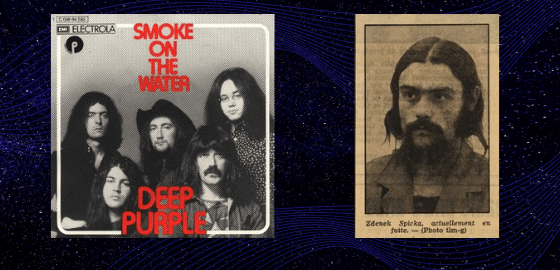
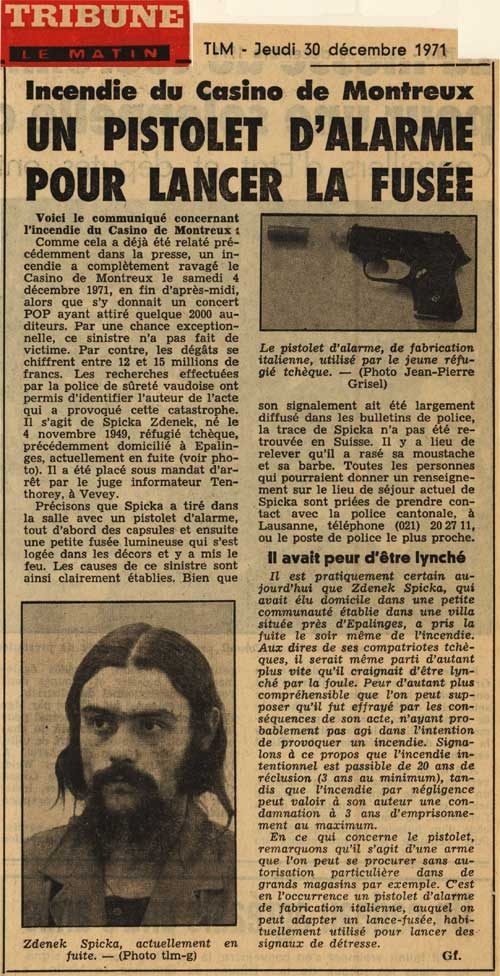
Step forward one Zdenek Spicka, a Czechoslovakian national living in Switzerland at the time. According to a local newspaper article published later that month Spicka is alleged to have fired some capsules and then a small flare into the ceiling of the venue which then started the fire that caused the entire place to burn down. Spicka fled the scene immediately afterwards and although a police ‘Wanted’ operation was mounted he was never located.

The above cutting was tracked down and posted to a Spanish Deep Purple blog back in 2009.

It was subsequently translated into English by another Deep Purple fan as follows:

“Here is the release concerning the Montreux Casino fire. As previously already stated in the press, a fire completely ravaged the Montreux Casino on Saturday, 4 December, 1971, at the end of the afternoon where a pop concert had attracted some 2000 listeners. By exceptional luck, this accident did not claim a victim. On the other hand, the damage in numbers was between 12 and 15 million francs. The investigation performed by the police can identify the perpetrator of the act that caused this catastrophe. It was one Spicka Zdenek, born 4 November 1949, Czech refugee, previously of Epalinages, currently on the run (see photo). He was placed under arrest by the [local judge] in Vevey.

The matter is that Spicka fired a flare gun in the [concert] hall, first some [capsules] and then a small flare that lodged into the ceiling which set it on fire. The cause of the accident is therefore clearly established. Although his details had been widely circulated in police bulletins, no trace of Spicka has been found in Switzerland. It has been suggested that he shaved off his beard and mustache. Anyone who can give information regarding Spicka should contact the police…

It is practically certain today that Zdenek Spicka, who had elected to live in a small commune established in a villa located near Epalignes, took flight the same night of the fire. According to his Czech compatriots, he left as soon as possible because he was afraid of being lynched by the crowd–understandably afraid of the consequences of his actions–even if he had not had the intention of starting the fire. Intentional fire can bring 20 years confinement with a minimum of three years, whereas fire due to negligence can bring a maximum of three years.

Regarding the pistol, it is a firearm that one can obtain without authorization in large stores, for example. It was an Italian-made device which could be adapted to flares used to signal distress.

What happened next…

Such an incredibly dangerous, foolhardy and unbelievably selfish thing to do at a packed gig, it was a miracle that no-one was killed.

However, the incident did, at least, leave the world with an unforgettable song and an immortal riff.

Sources:

Discussion Thread: “Did they ever identify the “Stupid with a Flare Gun” who started the fire in the Montreux Casino, and inspired “Smoke on the Water,” a song which has probably made enough to rebuild the casino twenty times over?” on Quora

Newspaper article: Deep Purple – Curiosidad “The Stupid” of Smoke on The Water

Translation: It died with an awful sound on the Deep Purple blog The Highway Star

Related Posts:

Book review: ‘Chasing Shadows – The Search for Rod Evans’ by Adrian Jarvis

Glenn Hughes Performs Classic Deep Purple Live – October 2023 tour celebrating 50 years of Burn album

Glenn Hughes, Bexhill 2019

Glenn Hughes, London 2015

Deep Purple, London 2015

Ritchie Blackmore’s Rainbow, Birmingham 2017

Whitesnake – The Purple Album

July Morning – how a British hard rock song became an annual celebration of summer in Bulgaria

July Morning’ is a 1971 song by English hard rock band Uriah Heep. Written by the band’s keyboard player, Ken Hensley, and vocalist David Byron with its distinctive organ sounds it has remained a significant highlight of the band’s live set.

Introducing the song on Uriah Heep’s 2019 UK tour, Mick Box recalled the time the band were in the studio working on the Look At Yourself album but he had to take a few days out due to contracting some sort of bug. When he returned the remaining musicians had worked up three separate pieces. Box, however, observed that all three were in the same key and suggested joining them together and adding a dramatic introduction to create something really special. ‘July Morning’ was born.

In most places the song is taken at face value for what it is – a classic slice of early 70s hard rock with lyrics celebrating the beauty of an early morning sunrise. In Bulgaria, however, the song has taken on a significance all of its own.

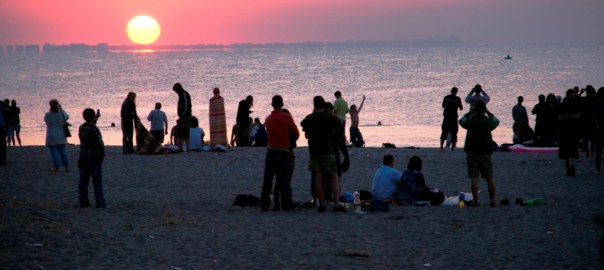
Every year on 1st July thousands flock to the Black Sea coast before dawn for their own ‘July Morning’ celebrations built around that 1971 song by Uriah Heep.

In 2012 some 12,000 people were said to have greeted the sunrise at Kamen Bryag where July Morning was performed live by former Uriah Heep singer John Lawton and his band.

Here is a July Morning celebration from 2019, prior to John Lawton’s untimely death.

It is said that the song grew in popularity during the 1980s and became a feature of impromptu summer gatherings of young rock fans. Although formal protests were banned under the Communist regime, the gatherings (and by extension the song) were seen as a subtle way of expressing one’s defiance towards the authoritarian regime and celebrating life and freedom.

Bulgarian communism may have collapsed in 1989 but there is no sign of a collapse in the popularity of the song – or indeed of the dawn gatherings which have remained an important part of the summer calendar each year.

Now the song has never enjoyed anything like this degree of significance in the country where it was actually created. It’s loved as a great rock song in Britain but that’s as far as it goes.

How appropriate, therefore, if Uriah Heep were to actually play the song at a dawn gathering on July 1st here Britain one day – celebrating the anniversary of the song and paying tribute to the life of of one of its creators, Ken Hensley, who sadly died in November 2020.

Uriah Heep – let’s do it!

Ken Hensley 1945-2020

Ken Hensley image by Paul Hasselblatt

Related posts:

Album reviews: four recent solo releases from the extended Uriah Heep family

Uriah Heep’s 50th anniversary – interview with Mick Box

Uriah Heep, London 2014

Uriah Heep at Giants of Rock 2018

Uriah Heep, Bexhill 2019

Mick Bolton: 1948-2021

Some sad news to start off 2021 was waking up on New Year’s Day and finding out, via social media, that Mick Bolton, the talented pianist who played with Mott The Hoople in the 70s and Dexy’s Midnight Runners in the 80s, has passed away.

Following the departure of Verden Allen and his eventual replacement by Morgan Fisher, Mick ended up touring with Mott The Hoople throughout the second half of 1973 and can be heard on the much-celebrated ‘Mott The Hoople Live’ album.

Reflecting on his introduction to the world of Mott, Mick wrote on his website:

“In May 1973 I auditioned for Mott The Hoople as piano player. They had a huge hit in 1972 with David Bowie’s song All The Young Dudes and, following the release of their 1973 album Mott and the departure of organist Verden Allen, they were about to take on a piano-player and a Hammond organist to promote their new album. I didn’t get the piano job – it quite rightly went to Morgan Fisher. But a couple of days later Stan Tippins the band’s manager phoned to ask if I could play Hammond organ. When I answered yes I was told I had got the job.”

“The US and UK tours were virtual sell outs and we played some memorable concerts with some great support acts.”

Former Mott The Hoople colleague, Morgan Fisher, paid tribute on social media, writing:

“RIP Mick Bolton. My organ buddy in Mott the Hoople, 1973. One of the sweetest of men, and a fine musician.”

I met Mick at several Mott The Hoople related events over the years, where he was always happy to discuss his time with Mott and his fond memories of touring with the band.

However, when I moved to Hastings in 2016, where Mick and his wife also lived, I would see quite a bit more of him. He was a much in-demand performer on the local music scene around Hastings and Rye. Indeed, the first ever gig I attended as a Hastings resident, as opposed to occasional seaside visitor, was seeing Mick perform at a local bar. You can read my write-up here.

I’d often see Mick and his wife Carol out and about, walking along the seafront in St Leonards or enjoying gigs from a plethora of visiting bands at the De La Warr and other local venues, spanning everything from classic rock to folk.

A talented pianist and a warm-hearted man his passing is a real loss to music and to the local community here in Hastings.

https://www.mickboltonmusic.co.uk/

Further reading:

Mick Bolton and Simon Shaw at Gecko, St. Leonards 2016

Mott The Hoople Fan Convention, Hereford 2016

Mott The Hoople at Shepherd’s Bush Empire 2019

News: Grand Elektra, Hastings on Music Venue Trust’s critical list of 30 UK venues facing imminent closure

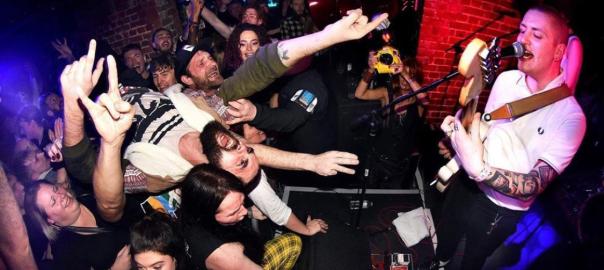
Throughout the Covid crisis the Music Venue Trust has worked to help secure the future of hundreds of grassroots music venues that have been hit by the catastrophic economic impact of the pandemic. The campaign is now focusing efforts on those venues under most imminent threat of permanent closure, ones where all other avenues of available funding from government schemes have been exhausted. Grand Elektra of Robertson Street, Hastings is one of thirty such venues on the #SaveOurVenues Red List of grassroots music venues most at risk of closure, nationally.

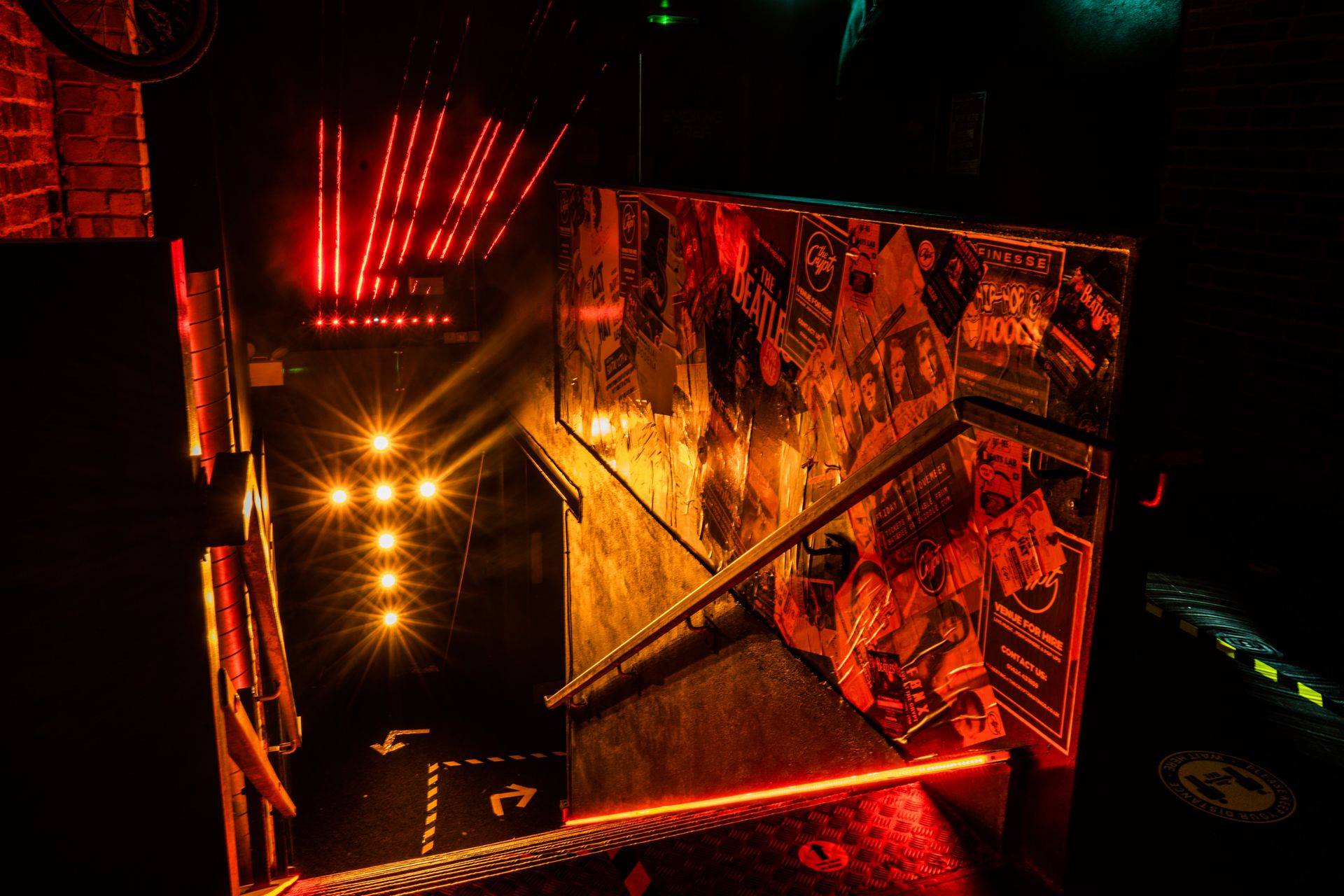
A number of major acts, including Ash, Muse, Kasabian and The Kooks as well as jazz icon Gil-Scott Heron, have all played there. Previously known as ‘The Crypt’, the 450 capacity venue was brought back from closure and fully refurbished back in 2015 and rebranded as the Grand Elektra. With the support of the Music Venue Trust a crowdfunding appeal has now been launched to save it.

Venue operator, Paul Mandry, told me:

“Grand Elektra fund raising via crowdfunding is so important to grassroot music venues, especially ones like us that didn’t successfully get the governments arts recovery fund, due to not ever filling out these forms before. As an independent I’ve never assumed we were viable and on top of the first lockdown, not getting certain information from accountants left us non eligible. Since that deadline we’ve had no signs that we could reapply which is a double blow because now we would be eligible as we know how to make a better case and have all the details from accountants ready to resubmit.

Not having the support from the arts council left us not being able to cover fixed bills like rent and lease hire which are mounting up daily, putting the venue in to the critical zone with #saveourvenues. The Crowdfunder is to cover these costs until March 2021 so we can stay open and entertain the town community like we want to do, without crippling debt, which could push us off the cliff edge we are on.”

Paul is full of praise for the role the Music Venue Trust have played throughout this crisis:

“Without the support of MVT this dreadful situation could have been a lot darker and harder to circumnavigate through to this point. We are not alone Beverley, Mark and Gang at MVT should be knighted for what they’ve accomplished throughout this global crisis. So many of us are forever grateful for their relentless energy to support and help save as much as they can of this decimated sector. I personally can’t thank them all enough.”

Donate to the crowdfunder here.

Music Venue Trust is a UK Registered Charity which acts to protect, secure and improve UK grassroots Music Venues for the benefit of venues, communities and upcoming artists. Read more here.

“We were never about making the same album twice” – Led Zeppelin III: 50th anniversary interviews

October 2020 marks fifty years since the release of the Led Zeppelin III album. Greater Manchester Rock Radio’s Stewart Taylor recently devoted one of his ‘Classic Albums’ shows to celebrating the album’s anniversary. The show included exclusive interviews with all three surviving members of the band. GMRR have kindly shared those recollections from Jimmy Page, Robert Plant and John Paul Jones for this piece.

Led Zeppelin III showed a marked progression in style from the previous two albums where the hard rock and blues influences were accompanied by folk influences and acoustic-based tunes. To begin preparing for the band’s third album Page and Plant had decamped to the isolated Bron-Yr-Aur cottage in Wales:

Jimmy Page: “The creative process for Led Zeppelin III changed because the first album had been – I wouldn’t say in a hurry because it was done efficiently and from the period before that we had already started doing a few dates in Scandinavia – and we didn’t stop! We didn’t stop working, all the way through 1969. And we’d managed to do the second album and we were also doing dates and tours in America. And we got our first – what you would call a break. And it was nice because it was fabulous all the energy of being on the road. But it was nice to breathe a sigh of relief and take in the general scent of the countryside… There was still writing going on but it wasn’t the frantic pace of having to do a show that night. The cottage in Wales was one of Robert’s ideas… It was good because it was acoustic guitars and whatever. There was literally no electricity. It was log fire, gas lights and little tape recorders. So the electricity that was in that place was the electricity we were producing with the music if you like.”

Robert Plant: “It had been a real fast quite a rollercoaster to get to that point. From what I remember we really needed to take stock and we were very aware or wished to make a departure of some kind and to calm it all down a bit….We wanted to try and break off, break away and we had an affinity he and I. And even if it wasn’t absolutely the most fruitful moment of the time, it at least allowed us the space to have space. And that meant that when we went on to write further on down the line we had developed the ability to create more space in the music.”

The pair were then later joined by John Bonham and John Paul Jones at another location, Headley Grange:

John Paul Jones: “I suppose it was the first time we’d ever we just sat down together and just tried things, you know, tried lots of different things. We had acoustic instruments as well hanging around. And it was just really nice to sit around a stretch out a little bit I suppose and just experiment. The band was never about making the same album twice.”

On the decision to plant themselves firmly in the ‘albums band’ camp:

Jimmy Page: “It was really apparent what was going on in America. There’d been a number of FM stations that had been established. And these FM stations were playing what we’d now call alternative music – to the singles. And you’d even get to hear them playing a whole side of an album. And I thought – oh boy! This is wonderful. This is the area to go in. Not the singles market because the problem with the singles market, you’d have a single that everyone has worked on… and you’d find bands who did that, the rest of the album material wasn’t very good.  Because they were a singles market band. Not only that you’d find when they did the next album… they have to do something that sounded very much like the single off the first album so everyone knew who they were. We didn’t do that.”

Led Zeppelin III saw the band exploring more acoustic material:

Robert Plant: “The thing opened up much more then. Although it was there – I mean on the second album there was ‘Ramble On’ and on the first album there was ‘Babe I’m Gonna Leave You’. There was the kind of acoustic element. The variety was there. My performance I wasn’t that pleased with on the first and second but by the third… ‘Gallows Pole is one of my favourite tracks and ‘Immigrant Song’ is, too. They were just so far between the two. And that to me was the beginning of me actually saying yep, boy, you can do something. Rather than it all being in the one idiom if you like. So yeah, I started getting a bit of pride then”

At the end of the hour-long show each of three are asked for their final thoughts on the album, listening back on it now:

John Paul Jones: “Well it reminded me how good a band it was. Also, it reminded me how much I miss John Bonham.”

Robert Plant: “All we wanted to do was keep stretching. This is the whole thing about Led Zeppelin.”

Jimmy Page: “If the band was going to stay together then you could really start going on this road where these initial ideas are expanded…right over the horizon in every direction.”

Thanks to Greater Manchester Rock Radio. You can listen to the full hour-long programme on Soundcloud here:

Related post:

The night Jimmy Page asked if he could hang out with me

Photo Credit: cottage via Andy c/o Wiki

Book review: ‘Noise Damage – My Life as a Rock ‘n’ Roll Underdog’ by James Kennedy

This review was originally published by Get Ready To Rock here

I’ve not just got a passing interest in rock autobiographies. I positively devour them. Pretty much anyone I admire who puts one out these days will tend to end up on my reading list sharpish. Usually, though, it’s people whose careers I follow, whose albums I buy and whose concerts I go to. James Kennedy is none of these. I was vaguely aware of his former band Kyshera but they were around at a time when I was insanely busy in my work life and any downtime would be spent listening to familiar favourites rather than seeking out new bands. To be honest I had to google Kyshera to give myself any idea of what they sounded like or, indeed, who the aforementioned Mr Kennedy actually is. His memoir turned out to be every bit as gripping as those of my heroes, however.

Born in 1980, Kennedy is a talented kid from a poor background in South Wales. “I am thankful for having cultured, lefty, weed-smoking atheists for parents, continually blasting out Pink Floyd, Zappa, Kate Bush and Stevie Ray Vaughan,” he shares with us, nicely dispelling those tedious one-dimensional caricatures of working class culture that are constantly being sold to us by Red Wall-chasing Tory politicians these days.

Kennedy then finds himself entering a world of professional music at a time when the traditional industry model as we knew it was rapidly imploding. He is not one to get nostalgic for the old ways, however. Fairly early on in the book he sets out his stall thus:

“We have the ability to create, record, produce, release and promote our art, all from our bedroom with no interference, censorship or bullshit from any third parties, and share it with the world for hardly any cost. How we make any money doing this is the new problem.”

The subsequent two-thirds of Noise Damage is then pretty much devoted to that very problem of not making any money. From heinous scams by criminal promoters to unfeasible hours holding down a multiplicity of jobs Kennedy paints a detailed picture of a life that, while bursting with creativity, friendship and critical acclaim on the one hand, gets worn down by years of grim conditions, constant back-stabbings and an absence of anything approaching stability on the other.

The book is an absolute must-read for anyone attempting a career in music (certainly anyone without wealthy parents or an independent income). However, there’s enough self-reflection, critical evaluation and good-natured humility to make this a genuinely powerful testimony on a highly personal level. Noise Damage is Kennedy’s first book. Let’s finally hope he makes some money out of it.

Published 18th October 2020 by Eye Books

http://eye-books.com/books/noise-damage

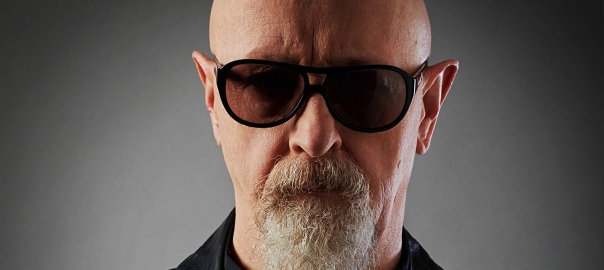
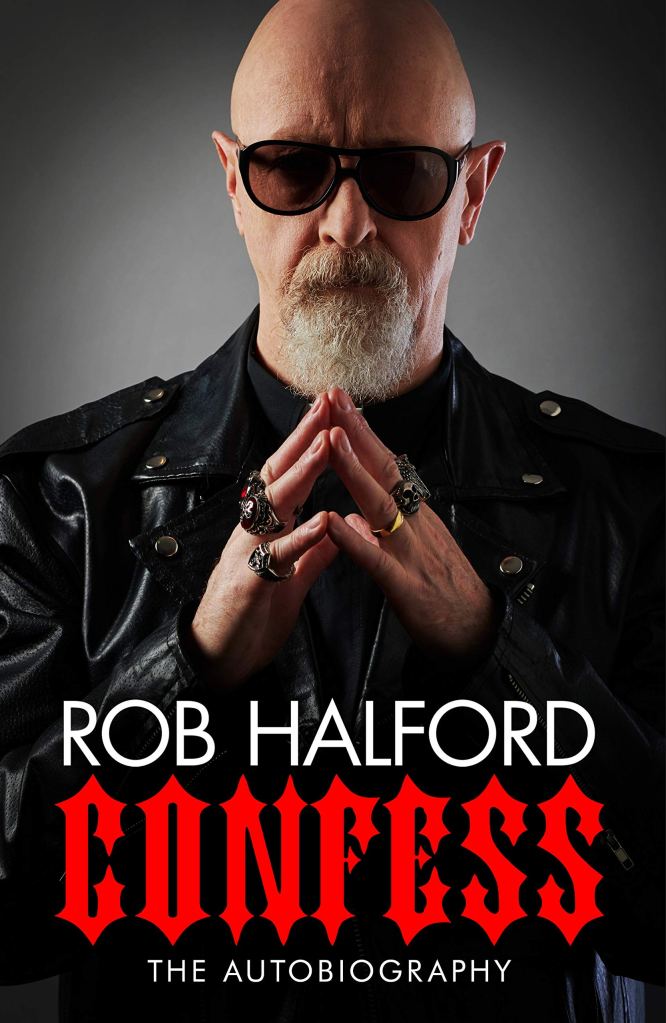
‘Confess’ by Rob Halford – a gay heavy metal fan reviews the Metal God’s autobiography

I’ve read enough rock autobiographies over the years to know the score: boy from working class background, boy joins a band, struggles along for a few years, makes it big, fame, alcohol and/or drug addiction, groupies galore, several wives, numerous girlfriends, sobriety, reflection and, finally, publishing deal. Judas Priest lead singer Rob Halford’s ‘Confess’, however, is a rock confessional with a difference. The wives and girlfriends are notable by their absence and Halford tells his tale as an out and proud gay man.

As someone who became a Judas Priest fan not long after my dad brought home a newly-released copy of ‘British Steel’ back when I was a young teenager, and as someone who has known they were gay from around that same time I was particularly keen to read Halford’s memoir.

Halford’s down-to-earth-working class upbringing in Walsall is easy to identify with. Coincidentally, although the two have never met, he lived just a couple of streets away from Noddy Holder’s family home, another musical hero of mine. Indeed, many of the place names were already familiar to me from Holder’s own autobiography. (The pub that Halford mentions as the location of his local bus stop as a kid is the same pub where the classic Slade foursome held their first ever rehearsal – trivia fans).

As Halford starts to metamorphosis from council estate kid to heavy metal rock god I certainly felt a sense of exhilaration as his dreams are achieved – such as the era-defining success of that iconic British Steel album, for example.

For much of the book, though, I also felt a sense of immense sadness. This paragraph, where he reflects on the state of his life in 1980 – by which time he was in his late 20s – is a telling one:

“It was five years since I’d been seeing Jason. Apart from the odd snatched random fumble I had been alone ever since… not just alone but forced to supress my longings, my needs, myself.”

When I think back to my own life at that stage, I had already met my partner. We’d bought a flat and been living together for several years by then. I was born fifteen years after Halford and my modest brush with life in the public eye never obliged me to hide my own sexuality. However, it’s not difficult to really grasp the pain and evident loneliness that Halford was going through. He does eventually find personal as well as professional fulfilment albeit that there are dysfunctional relationships, tragedy addiction along the way.

There is also a fair bit of revelatory gossip and down to earth black country humour to keep the reader entertained. However, there are a many segments that are deeply, deeply moving, too: Halford’s obvious joy at the emotions he experiences performing sober for the first time, the palpable relief he feels when he first publicly comes out back in the late 90s and the excitement he feels reuniting with Priest in the early 00s.

‘Confess’ does not always make for easy reading. There is a real sadness to parts of it but Rob Halford’s warmth and humanity shine through. Absolutely one of the best rock biogs in ages.

Published: Headline Publishing 29th September 2020

Related posts:

Album review : Judas Priest – Redeemer of Souls

Live review: Judas Priest at Brixton Academy 2015

Live review: Les Binks’ Priesthood at Minehead 2020

The day my dad went on Radio Lancashire to talk about Dr. Feelgood

BT payphone engineer, music fanatic and familiar figure around many Preston pubs, but until then someone with zero broadcasting experience, some time in the early 00s my dad found himself being invited on BBC Radio Lancashire for a one hour special on Dr. Feelgood.

My dad was, indeed, a huge fan of Dr. Feelgood just as he was a huge fan of many bands but I think one of his regular drunken Saturday night conversations about bands and rock music ended up with an invitation from one of the presenters to take part in a show.

Happily, a friend of his recorded it at the time and I recently rediscovered my copy.

“Alan Johnson has popped in to see tell us all about Dr. Feelgood. We’re doing a feature on Dr Feelgood and he’s ably assisted by Andy Stones,” the show starts off.

As well as playing tracks like ‘Back In the Night’, Down At The Doctors’ and ‘Milk and Alcohol’ the discussion meanders through the band’s early years with Wilko Johnson, then the illness and death of frontman Lee Brilleaux as well as the continuation of the band by Brilleaux’s former bandmates and a new frontman.

My dad reminds the presenter they did, in fact once make the Top 10 singles chart before being asked whether what they play is blues. “Not in the true sense,” is my dad’s rejoinder. “It’s just really good-time music, blues or not.”

The show draws to a close. There’s time for my dad to choose one last song. He says it has to be ‘Milk and Alcohol’ and he recounts his abiding image of frontman, Lee, on stage.

The hour is nearly up.

“Thanks for coming in,” says the presenter.

“I’m getting used to it,” says my dad.

“It can be a bit daunting sitting here with all the microphones and the gremlins,” the presenter says reassuringly.

“Without a pint,” my dad observes.

And with that the show comes to an end. I believe this was the sum total of my dad’s entire broadcasting experience. But I’ve got a recording of the show for posterity and it is comforting to be able to hear his voice. Here’s that clip of him talking about that abiding image of Lee Brilleaux on stage.

Book review: ‘Chasing Shadows – The Search for Rod Evans: Deep Purple’s original singer’ by Adrian Jarvis

Part biography, part rock ‘n’ roll travelogue and part love-letter in celebration of a teenage musical obsession, I enjoyed Adrian Jarvis’s ‘Chasing Shadows’. Subtitled ‘The Search for Rod Evans’ – the elusive lead singer from the very first line-up of Deep Purple back in the late 1960s – you could be forgiven for thinking it all starts sounding a bit obsessive and stalkerish.

But the book is not really like that at all. For a start, Jarvis is not particularly obsessed with the mysterious Mr Evans, who dropped out of the music businesses in the early 70s, reappeared in 1980 fronting a bogus Deep Purple, was sued by his erstwhile bandmates and promptly disappeared again. The author is certainly a huge fan of Deep Purple in all of their various guises (or “Marks”) over the years but he is open about what he sees as the limitations of Evans’ vocal style and lyric-writing abilities in comparison to his successors and Jarvis’s curiosity about the singer’s whereabouts is more about a symbolic missing piece in the jigsaw of the band he loves rather than an unfathomable obsession with Evans per se.

The “search” takes us down a number of unexpected and meandering routes, some of them with only the most tenuous connections to Evans himself. But it remains an entertaining read nevertheless. Moreover, as someone of a similar age to the author (ie one who was way too young to get into heavy rock/metal during its first wave in the late 60/early 70s but who was to discover an affection for those older bands via the New Wave of British Heavy Metal [NWOBHM] boom a decade later) there is much in this tale that I can relate to.

Published by Wymer Publishing 2017

Related posts:

Deep Purple’s Smoke On The Water: so who actually was the “stupid with a flare gun”?

Glenn Hughes, Bexhill 2019

Glenn Hughes, London 2015

Deep Purple, London 2015

Ritchie Blackmore’s Rainbow, Birmingham 2017

Whitesnake – The Purple Album

A tribute to Judy Dyble 1949-2020

The singer and songwriter Judy Dyble, who sang lead vocals on Fairport Convention’s very first album, sadly died at the weekend. Although never as celebrated in British folk rock history as her replacement, Sandy Denny, Judy’s beautifully clear, distinctive vocals nevertheless remain an essential part of the early Fairport sound.

After her time with Fairport, Judy was involved in a handful of other projects in the late 60s and early 70s before quitting the music business altogether, spending time bringing up her family and working as a librarian. Her musical story doesn’t quite end there, however, as the early 2000s saw Judy begin writing, recording and performing once more. Albums like the gently captivating ‘Talking With Strangers’ from 2009 and the gorgeous ‘Flow and Change’ from 2013 were extremely well received but her career renaissance continued to grow and grow with her more recent albums picking up a slew of top-notch reviews and frequent appearances in the music press.

Judy’s 2016 autobiography ‘An Accidental Musician’ is a beautiful read. Obviously, I’ve read my fair share of sex and drugs and rock and roll confessionals over the years and, perhaps unsurprisingly, this takes a very different tack. Obviously, it’s a fascinating read in terms of music history but there is so much in there that really any of us can relate to: bereavement, the lack of confidence that can come from not doing something for a long time, the fear and then the buzz of taking on new challenges – it all served to give the book a very, very human angle. When I posted comments along these lines on social media at the time, in typically engaging fashion Judy came back straight away:

“I am so glad you appreciated it, I kind of worry that it isn’t what people expect it to be – a typical race through the 60’s with lots of name droppings… Thank you.”

Other than being part of the communal sing-along for ‘Meet On The Ledge’ Judy was not called upon to play a major part in her former band’s forty-fifth anniversary celebrations which I know was a source of some frustration to her. I emailed Fairport’s Simon Nicol at the time expressing my disappointment that she had not been asked to play a bigger contribution. He did get back saying the band hoped to do more with Judy in the future. They certainly made up for it at the band’s fiftieth anniversary celebration at Cropredy in 2017 where, as well as a solo slot for Judy that weekend, all of the original line-up (sans deceased drummer Martin Lamble) reconvened. Magically we were transported back to 1967 with all of the surviving members from the first Fairport album reconvening on stage for a stunning recreation of the first track on the first album ‘Time Will Show The Wiser’, followed by ‘I Don’t Know Where I Stand’ and ‘Reno, Nevada’. It completely captured the magic of that first album and was really special seeing Judy, Ashley Hutchings, Simon Nicol, Richard Thompson and Iain Matthews sharing a stage together.

An essential part of the early Fairport sound, an unexpected and most wonderful artistic renaissance in later life and one of the loveliest, most sincere, most humble and least showbizzy people you could ever wish to meet, Judy Dyble will be greatly, greatly missed.

Me with Judy at the signing tent at Cropredy in 2017