Category Archives: Music culture & history

My seven favourite band reunions – what have been your favourites?

Seven spectacular reunion gigs

The communal celebration of a band’s legacy, the return of a classic sound and unforgettable songs, the emotional resonance of seeing members sharing a stage again after many years apart; there can be something very,very special about reunion gigs of your favourite bands. As the reunited line-up of Ozzy, Geezer and Tony prepare to play their final Black Sabbath show I look back on some pretty special band reunions. In no particular order, here are seven spectacular reunions I’ve been lucky enough to witness in recent years.

1. Black Sabbath 2014 and 2017

Truly one of the great reunions of modern times, even without original drummer Bill Ward. Back in 2014 when Sabbath played Hyde Park I wrote ‘Osbourne’s ups and downs have certainly been well-documented and Iommi has been undergoing debilitating bouts of chemotherapy over the past two years. All of that is a world away from tonight’s performance, however, and the band members are all blisteringly on form. They commence with a stunning version of War Pigs and one by one the classics are reeled off: Snowblind, Fairies Wear Boots, Iron Man. The sound is great. The guitars, drums and vocals are everything you would want at a Sabbath gig.’ When dates were announced for The End tour I had zero hesitation in snapping up a ticket. Reviews from 2014 here and from 2017 here.

2. Status Quo ‘Frantic Four’ 2013 and 2014

Although Status Quo continued to fill arenas each year, there was something very special and very emotional about seeing the classic ‘frantic four’ line-up of Alan Lancaster, John Coghlan, Rick Parfitt and Francis Rossi walk on stage at the Hammersmith Apollo after a 32-year absence. The earthy, rocky, bluesy brand of boogie they played that night was quite different from the keyboard-heavy pop-rock act that normally tours under the Quo banner these days and the crowd were absolutely ecstatic. Sadly, following the tragic death of Rick Parfitt, it’s something that can never be repeated now, but I was lucky enough to see them on both the original reunion tour in 2013 and the follow-up a year later. Here’s my review from 2014.

3. Mott The Hoople 2009 and 2013

I have loved Mott The Hoople ever since discovering one of their albums second-hand as teenager in the early 80s. And although I’d seen Ian Hunter solo before I was amazed to open the Guardian guide one Saturday morning and see an advert for a Mott The Hoople reunion at the Hammersmith Apollo with all the original members, 35 years after the bands demise. Although alzheimer’s was beginning to take its toll on drummer Dale Griffin he joined the band for the encores in 2009. Hugely emotional, it was a glorious celebration of a criminally under-rated band and remains one of my favourite gigs of all time and remains a text-book case of how to pull off a reunion with dignity, style, emotion and meaning. I saw the band again at the O2 when the reunion (sans Griffin) was repeated four years later. The sad deaths of both Dale Griffin and bass-player Overend Watts in the past year remind us how privileged Mott fans were to get their long-awaited reunion when they did.

4. Beach Boys 2012

While I’d seen a couple of stunning solo shows from Brian Wilson, I’d never been at all tempted by the Mike Love-fronted band that continued to tour under the Beach Boys name. But when it was announced that the surviving Beach Boys (Brian Wilson, Mike Love, Al Jardine, Bruce Johnston and David Marks) would be re-uniting to celebrate the band’s fiftieth anniversary I snapped up tickets for friends and family as soon as they went on sale. A mega run-through of Beach Boys hits, a gloriously full sound (aided by musicians from Brian Wilson’s musically brilliant touring band) and a beautifully authentic-sounding new studio album, too, this was definitely a reunion not to be missed. Al Jardine’s voice was particularly outstanding still.

5. Blur 2009 and 2015

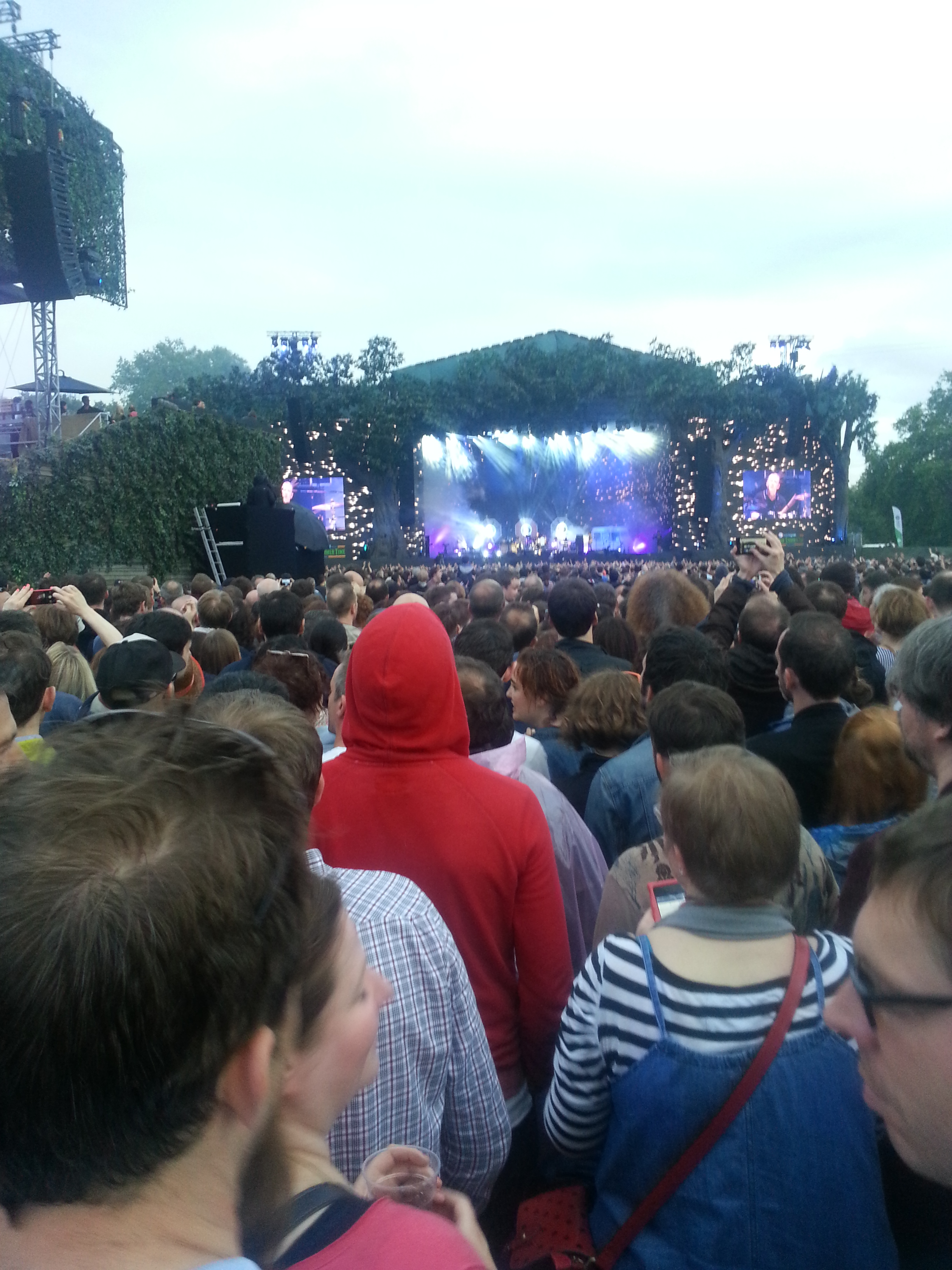
Blur’s Hyde Park reunions have become something of a tradition. I saw the first in 2009 and although I missed the one for the 2012 Olympics I did see them again in 2015. ‘The crowd is hugely good natured and it’s very much a communal celebration in Hyde Park. These songs have stood the test of time and are rightly held in great affection, as are the band who play them’ is what I wrote at the time. My full review from 2015 here.
2015-06-20 20.56.38.jpg

6. Fotheringay 2015

‘Sandy Denny was the finest British female singer-songwriter that ever lived. Fotheringay was the short-lived band she formed in 1970 on leaving Fairport Convention. It lasted less than a year, but forty-five years on the surviving members have reformed for a short tour and are playing their first London gig since 1970. Band reunions can elicit mixed reactions and some questions went through my mind on this one. However talented the remaining musicians are, would this be a worthwhile exercise with the band’s two main front-people, Sandy Denny and her husband Trevor Lucas, long since deceased? As soon as the band come on stage, though, and open with Nothing More, the opening number on the original Fotheringay album, all doubts are set aside.’ Full review here.

7. The Kinks (well Ray and Dave) 2015

Who knows if there’ll ever be a Kinks reunion. I did, however, catch a solo gig of Dave Davies in Islington back in 2015 with a very nice surprise at the end. Here’s what I wrote at the time: ‘Of course, when he came back on for an encore we could all guess absolutely what the song was going to be. What we couldn’t guess, though, was who would be joining him for that final song. “A surprise for Christmas!” announced Dave and on walked his brother Ray, the two of them sharing a stage together for the first time in 19 years. The audience as one are hit with amazement and wonderment at this beautiful and unexpected moment in rock’n’ roll history. Ray was in fine voice as he sang You Really Got Me and Dave cranked up the guitar. The audience went wild. Excitement, joy and genuine emotion as that 2 minutes and 14 seconds of one of the greatest rock’n’roll songs of all time blasted out from the stage.’ Full review here.

Of course, there are some band reunions I would love to see if ever they were so inclined (Gillan, Supergrass, the surviving members of the Byrds) and there is one I would have loved to have seen happen more than anything (Slade) but the possibility of that seems ever more remote with each passing year. However, I do feel genuinely lucky to be present at each of those moments described above.

Which have been your favourite musical reunions and which bands would you like to see re-unite?


Sunny Afternoon (the musical based on the story of the Kinks) at The Theatre Royal, Brighton 22/12/16

I’m not normally a huge fan of musicals. However, I am a huge fan of The Kinks so when the opportunity to see Sunny Afternoon came up I was never going to say no.

With most musicals I generally find the mix of dialogue and song unconvincing. The one musical I have properly enjoyed prior to this was Buddy, telling the story of the rise and fatal crash of Buddy Holly & The Crickets. This at least made sure that the only musical parts of the dramatisation were when the characters were realistically engaged in rehearsing, recording or performing.

With his love of love of music hall and vaudeville, however, this was never going to be an option for Ray Davies and it’s very much a musical in the fullest sense of the word – with choreographed dance routines, whole-cast sing-alongs, chunks of dialogue delivered in song and the full works. Normally, the sort of thing that would make me run a mile. But, as well as good, loud, convincing performances of many Kinks songs there was much I found to like in this production. It ostensibly tells the story of Ray Davies’ battle between artistic integrity on the one hand, and the demands of the 60s-era music business on the other. But the fiery relationship between Ray and brother Dave is also examined. (Why do nearly all brothers in bands have such fiery relationships?). Although there is a temptation for the Dave character to come across as a two-dimensional wanna-be-rockstar-cum-actual-rockstar he is brilliantly played by Mark Newnham and some of the complexities of the character and his relationship with his brother are convincingly explored.

Some of the more overly-theatrical elements of the show irked slightly but there were some really powerful scenes, too. My favourite bit is towards the end when the band are in the studio laying down the parts to Waterloo Sunset. It’s genuinely moving seeing the characters lay down hostilities and come together in this scene, emotionally as well as artistically. Overall, even for a hardened sceptic on this whole theatrical genre, I found Sunny Afternoon hugely enjoyable.

event_media-banner_lrg

http://sunnyafternoonthemusical.com/

Related review:
Dave Davies (with Ray!) Islington 2015

Slade, strikes and the three-day week: the story of the greatest Christmas record ever made

This and other Slade classics are covered in my book ‘Slade In The 1970s’

Brash, colourful, over the top, glittery – 1970s glam rock and Christmas seemed made for each other. Yet glam had been in ascendancy for some two years before anyone contemplated putting the two together. And more than anyone else, we can thank Slade for that. From the familiar pounding on the harmonium in the opening bars to the final “It’s Christmaaaas!” Slade’s Merry Xmas Everybody remains one of the most well-known and most popular Christmas records of all time. Released in December 1973, the Performing Rights Society once calculated that it is the world’s most listened-to song, heard by an estimated 42% of the global population.

“My mother-in-law the year before had said why don’t we write a song like “White Christmas”, something that can be played every year.” Jim Lea, Slade (Uncut Magazine)

Recorded in New York in the summer of 1973, Noddy Holder told Uncut magazine that he wanted the lyrics to convey a mood of optimism. The song certainly does that. But at the time of recording it, the band would have little clue as to how grim things were going to get in Britain that particular winter. Conservative Prime Minister Ted Heath’s increasingly fractious battle with the miners took a dramatic turn. Mineworkers, like all public employees at the time were suffering the effects of below-inflation pay increases at a time of hyper inflation, and were pursuing industrial action for higher pay. Regular domestic power cuts became a fact of life.


Merry Xmas Everybody was released on 7th December 1973. On 12th December Heath announced that in order to conserve coal stocks, as from midnight on 31st December the Government would be enforcing a three-day week. Companies were to be permitted to consume electricity only on three consecutive days per week, additional working hours were to be banned and TV companies were required to cease broadcasting at 10.30pm each night.

“We shall have a harder Christmas than we have known since the War.” Edward Heath

This was the Christmas in which Slade’s Merry Christmas was first unleashed on to the public.

It’s a ground-breaking Christmas song in a number of ways. Unlike the treacly nostalgia of previous Christmas classics, Holder and Lea managed to capture the essence of a working class family Christmas:

Are you waiting for the family to arrive
Are you sure you’ve got the room to spare inside
Does your granny always tell you
That the old songs are the best
Then she’s up and rock ‘n’ rolling with the rest

That was combined with a genuine spirit of bright, breezy optimism:

So here it is Merry Christmas, everybody’s having fun
Look to the future now, it’s only just begun

There is a freshness about the way that line is delivered that still sounds fresh even today. “In terms of comfort we shall have a harder Christmas than we have known since the war,” Heath declared ominously. But while it might be argued that anything Slade recorded at that particular time in pop history was destined for the Number 1 slot anyway, there was something marvellously subversive about Slade’s Christmas single being the best selling record at the time. People singing along to a chorus that celebrates having fun and looking to the future during the middle of a heated political stand-off, a major breakdown in industrial relations, a draconian response from government and a very bleak-looking New Year indeed.

The three-day week came into force on New Years Day 1974. The Christmas song that was the antidote to it remained at Number 1 until well into the middle of January. In fact, it was February before it dropped out of the charts. As the chorus makes clear, the song is very much a song for the New Year – looking ahead to the future – and not simply one about Christmas.

The Government’s battle with the miners continued to intensify and, refusing to back down, Heath called an election in February 1974. “Who governs Britain?” demanded Heath. “Not you!” the voters told him. He lost the election and embarked on what became known as the longest sulk in British political history. The National Union of Mineworkers secured their pay rise, returned to work and lived to fight another day. But they would be brutally smashed by the Thatcher Government a decade later and Britain’s pit communities decimated. Whatever the battles of the past, the challenge of climate change, of course, means that the only sensible coal policy today is to leave the rest of it in the ground.

Yet Slade’s Merry Xmas Everybody lives on, outliving the three-day week, Ted Heath, the miners and (in its original formation) even the band itself. That celebration of working class life in the festive season and the bright sunny optimism for a better future ahead still makes it the greatest Christmas song ever recorded.

It’s Christmaaaaaas!!!

Related posts here:

Slade in the 1970s by Darren Johnson – reviews round-up

Interview with Don Powell

Interview with Jim Lea

Slade Fan Convention 2016

Slade live in Hastings 2016

Slade live in Minehead 2015

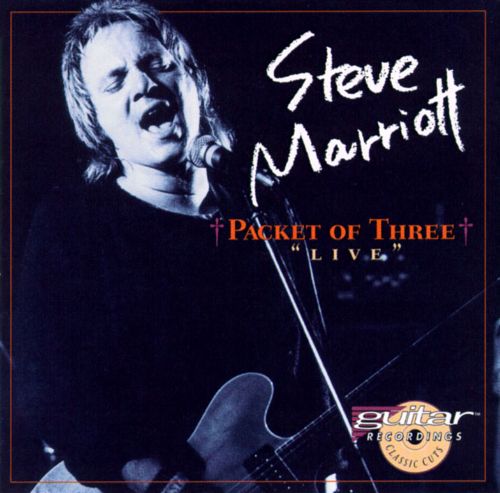
1985: Twenty of us in a cellar bar in Blackpool with Steve Marriott – memories of seeing Humble Pie/Small Faces legend

Iconic musicians of the 60s and early 70s are rightly celebrated now. But the mid 80s could be a harsh climate for many such icons. And although the end of the 60s was only 15 years previously it genuinely felt like a different world musically back then.

mi0002514837

I’d got into Marriott’s former bands, Small Faces and Humble Pie, via a compilation tape that had a track from each on. It led me to pick up compilation LPs of each band’s Immediate output and I was genuinely thrilled to see that the former guitarist/lead singer of both bands would be performing at the Bier Keller in Blackpool where I had recently moved. This would be 18-year old Darren’s third trip to the Bier Keller. The first I’d gathered a group of flatmates, friends and hangers-on to come and see Brian Connolly’s version of The Sweet. But that ended in disappointment and drunkenness when Connolly never showed up. The second time was for Tony’s McPhee’s Groundhogs, where I’d managed to persuade a flatmate to come along but he left after about three songs. The third time I was on my own.

2016-10-22-14-27-25

I got there and there were no more than around half a dozen audience members and three band members. Marriott was deep in conversation in the tiny backstage area but I got chatting to bass player Jim Leverton who was hanging by the door. I fired off the titles of several of my favourites from the Immediate compilations and waited, expectantly, for Leverton’s response. “Nah, we don’t play any of those any more. But if you enjoy the blues you’ll enjoy this.”

I really wasn’t sure what to expect at this stage. The place was still almost completely empty although the crowd had grown to about 15-20. But Marriott and his two Packet of Three colleagues came on stage and launched into an explosive set: ‘Watcha Gonna Do About It”, “Bad Moon Rising”, “Tin Soldier”, “I Don’t Need No Doctor.” Many of these would be on Marriott’s Live At Dingwalls album that my dad bought for me soon after when I enthused to him about the gig.

It was incredible to see him giving it his all to no more than 20 people. It wasn’t a particularly long set but afterwards he sat at the bar while very single member of the audience queued in line to buy him a brandy, get something signed and have a chat.

I’ve still got the faded 30-odd-year-old scrap of paper Steve Marriott, Jim Leverton and drummer Fallon Williams signed for me.

2016-12-05-09-13-15

I didn’t get to see Marriott again until I moved to London five years later and saw him at the Half Moon in Putney. Knowing the band gigged regularly on the London circuit I was looking forward to seeing quite a bit more of him. But sadly, only a few months later came the news of the tragic house fire that took his life. At least I got to see the great Steve Marriott live.

The Sweet versus Bowie: the riff in Blockbuster and Jean Genie – origins and influences

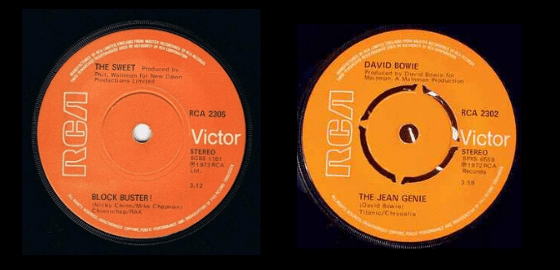
In January 1973 at the height of the glam rock craze, two singles with instantly memorable but remarkably similar riffs were both enjoying chart success: The Sweet’s ‘Blockbuster!’ and David Bowie’s ‘The  Jean Genie’, each released by RCA records. Which came first? Were they both dreamt up independently? Did one copy off the other? Or did they both draw on influences from somewhere else?

In the folk world songs have always been adapted, evolved and passed on. In the rock world that sort of behaviour is more likely to get you involved in lengthy court cases and costly lawsuits. But in folk there has been over a century of legitimate and rigorous study looking into the often murky origins of traditional songs and tunes. A simple question therefore is: can the principles of studying folk in determining song origins also be applied to glam rock?

We start with the song ‘Blockbuster!’ written by The Sweet’s then songwriting team of Mike Chapman and Nicky Chinn, recorded on 1st November 1972 in London and released in January 1973. In Dave Thompson’s Sweet biography ‘Block Buster’, The Sweet’s Steve Priest recalls Chapman playing his idea for a new song on an acoustic guitar while they were backstage at the BBC waiting to go on Top Of The Pops to perform ‘Wig Wam Bam’ (most likely their appearance on 14th September 1972).

The riff was remarkably similar to David Bowie’s ‘The Jean Genie’ recorded on 6th October 1972, released in November 1972 and in the charts at the same time. “While en route to Tennessee, ‘The Jean Genie’ was developed from an impromptu tour bus jam,” in September 1972 recounts the Mick Ronson biography, ‘The Spider With The Platinum Hair’ by Weird & Gilly. This would have been just prior to the band’s gig in Memphis which is recorded as taking place on 24th September 1972, several days after Mike Chapman strummed the riff for Blockbuster to Steve Priest on the other side of the Atlantic.

Both sides have always denied copying one another and given both ‘Blockbuster’ and ‘The Jean Genie’ were recorded and released around the same time it seems unlikely that either would have had time to secretly copy the other, then get it recorded and released, all within the confines of the same record company, RCA.

What is far more likely is that they were both influenced by the Yardbirds’ 1965 hit ‘I’m a Man’.

Alwyn Turner’s website Glitter Suits & Platform Boots quotes The Sweet’s Andy Scott as follows: “And then, you wouldn’t believe this, before our release we were in the office of the guy who was our contact at RCA and he played us the new David Bowie record, he played us ‘Jean Genie’. And I went, ‘That’s the same guitar riff,’ and he went, ‘Is it?’ This is a record company guy and I’m saying, ‘Haven’t you noticed?’ And he went, ‘No.’ I was horrified, I was thinking: that’s coming out first, and we’re coming out a week behind it, on the same label, it’s got the same guitar riff. I said: well, we don’t stand a chance of being #1. That was my thought. And within three weeks we were #1 and he was #2. I’ve since spoken to Trevor Bolder, the bass-player, and he said, ‘Remember “I’m A Man”?”

Here is that Yardbirds’ version of ‘I’m A Man’.

Interestingly, Iggy Pop and The Stooges also recorded a version of ‘I’m A Man’ during the sessions for the Raw Power album in early 1972. Bowie was involved in remixing this album and although ‘I’m A Man’ doesn’t appear on the album, he would certainly have been familiar with the Stooges cover version. Could this have had an influence on Bowie’s ‘The Jean Genie’ later that year?

We can hear Iggy & The Stooges version of ‘I’m A Man’ here.

Both recordings are, of course, cover versions of a 1955 original version of ‘I’m A Man’ by Bo Didley.

Bo Didley’s song is itself influenced by a song Willie Dixon wrote for Muddy Waters ‘Hoochie Coochie Man’ recorded in 1954

The blues of Bo Didley, Muddy Waters et al can be traced back through the early electric blues of the 1940s to the acoustic blues of the 1920s, through the slave trade, plantations and back to African origins, where a number of the elements that would come to define key features of the blues could be traced back to.

But it’s worth specifically going back to that Bo Didley tune. The riff in ‘I’m a Man’ is significantly changed from that played by Muddy Waters in Dixon’s ‘I’m A Man’. Didley has adapted the tune as a simple repetitive four note riff repeated throughout the entire song, making it notably different.

So although it was influenced by an earlier blues song I think we can safely say that the riff that appears in ‘Blockbuster!’ and ‘Jean Genie’ first emerged in a Bo Didley song in 1955.

Book: The Sweet in the 1970s

If you enjoyed reading this my book ‘The Sweet In The 1970s’ is out on 30th July 2021.

Details here

Links and thanks:

Some great background info and quotes here http://www.alwynwturner.com/glitter/sweet.html

Thanks also to Michael Duthie for pointing me towards the Mickie Most video (below) and to Josh Beeson for pointing me to the Iggy & The Stooges version of ‘I’m A Man’.

Another fascinating release from the 60s that could have played an influential role in the later 70s glam releases was Mickie Most’s 1964 version of ‘Money Honey’.

Unlike earlier versions of Money Honey by Elvis and previously The Drifters, the Mickie Most version utilises that same Bo Didley riff. Most would go on to be a towering figure in glam rock as mentor and producer for Suzi Quatro and as RAK Records boss, home to the likes of Quatro and Mud. He knew Mike Chapman very well and could have helped plant some of the creative seeds for that Blockbuster riff, further strengthening those glam rock links back to blues history.

Related posts:

‘The Sweet in the 1970s’ by Darren Johnson – published 30th July 2021

Before glam: the debut 60s singles of Bowie, Bolan, Slade, Mud and Sweet

From AC/DC to ABBA: five classic glam rock singles by non-glam bands

Slade, strikes and the three-day week: the story of the greatest Christmas record ever made

Lost In Space: interview with former Slade legend Jim Lea

Interview with Andy Scott ahead of Sweet’s 2019 UK winter tour

Death of a glam icon – Steve Priest: 1948-2020

July 2012: The night Jimmy Page asked if he could hang out with me

Of my 16-year stint in full time politics as an elected member of the London Assembly (holding first Ken Livingstone then Boris Johnson to account) most of it was never particularly glamorous. But occasionally I did get to meet the odd rock star or two in my line of work: Bob Geldof, Brian May, Dexy’s Kevin Rowlands and, yes, Jimmy Page.

It was the evening before the Opening Ceremony of the 2012 Olympics and there was a reception at the Mansion House in the City of London. I arrived at exactly the same time as Jimmy Page (who had performed at the Closing Ceremony of the Bejing Olympics you will recall but didn’t have any formal role in the London Games). Of course, I recognised him straight away, introduced myself, got him to autograph the back of my invitation and we got chatting. As I’d been to loads of these things before, while we walked up the stairs I helpfully explained the set-up and all the archaic rituals you went through. I didn’t want to monopolise his company all evening and assumed that he’d have plenty of people he wanted to chat to, so once we’d got past all the flunkies and the formal introductions and the rituals where out of the way I shook his hand and let him get on with the rest of his evening.

Two minutes later, he’s back: “Well Darren,” Jimmy whispered, “I don’t really know anyone here, do you mind if I hang out with you for the rest of the evening?”

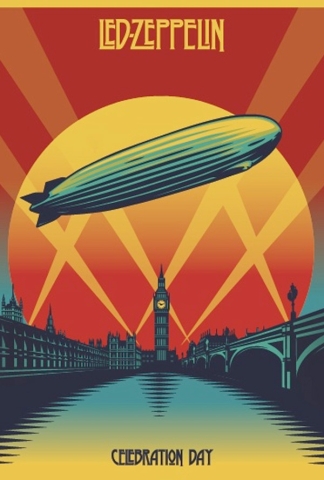
What a lovely, unassuming man and what a relaxed, fun, brilliant evening we had. I said I’d introduce him to some of the other people there but first we had a long chat about the making of Led Zep IV, about the state of the modern music industry, about his old cottage by Loch Ness, about bands and musicians we both admired and about many, many other things. I asked him what he was currently working on: “Don’t say anything to anyone yet but we’re putting out a DVD and CD of the reunion concert we did at the O2. It’s coming out in a couple of months. That’s been my main project at the moment but keep it to yourself.”

Other people joined up with us at various points during the evening (including Boris Johnson’s Environment Deputy, Matthew, another big Zep fan – pictured above on the left). But I kept my promise about the Celebration Day release and never said a word to anyone until the official announcement. We stayed until the end and as one of the waiters was clearing up after us, he quickly pulled a Led Zep CD out of his pocket and asked Jimmy to sign it, which of course he did.

I will always have fond memories of the night I let Jimmy Page hang out with me. And the surreal nature of that memorable request will probably stay with me for a good while yet.

led_zeppelin_-_celebration_day

Visit to the Hendrix Flat, 23 Brook Street, London

One of the things that has long frustrated me about London is how little effort it puts into celebrating it’s rock ‘n’ roll heritage (certainly compared to Liverpool). This is in spite of London being (after Memphis the birthplace of rock ‘n’ roll) probably the most important city on the entire planet in terms of rock history when one considers the number of globally influential bands who either formed in this city, built their reputation in this city or recorded in this city.

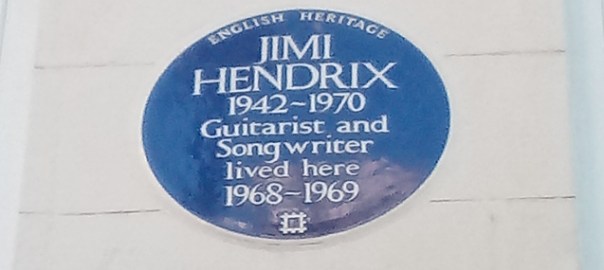
Hopefully, things are starting to change and that’s why, I was delighted to see Jimi Hendrix’s flat at 23 Brook Street, where he lived between July 1968 and March 1969, being restored and opened to the public this year.

By a quirk of fate it’s right next door to the home of George Frideric Handel who live here between 1723 and 1759 . For years the old Hendrix flat had just been used as a storage annexe but now both homes are open to the public as part of a single visitor attraction.

The first part of the tour is the Handel house. It was interesting to find out more about the man, his music and his home.

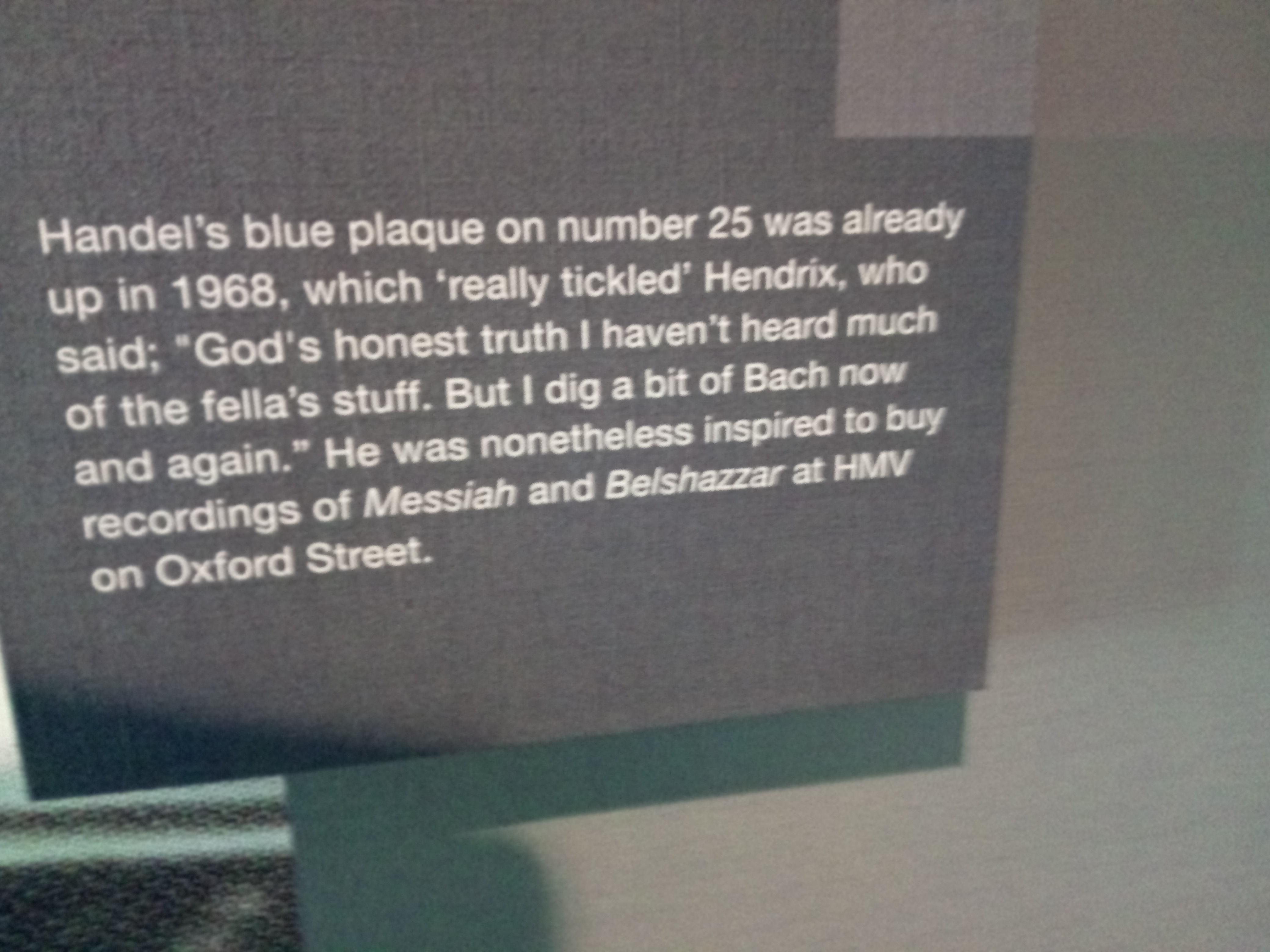
I confess to not knowing a huge amount about Handel, prior to this visit. In fact, this quote from Hendrix in the later part of the exhibition sums it up nicely for me:

2016-11-30-13-29-38

The second part of the tour starts with an exhibition, devoted to Hendrix, on the third floor of number 25 which includes his acoustic guitar, stage-wear and other displays. It was really fascinating to learn more about his early career in the segregation-era US, prior to being discovered and brought to London for his big breakthrough by manager Chas Chandler (who would go on to manage some more heroes of mine: Slade).

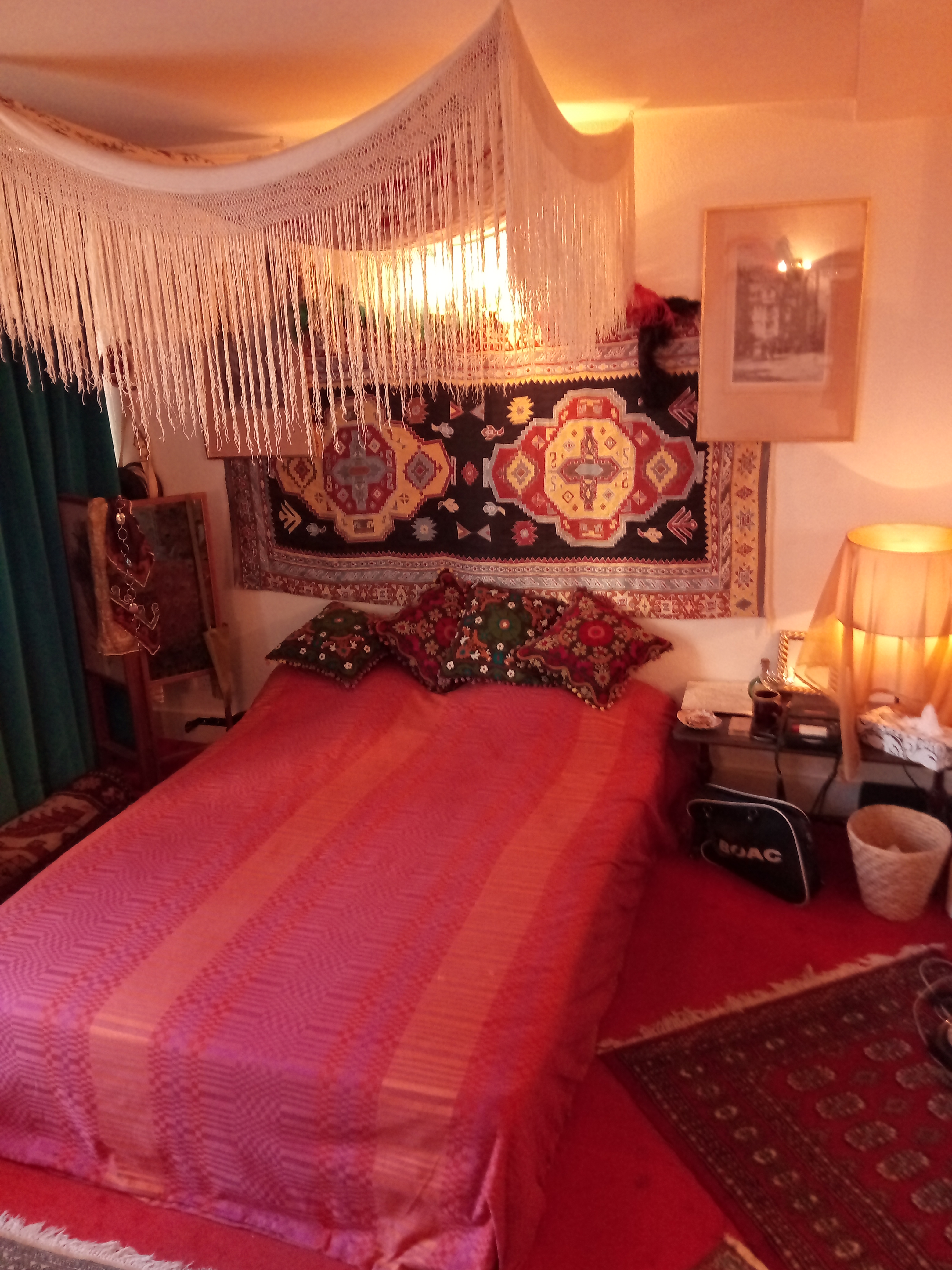
After the initial exhibition you then walk through into number 23 and enter the Hendrix flat itself. In the modest sized flat the largest room which was Hendrix’s living room-cum bedroom has been lovingly restored with exact replicas of furniture, soft furnishings and a whole bundle of belongings he had in the flat at the time, including all the records Hendrix had in his collection there.

The website for the house gives some useful background:

The flat on the upper floors of 23 Brook Street was found by Jimi’s girlfriend Kathy Etchingham from an advert in one of the London evening newspapers in June 1968 while he was in New York. He moved in briefly in July before returning to the United States for an extensive tour. He spent some time decorating the flat to his own taste, including purchasing curtains and cushions from the nearby John Lewis department store, as well as ornaments and knickknacks from Portobello Road market and elsewhere. He told Kathy that this was ‘my first real home of my own’.

2016-11-30 13.49.29.jpg

It really felt like walking straight into a slice of late 60s life and because so many photos exist of Hendrix in that flat, they have been able to do an amazing job on recreating it exactly as it was. It was a weekday and wasn’t hugely busy when I visited and the experience was made all the more fascinating by a lovely and amazingly helpful and informative guide. She was one of those rare people who seem to confound the old saying about the 60s by both remembering them (in great detail) and being there. She had loads of information to share, both on the recent challenge of restoring the flat and of Hendrix’s day to day life in it back in the late 60s, not to mention talking me through his life on the road and his many musical influences as we knelt on the floor and flipped through his recreated record collection together: Johnny Cash, Bob Dylan, lots of old American blues recordings and many more.

2016-11-30-13-50-13

For anyone interested in rock history who wants to get that bit closer to the life of Mr James Marshall Hendrix then the Hendrix flat is a must-see on any visit to London.

2016-11-30-14-08-35

Visit the Handel and Hendrix House website here

Talking Musical Revolutions with Zoë Howe at Kino-Teatre, St Leonards 24/11/16

My review was originally published on The Stinger independent music website here

Rock writer, Zoë  Howe, who has produced acclaimed biographies on the likes of The Slits, The Jesus And Mary Chain, Wilko Johnson, Lee Brilleaux and Stevie Nicks, dropped in at St Leonard’s’ Kino Teatre on Thursday to talk about her experiences writing those; and also about her latest book, Shine On Marquee Moon, her first work of fiction.

Shine On Marquee Moon, named after the iconic Television album, follows the adventures of a fictional 80s new romantic band, Concierge, who are enjoying something of a modern-day revival.In spite of owning up to getting Falco’s “Rock Me Amadeus” as the first ever single she bought with her own money (which she played us the video of, along with Duran Duran’s ‘The Reflex’) this is less Howe’s world than the rock world she knows far more intimately, both as a writer and a performer.

She explained that although she started out with a rock band in mind, she switched genre’s because she “didn’t want it to become too Spinal Tap.”

From the couple of readings she gives us tonight, however, it’s brilliantly observed, hilariously eccentric and caustically witty, yet at the same time it comes across as a very human and empathetic portrayal, too.

3d9aac_36ae5f53993b49d78c5c3bbb22c15929mv2_d_1748_2473_s_2

And when Howe moves on to talk about her rock biographies, it’s abundantly clear how precious to her maintaining that human element is.

Drawn to bands like The Who at an impossibly young age, Howe reveals that the first rock biography she ever read was a sordid hatchet job on Keith Moon.

She denies that she consciously set out to do this when I put the question to her later on, but that lurid account could almost have acted as her personal manifesto on how not to do it when it came to working on her own music biographies years later.

She emphasises the importance she attaches to giving her subjects a degree of dignity and respect, as well as love she’s keen to stress, regardless of whatever bizarre rock star behaviour or low points in people’s personal lives her books inevitably touch on.

Howe seems to have taken a Punk DIY ‘just get on and do it’ approach to writing: experimenting and learning as she goes along, rather than bending over backwards to fit the usual constraints of the publishing industry. And it certainly seems to be paying off.

3d9aac_c29c0e00d5f54575a1be3b84f8d1b517

Talking Musical Revolutions makes for a fascinating evening and with some thought-provoking questions from interviewer, Gavin Martin, a great selection of video clips (The Who, The Slits, Bauhaus and Dr Feelgood, for example – not just Falco and Duran Duran!) and some highly entertaining readings from her new book, the two hours just fly by.

Whether it’s her rock biographies or her new foray into the word of fiction, it’s clear that Zoë Howe deals with her subject matter with warmth, passion and good humour.

And at least one or two of those publications are likely to find their way on to my Christmas present wish-list this year.

http://www.zoehowe.com/

85320b_a06adc1ada4b4e73a367be48a4fa259bmv2

Photo from event publicity promo


Book review: ‘Hastings Old Town Music Scene’ by Sean O’Shea

Having been resident in Hastings only some six months or so my perceptions of the town’s lively, thriving music scene are still those of the enthusiastic newcomer. I can’t pretend to know the scene inside out and back to front like many of the people Sean O’Shea interviews in this 140-page book, but that helped make it a fascinating read for me.

For a smallish town of 90,000 Hastings has an unparalleled live music scene, particularly in the old town which this book focuses on: dozens of pubs and bars putting on live music, a healthy mix of larger venues, too, and numerous events and festivals. And for a long long time the town has exerted an almost gravity-like pull as a place for musicians of all types to set up home here and play here. But my perception is that unless you are familiar with the town, either as a resident or frequent visitor, all of this is pretty much under the radar. I think this is probably because, although it’s long had a very healthy live music scene and is teeming with musicians, it’s not given birth to a really big name band that comes to define the place musically and put it on the musical map. Andover forever has The Troggs, Guildford – the Stranglers, Wolverhampton – Slade. Yet Hastings just seems to have dozens and dozens and dozens of very talented musicians, but not necessarily ones who are household names. This book, therefore, is not filled with interviews of mega-successful rock icons reflecting on their long-past musical roots, but rather is a series of interviews with musicians who live and perform in the town today. A few of those interviewed were born here and reflect on a Hastings childhood and teenager-dom. But most have been drawn here at some point by the pull of the town’s music and arts scene, many it appears via south-east London – a journey I, too, have made.

It’s packed with stories and reflections and covers interviews with musicians from a wide range of genres: folk, jazz, rock, blues, classical and more. Some like Lorna Heptinstall of the internationally acclaimed Skinny Lister or Liam Genockey of the iconic folk rockers Steeleye Span, both of whom ended up in Hastings, have profile and reputations that stretch far beyond Hastings. But others, like the four women who make up the a capella harmony vocal group, Rattlebag, renowned for their folk sing-arounds in the Stag Inn, are little known outside Sussex. But their passion for and insight into the Hastings music scene makes for a genuinely enjoyable read.

Whether you’re a music-loving resident familiar with scene or a curious visitor who wants to find out more, ‘Hastings Old Town Music Scene’ is well worth a read. At the back there’s a list of old town music venues as well as a calendar of the key musical events, festivals and fairs that Hastings has built up a considerable reputation for.

Published 2016 by Hastings Press

51ssidrzzkl-_sx340_bo1204203200_

Review: ‘You Say You Want a Revolution? Records and Rebels 1966-1970’ Exhibition at the V&A

The Victoria & Albert Museum’s ‘You Say You Want a Revolution? Records & Rebels’ covers the period 1966-1970, a time I recall as one of starting nursery school, learning to ride a red plastic motorbike and amassing a collection of soft toys. The music I probably took in by osmosis while still in the womb but the rest of it, I’m obviously grateful for exhibitions like this to show me what else I missed.

On first entering I’m slightly underwhelmed: displays of LP covers many of which I have in my collection and posters I’d seen many times before. Moving on, there’s numerous displays of Carnaby Street-era swinging sixties (that famous pink mirrored mini-dress that Sandie Shaw wore, a life-size re-enactment of the Sgt. Pepper’s album cover – with the actual fluorescent suits that John and George wore for the photo-shoot) and the exhibition begins to widen it’s scope. As well as fashion and music we get snapshots of the US civil rights and UK gay liberation campaigns as well as students in Paris in 1968 and the moon landing in 1969.

There’s definitely some fascinating exhibits but I’m still not exactly clear what the overall story is at this stage, other than lots of different and exciting things happened in this period of history: musically, culturally, technologically and politically. When I compared it to my experience of, say, visiting the Stax Studio museum in Memphis (where the interconnectedness of the fight for civil rights and the vision for making great music emanates from every single fibre of every single exhibit) or, say, the Rolling Stones exhibition where many of these issues are addressed through the eyes of a single band, I wasn’t experiencing the same visceral feeling in my gut.

That changed, towards the end of the exhibition, however, which looked at the festival culture of the era: specifically the gallery devoted to Woodstock with its huge screens showing clips of the festival, decked out in fake grass on the floor and even beanbags so you could lie back, soak it all in and be transported back to the fields of a New York State dairy farm in August 1969. Seeing scenes of Country Joe MacDonald singing the ‘Fixing to Die Rag’ and the hope, joy and genuine optimism of the young people in the crowd and comparing it to the scenes of utter despair among America’s youthful protesters this very week as they contemplate a future with Donald Trump as President was the moment the exhibition moved from being interesting to being genuinely moving and bitingly culturally relevant. I left with a lump in my throat.

https://www.vam.ac.uk/exhibitions/you-say-you-want-a-revolution-records-and-rebels-1966-70
rev-digital-banners_610x262px_02aw-v2

Related reviews:
Rolling Stones “Exhibitionism”
Sun Studios tour