Category Archives: Album reviews

Folk: album review – Kaela Rowan ‘The Fruited Thorn’

My review was originally published on the Bright Young Folk website here

Scottish singer Kaela Rowan sang with Mouth Music, recording four albums with them in the 1990s, and more recently has been touring and recording as part of the acclaimed Shooglenifty and their unique fusion of traditional Scottish music and modern dance beats. The Fruited Thorn is Rowan’s second solo album, following Menagerie which was released in 2014.

An album of eleven traditional ballads (seven sung in English, four in Gaelic), The Fruited Thorn is, in Rowan’s own words, “a homage to all the amazing ballads and ballad singers past and present. Those great singers who bring songs to life and helped awaken the young singer in me.”

The whole album has a nice relaxed tempo about it and some beautiful songs, both familiar and less familiar. However, some really interesting musical collaborations do make it particularly stand out from many similar releases in this field.

Rowan has put together a band composed of Shooglenifty personnel James Mackintosh (percussion, guitars, keyboards, vocals) and Ewan MacPherson (guitars, mandolin, jaw harp) for the entire album, but throughout they are joined by a fascinating line-up of additional guests.

Second track ‘Eilan Fhianain’ is one of the most interesting and unexpected collaborations on the album. Rowan’s traditional Gaelic singing is accompanied by traditional Indian singer Dayam Khan Manganiyar who sings the songs of the Rajasthani desert lands, and the two sets of vocals provide for an absolutely compelling cultural mix that actually works. He also provides vocals on another track, ‘Griogal Chridhe’, another traditional Gaelic song.

Elsewhere, more familiar territory is covered and the album gives us lovely new interpretations of traditional standards like ‘Now Westlin Winds’, ‘Lord Gregory’ and ‘As I Roved Out’. Rowan’s soft but persuasive vocals and the gentle but innovative instrumentation provide a fresh take on well known songs. The Uillean pipes on ‘As I Roved Out’ are particularly lovely – played by Jarlaith Henderson who also provides backing vocals to the same track.

While percussion on most of the tracks eschews the folk fusion dance beats for which Shooglenifty is renowned for, it would be surprising if such influences were to be completely absent from the album and sixth track ‘Mary and the Gallant Soldiers’ is where the so-called “Acid Croft” influences of Shooglenifty are most apparent.

An album that takes a fresh look at some traditional ballads, with fine vocals, superb instrumentation and innovative collaborations, The Fruited Thorn skilfully bridges the gap between the experimental and the familiar.

Released August 2016

http://www.kaelarowan.net/

the-fruited-thorn-kaela-rowan

Folk: Album review – NUA ‘Flow’

My review originally appeared on the Bright Young Folk website here

Toronto-based instrumental trio NUA are fiddle player James Law, guitarist Graeme McGillivray and bodhrán player Jacob McCauley. The band draws on Scottish and Irish folk traditions. Flow is their second album and follows their well-received debut Bold, which came out in 2013.

A nice, clean, uncluttered sound, it is the interaction of the rhythms of the guitar and the bodhrán with the melodies of the fiddle that really make this band. However, that is not to suggest for a moment that the guitar and the bodhrán just remain in the background while the fiddle takes centre-stage. Launching their new album, Jacob McCauley recently explained, “We wanted to have three members that equally share the spotlight so to speak. Where each member can take on multiple roles depending on what is going on musically. Obviously when it comes down to it, we only have one melody player, but the guitar and bodhrán both have their moments to speak melodically instead of just rhythmically. The fiddle also has times to lay back and keep a more rhythmic feel or a more subtle drone.”

The result is an album of twelve original self-composed tunes, half joint compositions by fiddle-player, Law, and guitarist, McGillivray, and the remainder written solely by one or the other.

Opening track Wide Open makes for an uplifting start and sets the album up nicely, beginning with some bright, sunny-sounding guitar before being joined by some lovely fiddle that darts and dances around.

A whole album of instrumentals, regardless of how good each individual tune is, does need light and shade, depth and colour and several changes of gear to maintain the attention of most listeners, however. This CD is one that meets those challenges even, at times, within a single tune.

The excellent Ghostrider, for example, starts off with a very gentle and soothing melody but gradually gets more and more frenetic, drawing the listener in until finally, at the very, very end, the tune draws to a close with all the soothing gentleness with which it began.

A fresh and vibrant take on traditional Celtic music, a strong collection of original tunes and some inspired interplay between the three musicians, NUA are likely to continue cementing their reputation on the folk scene and no doubt pick up a few more awards with this, their second album.

Released: June 2016

http://www.trionua.com/

flow-nua

Folk: album review – Ray Hearne ‘Umpteen’

My review originally appeared on the Bright Young Folk website here

Umpteen is a new album from Yorkshire-based folk singer and songwriter, Ray Hearne. From an Irish family who settled in South Yorkshire he has his cultural roots in the traditional Irish tunes of his parents but is deeply influenced by the stories, surroundings and dialects of the South Yorkshire coal and steel communities he grew up in, and in the post-industrial landscape they have become, where he still resides.

As Hearne says in his own words: “Where were the songs of South Yorkshire steel and coal? I knew songs about the Ohio, Thames and Shannon but not about the Don and Rother which had flowed through the whole of my life. Where were the songs in our accent? Shocking to say, they were nowhere to be found. It dawned on me that we would have to write them ourselves.”

Following on from the well-received previous album The Wrong Sunshine, Umpteen is a collection of fourteen self-penned songs. As well as bringing in some evocative lyrics, delivered in a warm, rich, no-holds-barred South Yorkshire tongue, there’s also some fine musicians and guest singers performing on this too, including Belinda O’Hooley, Jude Abbott, Greg Russell and Ciaran Algar.

Highlights on the album include opening track ‘Moonpenny Hill’, a passionate, powerful folk anthem, bitingly, savagely political but equally full of warmth and humanity. Here, Hearne reflects on the everyday struggles of the 84/85 miners’ strike where, in spite of “bitter the wind from the south” there is the warmth provided by comradely solidarity, supportive sisterhood and thoughts of the coming spring.

Away from the political narratives ‘The Longest Hot Summer’, with lovely accompanying piano from Belinda O’Hooley, is a nostalgic recollection of the gift of long hot summer days where “blossoms are garlanded in ginnel and vale”, the old folk are on their allotments, and there is an age to wait between “clocking on and clocking off.”

‘The Hales of Henry Street’ is written in memory of Private Henry Hale of Rotherham and thousands like him slaughtered in the First World War. Folk listeners will have heard many similar, equally heart-rending, recollections in recent years. But the lyrics eloquently capture both the horrors of the trenches and the impact on the folk back home. Lush brass from Jude Abbot gives the song an evocative, mournful and thoroughly South Yorkshire feel.

Whether it’s hard-hitting protest songs about the Thatcher era, wistful memories of growing up or historical tributes to fallen brothers a century ago, the spirit of South Yorkshire oozes out of every groove of this CD with typical honesty, humanity and good humour. Ray Hearne has done his adopted and beloved homeland proud with this fine set of songs.

Released: May 2016

http://rayhearne.co.uk/

umpteen-ray-hearne (1)

Rock/folk: album review – Ashley Hutchings ‘From Psychedelia to Sonnets’

My review originally appeared on the Bright Young Folk website here

Ashley Hutchings has been one of the most influential, not to say prolific, musicians in British folk over the past half century. He has also written some charming prose, and over the years has proved to be master of an engaging and entertaining delivery of the spoken word. After publishing a book “Words, Words, Words” in 2014, which collated some of his writings for the very first time, an obvious next step was putting this all together into some kind of touring show. That is exactly what we have here on this album.

Recorded at a single performance at Wigan Parish Church in February 2016, From Psychedelia to Sonnets brings together songs, poetry and spoken passages from both Hutchings’ own previous work and other works that he’s had a close involvement with.

It’s all linked with a string of anecdotes, reflections and observations from his life and musical career. The musical parts feature the talents of Becky Mills on vocals and acoustic guitar and Ruth Angell on vocals, violin, pump harmonium and piano.

Of the spoken word sections, Hutchings’ contributions include a reading of the sleevenotes he produced for the 2003 reissue of the very first album of the band he founded: Fairport Convention. To the uninitiated, the thought of someone reading out old album sleevenotes to a public audience could appear a deathly dull proposition, bordering on psychological torture. But this is no ordinary album and no ordinary man. In this case we have possibly some of the most evocative sleeve notes ever written: “What we wore, Pollock-style paint-splattered shirts, fringed jackets, scarves various, dark velvet, boots with the heels worn down, voluminous hair…”

Listeners do get to hear far more than just sleevenotes, though. Poems written by Hutchings, such as The Complete Angler and You Are What You Eat, form part of the set alongside a variety of other readings. The spoken-word parts are then interspersed with a number of songs throughout the album.

In spite of Hutchings being a wonderful bass-player and hugely influential band leader few would argue that that this was on account of his singing abilities. He has, however, always had a knack for seeking out some enormously talented vocalists to work with over the years. This album continues in that tradition. Musical highlights include one of two songs on the album that originated through Hutchings’ work on the Lark Rise to Candleford theatre productions: ’Til The Time We Meet Again, sung beautifully by Mills. A Song of Two Bridges, where Angell and Mills alternate the lead vocals and each adopts the persona of a world-famous bridge in conversation with one another is another highlight.

For anyone wanting an introductory overview of Ashley Hutchings’ recorded work this album is not an obvious place to start. There are various compilations that do a much better job of that. However, for those who maintain a keen interest in Hutchings’ never less than fascinating career, or for those who have recently seen one of these shows live and are looking for a suitable memento to relive the event, then this CD is well worth a purchase.

Released: April 2016

http://ashleyhutchings.com/

from-psychedelia-to-sonnets-ashley-hutchings

Rock/folk: album review – Sandy Denny ‘I’ve Always Kept a Unicorn: The Acoustic Sandy Denny’

My review originally appeared on the Bright Young Folk website here

Arguably, the finest female singer songwriter Britain has ever produced, it’s perhaps only been in recent years that Sandy Denny’s legacy has begun to start getting the due recognition it deserves. Yet on the other hand can there be too many attempts at repackaging? One Sandy Denny collection after another has been released in recent years so it is prudent to explore the purpose behind this latest one.

Indisputably, Denny appeared on some of the most iconic folk-rock albums the genre has ever produced. British popular music would certainly be much poorer had she never made albums like What We Did On Our Holidays and Liege and Lief with Fairport Convention or Fotheringay, with her own short-lived band of the same name.

At the same time, it is also not unreasonable to argue that a voice as unique and as precious as Denny’s also deserves the chance to be appreciated on its own terms: to be heard “pure, unadulterated and most untouchable” as the sleeve notes to this album boldly state, not merely as a singer in a band, however brilliant that band may be.

Even during her later solo career, which could perhaps have provided opportunities for the pure unadulterated Denny to come to the fore, her solo albums failed to remedy this for one reason or another. Each of her solo albums thus contained a plethora of guest musicians and elaborate arrangements, to the extent that they still receive very mixed reviews even today. Many a reviewer has argued that in spite of her outstanding prowess as a vocalist Sandy Denny never managed to make a truly outstanding solo album. So this is where this new collection comes in. Indeed, the extensive sleeve-notes for this CD cheekily subtitle it “The Best album Sandy Denny never made.”

So what it doesn’t try to do is attempt to provide a comprehensive overview of her entire recording career (as the 2010 Sandy Denny boxed set sought to do), nor does it simply collect together some of the best-known versions of her best-known songs (as other compilations have done). What it does do is bring together acoustic versions of forty songs from each stage of her career. Archives have been mined for demos, alternate takes, live recordings and BBC sessions.

While only a handful of these tracks have been previously unreleased, according to the sleeve-notes, that is arguably missing the point of this collection. It’s not really about unearthing new material or trying to gather together everything Denny has ever recorded. Rather it’s an attempt to bring some coherence to her recorded output and present her songs in a way that showcases her unique vocal talent with modest and simple, though still very beautiful, acoustic accompaniment.

Amongst the two CDs worth of tracks, the collection includes the beautifully understated acoustic version of Who Knows Where The Time Goes that Denny sang with the Strawbs, a guitar and vocals acoustic master of Fairport Convention’s She Moves Through The Fair, a brilliantly powerful piano and vocals version of Solo and a stunning live version of Blackwaterside, both from her solo career.

In an era where we can all get rather tired of the endless repackaging of classic artists and the endless attempts by record companies to find new ways of making money from the same old recordings, I’ve Always Kept A Unicorn – The Acoustic Sandy Denny is a project with a purpose, a logic and a coherence and as such it does Sandy Denny’s legacy proud.

Released: April 2016

Home

ive-always-kept-a-unicorn-the-acoustic-sandy-

Rock: album review – Whitesnake ‘The Purple Album’

As I’ve noted before, it’s understandable on the one hand but a real shame on the other that classic Deep Purple songs from the Mark 3 and Mark 4 eras are now all but forgotten by the band themselves. So efforts by both Glenn Hughes and now David Coverdale to celebrate the legacy of that era of the band and keep the music alive are to be applauded. Certainly in a live context anyway. But the question is do we actually need a CD of the David Coverdale-fronted Whitesnake performing cover versions from the David Coverdale-fronted Deep Purple?

I was a little bit sceptical and refrained from buying the album for several months. But seeing Coverdale’s erstwhile Purple bandmate, Glenn Hughes, the other month re-awakened my interest in all things Mark 3. So it was that I put this CD on my Christmas Present list.

And the verdict? There’s no doubt from the lengthy sleeve-notes penned by Coverdale of the passion and pride he feels for the musical output of his former band. And The Purple Album revisits thirteen tracks from the three albums (Burn, Stormbringer and Come Taste The Band) of the Coverdale-fronted Purple. They don’t attempt to be exact replicas of the originals. But while the tunes on the album have the sound and feel of the modern Whitesnake in many ways, neither have they been messed around with too much either. There’s great versions of Burn, You Fool No-one, Mistreated and Stormbreaker and there’s some great guitar work from Whitesnake guitarists Reb Beach and Joel Hoekestra. And there’s some nice, gentle and beautifully melodic versions of Sail Away, Holy Man and Soldier of Fortune, too.

Obviously, if you have not already got the Burn, Stormbringer or Come Taste The Band albums then get those before you think about buying this. But as a celebration of the tunes from those classic albums this is worth having. Because yes – those tunes certainly deserve to be celebrated.

Released May 2015

Home

The_Purple_Album_by_Whitesnake

Related reviews:
Glenn Hughes at The Electric Ballroom
Deep Purple at The O2

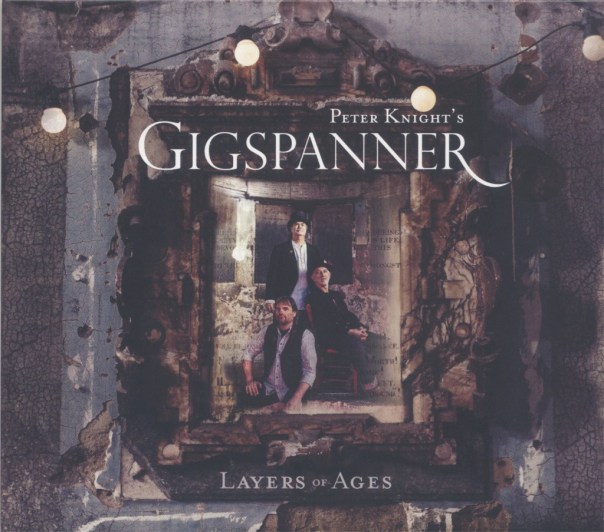
Folk: album review – Peter Knight’s Gigspanner ‘Layers of Ages’

Layers of Ages, Gigspanner’s long-awaited third album received numerous plaudits from folk reviewers when it was released last year. Deservedly so. Fiddle-player, Peter Knight, guitarist, Roger Flack, and percussionist extraordinaire, Vincent Salzfaas, have returned with another absolute gem.

Bows Of London opens the album, a song exploring those age-old themes sibling rivalry, murder and haunted musical instruments made out of human bones (well of course…) What really adds to the macabre nature of the subject matter though is the beautifully calm, understated way in which Knight delivers the lyrics. Death And The Lady is another highlight. Coming in at over nine minutes long, dark, brooding electric violin blends with pounding conga drums and Spanish-flavoured guitar to create a wonderfully atmospheric soundscape. However, for those yet to experience Gigspanner it’s difficult to emphasise the breadth of musical influences that this band explore. There’s lots of well known traditional material on the album, of course. But folk doesn’t even begin to describe the vast range of sounds you get to hear coming out of the speakers when Gigspanner are playing. King Of The Fairies, for example, has a Latin American feel while Louisina Flack immediately puts you in mind of a furiously energetic Cajun hoedown.

Not only have Gigspanner brought a fresh perspective on some really well-known traditional songs, the album revisits a couple of songs closely associated with Knight’s former band, Steeleye Span. There is a great version of Mad Tom of Bedlam which is given that unique Gigspanner treatment, as well as a new version of Hard Times Of Old England. The latter was recorded by Steeleye Span at the height of their rocked-up, mid-70s commercial peak. But it gets a thorough reworking here as a gentle, mournful ballad, providing a lovely finish to the album.

Having played Gigspanner’s previous two albums to death over recent years, it’s been wonderful to finally have a new one to play over these past few weeks. And what a masterpiece it is, wholly deserving of all the praise it’s received thus far.

Released: May 2015

http://www.gigspanner.com/

Gigspanner3-1024x903

Previous reviews:
Gigspanner at Whitstable 2014
Gigspanner at Hastings 2014
Gigspanner at Hastings 2015

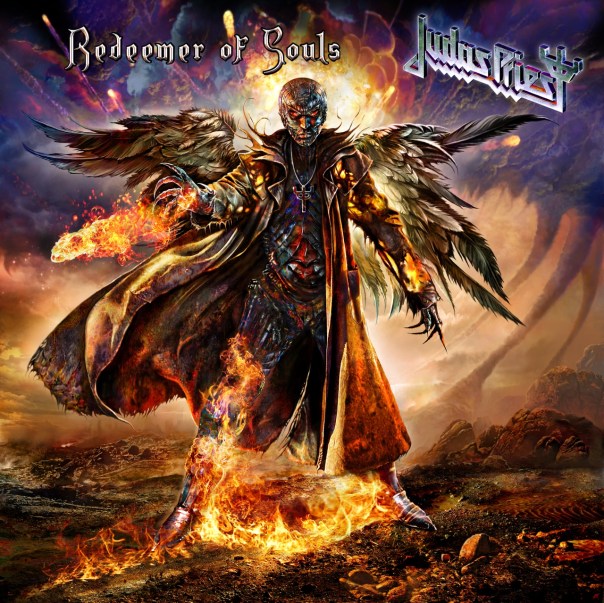
Metal: album review – Judas Priest ‘Redeemer of Souls’

After being so impressed with Judas Priest on their recent UK tour, it wasn’t long afterwards that I found myself putting their most recent studio album, 2014’s Redeemer of Souls, on my Christmas present list.

When the album was being launched guitarist, Glenn Tipton assured that fans that they need not expect something wildly experimental. “Sometimes in the past we may have come under fire for being too adventurous musically…so we have listened,” he claimed. “From start to finish, ‘Redeemer of Souls’ is 18 songs of pure classic Priest metal.” Well, I have only got the bog-standard 13 track version rather than the deluxe version, but other than that I’m not going to argue.

The album opens in strong form with Dragonaut which pretty much contains everything you want from a classic metal album, crunching guitars, tuneful melodic solos, thunderous vocals and an accessible, well-written tune you can sing along to.  Other memorable, stand-out tracks on the album include the title track, Redeemer of Souls, as well as Down In Flames and Metalizer. But if truth be told there’s not a weak track on the album. This is the first album with new guitarist, Ritchie Faulkner, who replaced founder member KK Downing. But as was also evident on their recent tour he certainly “gets” the Judas Priest sound.

In spite of having a reputation of purveyors of fearsome uncompromising metal, however, Judas Priest have also been able to pull the odd nicely-judged hard-rock ballad out of the hat. Beginning Of The End, the last track on the album, does the job beautifully.

After so much confusion around the band’s future only a few years ago, Redeemer Of Souls is a real return to form for Judas Priest. The line-up refreshed. The band rejuvinated. And with a clear sense of musical direction apparent from the outset. This is an album that stands up well against the band’s classics of the late 70s and early 80s.

Released July 2014

http://judaspriest.com/home/

Redeemer-of-souls-album-cover-art-1280

Previous review: Judas Priest at Brixton Academy 

Rock: album review – David Gilmour ‘Rattle That Lock’

Only a year after releasing what was billed as Pink Floyd’s final album, The Endless River, late 2015 saw David Gilmour bring out a new solo album, too. Rattle That Lock is his first solo offering since 2006. While Sid Barrett and Roger Waters both have their enthusiastic advocates as the holder of the creative genius behind Pink Floyd, for me it was always David Gilmour I looked to first and foremost. Gilmour’s vocals and guitar are the sound of Pink Floyd for me. I found the Waters-inspired The Final Cut little more than a self-indulgent ranty dirge, but hugely enjoyed both of the post-Waters albums, A Momentary Lapse of Reason and The Division Bell. And Gilmour’s 2006 solo offering, On An Island, very much continued in the same vein.

So what, then, of Rattle That Lock? I’ve played it several times over now. All of the musical ingredients you would expect from a David Gilmore album are there: the beautiful melodic guitar solos, the lush atmospheric keyboards, the deliciously rich backing vocals and that clear, sensitive unmistakable lead vocal. But somehow, unlike previous offerings, it doesn’t quite seem to add up to something greater than the sum of its parts. It’s not a bad album and there are some really beautiful moments on it. But in places it does begin to sound a bit like Pink Floyd by numbers. On An Island followed exactly that same formula, of course, but perhaps had the benefit of featuring a number of really well-written memorable songs that added to the creative output of, rather than merely sought to copy, the classic Floyd back catalogue.

There are some lovely stand-out tracks, like Faces of Stone and In Any Tongue. And apart from the truly horrendous disco beat on Today there are very few low points on this album. But overall, although it’s mainly songs rather than instrumentals, Rattle That Lock is more in the business (like 2014’s The Endless River) of offering atmospheric Floydish soundscapes rather than genuinely classic new material. Having said that, it’s still a thousand times better than The Final Cut

Released: September 2015

http://www.davidgilmour.com/rattlethatlock/

91fkuZQLOVL._SL1500_.jpg

Folk/country: album review – Marina Florance ‘This, That & The Other’

Folky, countryfied, bluesy, Americana, Marina Florance’s rich, velvety vocals and deft, expressive acoustic guitar playing have the effect of making every song she plays sound like a timeless classic. I first became aware of this extremely talented singer-songwrter at Folkstock’s Emerging Talent Showcase back in November. Her incredible voice and heartfelt songs bowled me over. Though not exactly a household name, Florance has been picking up more and more fans wherever she’s played and sung. Tom Robinson has championed her on his BBC 6 music show and she’s wowed audiences at the Cambridge Folk Festival.

The album opens with I Told You My Troubles. Florance has a knack of turning an initial world-weary and burdonsome vocal into a defiant and uplifting song of hope and joy. This is one of those songs, as is the next one, Little Black Cloud, a beautiful song which is the stand-out track on an exceptionally strong album.

Mostly, the album is just Florance’s rich, heartfelt vocals and her beautiful acoustic guitar-playing. But there are some nice guest contributions, too: some lovely melodeon on a couple of tracks and additional guitar from Ben Smith and alto-sax from Greg Camburn on one track. All of the songs are penned by Florance alone or with one of her writing partners. It’s testimony to her talents as a songwriter that an album as strong as this from a relative newcomer to recording succeeds without the need for a single cover version.

Let’s hope that 2016 becomes the year where Marina Florance comes to much wider public attention. This, That & The Other couldn’t be a better showcase for doing that. As soon as you put it on it has the sound and feel of a classic album, one that can happily sit by the likes of Alison Krauss, Joni Mitchell and Carole King in my CD collection.

Released: January 2016

http://www.marinaflorance.com/

a0692132365_10

Previous review: Marina Florance at The Islington