Category Archives: Album reviews

Have we been seeing a creative renaissance for our vintage rock and metal acts?

OK, so Black Sabbath may have played its last ever tour, we have seen one devastating rock star death after another and a number of acts are no more. But, in spite of all that, have we been witnessing a real renaissance for some of our classic rock and metal bands in recent years? I would contend we have.

After some difficult years in the late eighties and nineties for many of our much loved rock giants, one band after another have been releasing albums that stand up really well against their early classics. The aforementioned Black Sabbath released the brilliant 13 album in 2013, which in my view can happily sit alongside the first four Sabbath albums as a genuine bona fide classic. Uriah Heep’s Outsider released in 2014 can unashamedly sit alongside the David Byron-era material in terms of Heep’s unmistakable brand of melodic hard rock. Girlschool’s Guilty As Sin is every bit as good as their era-defining early albums, with lead track Come The Revolution a match for any of their well-known classic tunes. Saxon’s Battering Ram from 2015 and Judas Priest’s Redeemer Of Souls from 2014, each reviewed elsewhere here, both stand up well and offer everything you’d want to hear in a new album from either band. Even The Stones have got in on the act with their critically-acclaimed back-to-basics Lonesome & Blue album celebrating their R&B roots.

My theory is that all of these bands have reached a stage in their musical careers where, unlike some often painful attempts a decade or two ago, they have more than proved themselves. They now no longer feel obliged to sound contemporary or try to keep up with modern trends but can simply concentrate on sounding like themselves and producing the kind of music and the kind of albums that brought them to the public’s attention in the first place.

Of course, it doesn’t mean we shouldn’t be championing newer rock acts and none of the bands I’m talking about here are going to be around forever. However, I think we could still be seeing a few more classic releases yet from some of our favourite rock veterans over the next few years.

2017-01-21 15.38.55.jpg


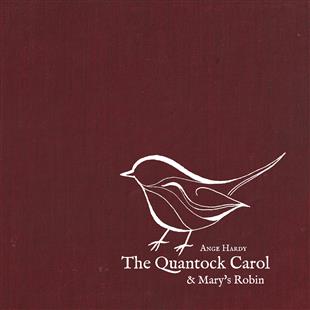
Folk: single review – Ange Hardy ‘The Quantock Carol’

My review was originally published by Bright Young Folk here

The Ange Hardy Christmas single is becoming a much-anticipated annual tradition in the contemporary folk work. In 2014 we had The Little Holly Tree, followed by When Christmas Day is Near in 2015. Now, for 2016, we have The Quantock Carol.

Hardy presents us with two tracks this Christmas: The Quantock Carol and Mary’s Robin. Both are self written, self-produced, unaccompanied vocal performances, yet Hardy has a knack for writing Christmas songs that sound like long-forgotten but recently unearthed Victorian carols.

The Quantock Carol was written for a world in which “peace seems more important and less certain than ever,” Hardy reveals in the sleeve-notes. It was inspired by the landscapes of the Quantock hills where she resides, with the hope that such serenity may be something the whole world comes to experience. It’s a short song, just one minute 22 seconds, but it resonates with peace and goodwill to all and is sung in the rich, warm, clear voice that we have come to expect.

The second track, Mary’s Robin, is based on a Gaelic nativity legend, about how the robin came to get its red breast. Again, it’s beautifully sung and wouldn’t sound at all out of place at any festive concert, alongside more traditional carols.

With such a beautiful collection of seasonal songs being built up over the past few years, we surely look forward to an Ange Hardy Christmas album before too long.

Released November 2016

the-quantock-carol-single-ange-hardy

http://www.angehardy.com/

Previous review:

The Little Holly Tree EP


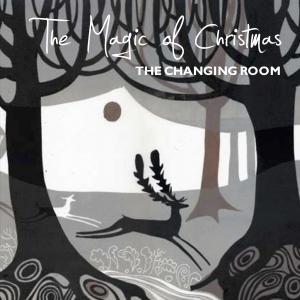
Folk: EP review – The Changing Room ‘The Magic of Christmas’

My review was originally published by Bright Young Folk here

It’s been quite a year for The Changing Room, the Cornish-based folk duo of Tanya Brittain and Sam Kelly. Kelly picked up the Horizon prize at the BBC Folk Awards, the duo’s second album Picking Up the Pieces was released in the summer and there was also a collaboration project with The Lost Gardens of Heligan. So what better way to round of the year than with a Christmas EP.

Though neither originate from Cornwall (Brittain is originally from Sheffield and Kelly from Norfolk) they have undoubtedly helped give a greater profile to the Cornish language in folk music. Once formally classified “extinct” by UNESCO, Cornish has undergone a remarkable cultural renaissance in recent decades, thanks in no small part to the musical contributions of outfits like The Changing Room.

From June Tabor and Oysterband’s cover of Love Will Tear Us Apart to Richard Thompson’s spirited cover of Britney Spears, there have been some great folk makeovers of rock and pop classics in recent years. This EP continues that tradition with a cover of The Pretenders 1980s seasonal hit 2000 Miles, in Cornish, of course.

Even if one never learns or understands a word of Cornish it’s a beautifully expressive language and Kelly’s vocals, as fresh and contemporary-sounding as we have come to expect, handle the song equally beautifully.

The second track is Brittain’s own. Her ethereal Enya-like vocals give depth and beauty to this moodily atmospheric piano and vocals track, this time in English, all about the magic, brightness and calm of Christmas eve.

For the final track, the duo present their take on Silent Night. Anyone thinking they have quite enough versions of this song amongst their Christmas folk CDs already, can be reassured that this is something quite special. Again sung in Cornish, Kelly’s vocals are set against a mandolin backing that is as warm and melodic as a set of Christmas chimes, without a trace of overdone Christmas cheesiness or seasonal cliche.

For those looking for something striking, fresh and a just little different for their seasonal folk playlist this year The Magic of Christmas EP from this talented duo is well worth a punt.

Released November 2016

http://www.thechangingroommusic.com/

the-magic-of-christmas-ep-the-changing-room

Related review:

Sam Kelly Trio at Green Note 2015

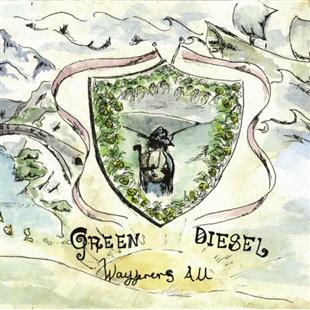
Folk rock: album review – Green Diesel ‘Wayfarers All’

My review was originally published by Bright Young Folk here

Formed in Faversham in Kent seven years ago, Green Diesel trace their musical influences back to the golden era of late 60s/early 70s British folk rock, to bands like Fairport Convention and the Albion Band. Indeed, it could be argued that this album sounds more like the direct offspring of the iconic albums from that period than perhaps the output of the Fairport of today does.

Green Diesel do folk rock and they do it superbly well. A rocking rhythm section and some lovely electric guitar licks blended with a good range of traditional instruments and some beautiful vocals – all of the essential ingredients for a great folk rock album are there, not to mention a great selection of songs and tunes.

Wayfarers All, the band’s second album following their 2012 debut Now Is the Time, contains a mixture of original and traditional material. Unless one was familiar with the traditional songs it would not be immediately obvious which songs fell into which category, a mark of both the quality of band member Greg Ireland’s song-writing talents, together with the ability of the band to put their own consistent musical stamp on the songs and tunes they perform.

To Kill the King opens the album, one of five tracks written by Ireland, and it demonstrates the vocal, instrumental and song-writing talents of the band nicely. Lead vocalist and violinist, Ellen Clare, has a clear but engaging folk voice that’s perfect for this type of material. Of the traditional material, the band do beautiful versions of Mad Tom of Bedlam and May Song.

Another thing that is always pleasing to to hear on any folk rock album is a mix of female and male vocals. And Wayfarers All doesn’t disappoint in this regard either. Lead guitarist Matt Dear takes the lead vocal on his own composition, A Fisherman, Once; while the band’s arrangement of Oak, Ash and Thorn, with its beautiful choral singing from the whole band punctuated by pumping electric bass, puts one in mind of early 70s Steeleye Span.

All in all Wayfarers All is a hugely enjoyable album. An up and coming band who deserve to be much bigger, let’s hear it for Green Diesel and this enchanting slice of classic English folk rock.

Released July 2014

https://www.facebook.com/greendieselfolk/?ref=br_rs&qsefr=1

wayfarers-all-green-diesel

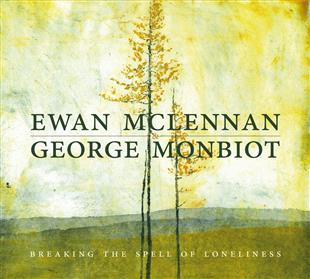
Folk: album review – Ewan McLennan & George Monbiot ‘Breaking the Spell of Loneliness’

My review was originally published by Bright Young Folk here

Many followers of Bright Young Folk may be familiar with columnist George Monbiot. For some, Monbiot’s polemical Guardian columns on environmental destruction, economic inequality, the abuse of power and social decay may be a key reason for purchasing that newspaper, but would anyone want to purchase an album by him?

The first thing to make abundantly clear is that it is Ewan McLennan whose vocals and music we hear throughout the album. Monbiot, though, contributes much of the lyrical content and the story on how this album came about is a fascinating one.

The project began in the wake of an article that Monbiot wrote about the age of loneliness, which explored the themes of social isolation and the breakdown of society. It soon went viral and there was interest from publishers, but Monbiot’s further writings on the subject became the basis for songs, rather than a book, and he turned to McLennan with the idea of putting an album together.

So, a compelling back-story but musically and lyrically is the album any good?

There’s a gentle, melodic, laid-back feel to the music which provides the perfect backdrop for appreciating the album’s lyrical content. McLennan provides the vocals and guitar and he’s joined by Lauren MacColl on violin and viola, Sid Goldsmith on slide guitar, Donald Shaw on harmonium and Beth Porter on cello.

Scotsman McLennan, has a voice with absolutely bags of character, that immediately draws the listener in to each enunciated syllable of each line of every song.

Opening track Such a Thing as Society offers an eloquent and unapologetic rebuttal to one of former PM Margaret Thatcher’s most famous quotes: “There is such a thing as society, it keeps us from losing our minds, it’s working and living and laughing together, that makes us human kind.”

My Time and Yours, with its melancholic harmonium accompaniment and reflective lyrics looking back to days of hard time,s but strong communal and familial ties, is a particular favourite. It is a battle cry for today’s generations to break the spell of loneliness. It’s the only song written by McLennan alone but completely fits in with the overall theme of the album, and in many ways its lyrics act as a rallying manifesto for the album as a whole.

Other themes explored on the album include lost childhood freedoms and the casualties of society as seen through the eyes of a desk sergeant on night duty at a local police station. A haunting and beautiful instrumental Unknown Lament, and spirited cover of the civil rights anthem We Shall Overcome complete the album.

The world we live in means there is an awful lot to rally against and the folk genre rightly retains a crucial role in turning out songs that make us think hard about the world we live in. But however sincere the intentions and however important the issues, it is not unreasonable to expect such songs to be well-written, well-played and well-sung. Breaking the Spell of Loneliness more than passes those tests and is an absolute gem of an album.

Released October 2016

http://www.ewanmclennan.co.uk/breaking-the-spell-of-loneliness

breaking-the-spell-of-loneliness-ewan-mclenna


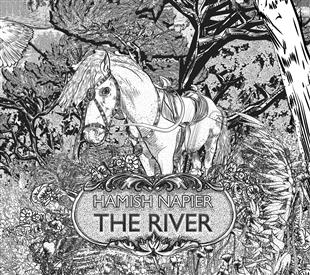
Folk: album review – Hamish Napier ‘The River’

My review was originally published by Bright Young Folk here

Hamish Napier is an in-demand folk musician who has collaborated with a number of key acts on the Scottish folk scene. The River, however, is the debut solo album from this Strathspey-born composer and multi-instrumentalist, and is very much inspired by a childhood spent growing up on the banks of the Spey. “The River brings to the surface vivid sonic images of occurrences, past and present, along the mile-long stretch of the Spey that flows past my childhood home,” Napier tells us in the extensive sleeve notes.

The album includes a stellar cast of renowned Scottish folk musicians, including Sarah Hayes (Admiral Fallow) on flute, James Lindsay (Breabach) on double bass, Martin O’Neil (Duncan Chisholm) on bodhran, as well as Callum MacCrimmon singing Canntaireach, the ancient chanting language of the bagpipes.

Perhaps symbolic of the constantly changing flow of any river, there is a breadth of sounds and moods explored on this album. Opening track Mayfly puts one in mind of some early 70s prog rock passages, a folky Tubular Bells if you will. It’s perhaps an unusual start but provides a captivating experimental feel which immediately encourages the listener to want to explore further.

The Whirlpool meanwhile is a lovely tune with flute and whistle. It has been written as a round – in celebration of the whirlpool that constantly spins and spins just a few hundred yards from the Old Spey Bridge.which captures the frenetic natural cycle of the river as an ever-changing dance. The mood changes considerably with The Dance, beginning with gentle, sombre piano.

Of course, no aquatic-inspired folk, be it river or sea, is complete without harrowing tales of tragedy and death, and the beautiful but mournful Drowning of the Silver Brothers is inspired by the fate of two local boys who mysteriously drowned in the 1930s. Clearly not forgotten locally, this piece serves as a haunting but fitting tribute to the boys and the mystery that surrounds them.

Another memorable track is Floating, which has a funky electronic feel to it demonstrating just how far Napier is prepared to cast his musical net in order to capture the range of moods and emotions he feels moved to express in this album. The two-part The Spey Cast closes the album. The first part is a thought-provoking gentle piece inspired by the death of an old fly fisherman while the second part is a fast and furious musical romp which reflects the mixture of chaos and hilarity that is the town’s annual raft race.

For those with a love of Scottish folk, particularly those with a keen interest in experimentation and innovation within the Celtic world and who love to hear the sound of boundaries being pushed, this is an album well worth exploring.

Released January 2016

http://www.hamishnapier.com/

the-river-hamish-napier


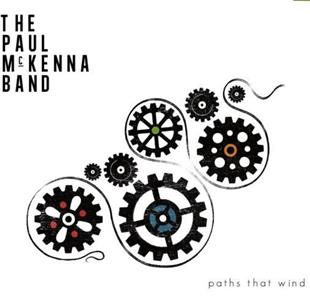
Folk: album review -Paul McKenna Band ‘Paths That Wind’

My review was originally published by Bright Young Folk here

Now celebrating their tenth anniversary, The Paul McKenna Band release their fourth album and continue to cement their reputation as one of Scotland’s premier folk bands. Indeed, “the best folk band to come out of Scotland in the last twenty years,” as the New York Times would have it.

Although no-one would claim they offer a wholesale re-invention of Scottish folk music there is, nevertheless, a fresh and contemporary feel to the band’s sound. Guitar, bouzouki, fiddle, flute and whistles combine to produce a sound that’s accessible, interesting and highly listenable.

This is in no small part assisted by McKenna’s warm and engaging vocals which add a depth and sincerity to the material. As well as regular band members, Paul McKenna, Sean Gray, Ewan Baird and Conor Markey there are also guest slots from a number of notable musicians on the Scottish music scene, like John McCusker (who also produces the album), Rod Patterson, Mike Vass and James Lindsay.

The album comprises eight songs and two tunes, combining original material with some traditional songs as well as some well-chosen covers. Of the self-penned material, highlights include opening track Long Days, which reflects on the age old theme of homesickness: “the grass is always green until we tried to walk it” and here we have some lovely guitar and mandolin that complements McKenna’s lyrics perfectly.

As well as some highly personal lyrics, the band are not afraid to tackle controversial themes either: The Dream is a song written by McKenna about Freddie Gray who died at the hands of the Baltimore Police at the time the band were based in the USA. It’s a thoughtful song reflecting on a brutal episode and evoking the spirit of Martin Luther King: “What happened to the dream, we shall overcome, and walk hand in hand together to the setting of the sun.” Beautiful music, powerful lyrics and warm and very human vocals make this a definite stand-out on the album.

Of the non-original material noteworthy tracks include a lovely version of the traditional Irish song, The Banks of The Moy as well as a heartfelt cover of Peggy Seeger’s anti-fascist anthem, Song of Choice.

Paths That Wind is a strong album that will help consolidate The Paul McKenna Band’s fan-base and, hopefully, win them many new ones. Engaging vocals, thoughtful songs and high standards of musicianship make this an album to be highly recommended.

Released April 2016

Home

paths-that-wind-the-paul-mckenna-band


Rock/folk: album review – Ashley Hutchings ‘Twangin’ ‘n’ a-Traddin’ Revisited’

My review was originally published by Bright Young Folk here

Twangin’ ’n’ a-Traddin’ Revisited is a celebration of the music that first captured Ashley Hutchings’ imagination. Not English folk but rather the instrumentals of the pre-Beatles era from the likes of The Shadows, The Tornadoes and Duane Eddy.

Hutchings has reissued the album, originally released in 1994, and added three new tracks in what he hopes will lead to a reappraisal of what he calls this “misunderstood and undervalued work.”

Officially credited to The Ashley Hutchings Big Beat Combo, the juxtaposition of musical styles is evident, not only in the choice of material, but in the cast of supporting musicians too. Joining Hutchings are Simon Nicol, Simon Care and Richard Thompson from the folk rock world, but also original Tornadoes drummer and legendary session man, Clem Cattini, along with Georgie Flame and the Blue Flames guitarist, Colin Green.

It’s certainly not going to appeal to every folkie but, this being Ashley Hutchings, the folk influence is never that far away. The Tornadoes’ Telstar is radically reimagined as a gentle traditional-flavoured somewhat pastoral tune, with Simon Care on melodeon and Richard Thompson on penny whistle. In a nod to the heritage of the original, though, Clem Cattini, again takes up the drum kit, just as he did when it was a number 1 hit for the Tornadoes back in 1962.

Versions of other classic instrumentals of the era, such as F.B.I. by the Shadows and Walk Don’t Run by the Ventures, whilst staying more faithful to the originals, are still fascinating to hear because of the choice of instrumentation and unexpected mix of musical sounds.

Meanwhile, other tracks like Horsin’ Around and Spinnin’ Jenny/Soldiers’ Spree are traditional tunes that have been given the drum patterns and instantly recognisable twanging guitar sounds of one of those early ’60s instrumentals. Think Hank Marvin giving a helping hand at a morris gig…

Besides the 1960s cover versions and the traditional tunes there are also a number of self-penned tracks from Hutchings himself, which again draw on both folk influences and the rock ’n’ roll instrumentals of the era.

This is not a simple reissue, however, and three new songs have been added to what was originally an album of instrumentals. Two of these have vocals from the Velveteens, a young female singing trio whose vocal delivery along with the evocative period lyrics perfectly capture teenagerdom in late ’50s/early ’60s Britain. The third of the new recordings, and the final track of the album, is Welcome to The World, Hutchings’ very personal reflection on growing up in that era.

For those wanting an introduction to Ashley Hutchings’ considerable back catalogue, this is certainly not the album to start with. Unlike some of Hutchings’ most notable output, it’s always going to be an interesting curiosity rather than a genre-defining classic. But a re-release is long overdue. It’s simply fascinating to hear the sounds that first inspired the teenage Hutchings to want to be a professional musician, melded with the folk influences that have been the mainstay of his long and celebrated career.

Released April 2015

http://ashleyhutchings.com/

twangin-n-a-traddin-revisited-ashley-hutching

Related review:
Ashley Hutchings – From Psychedelia to Sonnetts

Rock/folk: album review – Richard Thompson ‘Acoustic Classics’

My review was originally published by Bright Young Folk here

Richard Thompson is rightly ranked as one of the world’s greatest guitarists and is also recognised as an outstanding songwriter. There is no mystery behind the title of his latest CD. Acoustic Classics does exactly what it says on the tin, offering acoustic recordings of classic Thompson tracks. The question is does anyone with even a passing interest in Richard Thompson really need re-recorded versions of I Want To See the Bright Lights Tonight and 1952 Vincent Black Lightning?

Surprising though it may seem, however, there is no product out there that properly represents Thompson’s latter-day acoustic shows. “I really wanted to have something that would reflect the acoustic shows,” he explains, “But we didn’t really have anything like that. Just some old, slightly scratchy recordings of solo sets that I wasn’t really happy with.”

Listeners will come across a number of re-recorded versions of songs made famous by the renowned Richard & Linda Thompson albums of the 1970s, songs like Walking on a Wire, Down Where the Drunkards Roll and Shoot Out the Lights. Wonderful though those original Richard and Linda recordings are, with their full instrumentation and lush vocals, it is also good to hear those songs stripped back to Thompson’s stunning guitar and mournful voice.

Other songs on the album come from Thompson’s later solo career but, again, stripped back to the very basics in a way that shows off the beauty of the songs and Thompson’s guitar work, although the aforementioned 1952 Vincent Black Lightening differs little from the un-improvable original. It wouldn’t have been right to have missed out such a classic, however. Some particular personal favourites have been missed out, of course, but it was never going to be possible to get everyone’s favourite Richard Thompson songs on to a 14-track CD.

For anyone catching one of his excellent acoustic shows this summer, who comes away wanting a more permanent reminder, this album is ideal; and for those less familiar with Thompson’s voluminous back catalogue this is a pretty good introduction.

Released July 2014

http://www.richardthompson-music.com/

acoustic-classics-richard-thompson

Related reviews:

Richard Thompson live at Folk by the Oak

Richard Thompson at Royal Festival Hall

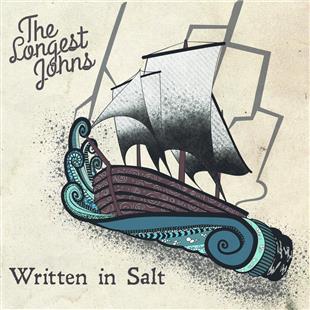
Folk: album review -The Longest Johns ‘Written in Salt’

My review was originally published on the Bright Young Folk website here

The Bristol-based five-piece are an a capella folk band with a particular emphasis on performing sea shanties. Although they have produced a couple of well-received EPs before, Written in Salt is The Longest Johns’ debut album.

As the album title suggests, a passion for maritime songs is very much at the heart of what The Longest Johns and this album are about. Consisting of thirteen tracks, all are sung a capella, save for a lone instrumental and a spoken-word narrative on the album.

Although the group originally began as a four-piece they expanded to a five-piece in 2015, which allows them to showcase a magnificent vocal range and some wonderful harmonies.

There are some well-chosen traditional shanties on the album including Old Maui, a traditional whaling song; Randy Dandy-O and, rounding off the album is Drunken Sailor, nowadays by far one of the best-known shanties in the entire repertoire, but the group give it a fresh, lively and compelling interpretation.

The Grey Funnel Line sticks with the maritime theme, but rather than being another raucous work song, it gives the band the chance to demonstrate their more mournful side with a song that captures the homesickness and longing for a true love that accompany a life at sea.

This is not just a band that sticks to interpretations of traditional songs and covers, though. The album also features a number of self-penned shanties. Barge Ballad, penned by the band’s Josh Bower, opens the album and in its writing, melody and delivery there is an authenticity about it that gives the song a natural and completely uncontrived flavour.

Written in Salt is a fine debut album from five guys who are able to apply their considerable vocal and creative talents to both revisiting traditional shanties and contributing new ones to the genre.

Released June 2016

http://www.thelongestjohns.com/

written-in-salt-the-longest-johns