Tag Archives: folk

Book review: ‘Hastings Old Town Music Scene’ by Sean O’Shea

Having been resident in Hastings only some six months or so my perceptions of the town’s lively, thriving music scene are still those of the enthusiastic newcomer. I can’t pretend to know the scene inside out and back to front like many of the people Sean O’Shea interviews in this 140-page book, but that helped make it a fascinating read for me.

For a smallish town of 90,000 Hastings has an unparalleled live music scene, particularly in the old town which this book focuses on: dozens of pubs and bars putting on live music, a healthy mix of larger venues, too, and numerous events and festivals. And for a long long time the town has exerted an almost gravity-like pull as a place for musicians of all types to set up home here and play here. But my perception is that unless you are familiar with the town, either as a resident or frequent visitor, all of this is pretty much under the radar. I think this is probably because, although it’s long had a very healthy live music scene and is teeming with musicians, it’s not given birth to a really big name band that comes to define the place musically and put it on the musical map. Andover forever has The Troggs, Guildford – the Stranglers, Wolverhampton – Slade. Yet Hastings just seems to have dozens and dozens and dozens of very talented musicians, but not necessarily ones who are household names. This book, therefore, is not filled with interviews of mega-successful rock icons reflecting on their long-past musical roots, but rather is a series of interviews with musicians who live and perform in the town today. A few of those interviewed were born here and reflect on a Hastings childhood and teenager-dom. But most have been drawn here at some point by the pull of the town’s music and arts scene, many it appears via south-east London – a journey I, too, have made.

It’s packed with stories and reflections and covers interviews with musicians from a wide range of genres: folk, jazz, rock, blues, classical and more. Some like Lorna Heptinstall of the internationally acclaimed Skinny Lister or Liam Genockey of the iconic folk rockers Steeleye Span, both of whom ended up in Hastings, have profile and reputations that stretch far beyond Hastings. But others, like the four women who make up the a capella harmony vocal group, Rattlebag, renowned for their folk sing-arounds in the Stag Inn, are little known outside Sussex. But their passion for and insight into the Hastings music scene makes for a genuinely enjoyable read.

Whether you’re a music-loving resident familiar with scene or a curious visitor who wants to find out more, ‘Hastings Old Town Music Scene’ is well worth a read. At the back there’s a list of old town music venues as well as a calendar of the key musical events, festivals and fairs that Hastings has built up a considerable reputation for.

Published 2016 by Hastings Press

51ssidrzzkl-_sx340_bo1204203200_

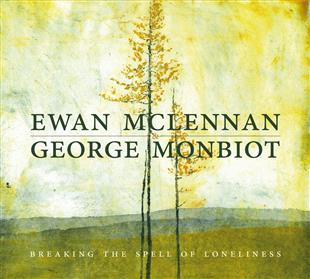
Folk: album review – Ewan McLennan & George Monbiot ‘Breaking the Spell of Loneliness’

My review was originally published by Bright Young Folk here

Many followers of Bright Young Folk may be familiar with columnist George Monbiot. For some, Monbiot’s polemical Guardian columns on environmental destruction, economic inequality, the abuse of power and social decay may be a key reason for purchasing that newspaper, but would anyone want to purchase an album by him?

The first thing to make abundantly clear is that it is Ewan McLennan whose vocals and music we hear throughout the album. Monbiot, though, contributes much of the lyrical content and the story on how this album came about is a fascinating one.

The project began in the wake of an article that Monbiot wrote about the age of loneliness, which explored the themes of social isolation and the breakdown of society. It soon went viral and there was interest from publishers, but Monbiot’s further writings on the subject became the basis for songs, rather than a book, and he turned to McLennan with the idea of putting an album together.

So, a compelling back-story but musically and lyrically is the album any good?

There’s a gentle, melodic, laid-back feel to the music which provides the perfect backdrop for appreciating the album’s lyrical content. McLennan provides the vocals and guitar and he’s joined by Lauren MacColl on violin and viola, Sid Goldsmith on slide guitar, Donald Shaw on harmonium and Beth Porter on cello.

Scotsman McLennan, has a voice with absolutely bags of character, that immediately draws the listener in to each enunciated syllable of each line of every song.

Opening track Such a Thing as Society offers an eloquent and unapologetic rebuttal to one of former PM Margaret Thatcher’s most famous quotes: “There is such a thing as society, it keeps us from losing our minds, it’s working and living and laughing together, that makes us human kind.”

My Time and Yours, with its melancholic harmonium accompaniment and reflective lyrics looking back to days of hard time,s but strong communal and familial ties, is a particular favourite. It is a battle cry for today’s generations to break the spell of loneliness. It’s the only song written by McLennan alone but completely fits in with the overall theme of the album, and in many ways its lyrics act as a rallying manifesto for the album as a whole.

Other themes explored on the album include lost childhood freedoms and the casualties of society as seen through the eyes of a desk sergeant on night duty at a local police station. A haunting and beautiful instrumental Unknown Lament, and spirited cover of the civil rights anthem We Shall Overcome complete the album.

The world we live in means there is an awful lot to rally against and the folk genre rightly retains a crucial role in turning out songs that make us think hard about the world we live in. But however sincere the intentions and however important the issues, it is not unreasonable to expect such songs to be well-written, well-played and well-sung. Breaking the Spell of Loneliness more than passes those tests and is an absolute gem of an album.

Released October 2016

http://www.ewanmclennan.co.uk/breaking-the-spell-of-loneliness

breaking-the-spell-of-loneliness-ewan-mclenna


Folk: album review -Paul McKenna Band ‘Paths That Wind’

My review was originally published by Bright Young Folk here

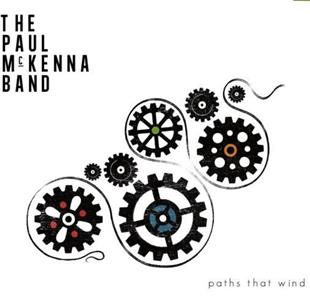
Now celebrating their tenth anniversary, The Paul McKenna Band release their fourth album and continue to cement their reputation as one of Scotland’s premier folk bands. Indeed, “the best folk band to come out of Scotland in the last twenty years,” as the New York Times would have it.

Although no-one would claim they offer a wholesale re-invention of Scottish folk music there is, nevertheless, a fresh and contemporary feel to the band’s sound. Guitar, bouzouki, fiddle, flute and whistles combine to produce a sound that’s accessible, interesting and highly listenable.

This is in no small part assisted by McKenna’s warm and engaging vocals which add a depth and sincerity to the material. As well as regular band members, Paul McKenna, Sean Gray, Ewan Baird and Conor Markey there are also guest slots from a number of notable musicians on the Scottish music scene, like John McCusker (who also produces the album), Rod Patterson, Mike Vass and James Lindsay.

The album comprises eight songs and two tunes, combining original material with some traditional songs as well as some well-chosen covers. Of the self-penned material, highlights include opening track Long Days, which reflects on the age old theme of homesickness: “the grass is always green until we tried to walk it” and here we have some lovely guitar and mandolin that complements McKenna’s lyrics perfectly.

As well as some highly personal lyrics, the band are not afraid to tackle controversial themes either: The Dream is a song written by McKenna about Freddie Gray who died at the hands of the Baltimore Police at the time the band were based in the USA. It’s a thoughtful song reflecting on a brutal episode and evoking the spirit of Martin Luther King: “What happened to the dream, we shall overcome, and walk hand in hand together to the setting of the sun.” Beautiful music, powerful lyrics and warm and very human vocals make this a definite stand-out on the album.

Of the non-original material noteworthy tracks include a lovely version of the traditional Irish song, The Banks of The Moy as well as a heartfelt cover of Peggy Seeger’s anti-fascist anthem, Song of Choice.

Paths That Wind is a strong album that will help consolidate The Paul McKenna Band’s fan-base and, hopefully, win them many new ones. Engaging vocals, thoughtful songs and high standards of musicianship make this an album to be highly recommended.

Released April 2016

Home

paths-that-wind-the-paul-mckenna-band


Eliza Carthy at St Mary in the Castle, Hastings 4/11/16

My review was originally published on The Stinger independent music website here

We see it in other musical genres, but with this one perhaps even more so, and second and third generation offspring of the 50s/60s folk revival have been making a significant impact on the contemporary folk scene.

This is unsurprising in a way, given that folk in its original sense was always about songs being passed down through generations.And there aren’t many singers with more impeccable credentials than Eliza Carthy, daughter of folk mainstay, Martin Carthy, and Norma Waterson, of the renowned Waterson singers.First up tonight, however, and keeping it within that illustrious family, is none other than Eliza’s cousin, Marry Waterson, performing with guitarist, David A Jaycock, with whom she’s just released an album.A warm, earthy and passionate singer she’s a good choice for support act, singing a mixture of songs from the duo’s album and from her family’s incredible back catalogue.

Although there are some similarities in the voices of both Eliza and Marry, the contrast between the opening act and the main act couldn’t be greater.

Where the first is stripped back, intimate and reflective the second is big, bold and theatrical. Eliza Carthy and the other eleven members of her latest venture, The Wayward Band, make an instant and lasting impact the minute they hit the stage.

It’s been called a folk supergroup and includes musicians from the likes of Bellowhead, Mawkin, Edward II and Peatbog Fairies.

It’s a very full sound (fiddles, cello, bass, guitar, keyboards, accordion, drums, percussion, brass section) and it’s possible that other folk singers could get a bit drowned out by such backing.

Not Eliza Carthy, though, who has both the strength of voice and the charismatic stage presence to never risk being overwhelmed.

Furthermore, they’ve put together a great selection of songs, too.

There will be a full album out in February but tonight those who wanted to hear more of The Wayward Band had to settle for buying the band’s EP.

Definite highlights from tonight’s set included a gloriously rumbustious ‘Good Morning Mr Walker’ and Carthy’s thoughtful reflection on the refugee crisis: ‘You Know Me’.

Introducing the song she said she felt moved to speak up for the long-standing and ancient tradition of offering hospitality to strangers.

Throughout the night the band were rewarded with a great reception from the crowd.

“Is this the new Bellowhead?” asks the poster advertising tonight’s gig. There are obvious similarities.

But there are obvious differences, too. Although there’s brass it’s not as dominant in the overall sound mix as it is in Bellowhead and in The Wayward Band there’s also an emphasis on Carthy’s own material as well as interpretations of traditional songs.

However, for those on the look-out for a big band that fills the stage and a big sound that fills the auditorium and an act that keeps folk music well and truly in the 21st century, Eliza Carthy and The  Wayward Band is definitely one to look out for.

Marry Waterson website: http://marrywaterson.com/

Eliza Carthy website http://www.eliza-carthy.com/
14947717_10154639273511449_7828087072667150063_n

Rock/folk: album review – Richard Thompson ‘Acoustic Classics’

My review was originally published by Bright Young Folk here

Richard Thompson is rightly ranked as one of the world’s greatest guitarists and is also recognised as an outstanding songwriter. There is no mystery behind the title of his latest CD. Acoustic Classics does exactly what it says on the tin, offering acoustic recordings of classic Thompson tracks. The question is does anyone with even a passing interest in Richard Thompson really need re-recorded versions of I Want To See the Bright Lights Tonight and 1952 Vincent Black Lightning?

Surprising though it may seem, however, there is no product out there that properly represents Thompson’s latter-day acoustic shows. “I really wanted to have something that would reflect the acoustic shows,” he explains, “But we didn’t really have anything like that. Just some old, slightly scratchy recordings of solo sets that I wasn’t really happy with.”

Listeners will come across a number of re-recorded versions of songs made famous by the renowned Richard & Linda Thompson albums of the 1970s, songs like Walking on a Wire, Down Where the Drunkards Roll and Shoot Out the Lights. Wonderful though those original Richard and Linda recordings are, with their full instrumentation and lush vocals, it is also good to hear those songs stripped back to Thompson’s stunning guitar and mournful voice.

Other songs on the album come from Thompson’s later solo career but, again, stripped back to the very basics in a way that shows off the beauty of the songs and Thompson’s guitar work, although the aforementioned 1952 Vincent Black Lightening differs little from the un-improvable original. It wouldn’t have been right to have missed out such a classic, however. Some particular personal favourites have been missed out, of course, but it was never going to be possible to get everyone’s favourite Richard Thompson songs on to a 14-track CD.

For anyone catching one of his excellent acoustic shows this summer, who comes away wanting a more permanent reminder, this album is ideal; and for those less familiar with Thompson’s voluminous back catalogue this is a pretty good introduction.

Released July 2014

http://www.richardthompson-music.com/

acoustic-classics-richard-thompson

Related reviews:

Richard Thompson live at Folk by the Oak

Richard Thompson at Royal Festival Hall

Folk: album review -The Longest Johns ‘Written in Salt’

My review was originally published on the Bright Young Folk website here

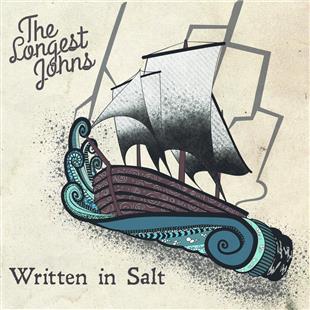
The Bristol-based five-piece are an a capella folk band with a particular emphasis on performing sea shanties. Although they have produced a couple of well-received EPs before, Written in Salt is The Longest Johns’ debut album.

As the album title suggests, a passion for maritime songs is very much at the heart of what The Longest Johns and this album are about. Consisting of thirteen tracks, all are sung a capella, save for a lone instrumental and a spoken-word narrative on the album.

Although the group originally began as a four-piece they expanded to a five-piece in 2015, which allows them to showcase a magnificent vocal range and some wonderful harmonies.

There are some well-chosen traditional shanties on the album including Old Maui, a traditional whaling song; Randy Dandy-O and, rounding off the album is Drunken Sailor, nowadays by far one of the best-known shanties in the entire repertoire, but the group give it a fresh, lively and compelling interpretation.

The Grey Funnel Line sticks with the maritime theme, but rather than being another raucous work song, it gives the band the chance to demonstrate their more mournful side with a song that captures the homesickness and longing for a true love that accompany a life at sea.

This is not just a band that sticks to interpretations of traditional songs and covers, though. The album also features a number of self-penned shanties. Barge Ballad, penned by the band’s Josh Bower, opens the album and in its writing, melody and delivery there is an authenticity about it that gives the song a natural and completely uncontrived flavour.

Written in Salt is a fine debut album from five guys who are able to apply their considerable vocal and creative talents to both revisiting traditional shanties and contributing new ones to the genre.

Released June 2016

http://www.thelongestjohns.com/

written-in-salt-the-longest-johns


Folk: album review – Kaela Rowan ‘The Fruited Thorn’

My review was originally published on the Bright Young Folk website here

Scottish singer Kaela Rowan sang with Mouth Music, recording four albums with them in the 1990s, and more recently has been touring and recording as part of the acclaimed Shooglenifty and their unique fusion of traditional Scottish music and modern dance beats. The Fruited Thorn is Rowan’s second solo album, following Menagerie which was released in 2014.

An album of eleven traditional ballads (seven sung in English, four in Gaelic), The Fruited Thorn is, in Rowan’s own words, “a homage to all the amazing ballads and ballad singers past and present. Those great singers who bring songs to life and helped awaken the young singer in me.”

The whole album has a nice relaxed tempo about it and some beautiful songs, both familiar and less familiar. However, some really interesting musical collaborations do make it particularly stand out from many similar releases in this field.

Rowan has put together a band composed of Shooglenifty personnel James Mackintosh (percussion, guitars, keyboards, vocals) and Ewan MacPherson (guitars, mandolin, jaw harp) for the entire album, but throughout they are joined by a fascinating line-up of additional guests.

Second track ‘Eilan Fhianain’ is one of the most interesting and unexpected collaborations on the album. Rowan’s traditional Gaelic singing is accompanied by traditional Indian singer Dayam Khan Manganiyar who sings the songs of the Rajasthani desert lands, and the two sets of vocals provide for an absolutely compelling cultural mix that actually works. He also provides vocals on another track, ‘Griogal Chridhe’, another traditional Gaelic song.

Elsewhere, more familiar territory is covered and the album gives us lovely new interpretations of traditional standards like ‘Now Westlin Winds’, ‘Lord Gregory’ and ‘As I Roved Out’. Rowan’s soft but persuasive vocals and the gentle but innovative instrumentation provide a fresh take on well known songs. The Uillean pipes on ‘As I Roved Out’ are particularly lovely – played by Jarlaith Henderson who also provides backing vocals to the same track.

While percussion on most of the tracks eschews the folk fusion dance beats for which Shooglenifty is renowned for, it would be surprising if such influences were to be completely absent from the album and sixth track ‘Mary and the Gallant Soldiers’ is where the so-called “Acid Croft” influences of Shooglenifty are most apparent.

An album that takes a fresh look at some traditional ballads, with fine vocals, superb instrumentation and innovative collaborations, The Fruited Thorn skilfully bridges the gap between the experimental and the familiar.

Released August 2016

http://www.kaelarowan.net/

the-fruited-thorn-kaela-rowan

Folk: Album review – NUA ‘Flow’

My review originally appeared on the Bright Young Folk website here

Toronto-based instrumental trio NUA are fiddle player James Law, guitarist Graeme McGillivray and bodhrán player Jacob McCauley. The band draws on Scottish and Irish folk traditions. Flow is their second album and follows their well-received debut Bold, which came out in 2013.

A nice, clean, uncluttered sound, it is the interaction of the rhythms of the guitar and the bodhrán with the melodies of the fiddle that really make this band. However, that is not to suggest for a moment that the guitar and the bodhrán just remain in the background while the fiddle takes centre-stage. Launching their new album, Jacob McCauley recently explained, “We wanted to have three members that equally share the spotlight so to speak. Where each member can take on multiple roles depending on what is going on musically. Obviously when it comes down to it, we only have one melody player, but the guitar and bodhrán both have their moments to speak melodically instead of just rhythmically. The fiddle also has times to lay back and keep a more rhythmic feel or a more subtle drone.”

The result is an album of twelve original self-composed tunes, half joint compositions by fiddle-player, Law, and guitarist, McGillivray, and the remainder written solely by one or the other.

Opening track Wide Open makes for an uplifting start and sets the album up nicely, beginning with some bright, sunny-sounding guitar before being joined by some lovely fiddle that darts and dances around.

A whole album of instrumentals, regardless of how good each individual tune is, does need light and shade, depth and colour and several changes of gear to maintain the attention of most listeners, however. This CD is one that meets those challenges even, at times, within a single tune.

The excellent Ghostrider, for example, starts off with a very gentle and soothing melody but gradually gets more and more frenetic, drawing the listener in until finally, at the very, very end, the tune draws to a close with all the soothing gentleness with which it began.

A fresh and vibrant take on traditional Celtic music, a strong collection of original tunes and some inspired interplay between the three musicians, NUA are likely to continue cementing their reputation on the folk scene and no doubt pick up a few more awards with this, their second album.

Released: June 2016

http://www.trionua.com/

flow-nua

Folk: album review – Ray Hearne ‘Umpteen’

My review originally appeared on the Bright Young Folk website here

Umpteen is a new album from Yorkshire-based folk singer and songwriter, Ray Hearne. From an Irish family who settled in South Yorkshire he has his cultural roots in the traditional Irish tunes of his parents but is deeply influenced by the stories, surroundings and dialects of the South Yorkshire coal and steel communities he grew up in, and in the post-industrial landscape they have become, where he still resides.

As Hearne says in his own words: “Where were the songs of South Yorkshire steel and coal? I knew songs about the Ohio, Thames and Shannon but not about the Don and Rother which had flowed through the whole of my life. Where were the songs in our accent? Shocking to say, they were nowhere to be found. It dawned on me that we would have to write them ourselves.”

Following on from the well-received previous album The Wrong Sunshine, Umpteen is a collection of fourteen self-penned songs. As well as bringing in some evocative lyrics, delivered in a warm, rich, no-holds-barred South Yorkshire tongue, there’s also some fine musicians and guest singers performing on this too, including Belinda O’Hooley, Jude Abbott, Greg Russell and Ciaran Algar.

Highlights on the album include opening track ‘Moonpenny Hill’, a passionate, powerful folk anthem, bitingly, savagely political but equally full of warmth and humanity. Here, Hearne reflects on the everyday struggles of the 84/85 miners’ strike where, in spite of “bitter the wind from the south” there is the warmth provided by comradely solidarity, supportive sisterhood and thoughts of the coming spring.

Away from the political narratives ‘The Longest Hot Summer’, with lovely accompanying piano from Belinda O’Hooley, is a nostalgic recollection of the gift of long hot summer days where “blossoms are garlanded in ginnel and vale”, the old folk are on their allotments, and there is an age to wait between “clocking on and clocking off.”

‘The Hales of Henry Street’ is written in memory of Private Henry Hale of Rotherham and thousands like him slaughtered in the First World War. Folk listeners will have heard many similar, equally heart-rending, recollections in recent years. But the lyrics eloquently capture both the horrors of the trenches and the impact on the folk back home. Lush brass from Jude Abbot gives the song an evocative, mournful and thoroughly South Yorkshire feel.

Whether it’s hard-hitting protest songs about the Thatcher era, wistful memories of growing up or historical tributes to fallen brothers a century ago, the spirit of South Yorkshire oozes out of every groove of this CD with typical honesty, humanity and good humour. Ray Hearne has done his adopted and beloved homeland proud with this fine set of songs.

Released: May 2016

http://rayhearne.co.uk/

umpteen-ray-hearne (1)

Rock/folk: album review – Sandy Denny ‘I’ve Always Kept a Unicorn: The Acoustic Sandy Denny’

My review originally appeared on the Bright Young Folk website here

Arguably, the finest female singer songwriter Britain has ever produced, it’s perhaps only been in recent years that Sandy Denny’s legacy has begun to start getting the due recognition it deserves. Yet on the other hand can there be too many attempts at repackaging? One Sandy Denny collection after another has been released in recent years so it is prudent to explore the purpose behind this latest one.

Indisputably, Denny appeared on some of the most iconic folk-rock albums the genre has ever produced. British popular music would certainly be much poorer had she never made albums like What We Did On Our Holidays and Liege and Lief with Fairport Convention or Fotheringay, with her own short-lived band of the same name.

At the same time, it is also not unreasonable to argue that a voice as unique and as precious as Denny’s also deserves the chance to be appreciated on its own terms: to be heard “pure, unadulterated and most untouchable” as the sleeve notes to this album boldly state, not merely as a singer in a band, however brilliant that band may be.

Even during her later solo career, which could perhaps have provided opportunities for the pure unadulterated Denny to come to the fore, her solo albums failed to remedy this for one reason or another. Each of her solo albums thus contained a plethora of guest musicians and elaborate arrangements, to the extent that they still receive very mixed reviews even today. Many a reviewer has argued that in spite of her outstanding prowess as a vocalist Sandy Denny never managed to make a truly outstanding solo album. So this is where this new collection comes in. Indeed, the extensive sleeve-notes for this CD cheekily subtitle it “The Best album Sandy Denny never made.”

So what it doesn’t try to do is attempt to provide a comprehensive overview of her entire recording career (as the 2010 Sandy Denny boxed set sought to do), nor does it simply collect together some of the best-known versions of her best-known songs (as other compilations have done). What it does do is bring together acoustic versions of forty songs from each stage of her career. Archives have been mined for demos, alternate takes, live recordings and BBC sessions.

While only a handful of these tracks have been previously unreleased, according to the sleeve-notes, that is arguably missing the point of this collection. It’s not really about unearthing new material or trying to gather together everything Denny has ever recorded. Rather it’s an attempt to bring some coherence to her recorded output and present her songs in a way that showcases her unique vocal talent with modest and simple, though still very beautiful, acoustic accompaniment.

Amongst the two CDs worth of tracks, the collection includes the beautifully understated acoustic version of Who Knows Where The Time Goes that Denny sang with the Strawbs, a guitar and vocals acoustic master of Fairport Convention’s She Moves Through The Fair, a brilliantly powerful piano and vocals version of Solo and a stunning live version of Blackwaterside, both from her solo career.

In an era where we can all get rather tired of the endless repackaging of classic artists and the endless attempts by record companies to find new ways of making money from the same old recordings, I’ve Always Kept A Unicorn – The Acoustic Sandy Denny is a project with a purpose, a logic and a coherence and as such it does Sandy Denny’s legacy proud.

Released: April 2016

Home

ive-always-kept-a-unicorn-the-acoustic-sandy-