Category Archives: Interviews

Interview with former Mick Ralphs vocalist and current Big River frontman – Adam Barron

Kent-based blues rock band Big River were formed back in 2016, taking their inspiration from that early 1970s golden era of blues rock and turning out a nice line in meaty rhythm, soulful vocals, catchy hooks and big fat riffs and lush guitar solos. Adam Barron took over as lead singer of Big River in 2021 but had previously worked with that giant of blues rock, Mick Ralphs, as lead singer of the Mick Ralphs Blues Band. I catch up with Adam to discuss his time working with Ralphs, his joining Big River and Big River’s latest single ‘Wings’.

You’ve never made any secret of your love for that classic era of blues rock from the late ‘60s and early 1970s. I was still a toddler when Free were formed and still at infant school when Bad Company started out – and I’m considerably older than you! So where does your love of those bands and that whole era of music come from then?

I’ve always loved music. My mum loved music, not all of it to my taste now. But she did particularly love Queen. So I remember listening to a lot of Queen when I was a child. And also this particularly brilliant cassette. A triple cassette album called Sixty Number Ones of the Sixties. And I loved that – and that had a bit of everything on. But when it came to classic rock and blues rock, that was when I went to secondary school. I was about 12 or 13 and a friend of mine lent me a copy of the Free album Fire and Water. And I still remember listening to it that first time and it was like a thunderbolt went off. I was like, “Oh my god. This is what I want to do with my life.” And from there I kind of listened to everything I could find and this was obviously not quite pre-internet but very early internet so we didn’t have everything at the touch of a button. But I remember watching an interview with Paul Rodgers where he said, “If you want to be as good as your heroes, don’t listen to them. Listen to who they listened to.” So that’s where I kind of went back. To Muddy Waters and all the classic soul singers, Sam Cooke and Otis Redding. So really Free and Bad Company were like the gateway for me into all of that incredible music.

You had to do some real detective work, didn’t you, pre-internet? To track albums down and work out who recorded what!

Absolutely. That’s why I often say that my musical knowledge is like a map of the world that’s partially been eaten by mice. There’s some bits that I know loads about and then others that just completely escaped me. I’ve actually started a little project recently with a group of friends of mine where they give me classic albums from the ‘70s onwards and if I haven’t listened to it as an album, it goes on my list. So that I can start filling in some of those gaps!

Before taking on lead vocals for Big River you’d previously worked with Bad Company’s Mick Ralphs in the Mick Ralphs Blues Band. Can you tell us how that came about?

It was just one of those fortuitous things really. They were looking for a new singer. They had been around for a little while with another singer.

Because you were the second singer with them? They’d done one album with another vocalist first?

Yeah they did. And a friend of mine, who I had met when I was a teenager at the first jam night I ever went to, he sent me a message and said, “Oh, this is a bit of you, isn’t it?” And it was a Facebook post saying they were looking for singers. And I was like, “Christ! Yeah, that is a bit of me!” So I got in contact, sent some video clips and stuff and they invited me up for an audition. And I got the job. Yeah!

I still remember that first tour. It was about this time of year – a bit earlier than this time of year – and they had a run of gigs up to Christmas. We had a few days rehearsing in a little rehearsal studio up in High Wycombe. And I still remember just standing there and listening to that unforgettable and almost indescribable big sound that Mick produced. And it wasn’t even when he was playing a Bad Company song. He was playing an old blues one. I can’t remember off the top of my head what it was but I was facing the other way and he was behind me. And you know those great guitarists when you just know it’s them? And yeah it was outrageous. And I never lost that feeling of wonder really. Just sharing the stage with him and seeing the things he could do with a very simple set up of a guitar and an amp and pretty much nothing else.

And how long were you with Mick Ralphs Blues Band for?

So it was a few years. It got cut short.

Yes it all came to an end, sadly.

Yeah, we had just done a run of gigs and then he’d gone back on the road with Bad Company and we’d all gone up to watch the big last show at the O2 – which was just nuts. It was so good. And then, unfortunately, a couple of days later was when he had a stroke and that put paid to the band. But most importantly, he’s still with us. Obviously it put paid to the band which was a great shame for the music but also just because we had so much fun. Getting in a transit van and driving around to these gigs and just listening to Mick tell us the most amazing stories.

I wrote at the time that you joined Big River, after the previous vocalist departed, that you seemed like an ideal fit for the band. And around that time Simon Gardiner came in on bass, too. Was it a comfortable band to slot into?

Yeah, absolutely. I’ve known Damo (Fawsett – Big River founder and guitarist) for a few years and we’d done a couple of bits and bobs together and he always struck me as a lovely guy. I’ve always known he’s a great guitarist. And when he asked me, we were just coming to the tail-end of lockdown and I was itching to do something. As most of us musicians or music lovers were. We were itching to be either playing gigs or going to gigs. So I went and had a rehearsal and none of us had played for months, if not years because of everything that had gone on. And so we all said at the beginning it really doesn’t matter how it sounds because we’re all going to be as rusty as fuck. What really matters is how does it feel. And it felt great. It felt natural. It felt loads of fun. And it has done ever since really.

It probably felt like a new band for all four of you, not just you as a newcomer, I suppose?

Absolutely. It was like Big River Mark II as we say. Because it was just a fresh start, not because of me but because of the timing. Eighteen months of not gigging meant that we were all kind of chomping at the bit. And then Simon (Gardiner – Big River Bass-player) came along who’ve I’ve known for a long time. He used to gig with Rosco Levee and the Southern Slide and I’ve known Ros since I was 16. So he came in and, again, we had a few people who auditioned because Ant, our previous bass-player who’s a lovely guy who we all still get on well with, just couldn’t put the time or commitment in. Which is unfortunately one of the joys of being a grown-up trying to be in a band as well. And Simon came along and auditioned and, again, it was just that thing. It felt right. And it’s taken us in a slightly different direction which is really good as well.

And so you’ve been with them two years now?

Yeah, it’s coming up to two and a half years.

And you’ve gigged quite extensively as well as recording the EP Beautiful Trauma?

Yeah absolutely. I mean what I really love is in previous bands I’ve almost been – I use the phrase – a gun for hire. Because I would quite often be brought in to a project for the voice. Which is great and I’ve done some incredible things and I’ve had the most fun. But this was a different animal. It was coming in to be part of a band and write the music and get out there and play it. And I’ve found that such an enjoyable experience. I absolutely love sitting down with the boys in a room and thrashing out a new song and seeing what’s going to pop out. Because we’ve got four musicians who all write. And it might be an idea from Joe or it might be a fully-fledged song or it might be just a riff from Damo or it might be a thing on my ukulele or whatever it is. And it starts with this little seed and by the end of a couple of sessions of thrashing it about we’re like, “Oh! Well that’s what it is.”

So you feel like you are fully involved in this band creatively then and not simply the ‘voice for hire’ as it were?

Yeah absolutely. And it’s flexing a whole kind of different muscle that was a bit underdeveloped before.

Had you written much before you joined Big River then?

Yeah bits and pieces. But I’ve never really had the vehicle for it. And although I can find my way around a piano and I can play the ukulele a bit, I could never quite get the ideas in my head out on to an instrument because I didn’t quite have the technical ability. So, for me, when I had written before it always tended to be with someone. And that was always a bit few and far between. But with these boys it’s just really natural.

You released your latest single, ‘Wings’, last week. Are you pleased with the response it’s been getting so far?

Yeah, I am. We started playing it at gigs over the summer. It’s written by Simon our bass-player and when he brought it to us, I said, “Oh Simon, we’ve got one here!” I said, “This is the set-ender.” And he said, “Really? It’s quite slow.” And I said this is the big finish. And we played around with it and ended up coming up with the massive outro at the end where Damo really gets to let loose and open up. I knew it was going to go down well and it did go down well – as soon as we started playing it at gigs. So I was hopeful that it would have a similar response when the single came out and, yeah, we’ve had some really, really lovely responses. And quite a bit of radio play which is really nice. The main aim is we want people to hear it.

And what next for Big River?

We’ve got a couple of gigs left this year. We supported Brave Rival at the 100 Club a few weeks ago and it was joyous. Absolutely joyous. Those guys are bang on it. They deserve all the plaudits they are getting because they’re fantastic. And we’ve really enjoyed supporting them and we had a lovely, magical, impromptu live music moment where, after a little chat before soundcheck, we ended up getting the girls up to sing ‘Tennessee Whiskey’ with me, which was just amazing. It was so good. And they’ve invited us to come and support them again at the 229 (London) on 16th November which we’re really looking forward to. And then the big one, the last gig of the year which we’re over the moon about is Friday 1st December and that’s at Planet Rockstock which we are really excited about. And that’s it for gigs this year but we are already booking studio time. We’ve got another three or four songs that are pretty much ready to record.
So will it be another EP or are you working on an album?

We’re going to bring an EP out in the Spring and then the aim is to have a full album out in the Autumn of next year. One thing we have been a bit slow with and it’s because, unfortunately, we’re all family men with jobs and real lives, is getting new music out. We’ve kept it ticking over but next year we want to get a lot of new music out.

So plenty to look forward to for Big River fans. Is there anything else you want to tell us before we wrap up?

We’ve really loved getting out in front of new people this year and adding to our dedicated and loyal fanbase. And we love seeing those familiar faces. We love seeing those Big River T-shirts. And we just look forward to seeing everyone out there at another festival or another gig next year and hopefully bring in whole new army of Big River fans with them.

Bandcamp: https://bigriver1.bandcamp.com/

Facebook: www.facebook.com/bigriverblues

X/Twitter: https://twitter.com/bigriverblues

Related posts:

EP review – Big River ‘Beautiful Trauma’

Live review – Big River at The Carlisle, Hastings 2021

Single review – Big River – Don’t Hold Out

Album review – Big River – Redemption

Mick Ralphs Blues Band at Giants of Rock 2016

Dave “Bucket” Colwell at Leo’s Red Lion, Gravesend 2016

Absolute Beginner: Interview with Bowie/Iggy guitarist Kevin Armstrong

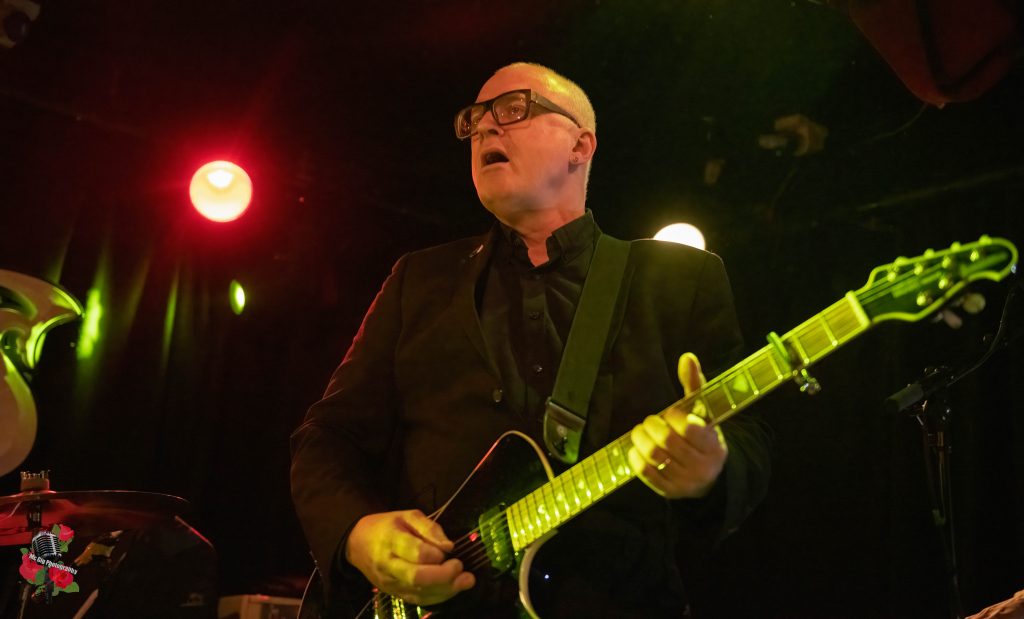
Kevin Armstrong has played alongside icons like David Bowie, Iggy Pop, Thomas Dolby, Sinéad O’Connor and many others. We catch up to talk about his forthcoming autobiography Absolute Beginner which comes out on 17th October; as well as the Lust For Life project which has brought together the likes of Clem Burke, Glen Matlock and Katie Puckrik to celebrate the classic Iggy album; plus our mutual love of the live music scene down here in Hastings.

When did the idea for the autobiography first come about? Was it a covid lockdown project for you or did it begin well before that?

No, it began well before that. It was after David Bowie died. Because I was in the middle of my late-blossoming run with Iggy Pop in 2014-19. I was like two years into that and I was half-expecting to see Bowie again at some point. I hadn’t seen him for twenty years but I was half-expecting to see him again just because him and Iggy are good friends and he would quite likely turn up in the old days back-stage and come and visit us or take us out for a meal or whatever. So I did expect to see him again. When he died, it was quite a shocker and so at that point I thought, well it’s time to tell the story now. I’m back with Iggy for a second time, David’s just died and these are giants of music and it just made me think, well they’re all disappearing and soon I’ll be disappearing so we might as well tell the story.

Was it part of a mourning process for you then, as a sort of personal thing as well?

Not really. It was more of a kick up the arse. It was more saying, well if ever you’re going to write this story – obviously I’d thought about it in the past –  then I just thought, well now’s the right time to start it. I didn’t know where it would go. I didn’t really think about, “Oh this is definitely going to be a book and I’m going to put it out.” It wasn’t that. It was more or less, I’ve just got to write this down now and chronicle it, even if it’s just for myself. So I started writing and because I was on the road with Iggy a lot at that time, that gives you a lot of downtime. Sitting in the back of cars, or in an aeroplane or in a hotel waiting or whatever. There’s a lot of spare time if you like so I used that time. I just carried a laptop with me and started writing. And just carried on.

So it’s definitely been more about writing than partying on tour these days?

Oh it hasn’t been partying for years, to be honest. I mean, you know it used to be groupies in the back of the bus and taking your own weight in drugs every day – but that stopped a very long time ago. These days, the more civilised and professional outfits – even Iggy Pop – it’s more bottles of Perrier and laptops.

In spite of sharing a rehearsal studio with the Sex Pistols, you are quite candid in the book about not really getting punk, musically, when it came along. Obviously, your first love was the older bands like Zepelin and Purple but then you seemed to slot into the world of post-punk extremely well?

Well, I think we all had to sink or swim at that point. I was a musician before my contemporaries at that time. So when punk came along  – I’m sure a lot of musicians felt the same – it was like “Oh, what’s this? We’re supposed to unlearn everything we’ve learned? Or pretend we don’t know stuff.” Because it’s not cool to know the difference between a major and a minor chord even. So I guess I fell into that as a means of survival really. And then, of course, your taste develops over your life, doesn’t it? Things you might have dismissed earlier on in life, you sort of get them later on and you think, “Oh yeah, I know what that’s about…” And that doesn’t always happen at a time that’s useful to you but it’s what happened to me. And then during the post-punk phase, I think clearly it became, with the more sophisticated American bands coming through – your Blondies and your Televisions – it became less  de rigueur to know absolutely nothing about music. Because if you were in the Talking Heads you had to know one end of an instrument from the other. Whereas if you were in Slaughter & The Dogs you sort of didn’t.

There’s a passage in the book that you describe as the pivotal moment in your life where you had been booked in to do a session with a mystery big-name artist in early 1985. When you got that call had you any thoughts on who it might be when you were first asked?

Yeah, Bowie was on the list. I can’t remember who else we thought it might be but Bowie was on the list because there was a rumour. I don’t know maybe it was just a hope or something. But there wasn’t a lot of time to talk to anyone about it because I wasn’t super-aware who was going to be there among the other band members either. I think I knew Matthew Seligman was going to be there, the bass-player, because we were always in touch. But the others I didn’t really know them that well so the only discussion about it was for the twenty minutes before it happened. In the studio itself, where we said, “Who do you think is coming? Who is it?” So Bowie was one of the names that came up.

So that turned out to be the make-or-break career moment for you, as you describe in the book, and a lot of things flowed from that?

Well it would do, wouldn’t it? I mean once you’ve had an opportunity like that to play with someone like that, people notice. And so it opened a lot of doors for me, of course it did. And I think it’s done that for almost everyone who’s ever played with Bowie for any length of time. Immediately, your kudos goes up. Your bankability. Your whole level of class goes up. “Oh, that guy played with Bowie.” It just becomes a badge of excellence wherever you go.

And he was always very aware of that, wasn’t he? And tried to use it in a positive way.

I think he was. Actually, the whole thing I go into in the book about, him using all that time, the precious seconds of his set at Live Aid to introduce the band by name. That was his way of understanding that. He knew. We weren’t getting paid for it but that’s hardly the point. The point was he wanted to actually say our names on that stage which was typically empathetic of him in a way. He understood that.

In the book you talk about the diverse range of artists you’ve toured or recorded with. For you as a guitarist, which have been the most satisfying, artistically, to work with?

Oh, that’s an interesting question. I did enjoy working with Morrissey very much because at that time in my path as a musician… it was just one of those stepping stones where I developed as a guitar-player, working for him. And I’ve always enjoyed working with those artists that stretch me as a musician. Sometimes they stretch you as a performer, you know. Like Iggy Pop, for instance. There’s a certain level of aggression and emotional focus you need to play, even though the music’s quite simple. But I have enjoyed working with the more sophisticated musical artists where I’ve really learnt something or had to stretch. I’ve said yes to it at the beginning and then realised, woah! I’m a little bit out of my depth. So Prefab Sprout would come into that category, as would Thomas Dolby, actually. Things where you come out the other end feeling, “Ah, I’m a bit smarter. I’ve learnt something here.”

Morrissey was the same because I actually got to write a few songs with Morrissey and I was there right from the start – it wasn’t like a “Come in and do an overdub” to something that was already happening. It was right in from the ground, writing, and making the records. So my guitar-playing took a definite leap forward with that because I was conscious of the fact that being ‘Morrissey’s guitarist’ you’ve got Johnny Marr as a bench-mark and you’d better do something that’s good. And so I’m quite pleased with the work I did with Morrissey from that point of view. And Thomas Dolby the same. Because he’s a keyboard-player and because he uses chords that aren’t in the book, you have to know your stuff and you have to learn what he’s doing. And sometimes he’d write guitar parts as well but he’d write them on a keyboard with a sequencer or something and then I’d have to translate them and make them guitaristic or make them even playable on a guitar – which was a big challenge. And lots of people still say, “Oh, I love your guitar part on this.” And actually it was Thomas’s but I learnt to play it and made it my own.

And so the most rewarding creatively aren’t necessarily the most high profile or the most lucrative?

No, not really. It depends how you judge things doesn’t it? I mean, I’ve never thought of it in that way. “I’ve got to work with famous people or people where you earn the most money.” It’s always, from a musician point of view, about how to please yourself in a way and how to bring something that’s like how to really enjoy what you’re doing. And sometimes that can be the most obscure artists. For eleven years I had a studio in Portobello Road and all manner of people came through there. And some of them were completely obscure but some of the best music I’ve ever made is on those tapes.

Kevin at Whelan’s, Dublin – photo credit: Ian McDonnell

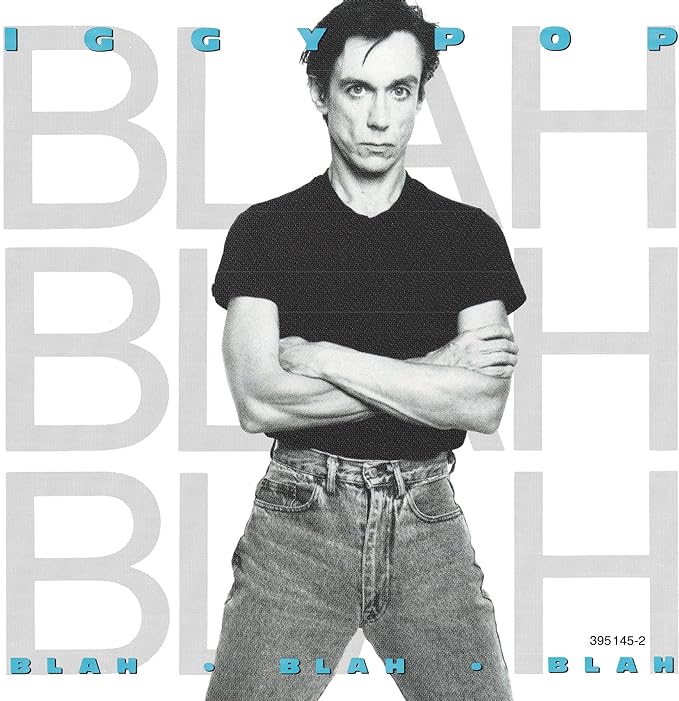
And let’s just talk a little bit about Iggy Pop. Obviously, working with David Bowie opened doors for working with Iggy on the Blah Blah Blah album – which I bought at the time it came out. And then you had a second stint with Iggy. In the book you talk about your differences in approach between the first and the second stint. Clearly, there was a certain amount of growing up along the way?

Well, it was a big gap. I stopped working with Iggy for the first time in 1986 and I didn’t get to work with him again until 2014 – so go figure! You’re a changed person by that time and I definitely didn’t know very much about my craft as a sideman in the beginning because that started with Bowie and then it went on into Iggy and became a bit of a rollercoaster. But I didn’t have any preparation or run-up to that. I wasn’t trying to be that. I was trying to be an artist before that and I just got bounced into that world. So the first time around with Iggy, I’d always thought during the intervening years, “Oh, my goodness. That was so great what we did but it could have been so much better with what I know now.” Because I didn’t really know – I was kind of as green as a cabbage then. And so getting the call in 2014 was a massive great opportunity to revisit some of that work. And we’re even playing some of the same songs and this time really use all the intervening experience to make it great. And I think we got half-way there! I never think I get more than anywhere more than halfway to what’s in my head – but we did some pretty good stuff.

You seem a little bit disappointed in the book that it came to an end because of Covid in a fairly low-key way rather than a big triumphant stadium gig somewhere?

That happened to lots of people! It happened to my son who was at school and then his school career just sort of fizzled out – with online lessons and no hoo-hah at the end of it. So I felt a little bit like that. It was a little bit of a victim of the pandemic. And Brexit, also, it has to be said. Because we used to be able to travel Europe-wide with no extra paperwork and even using our own equipment and driving it all around door-to-door anywhere in Europe, it was all fine. And then that all stopped and then when Iggy did this project with a French band for what was going to be a side-project – we were even saying, “Yeah we’re back in the saddle in a couple of months lads and here we go and all the rest of it.” And I was even talking to him directly about the changes to the set and all this stuff. And then it made sense, once they’d figured it out, for the French band to carry on as the Iggy band. Because they could travel freely and it was cheaper for them and there they were! I’m still in touch with Iggy – not on a very regular basis but we still have email traffic backwards and forwards and talk to each and it’s very pleasant – but it’s a bit of a shame, yeah, the way it finished. I thought we should have gone out n a blaze of glory rather than a rather desultory gig in a theme park in Budapest in 2019.

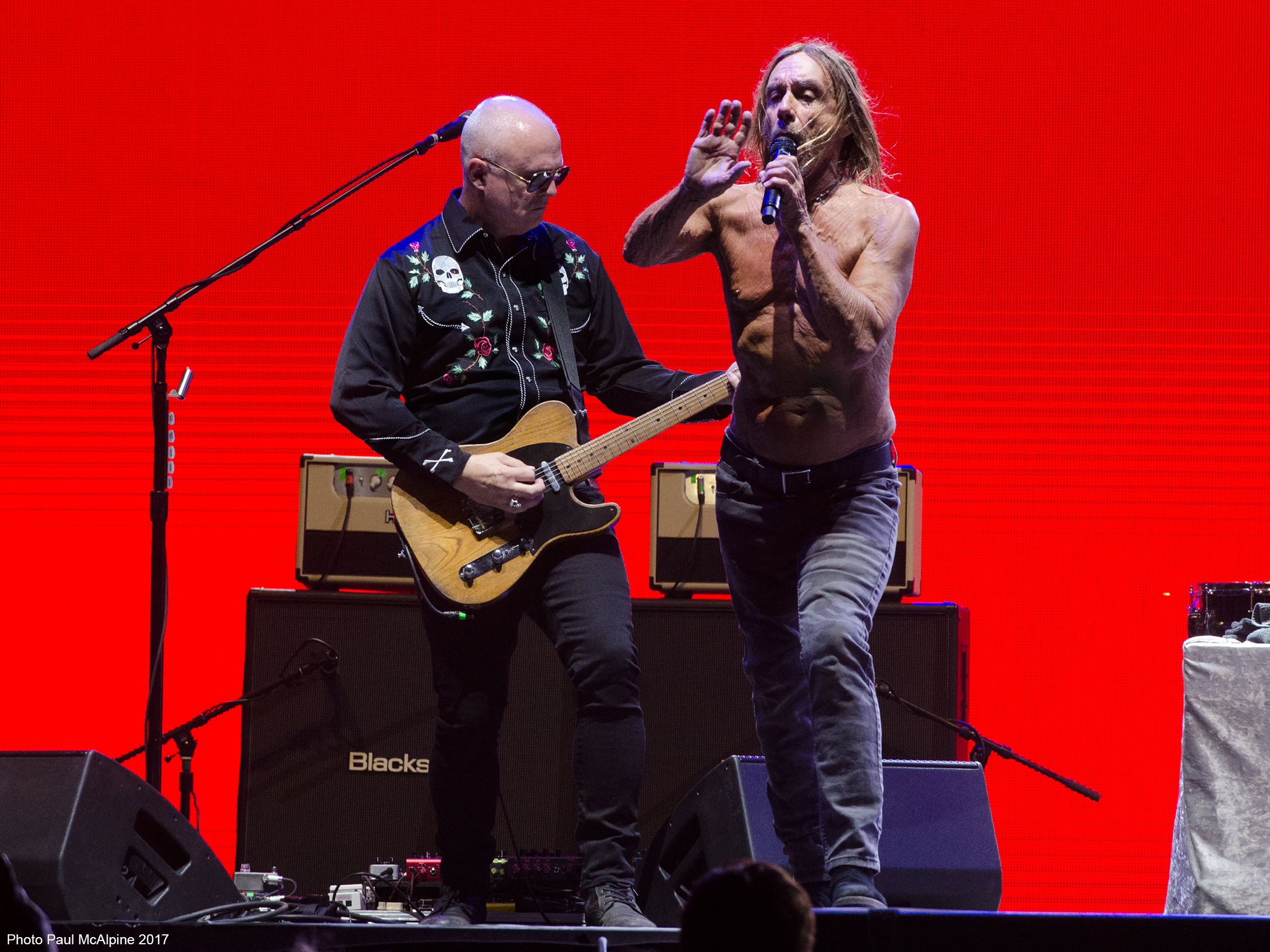
Kevin with Iggy – photo credit: Paul MCAlpine

Although you did end up still performing those songs and celebrating Iggy in quite a different way?

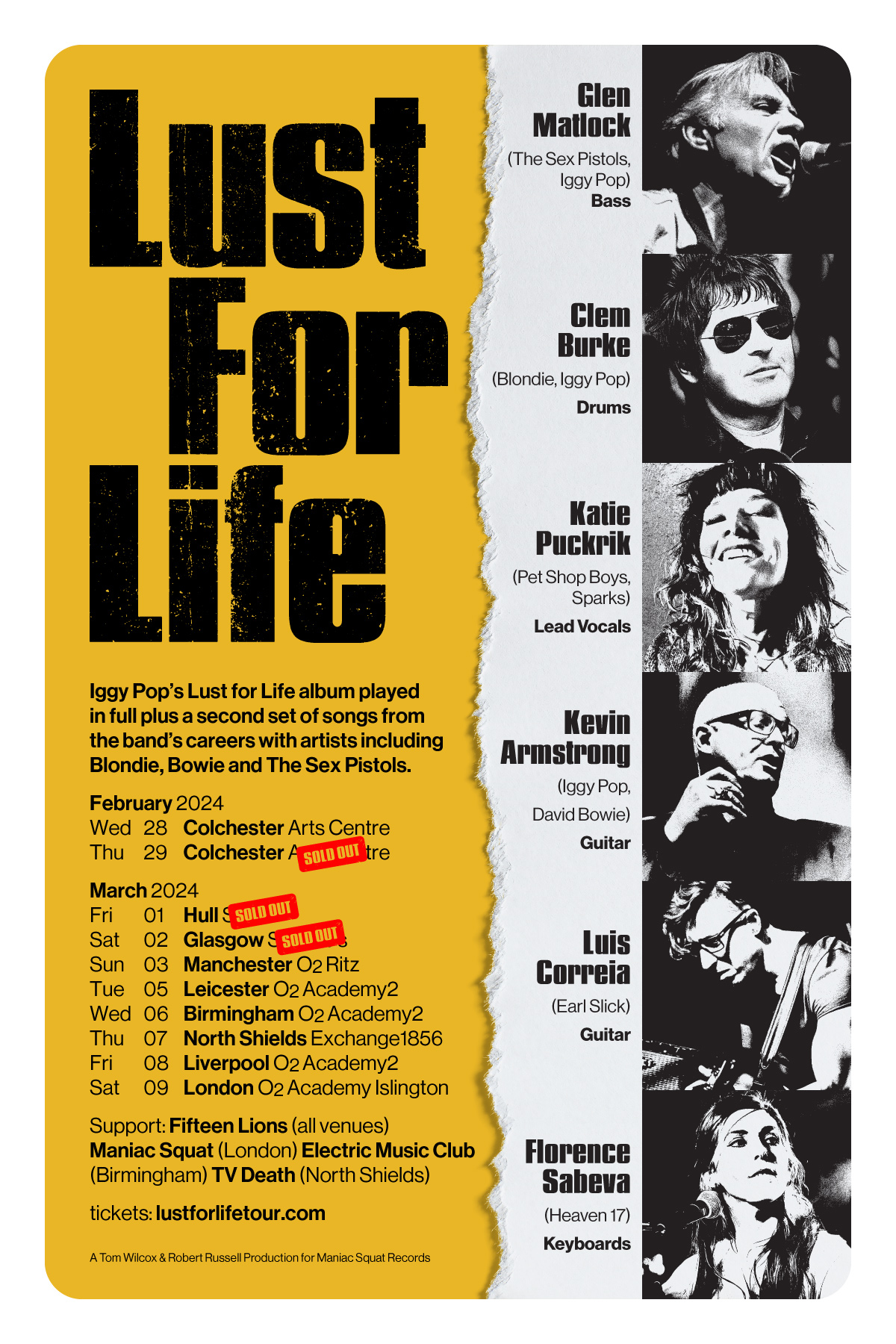
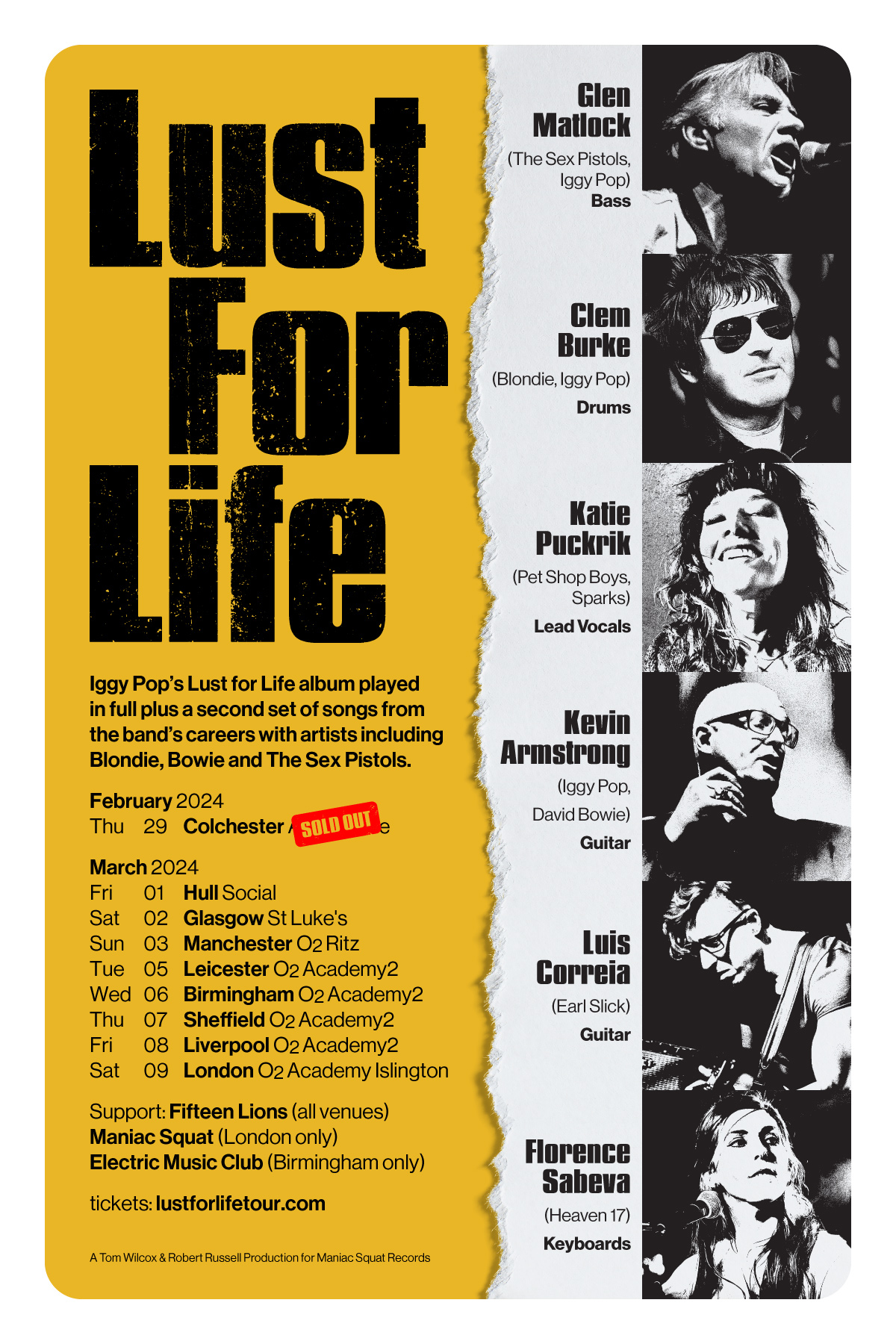
As you well know! Because of the great work you’ve done on the Lust For Life tour. Our friend Tom Wilcox had the idea to do a tribute thing with some ex-Iggy members so we’ve assembled Clem Burke and Glen Matlock and the excellent Katie Puckrik – who’s been a revelation to us all – singing. So we are doing that again in March 2024 and I’m looking forward to that. I even got a message from Iggy. I sent him a couple of clips of the band playing and he said, “You guys sound great!”

Lust For Life Tour – Photo credit: John Scott

Were you pleasantly surprised by the response that the Lust For Life tour got?

I definitely was, yeah. Because, as you and I know, Tom Wilcox has these amazing concepts of bands that he’d like to see put together. And some of them work and some of them go on to have a bit of a life and other ones just crash into the dust – however good they are. I recall the one we did with Richard Strange, and Lou Reed material, which I thought was very, very good but only a very few people came to sees it. But this one caught fire. Which is good really because it was originally billed, as you know, around Tony Sales – the Tin Machine bass-player and early Iggy bass-player. It was built around him and even all the merchandise had his name on and everything. And then he couldn’t make it for sort of administrative reasons so that whole tour was hanging by a thread.

It almost came to a sticky end…

It almost came to a sticky end. I had a Zoom call with Clem Burke and Tom and Katie going, “Well, what we going to do?” We’d lost the principal guy who was selling tickets and we lost a Japan trip over it. And then I thought, hang on let’s call Glen Matlock. And luckily he didn’t say no! And him and Clem had been working in Blondie, as you know, so it was brilliant. And Glen was the only person on the planet who could have filled that seat in the right way, having the Iggy connection and being a name himself. So it took off and I was very pleased with it.

And although Glen didn’t play on the Lust For Life album he’s obviously much better known in this country anyway.

Yes, he had played for Iggy. He’s played in Iggy’s band. They know each other so all of us have that connection with the music and I was so pleased with Iggy’s reaction to the band and the crowds who came as well. They really seemed to love it.

The Lust For Life band sets out on tour again in 2024

Any my final question is more of a local one really. Like a good number of musicians of a certain vintage you ended up moving from London to Hastings. Was the local music scene down here part of the attraction or was that mainly just a happy coincidence?

A bit of both really because I knew a number of musicians who were from down here so I played with Russell Field and Blair MacKichan and Liam Genockey. So I knew there was a bit of a scene down here but I was quite surprised when we moved down here and realised quite how vibrant it is. It’s actually much more active than the London area I was working in, where obviously I had my professional friends and network of people. But down here there really is a burgeoning music scene encompassing everything from young original artists to cover bands and veteran rockers and legends and all that. So there seems to be a massive culture of music in Hastings and that’s thrilling to me. It’s brilliant. I’ve been down here ten years now and it’s really in my bones now.

Yes! I’ve been here seven now and it was definitely part of the attraction for me was being able to see so many bands.

Yeah, I’ve even seen James Hunter playing in the Albion. Or you can see Liane Caroll playing for free in the wine bar in the town – it’s just great.

Photo: Darren Johnson

Fantastic! Is there anything else you want to tell us?

Just that the physical copies of the book are out in October. It’s available for pre-order on Amazon. I’m doing two little book launch events. One will be on 15th October at the Kino (St Leonards) and that will be canapes, wine, a bit of singing, a bit of meet and greet. And I think there’s quite exciting news of one coming in the next few days in Heddon Street which, of course, is the place of Ziggy fans / Bowie fans pilgrimage. And there’s a place called Ziggy’s which is relocating to the very building where that photograph was taken in front of that building. And I believe they want me to do a launch there.

And, of course, anybody can contact me through my website and get signed copies or come and meet at an event.

Also, probably worth mentioning we’re doing the Lust For Life Tour in March next year and I’m part of the Bowie convention in Liverpool in July next year as well so I look forward to meeting people there.

More information at: https://www.kevin-armstrong.com/

Tickets for the 20024 Lust For Life Tour available via: https://www.lustforlifetour.com/

Photo credit for header: Cormac Figgis

Related posts:

Live review: Kevin Armstrong at the Kino, St Leonards 15/2/18

Notes from the Lust For Life Tour – Feb/Mar 2023

Lust for Life 2024: Clem Burke, Glen Matlock and Katie Puckrik reunite for second UK tour

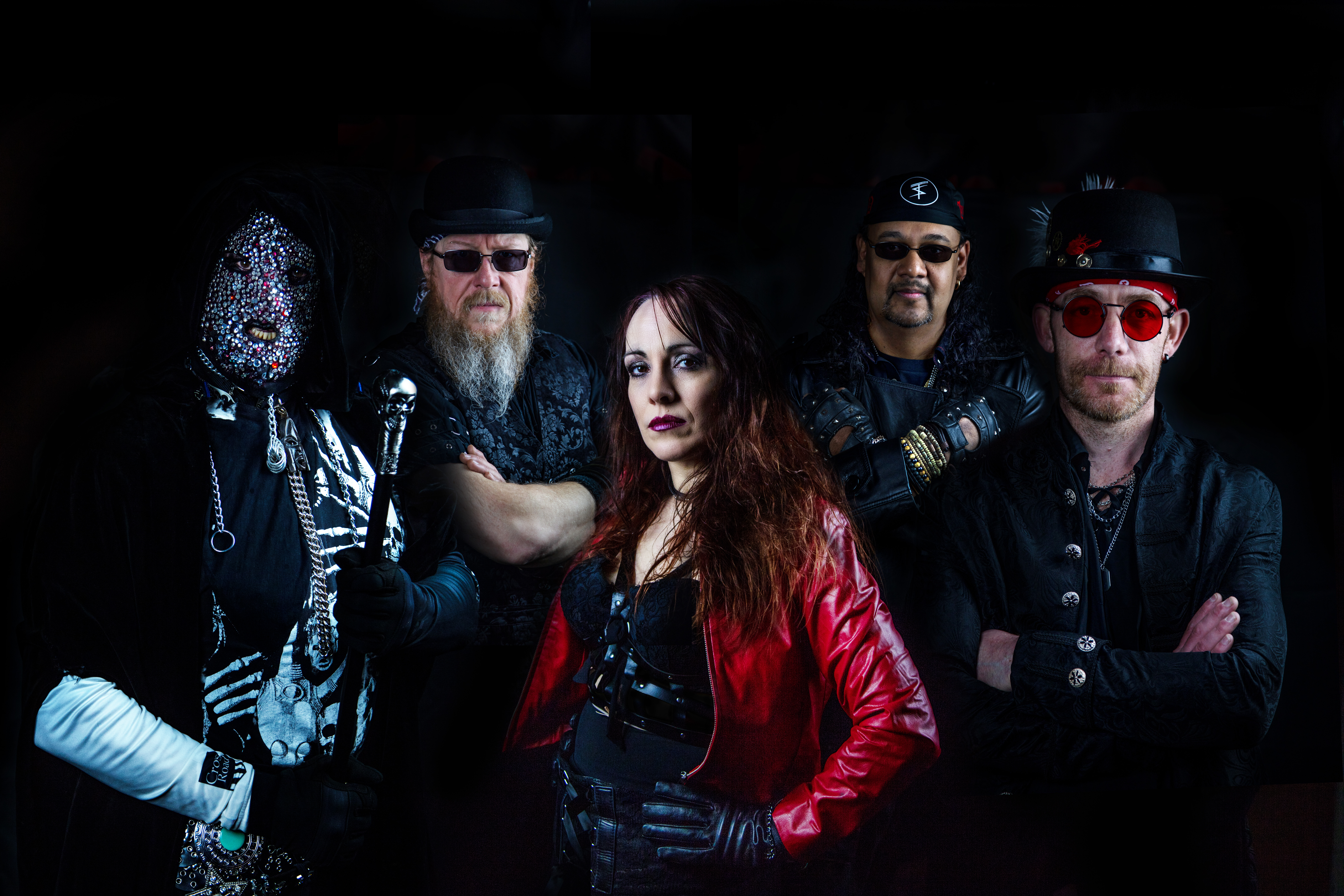
Behind the mask: interview with Thunderstick’s Barry Graham Purkis ahead of new studio album

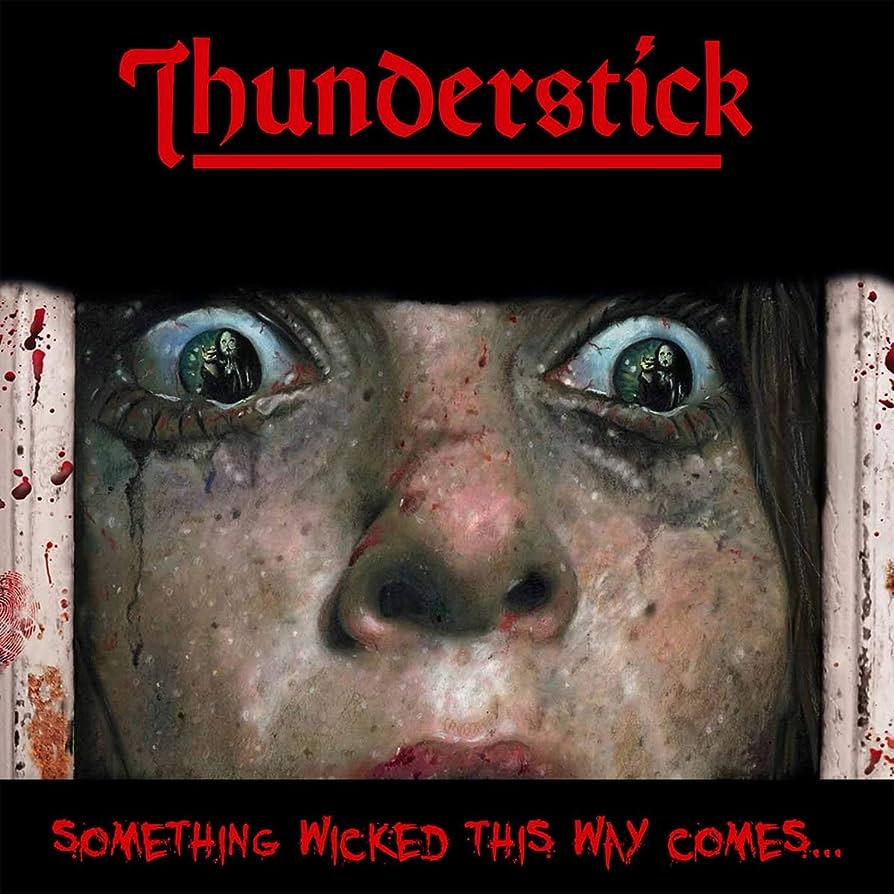
NWOBHM legend, Barry Graham Purkis, resurrected his Thunderstick persona back in 2017 and released a critically-acclaimed album, Something Wicked This Way Comes – the first all-new Thunderstick product in thirty years. The revitalised band has since proved a popular live draw at festivals. Now they’re back with a new single and a new studio album set for release in October 2023. Here, Barry updates me on what’s been happening.

You were one of the pioneers of the New Wave Of British Heavy Metal (NWOBHM) back in the late 70s. Apart from one or two obvious examples it’s an era that tended to get overlooked. Do you think the New Wave Of British Heavy Metal is finally starting to get the recognition it deserves?

Yes and no… I often get asked, “Did you think it was something special at the time?” Well, the answer is no to that because it was very much a kind of work-in-progress. It was after we’d had total domination by punk. The record companies were only signing punk bands. And a lot of them got their fingers burnt through doing so because there were only a handful of bands that were really iconic and of their time. We all know the Sex Pistols – absolutely amazing album, Clash, Siouxsie & the Banshees, there are a number of them. Whereas a lot of other bands, there was a lot of dross as well. But because of that domination, nothing was happening with any other musical genre. And there was this underground movement of all these bands that were learning to play as a throwback against punk, because of the simplicity. Punk was all about a feeling, wasn’t it. It wasn’t so much about musical proficiency. It was more about an attitude and everything else that it signified. And so be it. Because before that we had the self-indulgence of the prog rock bands that would go for ten-minute drum solos. And then you’d have a five-minute bass solo and then a keyboard solo and it was just ridiculous. So there was a backlash against that. But there was also a backlash against punk – the simplicity of it and that a lot of these bands hadn’t even learnt how to play their instruments. And so there were a lot of metal bands or hard rock bands at the time that actually had.

So there were quite a few bands around but they didn’t have any exposure. And then, bit by bit, they started emerging. Samson, the band I was playing with at the time obviously had a great stake in that because we were one of the first bands to release an album that was considered to be New Wave Of British Heavy Metal. And that was the Survivors album. We also had a management company that were prepared to put money into that band and so they financed what was known as the Heavy Metal Crusade. Paul Samson knew a band from south London that he was good friends with because we were looking for support acts to come out with us. He recommended a band called Angelwitch and so they were put on the bill and we were still thinking about a third band and I said, “Well the band I played with prior to joining Samson was a band called Iron Maiden. Would you be interested in them?” And he said, “Yeah, sure.” So that’s how that came about.

One of the venues that we played at regularly was a place called the Music Machine in Camden in London. Quite a sizeable venue and when we played that – around 1979-1980 – there was no social media, there was hardly any VHS let alone DVDs and there were no real rock magazines. They were all black and white weekly music rags – Sounds, Melody Maker, New Musical Express etc. One of the main contributors to Sounds, a guy called Geoff Barton, came down to have a look at this gig with Samson, Iron Maiden and Angelwitch. And he went away and wrote up his piece and that was the very first time when he coined the phrase ‘This is the new wave of British heavy metal’. I mean up until then it wasn’t even called heavy metal, it was called rock – hard rock. And because I was doing the Thunderstick thing with the mask, I got on the front cover of Sounds and they said, ‘Is this the new face of heavy metal?’

And that’s how it came about. And now, let’s move forward up to these days and there are so many bands who like tag themselves in on NWOBHM and say, “Oh yeah, we’re a NWOBHM band.” A lot of which you can totally disregard because it was only a handful of bands at the time that were there and doing it. A lot of publications at the time thought that bands such as Def Leppard were part of that movement. I think they’ve distanced themselves suitably enough now but there are the bands that are still trading on that such as Tygers of Pan Tang and Diamond Head. And I guess it’s the same for me. Whenever we play, I always seem to get the phrase New Wave Of British Heavy Metal coming up. Which makes me laugh because I’m not heavy metal at all. My band, Thunderstick, are purely hard rock, pushy, punchy rock. We’re not metal by any stretch.

The Thunderstick persona that you developed, that was captured on that cover of Sounds, it brought an element of that very theatrical style of rock from the mid-70s to a new generation in the early 80s. Was that a conscious decision?

Very, very much so. The way the mask came about was the simple fact that there weren’t very many glossy colour magazines that catered to a certain genre or anything like that. And when they did start bringing out posters of bands, you would always get the singer at the front strutting his stuff, you would get the guitarist pulling all the stereotypical poses and then you would get the top of somebody’s head and a row of cymbals. And that was the drummer! Now there were certain drummers that were obviously iconic. There was Keith Moon and Ian Paice and John Bonham and drummers of repute such as that. But I’m talking about grassroots bands. Nobody would really be able to tell you who the hell the drummer was. So I went ahead and I created a faceless drummer. And in doing that I then came up with the name Thunderstick. Now the theatricality came in with that image. Well it kind of wrote itself. Because the moment I put the mask on, that’s it – I kind of became that person.

You stopped being Barry and you became Thunderstick while the mask was on.

Exactly! And also the fact of my love of theatricality in bands. To this day I still worship at the altar of Alice Cooper because I just love that. The Tubes was another band that I really, really used to love going and seeing when they toured over here. So it’s always been paramount in my thinking. Always.

Who are your favourite artists and who have been the big influences on you? You’ve mentioned a couple. Are there more?

Well there are but the main thing about my musical taste is that I like to regard it as very eclectic. There’s bands like The Residents. I used to love them. Very, very strange band. But then, as I’ve just mentioned, I would love Alice Cooper. I would love hard rock. I also loved experimental music like Brian Eno, for example. As well as that, I’ve always loved female vocals. So, yeah,  I have got a very eclectic taste. As regards drumming, very strange influences. Obviously, I’ve mentioned Keith Moon. John Bonham I loved and it’s only at an older age as I am now that I can appreciate exactly what he did.

So my influences at the time, there was a guy called Guy Evans, who played for a band called Van Der Graf Generator. Another one was a guy called Pierre Merlin who played for a band called Gong which I love. I used to go and see them quite regularly – and that harks back to the theatricality in music. And what a fantastic drummer. The hi-hat stuff that he used to do was just quite incredible. Prairie  Prince from the aforementioned Tubes – absolutely amazing drummer as well.

And I just thought they were able to treat the drums as a musical instrument rather than just a rhythm-making machine. And I’ve always maintained that. I can’t abide drum solos. I hate them. I have had to do them in the past, many years ago. With my particular style of playing, I have always tried to put everything I can into the musical arrangement. And so for drum solos I haven’t really got a great deal more to say. All I’m doing is a repetition of what I’ve done within the song anyway. And also the fact, technically, I’ve never had a drum lesson in my life. I literally learnt to play from the heart and that’s my style. I really wish that I could be more technical and I see these young kids of 8 or 9 and they sit down behind a drum-kit and they’re just wizards and they hardly break a sweat and I think how the hell do they do that? Because it’s something that I’ve never been able to do. In some ways I’ve found it frustrating and I suppose to a certain extent it’s held me back. But the other side of the coin is that I bring something to my style of playing that is unique. And I hope I am one of those drummers that when you hear them for the first time you know exactly who it is. And you can go, “That’s Thunderstick!”

So when you left Samson did you have a very clear idea about the kind of band you wanted and the kind of music and image you wanted?

Yeah.. there was  a stop-gap between Samson and Thunderstick. That stop-gap was Bernie Torme’s Electric Gypsies. I was the drummer with them for a little while and we did selected dates. I also did a Capital Radio session… But then some of the press jumped on the fact that I was ‘Thunderstick unmasked’ and that became a bit untenable so it was time to move on. Bernie didn’t want any of that. It was Bernie’s band obviously.

So I then started putting together Thunderstick and, yes, I was totally focused on what I wanted from it. I used to even design the lighting – nine times out of ten it was design of lighting that I could ill-afford – but I used to design the lighting, the choreography, and just anything and everything regarding Thunderstick, as well as being the songwriter. I had a clear-cut idea of what I wanted it to be. I also immediately thought that I wanted a female vocalist. There were two reasons for that. One being the fact that I always liked writing for a higher register voice. But more so because the Thunderstick image within Samson was very stark. And it was during the time of female emancipation and the women’s lib group were really quite active in what they had to say, and rightly so, but felt that my image was very detrimental to women and belittled women. It didn’t help that we all know the story that there was a guy called the Cambridge Rapist who wore a mask very, very similar and was breaking into women’s homes and raping them which was just horrific. I’ve never viewed the Thunderstick character to be anything but the knock-about character that it was.

Like Alice Cooper and his guillotine…

That’s it. Exactly right. You can read into things that happen on stage so easily and with certain people in their hands it becomes quite an incendiary type of thing. So I thought, you know what, I’m going to put a female vocalist at the front of the stage and then that way if I do get any comebacks from other women I can just say, “Look, go and talk to her.”

And there’s an obvious counterpoint then on stage.

Yeah the ‘Beauty and the Beast’ thing.

In 2017 Something Wicked This Way Comes was the first new Thunderstick album for thirty years, picking up many positive reviews. Were you surprised by the response to that album?

Yes, totally. I didn’t know because I hadn’t put any product out for, as you’ve said, thirty years. Thunderstick had died a death within the ‘80s. The reason behind putting that album out, as you also know, is it was due to Jodee Valentine’s death after her fight with dementia. For those that don’t know, Jodee was an American singer who loved everything English regarding rock bands. Her all-time favourite band was The Who and she came from the States, on the east coast, and had a degree in classical piano and decided that she wanted to just jump on a plane and come to England, home of The Who. So she did just that and in the meantime I’d gone through a few singers because they weren’t right. The first singer was a lovely lady called Vinnie Monroe and then I had another lady called Anna Borg and through one thing or another they and the band parted company. It was nothing acrimonious. With Anna she kept losing her voice and I had to blow out a tour because of that.

So in goes the advert for another vocalist and Jodee came along. My main rule regarding the band was no fraternisation amongst the band because it really doesn’t work. And what do I do? I commit the cardinal sin and I move in with Jodee. So Jodee and I became an item but it was great on stage because we were, as you just said, that counterpoint. We were able to really work off each other. But the music industry being the volatile environment that it is, has had many a relationship that has fallen foul of it and we were just another one. So she jumped on a plane, went back to the States and that was that.

And many, many years later, I read that there was a guy that had been visiting her in a care-assisted home. I had recently remixed all of the early material and put it out on an American label and it was called Echoes From The Analogue Asylum. The reason I called it that was because purely and simply it was of its time and all of the songs were recorded analogue. Digital didn’t exist. So it was the first time that I was able to put it out in a digital format. He got a copy of it unbeknownst to me and he then went and saw Jodee because he was a musician and he would go to these care-assisted homes as a visitor. And he took a copy of the album and played it to her and she didn’t even recognise her own voice. She was just staring out of the window. Which is absolutely terrible. And he told me that she’d been in there for five years before she passed. It was, for me, a very emotional time. Although at that time I’d moved on and I have my wife and I have a daughter and what have you. But there was just so much material there that I thought,  you know what, she would have loved it to actually come out on an album. So that’s what I did. That’s when I went into the studio and the studio found me a session vocalist at the time and she was good enough to be able to put on the album and the rest regarding that album is history.

It came out and it received really, really positive reviews all the way around the globe. And I was just amazed by that. I really was. It was simplistic in its approach because I didn’t have a great deal of money. In fact, I mixed the album in two days, with the engineer. And it was funny because a lot of the reviewers picked up on it and said, “You’ve managed to encapsulate that simplistic late ‘70s, early ‘80s type of NWOBHM sound and projected it into the now. Is that something you actually worked at?” Yes, it was something I worked at but also it was the fact that I had no money and I had to mix it in two days! Which was great, because they picked up on that. That was wonderful and yeah, it received some very good reviews.

And you now have a new studio album coming out in October. Tell us about that.

Well, after the reviews of Something Wicked people were asking why I didn’t have a performing band going out and promoting the music. And it was purely because I hadn’t even contemplated putting a playing band together to be able to do it live. Getting those reviews, I started having to have a rethink. And I started thinking along the lines of, maybe I should put a live band together. And I did. I put a live band together and used a young lady who I’d seen something of in a band that she was singing in and so I approached her. She came with her partner who’s a guitarist and I started putting together a live show to be able to play the material that was on the Something Wicked album. It didn’t work out with them because they were a partnership and without going into too much detail they were promoting their band rather than promoting Thunderstick.

So then we started looking for another vocalist and one of my friends, who also played in a NWOBHM band – the guitarist from More, a guy called Dave John Ross – he came to me and said, “Have you seen this vocalist? She plays for a covers band and she also does solo material with backing tapes.” I was completely taken aback when I listened to her. I thought, oh my god. She had this unique vibrato in her voice and she had never sung in front of a real loud, hard rock band before but she came along for the audition and she blew me away. Completely! And I also hope that we did her. And we got together and she’s been with me a good three years or so. She has great stagecraft and she has an amazing voice. So there was all this material left laying around that I had written in the ‘80s that had only got as far as the demo stage. And I thought, yep, it’s time to do this thing that musicians do of getting in the studio and bringing out another album. With her on it. It was so important for me to get something out with her on it.

Thunderstick live in 2019

So yes, it’s been a long time in the making. I can tell you a little bit about it. There was a lot of material taken from the early days. I also started writing with one of the ex-Thunderstick guitarists, a guy called Dave Killford, who had appeared on Something Wicked as well. And I also started writing with Rex (bass-player with Thunderstick). Thunderstick was, for me, always my baby. Completely. And I used to write the material, I would produce it etcetera, all the way down the line. So, for me to start writing with other people, I found it was quite cathartic for me to actually do that. Because instead of having all the responsibility, all the time, I was able to work off other people and that was really, really good.

So we started writing and I put the drums down in 2019 with the thought that we would release it sometime in 2020. But we all know what happened. We’d just started putting the bass tracks down when it came about that we had to self-isolate and nobody was allowed to get together in a room and it just absolutely decimated my timetable. I then had guitarists, a lot of guitarist that are friends saying, “If you need me to do anything you know where I am.” So a lot of the guitar work is my friends that have recorded remotely and sent all the files in but therein lies a problem because my drums when I put them down, they weren’t done in a recording studio. They were done in a rehearsal studio and I just found that there was so much wrong with the drums. There was spillage onto different mics and there were problems with mics that weren’t connected properly, just one thing after another. Technical problems. And then most of the guitarists that had contributed to the album always wanted to put their effects on it. At the time I should have insisted and said I want a dry signal which enables me to then at a further date when we mix be able to do what I wanted. I thought it was saving time but in the long run it didn’t save time at all.

So, I have a plethora of guitarists on it – but they’re all good friends and they’re all people that I regard highly as musicians and their contributions have been amazing. I have now, obviously, my own live band that continues. Raven has done some amazing vocal tracks on the album. She really has. And where are we now? 2023! And it was only about two to three weeks ago that I actually finished the mastering of the album. It’s a long album. It lasts for about an hour and twenty-five which is really good. I think material-wise, it’s some of the strongest stuff I’ve ever written and my co-conspirators I hope are also pleased with what they’ve put on it so, yeah, I’m looking forward to it coming out.

And you’ve got  a new single coming out later in August?

I said earlier that I needed to get something out with Raven on it. We put out a single called ‘Go Sleep With The Enemy (I Dare You)’ and it was a limited-run which we sold at gigs. So I’ve revisited that because I thought it would be good to have something that represents the album and the way that we’ve moved forward as a band on that album. It is a heavier version of the original track but I think it’s more representative of the way that the album will sound so, yeah, I’m looking forward to putting that out again. I’m looking forward to people’s response on it.

Thanks Barry. Before we wrap up, is there anything else you want to tell us?

I’d just like to say, check us out. We’re doing a couple of festivals. We’re also doing one in France in October called British Steel. Obviously, we’ve just done the Iron Maiden after-party (at the Cart & Horses in east London) when Iron Maiden did the two nights at the O2 and we did the first night as an after-party. It was really well-attended. It sold out. I’m also very happy that we put one track up that had been recorded by somebody. The sound quality was really quite good and we’ve had two-and-a-half-thousand views on that, which is amazing and, as you said, the album will be out in October. And I’m just hoping and praying that everyone receives it as well as they did with Something Wicked because I think the material on it is even stronger. And thanks for supporting Thunderstick if you are, indeed, a supporter. And if not, check us out and welcome you on board!

Facebook: https://www.facebook.com/thunderstickofficial/

Facebook fan site: The Thunderstick Stormtroopers

Twitter: https://twitter.com/ThunderstickUK

Instagram: https://www.instagram.com/thunderstick.official/

Related posts:

Thunderstick album – news, reviews and interviews round-up

News: 40 years of Thunderstick celebrated with limited-edition live album – released 20/3/20

Rivets For The Eiffel Tower: interview with Robert Carter of folk/rock/blues band Parkbridge

Coming together through a shared love of classic rock, folk rock and blues – bands like Led Zeppelin, Pink Floyd, Fairport Convention and Free – Parkbridge is a four-piece from Greater Manchester. The band’s debut album Rivets For The Eiffel Tower comes out in the Autumn. I catch up with lead singer, lyricist and guitarist, Robert Carter.

Firstly, what got you into performing?

It was really my cousin, Steve. He was in bands from being a teenager. He’s five years older than me and I used to go round to his house and he’d be playing the piano and he’d try and teach me how to play ‘Chopsticks’. His fingers would just go up and down the keys and I was just so impressed. And then as he got older he started being in bands. And then when I started writing songs, he was the first person that I contacted to see if he was interested in playing around with them. In the early ‘80s we got together once a week for about a year and wrote songs together. In those days it was usually his music and my lyrics. But then we both had young kids and we kind of let it drift. He’s in Whitby now but we still get together at least once a year. And we just get the guitars out and start playing. It’s great fun.

What prompted you to start writing? You said you started off writing songs with your cousin.

It was probably about 1980 when I was 20 years old. Believe it or not there was a Paul Gambaccini series about various bands and he did one on the Doors. He was talking about how Jim Morrisson had written a load of poetry and he took them to Ray Manzarek, who was obviously an accomplished musician, and Ray Manzarek said something along the lines of, “These are the greatest lyrics I’ve ever seen. Let’s form a band and make a million dollars.” And I thought it was going to be that easy. So just find a really great musician – my cousin – and we’ll make a million dollars. But it didn’t quite work like that!

So you’re still waiting for the million dollars?

Yes, although that doesn’t go quite as far these days, does it? But it did 40 years ago!

And now you’re the singer and guitarist with Parkbridge. Tell us how this project first came about.

There’s an area of Ashton-under-Lyne called Park Bridge – two words. And it’s a famous old area that I’ll come back to in a minute. But it’s got an institute which is basically like a co-operative pub and about three years ago they had what they called an acoustic night. So I trundled up with my guitar and played a few songs and our bass player, Ian Turford, was in another band at the time. Their band played a few songs and Ian then said to me, “Let’s get together and do something.” But Ian works full time and he’s playing in bands almost every night of the week. And he’s married and he’s got grand-kids and kids and all that stuff. So fitting it in was difficult. And then a couple of years later, I was introduced to Sean Dyer by one of the members who said, “You play guitar. You play guitar. Talk to each other!” So, we started chatting and even though he’s considerably younger than me, he has very similar music tastes. We talked about Paul Kossoff and Free. We talked about Peter Green and David Gilmour and Led Zeppelin. And then we started talking about folk and Fairport and Cropredy Convention and he said, ‘Oh, I’ve just got into Fairport.” And he likes a bit of Bert Jansch and Richard Thompson and the more we talked, the more we kind of clicked. I just invited him round. I said, “I’ll play you some of the songs I’ve written and see what you think.”

So we did and it worked out quite well. He started noodling – that’s a technical term for playing arpeggios and licks! – around the songs I was singing to him. So I said, “We’ve got to do this again.” So we met again the next week, did the same songs and played around with them and I said, “Do you know Ian?” – who also lived in Park Bridge at the time and he said, “Yes, of course I do – great bass player.” And I said, “Well, he and I have been talking about doing something and we’ve just never got around to it.” So, I phoned him up and the next week when we got together, Ian came, too, just with his acoustic bass. And we sat in my kitchen and started just formulating arrangements for the songs that I’d written. Ian then got us a gig supporting another band he was in and it went really well. But his band had a drummer. And Sean and I were watching this second band and we said, “Oh, we need a drummer don’t we?” Anyway, a couple of months later a drummer that Ian had played with, Dave Johnson, had his drums set up at the back of the hall in a rehearsal room. So we went and met Dave and it all started to click together. We said let’s work on some original songs, let’s play around with some covers just to get the feel and get tight as a band and that’s kind of it. So by about May last year, we’d become the four-piece that we are today.

As a band you’re upfront about bringing that mix of rock, blues and folk influences into your music. Was that a conscious decision or did that just evolve from those first few jam sessions together?

I think it’s evolved. When Sean and I first got together we were talking about folk and folk rock – in an acoustic environment. And then there was one particular song called ‘Hired To Kill’ which is on the first album, and I said, “This isn’t working.” When I wrote the song, I wrote it as a rock song and it needed a riff. So Sean started playing around with an electric riff and we bounced it around and it evolved into a rock song. As did another one called ‘Alright Jack’ which is the opening track on the album. And, again, once we put an electric riff to it, it just took on a whole new dimension. But we’ve not done that with everything. The album is a mix of rock, acoustic rock, folk rock and blues. A couple of songs I wrote were definitely written as blues songs in the twelve-bar format. So it’s evolved really. It started out as a folk rock duo and has now become either a folky blues-rock band or a bluesy folk-rock band.

What are your favourite artists and who has been a big influence on you?

After I graduated from the pop-rock bands of the early ‘70s like Slade and Sweet, I was at a neighbours. They were all a few years older than me. And one day one of the guys put on Led Zeppelin 2 and it changed my life! I heard Led Zeppelin as an 11 or 12-year-old and I just thought wow! So then I started to discover new things and started listening to the Alan Freeman show was on the radio on a Saturday afternoon. So the bands that I really got into: Led Zeppelin I’ve mentioned, of course. I love Free, Family, Pink Floyd. The heavier stuff, like Black Sabbath. I got into Uriah Heep as well. It was all of those kind of bands. A friend had Wishbone Ash’s Argus which is a sublime album. So it was really what we now call classic rock that influenced me. But, I always had a soft spot for Fairport Convention. And I got into Fairport, as many people did, because of Sandy Denny doing the duet with Robert Plant on ‘The Battle of Evermore’. And I thought, “I’ve got to hear more of her.” So I went and discovered Fairport and I’ve been a Fairport fan ever since. I go to their Cropredy festival every year – as you do! I’m also a big Neil Young fan. And the Byrds. And I just love Bob Dylan, as a song-writer, and against popular perception, I do also actually like Bob Dylan’s singing voice, too. I think he pus his songs across really, really well.

You must be excited to have the band’s debut album coming out – Rivets For The Eiffel Tower. Firstly, tell us where that title comes from.

I mentioned Park Bridge earlier. Park Bridge was formed as a village during the industrial revolution. There was a big iron foundry in Park Bridge and a mill. If you ever go to Paris, in the museum at the Eiffel Tower there is an inscription that says “Rivets made by the Park Bridge Iron Foundry, Ashton-under-Lyne.” And so Rivets For The Eiffel Tower became the obvious name for our first album. They also, we believe, made the rivets for the Sydney Harbour Bridge, too – so there might be a second album title there. And as third album’s often sink – ours won’t of course – they also made the rivets for the Titanic but we don’t talk about that one too much!

So what can people can expect from the album?

They’re all original songs. There are eight songs on the album. There’s a couple of what you would call folk rock. There’s a couple that are classic rock in style. There’s a couple that could be classed as indie rock and there’s a couple of blues songs. And they are all words written by me and music and arrangements by the band. And if you’re into the kind of bands that we’ve been talking about, maybe you’ll like what you hear. I have to say that I’m working with three fantastic musicians. Sean’s two big influences are David Gilmour and Peter Green and I think that comes out in the album. Ian, the bass-player, loves a bit of Black Sabbath and you can hear a bit of Geezer Butler’s influence in there. He plays a melodic bass quite regularly, not just a thump-thump bass, and Ian’s style kind of captures that. And Dave is quite eclectic. He loves a bit of John Bonham but he loves quite a few modern drummers as well. And they’re all great musicians and it’s a privilege for me to work with them. We’re probably a little different to most of the newish rock bands you hear these days. We try and be melodic. We try and tell a story in the lyrics. We try and offer something different. So if you’re into that classic rock sound with style, have a listen and tell us what you think!

You also present your own music show on Real Rock Radio. Can you also say a bit about that?

It started last year at the Tameside Beer Festival. Immediately after Parkbridge played, Tony Charles, the managing director of Real Rock Radio did a set of classic rock songs and we got chatting and he said, “I could really do with someone on the station who could do country rock.” And I said, “What about folk rock and acoustic rock, with a little bit of country rock thrown in?” He said, “I love it!” So I now present every Friday at 7 O’clock ‘The Acoustic & Folk Rock Show’ on Real Rock Radio. It’s repeated on Tuesdays at 2pm for those people who have better things to do on a Friday. And it’s great fun. It’s a lot more work than I expected but it’s introduced me to a lot of bands that I wasn’t aware of. And on this week’s show I’ve actually sneaked in ‘Why Do You?’ from our album but don’t tell anyone!

Rivets For The Eiffel Tower by Parkbridge goes on general release on 6th October with a limited-edition CD available from 18th August 2023.

Website: www.parkbridgemusic.com

Facebook:  https://www.facebook.com/parkbridgemusic

Twitter:  https://twitter.com/Parkbridgemusic

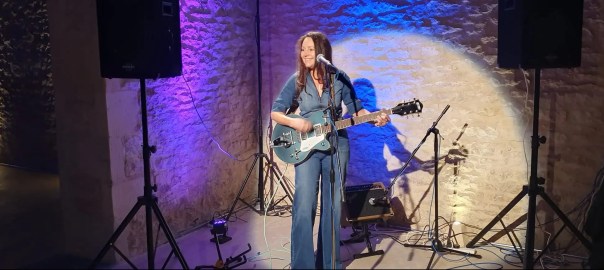
The gripping tale of Little Lore: interview with Americana singer-storyteller, Tricia Duffy

Initially one half of the duo, Duffy & Bird, Tricia Duffy then set out on her own as a solo artist under the name of Little Lore. We discuss why her songwriting is like an episode of The Simpsons, her feelings of devastation at the demise of her original duo and why, in hindsight, it turned out to be the best thing that’s ever happened to her.

Tell us how you first got involved in playing and singing.

I was a singer when I was a child and then when I was 19  left the UK to go to America to work on cruise ships. I was so desperate to get into working at sea, my first job was in the gift shop. I left the gift shop and became a hostess and entertainer. I spent four and a half years at sea altogether. I was basically like a Butlins redcoat. Doing everything from calling bingo to singing. I sang a lot of standards and contemporary music as well.

And I always sang in choirs and that type of thing, and then I was really fortunate to meet an amazing lady who’s still my singing teacher, Rose Bellingham. She runs these workshops and I went to one of those and I performed a solo. It must have been about fifteen years ago now. And she just came up to me afterwards and said, “You know it’s not too late for you. If you want to still make it as a singer you probably could.” And I was like, “Really?” because it was just a hobby at that stage. And I said, “Well give me some lessons then.” And I started having lessons and I was sort of genre-confused. I didn’t really know where I wanted to be. And she suggested that I try for a musical so I went to an open audition for a musical and amazingly got a part. First audition I’d ever been for and I got a part in a musical. Which was a great learning curve to work out what’s definitely not for me because – my God! – that is a different kind of schedule. I don’t know how anyone does a long run. The one I did was very short and I had, like, the older woman ballad part but it nearly killed me.

And then I started singing contemporary music. I got into a band and was singing rock covers. I met Al my duo partner and we were on that pub circuit doing covers gigs as a duo – with guitar and vocals. Our set-list was up to a hundred songs I would imagine because we were always thinking, “Oh, we’ll do this. We’ll cover that.” And Al was such an amazing guitarist. He could  play anything. And I said to him one day, “Do you know what? It’s all very well trying to turn heads with different arrangements of other people’s songs. Why don’t we write our own?” And he just goes, “Alright. You start. Let me know when you’ve got something.” And I was like, “Fine, I will.” So I started writing and really found my feet with Americana and country.

Did the focus on Americana come straight away or did you start off by experimenting with various genres and styles?

Well I suppose I still do experiment with different genres and styles, now that I’m writing professionally. I’ve been writing for a sync brief in a shoegaze style and this morning I was writing something for musical theatre. So I do still experiment with genres but my artist project – the Little Lore project and Duffy & Bird before it – they both very much have storytelling leanings. And writing songs to perform myself rather than writing for other people I really do like songs that tell stories. I admire those songs when other people write them and those are the songs I want to write. So that naturally points me to towards that genre and I also enjoy the devices of Americana: the instruments – the way that a voice can duet with a steel and all of those kind of things.

After beginning to establish yourself as part of a duo, you then moved onto becoming a solo artist. Did that feel daunting?

Absolutely. It destroyed me. I was devastated by the ending of the duo. I didn’t want it to finish at all. And I didn’t know I could do it on my own because my voice is my first instrument. My guitar-playing was not that hot and I couldn’t imagine having the kind of relationship with someone else as a duo partner that I’d had with Al. And it was obviously the pandemic so I couldn’t even get together with anyone anyway. I didn’t have the opportunity to find a chemistry with another guitarist. It was really, really upsetting when it ended. I didn’t want it to end at all. We just had different priorities and he couldn’t give me what I wanted so there was tension between us because I was like, “When are you going to get to that song I sent you?” And he’d be like, “Later, when I’m not running a business and dealing with my family.” So we just had different priorities. But, I have to say that even though I still really miss that and I miss him and I miss our friendship – because obviously that had a massive impact – it has been the best thing that’s happened to me!

I was going to say that! Because in preparation for this interview I listened to your previous albums and while the Duffy & Bird material has a raw, really emotive feel about it which works really well, when we move on to hearing the Little Lore material, it’s like a whole different world. The way you’ve thrown yourself into it and the way your voice works with the instrumentation, it just seems a huge leap forward.

Thank you. That really means a lot to me because I know you’re really familiar with everything that I’ve done. It honestly has been the best thing that ever happened. I think that everything works out for a reason doesn’t it. What feels really awful at the time turns out for the best. And I’m so focused on my writing. My writing is getting better and better. Obviously, every week I still write duff songs! But it’s a volume game. You’ve got to write a huge amount of material is what I’ve really learnt. I mean, just masses. I write two to three songs a week now and I’m really disciplined: “Writers write so get to your desk. Get your notebook out. Pick up your guitar and write!”

Are they always completed songs or are there fragments that you might return to later and use elsewhere?

Pretty much always completed songs. I’ve got a couple of little devices. I write for something called the song-a-week challenge every week. Which is run by an amazing guy called James Tristan Redding in Nashville. And he just puts a prompt up every week. This week’s prompt was ‘Ode to chameleons’ so you just never know what you’re going to get and I’ve been doing it over a year now. Every single week I’ve written to that prompt. Whatever he offers me. Last week it was something like ‘The roots beneath the tree’ – so it can be anything! And you can either write that as a title or you can jump off from it so today I’ve jumped off from it a little bit. And there’s a minimum of one every week so that’s fifty-two songs a year!

And then over and above that, I’m doing a Masters in song-writing and so we get one or two briefs a week from that as well. And sometimes they’re quite broad – so it might be to experiment with a different form or to experiment with a different rhyming pattern. And other times they’re more specific – write something about identity, write something about imposter syndrome, write something about a topic. Sometimes it’s been sonic challenges – write with a certain chord structure or whatever. So there’s all sorts of different things coming in which is really good for my discipline.

And then over and above that, there’s the songs that come to you. You’re running down a river and see someone reading a book and think, “Ooh, that’s a title.” And then I’ve got some briefs as well – I’m writing for a movie at the moment. So there’s a few opportunities like that coming through as well.

You don’t just stick to stereotypical Americana themes like road-trips and personal heartbreak. You’re happy to tackle all sorts of controversial, contemporary issues. Was that a conscious decision?

Well I like songs to be – and this is a very specific technical term – ‘arf clever! You know like when you watch an episode of The Simpsons and there’s something for the adults and you go, “Ahh ha-ha-ha that’s funny,” and then the kids can just take it on face value. When songs are good, that’s what I think they do. If you are listening carefully to the lyrics and to how the music plays with the words you can go, “Oooh, actually that’s clever. I see what they did there. Interesting.” And a lot of country music really does do that. Those typical – ‘problem, statement, how do I feel about the problem, expand more on the problem, ooh twist the problem about up on it’s head, it’s not really about what you thought’ – type songs I think are really, really, really clever. Which is probably why I’m really drawn to that kind of writing and that kind of music. And yet, you could just listen to it on the radio and hum along to the melody. You don’t have to engage with the clever lyrics. You can just listen to the chorus and go, “Oh, that’s nice. It’s a fun tune. I can sing along to it.” So that’s something that I really try to do. Sometimes, I think I have a tendency to go off ‘alf clever and go full clever and then I have to really reign myself back and just decide what I want the song to be about.

What are your favourite artists and who has been a big influence on you?

One of my absolute top favourites is Sheryl Crowe. I love the fact that she can write a really hard-hitting, political song one minute and then just a pop throwaway the next minute. I love the vibe of that Americana with the pop sound. I think she’s a badass as well and so all power to female performers who keep on hustling and keep on doing it. To that end as well, I really love Shania Twain. I just think she’s amazing. I think she’s a really good role model. I love Dolly. I love Joanie Mitchell. Another great influence of mine is Nina Simone. I absolutely adore both her writing and her performing of other people’s songs. Her phrasing and her ability to tell a story – there’s no-one touches her. And she really did sing some very hard-hitting, difficult songs as well.

You’re a regular visitor to Nashville. Are those trips now an important part of the creative process for you?

Definitely. My dream is to be able to go out there twice a year for a month to six weeks at a time. And have that environment where I could just drop in for co-writes and what have you. Obviously, the pandemic stopped me going for a bit but I went this year in March and I’m going again next year. They have a song-writing festival over there called Tin Pan South which is just an amazing place to be because it’s literally the only large-scale festival that celebrates song-writing rather than performing. It’s super inspiring because those national writers are writing contemporary pop music that we hear on our radios right now, as well as country music.

Presumably, you’ve managed to fit in a bit of time for sight-seeing as well while you’ve been in Nashville?

Well, I’ve seen a lot of the sights already but the live music is the thing – so you’re going to all the iconic venues and you’re seeing live music and that’s really what you want to see.

You’ve got a new EP that you’re working on currently. What can you tell us about that?

I’ve got seven songs and I’m going to release it in two parts: Seven Stories part one and Seven Stories Part Two. There’s a real variety of styles. Death is one of my favourite subjects to write about so there are a couple of quite bleak, sad, death songs. I’ve got some wry wit in there as well. There’s obviously a climate change one as well – I always like to include one of those. It’s a figurative song written from the perspective of the planet.

I’m recording the vocals in a studio in Kent with an amazing producer and engineer called Paul Stanborough. Lowpines (Ollie Deakin) has done the production and all of the instrumentation again and Morgan Karabel is playing drums once more. It is important to me to have women in the team so having a female drummer is really cool.

Is there anything else you want to tell us?

I hope I’m going to write an album next year. These EPs will come out in the autumn and early next year and probably towards the end of next year hopefully I’ll be able to release an album.

Live dates:

Saturday 8th July at 3pm, Hanwell Cavern, London W7

Tuesday 5th September at 8pm, Songwriters Gallery, Hangar Farm Arts Centre, Totton, Southampton SO40 8FT

https://littlelore.uk/

Related posts:

Little Lore: the magical new project from UK Americana singer-storyteller Tricia Duffy

‘Normal’: a gorgeous slice of lush Americana – the new single from Little Lore

Seven Stories: a brand-new project from the acclaimed Americana singer-songwriter, Little Lore

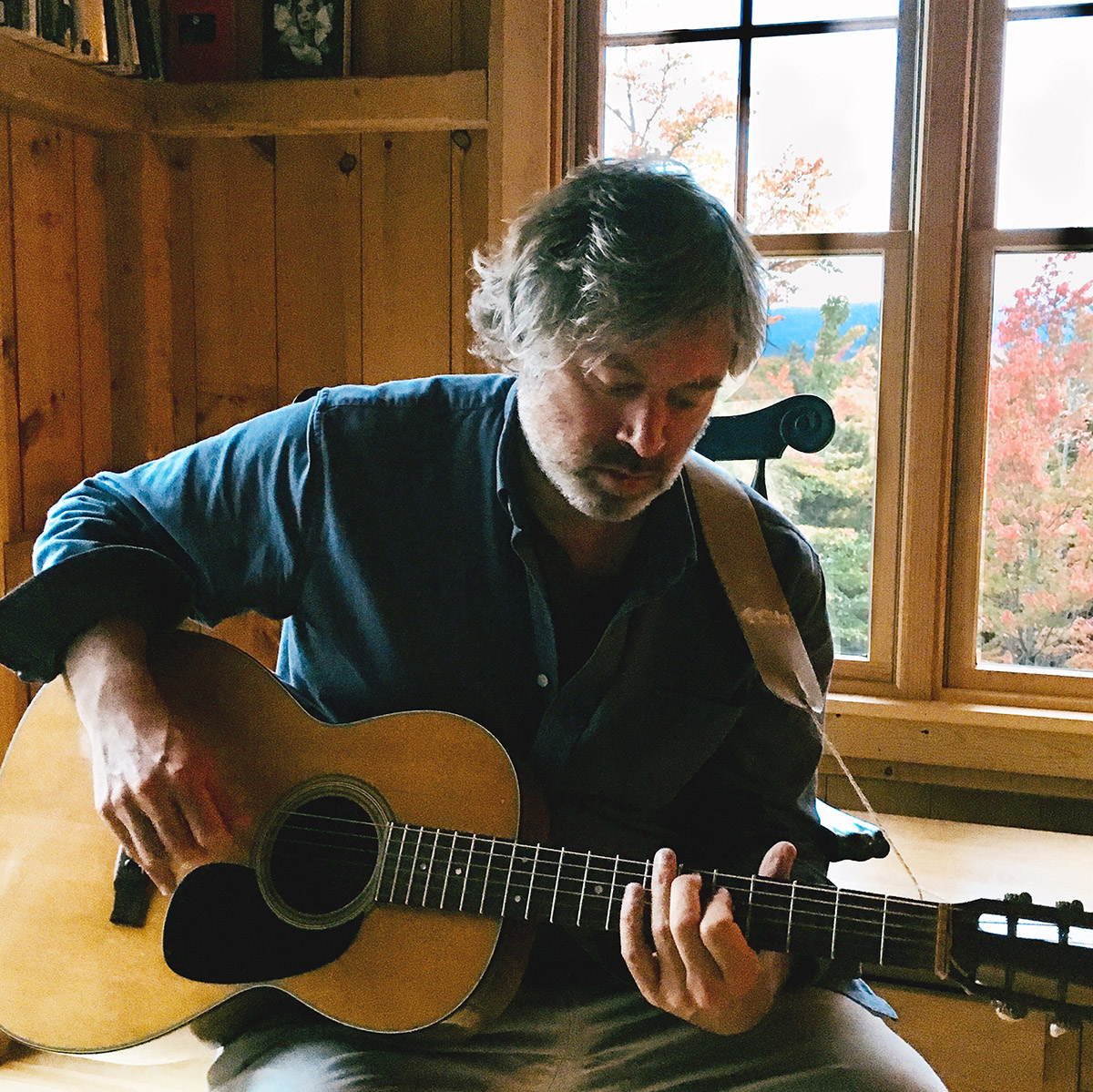
Always Seeking: interview with guitarist and singer songwriter – Jake Aaron

Always Seeking is the eagerly-anticipated second album from guitarist and singer songwriter, Jake Aaron. It follows his highly-acclaimed 2019 debut, Fag Ash and Beer, which drew many enthusiastic reviews. Always Seeking was released on digital formats on 17th May 2023 and is also available on CD from 7th June. Having interviewed Jake back in 2019 following the release of his debut album, I catch up with him again to find out more about the latest one.

It’s been four years since your debut album Fag Ash & Beer which attracted some extremely favourable reviews. When did you begin working on the follow-up?

Some of the music goes back a long time, a few years in some cases. I had chords without a melody, words without songs, songs without words, but an Americana album of some sort seemed to be taking shape for a while. The actual process of bringing it all together and finishing it off probably spanned two or three years.

Was this a different process to writing the previous album?

It was pretty different, yes. With the first album, only three tracks were recorded live.  I started mainly with solo acoustic pieces and the players coloured some of them in with overdubs. With Always Seeking eight of the tracks were recorded live so it probably has more band energy.

How would you describe Always Seeking as an album?

I loosely imagined a noir Western, and something with a moving landscape, scenes and moods. As far as the theme goes, I suppose like a lot of people, I’m prone to follow mirages and over romanticise the future and the past.

Like its predecessor the album crosses a number of genres and takes in a range of influences. It’s obviously important to you not to be boxed in, musically?

I’ve absorbed a lot of music over the years and like lots of different music so it would be hard to stick with just one sound.  As I’m an independent artist too and not very commercial, I’m pretty free to record what interests me.  It’s not like a major label is locking me up till I’ve written my next hit.

Some genres probably aren’t that far removed from each other anyway especially folk, rock, and blues. John Renbourn and Davy Graham were often crossing over naturally to classical and jazzy sounds. Or, thinking of George Harrison and Robby Basho who played some sitar, into Indian Raga.  Maybe it’s partly due to the instrument –  guitarists can pick up a classical guitar, an electric guitar, sitar or banjo, or use different tunings and sound very different. I mean if I played the bagpipes I’d be a bit more stuck stylistically.

The album features a number of the musicians who played on your first album. Clearly, you enjoyed working with them, first time around?

Totally! Steve Lodder on keyboards again, Davide Mantovani on bass, Marc Parnell drums, Steve Waterman on trumpet and Kenny Jones engineering. They’re fantastic to work with. I think they’re a good choice too because some of my music is off-beat and, as jazzers, they’re completely unfazed.

The only track I was unsure about asking them to play, was the rockier track ‘Gotta Believe’ and they were free to opt out of that one if they wanted. Marc’s response was: “Jazz players are fine playing rock, it’s rock players who won’t play jazz!” It’s true, listen to them!

You’ve also got a couple of other guests on the album, John Etheridge on several tracks and Kate Kurdyak on a couple of tracks. How did they get involved?

The character in the album artwork and music turned out to be female so it seemed to call out for a female singer. It took a long time to find the right singer till I remembered a song I really liked in 2021 – ‘Dose Me Up’ by a Canadian band Vox Rea. Kate has a beautiful voice. I had to wait a while till she got back from touring but it was worth it and I’m really glad she got involved in the album.  Vox Rea recently made it onto BBC Radio 2 with their track “Julia”, so very possibly we’ll be hearing more of them.

Lupe – Always Seeking, Jake Aaron

I’ve known John a little for a few years ever since bumping into him on the tube and sharing a tube journey with him. I’d just seen him playing with John Williams at Ronnie Scott’s, and in Nottingham too, so had quite a bit to chat about the music and the shows. It so happens John also plays with Steve and were working together on some jazz versions of The Kinks which I heard when I was working on the album. It had some stunning lead guitar.  Three of the tracks on “Always Seeking” needed some lead guitar and I wasn’t about to follow Steve’s solo in The Revenant  – so one thing led to another and John seemed to like the pieces.  John’s two solos on The Revenant are just brilliant which is partly why the track is so long! I couldn’t find anywhere to fade it. It’s a very joyous listen, very melodic, very unrushed.

The artist Anthony Macbain produced a very striking image for the album cover, full of old-style western film imagery. Did you have a clear idea of what you wanted from the outset?

Anthony’s art is fantastic and adds a whole new dimension to the music. We had some shared musical interests too which probably helped including – you’ll be very pleased to know – Iron Maiden. I sent Anthony a rough, badly drawn sketch of a rider on a ridge looking over clouds, with a guitar and rifle. Anthony took the idea and transformed it. His first sketch was of a female rider looking at the viewer. It was so good I asked him to finish it though we felt the image of the rider in the distance worked better for the album cover. The original image is now in the CD as a fold-out poster and looks terrific. It was a real surprise when I received the first copy.

What next for Jake Aaron?

I’m looking into pressing some vinyl for Always Seeking, depending on the level of interest. The feedback about the artwork and line up is so good it would be good to see it on vinyl – it might be something someone picks up in a second hand shop one day and asks what the hell was that? I had that experience a lot when I used to trawl second hand record shops. I’ve emailed a record shop in London who haven’t got back yet, so if there are any vinyl shops reading give us a shout!

Vinyl seems to be making a huge resurgence. One of my tracks was picked up by a vinyl “mixtape” club in the US, Vinyl Moon, who produce really beautiful vinyl each month with original music and artwork that piqued my interest too.  Jared Sylvia designed the volume that my track’s on.

(Update: since the interview Jake has now achieved his ambition of releasing the album on vinyl – you can order it here!)

Musically I’ve got quite a lot of stuff simmering in the pot, some lyrics, chords, a few melodies, song titles. So I guess there could be a single or two, an EP and another album at some point. I’m more interested than I used to be in reworking earlier tracks these days. Sometimes you can only take a track so far at the time and then run out of time, skill or imagination and then a few years later pick it up again – you might have evolved a bit musically and can do more with it.

I did think the other day if I write more material I can do a Best Of some day which would be a great thing – it would immediately improve the overall standard of the album with a massive edit!

#jakeaaron #folkguitar #folkfusion #stevelodder #johnetheridge #stevewaterman #davidemantovani #marcparnell #katekurdyak  #vinylmoon #anthonymacbain #johnrenbourn #davygraham #robbybasho #georgeharrison #indianraga  #fusionguitar #ironmaiden

Album streaming link: https://jakeaaron.com/always-seeking

Website: https://www.jakeaaron.com/home

Facebook: https://www.facebook.com/jakeaaronmusic/

Instagram:  https://www.instagram.com/jakeaaronmusic

Spotify: https://open.spotify.com/artist/6wIrG2gCGDYJ0YImaroH1g

Related post:

Interview: Darren talks Fag Ash and Beer with guitarist/singer-songwriter Jake Aaron

Slade in the 1970s: interview with Mike Rogers

Radio host, YouTuber, writer and producer, Tokyo-based Mike Rogers has many incredible connections in the world of rock and roll.

I’ve been in contact with Mike on numerous occasions in connection with my music PR work, representing other artists. This time, however, I was the guest on the Mike Rogers Show, talking about my recently-published book on Slade.

You can catch my interview with Mike below, where I talk about my love of ’70s glam, my new book on Slade, my two previous books on Suzi Quatro and The Sweet and my segue from London politics to music writing.

Actually, as The Times noted last weekend I’m not the first ex-London politician to write a book on Slade. Before turning my hand to music writing, I did a sixteen year stint as an elected member of the Greater London Authority (GLA), representing the Green Party. But the first person to write a book on Slade was George Tremlett, a Conservative member of the predecessor body, the Greater London Council (GLC), whose own Slade book came out in 1975.

And below Here we have George Tremlett’s 1975 book ‘The Slade Story’, alongside my own book which came out on 26th May this year.

Related posts

‘Slade In The 1970s’ by Darren Johnson out 26th May 2023

Reviews round-up: ‘Suzi Quatro In The 1970s’

Reviews round-up: ‘The Sweet in the 1970s’

SLADE in the SEVENTIES – with author, Darren Johnson

I talk to Gary Alikivi about my love of 70s glam, my writing and my forthcoming book on Slade for his excellent online blog here.

Alikivi's avatarALIKIVI : NORTH EAST UK CULTURE

I was encouraged by the reaction to my Sweet book and began work on one about Suzi Quatro, another big ‘70s icon that I’ve always been a huge fan of. However, the first band I truly fell in love with was Slade said author Darren Johnson.

Originally from the North West, Darren moved to London in 1990 where he spent over twenty years working full time in politics…

My professional background was in politics and campaigning so I’d written a lot about current affairs and had various articles published in the national press – from tackling climate change to building more council housing.

After stepping back from politics Darren moved out of the capital and in 2016 based himself in Hastings, East Sussex.

When I no longer had an endless cycle of meetings to attend, one of the things I was determined to do was go to more live gigs…

View original post 944 more words

Interview with Plastic EP about my new book: ‘Suzi Quatro in the 1970s’

Following publication of my recent book on Suzi Quatro, I was delighted to be interviewed by the force of nature that is Plastic EP. He’s had a huge range of guests from big-name musical stars to dedicated music lovers like myself. We talked Suzi, The Sweet, my love of the 70s glam era and the two books I’ve had published for Sonicbond’s ‘Decades’ series (with a third on the way!)

You can catch the full interview with Plastic EP here:

Among the 800 guests he’s had on so far, Plastic EP has interviewed Suzi, herself, of course. You can catch one of his interviews with Suzi here, where he’s joined by co-host, Sabine Brignell.

Plastic EP and Sabine also interviewed Don Powell recently, which you can catch here:

Related posts:

New book: ‘Suzi Quatro In The 1970s’ by Darren Johnson coming in July 2022

Book news: ‘The Sweet in the 1970s’ by Darren Johnson – published 30th July 2021

2021 in Darren’s music blog – the ten most popular posts of the year

My special thanks go to all those who have visited (and hopefully enjoyed) Darren’s music blog during 2021. The blog has been the usual mad mix of hard rock, metal, folk, Americana, glam rock, britpop, and more – basically anything I enjoy listening to! Here, however, are the ten most popular blog posts from 2021.

1. Deep Purple’s Smoke On The Water: so who actually was the “stupid with a flare gun”?

Fifty years after the events that inspired the recording of Deep Purple’s most famous song and the world’s most famous heavy rock riff, I take a look at the history behind ‘Smoke On The Water’. In December 1971 the band were planning to record their forthcoming album Machine Head at the Montreux Casino in Switzerland. As we know at the Frank Zappa concert on 4th December someone burnt the place to the ground. Who was ‘the stupid with a flare gun’? This post went viral after being shared by a certain Ian Gillan and easily became my most popular post of the year.

Read full post here

2. Tribute to John Rossall: Glitter Band founder passes away peacefully following cancer battle

This is my tribute to Glitter Band founder member sadly passed away on Saturday 2nd October following a cancer diagnosis earlier in the year. John Rossall played on all the early Glitter Band hits before leaving to pursue a solo career. A popular figure at festivals and gigs on the 70s live music circuit for many years, he stunned both fans and critics alike with a hugely well-received comeback album The Last Glam in Town released in Autumn 2020.

Read full post here

3. Interview with guitarist/singer/song-writer and Grand Funk Railroad founding legend Mark Farner

I was luck enough to interview a number of music legends this year. My most popular of 2021 was with Mark Farner one of the founders of Grand Funk Railroad. In this interview we look back at Mark’s career: forming Grand Funk, performing at the Atlanta Pop Festival in 1969 and London’s Hyde Park in 1971 as well as discussing the inspirations behind his songs, his collaborations with the likes of Ringo Starr and Alice Cooper not to mention his brand new DVD.

Read full post here

4. July Morning – a fifty-year-old British rock song and an annual celebration of summer in Bulgaria

Another post about another iconic fifty-year-old British hard rock song. July Morning is a 1971 song by Uriah Heep. Written by the band’s keyboard player, Ken Hensley, and vocalist David Byron with its distinctive organ sounds it has remained a significant highlight of the band’s live set. In most places the song is taken at face value for what it is – a classic slice of early 70s hard rock with lyrics celebrating the beauty of an early morning sunrise. In Bulgaria, however, the song has taken on a significance all of its own.

Read full post here

5. Dirkschneider & The Old Gang: former Accept vocalist re-unites old colleagues for new project

In the Autumn of 2020 former Accept lead vocalist, Udo Dirkschneider, began putting together a new project that brought together some familiar faces. Going by the moniker Dirkschneider & The Old Gang, the name is pretty self-explanatory. Along with Dirkschneider and his son, Sven, two former Accept members (bassist Peter Baltes and guitarist Stefan Kaufmann) have also been brought in, along with singer Manuela Bibert.

Read full post here

6. A quick tour around my CD collection

I obviously talk a great deal about my love of music but I thought it might be an idea to give readers a quick tour of my actual CD collection. Although I was a keen purchaser of vinyl in my mid to late teens during the first part of the 1980s, frequent house moves in my late teens and early 20s meant that the format was becoming a bit cumbersome. By the time the 1990s came along I was glad to embrace the CD and gradually began building up a collection. From just a handful of CDs thirty years ago it’s now grown to what it is today.

Read full post here

7. Book news: ‘The Sweet in the 1970s’ by Darren Johnson – published 30th July 2021

Followers of this blog will be aware that my love of 1970s glam icons The Sweet is pretty well documented. They’ve featured heavily on Darren’s Music Blog over the seven years of the blog’s existence. This was the post announcing the impending publication of my first book – ‘The Sweet in the 1970s’ which came out as part of the Decades series published by Sonicbond.

Read full post here

Former Rainbow vocalist, Graham Bonnet, has announced that his forthcoming album will feature ex-bandmate Don Airey. The two who performed together on the classic Down To Earth album back in 1979 will appear on a new album Graham Bonnet solo album. Bonnet is currently recording with bandmates Beth-Ami Heavenstone (bass), Conrad Pesinato (guitar) and Mark Zonder (drums).

Read full post here

9. Peter Donegan: interview with Americana singer-songwriter and son of skiffle legend, Lonnie Donegan

Another of the interviews I enjoyed doing during 2021. In the week of the sixty-seventh anniversary of the recording of Lonnie Donegan’s ‘Rock Island Line’ I talked to Peter Donegan about his father’s legacy, about his viral TV duet with Tom Jones on The Voice and about his forthcoming album.

Read full post here

10. Let there be drums! interview with Slade legend Don Powell

One of my all-time musical heroes I catch up with founding member of Slade and drumming legend, Don Powell. Via Zoom in Don’s home in Denmark we talk about his single ‘Let There Be Drums’ raising money for crew, engineers and technicians hit by the pandemic, about the old Slade days, about working with Suzi Quatro and Andy Scott, about recovering from a stroke and much, much more besides.

Read full post here

2020 in Darren’s music blog

2019 in Darren’s music blog