Although their first album seemed to pass me by at the time I instantly became a fan of the Faversham-based folk rock band, Green Diesel, when I was asked to review their second album, Wayfarers All, back in 2014. They are currently promoting their fifth album,Onward The Sun, which came out in April and which was recently described by Shindig! magazine as “folk rock at its finest.” I couldn’t agree more which is why I headed over to Brighton to catch the band live.
Performing at the charmingly elegant Folklore Rooms above the Quadrant pub, the band were supported first by Bity Booker, a London-based alt-folk singer-songwriter with beautiful songs, a sweet voice and some hilariously deadpan introductions. And by Brighton’s own The Witchcraft & Vagrancy Act, who delve into the macabre side of folk to come up with their own fabulous folk horror interpretations of traditional songs – think Cecil Sharp had he spent his time hanging around with Bauhaus and Alice Cooper.
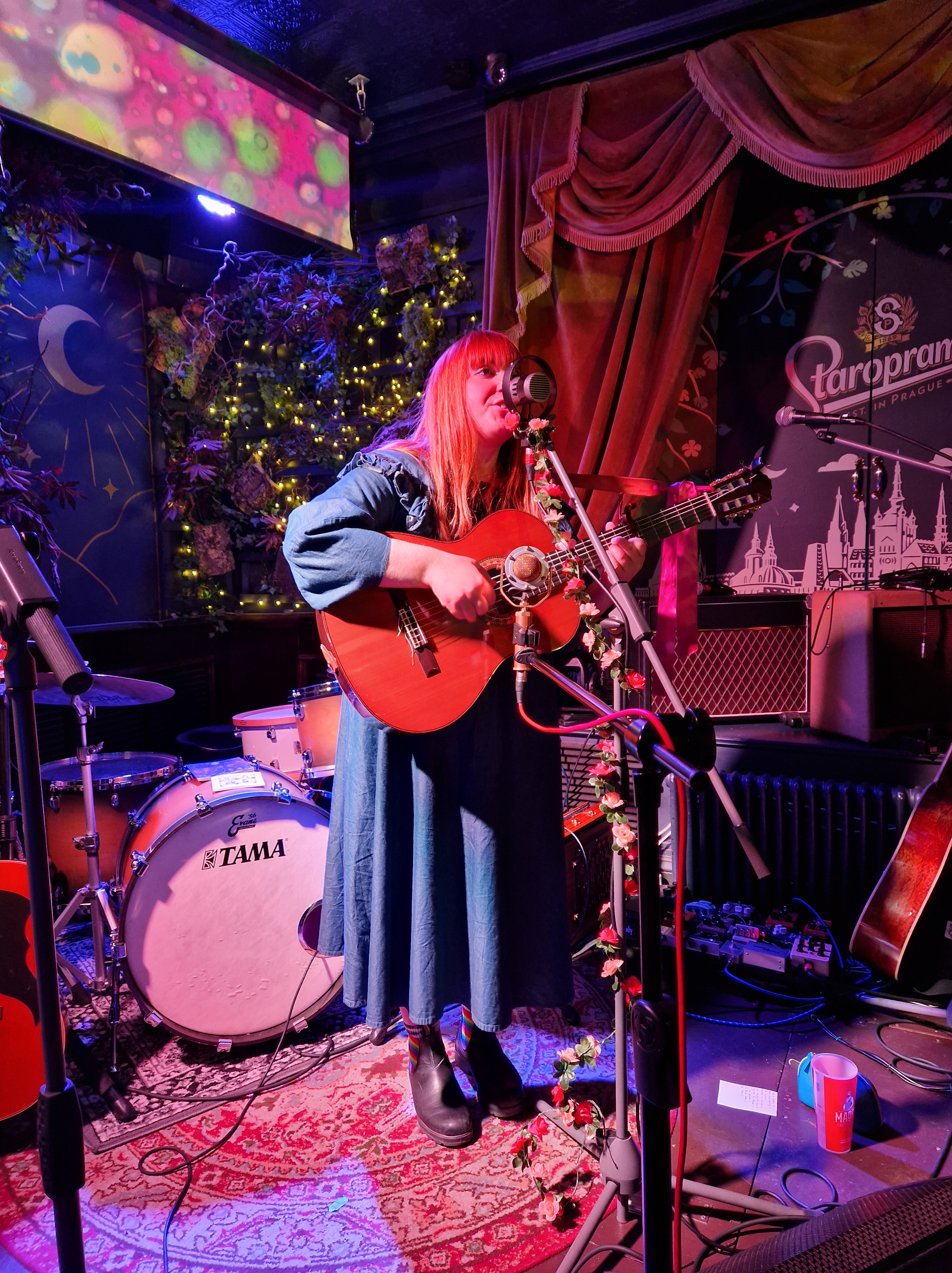
Bity Booker
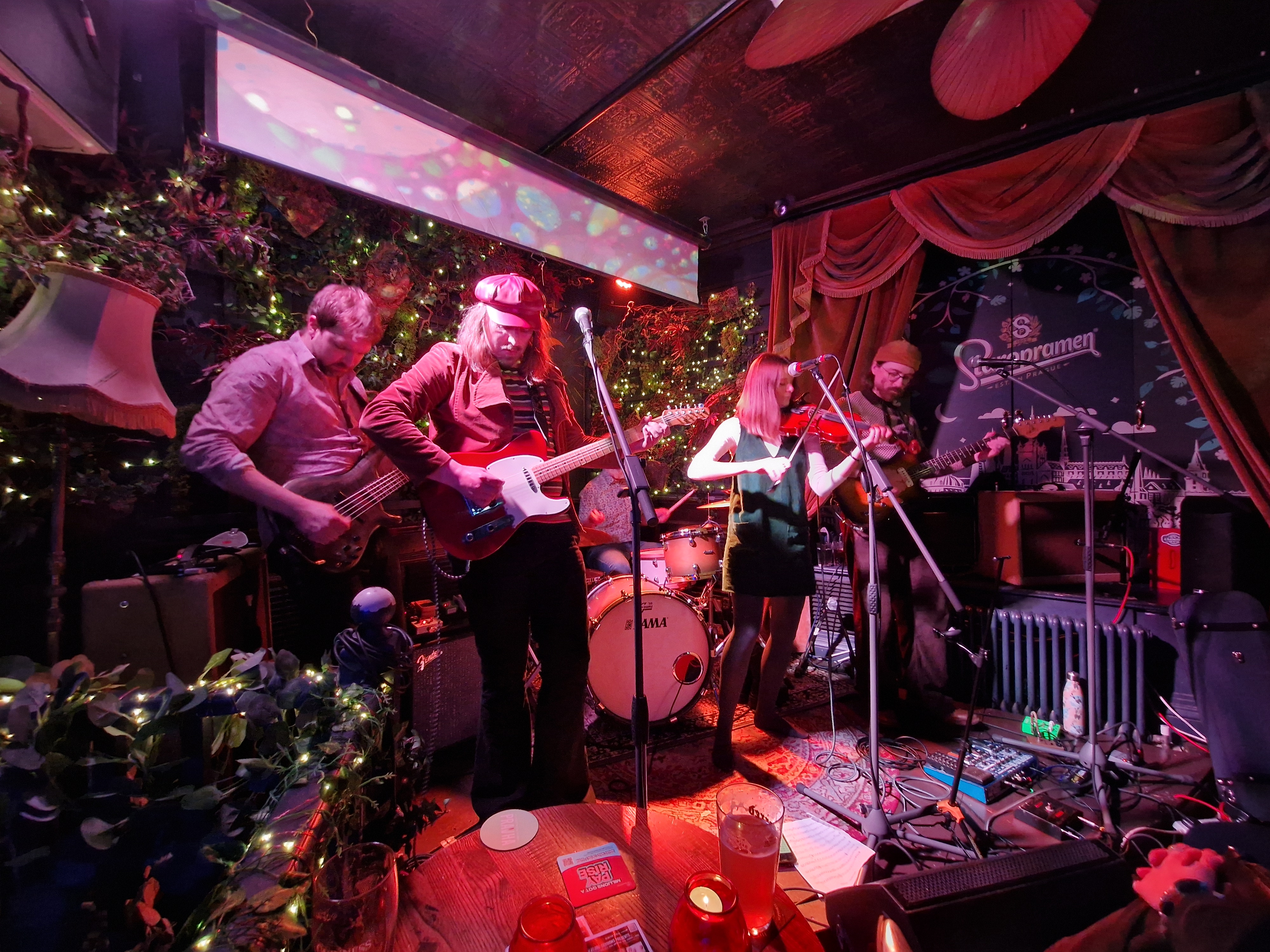
For Green Diesel, the evening provides a welcome opportunity to showcase material from the new album alongside some older favourites. There’s well-received renditions of ‘Onward the Sun!’ the album’s title track, and ‘Ring The Hill’ another superb song from the album. Ellen Care’s vocals are utterly perfect for material of this type, combining just the right amount of sweetness and menace as she lets these folklore-inspired stories unfold, backed by some psych-folk guitar-wizardry, a powerful rhythm section and her own stunning fiddle playing.
Green Diesel have never been averse to a bit of folk horror themselves, of course, and tonight’s set includes the band’s cover of ‘Maypole’ from The Wicker Man soundtrack, sung by lead guitarist, Matt Dear, and given a suitably-ominous sounding Green Diesel makeover. The band even throw in a couple of Morris tunes which comprise the instrumental segment of the new album, again given the Green Diesel treatment: heavied up and performed in minor key. Superb stuff!
Green Diesel
Green Diesel just seem to get better and better with each year that passes. And with two impressive support acts it made the trip to Brighton and the never-knowingly-reliable late train back to Hastings well worthwhile.
Ahead of the release of their fifth album Onward The Sun! which comes out on 25th April, I talk to Greg Ireland of Faversham-based folk rock band, Green Diesel.
We’ll move on to the new album in a bit but let’s start right at the beginning. Tell us how Green Diesel came about.
Well, it seems like a very long time ago now. I think we’ve probably graduated away from being a young new folk band. So, I guess in some ways it’s a continuation of the band I was in when I was at school. I played in a band with some of the guys who are still in the band today. It’s a completely different group, but it had the same name. And that kind of fell apart as school bands do. And we would just do an occasional gig here and there, where this ever-revolving cast of characters would play some covers that we liked at a local festival. And we could never think of another name, so we just kept going! And then I guess around 2009, that sort of time, I’d kind of gone fairly heavily down a kind of Fairport-esque path.
So, was that a departure from the original incarnation of Green Diesel then?
Well yes and no. We’d always kind of played vaguely rootsy music. So, we did some blues stuff, we did Neil Young-style songs and The Band. So, it wasn’t a complete 180 – but certainly the idea of doing music based around traditional music had been something that had been percolating in my head. And I managed to convince the other guys, again for one of the local festivals: “Oh, let’s get a violin player and as one of our numbers, we’ll do a set of tunes in the kind of classic Swarbrick style.” Which they were on board with. I think I’d dragged them along to a couple of Cropredies by this point, so they weren’t completely against the idea. So, we got Ellen (Care) in to do that and that went well and I took that as a good jumping-off point: “Oh, let’s go down this path.” And that became more of a serious band. And I started writing songs. A couple of the others had started bringing things in. We took the plunge and we got found on the street by Roger Cotton, who was a producer who liked us and said, “Do you guys want to come and make a record?” And so we did and that was our first album, Now Is The Time. And somehow – there have been quite a few people in and out of the door over that time – we’re still here today.
And when you first put the band together then, did you have a clear idea of the sound you wanted to go for from the very start? Because let me just share this. I’ve got a theory about folk rock in that while the folk element can be fairly timeless, delving back centuries, the rock element usually reflects what’s contemporary at the time in terms of rock music. That was certainly the case with Fairport in the late 60s and early 70s. I would argue bands like Oysterband as well very much reflected the post-punk era in the rock element. But clearly you didn’t go for a sort of millennium-era indie vibe or anything like that. You delved back.
I think we’d always had that kind of retro taste in music. So, certainly there was always elements of that kind of late ‘60s, vaguely psychedelic rock. But I think when we started off, we were playing much more acoustic music. Not always but I rarely played an electric guitar. And although we probably weren’t vibing off what they now call indie sleaze (and at the time I called ‘horrible music without a tune’) – there were a lot of bands around at the time, like the Decemberists who were a huge influence on us. And early Arcade Fire. We just caught the beginnings of what came to be termed ‘new folk’ and so there was an element of that in there as well.
So, I wouldn’t say it was completely “we just want to go retro”. But then, equally, I grew up listening to Britpop-type music, which always had that very ‘looking-back’ element to it. So, I guess we were the start of that musical generation who just sort of had everything – who grew up listening to their parents’ music and then had their own music. And the big genrefication that really lasted up to the early ‘90s was just starting to break down a bit. I think you see it more today with younger people who will listen to everything, you know, encompassing Disney soundtracks, to Steely Dan, to actual contemporary pop stars – which you’ll have noticed I haven’t been able to name any of! But I think guys our age were maybe at the beginning of that kind of change in music consumption that we see today, possibly.
Yeah, I think I think that’s fair. I think I did my own sort of 1980s teenage version of a Spotify playlist, which was just going to second-hand shops and buying ‘60s and ‘70s albums incredibly cheaply and discovering music that way. So, yeah, I think that’s right.
And then moving on, there’s been quite a gap between this new album, Onward The Sun, and the previous album, After Comes the Dark. Can you give us a quick update on what’s been happening in Green Diesel since the last album came out?
Yeah, in some ways it’s an even bigger gap than it might seem now. Because although After Comes the Dark came out in 2021, it was predominantly written and recorded in late 2019/early 2020 and then got stuck by COVID so we could never finish it. The material on that album feels very old, not necessarily in a bad way, but it really feels very different. So, I guess quite a lot has happened since then. Ellen’s had two children, which has somewhat made progress perhaps run a bit slower than it might otherwise have done. We’ve got a new drummer in. We had Paul (Dadswell) on the last album, circumstances took him elsewhere in life. We were very lucky to very quickly find Ben Love, who is on duties for this album and he’s been a fantastic addition. So, there was a lot of just gathering together of material. And I think one of the big things about this record that maybe is different to some of the others, it grew a lot more out of just jamming and playing around with ideas. I think in the past, it’s very much been the writer – be it me or one of the others – coming in with a song and, not everything charted out note for note, but a pretty good idea of “this is how I want it to end up”.
But this one, partly because we had long periods of time where Ellen wasn’t able to participate directly for children reasons, basically the four of us were bored. We quite liked to play something even if we weren’t able to get out and gig as much as we might have wanted to. And particularly that post-COVID period where you were able to do things again, it was a nice novelty to get together in a room and just make some noise.
So, there’s quite a few songs on this record that have grown more out of that. They’re kind of longer and a bit looser, maybe structurally. And then Ellen had a second child so we had the backings of the songs down and then we took a break. What I call her maternity leave. Then came back to it. So, it’s just a lot of playing. And I think it was particularly good when Ben Love came in on drums because it meant very quickly, we sort of found our groove, literally. It gave us a really good chance to work up that material. And I should say as well, Paul put in a lot of work on some of the songs. There were, I think, two or three that have been part of our live set now for two or three years. So, it’s very much been a group effort in that sense, which I really like about it.
So that accounts for some of the longer instrumental sections in some of the songs, which I know you’ve really gone for on this album?
Yeah. I think, jumping back to one of your earlier questions, we’ve got a lot heavier as a band over time. And that sort of lends itself to that kind of sonic exploration and just jamming it out a bit. And partly the way that our tastes have gone. I think still rooted around songs that work as songs. We write in a very hook-led way. But yeah, just that bit of freedom to keep going, I quite like.
Yeah, I like what you’ve done and, as you say, without losing the essential element of the song. I mean, some bands can jam so much that the actual purpose of the song is lost. You haven’t done that.
Yeah, we haven’t got to Grateful Dead so far. Who knows what comes next!
What do you want to tell us about the new album and some of the songs on the album?
So it’s nine tracks this time and there’s a couple of traditional pieces on there, but they’re predominantly from within the band. I’ve written some, Ben Holiday on bass wrote one, Matt on guitar has written one and we’ve got a cover as well. There’s a cover of ‘The Maypole’ song from The Wicker Man soundtrack, which Matt bought in. That was quite good fun to work on.
It does seem a very good fit for Green Diesel.
Yeah, that soundtrack as a whole has always been a big, big influence for us. So, it kind of seemed right to go there. We haven’t done a lot of covers, traditionally, so it was quite an interesting challenge.
Yeah, so there’s a good variety of writers there. I wouldn’t say there’s a theme to the album, but it kind of builds on where we were going with After Comes the Dark. Although the majority of the songs are original, they’re very much rooted in a traditional folk idiom. And there’s a lot of folk-lore. The weirder end of folklore but I suppose the term that’s popular at the moment is folk horror. And that kind of really ticks quite a lot of our boxes. So, there’s some bits about witchcraft in there and some of the traditions around potion-making. And while I say it’s darker, I think there’s a kind of optimism there as well. Very rooted in the natural world and what we see and what we experience. And then we’ve finally managed to do our Moris On bit because the instrumentals are two Morris dance tunes, which is something that me and Ellen have both been keen to do for a while. And we’ve done that in our own way. It kind of wanders off a bit in the middle and, you know, bringing some of our – those of us who have them – slightly proggish leanings. So just to really, really sell it to the hipsters, it’s Morris dance music mixed with progressive rock – because obviously that’s a pretty big thing!
They’re so evidently Morris tunes from the moment you hear them, but yeah, they’ve been given the Green Diesel treatment so it definitely fits in with the album as a whole.
Yeah, I think I’d probably describe it as quite a confident album. It’s the album of a band who kind of know who they are. That partly comes from just playing together a lot, but there’s a real core strength there. I suppose it’s the one I feel, so far, that we’ve done that sounds most like us. It feels very much like everything’s been developing up to this point to, to get to where we are in 2025.
And on the live front, you’ve got some gigs coming up in Kent and Sussex. And I’m hoping to get to the Brighton one. But where I would really like to see you would be on the main stage at Cropredy. I think you’d go down a storm. And when I interviewed Dave Pegg, he told me that they’re not able to have the really big names, the Brian Wilsons and the Alice Coopers that they’ve had, because of the financial constraints that they’re now facing. They have downsized the festival to make it more financially viable so it could be the perfect opportunity. I think you would go down an absolute storm.
That’s what I’d love to think. So, if Dave’s watching this, then come and get me! Back when my brother was still in the band and we were at I think the 2007 Cropredy, that was always the goal. Unfortunately, the goal was to do it by 2014 so we’ve missed the mark a little bit there. But we’re always open to offers!
Well, let’s see, it would be good. Because you have played the fringe, haven’t you?
Yeah, we’ve done the fringe a few times. That’s always good fun. I mean, generally, just, just being able to play to people who are open to listening to what we do is always good. The reality of being where we are in our lives means, unfortunately, we’re not in a position at the moment that we can all jump in the van and go around the country for three weeks. So, we have to be, I suppose, more, selective. And partly financial realities as well. I’d love to go to Europe, but to make it pay – or at the very least cover costs – it’s much more challenging now. And that’s just the reality of it. But, you know, and it’s probably what keeps us going, to be honest, there’s something about that kind of response from people who are listening to music that you’ve created. And it might be the first time they’ve heard it. They might have come to every show. Either way, there’s just a real kind base-level thrill to that.
Fantastic. Is there anything else you want to tell people before we wrap up?
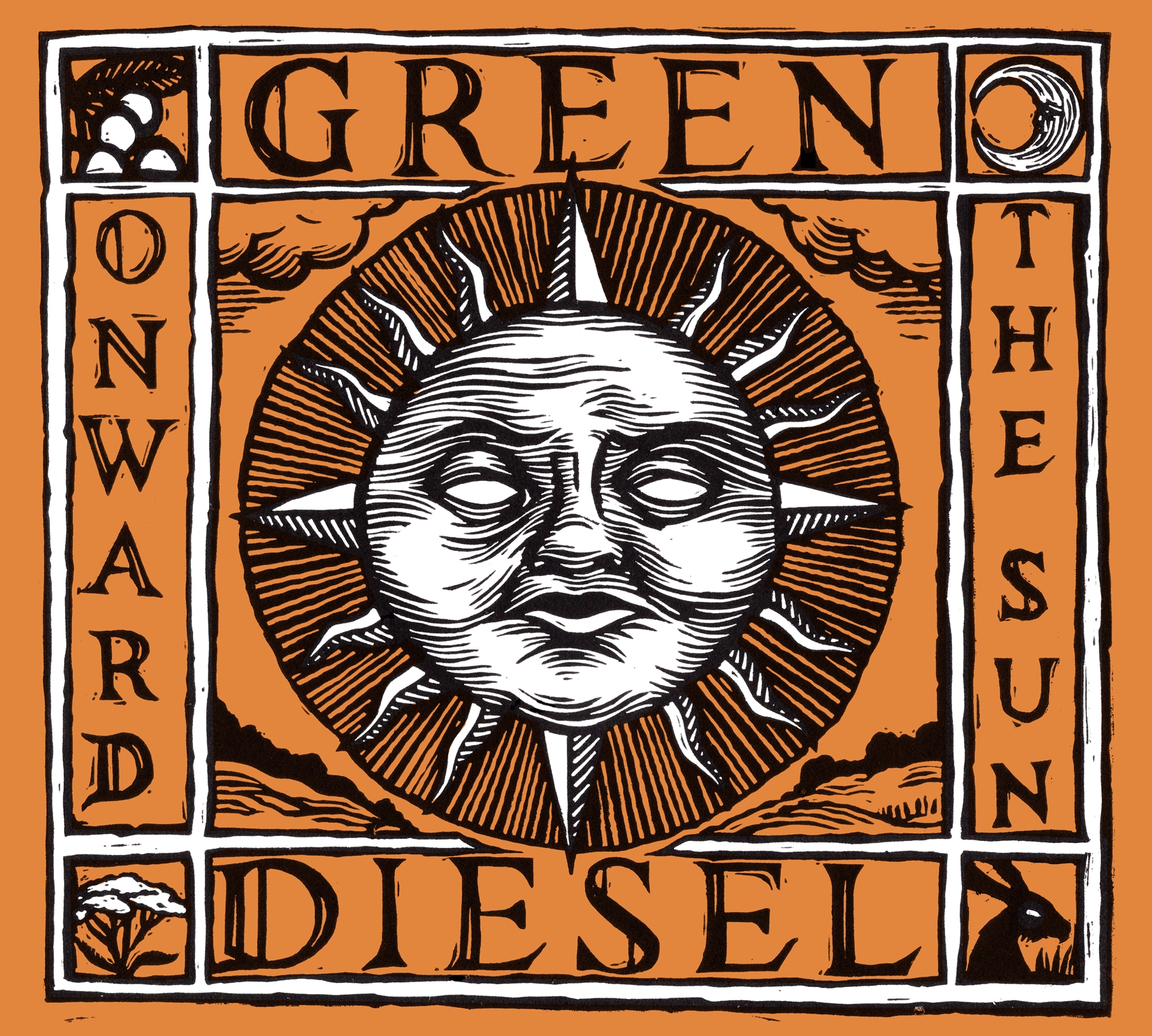
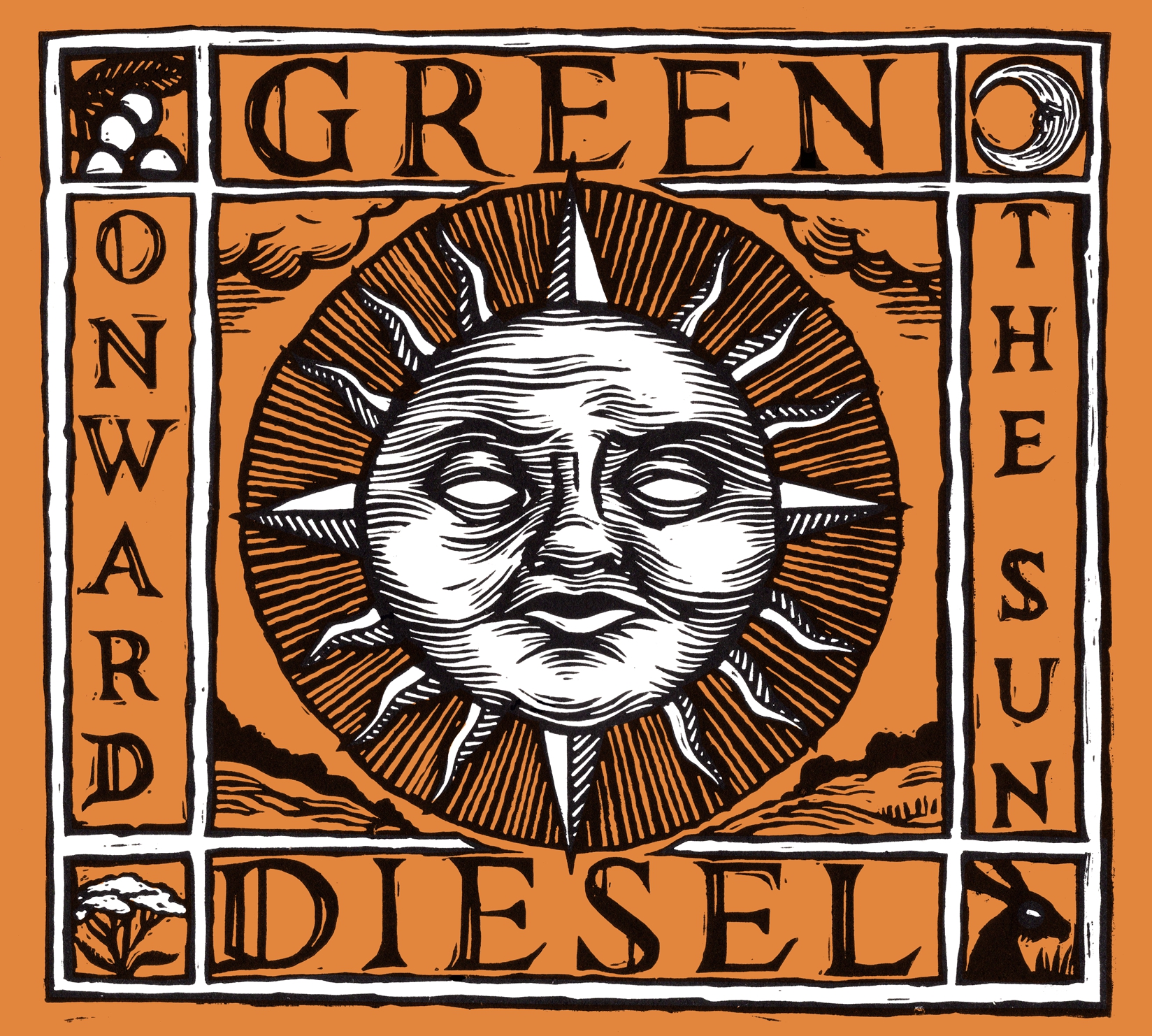
So, the album that we’re discussing is called Onward The Sun. It comes out on 25th of April. It’s going to be available digitally and on CD. That’s it at the moment. Who knows, if demand is there we might look at doing a vinyl version some way down the line. You can pre-order it. If you go to the website, which is greendieslefolk.com, you can order a copy there. It’s got a lovely front cover. It’s made by an artist based in Margate, which is not that far away from us, called Matt Pringle. And I think he’s really got the core of what we’re doing. So yeah, please check us out. We love to reach new people. If you do happen to be promoters for a slightly more mature folk rock band than you would have had a few years ago, then do get in touch because we always love to find new markets. But yeah, please give us a listen and I hope you enjoy it.
Following their critically-acclaimed 2021 album, After Comes The Dark, which saw Green Diesel pick up a slew of enthusiastic reviews for what became their best-selling release to date, the Kent-based folk rock band are finally back with a brand-new album.
Onward The Sun! is the band’s long-awaited fifth album and is scheduled for release on 25 April. The nine-track album features six newly-composed songs inspired by themes such humanity’s connections with the natural world, ancient folklore, the persecution of witches and Shakespeare’s Henry IV, as well as fresh interpretations of much-loved Morris tunes, a modern take on a traditional murder ballad and a cover of a Paul Giovanni composition from the cinematic soundtrack to The Wickerman.
Discussing the single, ‘Ring The Hill’, guitarist, vocalist and multi-instrumentalist, Greg Ireland, comments:
“Based on the Cornish legend of the white hare. It is thought that the creature is the spirit of a broken-hearted lady determined to haunt her faithless lover to the grave. This also got me thinking about the historical connections between hares and witchcraft – the chorus lyrics are an adaptation of some of the words used by Isobel Gowdie at her trial (she was tried as a witch in Scotland in 1662 and her testimony survives). The song follows the progression of our heroine from broken-hearted to vengeful and it seemed appropriately prog to divide it into two parts. The tune for the second part is a variant of the traditional tune for Dives and Lazarus.”
Showcasing Green Diesel’s masterful distillation of folk, rock and psychedelic influences, together with their usual exemplary musicianship and trademark vocals, the album was recorded at Squarehead Studios in Newington, Kent with producer Rob Wilks (Smoke Fairies, Lianne La Havas, Story Books) once again at the helm.
Green Diesel are:
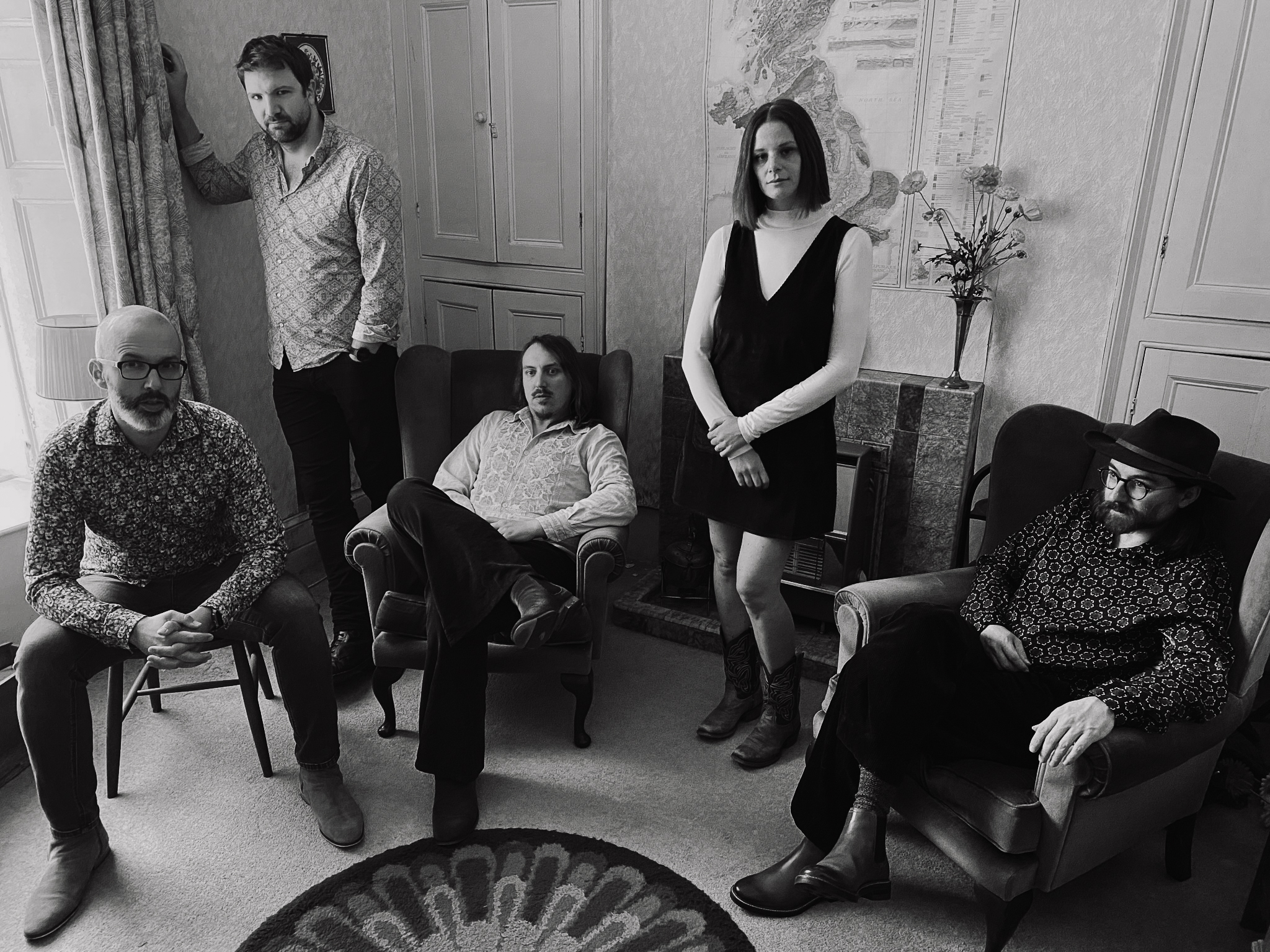
Ellen Care – violin/vocals Matt Dear – lead guitar/vocals Ben Holliday – bass Greg Ireland – rhythm guitar/mandolin/dulcimer/vocals Ben Love – drums/percussion
About Green Diesel:
Hailing from Faversham in Kent, Green Diesel take their inspiration from the depths of English folk lore and legend, and the classic folk-rock sound of their predecessors: Fairport Convention and The Albion Band. Blending violin, mandolin and dulcimer with electric guitars and drums, Green Diesel’s sound is born from a love of traditional English music and a desire to bring it to a modern audience.
Green Diesel’s first three albums, Now Is the Time (2012), Wayfarers All (2014) and The Hangman’s Fee(2016) all won praise for the quality of song-writing and musicianship. A major turning-point, however, came with the band’s last album After Comes The Dark (2021). The album entered the UK Folk Top 40 on release and saw Green Diesel nominated for FATEA Music’s ‘Group/Duo of the Year’ award and also saw the band pushing their sound further, bringing in elements of psychedelia and progressive rock whilst remaining rooted in their folk upbringing.
Green Diesel – What They Say:
“A cornucopia of sounds that blends classic folk-rock, prog and elements of stately Early Music into their own distinctive style’” – R2 Magazine
“4/5 stars – ‘(Green Diesel bring) a psychedelic, progressive edge to their interpretations of both traditional and original material” – Shindig!
“Evocative of early Steeleye Span and veined with prog-rock and influences drawn from early Genesis and the 70s Canterbury scene’” – Folk Radio
“Green Diesel has skyrocketed into my top few bands” – FATEA
Following their critically-acclaimed 2021 album, After Comes The Dark, which saw Green Diesel pick up a slew of enthusiastic reviews for what became their best-selling release to date, the Kent-based folk rock band are finally back with a brand-new album.
Onward The Sun! is the band’s long-awaited fifth album and is scheduled for release on 25 April. The nine-track album features six newly-composed songs inspired by themes such humanity’s connections with the natural world, ancient folklore, the persecution of witches and Shakespeare’s Henry IV, as well as fresh interpretations of much-loved Morris tunes, a modern take on a traditional murder ballad and a cover of a Paul Giovanni composition from the cinematic soundtrack to The Wickerman.
Showcasing Green Diesel’s masterful distillation of folk, rock and psychedelic influences, together with their usual exemplary musicianship and trademark vocals, the album was recorded at Squarehead Studios in Newington, Kent with producer Rob Wilks (Smoke Fairies, Lianne La Havas, Story Books) once again at the helm.
Guitarist, vocalist and multi-instrumentalist, Greg Ireland, comments:
“This is an album born out of playing together a lot! Most of the pieces were developed through a lot of sessions together and really stretching out the jams into some of those elongated pieces we play live. We then recorded the main tracks all live together in one room, no click tracks. It’s really a celebration of what this band is and the sound we make together.”
Green Diesel are:
Ellen Care – violin/vocals Matt Dear – lead guitar/vocals Ben Holliday – bass Greg Ireland – rhythm guitar/mandolin/dulcimer/vocals Ben Love – drums/percussion
About Green Diesel:
Hailing from Faversham in Kent, Green Diesel take their inspiration from the depths of English folk lore and legend, and the classic folk-rock sound of their predecessors: Fairport Convention and The Albion Band. Blending violin, mandolin and dulcimer with electric guitars and drums, Green Diesel’s sound is born from a love of traditional English music and a desire to bring it to a modern audience.
Green Diesel’s first three albums, Now Is the Time (2012), Wayfarers All (2014) and The Hangman’s Fee(2016) all won praise for the quality of song-writing and musicianship. A major turning-point, however, came with the band’s last album After Comes The Dark (2021). The album entered the UK Folk Top 40 on release and saw Green Diesel nominated for FATEA Music’s ‘Group/Duo of the Year’ award and also saw the band pushing their sound further, bringing in elements of psychedelia and progressive rock whilst remaining rooted in their folk upbringing.
Green Diesel – What They Say:
“A cornucopia of sounds that blends classic folk-rock, prog and elements of stately Early Music into their own distinctive style’” – R2 Magazine
“4/5 stars – ‘(Green Diesel bring) a psychedelic, progressive edge to their interpretations of both traditional and original material” – Shindig!
“Evocative of early Steeleye Span and veined with prog-rock and influences drawn from early Genesis and the 70s Canterbury scene’” – Folk Radio
“Green Diesel has skyrocketed into my top few bands” – FATEA
Onward The Sun! – Track-By-Track:
1. Venus Tree (Ireland): ‘Yarrow (the ‘pretty flower of Venus’ tree) is an interesting plant…! The song is perhaps a slightly twisted take on a love song, based around some of the ways in which yarrow can be used for what you might call ‘love divination’ whereby sprigs of yarrow would be placed under the pillow of a young woman who would then dream of her true love to be. One popular rhyme for instance reads:
‘Yarrow sweet yarrow, the first that I have found And in the name of sweet Jesus, I pluck it from the ground As Joseph loves sweet Mary and took her for his dear So in a dream this very night my true love will appear!’
Like all good folk stories there’s a twist in the tale of course. The yarrow plucked must be plucked from the grave of a young man dead before his time…’ Greg
2. Hotspur (Holliday): ‘Hotspur is the nickname given to Henry Percy, who was the 2nd Earl of Northumberland and led a rebellion against Henry IV. This rebellion culminated at the Battle of Shrewsbury, which is depicted in Shakespeare’s Henry IV. The night before the Battle, Hotspur is told that his various allies who agreed to fight alongside him aren’t turning up, but (in the play) he still delivers a fiery speech and declares they will go ahead and attack the ‘usurper’ Henry IV no matter what. The song tries to capture his mental state at night before the battle – he can’t sleep, he’s scared, but he knows he has to ‘front up’ and be the brave, fearless, fiery Hotspur that everyone knows.’ Ben
3. Huntress Moon (Dear): ‘This song is a spell of transformation. I’d been reading about Paracelsus, the history of alchemy, the occult, and the persecution of witches during the Reformation. I wanted to write something that drew on this symbolism, using the language of magick to craft a lament, an impossible dream, a transcendent fiction.’ Matt
4. Princess Royal/Dribbles of Brandy (trad arr Green Diesel): ‘Two English folk tunes learnt from our trusty companion Pete Cooper’s book of English Fiddle Tunes. I’ve played Princess Royal with my dad for years – there’s actually two different versions of this tune: one in a minor key and one in a major key. The minor one seemed to fit our style better! The second tune is called Dribbles of Brandy and was one we used to have on setlists during our wild misspent youth before it took a quiet retirement. It seemed time to resurrect! This one always puts me in mind of late night gigs at Broadstairs Folk Week fuelled by too many ciders…’ Ellen
5. Hymn For The Turning Year (Ireland): ‘Written in the depths of the Covid winter of 2020 when, amidst all the chaos in the human world, the Earth was just doing the same thing it does every year. The verses are individual snapshots of things I witnessed on my mandated solo walks and a reflection on ultimately how powerless we are against the natural world, a feeling which seemed to be mirrored on a human level by the situation in the world at the time.’ Greg
6. Maypole (Paul Giovanni): ‘A cover of one of Paul Giovanni’s compositions from the soundtrack to The Wickerman. The soundtrack has long been a favourite of mine, it was and remains a big influence on my songwriting. This song always struck a chord with me, and I’d always wanted to develop it into a longer song. It seemed to encapsulate my morbid attraction to the Summerisle cult, a return to a cyclical view of time, death and life entwined.’ Matt
7. Onward The Sun! (Ireland): ‘In some ways the sister song to Hymn… a frequent walking route of mine was up Golden Hill in Harbledown, just outside Canterbury. There’s a particular bench there where you can just sit and look across the hills. The sun is such a part of folklore and folk imagery and I suppose that was in my mind on some of these walks – musing on our temporary status in the world. We’ll all shuffle off sooner or later but the sun will go on and on. Hopefully…’ Greg
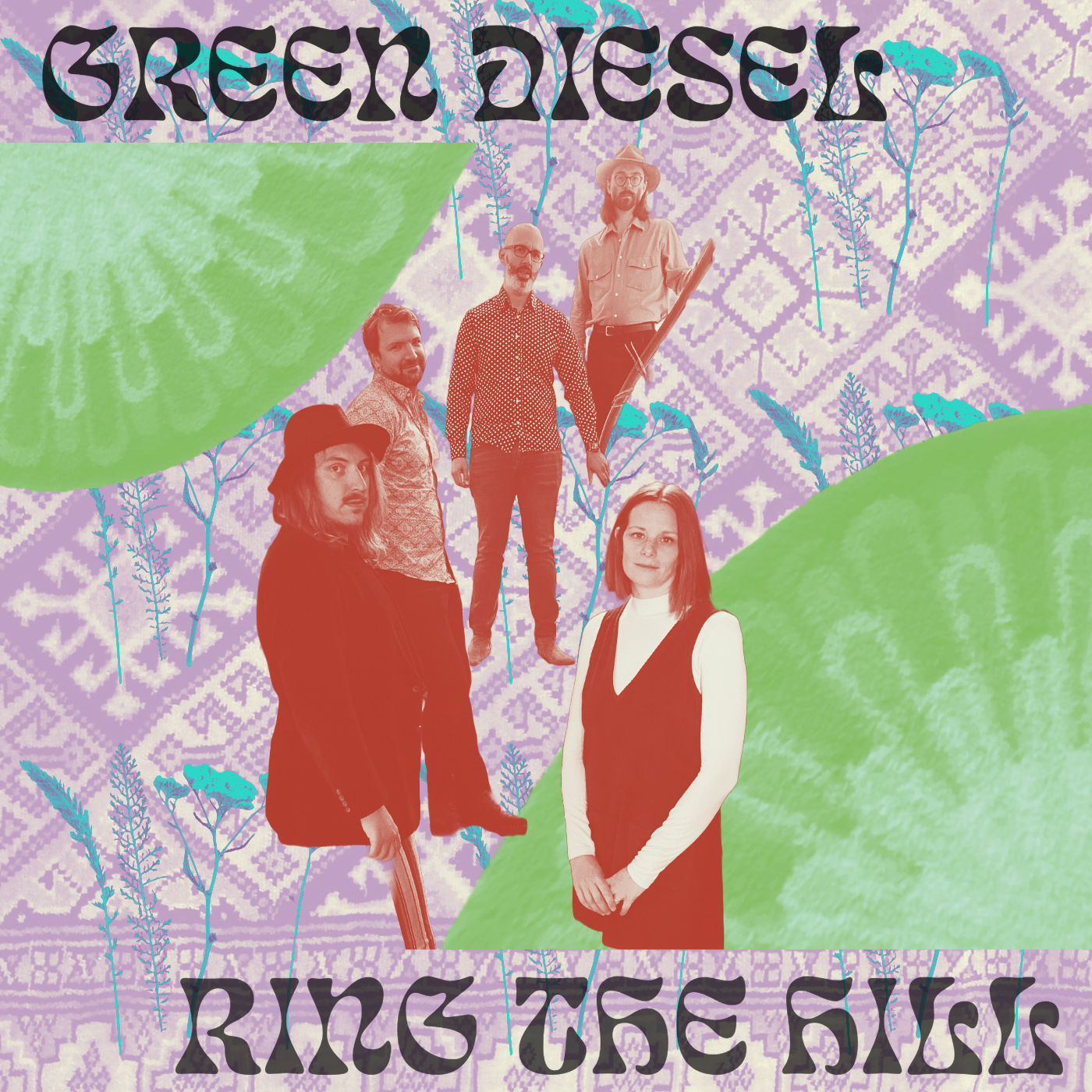
8. Ring The Hill (Ireland): ‘Based on the Cornish legend of the white hare. It is thought that the creature is the spirit of a broken-hearted lady determined to haunt her faithless lover to the grave. This also got me thinking about the historical connections between hares and witchcraft – the chorus lyrics are an adaptation of some of the words used by Isobel Gowdie at her trial (she was tried as a witch in Scotland in 1662 and her testimony survives). The song follows the progression of our heroine from broken-hearted to vengeful and it seemed appropriately prog to divide it into two parts. The tune for the second part is a variant of the traditional tune for Dives and Lazarus.’ Greg
9. Wild Wild Berry (trad arr. Green Diesel): ‘A traditional song that appears to share similarities with the Lord Randall ballad. Collected from the traditional singer Ray Driscoll who apparently learned it in Shropshire after being evacuated there during the war. My own introduction to the song came from the version by the Furrow Collective. I particularly liked the way that this version distils the essence of the long Lord Randall ballad into three powerful verses. And, of course, I love the poetic ending of the murderer being hanged with the deadly nightshade entwined in her hair! Musically I had been listening to a lot of drone-based composers like Alison Cotton and John Cale and wanted to try and extract the maximum mileage we could from one chord on this one’. Greg




 Darren's music blog