Tag Archives: interview

Behind the mask: interview with Thunderstick’s Barry Graham Purkis ahead of new studio album

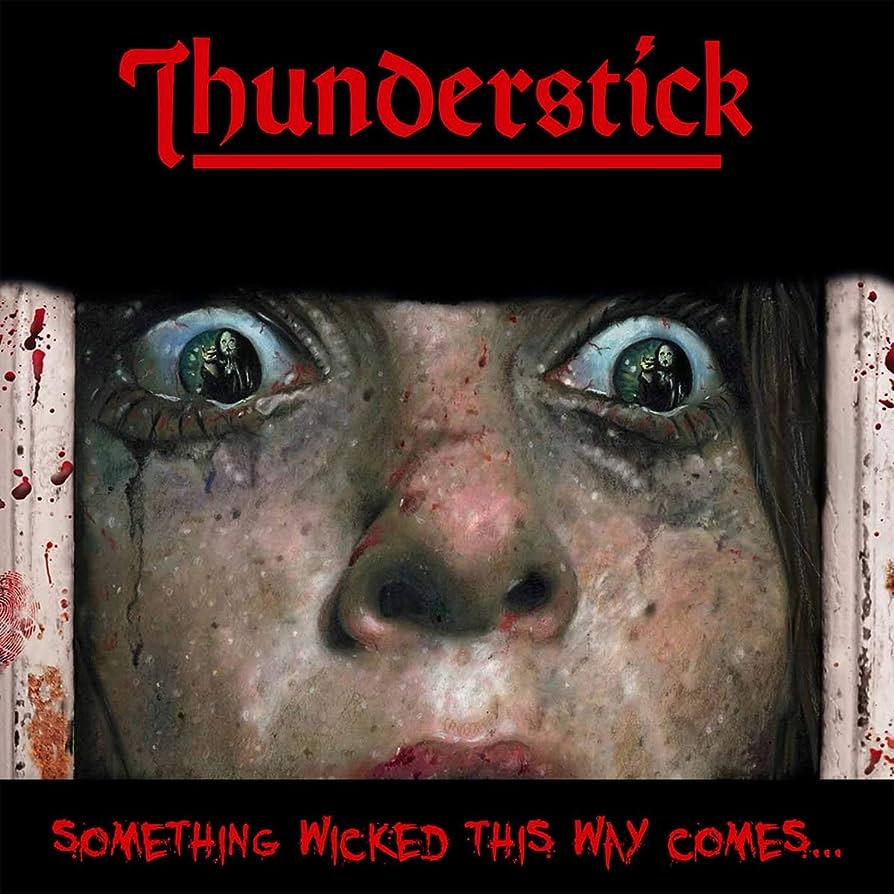
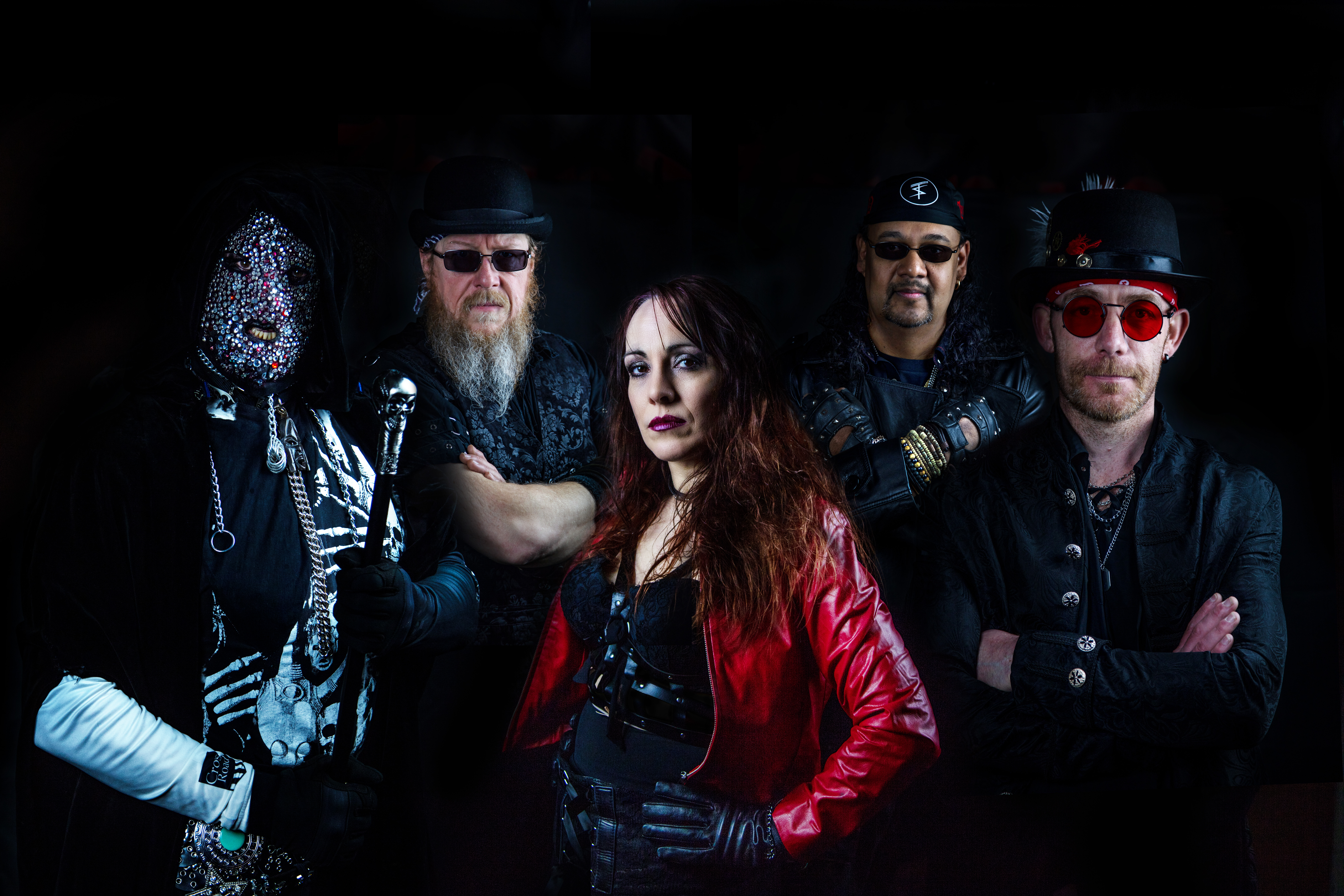
NWOBHM legend, Barry Graham Purkis, resurrected his Thunderstick persona back in 2017 and released a critically-acclaimed album, Something Wicked This Way Comes – the first all-new Thunderstick product in thirty years. The revitalised band has since proved a popular live draw at festivals. Now they’re back with a new single and a new studio album set for release in October 2023. Here, Barry updates me on what’s been happening.

You were one of the pioneers of the New Wave Of British Heavy Metal (NWOBHM) back in the late 70s. Apart from one or two obvious examples it’s an era that tended to get overlooked. Do you think the New Wave Of British Heavy Metal is finally starting to get the recognition it deserves?

Yes and no… I often get asked, “Did you think it was something special at the time?” Well, the answer is no to that because it was very much a kind of work-in-progress. It was after we’d had total domination by punk. The record companies were only signing punk bands. And a lot of them got their fingers burnt through doing so because there were only a handful of bands that were really iconic and of their time. We all know the Sex Pistols – absolutely amazing album, Clash, Siouxsie & the Banshees, there are a number of them. Whereas a lot of other bands, there was a lot of dross as well. But because of that domination, nothing was happening with any other musical genre. And there was this underground movement of all these bands that were learning to play as a throwback against punk, because of the simplicity. Punk was all about a feeling, wasn’t it. It wasn’t so much about musical proficiency. It was more about an attitude and everything else that it signified. And so be it. Because before that we had the self-indulgence of the prog rock bands that would go for ten-minute drum solos. And then you’d have a five-minute bass solo and then a keyboard solo and it was just ridiculous. So there was a backlash against that. But there was also a backlash against punk – the simplicity of it and that a lot of these bands hadn’t even learnt how to play their instruments. And so there were a lot of metal bands or hard rock bands at the time that actually had.

So there were quite a few bands around but they didn’t have any exposure. And then, bit by bit, they started emerging. Samson, the band I was playing with at the time obviously had a great stake in that because we were one of the first bands to release an album that was considered to be New Wave Of British Heavy Metal. And that was the Survivors album. We also had a management company that were prepared to put money into that band and so they financed what was known as the Heavy Metal Crusade. Paul Samson knew a band from south London that he was good friends with because we were looking for support acts to come out with us. He recommended a band called Angelwitch and so they were put on the bill and we were still thinking about a third band and I said, “Well the band I played with prior to joining Samson was a band called Iron Maiden. Would you be interested in them?” And he said, “Yeah, sure.” So that’s how that came about.

One of the venues that we played at regularly was a place called the Music Machine in Camden in London. Quite a sizeable venue and when we played that – around 1979-1980 – there was no social media, there was hardly any VHS let alone DVDs and there were no real rock magazines. They were all black and white weekly music rags – Sounds, Melody Maker, New Musical Express etc. One of the main contributors to Sounds, a guy called Geoff Barton, came down to have a look at this gig with Samson, Iron Maiden and Angelwitch. And he went away and wrote up his piece and that was the very first time when he coined the phrase ‘This is the new wave of British heavy metal’. I mean up until then it wasn’t even called heavy metal, it was called rock – hard rock. And because I was doing the Thunderstick thing with the mask, I got on the front cover of Sounds and they said, ‘Is this the new face of heavy metal?’

And that’s how it came about. And now, let’s move forward up to these days and there are so many bands who like tag themselves in on NWOBHM and say, “Oh yeah, we’re a NWOBHM band.” A lot of which you can totally disregard because it was only a handful of bands at the time that were there and doing it. A lot of publications at the time thought that bands such as Def Leppard were part of that movement. I think they’ve distanced themselves suitably enough now but there are the bands that are still trading on that such as Tygers of Pan Tang and Diamond Head. And I guess it’s the same for me. Whenever we play, I always seem to get the phrase New Wave Of British Heavy Metal coming up. Which makes me laugh because I’m not heavy metal at all. My band, Thunderstick, are purely hard rock, pushy, punchy rock. We’re not metal by any stretch.

The Thunderstick persona that you developed, that was captured on that cover of Sounds, it brought an element of that very theatrical style of rock from the mid-70s to a new generation in the early 80s. Was that a conscious decision?

Very, very much so. The way the mask came about was the simple fact that there weren’t very many glossy colour magazines that catered to a certain genre or anything like that. And when they did start bringing out posters of bands, you would always get the singer at the front strutting his stuff, you would get the guitarist pulling all the stereotypical poses and then you would get the top of somebody’s head and a row of cymbals. And that was the drummer! Now there were certain drummers that were obviously iconic. There was Keith Moon and Ian Paice and John Bonham and drummers of repute such as that. But I’m talking about grassroots bands. Nobody would really be able to tell you who the hell the drummer was. So I went ahead and I created a faceless drummer. And in doing that I then came up with the name Thunderstick. Now the theatricality came in with that image. Well it kind of wrote itself. Because the moment I put the mask on, that’s it – I kind of became that person.

You stopped being Barry and you became Thunderstick while the mask was on.

Exactly! And also the fact of my love of theatricality in bands. To this day I still worship at the altar of Alice Cooper because I just love that. The Tubes was another band that I really, really used to love going and seeing when they toured over here. So it’s always been paramount in my thinking. Always.

Who are your favourite artists and who have been the big influences on you? You’ve mentioned a couple. Are there more?

Well there are but the main thing about my musical taste is that I like to regard it as very eclectic. There’s bands like The Residents. I used to love them. Very, very strange band. But then, as I’ve just mentioned, I would love Alice Cooper. I would love hard rock. I also loved experimental music like Brian Eno, for example. As well as that, I’ve always loved female vocals. So, yeah,  I have got a very eclectic taste. As regards drumming, very strange influences. Obviously, I’ve mentioned Keith Moon. John Bonham I loved and it’s only at an older age as I am now that I can appreciate exactly what he did.

So my influences at the time, there was a guy called Guy Evans, who played for a band called Van Der Graf Generator. Another one was a guy called Pierre Merlin who played for a band called Gong which I love. I used to go and see them quite regularly – and that harks back to the theatricality in music. And what a fantastic drummer. The hi-hat stuff that he used to do was just quite incredible. Prairie  Prince from the aforementioned Tubes – absolutely amazing drummer as well.

And I just thought they were able to treat the drums as a musical instrument rather than just a rhythm-making machine. And I’ve always maintained that. I can’t abide drum solos. I hate them. I have had to do them in the past, many years ago. With my particular style of playing, I have always tried to put everything I can into the musical arrangement. And so for drum solos I haven’t really got a great deal more to say. All I’m doing is a repetition of what I’ve done within the song anyway. And also the fact, technically, I’ve never had a drum lesson in my life. I literally learnt to play from the heart and that’s my style. I really wish that I could be more technical and I see these young kids of 8 or 9 and they sit down behind a drum-kit and they’re just wizards and they hardly break a sweat and I think how the hell do they do that? Because it’s something that I’ve never been able to do. In some ways I’ve found it frustrating and I suppose to a certain extent it’s held me back. But the other side of the coin is that I bring something to my style of playing that is unique. And I hope I am one of those drummers that when you hear them for the first time you know exactly who it is. And you can go, “That’s Thunderstick!”

So when you left Samson did you have a very clear idea about the kind of band you wanted and the kind of music and image you wanted?

Yeah.. there was  a stop-gap between Samson and Thunderstick. That stop-gap was Bernie Torme’s Electric Gypsies. I was the drummer with them for a little while and we did selected dates. I also did a Capital Radio session… But then some of the press jumped on the fact that I was ‘Thunderstick unmasked’ and that became a bit untenable so it was time to move on. Bernie didn’t want any of that. It was Bernie’s band obviously.

So I then started putting together Thunderstick and, yes, I was totally focused on what I wanted from it. I used to even design the lighting – nine times out of ten it was design of lighting that I could ill-afford – but I used to design the lighting, the choreography, and just anything and everything regarding Thunderstick, as well as being the songwriter. I had a clear-cut idea of what I wanted it to be. I also immediately thought that I wanted a female vocalist. There were two reasons for that. One being the fact that I always liked writing for a higher register voice. But more so because the Thunderstick image within Samson was very stark. And it was during the time of female emancipation and the women’s lib group were really quite active in what they had to say, and rightly so, but felt that my image was very detrimental to women and belittled women. It didn’t help that we all know the story that there was a guy called the Cambridge Rapist who wore a mask very, very similar and was breaking into women’s homes and raping them which was just horrific. I’ve never viewed the Thunderstick character to be anything but the knock-about character that it was.

Like Alice Cooper and his guillotine…

That’s it. Exactly right. You can read into things that happen on stage so easily and with certain people in their hands it becomes quite an incendiary type of thing. So I thought, you know what, I’m going to put a female vocalist at the front of the stage and then that way if I do get any comebacks from other women I can just say, “Look, go and talk to her.”

And there’s an obvious counterpoint then on stage.

Yeah the ‘Beauty and the Beast’ thing.

In 2017 Something Wicked This Way Comes was the first new Thunderstick album for thirty years, picking up many positive reviews. Were you surprised by the response to that album?

Yes, totally. I didn’t know because I hadn’t put any product out for, as you’ve said, thirty years. Thunderstick had died a death within the ‘80s. The reason behind putting that album out, as you also know, is it was due to Jodee Valentine’s death after her fight with dementia. For those that don’t know, Jodee was an American singer who loved everything English regarding rock bands. Her all-time favourite band was The Who and she came from the States, on the east coast, and had a degree in classical piano and decided that she wanted to just jump on a plane and come to England, home of The Who. So she did just that and in the meantime I’d gone through a few singers because they weren’t right. The first singer was a lovely lady called Vinnie Monroe and then I had another lady called Anna Borg and through one thing or another they and the band parted company. It was nothing acrimonious. With Anna she kept losing her voice and I had to blow out a tour because of that.

So in goes the advert for another vocalist and Jodee came along. My main rule regarding the band was no fraternisation amongst the band because it really doesn’t work. And what do I do? I commit the cardinal sin and I move in with Jodee. So Jodee and I became an item but it was great on stage because we were, as you just said, that counterpoint. We were able to really work off each other. But the music industry being the volatile environment that it is, has had many a relationship that has fallen foul of it and we were just another one. So she jumped on a plane, went back to the States and that was that.

And many, many years later, I read that there was a guy that had been visiting her in a care-assisted home. I had recently remixed all of the early material and put it out on an American label and it was called Echoes From The Analogue Asylum. The reason I called it that was because purely and simply it was of its time and all of the songs were recorded analogue. Digital didn’t exist. So it was the first time that I was able to put it out in a digital format. He got a copy of it unbeknownst to me and he then went and saw Jodee because he was a musician and he would go to these care-assisted homes as a visitor. And he took a copy of the album and played it to her and she didn’t even recognise her own voice. She was just staring out of the window. Which is absolutely terrible. And he told me that she’d been in there for five years before she passed. It was, for me, a very emotional time. Although at that time I’d moved on and I have my wife and I have a daughter and what have you. But there was just so much material there that I thought,  you know what, she would have loved it to actually come out on an album. So that’s what I did. That’s when I went into the studio and the studio found me a session vocalist at the time and she was good enough to be able to put on the album and the rest regarding that album is history.

It came out and it received really, really positive reviews all the way around the globe. And I was just amazed by that. I really was. It was simplistic in its approach because I didn’t have a great deal of money. In fact, I mixed the album in two days, with the engineer. And it was funny because a lot of the reviewers picked up on it and said, “You’ve managed to encapsulate that simplistic late ‘70s, early ‘80s type of NWOBHM sound and projected it into the now. Is that something you actually worked at?” Yes, it was something I worked at but also it was the fact that I had no money and I had to mix it in two days! Which was great, because they picked up on that. That was wonderful and yeah, it received some very good reviews.

And you now have a new studio album coming out in October. Tell us about that.

Well, after the reviews of Something Wicked people were asking why I didn’t have a performing band going out and promoting the music. And it was purely because I hadn’t even contemplated putting a playing band together to be able to do it live. Getting those reviews, I started having to have a rethink. And I started thinking along the lines of, maybe I should put a live band together. And I did. I put a live band together and used a young lady who I’d seen something of in a band that she was singing in and so I approached her. She came with her partner who’s a guitarist and I started putting together a live show to be able to play the material that was on the Something Wicked album. It didn’t work out with them because they were a partnership and without going into too much detail they were promoting their band rather than promoting Thunderstick.

So then we started looking for another vocalist and one of my friends, who also played in a NWOBHM band – the guitarist from More, a guy called Dave John Ross – he came to me and said, “Have you seen this vocalist? She plays for a covers band and she also does solo material with backing tapes.” I was completely taken aback when I listened to her. I thought, oh my god. She had this unique vibrato in her voice and she had never sung in front of a real loud, hard rock band before but she came along for the audition and she blew me away. Completely! And I also hope that we did her. And we got together and she’s been with me a good three years or so. She has great stagecraft and she has an amazing voice. So there was all this material left laying around that I had written in the ‘80s that had only got as far as the demo stage. And I thought, yep, it’s time to do this thing that musicians do of getting in the studio and bringing out another album. With her on it. It was so important for me to get something out with her on it.

Thunderstick live in 2019

So yes, it’s been a long time in the making. I can tell you a little bit about it. There was a lot of material taken from the early days. I also started writing with one of the ex-Thunderstick guitarists, a guy called Dave Killford, who had appeared on Something Wicked as well. And I also started writing with Rex (bass-player with Thunderstick). Thunderstick was, for me, always my baby. Completely. And I used to write the material, I would produce it etcetera, all the way down the line. So, for me to start writing with other people, I found it was quite cathartic for me to actually do that. Because instead of having all the responsibility, all the time, I was able to work off other people and that was really, really good.

So we started writing and I put the drums down in 2019 with the thought that we would release it sometime in 2020. But we all know what happened. We’d just started putting the bass tracks down when it came about that we had to self-isolate and nobody was allowed to get together in a room and it just absolutely decimated my timetable. I then had guitarists, a lot of guitarist that are friends saying, “If you need me to do anything you know where I am.” So a lot of the guitar work is my friends that have recorded remotely and sent all the files in but therein lies a problem because my drums when I put them down, they weren’t done in a recording studio. They were done in a rehearsal studio and I just found that there was so much wrong with the drums. There was spillage onto different mics and there were problems with mics that weren’t connected properly, just one thing after another. Technical problems. And then most of the guitarists that had contributed to the album always wanted to put their effects on it. At the time I should have insisted and said I want a dry signal which enables me to then at a further date when we mix be able to do what I wanted. I thought it was saving time but in the long run it didn’t save time at all.

So, I have a plethora of guitarists on it – but they’re all good friends and they’re all people that I regard highly as musicians and their contributions have been amazing. I have now, obviously, my own live band that continues. Raven has done some amazing vocal tracks on the album. She really has. And where are we now? 2023! And it was only about two to three weeks ago that I actually finished the mastering of the album. It’s a long album. It lasts for about an hour and twenty-five which is really good. I think material-wise, it’s some of the strongest stuff I’ve ever written and my co-conspirators I hope are also pleased with what they’ve put on it so, yeah, I’m looking forward to it coming out.

And you’ve got  a new single coming out later in August?

I said earlier that I needed to get something out with Raven on it. We put out a single called ‘Go Sleep With The Enemy (I Dare You)’ and it was a limited-run which we sold at gigs. So I’ve revisited that because I thought it would be good to have something that represents the album and the way that we’ve moved forward as a band on that album. It is a heavier version of the original track but I think it’s more representative of the way that the album will sound so, yeah, I’m looking forward to putting that out again. I’m looking forward to people’s response on it.

Thanks Barry. Before we wrap up, is there anything else you want to tell us?

I’d just like to say, check us out. We’re doing a couple of festivals. We’re also doing one in France in October called British Steel. Obviously, we’ve just done the Iron Maiden after-party (at the Cart & Horses in east London) when Iron Maiden did the two nights at the O2 and we did the first night as an after-party. It was really well-attended. It sold out. I’m also very happy that we put one track up that had been recorded by somebody. The sound quality was really quite good and we’ve had two-and-a-half-thousand views on that, which is amazing and, as you said, the album will be out in October. And I’m just hoping and praying that everyone receives it as well as they did with Something Wicked because I think the material on it is even stronger. And thanks for supporting Thunderstick if you are, indeed, a supporter. And if not, check us out and welcome you on board!

Facebook: https://www.facebook.com/thunderstickofficial/

Facebook fan site: The Thunderstick Stormtroopers

Twitter: https://twitter.com/ThunderstickUK

Instagram: https://www.instagram.com/thunderstick.official/

Related posts:

Thunderstick album – news, reviews and interviews round-up

News: 40 years of Thunderstick celebrated with limited-edition live album – released 20/3/20

Rivets For The Eiffel Tower: interview with Robert Carter of folk/rock/blues band Parkbridge

Coming together through a shared love of classic rock, folk rock and blues – bands like Led Zeppelin, Pink Floyd, Fairport Convention and Free – Parkbridge is a four-piece from Greater Manchester. The band’s debut album Rivets For The Eiffel Tower comes out in the Autumn. I catch up with lead singer, lyricist and guitarist, Robert Carter.

Firstly, what got you into performing?

It was really my cousin, Steve. He was in bands from being a teenager. He’s five years older than me and I used to go round to his house and he’d be playing the piano and he’d try and teach me how to play ‘Chopsticks’. His fingers would just go up and down the keys and I was just so impressed. And then as he got older he started being in bands. And then when I started writing songs, he was the first person that I contacted to see if he was interested in playing around with them. In the early ‘80s we got together once a week for about a year and wrote songs together. In those days it was usually his music and my lyrics. But then we both had young kids and we kind of let it drift. He’s in Whitby now but we still get together at least once a year. And we just get the guitars out and start playing. It’s great fun.

What prompted you to start writing? You said you started off writing songs with your cousin.

It was probably about 1980 when I was 20 years old. Believe it or not there was a Paul Gambaccini series about various bands and he did one on the Doors. He was talking about how Jim Morrisson had written a load of poetry and he took them to Ray Manzarek, who was obviously an accomplished musician, and Ray Manzarek said something along the lines of, “These are the greatest lyrics I’ve ever seen. Let’s form a band and make a million dollars.” And I thought it was going to be that easy. So just find a really great musician – my cousin – and we’ll make a million dollars. But it didn’t quite work like that!

So you’re still waiting for the million dollars?

Yes, although that doesn’t go quite as far these days, does it? But it did 40 years ago!

And now you’re the singer and guitarist with Parkbridge. Tell us how this project first came about.

There’s an area of Ashton-under-Lyne called Park Bridge – two words. And it’s a famous old area that I’ll come back to in a minute. But it’s got an institute which is basically like a co-operative pub and about three years ago they had what they called an acoustic night. So I trundled up with my guitar and played a few songs and our bass player, Ian Turford, was in another band at the time. Their band played a few songs and Ian then said to me, “Let’s get together and do something.” But Ian works full time and he’s playing in bands almost every night of the week. And he’s married and he’s got grand-kids and kids and all that stuff. So fitting it in was difficult. And then a couple of years later, I was introduced to Sean Dyer by one of the members who said, “You play guitar. You play guitar. Talk to each other!” So, we started chatting and even though he’s considerably younger than me, he has very similar music tastes. We talked about Paul Kossoff and Free. We talked about Peter Green and David Gilmour and Led Zeppelin. And then we started talking about folk and Fairport and Cropredy Convention and he said, ‘Oh, I’ve just got into Fairport.” And he likes a bit of Bert Jansch and Richard Thompson and the more we talked, the more we kind of clicked. I just invited him round. I said, “I’ll play you some of the songs I’ve written and see what you think.”

So we did and it worked out quite well. He started noodling – that’s a technical term for playing arpeggios and licks! – around the songs I was singing to him. So I said, “We’ve got to do this again.” So we met again the next week, did the same songs and played around with them and I said, “Do you know Ian?” – who also lived in Park Bridge at the time and he said, “Yes, of course I do – great bass player.” And I said, “Well, he and I have been talking about doing something and we’ve just never got around to it.” So, I phoned him up and the next week when we got together, Ian came, too, just with his acoustic bass. And we sat in my kitchen and started just formulating arrangements for the songs that I’d written. Ian then got us a gig supporting another band he was in and it went really well. But his band had a drummer. And Sean and I were watching this second band and we said, “Oh, we need a drummer don’t we?” Anyway, a couple of months later a drummer that Ian had played with, Dave Johnson, had his drums set up at the back of the hall in a rehearsal room. So we went and met Dave and it all started to click together. We said let’s work on some original songs, let’s play around with some covers just to get the feel and get tight as a band and that’s kind of it. So by about May last year, we’d become the four-piece that we are today.

As a band you’re upfront about bringing that mix of rock, blues and folk influences into your music. Was that a conscious decision or did that just evolve from those first few jam sessions together?

I think it’s evolved. When Sean and I first got together we were talking about folk and folk rock – in an acoustic environment. And then there was one particular song called ‘Hired To Kill’ which is on the first album, and I said, “This isn’t working.” When I wrote the song, I wrote it as a rock song and it needed a riff. So Sean started playing around with an electric riff and we bounced it around and it evolved into a rock song. As did another one called ‘Alright Jack’ which is the opening track on the album. And, again, once we put an electric riff to it, it just took on a whole new dimension. But we’ve not done that with everything. The album is a mix of rock, acoustic rock, folk rock and blues. A couple of songs I wrote were definitely written as blues songs in the twelve-bar format. So it’s evolved really. It started out as a folk rock duo and has now become either a folky blues-rock band or a bluesy folk-rock band.

What are your favourite artists and who has been a big influence on you?

After I graduated from the pop-rock bands of the early ‘70s like Slade and Sweet, I was at a neighbours. They were all a few years older than me. And one day one of the guys put on Led Zeppelin 2 and it changed my life! I heard Led Zeppelin as an 11 or 12-year-old and I just thought wow! So then I started to discover new things and started listening to the Alan Freeman show was on the radio on a Saturday afternoon. So the bands that I really got into: Led Zeppelin I’ve mentioned, of course. I love Free, Family, Pink Floyd. The heavier stuff, like Black Sabbath. I got into Uriah Heep as well. It was all of those kind of bands. A friend had Wishbone Ash’s Argus which is a sublime album. So it was really what we now call classic rock that influenced me. But, I always had a soft spot for Fairport Convention. And I got into Fairport, as many people did, because of Sandy Denny doing the duet with Robert Plant on ‘The Battle of Evermore’. And I thought, “I’ve got to hear more of her.” So I went and discovered Fairport and I’ve been a Fairport fan ever since. I go to their Cropredy festival every year – as you do! I’m also a big Neil Young fan. And the Byrds. And I just love Bob Dylan, as a song-writer, and against popular perception, I do also actually like Bob Dylan’s singing voice, too. I think he pus his songs across really, really well.

You must be excited to have the band’s debut album coming out – Rivets For The Eiffel Tower. Firstly, tell us where that title comes from.

I mentioned Park Bridge earlier. Park Bridge was formed as a village during the industrial revolution. There was a big iron foundry in Park Bridge and a mill. If you ever go to Paris, in the museum at the Eiffel Tower there is an inscription that says “Rivets made by the Park Bridge Iron Foundry, Ashton-under-Lyne.” And so Rivets For The Eiffel Tower became the obvious name for our first album. They also, we believe, made the rivets for the Sydney Harbour Bridge, too – so there might be a second album title there. And as third album’s often sink – ours won’t of course – they also made the rivets for the Titanic but we don’t talk about that one too much!

So what can people can expect from the album?

They’re all original songs. There are eight songs on the album. There’s a couple of what you would call folk rock. There’s a couple that are classic rock in style. There’s a couple that could be classed as indie rock and there’s a couple of blues songs. And they are all words written by me and music and arrangements by the band. And if you’re into the kind of bands that we’ve been talking about, maybe you’ll like what you hear. I have to say that I’m working with three fantastic musicians. Sean’s two big influences are David Gilmour and Peter Green and I think that comes out in the album. Ian, the bass-player, loves a bit of Black Sabbath and you can hear a bit of Geezer Butler’s influence in there. He plays a melodic bass quite regularly, not just a thump-thump bass, and Ian’s style kind of captures that. And Dave is quite eclectic. He loves a bit of John Bonham but he loves quite a few modern drummers as well. And they’re all great musicians and it’s a privilege for me to work with them. We’re probably a little different to most of the newish rock bands you hear these days. We try and be melodic. We try and tell a story in the lyrics. We try and offer something different. So if you’re into that classic rock sound with style, have a listen and tell us what you think!

You also present your own music show on Real Rock Radio. Can you also say a bit about that?

It started last year at the Tameside Beer Festival. Immediately after Parkbridge played, Tony Charles, the managing director of Real Rock Radio did a set of classic rock songs and we got chatting and he said, “I could really do with someone on the station who could do country rock.” And I said, “What about folk rock and acoustic rock, with a little bit of country rock thrown in?” He said, “I love it!” So I now present every Friday at 7 O’clock ‘The Acoustic & Folk Rock Show’ on Real Rock Radio. It’s repeated on Tuesdays at 2pm for those people who have better things to do on a Friday. And it’s great fun. It’s a lot more work than I expected but it’s introduced me to a lot of bands that I wasn’t aware of. And on this week’s show I’ve actually sneaked in ‘Why Do You?’ from our album but don’t tell anyone!

Rivets For The Eiffel Tower by Parkbridge goes on general release on 6th October with a limited-edition CD available from 18th August 2023.

Website: www.parkbridgemusic.com

Facebook:  https://www.facebook.com/parkbridgemusic

Twitter:  https://twitter.com/Parkbridgemusic

The gripping tale of Little Lore: interview with Americana singer-storyteller, Tricia Duffy

Initially one half of the duo, Duffy & Bird, Tricia Duffy then set out on her own as a solo artist under the name of Little Lore. We discuss why her songwriting is like an episode of The Simpsons, her feelings of devastation at the demise of her original duo and why, in hindsight, it turned out to be the best thing that’s ever happened to her.

Tell us how you first got involved in playing and singing.

I was a singer when I was a child and then when I was 19  left the UK to go to America to work on cruise ships. I was so desperate to get into working at sea, my first job was in the gift shop. I left the gift shop and became a hostess and entertainer. I spent four and a half years at sea altogether. I was basically like a Butlins redcoat. Doing everything from calling bingo to singing. I sang a lot of standards and contemporary music as well.

And I always sang in choirs and that type of thing, and then I was really fortunate to meet an amazing lady who’s still my singing teacher, Rose Bellingham. She runs these workshops and I went to one of those and I performed a solo. It must have been about fifteen years ago now. And she just came up to me afterwards and said, “You know it’s not too late for you. If you want to still make it as a singer you probably could.” And I was like, “Really?” because it was just a hobby at that stage. And I said, “Well give me some lessons then.” And I started having lessons and I was sort of genre-confused. I didn’t really know where I wanted to be. And she suggested that I try for a musical so I went to an open audition for a musical and amazingly got a part. First audition I’d ever been for and I got a part in a musical. Which was a great learning curve to work out what’s definitely not for me because – my God! – that is a different kind of schedule. I don’t know how anyone does a long run. The one I did was very short and I had, like, the older woman ballad part but it nearly killed me.

And then I started singing contemporary music. I got into a band and was singing rock covers. I met Al my duo partner and we were on that pub circuit doing covers gigs as a duo – with guitar and vocals. Our set-list was up to a hundred songs I would imagine because we were always thinking, “Oh, we’ll do this. We’ll cover that.” And Al was such an amazing guitarist. He could  play anything. And I said to him one day, “Do you know what? It’s all very well trying to turn heads with different arrangements of other people’s songs. Why don’t we write our own?” And he just goes, “Alright. You start. Let me know when you’ve got something.” And I was like, “Fine, I will.” So I started writing and really found my feet with Americana and country.

Did the focus on Americana come straight away or did you start off by experimenting with various genres and styles?

Well I suppose I still do experiment with different genres and styles, now that I’m writing professionally. I’ve been writing for a sync brief in a shoegaze style and this morning I was writing something for musical theatre. So I do still experiment with genres but my artist project – the Little Lore project and Duffy & Bird before it – they both very much have storytelling leanings. And writing songs to perform myself rather than writing for other people I really do like songs that tell stories. I admire those songs when other people write them and those are the songs I want to write. So that naturally points me to towards that genre and I also enjoy the devices of Americana: the instruments – the way that a voice can duet with a steel and all of those kind of things.

After beginning to establish yourself as part of a duo, you then moved onto becoming a solo artist. Did that feel daunting?

Absolutely. It destroyed me. I was devastated by the ending of the duo. I didn’t want it to finish at all. And I didn’t know I could do it on my own because my voice is my first instrument. My guitar-playing was not that hot and I couldn’t imagine having the kind of relationship with someone else as a duo partner that I’d had with Al. And it was obviously the pandemic so I couldn’t even get together with anyone anyway. I didn’t have the opportunity to find a chemistry with another guitarist. It was really, really upsetting when it ended. I didn’t want it to end at all. We just had different priorities and he couldn’t give me what I wanted so there was tension between us because I was like, “When are you going to get to that song I sent you?” And he’d be like, “Later, when I’m not running a business and dealing with my family.” So we just had different priorities. But, I have to say that even though I still really miss that and I miss him and I miss our friendship – because obviously that had a massive impact – it has been the best thing that’s happened to me!

I was going to say that! Because in preparation for this interview I listened to your previous albums and while the Duffy & Bird material has a raw, really emotive feel about it which works really well, when we move on to hearing the Little Lore material, it’s like a whole different world. The way you’ve thrown yourself into it and the way your voice works with the instrumentation, it just seems a huge leap forward.

Thank you. That really means a lot to me because I know you’re really familiar with everything that I’ve done. It honestly has been the best thing that ever happened. I think that everything works out for a reason doesn’t it. What feels really awful at the time turns out for the best. And I’m so focused on my writing. My writing is getting better and better. Obviously, every week I still write duff songs! But it’s a volume game. You’ve got to write a huge amount of material is what I’ve really learnt. I mean, just masses. I write two to three songs a week now and I’m really disciplined: “Writers write so get to your desk. Get your notebook out. Pick up your guitar and write!”

Are they always completed songs or are there fragments that you might return to later and use elsewhere?

Pretty much always completed songs. I’ve got a couple of little devices. I write for something called the song-a-week challenge every week. Which is run by an amazing guy called James Tristan Redding in Nashville. And he just puts a prompt up every week. This week’s prompt was ‘Ode to chameleons’ so you just never know what you’re going to get and I’ve been doing it over a year now. Every single week I’ve written to that prompt. Whatever he offers me. Last week it was something like ‘The roots beneath the tree’ – so it can be anything! And you can either write that as a title or you can jump off from it so today I’ve jumped off from it a little bit. And there’s a minimum of one every week so that’s fifty-two songs a year!

And then over and above that, I’m doing a Masters in song-writing and so we get one or two briefs a week from that as well. And sometimes they’re quite broad – so it might be to experiment with a different form or to experiment with a different rhyming pattern. And other times they’re more specific – write something about identity, write something about imposter syndrome, write something about a topic. Sometimes it’s been sonic challenges – write with a certain chord structure or whatever. So there’s all sorts of different things coming in which is really good for my discipline.

And then over and above that, there’s the songs that come to you. You’re running down a river and see someone reading a book and think, “Ooh, that’s a title.” And then I’ve got some briefs as well – I’m writing for a movie at the moment. So there’s a few opportunities like that coming through as well.

You don’t just stick to stereotypical Americana themes like road-trips and personal heartbreak. You’re happy to tackle all sorts of controversial, contemporary issues. Was that a conscious decision?

Well I like songs to be – and this is a very specific technical term – ‘arf clever! You know like when you watch an episode of The Simpsons and there’s something for the adults and you go, “Ahh ha-ha-ha that’s funny,” and then the kids can just take it on face value. When songs are good, that’s what I think they do. If you are listening carefully to the lyrics and to how the music plays with the words you can go, “Oooh, actually that’s clever. I see what they did there. Interesting.” And a lot of country music really does do that. Those typical – ‘problem, statement, how do I feel about the problem, expand more on the problem, ooh twist the problem about up on it’s head, it’s not really about what you thought’ – type songs I think are really, really, really clever. Which is probably why I’m really drawn to that kind of writing and that kind of music. And yet, you could just listen to it on the radio and hum along to the melody. You don’t have to engage with the clever lyrics. You can just listen to the chorus and go, “Oh, that’s nice. It’s a fun tune. I can sing along to it.” So that’s something that I really try to do. Sometimes, I think I have a tendency to go off ‘alf clever and go full clever and then I have to really reign myself back and just decide what I want the song to be about.

What are your favourite artists and who has been a big influence on you?

One of my absolute top favourites is Sheryl Crowe. I love the fact that she can write a really hard-hitting, political song one minute and then just a pop throwaway the next minute. I love the vibe of that Americana with the pop sound. I think she’s a badass as well and so all power to female performers who keep on hustling and keep on doing it. To that end as well, I really love Shania Twain. I just think she’s amazing. I think she’s a really good role model. I love Dolly. I love Joanie Mitchell. Another great influence of mine is Nina Simone. I absolutely adore both her writing and her performing of other people’s songs. Her phrasing and her ability to tell a story – there’s no-one touches her. And she really did sing some very hard-hitting, difficult songs as well.

You’re a regular visitor to Nashville. Are those trips now an important part of the creative process for you?

Definitely. My dream is to be able to go out there twice a year for a month to six weeks at a time. And have that environment where I could just drop in for co-writes and what have you. Obviously, the pandemic stopped me going for a bit but I went this year in March and I’m going again next year. They have a song-writing festival over there called Tin Pan South which is just an amazing place to be because it’s literally the only large-scale festival that celebrates song-writing rather than performing. It’s super inspiring because those national writers are writing contemporary pop music that we hear on our radios right now, as well as country music.

Presumably, you’ve managed to fit in a bit of time for sight-seeing as well while you’ve been in Nashville?

Well, I’ve seen a lot of the sights already but the live music is the thing – so you’re going to all the iconic venues and you’re seeing live music and that’s really what you want to see.

You’ve got a new EP that you’re working on currently. What can you tell us about that?

I’ve got seven songs and I’m going to release it in two parts: Seven Stories part one and Seven Stories Part Two. There’s a real variety of styles. Death is one of my favourite subjects to write about so there are a couple of quite bleak, sad, death songs. I’ve got some wry wit in there as well. There’s obviously a climate change one as well – I always like to include one of those. It’s a figurative song written from the perspective of the planet.

I’m recording the vocals in a studio in Kent with an amazing producer and engineer called Paul Stanborough. Lowpines (Ollie Deakin) has done the production and all of the instrumentation again and Morgan Karabel is playing drums once more. It is important to me to have women in the team so having a female drummer is really cool.

Is there anything else you want to tell us?

I hope I’m going to write an album next year. These EPs will come out in the autumn and early next year and probably towards the end of next year hopefully I’ll be able to release an album.

Live dates:

Saturday 8th July at 3pm, Hanwell Cavern, London W7

Tuesday 5th September at 8pm, Songwriters Gallery, Hangar Farm Arts Centre, Totton, Southampton SO40 8FT

https://littlelore.uk/

Related posts:

Little Lore: the magical new project from UK Americana singer-storyteller Tricia Duffy

‘Normal’: a gorgeous slice of lush Americana – the new single from Little Lore

Seven Stories: a brand-new project from the acclaimed Americana singer-songwriter, Little Lore

Always Seeking: interview with guitarist and singer songwriter – Jake Aaron

Always Seeking is the eagerly-anticipated second album from guitarist and singer songwriter, Jake Aaron. It follows his highly-acclaimed 2019 debut, Fag Ash and Beer, which drew many enthusiastic reviews. Always Seeking was released on digital formats on 17th May 2023 and is also available on CD from 7th June. Having interviewed Jake back in 2019 following the release of his debut album, I catch up with him again to find out more about the latest one.

It’s been four years since your debut album Fag Ash & Beer which attracted some extremely favourable reviews. When did you begin working on the follow-up?

Some of the music goes back a long time, a few years in some cases. I had chords without a melody, words without songs, songs without words, but an Americana album of some sort seemed to be taking shape for a while. The actual process of bringing it all together and finishing it off probably spanned two or three years.

Was this a different process to writing the previous album?

It was pretty different, yes. With the first album, only three tracks were recorded live.  I started mainly with solo acoustic pieces and the players coloured some of them in with overdubs. With Always Seeking eight of the tracks were recorded live so it probably has more band energy.

How would you describe Always Seeking as an album?

I loosely imagined a noir Western, and something with a moving landscape, scenes and moods. As far as the theme goes, I suppose like a lot of people, I’m prone to follow mirages and over romanticise the future and the past.

Like its predecessor the album crosses a number of genres and takes in a range of influences. It’s obviously important to you not to be boxed in, musically?

I’ve absorbed a lot of music over the years and like lots of different music so it would be hard to stick with just one sound.  As I’m an independent artist too and not very commercial, I’m pretty free to record what interests me.  It’s not like a major label is locking me up till I’ve written my next hit.

Some genres probably aren’t that far removed from each other anyway especially folk, rock, and blues. John Renbourn and Davy Graham were often crossing over naturally to classical and jazzy sounds. Or, thinking of George Harrison and Robby Basho who played some sitar, into Indian Raga.  Maybe it’s partly due to the instrument –  guitarists can pick up a classical guitar, an electric guitar, sitar or banjo, or use different tunings and sound very different. I mean if I played the bagpipes I’d be a bit more stuck stylistically.

The album features a number of the musicians who played on your first album. Clearly, you enjoyed working with them, first time around?

Totally! Steve Lodder on keyboards again, Davide Mantovani on bass, Marc Parnell drums, Steve Waterman on trumpet and Kenny Jones engineering. They’re fantastic to work with. I think they’re a good choice too because some of my music is off-beat and, as jazzers, they’re completely unfazed.

The only track I was unsure about asking them to play, was the rockier track ‘Gotta Believe’ and they were free to opt out of that one if they wanted. Marc’s response was: “Jazz players are fine playing rock, it’s rock players who won’t play jazz!” It’s true, listen to them!

You’ve also got a couple of other guests on the album, John Etheridge on several tracks and Kate Kurdyak on a couple of tracks. How did they get involved?

The character in the album artwork and music turned out to be female so it seemed to call out for a female singer. It took a long time to find the right singer till I remembered a song I really liked in 2021 – ‘Dose Me Up’ by a Canadian band Vox Rea. Kate has a beautiful voice. I had to wait a while till she got back from touring but it was worth it and I’m really glad she got involved in the album.  Vox Rea recently made it onto BBC Radio 2 with their track “Julia”, so very possibly we’ll be hearing more of them.

Lupe – Always Seeking, Jake Aaron

I’ve known John a little for a few years ever since bumping into him on the tube and sharing a tube journey with him. I’d just seen him playing with John Williams at Ronnie Scott’s, and in Nottingham too, so had quite a bit to chat about the music and the shows. It so happens John also plays with Steve and were working together on some jazz versions of The Kinks which I heard when I was working on the album. It had some stunning lead guitar.  Three of the tracks on “Always Seeking” needed some lead guitar and I wasn’t about to follow Steve’s solo in The Revenant  – so one thing led to another and John seemed to like the pieces.  John’s two solos on The Revenant are just brilliant which is partly why the track is so long! I couldn’t find anywhere to fade it. It’s a very joyous listen, very melodic, very unrushed.

The artist Anthony Macbain produced a very striking image for the album cover, full of old-style western film imagery. Did you have a clear idea of what you wanted from the outset?

Anthony’s art is fantastic and adds a whole new dimension to the music. We had some shared musical interests too which probably helped including – you’ll be very pleased to know – Iron Maiden. I sent Anthony a rough, badly drawn sketch of a rider on a ridge looking over clouds, with a guitar and rifle. Anthony took the idea and transformed it. His first sketch was of a female rider looking at the viewer. It was so good I asked him to finish it though we felt the image of the rider in the distance worked better for the album cover. The original image is now in the CD as a fold-out poster and looks terrific. It was a real surprise when I received the first copy.

What next for Jake Aaron?

I’m looking into pressing some vinyl for Always Seeking, depending on the level of interest. The feedback about the artwork and line up is so good it would be good to see it on vinyl – it might be something someone picks up in a second hand shop one day and asks what the hell was that? I had that experience a lot when I used to trawl second hand record shops. I’ve emailed a record shop in London who haven’t got back yet, so if there are any vinyl shops reading give us a shout!

Vinyl seems to be making a huge resurgence. One of my tracks was picked up by a vinyl “mixtape” club in the US, Vinyl Moon, who produce really beautiful vinyl each month with original music and artwork that piqued my interest too.  Jared Sylvia designed the volume that my track’s on.

(Update: since the interview Jake has now achieved his ambition of releasing the album on vinyl – you can order it here!)

Musically I’ve got quite a lot of stuff simmering in the pot, some lyrics, chords, a few melodies, song titles. So I guess there could be a single or two, an EP and another album at some point. I’m more interested than I used to be in reworking earlier tracks these days. Sometimes you can only take a track so far at the time and then run out of time, skill or imagination and then a few years later pick it up again – you might have evolved a bit musically and can do more with it.

I did think the other day if I write more material I can do a Best Of some day which would be a great thing – it would immediately improve the overall standard of the album with a massive edit!

#jakeaaron #folkguitar #folkfusion #stevelodder #johnetheridge #stevewaterman #davidemantovani #marcparnell #katekurdyak  #vinylmoon #anthonymacbain #johnrenbourn #davygraham #robbybasho #georgeharrison #indianraga  #fusionguitar #ironmaiden

Album streaming link: https://jakeaaron.com/always-seeking

Website: https://www.jakeaaron.com/home

Facebook: https://www.facebook.com/jakeaaronmusic/

Instagram:  https://www.instagram.com/jakeaaronmusic

Spotify: https://open.spotify.com/artist/6wIrG2gCGDYJ0YImaroH1g

Related post:

Interview: Darren talks Fag Ash and Beer with guitarist/singer-songwriter Jake Aaron

Peter Donegan: interview with Americana singer-songwriter and son of skiffle legend, Lonnie Donegan

In the week of the sixty-seventh anniversary of the recording of Lonnie Donegan’s ‘Rock Island Line’ I talk to Peter Donegan about his father’s legacy, about his viral TV duet with Tom Jones and about his forthcoming album.

DJ: Firstly it’s a huge, huge pleasure to be talking to you. My own dad was a big, big Lonnie Donegan fan and I think he’d be very touched that I was interviewing his son. Growing up in the 1970s the Rolling Stones and Deep Purple and so on were always played a lot in our house but there was still always lots of Lonnie Donegan, too. So it was a big part of my childhood. But if we can start off going back to the very beginning then we’ll look at your more recent career. Elvis Presley recorded ‘That’s Alright’ and your father recorded ‘Rock Island Line’ in the very same month back in July 1954. It’s something Billy Bragg points out in his book on skiffle, and he called them ‘the first tremors of an earthquake that would shake the world’. Did that give you a good feeling seeing it put like that?

PD: Yes, definitely. Billy’s been a huge campaigner for the importance of what has become a kind of forgotten era – the skiffle era. I mean, Billy made another nice analogy which was that it was the nursery for British rock and roll. Because songs like ‘Rock Island Line’ – and that one in particular which changed the British music industry – it gave a new breath of life into what was, you know, a crooners’ market. And I don’t mean any disrespect to any artist up until my dad came out, obviously, but it did. It changed the nature of it. And it made music accessible. It meant that for people like Eric Clapton, for people like Van Morrison, for people like Jimmy Page – all these kind of people realised, ‘Ok, so I don’t have to be – number one – classically trained to play the guitar. I can learn the basic two/three chords – or one sometimes – and the lyrics and go for it.’ And, number two, it meant that you didn’t have to feel self-conscious singing a lot of these old American country and blues songs and feel self-conscious about it – especially a British white person as well.  You didn’t feel like you were false either. You could be ‘paying homage’ to, you know, and doing it in your own way. I mean that gave birth to, like the Beatles and the Rolling Stones and Led Zeppelin who all started off in skiffle bands.

DJ: And it was a very British take. It wasn’t a straightforward adoption of an American culture was it?

PD: No, No. You could argue really that while skiffle was Americana music, as we call it now nowadays, it was definitely with a very British tint to it. It didn’t sound the same. They were the same songs, but they weren’t the same way. They were definitely distinct. Which is how ‘Rock Island Line’ went to number 8 in the States, you know – just before Johnny Cash recorded and released it. And the odd thing is, is that my dad had added that part of the tollgate which wasn’t in the Leadbelly original. And then Johnny Cash put out a version afterwards with the tollgate in it again – so you can argue that Johnny was listening to my dad’s version. Because it’s kind of like, he’s just taken dad’s version, slowed it down just a little bit. So there could be something there. There could be something there. You could argue really that the skiffle sessions – all that stuff for that period in time, that six years or whatever it was – was a little bit more British even than when the Stones came out. Because they were doing it much more per original blues… Definitely, much more modernised but it was arguably more towards the original than what Dad was doing.

DJ: In the true folk tradition he actually adapted it and added his own take on it and that’s now become the tradition.

PD: Yes, exactly. You know, it’s been fantastic. And, of course, Dad wrote his own things as well which we all know about. Most notably was the Tom Jones hit ‘I’ll Never Fall In Love Again’. I mean, it wasn’t written for Tom to do. My dad went to release it because he loved the sounds that he was hearing coming from Ray Charles. Great gospel R&B singer, you know, and Dad thought, ‘That’s brilliant. I want to do something like that.’ Wrote ‘Never Fall In Love Again’ and the record label which was Pye at the time – who were trying to be true to their roots and wanting to be jazz, despite the fact of having Lonnie Donegan on the record label who was definitely not jazz anymore despite his origins of coming through with the Ken Colyer Jazzmen and then the Chris Barber Jazz Band – they insisted on there being a jazz version. So they recorded a jazz version and a more gospel version which Dad wanted to do. And insisted on releasing the jazz version – obviously, because that was their plan all along. And nothing happened with it – because it wasn’t what people expected. It wasn’t ‘Dad’ if you know what I mean. So, Tom picked up on it.

DJ: It was a few years gap wasn’t it between your dad releasing it and Tom Jones having a hit with it?

PD: It was early ‘60s for my dad. You’re looking at 62/63 whenever it was – and I think it was 67/68 when Tom released it. And Dad’s gag on stage was always, ‘What’s Tom Jones got that I haven’t got!’ It was always a good laugh. And then, of course, Elvis picked it up in the end because, you know, Elvis was permanently ‘on tour’ doing all the casinos in Vegas. As was Tom, so they were always going to see each other’s set at some point in time. And Elvis picked it up and did it, you know. And I think that was the last track on the last album that Elvis released.

Watch the full interview on YouTube here

DJ: And then, obviously, you had that wonderful emotional moment with Tom Jones on ‘The Voice’ two years ago. That must have been very, very special?

PD: It was! It was a big ‘pinch me’ moment because I was scouted by the show. They’d seen me at a country festival in London and they wanted that – because they knew that the country genre was really booming in the UK. And they wanted me to go and try out – so that was nice. And they said, ‘Don’t worry. It’s not like you’ve got to wait in the queue or anything. You can go straight to the producer so there’s no pressure.’ And that’s more pressure I think! So yeah.. sat there and did some original songs. That’s what they wanted. They said they wanted originals. And went through about another four rounds of auditions and they said, ‘Yep – we want you for the blinds.’ And I just thought well, if nothing else, this is just a bit of PR. You know, get a nice bit of high-quality PR footage [laughs] and have some fun while you’re there. And when it was Tom that turned, you know, it was an emotional relief that somebody turned. I was very nervous. I’d never done anything like that before and it was a very nice moment. And then when, obviously, Tom asked us to do that song and we did it – it was a shock, you know. There’s a video about me – because I did a video on YouTube talking about it which had about two million views.

DJ: Yes, I watched that. I still tear up every time I see the footage. It’s just so incredible!

PD: It was a lovely, lovely evening. It really was. I mean, bittersweet in some ways because obviously you realise it’s a TV show first and foremost before it’s a talent show – and it’s a very good one and I really enjoyed my experience on there. But, as a friend of mine who was there said, ‘That’s going to go viral.’ I said, ‘Do you think? Shit!’ He said, ‘Why?’. I said, ‘I peaked too soon in that case! It probably means I’m out next.’ And I was out next!

DJ: But no-one could take away that moment though.

PD: No! I have no regrets. I had great fun. And not many people get to do three songs in two shows – so it was good!

DJ: Has Tom been in touch since?

PD: No. I’ve tried but not got anything back though.

DJ: Ok. Ok. And just looking back – this week, it’s actually the 67th anniversary of ‘Rock Island Line’ being recorded.

PD: Yep. ‘54 it was recorded. ‘56 it became a hit. It was a track on the Chris Barber Jazz Band album and for whatever reason Decca released it two years later as a single and it was played on – I can’t remember the radio show – Dad didn’t know anything of it. Somebody said to him, ‘You know you’re number one!. He was like, ‘What?’ ‘Yeah check out the papers…’ And the rest is history, as they say.

DJ: And you did a special concert two years ago, to mark the 65th anniversary of it?

PD: We did, yes. We did one in 2018 just at the end because it all started off with Chas Hodges – God rest his soul. It was his initial idea because we were raising money for our son’s therapy for his autism and he said, ‘If you want to do a gig, me and Dave will get up and do something. We’ll do half an hour, you finish the gig off. I was like, well that’s lovely. Mentioned it to a couple of friends as I was talking and they we’re like, well I’ll do something and I’ll do something and someone said, ‘Well we haven’t done a night for your dad in a while. Why don’t we do that?’ So in 2018 we had Billy Bragg, Nora Guthrie, The Jive Aces, Mike Berry, Mike Read, Ralph McTell, Chris Difford from Squeeze, Chas McDevitt, Vince Eager and we did that at the Union Chapel in Islington. And Billy Bragg said, ‘Right, so what are we doing next year?’ And I was like, oh you’re kidding right. But I’d invited Van to do that one and he wasn’t available but then he followed up and said, ‘Are you doing another one?’ I said, ‘Well yes, next year’s the 65th anniversary of the recording of ‘Rock Island Line’. And then Mike Read said, ‘Well we need a blue plaque to commemorate that.’ So we did a blue plaque on the same day, on the morning and then we went and did the gig.

 DJ: You obviously grew up with music. Did you always want to be a musician?

Yeah. I did. There was never any other option, you know. And I had a great coach, obviously, in Dad and he always taught me that the best thing to do – the only way to make it in this industry is to write your own songs. And that’s why I’ve always done that. From becoming my dad’s piano player to then becoming the opening act for the set, I always did original material. And then, from then I kept doing it. It was difficult because, you know, every time a label said that we could do an album they would only include a maximum of one of my songs on it. Because they wanted to make easy money and just do another Lonnie Donegan tribute album which was, you know, getting frustrating to say the least. So, I decided to go independent and in 2017 released my ‘Superman’ EP which did quite well for my first independent thing and that’s what got me ‘Country To Country Festival’ which got me noted by the guys at ‘The Voice’ and then on with Tom Jones and then on from there. And then we did the live album after that which was recorded in 2019 in the Decca recording studios. In the same studio that Dad recorded ‘Rock Island Line’ – which now belongs to the English National Opera. But that was nice. It was good fun. And then since then I’ve released ‘Thank You Texas’ which was co-written with two Texans at the Buddy Holly song-writing retreat in Lubbock.

DJ: And that won an award didn’t it?

PD: It yes – at the ‘Texas Sounds Country Music Awards’ last year. Got Best Male Vocalist and Original Song.

‘Thank You Texas’ recorded at North London’s Mill Hill Music Complex

DJ: The Americana/country direction that you’ve taken as you wanted to pursue your own, as you say, independent career – was that a very conscious decision or did you just sort of evolve into that direction, musically?

PD: Well, obviously, when you consider the influences I was surrounded by with Dad’s record collection at home – which had everything, you know, from Fats Waller to Jerry Lee Lewis, Johnny Cash, Willie Nelson, The Highway Men – all that kind of stuff. So I grew up with that plus – I was born in London but only because Dad was doing a West End thing at the time… We were living in California. So you know California, Florida, Spain. I didn’t grow up here, so I was surrounded by American music a lot of the time. And Dad was big into country. And then so was I. I’m a huge Waylon fan, Willie fan and later on, you know, I love now Chris Stapleton and Eric Church and the High Women if you’ve heard them… So it was a natural transition for me because I like to write stories, you know real-life events, that kind of stuff. And country music, Americana music in general really lends itself to that.

DJ: Well story telling is at the heart of those lyrics.

PD: Yeah. So it was a natural transition for me. And when you consider really where I came from musically with Dad, skiffle is what we call Americana now. Because Americana is country, with blues, folk. And it’s just Americana is the umbrella term. And underneath it you’ve got all these different genres.

DJ: So what’s next for you in terms of your solo career? Are you working on new music at the moment?

PD: I am yes. Again, written at the same retreat with a couple of great song-writers in America. With Sean Healen who’s from New Mexico and with Tessy Lou Williams – ‘It’s My Dreams’. We did a lockdown sessions version of it which you can find on YouTube but there will be a single version of it coming out. And it will be included on the new album which is currently being made.

There’ll be a couple more singles to come off that album as well… I think there’s some really cool tunes on there, especially with the new collaborations. Because I do like to co-write… the old adage two heads are better than one is true. Because there’s ideas that you come up with that you wouldn’t come up with unless you were sitting with somebody else. I’m not saying that maybe their idea is in the song, but they say something which sparks an idea in your head again, you know – and the other way around, too.

DJ: That approach to collaboration is very much part of the Americana scene isn’t it, I think?

PD: It is and there’s a feelgood sense within it as well. It’s a case of not quite as much competition as we’re in it together. So it’s more fun to drag these other people that you respect – if you’re not already friends – along with you and have that shared experience rather than try and keep it for yourself. And I like that feel. It’s much more relaxed… It’s a better experience. It’s less uptight.

Thank you so very much to Peter Donegan for talking to me. You can check his forthcoming live dates on his website here:

https://peterdonegan.com/home

Related posts:

Visit to the birthplace of British rock ‘n’ roll – the 2i’s coffee bar, Soho

Book review: ‘Roots, Radicals & Rockers – How Skiffle Changed the World’ by Billy Bragg

Let there be drums! interview with Slade legend Don Powell

I catch up with founding member of Slade and drumming legend, Don Powell. Don’s band have just released a brand new single, a cover of the instrumental classic ‘Let There Be Drums’ featuring eighteen of the UK’s leading drummers with all profits going to We Make Events, raising money for crew, engineers and technicians hit by the pandemic and the cancellation of live gigs. Via Zoom in Don’s home in Denmark we talk about the new single, about the old Slade days, about working with Suzi Quatro and Andy Scott, about recovering from a stroke and much, much more besides.

DJ: I want to talk first about the new single ‘Let There Be Drums’ the cover of the old Sandy Nelson instrumental which was released just last week. It’s already made quite a splash I believe. Can you just say a bit about how that all came about?

DP: I tell you what, Darren, it’s funny how these things stick with you. It was before I was actually playing drums it was like in my youth club days when it was first released in ’61. So, I’d be 14/15 then and it was like the youth club. You know playing table tennis and we used to have the old Dansette record player and some of the older members of the club brought this record down and it just freaked me out. I’d never heard a drumming record before – just a solo drumming record. And I thought, blimey, this is incredible. It sort of stuck with me.

DJ: Were you already drumming by then?

DP: No, no, no.

DJ: So that’s what got you into the drums then?

DP: Maybe, I was playing drums in the boy scouts. But it just freaked me. It floored me when I heard it because I’d never heard a drumming record before. Anyway, it’s always been in the back of my mind. Then Craig Fenney, who was the bass-player with Slade when we went back on the road in 91/92, me and him were talking about it. It came up in conversation. I think it was Craig who brought it up in conversation. I said, “Actually, Craig…” What I did I recorded drums – do you remember that solo artist Jona Lewie? He had a couple of hits – ‘You’ll Always Find Me in the Kitchen at Parties’ and ‘Don’t Stop the Cavalry’. Well, he’s got a 48-track recording studio at his house. And he invited me down and I started playing around and I recorded one or two drum tracks. And when Craig brought it up, I said, “Actually Craig, I have got some recordings of the drum track.” Because the way technology’s gone sky-high, I got the old 24-inch master-tapes and had them transferred digitally. And then it was Craig’s idea who said, “Why don’t we try and get lots of guest drummers. Let’s throw some names in between us and do like a cover version.” I said, “That’s a great idea.”

And we started throwing names about and I mentioned Brian Bennett from the Shadows. Because about three or four times a year about 35-40 of us have a lunch in London – like musicians, actors and people like that. And Brian’s always there so we made contact like that. And he said straight away, “No problem.” And the idea was, Darren, was for them to record about fifteen seconds – and also film it so we could put it all together like a montage-type thing. And there was Bev Bevan who was originally from the Move, and then ELO and he did a stint with Black Sabbath. Everybody was so gracious and then we decided to donate all this to charity – for all the road crews and technicians who’ve really suffered with the pandemic catastrophe. And it just came together really quickly, Darren. They all put their oar in and got themselves filmed while they recorded it and sent it to us. And we just put it all together and we’ll just see what happens with it, mate.

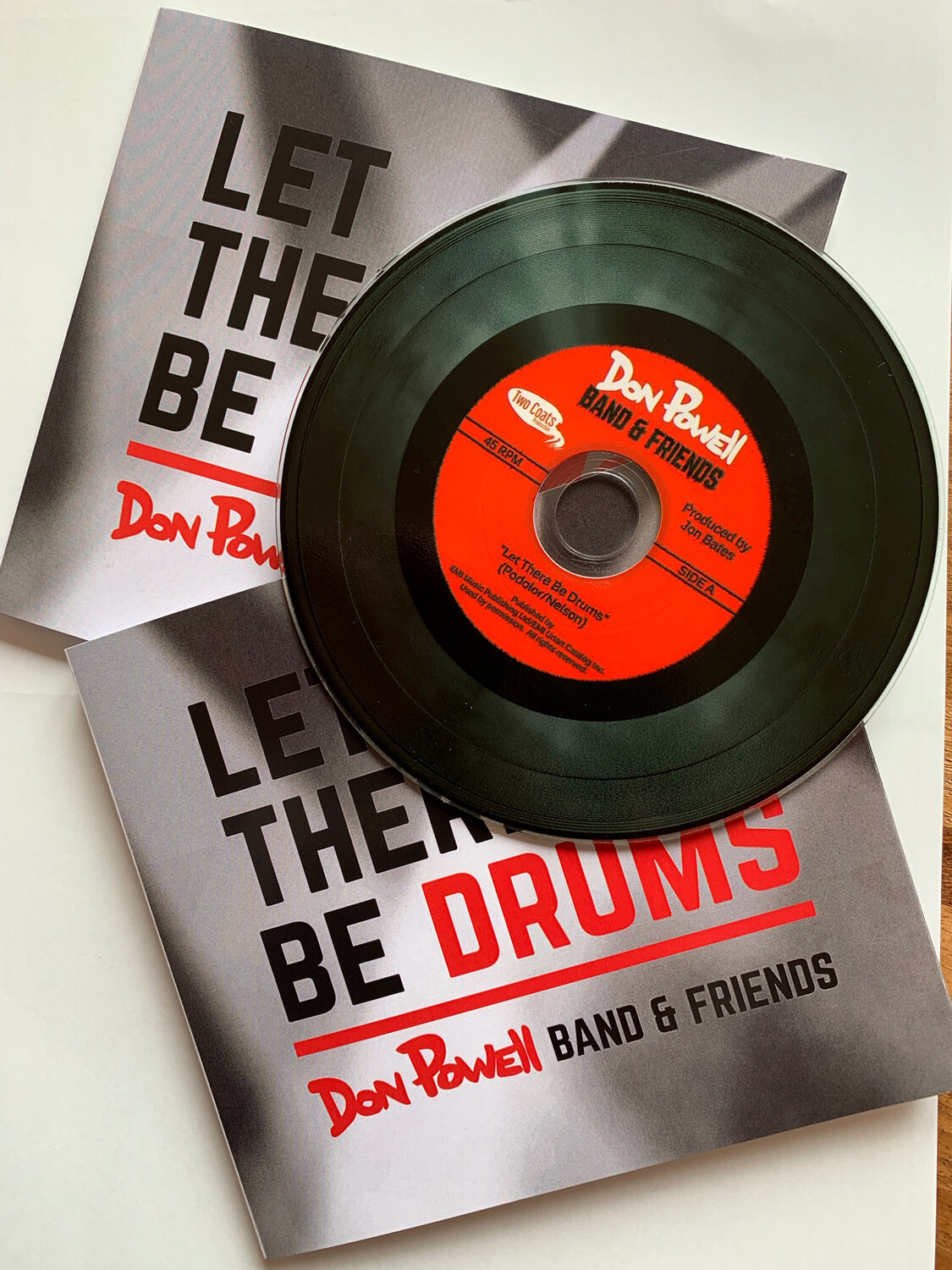
‘Let Their Be Drums’ limited edition CD

DJ: Well it’s a great track and it’s a great cause so let’s hope it’s going to be a real success.

DP: I don’t think people really realise the work that these guys do. I mean without these guys the show wouldn’t go on.

DJ: Hopefully, when things do go back to normal we’ll start to appreciate them more – as ordinary punters.

DP: Can you see light at the end of the tunnel yet? There are a few concerts in the offing but we’re just going to have to wait and see, Darren.

DJ: It’s been quite an exciting time for you because you formed the Don Powell Band last year. You had the project with Suzie Quatro and Andy Scott a few years ago. There seems to have been a burst of new projects that you’re involved in these days.

DP: Yeah. I’ve been pretty lucky really, Darren. The Suzi Quatro and Andy Scott one was quite nice because what it was there was Slade, Sweet and Suzi Quatro band did a few shows together and Suzi, Andy and myself are sitting in the hotel restaurant one day and Andy Scott said, “Now this will make a good band.” And everybody’s sort of yeah, I wonder, I wonder… And we kept on mentioning it and it came about and we said let’s get together and do some recordings. And so what we did we went down to Peter Gabriel’s place. He’s got a massive studio complex over in the west country. And so we went down there and what we did you live there – sort of live, eat and record there. And that’s when we did the album really. We had a great time doing it. And then it got released by Sony in Australia and it charted. So we went over and tour there. Because what we did, Suzi Quatro goes over there every year anyway and she has done for the last thirty years. And we were the opening act. Andy, Suzi and myself were the opening act. It was a great tour. And it helped with the album really.

Quatro Scott Powell album

DJ: So all these new things that you’ve been doing – was it starting to get a little bit frustrating before? Because I know you went out with Dave Hill for a good twenty-odd years. Was it starting to get a bit frustrating just going out there and doing the hits? Were you starting to feel that you wanted to do some new things?

DP: In a way yes. Apart from doing the Slade material with Dave Hill – but that’s what people wanted to see. It’s like with any band that’s had an amount of success, it’s hard to get out of that hole that you dig yourself into. I mean, we had it with the original line-up with Noddy and Jim – what do we play or what do we leave out? It’s a hard thing to try and decide. Everyone’s got different ideas or different choices you know but we all have to try and find out or work out what the audience want really. But we came to an end in a way. Noddy Holder didn’t want to tour anymore so it was just a matter of looking for things and Dave Hill and myself were still keen on touring which we did. And actually it was great because we went to a lot of territories like Russia and the old Eastern Bloc which we couldn’t do in the 70s.

DJ: The world opened up more I suppose?

DP: Oh yes. We had some great shows in Russia. It was incredible. And it’s not until you go there that you realise how big that place is.

DJ: You were massive there but at the time you could never really get there.

DP: No, we couldn’t get there. There was no record deal. We hadn’t got a clue what was going on release-wise you know, for obvious reasons. And it’s amazing when you realise – we flew from Moscow to Dal’niy Vostok on the east coast and it’s like thirteen hours. That’s like flying from Los Angeles. It’s incredible – but we’ve had some great times there, Darren.

DJ: Yes, I only saw the original band three times in the early 80s but then I saw you and Dave many, many times after that. But there seemed to be a time, only a year or two ago when it all seemed to be going wrong for you.  You had the email sacking you from Dave Hill. That was after your serious tendon injury that put you out of action for a while. And then to cap it all after that, you had a stroke. It all seemed to be going wrong for you?

DP: Yeah. It was a weird thing. There was no reasoning for it. With the stroke it was strange. I was here at home. We all were here at home, and I was just watching TV and I went to sort of grab my cup of tea and I couldn’t get the cup. I couldn’t grab the cup or hold the cup. I had to hold my hand and then I came downstairs to speak to my wife, and it was a problem coming down the stairs and luckily our daughter is a doctor. And she said, “You’ve had a stroke. You need to go to the hospital. Because my speech is a bit blurred sort of thing.

DJ: I thought that was just the Wolverhampton accent!

DP: Oh no! Or it could be my drinking days! That would have been normal then. If it was my drinking days I would understand – but that’s all gone! But we just sent for an ambulance, and they hooked me up to some machines and checked me out and they said, “You’ve had a stroke. We’ve got to take you to hospital.” And that’s what it was. It was just a small stroke, and I was at the hospital. Luckily, it was our daughter who said, being a doctor, who said, “If you were my husband I would send you to the hospital.” Anyway, it was all sorted out and everything was ok. Apparently, it wasn’t that serious but I’m glad I got the advice. So yep, everything’s ok.

DJ: Because there was like a twelve-month period where just everything was going wrong for you. There was your tendon, then there was the Dave Hill thing, then there was your stroke. Was there a time when you just thought about packing it all in and knocking it on the head?

DP: No. No.

DJ: You always stayed positive?

DP: I was very positive. Actually, that came from my wife as well, Darren. My wife, Hanne, she was great you know. She made me practice going upstairs and I had a practice kit and she made me get on that and she said, “I love to hear you play.” And that was ok, actually. It was strange. There was no problem playing drums or anything. And it was just a matter of this little minor stroke happened if you like – and that was it. I’m on tablets for the rest of my life but apparently that’s just like the norm these days. But it’s ok. It was a bit scary at the time.

Watch our full Zoom chat on Youtube here

DJ: And a high point last year, it must have been really nice for you after all these years seeing Slade back in the album charts?

DP: Yeah incredible. You see, I looked at the CD and I thought, “Blimey. It ain’t bad is it? A nice bit of history there.” But also, when it went back in the charts I thought everybody had got this stuff, you know! How much further can you go, you know. It is incredible but I tell you what people always talk about the – we call it ‘that song’ – the Christmas song. No matter where we go around the world, no matter what time of year – they wanna hear that song.

DJ: But do you think this has helped broaden people’s memories and recollections of the band now? I mean, that compilation must have helped.

DP: Oh I think so. I think the general comments I’ve been getting, Darren, is people saying, “Oh, I didn’t realise you had so many hits. Oh, I forgot you had that one. Oh yeah and that one.” I mean I do myself as well. I’m looking thinking, wow I forgot about that. So it’s nice compliments and it’s nice bit of history on the CD really.

DJ: The hit that really got everything going for me in terms of Slade – because I was like 6 or 7 when ‘Cum On Feel The Noize’ and those hits came out and I was more into the Wombles than Slade at that age – but by the time I was 14 ‘We’ll Bring The House Down’ came out. That was your big comeback single. That was the one that really turned me into a lifelong Slade fan.

DP: That was a great record. Obviously, with Nod’s lyrics that’s how it came about. It’s all about a concert. And what we did, when we recorded that I just went to the toilet and I made a loud cough and I thought, “Ooh, that’s a nice echo in here.” And I thought, “I wonder, how would it be if we put the drums in here.” Because it was all tiled and everything and it was like a thunderous sound in the toilet – absolutely incredible. But we never thought – I was halfway through this incredible take and the automatic flush went off. I thought, “Oh shit!” you know. And we had to turn the water off – it’s those things you don’t think about. It was a great comeback record that, though. It was a nice record to come back with actually.

DJ: It must be a brilliant record for a drummer, too, because the drums are so centre-stage.

DP: Oh yes. It’s great to play on stage, Darren. Because the thing is I can just keep on playing while the other guys just talk to the audience and just mess around and all that. It’s a great stage song, especially for me anyway.

DJ: As a drummer which is your favourite Slade song to play?

DP: Oh, there’s a couple really. I mean ‘Cum On Feel The Noize’ I always love playing and ‘My Oh My’. If you listen to that at the start it’s basically just bass drum and snare drum. And I come in with the drum fills afterwards. It was a great song to play and also ‘Cum On Feel The Noize’ is one of my favourites as well.

DJ: Definitely. That would be one of my favourites as well.

DP: It’s incredible. There’s another one when you think, Darren. We released that in the States at the same time in ’73 and it never saw the light of day – nothing. And then Quiet Riot recorded it and it goes to number 1.

DJ: And then gave your career a boost because you started having hits for the first time ever in America as well.

DP: Oh, that’s what happened there. It gave us a boost. All these record companies over there were after us and we signed with CBS. And MTV had just started as well, Darren, which helped a lot. That video was on MTV all the time.

DJ: The ‘Run Run Away’ video?

DP: Yep. ‘Run Run Away’ was released first because they used that castle as the back-drop. Of course, like typical Americans they all thought that’s where we lived.

DJ: Slade’s castle!

DP: They thought it was our house.

DJ: That’s even more bizarre than Vic Reeves really.

DP: Yes. We just played along with that one, so it was quite good.

DJ: Well, yeah, every rock band in Britain has their own castle. And if we can go back to the very, very early days of Slade now. In the early days you actually wrote quite a bit for Slade at the start but when the hits started coming you stopped. I think that was a shame, personally, because while I could see your lyrics were not hit single material, I would have thought for album tracks they would have been perfect.

DP: I’ve started writing again now but the thing is Noddy Holder and Jim Lea started writing and they were doing it like that [clicks fingers] and they were coming out with the hits, and it was so easy for them, Darren, so I just let them carry on with it.

DJ: Oh right, you just thought let them get on with it.

DP: Yeah.

DJ: They didn’t actually tell you to stop writing or discourage you?

DP: Oh no, nothing like that. They were coming up with this great material, so I just thought, you know, “Let them carry on with it.  They’ve got the formula now so great just let them do it.” But I’ve started writing again over the last few years for the solo stuff I’ve been doing so we’ve just got our fingers crossed with the Don Powell Band really when we start doing some more recordings. But then again, Darren, it’s amazing how technology’s changed. Because of this pandemic crap, you know, I haven’t been able to travel. The rest of the guys have been recording stuff in England and sending the files to me and I just go to the studio I use over here, put the drums on and send it back. It’s not the same as all being in the studio at the same time because there’s that rapport you have that sort of feeds itself when you’re all playing together. But at least we can do something while this is going on around us, you know?

DJ: It’s something really positive to focus on.

DP: Yes, there’s a guy in Australia who I met when I toured there with Andy and Suzi a few years ago and he was doing some solo stuff and he asked me to play drums on it and I said yes. And he’s doing the same. He’s sending the files over from Australia. I’m waiting for them. And I’ll put drums on and send it back.

DJ: So can we expect an album from the Don Powell Band then?

DP: Oh yes. For sure. For sure…

DJ: And when..?

DP: Hopefully – they’re all writing stuff, which is all of us – as soon as possible really, Darren. At the moment with this pandemic, as I said, at least they can send me material, I can put drums on and send it back, you know. But it’ll be nice when we can all get in the studio together at the same time. A great bunch of guys and they’re great fun to be with. We only had two rehearsals together before all this lockdown came.

DJ: So you know each other better on Zoom than you do in real life!

DP: Exactly! It’s strange it is.

DJ: Although, obviously, you and Craig (Craig Fenney – bass player) go back many years.

DP: Oh yes. We go back even before we were back on the road – Dave and myself when Craig was in the band – I’ve known Craig even before then. So it’s not like we were total strangers so that’s good.

DJ: And still just on Slade, I’m not going to dwell on the Dave Hill thing, but do you still hear from the other two members of the band – Noddy and Jim?

DP: Yeah, occasionally we speak and like I said we’ve got one coming up in September. There’s like 35-40 of us have a lunch together in London. There’s like musicians, drummers. And it’s great. There’s like Bruce Welch from the Shadows and Brian Bennett. I mean there’s Clem Cattini. I don’t know whether you know of him, Darren?

DJ: Oh yes, big session player – yes.

DP: Oh you know – and he’s such an unassuming guy because you know he started with ‘Telstar’ from the Tornadoes, that’s how it started with him. And he went into studio work and do you know he’s played drums on over 200 hit records? 55 number ones he’s played drums on.

DJ: That’s more than you!

DP: Yeah. It’s phenomenal.

DJ: I mean you’ve not done too bad playing on number ones.

DP: The thing is when you’re talking to Clem, Darren, you talk about records and, “Yeah, I played drums on that. Yeah, I did that one as well. Yeah, and that one.” He was telling us he never knew where he was going in those days. He’d have a contact. Go to so-and-so studio. He said on one day he did ‘Lilly The Pink’ in the morning by Scaffold and in the afternoon he packed his drums away and went to Decca studios and then he did ‘It’s Not Unusual’ by Tom Jones. So he did two number ones in one day. And he got something like sixty quid. [laughs] But that’s what it was then.

DJ: It’s more the legacy than the money.

DP: Yeah, course it is. He’s got some great stories though. And it’s why I like talking to Bruce Welch as well because I asked, and I didn’t know whether Cliff Richard and The Shadows actually toured America – but they did. Back in the very early ‘60s they were on one of those package things with people like Dion and the Belmonts, all those kind of people. But then again, travelling on a greyhound bus. No private jets then. It was just travelling on a bus. But yes, it’s great talking to those people. And those people I look up to those people.

DJ: And Noddy and Jim, do you still hear from them?

DP: Well, as I say, Nod’s always at the lunches.

DJ: So you keep up with Nod.

DP: And Jim – Jim’s not on email. Jim never bothers with email or mobile phones or anything like that.

DJ: He has spoken to me. I interviewed him a couple of years ago.

DP: Oh good. I mainly contact Jim through his brother now. His brother’s on email so I make contact like that through his brother. So I’ll see Nod – if the lunch goes ahead in September, Darren, I shall see Nod there. We always have a good laugh you know. The thing is no-one knows what we’re talking about. We’re just on our own talking and killing ourselves laughing. And no-one knows what we’re talking about. Well when you think, when we’ve been together so long – like I’ve always said I probably knew the rest of the band Nod, Dave and Jim better than I knew my own brother.

DJ: Because you saw a lot more of them.

DP: Oh, just in the back of the van and sharing bags of chips and things like that. I mean we went through so much together really and that can never go away.

DJ: Yes, and that’s a really nice note to end the Slade memories on. And just looking to the future now what next for the Don Powell Band?

DP: Well like I said, it’s all frozen with this pandemic that’s going on but hopefully, as you know, because we’re recording at least we can do some recording. Like I said they send the files to me and I put drums on and send it back. So, hopefully, when all this clears we can get together. We only had two rehearsals together before all this started. So, hopefully, we can just get things sorted when all this pandemic stuff’s done.

DJ: And you are planning a tour then?

DP: Well we would like to, but we will see how it all sort of channels out really. So it’ll be nice. It will be the usual thing. They be asking for ‘that song’. Merry Christmas!

DJ: Presumably, you are going to do a mix of new material and Slade classics?

DP: Oh, I suppose we’ll have to do. Because one of the guitarists is Bob Wilson from Steve Gibbons Band. So we’ve started rehearsing some of Steve Gibbons’ stuff as well. So there’s a lot of material to choose from, Darren.

DJ: And if I can ask one final favour as well. I work for a learning disability charity called Stay Up Late and what we do is help people with a learning disability get out to gigs.

DP: Oh nice! I do that kind of thing over here, Darren.

DJ: Yeah, I knew you did. And one of our participants Daniel is a massive Slade fan, so if you can give a message of support to our charity Stay Up Late that would be brilliant.

DP: Hi there people. This is Don Powell from the Don Powell Band and I’m sending a message to the Stay Up Late people just keep on trucking and keep on going guys. It’s going to be fantastic.

Fantastic. Thanks Don!

‘Let Their Be Drums’ released 18th June 2021

Available via: https://donpowellband.company.site/

Related posts:

Veteran drummer Don Powell out of Slade

Slade legend Jim Lea releases video footage in bid to locate recently stolen guitar

EP review – Jim Lea ‘Lost In Space’

Interview with former Slade legend Jim Lea

Jim Lea at the Robin 2, Bilston 2017

Before glam: the debut 60s singles of Bowie, Bolan, Slade, Mud and Sweet

Slade, strikes and the three-day week: the story of the greatest Christmas record ever made

Slade at Donnington 1981

Slade at White Rock Theatre, Hastings 2015

Giants of Rock, Minehead 26-29 January 2018

Slade at Brighton 2019

Late Bloomer: interview with US singer-songwriter L.A. Moore – new solo album out

L.A. Moore is a US-based singer-songwriter. Alongside two albums he’s recorded with folk rock influenced band Not Broken Yet, Late Bloomer is Moore’s first solo release.

Originally transferred to Florida from Canada for a job in corporate marketing, he found himself out of work in the economic collapse of 2008 and started attending open mic evenings in the Tampa/ St. Petersburg area.  Over time L.A. hooked up with two other local musicians, John Stone and Paul Cataldo forming the folk rock band Not Broken Yet.

“When COVID came along the band slowed down its live schedule but I was fortunate to have the opportunity to sit in with The Joe Milligan Project and John Alan Carmack, both great songwriters in their own right”. “Of course the big challenge was to go out and play on my own. At that point you question whether you or the songs are good enough, but I thought, this is something I really want to do and I’m not getting any younger.”

I caught up with him recently to talk to him how he first got into performing, his inspirations and his musical influences, as well, of course, as his new album. Late Bloomer is an album of pithy, engaging, thoughtful original songs and some deft acoustic guitar-playing. I was keen to find out more.

Firstly, tell me a bit more about your musical background.

I was largely a” hobby” player, up until 2008. Guitar had always been a serious hobby and I did get out to play when I was living in Canada, but it was not until I was out of work in 2008 in Florida, that I really started to go out and perform. There is a significant and emerging music scene in the Tampa St. Petersburg area and there are wonderful opportunities to both play and interact with other local musicians. I ended up in a “Folk Rock” trio, Not Broken Yet, which has produced two original CD’s. (Not Broken Yet 2, being released as we speak). Sonically we are often compared to CSN and the Eagles.

And your main musical influences?

Being a child of the mid-sixties music scene, I was fortunate to be influenced by the great music of the time, Beatles, Stones, Zeppelin, Cream, Hendrix, with sprinklings of the other Brit Invasion bands. The first “album” I ever bought was the Butterfield Blues band, which of course lead me to The Blues Breakers, Mayall, Yardbirds etc. Motown was big too, so there is all of that.

‘Folk Music’ was still in its evolutionary phase coming out of the late 50’s, but as an acoustic guitar player I was influenced by Dylan, James Taylor, Cat Stevens, Joni Mitchell, Neil Young and local hero Bruce Cockburn who often played at the college I attended.

As my tastes and interests matured, I discovered Pentangle, Jansch and Renbourn, and later, John Martyn and Nick Drake. As I looked to improve my acoustic chops I discovered Geoff Muldaur, who had a very strong influence on my current style. Geoff also influenced the type of guitar I play, that being 12 fret models, once I discovered the unique qualities of acoustic 12 frets, I started to play them exclusively.

What were the key inspirations for the songs on the album, and your song-writing generally?

Well, “Late Bloomer” is pretty self-explanatory. I got out of the gate pretty late with performing and songwriting, but now I am making up for lost time with an enthusiasm and confidence I did not have in my youth.

When I first started going out to play in the local Florida music scene, there was a great emphasis on original song writing. Several of the venues, which did not have ASCAP licenses at the time, did not allow cover songs, so you had to write. The first of those songs was Little Miss Hurricane, influenced by my first weekend in Florida sitting in an empty house, waiting for my furniture to arrive and watching Hurricane Jean, rip the screen lanai off the back of my newly purchased home! Welcome to Florida!!

Naturally other songs followed and the themes ranged from suicide of a friend (‘Reach Out’) to ‘Home’ – which begs the question, where is home?  Where you are from? Where you live? Or somewhere in the mind?

‘Rum Punch’ is also clearly influenced by the southern lifestyle. I was never a fan of Jimmy Buffet, but he is a HUGE influence in Florida and my not-so-secret wish is to one day have a crowd of sun worshippers singing ‘Rum Punch’.

As I moved forward with the songwriting I went back to some of those early acoustic influences and started to explore the great sonic opportunities of open tunings. Several of the songs on Late Bloomer are played in open D tuning.

And tell us a bit about the accompanying musicians you assembled?

Late Bloomer has a small “who’s who” of local talent. Largely produced and engineered by Stephen Paul Connolly at his Zen Studios here in St. Petersburg Florida, Stephen is a local guitar hero who toured as the lead guitar player for Roger McGuinn, when he pursued his solo career. “Steve” is highly respected for his production skills and draws the best local songwriters to his recording studio. He plays guitar, pedal steel and keys on several of the tracks.

Douglas Lichterman is a local guitar teacher and member of the Joe Milligan Project band. I have had the pleasure of playing with Douglas on several occasions and was honoured to have him play on Late Bloomer. TJ Weger is a local legend, playing guitar, mandolin, pedal steel, dobro etc. TJ was fundamental in bringing the “Americana” vibe to many of the songs. Sam Farmer is a very talented local drummer and solo musician. John Stone plays bass with me in Not Broken Yet and John Alan Carmack who sings backup on ‘Rum Punch’ is the hardest working musician in Tampa/St. Petersburg with his own exceptional CD Kentucky Motel.

Late Bloomer can be obtained via lamooremusic.com on CD and most digital platforms

Released: 14th April 2021

Interview with Alan Hewitt of the Moody Blues and One Nation

Alan Hewitt has played keyboards with the Moody Blues since 2010 as well as fronting his own band Alan Hewitt & One Nation. In this interview we talk about growing up in a small US town where all the upcoming local bands seemed to be obsessed with English prog, about eventually getting the call from the Moody Blues and about catching Covid while performing an online gig to a virtual audience. We also discuss his latest single and forthcoming album.

DJ: It’s so nice to speak to you, Alan, and thanks so much for your time doing this. First, I’d just like to find out a little bit about how you got into music professionally in the first place?

AH: Ok, Darren, great to be here… Well, I started out like a lot of kids do, you know, twelve years old and I started on drums and we put a band together. I grew musically as time went on. Those were fun years. My brother actually played bongos in my band and we would play gigs together.

DJ: A percussion duo, you and your brother then!

AH: Yeah! Actually my brother was a real kind of nurturing guy along the way. You know you need someone to kind of help support you along the way. My parents were great, too. So then, had a band – fourteen-fifteen years old – which was a really cool band. It was three of us, kind of like an Emerson Lake & Palmer thing. And we did Tchaikovsky, and we would turn them into rock tunes. And we opened up for a lot of known acts and so that was kind of my start to getting into the little bit bigger realm of things. From that point on I went to Berklee College of Music and that’s where things started blossoming as I started getting some foundation under me. And it moved from there…

DJ: So the prog classically-influenced thing came at quite an early age then?

AH: It was interesting because the town I grew up in (Petoskey, Michigan) was really small. It would be like Cobham, something like that over there. And we had several bands and pretty much all of the bands were into progressive rock. I mean like Gentle Giant, Blodwyn Pig, Genesis, Yes, and of course, Emerson, Lake & Palmer – all of them! Yeah, it’s kind of strange actually. I wanted to go as far out as I could possibly go. Some of the guys I was with that was far enough. I wanted to go even further so that’s why I kind of moved on.

DJ: And eventually at some point the call came to begin touring with the Moody Blues. How did that gig come about?

AH: Well there was quite a gap in there because I had film and TV and then I did some other things. And then along the lines I was in a management group which had Earth, Wind & Fire, Warrant, Moody Blues and the Beach Boys and some others. So that was how it originally all came together. I had met Justin (Hayward) about twenty years prior to me being in the band and we got along great. I had a sail-boat, we’d go out sailing – just kind of hanging. Did a little music but not much. And then, like you said, later on I got a call asking me if I’d be interested in going out. They didn’t tell me it was the Moody Blues though. I said, “It depends who it is but I’m interested.” And after I had a little meeting with Robert Norman who was our agent, he approved it to the next level and then I had an audition – along with some other guys, too. And then I got the gig and that’s kind of how it came down.

DJ: Wonderful. Although you weren’t a nominee for the Rock and Roll Hall of Fame presumably you were there as part of the live performance?

AH: Yeah, we got to play!

DJ: That must be something!

AH: It was cool. It was really cool. It was a long night for the guys because we were last on – and, of course, they have to sit out there at the table with everybody. But it was really cool. I spent a lot of time in the green room with Ann Wilson and some of the other people that were in there – and it was a gas.

DJ: Because she inducted the band didn’t she?

AH: She did. And it’s interesting because I had met her. I had a band in Chicago back in the mid-80s and they worked at a studio called Pierced Arrow. Remember that song ‘Another Paradise’ with the guy from Loverboy? They were recording that… and I happened to be working a lot at that studio, too, and the guy who co-produced and mixed all of our records was doing that record. And I met her then, so we talked about that and she goes, “Wow, that’s a long time ago.”

DJ: Must have been a fantastic occasion for the band?

AH: Oh yeah. Have you had any of the other guys on? Have you had Justin or John here with you?

DJ: No, I did see Justin – he performed a solo gig down here in 2019 at De La Warr Pavilion. I’m down on the south coast.

AH: Nice. I did his first solo tour with him and it was really nice. Him and John – he’s totally acoustic and plays all his work. And John’s is more of a rock show so it’s an interesting contrast.

DJ: When live performances get going again in the UK, I’d definitely like to see more of them.

AH: That would be nice.               

DJ: You’ve obviously continued with a parallel solo career while being in the Moody Blues – and your film and TV work, too. Do you still continue with the film and TV compositions?

AH: I do yeah – I like to stay as creative as possible, so the Alan Hewitt & One Nation project is kind of an extension of the music that I really enjoy – whatever comes out basically because I need that conduit. It’s always coming in and so I have to bring it out. So we’re working on that album and that will be done shortly. We’re moving along pretty good. We’re on about half way through – and some of the new songs are pretty cool, too. And, yeah, the film and TV thing is a continual thing. I do – probably twenty-five shows I have music in on any given day…

DJ: So any shows that British viewers would be familiar with?

AH: I do have some British shows but you’re putting me in the hot chair – what are some of them? I have some stuff on the BBC… I know I have some documentaries. One’s about the redwoods – the trees over here. I think there’s a farm animal show and there was one about turtles, too! There’s three of those – those are documentaries. Of course, I did Bridget Jones – Edge of Reason. I know that’s not real British, but they play British – and there’s one Brit in it right!

DJ: We know that – we’ll go with that! What initially prompted you to put Alan Hewitt & One Nation together then? Tell us a little bit about that.

AH: Well it started, I just had a bunch of different revelations and it’s something I always wanted to do, and I was at a point – we took a break with the Moodies. I think it was at least five months. So it was a time where I could go ahead and start moving along with things. And it started with Jamie Glazier from Chick Corea and Jean-Luc Ponty. And J.V. Collier and Sonny Emory from Earth, Wind & Fire. And then Duffy King who’s my friend from northern Michigan, who was in one of those bands I told you about – and has won tons of awards in Detroit for his music and guitar playing. He was a Gibson clinic guy, too. So that was the foundation of that first band. And then I took a break from it because I got busy with touring with the Moodies and John (Lodge). And then we started it up again because now Duffy King’s still in it and then Billy Ashbaugh from the Moodies – the drummer from the Moodies who joined a few years ago to play along with Graham (Edge). And then David C. Johnson from the Neville Brothers. So then three of us live in Florida. So that made it a lot easier to do things. And then Duffy flies in when we need to do events or anything. We did a virtual ProgStock concert, but we had to go to a studio to do it, over in Fort Myers, and we all got Covid there.

DJ: Oh dear me.

AH: See what we do for the fans!

DJ: So you’re doing an online concert – looking after your audience and everything – but you still get Covid.

AH: Yeah. That was back in October and everybody’s good now. There was a few complications with a few of us but we’re all good on that now. So it kind of evolved into what it is and this way we’re going to be able to tour a lot easier. A smaller group and we have a new agent who is Jim Lenz from TKO. And the guys just all love what we’re doing. It’s just a really good, nice hang because we all get along great so it’s nice.

DJ: When is the album due? Is there a date?

AH: We’re looking for Summer, but it could be Fall. It just depends. A lot of it depends on this situation. It was starting to look good over here and now we’re getting a little bit of an upsurge again but – I’m hopeful.

DJ: I’ve heard the latest single ‘We’re One Nation’ which I love, and I love the sentiment behind that. Do you want to say a little about that and how you were inspired to write that?

AH: Of course, just like you and everybody else we’ve been paying attention to things and I just got to the point where instead of yelling at the TV I wrote it down. And that’s kind of where that came from. It’s not an angry thing but the concept is that if we all just kind of work together we’d be much better off – instead of splintering off into these little groups. So that’s the bottom line.

DJ: And the timing was perfect I think.

AH: Yeah. It definitely was. We had a single before that called ‘One Step Closer’. That’s a little bit more… it’s one step closer to the edge is basically what it was. ‘We’re One Nation’ is a little bit more positive

DJ: I absolutely love it.

AH: That’s good. I’m glad you like it.

DJ: Is there anything else you want to tell us? Any final thoughts you want to leave us with?

AH: Oh well, just we hope everybody can go out and see shows pretty soon and we’re looking forward to doing it, also. And thanks Darren for doing the podcast. Appreciate it.

DJ: It’s really good to chat. Thanks so much and good luck with everything. I hope you can get out performing soon.

AH: I do, too, and if we come near you we’ll see you?

DJ: Definitely. I’ll be there!

www.alanhewittandonenation.com

Related post:

Live review: Justin Hayward at De La Warr Pavilion, Bexhill 2019

Interview with guitarist/singer/song-writer and Grand Funk Railroad founding legend Mark Farner

Mark Farner was one of the founding members of American rock legends Grand Funk Railroad. As well as being their lead singer and lead guitarist he was also the band’s principal songwriter. In this interview we look back at Mark’s career: forming Grand Funk, performing at the Atlanta Pop Festival in 1969 and London’s Hyde Park in 1971 as well as discussing the inspirations behind his songs, his collaborations with the likes of Ringo Starr and Alice Cooper not to mention his brand new DVD ‘From Chile With Love’ which is due out on 6th April.

DJ: When we think of Grand Funk Railroad we think of one of the legendary American stadium bands of the 1970s. But you actually started off as a stadium band pretty much from the get-go. One of your very first gigs was at the legendary Atlanta Pop Festival in 1969. How did that come about?

MF: Well, the attorneys that did the legal work for that pop festival were the same attorneys that Terry Knight, our manager, used for his legal work in New York City. So they worked a deal with the promoters of the pop festival to put us on first and we’ll play for free. Grand Funk plays for free just to get the exposure and then they gave him an adjusted fee for the legal work. So, you know – one hand washes the other. That’s how we landed that gig. What a lucky thing for Grand Funk!

DJ: Incredible! And how did it move on from there – from that spectacular opening?

MF: Well, of course, the record companies had a lot of acts there and Capitol, being one of the companies, were very interested in talking to Terry Knight at that festival about signing. And then he did a deal with Capitol – a production deal – and signed the band to himself under this production deal and told the band that the 6% that we were receiving and dividing was more than the Beatles was getting. And we said, “More than the Beatles! Wow, that’s cool.”

We didn’t know. We’re twenty years old, Brother. So, we finally find out years and years later – there was a contract between Knight and Capital Records for 16%. So he was keeping ten, giving the band six to split and then taking a management commission of that 6%, Dude. Aargh – the tales I could tell you!

DJ: I’m pretty sure virtually every successful musician of your generation has a similar tale to tell!

MF: Oh, absolutely.

DJ: In 1971 you came over to the UK to London and headlined at Hyde Park? Have you any memories of that particular day?

MF: Darren, I gotta tell you. There I was ready to tear things apart because I always got worked up before I go out on the stage. I had to burn it off. You know, do some boxer shuffles and stuff – with my guitar on just to burn it up. Then it’s like busting out…shoot number four.. dynamo… the bull’s riding you know! So, here I come and I did not know that the lighting director had put dance wax on that stage, Brother.

Ohhhh my god. I hit that stuff and my cord – because we didn’t have cordless back then, you had a coil cord. I had two twenty-footers that would lock together with XLR connectors in the middle like a mic cable and it gave me a great distance. I could run any stage. But I was not prepared for what happened. Here I am. I hit that stage and I come sliding out on the dance wax and I’m going, “Oh, shit. I’m not gonna stop! Oh, no! I’m going right over the front of the… Woo!” And there I was, standing in front of the audience with the stage ten feet up and I’m at the very end of that cord. That guitar cord was still in my axe and I still played from that position. I just made like it was part of the show, Dude. What a breaking in I had at Hyde Park!

DJ: That was a great welcome to Britain really, wasn’t it?

MF: Oh my god, yeah. It was wonderful.

DJ: Grand Funk Railroad were always portrayed as one of those archetypal down to earth blue-collar type bands, but your lyrics weren’t always just the traditional rock n roll themes of cars and girls and rock ‘n’ roll. Your lyrics often dealt with some of the themes that the more esoteric bands were dealing with – ecology and peace and war and so on.

MF: Yeah. That was a kid from Flint, Michigan who lived in the outskirts of town. I was not a city boy by any means. We lived on my great grandfather’s farm in the farmhouse he built. It was an eleven-room farmhouse, and we had an orchard to run in and we had a river to play in. No houses back then, you know. What a great place to grow up. And that’s what I had in me when I left Flint, Michigan, and I first got in an airplane. I had never flown before it was like, “Oh, my god. This is cool. Look at this.” You know, I was just at that stage of life and that stage of my maturity and it came out in my music. I think people appreciated the heart behind it. There was always a sincerity because I meant what I said. And when I show up in Santiago, Chile, and I walk on that stage, I am who my songs say I am

DJ: Looking across your entire career which songs would you say you are most proud of?

MF: Well, I would say first of all I’m your captain. Because of the vast audience – it really crosses a lot of lines. And for some reason – I mean I prayed for that song. I asked God to give me a song that would reach and touch the hearts of those that love wants to get to – because God is love and love is unconditional. And that’s really, you know, what we’re made of. But we’re convinced by somebody to believe in some form of indebtedness to something and that took us away from the truth – and that awareness that we had in that setting of love, the strength and the power of love. So, we’ve gotta get back to it. And that’s what the music says to the people. Even in foreign countries, Darren. There in Santiago and Lebanon – a friend that I got to know he learned English because he wanted to know what the lyrics to ‘Heartbreaker’ meant. And he said that it was tearing him up. He loved the song so much he learned English. Then he moves to Detroit and he owns a lot of property. His family came over. It’s a good thing.

It’s a good song. And it reached the hearts of our military because it came out at the end of the Vietnam era and it really touched the hearts of a lot of Vietnam veterans. In fact, they voted my song number one when they had the twenty-fifty anniversary of the Wall – the monument there in DC. And they asked me if I would come and play that song. Just bring an acoustic guitar and, you know, play the song. And I said, “If you’re gonna have a stage and lights and you’re gonna have a PA I’ll bring my whole band. We won’t charge you a cent. We’ll put a whole show on.” An entire show for the veterans. And there was not just the Vietnam American veterans, but our Canadian brothers and sisters were there, too. And there’s family and it was a community feeling. And when we got to sing closer to home to that particular crowd, Brother, it was hard because I had a softball right here (holds throat). I’m so choked. I’m looking at everyone crying and hugging just for what that song does for them. Oh, my god.

DJ: That feeling must come to you every time you perform it now?

MF: It does. It’s my reward for being true and getting my ass outa bed and writing that song. Because a lot of times prior to that I can tell you, I had songs going on in my head and I thought I could hold em – I’ll remember this until… It was gone! So, that one stayed, and it became what it is to people because of no video – there was never a video of that song – and because of that it’s the same as ‘Bridge Over Troubled Water’. At WNEW in New York City they polled, they asked an audience of a hundred people, “What is the definition? What does this song mean to you?” And they got a hundred diversely different definitions. Not any two were even close, the guy’s telling me. I said, “Out of a hundred people not even close?” “Not even close,” he said. So that’s the same thing that happens, I believe when people read a book and then they go see the movie and they say, “Oh, that movie sucks.” Because that movie that they were running, that one was their own imagination and we come up with a whole lot better stuff!

DJ: And that’s why music is so special and such a universal language because we can all have that connection in our own unique way.

MF: Yes. Absolutely, Brother.

DJ: And for those reading who’ve perhaps not followed your career so closely in recent years give us a quick low-down on your solo career.

MF: My solo career has been doing a lot of dates up until the Covid thing. Going out with a lot of different bands. Jefferson Starship and Blue Oyster Cult and you know, some of our friends that are still sucking air and playing music. It’s great to be able to do that. And I love the setting, like when we go out and do a hippy-fest or Happy Together (festival) and then there was a tribute to the Beatles that we did. Just to get together with other musicians it’s going to be a learning experience.

For instance, when I got together with Ringo Starr to do that gig, Randy Bachman – the guy that made that chord is showing me how to play it – and I’m learning. Randy is a solid guy. He’s a really good-hearted man. He’s a real dude and I appreciate him so much. And we had Billy Preston, John Entwistle, Felix Cavaliere. Oh, my god – just the talent that was there on that stage and nobody ran into each other. I mean, you know, it was like such respect. And when we landed in Tokyo and had the press conference and Ringo was sitting at the table – the band was down both sides, it was kind of like the last supper with Ringo in the middle and the band going down both sides. And a lady came up and she’s from a magazine and she said, “I’d like to ask Mr Farner a question.” So I stand up and she said, “What is it like playing with a Beatle?” And I go, “Let me tell you something, Ringo puts his pants on one leg at a time just like everybody in this room.” Ringo stands up and he goes, “Thank you, Brother. And he comes over and he gives me a big hug. A sincere man thanking me for just giving him this recognition of just being a guy. Because he is tormented by people who want his autograph, who want it – because of their imagination. Their parents had it. Their parents’ parents had it for the Beatles. It just gets passed on and then your imagination carries it to this next level. So I feel for him and I understand why he went on YouTube and he did that thing but he’s a great guy and he’s a good-hearted man. He really is.

DJ: And tell us about your new DVD From Chile With Love – which includes a charitable donation doesn’t it?

MF: It’s going to be released April 6th, the official date. It is Mark Farner’s American Band ‘From Chile With Love’. It is available on my website markfarner.com It is sixteen performance tracks with two bonus videos, one of which is available for a free download right now markfarner.com. It is ‘Rock and Roll Soul’ taken from this live DVD concert and we got five audio tracks. Five bonus tracks – songs that people will hear for the first time. All for $14.99 – such a deal!

DJ: When was the concert recorded?

MF: It was a couple of years back in Santiago, Chile at Teatro Caupolicán. It’s a very good concert. My wife, Lesia, and I take three dollars from each of the DVD sales, and we contribute to Veterans’ Support Foundation. And they are an outfit that is of veterans, by veterans, for veterans that take care of, you know, transitional housing, they take a veteran off the street, if somebody’s had a hard time getting what they’re owed by the government there is somebody who will advocate for them and stand in the gap there and make sure that they get what they served their country to get. And we believe in them because we’ve been working with these same people since the ‘70s and this is a get-it-done operation and there’s nobody getting paid there. It’s all voluntary work – so we put our money where our mouth is and we thank the buyers of this DVD, the fans who will help us contribute to our veterans and their families in this way. We appreciate it so much. And if I could give a number if anybody knows of a veteran who could use some help or knows somebody in a situation call free: 800 882 1316

DJ: You also performed on several tracks on Alice Cooper’s latest album Detroit Stories. How did that come about?

MF: Well my manager, Bobby Steinman, gave me a holler he says, “Hey listen. Alice Cooper’s doing an album. It’s going to be a tribute to Detroit. There going to use some early Detroit funk, some Suzi Quatro, some Bob Seger and I’m thinking, “Wow man, a tribute to Detroit and Alice Cooper’s asking me? What a privilege that would be – yeah count me in.” So, it was getting into the studio with Wayne Kramer – a friend from the past and I have the utmost respect for him. I remember seeing MC5 at Detroit fairground for a concert that was there with all the local acts. That was Iggy and the Stooges, Amboy Dukes and oh my god, yeah, a lot of local acts. And we saw the MC5 take the stage and every head within a half mile turned right towards the stage and went, “What the heck is that?” And I shared that with Wayne. Loved working with him.

Loved working with Johnny (Bee) Bedanjek on this same project. Jonny Bee played drums for me back in the ‘80s in a solo thing. I did a three-piece with Mark Gaughan and Johnny Bee and we went out down through the south and toured three-piece and rocked the place. It was great. And it was great because Johnny Bedanjek puts it down. He lays such a deep back-beat. You can’t fall out of it. He would drag you into it.

DJ: Did you hang out with Alice Cooper back in the ‘70s or did you just get to know each other through this project?

MF: No, it was because he was a headliner, and we were a headliner we never did. Our paths didn’t cross. But I did play music with Dick Wagner who was Alice Cooper’s guitar player. But it was gas to hang with him. And Alice is a perfect gentleman. He’s a humble person. What really impressed me, Darren, we’re sitting in a restaurant. We just get our food. His fork is half-way between his plate and his mouth, and somebody walks up and says, “Will you sign this?” And he puts the fork down and takes the pen. I’m telling you, he’s a humble guy and to work with Bob Ezrin – what a terrific producer. A talent. That guy is intense. He’s the most intense producer I’ve ever worked with, but I love that intensity about him, and I love the depth of his heart.

DJ: And my final question, and I must ask this on behalf of your British fans, is there any chance of you and your other two original band-mates from Grand Funk ever reuniting for one last time?

MF: It wouldn’t be for lack of participation by me. For over twenty years I have been attempting, for the sake of the Grand Funk fans to put the band back together – the real band. Listen, I don’t know what it is. I know it’s not nice or not good what keeps us apart. But I keep proposing this and it never gets met with any… like it’s for real. “Yeah, well put a plan together.” “Me? A musician put a plan together?” No, you get a promoter to put a plan together. You get somebody that knows what they’re doing, that’s been in the business, that stands to make a lot of money. That’s the person you put in charge. You don’t put the musician – you keep his head in the creative place. Thank god, that’s where mine has lived most of my life and I haven’t had to deal with the business shit that keeps bubbling up. Somebody’s got to deal with it and thank god my better three-quarters, Lesia, has a better grip on it than I do.

DJ: And is there one final thought you want to leave us with today?

MF: Yes, Brother Darren, I just like to leave everybody with the thought of being free in our minds, disconnect ourselves momentarily from every indebtedness, not just monetary indebtedness but the indebtedness that comes from unfulfilled expectations of other people and the like. People are moved from the place of comfort by this weapon known as debt. It is the most foul word in the English language. It encompasses more than it could ever let on, so reckon with yourself in your time, in your heart closet and know that you are free and you are the one that controls the gate. Owe no man anything except to love him.

Thank you to the music legend that is Mark Farner.

The DVD Mark Farner’s American Band ‘With Love From Chile’ is released 6th April 2021 and is available via https://markfarner.com/

Glitter, glam and Blackpool rock: interview with glam rock legend John Rossall

Following the release of his highly acclaimed new album ‘The Last Glam In Town’ I talk to former Glitter Band legend, John Rossall. Our chat covers glam rock, show bands, growing up in Blackpool and, of course, John’s new album and the prospect of touring again post-Covid.

The last glam in town – that’s quite a statement isn’t it?

People have their own perspectives and thoughts on it. I just wanted to do an album. I’ve not done one for years and years, well forty-odd years, of original songs. But, yeah, I think it’s a bit of a statement really.

It’s such an authentic sound on the album that really captures the original spirit of glam. What was the experience like in the studio, making a glam rock album in the 2020s rather than the 1970s?

Well, for a start in the 70s you were actually in the room with somebody. If anybody was going to record something, they actually came in the studio to do it. You couldn’t have a guitar player playing his part in, say, Berlin and the drummer drumming in Stockholm. That’s a change. That took me a while to get used to.

Clearly it worked! Did you find the technology helped you create that glam sound even though it was recorded in a completely different context?

In some ways it did. But you have to write the song first before you worry about the technology. But I knew what I wanted to do before I started recording. I wanted to update what we did – the Glitter sound, basically. I wanted to bring it right up to the twenty-first century. It’s not been played on radio stations for quite a long time and I kind of wanted to update it. Make the drums a bit more powerful and make one or two subtle changes. But the main ingredients of it, the original production – I wanted to keep some of that magic in it.

You must be very encouraged with the reviews so far?

Yes, I am. It’s like I’ve written them myself almost! It’s a surprise. The reviews everywhere – it’s been beyond my wildest dreams really.

Tell us about some of the people you collaborated with on the album.

I had a few people. Apart from my touring band – that was the basic bottom line – but I had different guests on different songs. For instance, Jon Robb from the Membranes, we got together. I wanted to take the Glitter thing to a bit of a dark side, an almost avant-garde thing. And I found that the most challenging thing, to update it in that way but keep the roots of it still there, you know. Also, I worked with Robert Lloyd from the Nightingales. I recorded three songs with him and also Mark Standby, who’s a long-time collaborator. He was in my band about twenty years ago. He lives in Berlin now. I got Bob Bradbury from Hello to write a song for me. I wanted him to do one where we produce a kind of tribal feel with the drums. And then I got Michael (Wikman) from Sweden who plays the drum track on that. Of course, not forgetting Alan Merrill from the Arrows who wrote ‘I Love Rock ‘n’ Roll’ who wrote a song for me (‘Equaliser’) not long before he passed away, a couple of months later.

That was written especially for you for this album, was it?

Yes. We knew each other quite well in the 70s, obviously. But you know, over the years you kind of lose touch, like you do. But in the last five years we reconnected and did about three short tours in the UK. And the magic – he was still the same guy. I really enjoyed the tours we did with him and it’s so sad he never got to hear the finished thing. He actually plays guitar and does backing vocals on there.

Some of the songs on the album are really personal to you, aren’t they, like ‘Blackpool Rocks’?

Well there’s quite a lot of songs about Blackpool that I learnt when I was growing up. Most of them by the great legend George Formby – ‘My Little Stick of Blackpool Rock’ and ‘Cleaning Windows’ and all that kind of thing. But I kind of wanted to do one that went over my childhood. I grew up in Blackpool. My dad was in quite a famous Blackpool band in the Empress Ballroom. He played there for twenty years and as a kid, aged about 10 or 11, I used to go down there about once a week. And I used to stand at the side of the stage. Of course, I liked swing bands when I was about 10, 11, 12. And because he worked at the Tower Company, Winter Gardens we used to get a lot of free tickets to the summer season shows. And the whole atmosphere of Blackpool in the 50s was amazing. And that’s what basically the song is about. My childhood, Blackpool in the summer and my dad, who was still my mentor, even after all these years. So that’s what that was about. I was quite happy when it was done although it was one of the hardest songs to write on the album, actually.

If we can now go back to the very early days of your career. You were leading the Boston Show Band in the late 60s and early 70s and they morphed into the Glitter Band. We tend to think of show bands as mainly an Irish thing, but you were an English band working in Germany, weren’t you?

My first professional job, earning a living, was in an Irish show band. And I lived in Ireland for a few years. And then I joined the Mike Leander Show Band, which was an eleven-piece band, back in 1965. We did an eleven-week tour, an old-fashioned kind of package tour with the Bachelors headlining and people like Susan Maughan. And then the band disbanded and I didn’t know what to do and I thought I’ll start my own band. And that’s what I did a few months after that. Got an act together, got some guys together and we went across to Germany in 1966 and we stayed there for about nearly six years. Of course, there were personnel changes, people leave, somebody wants to settle down and when they got home sick, they’d want to go back to the UK. But I enjoyed doing it. We worked together with Paul Raven (Gary Glitter) during that time. And we kind of split really beginning of 72. We were touring the UK quite heavily. And myself and Harvey Ellison, the other sax player in the band, we had laid some notes down on ‘Rock and Roll (Part 2)’ in December of 71 and we thought the record had fizzled out. Then I got a call from Mike Leander around about the beginning of June of 72. And he asked whether we’d like to re-acquaint ourselves and work with Paul Raven again with ‘Rock and Roll (Part 2)’. And I thought yeah, we’ll do that. We were doing quite well and had some records as the Boston Showband at that time and I did make it a condition – and I liked the idea of Mike Leander producing – I did make it a condition that we would get to do a record after a reasonable amount of time, which we did.

And how many albums did you do with the Glitter Band then?

I did two.

People wouldn’t necessarily think show band to glam rock as the obvious route. But there were parts of the show band sound that became an integral part of the Glitter Band sound weren’t there?

The main thing was that most bands and groups around, they were just guitars and drums and maybe keyboards. Not a lot of them had sax and brass so that was correct. And, of course, in my very early days as a teenager in Blackpool I was playing in brass bands. And ‘Angel Face’ that’s got a kind of brass band feel about it, with the drums and the way the brass section goes especially in the middle eight. Some of those ideas, of course are apparent on the new album. As I said, I only did two albums with the Glitter Band back in the 70s, but this album is kind of the album I missed out on – that I wanted to make. Because when I left, I felt I had unfinished business with the band. I wanted the band to do something in America. We’d done it in the UK and Europe but to me the job was only half done. And I left.

So, this album isn’t just a career renaissance for you it’s actually a career highlight in terms of albums then?

Yeah, it is. When I started making the album it never entered my head, I was going to make a 70s album or a glam album. It’s just me. I’m the guy who wrote those songs in the 70s. And I’m a lot older now and more mature obviously – I hope! And I write songs now. And it’s people who are listening who put you where they think you should be. And it wasn’t a nostalgic album either. I just wanted to make a brand new statement and update the Glitter sound and do some fun songs. And that’s what this is about – having fun really, nothing serious.

You left the Glitter Band in the mid-70s for a solo career. For those who are maybe not familiar with your career since then do you want to just briefly sum up what you did musically between the Glitter Band and now with this album?

Well I did a couple of singles which were quite decent, but I was quite unlucky actually. One was playlisted everywhere. A song called ‘It’s No Use You Telling Me No’ a song I did with Twentieth Century Fox. And lo and behold just as it was coming out, they decided to close their UK office down. And we tried to buy the master back to give it to another record company, but they wouldn’t let us have it. And I was quite disillusioned. Then I went to Sweden for quite a few years. I was relatively unknown there. I thought my music was done but after a couple of years it never really leaves you. And I got a band together – Swedish guys – with the idea of just playing a few gigs, getting together at the weekends just for a bit of fun. But then I started getting invitations to go to Germany playing festivals. Big festivals, a couple of trips to the UK and, of course, it like reawakens you – the hunger. So, we were touring, quite a bit and shows in the UK. Not with any original music just mainly the old hits. And about two years ago I thought it would be nice to go on tour, make a new album with some brand-new songs and that would give me something new and creative. Well, of course, I got the album bit done and I should be on tour really now but obviously I’m not.

Yes, that’s something that’s affected every musician.

That’s the luck again! It strikes!

So, what are your plans now this album is out and assuming at some point venues reopen and we can start seeing live gigs again?

Hopefully, we’ll still tour the album, albeit next March, April, May – whenever we’re allowed to and it’s safe to do so, of course. That’s my immediate plan. Of course, the album’s only been released a couple of weeks so it’s still early days for it. We’ll have to see how we go with the album, really, and then that will decide what I do. But if it remains the same as now, I’ll probably go out and promote the album and do some shows. I still enjoy playing live. It’s still a great feeling you know.

And still going out there playing music. You could be the Jerry Lee Lewis of glam rock. The last glam standing?

Yes well. If the cap fits, yes!

Anything else you want to say?

Well I just hope people give it a chance, give it a good listen to and go out and buy it obviously. And I hope I can perform it next year on some live shows. I know through social media that people really want me to tour the album and that’s what I’ll try to do. So, all I want to say is I hope everyone gets through this alright and we can carry on and life gets back to something a bit like more like normal for us all.

Thanks to Claire Moat and Anne Street for their assistance in arranging this interview.

Related post:

Album review: Rossall – The Last Glam In Town