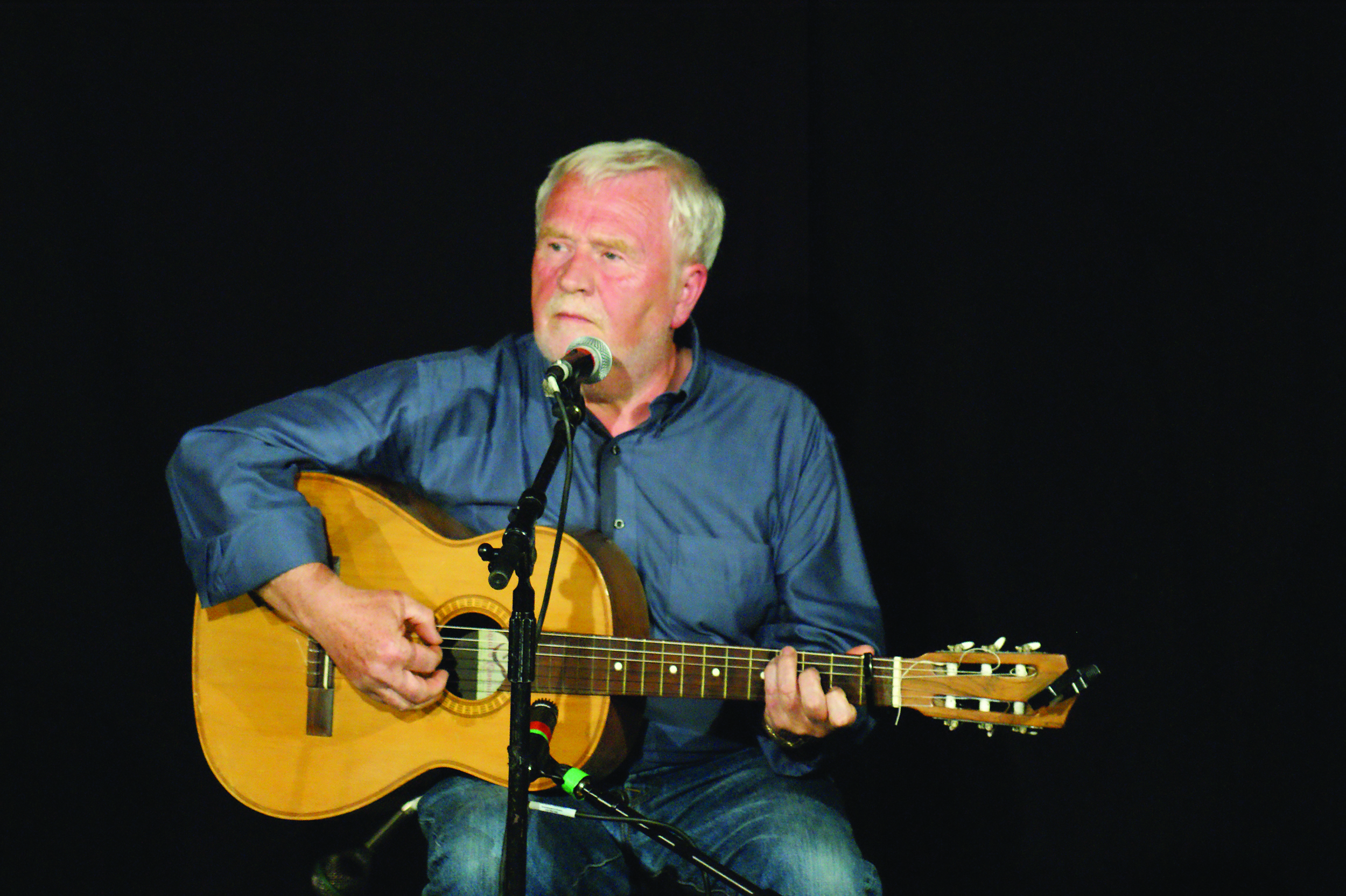
Formed in Chicago almost thirty years ago Sons of the Never Wrong are an alt-folk trio with a signature sound of soaring harmonies and lush acoustic arrangements built around of thoughtful, witty song-writing.
Their ninth studio album, Undertaker’s Songbook is something of a celebratory release as the band approach their 30th anniversary.
Founder members Bruce Roper (vocals, guitar) and Sue Demel (vocals, guitar, djembe, dulcimer) along with long-time member Deborah Lader (vocals, banjo, guitar, mandolin) who joined the trio in 1998, replacing original member Nancy Walker, are joined by a range of musical guests and spoken word collaborators for this special release. Guests include Marc Kelly Smith, Karen Savoca, Anne Harris and Pete Heitzman helping bring colourful texture to Sons of The Never Wrong’s trademark blend of folk, jazz, pop and rock influences.
Opening track, the gorgeous gospel-tinged, soul-flavoured ‘Muddy, Muddy River’ with guest, Bob Long, on organ and piano is clearly destined to be a centre-piece of future live performances and is a modern-day classic in the making – absolutely gorgeous.
Elsewhere on the album, the melancholic, ecologically-themed piano and vocals number ‘Shorebird’ is another stand-out track, along with the Indie-ish anthem ‘Om Not This Time’. Tracks like ‘Everyone’s In The House’, meanwhile, take us into more classic folk singer-songwriter territory, evoking the genre’s golden age.
Beautifully presented with hand-painted cover art from Lader, Undertaker’s Songbook is a fine album to mark the trio’s thirtieth anniversary.
When I came to review Called Back the latest album from Scottish singer-songwriter John Hinshelwood recently, on checking out his biog I was struck by the high regard he held for the Byrds and the influence that they were to have on his own music. Moreover, it went beyond mere musical influences. As well as sharing a stage with Roger McGuinn, he was involved in putting together a tribute to ex-Byrd and ex-Burrito, Gram Parsons, and actually came to record with former Byrd, Gene Parsons, who was with the band in its latter period, playing on five albums from Dr Byrds & Mr Hyde in 1969 to Farther Along in 1971.
I mentioned all this in my review and said it was certainly recommendation enough for me that this was going to be an album worth exploring. After I published my review, John got in touch. This led to a more detailed chat about how the Byrds came to have such a profound effect on his career and how he came to record with Gene Parsons.
I have already talked about my own particular Byrds journey here. There was clearly a meeting of minds between John and myself and he very kindly sent me a copy of his album on which Gene Parsons appeared.
Titled Holler Til Dawn the album was released in 2002. Recorded in various locations, including Scotland, Tennessee and California the album features eleven Hinshelwood originals, plus three covers: Kathy Stewart’s ‘Your Secret Love’, Lowell George’s and Keith Godchaux’s ‘Six Feet of Snow’ and Gram Parsons’ and Chris Hillman’s ‘My Uncle.’
The album boasts an impressive line-up of guest musicians and singers including, Rab Noakes, Cathy Stewart, Colin Macfarlane and Cathryn Craig as well as the aforementioned Gene Parsons, who plays on two tracks.
So how did he go about getting Gene Parsons to play on his album? John fills me in on how the two came to connect:
“I got to know Gene through Chrissie Oakes in Bristol, who used to run the Byrds Appreciation Society. I have known her since the early 70s and have kept in touch with her right up to the present. She contacted me back in 1995 to ask if I would be interested in organising a gig for Gene in Glasgow as part of his UK tour. Despite never having promoted a gig before, I agreed, and indeed had him back again a few years later. On both gigs, we did support, and agreed that on his next tour we would do some stuff together. Unfortunately, that tour has never happened, but I still live in hope.”
Prior to going on to record with Gene Parson, John was also able to bag himself a support slot for none other than Byrd’s founder, Roger McGuinn:
“The McGuinn gig came about as part of a roots festival in Glasgow in the late 90s. I knew the promoter, the late Billy Kelly, who was a great and genuine guy. I was really chuffed when he asked me to do an opening spot, not least because a lot of much better-known folk were desperate to do it. He knew how much it would mean to me as a Byrds fan, and he kept his word and gave me the gig. I must admit that it was somewhat surreal to be sitting in the dressing room pre gig, and listening to McGuinn practising ‘Eight Miles High’ next door!”
Reflecting on Gene Parsons contributing to the Holler Til Dawn album, Johns notes:
“As is the case with lots of recording nowadays, I wasn’t actually present when Gene added his contributions to the two tracks on Holler Til Dawn. Things have even changed a lot since 2001 when ‘Holler’ was recorded. Today, it is done by emailing files back and forth, but then I had to send the tracks by post to California where Gene recorded his parts, then posted them back to me!”
“The first track we did was the Gram Parsons/Chris Hillman song ‘My Uncle’ which appeared on the Flying Burrito Brothers debut album “The Gilded Palace of Sin” in 1969. The basic tracks of Alasdair Kennedy (mandolin), Tim Clarke (acoustic bass), and myself on acoustic guitar and lead vocal were done in Glasgow, then sent to California where Gene added two banjo tracks and two vocal harmonies.”
“The second track was one of my own songs “We’re all in this together” and has just myself and Gene on it. I play acoustic guitar and sing lead and harmony vocals, and Gene did banjo, acoustic guitar and harmony vocals. Again, I recorded in Glasgow and Gene in Albion, California.”
“Recording in this way requires a lot of trust, as I could not be present to direct and produce, but with Gene’s track record and wonderful musicianship, I was confident that all would work out well, and that did indeed prove to be the case.”
Our respective Byrds journeys
As a non-musician with no discernible musical ability whatsoever I can’t really claim anything so grand as ‘musical influences’. However, the Byrds were certainly had a big influence on me in terms of expanding my musical tastes and interests. I explained in my own post here about how listening to the Byrds as a teenager led me to start exploring the words of American folk-rock and English folk-rock and eventually English folk as well as Americana and country.
John chips in his own two-penneth:
“Your Byrds story is interesting, and I can relate to much of it. I also love Fairport and have seen them more times than any other band. The Byrds also got me listening to folk music, and a lot of our gigs are in folk clubs. It was also “Sweetheart of The Rodeo” that got me interested in country music which, like most ‘rock’ fans I thought I hated. I have, in fact, been in quite a few country and country rock bands over the years, including The City Sinners, which played the music of Gram Parsons.”
Holler Til Dawn is a fine album of first-rate Americana and picked up many favourable reviews at the time. Whether you’re a Gene Parsons fan specifically or a lover of Americana more generally it is well worth checking out.
‘Johnny’s Gone to Hilo’ is a second single from composer and folk artist Roly Witherow ahead of a forthcoming EP set for release later this year. Roly’s rendition is a characteristically inventive yet mournful interpretation of the traditional sea shanty. The single also features guest backing vocals from celebrated East Anglian folk singer, Nick Hart.
Check out ‘Johnny’s Gone to Hilo’ on Spotify here
A prolific composer in the world of film, TV, and theatre, Roly’s credits have included Channel 4’s On The Edge, 2015 BIFA nominated film Gregor and David Hare’s The Permanent Way. His debut folk album ‘Ballads and Yarns’ attracted a slew of highly favourable reviews in the UK media and beyond.
As a folk musician and singer, Roly’s influences include Pete Seeger, Ewan MacColl, Peggy Seeger, A.L. Lloyd, Richard Thompson, Nic Jones, Pete Bellamy, John Martyn, Shirley Collins, Dick Gaughan, Lisa O’Neill and Will Pound.
Of the new single Roly says:
“Johnny’s Gone to Hilo is a sea shanty originating from the sailors of the nitrate trade off the Pacific coast of South America in the 19th century. Hilo likely refers to the Peruvian port of Ilo, and whilst the tone of the shanty varies a great deal in all its different versions and iterations – from drinking song to lament, I thought the melody of the song lent itself best to a sorrowful arrangement with guitar, harmonium and two voices. The backing vocals are provided by acclaimed local folk singer Nick Hart of the Nest Collective, who, raised in a family of morris dancers, is renowned for his evocative voice that is rooted in the folk tradition.”
“The recording of the harmonium with all its noisy stops, billows and pipes was a particular challenge for producer Joe Garcia, but, with some ingenious microphone placement, he managed to capture the instrument’s unique and idiosyncratic sound with tremendous accuracy and warmth.”
Speaking on his five-track EP, set to be released in Winter 2021, Roly added:
“The forthcoming album is a very new direction for me. If my first album, ‘Ballads and Yarns’ had an experimental bent, stemming from my experience as a film composer and combining traditional songs with electric instrumentation, spoken word and elements of world music, this new album has a “back to basics” approach, focussing on the song itself in its most minimal form. The vast majority of the songs are for just acoustic guitar and voice, and the recordings have a very live feel to them, realised in large part by the expert production of Joe Garcia of Joe’s Garage, in Bristol.”
“This new album also has quite a playful, innocent and childlike quality to it, influenced in part by the children’s songs of Pete Seeger, Ewan MacColl and A.L. Lloyd, but also by my experience of recently becoming a father. One of the songs on the album ‘Ernie’s Song’ is dedicated to my son. The album is a combination of traditional songs from the British Isles and further afield, and originals, such as this first single ‘The Bird and the Frog’. There are also some collaborations on the album, including with renowned local folk singer Nick Hart. The album in general touches on themes of rural vs urban life, family and growing up, love and love lost, nature and animals, industrialisation & mechanisation, death and religion.”
What they say:
“Witherow’s resonant voice sits beautifully against a spacious guitar arrangement”– The Times
“mixes up art-rock, atmospherics and folk on his personal project” – The Guardian
“a modern yet classic celebration of the art of folk music” – Folk Radio UK
John Hinshelwood is a Scottish singer-songwriter from Lanakshire. As a teenager in the 1960s the likes of The Beatles and Bob Dylan made a big impact and he was also profoundly influenced by those US West Coast bands, like The Byrds. Indeed, as well as sharing a stage with Roger McGuinn, Hinshelwood has actually recorded with late-period former Byrd, Gene Parsons, as well as putting together a tribute to ex-Byrd and ex-Burrito, the late Gram Parsons.
That was certainly going to be recommendation enough for me and I was anxious to check out Hinshelwood’s latest album. With a long career he’s got a number of albums to his back catalogue, both individually and as collaborations, mostly in the folk/country/Americana vein where he’s built his reputation.
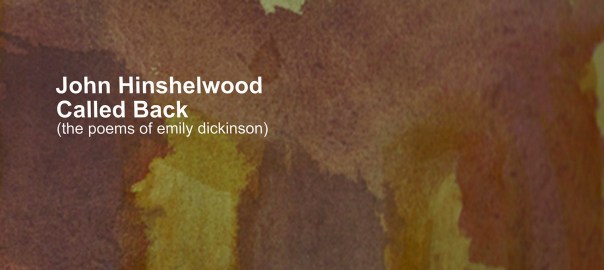
This latest album Called Back, is something of a departure. Lyrically, the album adapts the writings of nineteenth century American poet, Emily Dickinson and transforms them into fourteen songs. Poetry adaptations into songs is not particularly unusual in the folk/singer-songwriter genre – and I’ve reviewed plenty such examples here. Where Hinshelwood attempts something really ambitious and fairly unique, however, is in deploying a range of very different musical styles across different genres with the aim of creating music that matches the sentiment of each particular poem. We therefore get a lovely range of styles from bluegrass and Americana through to jazz and traditional folk.
The album definitely benefits from repeated listens as there is always something more that reveals itself to the listeners each time. He’s put together a fantastically diverse bunch of musicians to see him through this project, too, from members of his own regular touring band, to veteran LA session percussionist, Steve Foreman, to BBC Young Musician of The Year, David Bowden, plus many more.
An ambitious project, brilliantly executed and well worth a listen. Fans of country-tinged, folky Americana will love this album but there’s much, much more besides.
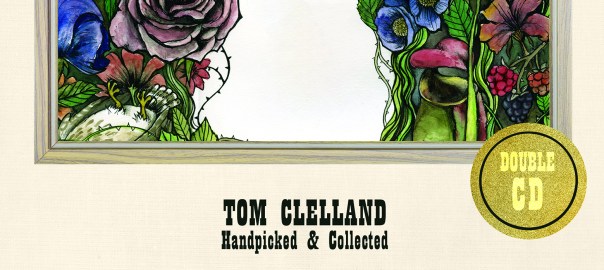
Tom Clelland is a Scottish folk singer-songwriter. He’s released several albums to date and Handpicked & Collected is something of a career retrospective. A double CD compilation comprising 23 tracks it brings together favourites from his previous albums along with live recordings.
His approach takes something from the Scottish folk tradition, something from American country and with Clelland’s compelling story-telling at the heart.
The first disc (the “Handpicked” part) features eight songs penned by Clelland based on historical events and myths. Themes range from war – including ‘Carion Craw’ commemorating the Battle of Harlaw in 1411 and ‘The Wind She Changed’ written at the time of the second Gulf War – to the supernatural such as ‘The Ghost With The Squeaky Wheel’ and ‘The Devil and the Hangman’.
With the second disc (the “Collected” part) we get a whopping fifteen songs and the themes are more eclectic here. There’s a much more personal feel to some of the song-writing here. Opening track ‘Slow Down’ is a delicious slice of infectious olde-time country while another country-flavoured track ‘Country Music Once Again’ takes a wry look at Clelland’s musical influences over the decades. There’s more of Clelland’s historical-based storytelling as well as the one track that’s not wholly original is ‘How Far To Babylon’, with lyrics adapted from a poem by Robert Louis Stevenson.
While Clelland’s vocals and guitar are at the core of all twenty-three tracks various musical guests provide additional accompaniment at various points, bringing added authenticity to the diverse range of musical influences explored on the album whether that’s Scottish folk or American country – from Mairearad Green on pipes to Willie Gamble on pedal steel.
Handpicked & Collected is a delightful retrospective from a talented singer-songwriter with a foot in both the folk and country camps.
L.A. Moore is a US-based singer-songwriter. Alongside two albums he’s recorded with folk rock influenced band Not Broken Yet, Late Bloomer is Moore’s first solo release.
Originally transferred to Florida from Canada for a job in corporate marketing, he found himself out of work in the economic collapse of 2008 and started attending open mic evenings in the Tampa/ St. Petersburg area. Over time L.A. hooked up with two other local musicians, John Stone and Paul Cataldo forming the folk rock band Not Broken Yet.
“When COVID came along the band slowed down its live schedule but I was fortunate to have the opportunity to sit in with The Joe Milligan Project and John Alan Carmack, both great songwriters in their own right”. “Of course the big challenge was to go out and play on my own. At that point you question whether you or the songs are good enough, but I thought, this is something I really want to do and I’m not getting any younger.”
I caught up with him recently to talk to him how he first got into performing, his inspirations and his musical influences, as well, of course, as his new album. Late Bloomer is an album of pithy, engaging, thoughtful original songs and some deft acoustic guitar-playing. I was keen to find out more.
Firstly, tell me a bit more about your musical background.
I was largely a” hobby” player, up until 2008. Guitar had always been a serious hobby and I did get out to play when I was living in Canada, but it was not until I was out of work in 2008 in Florida, that I really started to go out and perform. There is a significant and emerging music scene in the Tampa St. Petersburg area and there are wonderful opportunities to both play and interact with other local musicians. I ended up in a “Folk Rock” trio, Not Broken Yet, which has produced two original CD’s. (Not Broken Yet 2, being released as we speak). Sonically we are often compared to CSN and the Eagles.
And your main musical influences?
Being a child of the mid-sixties music scene, I was fortunate to be influenced by the great music of the time, Beatles, Stones, Zeppelin, Cream, Hendrix, with sprinklings of the other Brit Invasion bands. The first “album” I ever bought was the Butterfield Blues band, which of course lead me to The Blues Breakers, Mayall, Yardbirds etc. Motown was big too, so there is all of that.
‘Folk Music’ was still in its evolutionary phase coming out of the late 50’s, but as an acoustic guitar player I was influenced by Dylan, James Taylor, Cat Stevens, Joni Mitchell, Neil Young and local hero Bruce Cockburn who often played at the college I attended.
As my tastes and interests matured, I discovered Pentangle, Jansch and Renbourn, and later, John Martyn and Nick Drake. As I looked to improve my acoustic chops I discovered Geoff Muldaur, who had a very strong influence on my current style. Geoff also influenced the type of guitar I play, that being 12 fret models, once I discovered the unique qualities of acoustic 12 frets, I started to play them exclusively.
What were the key inspirations for the songs on the album, and your song-writing generally?
Well, “Late Bloomer” is pretty self-explanatory. I got out of the gate pretty late with performing and songwriting, but now I am making up for lost time with an enthusiasm and confidence I did not have in my youth.
When I first started going out to play in the local Florida music scene, there was a great emphasis on original song writing. Several of the venues, which did not have ASCAP licenses at the time, did not allow cover songs, so you had to write. The first of those songs was Little Miss Hurricane, influenced by my first weekend in Florida sitting in an empty house, waiting for my furniture to arrive and watching Hurricane Jean, rip the screen lanai off the back of my newly purchased home! Welcome to Florida!!
Naturally other songs followed and the themes ranged from suicide of a friend (‘Reach Out’) to ‘Home’ – which begs the question, where is home? Where you are from? Where you live? Or somewhere in the mind?
‘Rum Punch’ is also clearly influenced by the southern lifestyle. I was never a fan of Jimmy Buffet, but he is a HUGE influence in Florida and my not-so-secret wish is to one day have a crowd of sun worshippers singing ‘Rum Punch’.
As I moved forward with the songwriting I went back to some of those early acoustic influences and started to explore the great sonic opportunities of open tunings. Several of the songs on Late Bloomer are played in open D tuning.
And tell us a bit about the accompanying musicians you assembled?
Late Bloomer has a small “who’s who” of local talent. Largely produced and engineered by Stephen Paul Connolly at his Zen Studios here in St. Petersburg Florida, Stephen is a local guitar hero who toured as the lead guitar player for Roger McGuinn, when he pursued his solo career. “Steve” is highly respected for his production skills and draws the best local songwriters to his recording studio. He plays guitar, pedal steel and keys on several of the tracks.
Douglas Lichterman is a local guitar teacher and member of the Joe Milligan Project band. I have had the pleasure of playing with Douglas on several occasions and was honoured to have him play on Late Bloomer. TJ Weger is a local legend, playing guitar, mandolin, pedal steel, dobro etc. TJ was fundamental in bringing the “Americana” vibe to many of the songs. Sam Farmer is a very talented local drummer and solo musician. John Stone plays bass with me in Not Broken Yet and John Alan Carmack who sings backup on ‘Rum Punch’ is the hardest working musician in Tampa/St. Petersburg with his own exceptional CD Kentucky Motel.
Late Bloomer can be obtained via lamooremusic.com on CD and most digital platforms
After Comes The Dark – the long-awaited fourth album from Kent-based folk rock band Green Diesel is set for release on 16th July. The album was recorded during 2020 at Squarehead Studios in Sittingbourne and is the first to feature the band’s new five-person line-up. The album also marks the debut of drummer, Paul Dadswell, from Kentish acid-folk band Galley Beggar.
The current formulation of the band has enabled Green Diesel to explore new sounds and new directions. A noteworthy feature, and a distinct departure from previous albums, is that every single band member has written at least one song on the album. The result is an album of stunning folk rock with an inventive twist and innovative use of their studio surroundings.
Guitarist, vocalist and multi-instrumentalist, Greg Ireland, comments:
“After Comes The Dark is a kind of ‘folk in technicolor’. We used the studio to experiment with different sound textures and extra layers of vocal harmonies and you can hear that we’ve been inspired by more psychedelic sounds, too. There are plenty of prog rock and ‘Canterbury Sound’ bands influences in there.”
“The record is still very definitely a ‘folk’ album though. The major themes we explore are cycles, rebirth, the natural world and folklore. As each of us in the band grow older, the concept of the passing of time is apparent through many of the songs.”
As the band were preparing and arranging the songs, bands like Caravan and Genesis proved major influences – allowing Green Diesel to take a more experimental approach compared to past albums, exploring different time signatures and different musical structures. The twelve-string guitar features prominently on the album with suitably breath-taking results. The band were able to make full use of the fantastic array of keyboards available to them at Squarehead Studios.
After Comes The Dark was produced by Rob Wilkes whose previous work has included Smoke Fairies (as producer), along with Foals and Lianne La Havas (as engineer).
Hailing from Faversham in Kent, Green Diesel first emerged back in 2009, taking their inspiration from the depths of English folk lore and legend, and the classic folk-rock sound of their predecessors: Fairport Convention and The Albion Band. Blending violin, mandolin and dulcimer with electric guitars and drums, Green Diesel’s sound is born from a love of traditional English music and a desire to bring it to a modern audience. Green Diesel’s three previous albums: Now Is The Time (2012), Wayfarers All (2014) and The Hangman’s Fee (2016) have all won praise from critics and fans alike for the quality of song-writing and musicianship and the band have been a popular draw at festivals, from Broadstairs Folk Week to Beverley Folk Festival.
After Comes The Dark – track by track
‘Follow The River’ has been a Green Diesel live favourite for some time now and showcases the band’s rich vocal harmonies. Written by Greg while on a retreat to the Isle of Skye, the song was inspired by the power of water and the idea of simply surrendering to the current and being swept out to sea and to freedom. It also invokes childhood memories for Greg: “I have a vivid memory of staring at the water at Lydia Bridge in Devon for hours while on walks with my parents.”
‘Northern Frisk’, written by Ellen, is a song built around a tune, rather than a tune fitted into a song. Ellen: “I learnt the tune from the Pete Cooper book when I was looking for English 3/2 hornpipes. I knew from the start I wanted it to be about dancing and liveliness (frisk meaning to skip or leap playfully). The undead spirits emerged from the slightly darker undertones of the tune. I really like the layered crescendo as the tune builds up and imagine more and more dancers joining a whirring frenzy.”
‘Dusty Fairies’ is the band’s customary instrumental on the album. It comprises three tunes – ‘King of The Fairies’ and a couple of 3/2 hornpipes learnt from Pete Cooper’s English Fiddle Tunes book, namely ‘Dusty Miller’ and ‘Rusty Gulley’. Ellen’s dad, Chris, guests on concertina and helps create a mood that is in equal parts homage to a folk festival main-stage and tunes in the back garden with a glass of (homemade) cider.
‘Sea Song’ sees Greg returning to one of his favourite subject matters – the sea. Lyrically it plays with traditional folk ballad forms around heartbreak and loneliness. Musically, it has some medieval touches in places. Beautifully sung by Ellen, it is one of several slower songs on the album which sees the band broadening their musical palette with a contrasting array of styles.
‘I Wish My Love’ is a traditional song sung by Greg, based on Lisa Knapp’s reading of ‘The Pitman’s Love Song’. “Lots of time signatures on this one!” says Greg. “And an electric guitar solo that may not have been what A.L. Lloyd had in mind when he wrote about the song…”
‘The White Hart’ is bass-player Ben Holliday’s writing debut for the band. Ben plays guitar on this track and Greg plays bass. It is one of the more psychedelic tracks on the album, with an outro inspired by the likes of Espers and Mellow Candle. Ben: “The White Hart is a song inspired by a good friend of mine, who sadly lost her battle with a serious illness. It tells the story of resilience and grace when facing inconceivable adversity.”
‘Underworld’ was released in May as a single. Written by new drummer, Paul Dadswell: “The music was originally inspired by Philip Glass’s celebrated soundtrack to the 1982 experimental film Koyaanisqatsi, which got me playing about with an arpeggiator. I already had some lyrics about a moment of limbo when you have to choose between fantasy and reality, being born, or growing up, or moving past addiction. The moment of choice between living in the past and embracing the future. Feeling endlessly suspended between the familiar and the unknown. Or just getting out of bed in the morning…”
‘Katy Cruel’ is a traditional song, learnt from vocal trio Lady Maisery. Ellen: “There are various versions of this song, some that emphasise the plight of Katy but we wanted to make our version one that emphasises her defiance. She’ll take her own path!” The instrumental section is a 3/2 tune often known as ‘The Key To The Cellar’ and perhaps best known to folk rock fans as the tune for Steeleye Span’s ‘Cam Ye O’er Fae France’
‘Never Reach The Dawn’ is another song written by Greg, a dream-like song where the narrator is visited by the ghost of someone from the past. Lyrically, it was inspired by the canon of night visitor songs. Greg: “This is one of the tracks that helps define what the band aim to do – the inspiration and ‘launchpad’ is very traditional but we take that and bring in musical influences from outside the genre to create something completely new.”
‘Storm’ is written and sung by Matt in his customary enigmatic style! Matt: ‘Storm is an allegory for despair when met with insurmountable odds. A lament against scapegoating, denial and historic recurrence, but also a celebration of resilience and hedonism in the face of adversity.”
‘After Comes The Dark’ the album’s title track and closing song is another written by Greg. It uses the studio to create an unsettling texture – rural psychedelia meets folk horror. The song sums up the album’s themes of death, rebirth and the power of the natural world. Greg: “It doesn’t matter how many jewels and trophies you accrue – we all end up in the same place.”
Green Diesel – what they say:
“Green Diesel has skyrocketed into my top few bands” – FATEA
“Folk-rock in the grand manner” – R2 Magazine
“A band with roots deep in the native soil, playing their own electric interpretations of ancient English music” – Shindig!
“An established band simply getting better” – FolkWords
Ronan Gallagher has the sort of rich, seasoned, easy-going vocal delivery that makes it sound like’s he’s been performing around the pubs and bars of Ireland for decades. Married to some irresistibly catchy melodies, some thoughtful every-man style lyrics and a great cast of supporting musicians who deliver a fine blend of Celtic-infused Americana, it’s a sure-fire winner. Incredibly, however, Gallagher did not begin singing or learning to play the guitar until just over five years ago.
Clearly a natural, Time Waits For No One is Gallagher’s second album, a follow-up his debut Always Broke Never Broken released back in 2019.
Describing his songs “as gritty, passionate, raucous, lyrical, and at times political” they mostly tell stories of everyday life.
There are ten such gems on this album. They range from the title track, a jaunty number about living life to the full whatever your age, to the imposing ‘The World Is Burning’ a soul-infused, bluesy flavoured epic on the theme of environmental destruction. ‘Miss You’ meanwhile is a slow, sentimental country track with bags of character and bags of steel guitar. There’s no shortage of humour either with a US televangelist-style hellfire preacher making an appearance on one track.
There’s nothing about this album I don’t like. I just absolutely love it – incredible work and deserving of a much wider audience. Check it out!
Electronica duo Whyte have been compared to a Gaelic version of Sigur Rós, their brooding, shimmering arrangements forming a dramatic yet pleasing fusion of tradition and modernity.
Formed back in 2016, the duo are Alasdair C. Whyte (vocals) and Ross Whyte (electronics). Whyte were awarded the Scottish Gaelic Arts and Culture Award in 2019 and in 2017 won the Hands Up For Trad/Creative Scotland Nòs Ùr Songwriting Award for their original Gaelic song ‘Cionran’.
True to their experimental roots, the duo’s latest and third album MAIM is a collaboration with contemporary Gaelic theatre company Theatre Gu Leòr.
MAIM developed out of a partnership with Theatre Gu Leòr and a successful theatre production of the same name.The original theatre production, directed by Muireann Kelly, premiered in March 2020 and saw a run of sold-out shows at the Tron Theatre in Glasgow prior to advent of lockdown last Spring. MAIM, meaning panic in Gàidhlig, is a call to action, giving voice to the frustrations of the next generation who care deeply about the crisis facing their land and language, is how the show defined itself – and attracted a slew of favourable reviews.
“Both the production and the new album explore responses to the panic and horror we feel when time is running out,“ say the duo. “When faced with all we stand to lose – if we don’t make a stand against language and climate extinction.”
The album’s extensive sleeve-notes, curated by Ross Whyte, give the background to the duo’s collaboration and the creative process that inspired each of the ten tracks. A limited-edition book is also set for publication later this summer.
MAIM was recorded at GloWorm Recording with Gordon Maclean and Keir Long. Additional musical contributions come from Seonaid Aitken, Megan Henderson, Patsy Reid, Alice Allen and Màrtainn Skene (strings) and Elspeth Turner, Evie Wadddell, Cian McCarthy and Ruairidh Murray (additional vocals and guitar).
Experimental yet accessible and contemporary yet timeless this album will appeal to many fans of both traditional Celtic folk and modern electronica.
Released: 9th April 2021
Available from: Bandcamp | Amazon (CD, Download, Stream) | Spotify | iTunes | Apple Music | Youtube Music | birnamcdshop.com
Following a hugely well-received debut album in 2019, Scottish folk four-piece Gnoss are back with a follow-up. The Light Of The Moon reveals Gnoss to be in fine form once again and they will not be short of plaudits for this release. Featuring seven instrumentals and four songs, whether it’s the infectiously upbeat pieces or the more poignant ones The Light Of The Moon simply oozes with life and joy.
Built around the same quartet of Aidan Moodie (vocals, acoustic guitar), Graham Rorie (fiddle, mandolin, electric tenor guitar), Connor Sinclair (flute, whistles) and Craig Baxter (Bodhran, percussion) as on the previous Drawn From Deep Water album, this one also boasts Braebach’s James Lindsey on double bass.
Moodie: “The creative process spanned the strangest period in our lives. Most of the writing was done in isolation, with us finally coming together to arrange and carve the album’s sound in the autumn. We set out to create a record that was distinctly Gnoss not only by writing all-original material but looking more closely at blending the sonic textures of our instruments.”
“The album was recorded at the end of a year that should have been filled with career highlights and instead became quite the opposite – and I think all the emotion connected with that was channelled into the creative process of the release and we pushed ourselves into new spaces musically.”
Vibrant, inventive and joyful The Light Of The Moon promises to be one of the real stand-out contemporary folk albums of the year. A most excellent and not-at-all-difficult second album.