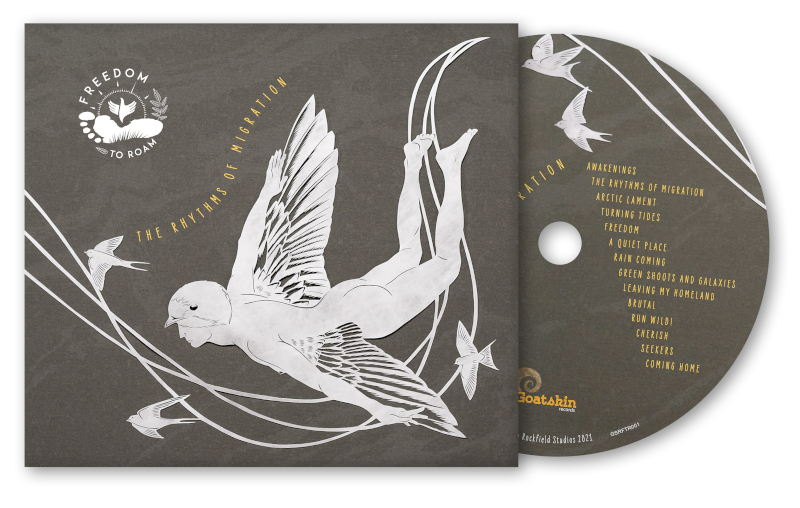
Drawing parallels between the age-old patterns of migration in the animal kingdom and the experiences of modern humans in today’s increasingly fraught world, acclaimed classically-trained flautist Eliza Marshall has brought together a collection of top-flight musicians to create the Freedom To Roam project. Under the banner The Rhythms of Migration the album comprises fourteen specially-commissioned instrumental pieces symbolising, celebrating and capturing migratory journeys.
Conceived as both a humanitarian and an environmental project it explores themes such as climate change, environmental destruction, rewilding, conflict and displacement.
Eliza Marshall:“This album approaches the interconnected challenges of climate change, environmental destruction and human displacement within the context of our needs for freedom, empathy and hopefulness. It’s the starting point to an all-encompassing project that aims to change our understanding of nature, wildness and our pivotal role in the future of life on this planet.”
Melding folk and classical influences to produce a collection of stunning and evocative soundscapes the project can boast a stellar cast of players:
Virginia McKenna, icon of wildlife conservation, and the project she founded the Born Free Foundation emerged as champions of the project and as well as the album it also includes a documentary film and a special launch concert at Cecil Sharp House on 18th December.
Gentle, stirring, dramatic, haunting and utterly immersive Freedom To Roam: The Rhythms of Migration is a wonderfully evocative collection of music that will take all but the most stone-hearted of us on a quite magical journey.
The #FolkForChristmas hashtag came about last year as a means of supporting artists whose income had been hit by the impact of the pandemic, with people being encouraged to support independent artists and, in particular, order directly from them this Christmas rather than head off to Amazon. In putting this list of recommendations together I’ve again used the not exactly scientific method of ranking them in order according to the number of hits each of these reviews received on my website.
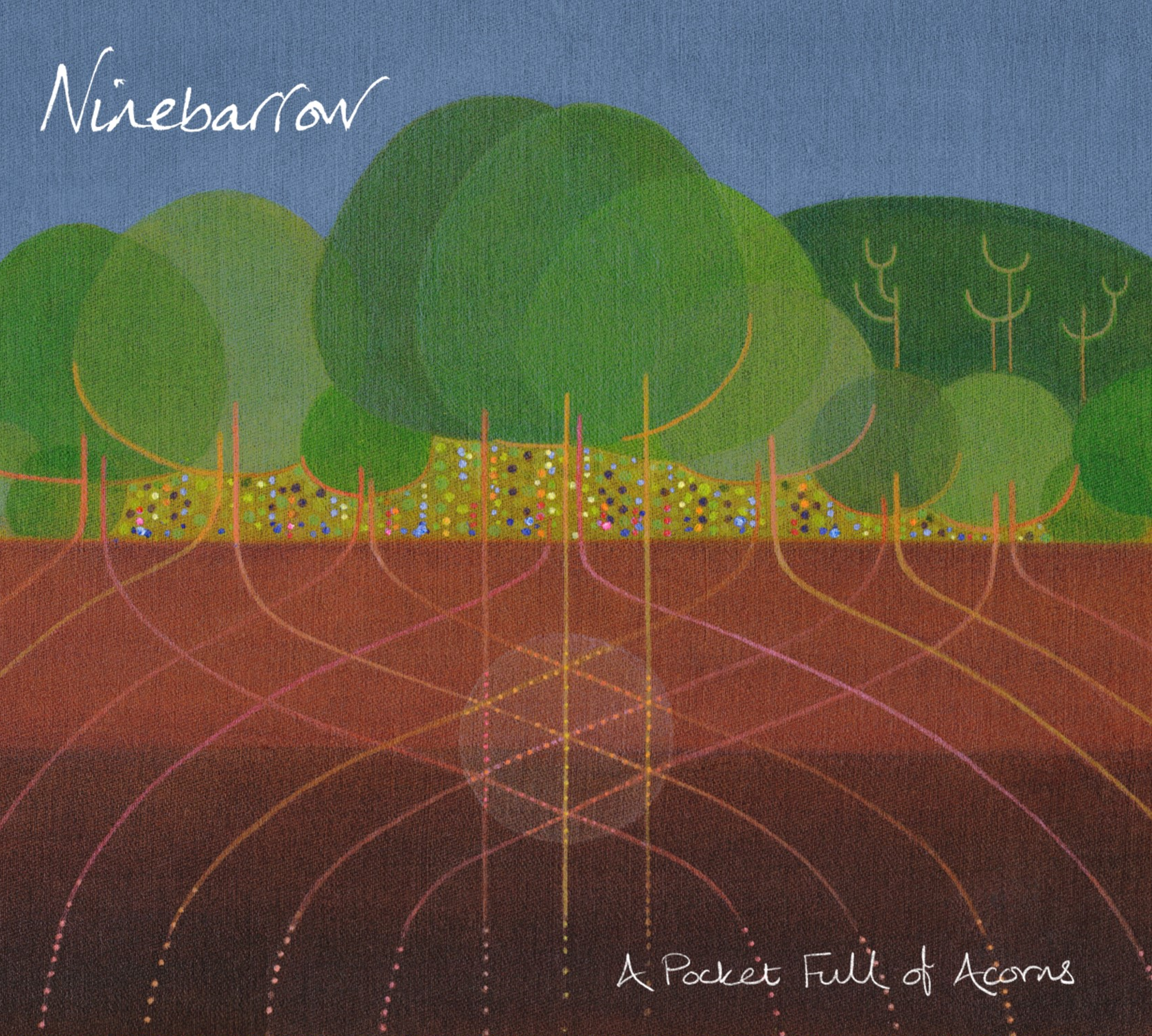
No. 1: Ninebarrow – A Pocket Full of Acorns
With a mix of original song-writing, covers, traditional numbers and musical adaptations of classic poetry, the duo apply their trademark harmonies to produce eleven tracks of exquisite contemporary folk. Highlights include the haunting but utterly beautiful ‘Cold, Haily, Windy Night’ a song about migration inspired by the scenes of destitution at the Calais refugee camp.
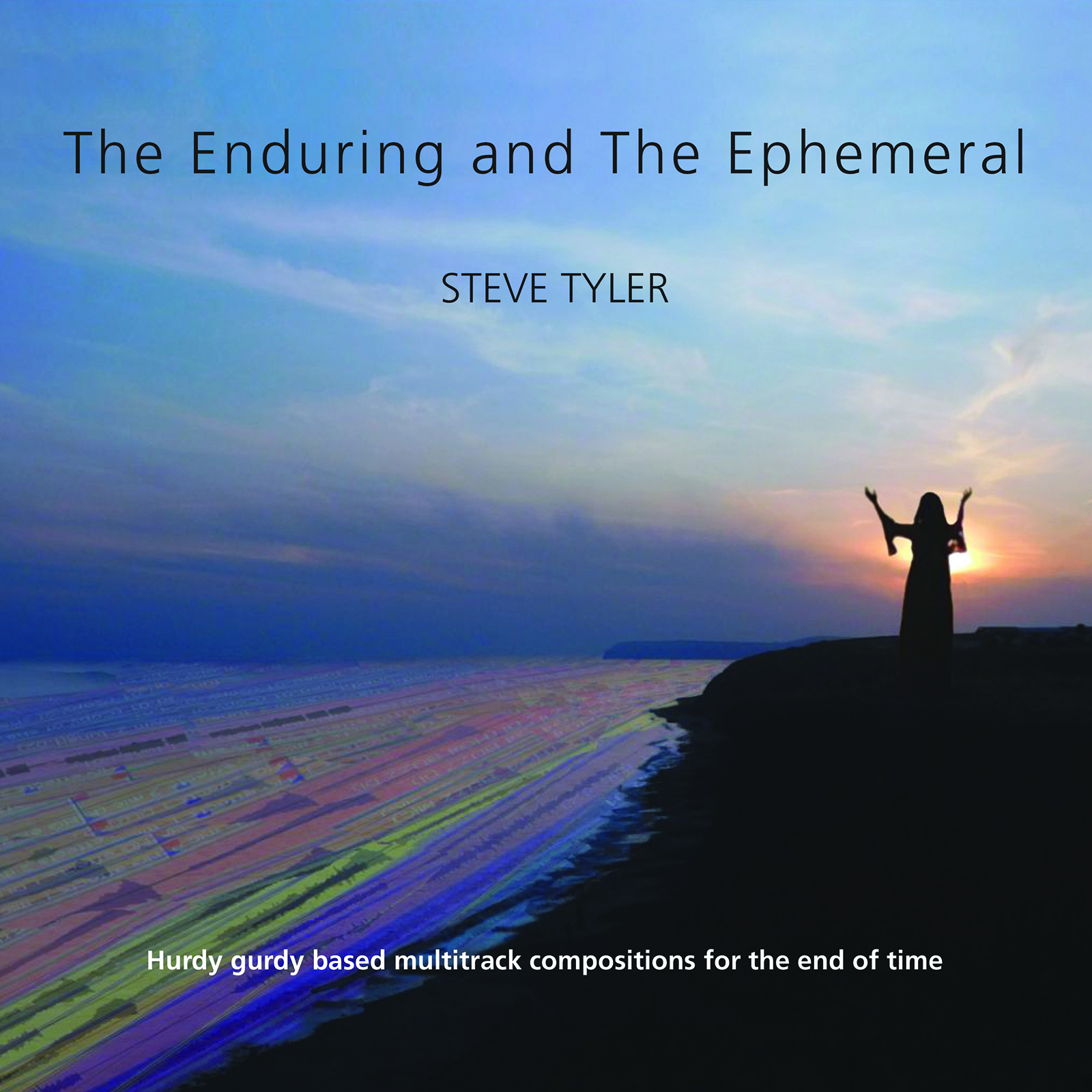
No. 2: Steve Tyler -The Enduring and the Ephemeral
Steve Tyler is a renowned hurdy gurdy player and from early music to traditional folk to industrial electronica he is at home playing within a variety of genres. The Enduring and the Ephemeral, however, is Tyler’s first album comprised fully of his own original material. The unique, utterly mesmerising sound of the hurdy gurdy takes centre-stage in this album of rich, layered, experimental prog-folk subtitled ‘Hurdy gurdy based multitrack music for the end of time’.
No. 3: John Edwin & the Banjodasha Hillbillies – Divine Life of Punarvasu
Swedish singer-songwriter-instrumentalist, Peter Danielsson, had spent time on the road performing in a variety of different outfits. Around a decade ago he felt it was time to go solo and that a change in musical direction was in order. He bought himself a banjo, taught himself to play clawhammer (the distinctive banjo playing style common to a lot of old-time American music) and reinvented himself as bluegrass performer, John Edwin.
The themes range from mythical creatures to long lost love to banishment to battle laments. An especially poignant moment is at the end of the first song ‘Wily Margaret’ where a few verses from an original field recording of the song, now in the custody of National Trust for Scotland, are spliced into MacMillan’s own version. A beautifully-made album that will find a suitable home with anyone who has a love for Gaelic songs and traditions.
I’ve much enjoyed seeing this husband-and-wife acoustic duo, Jim and Josie Tipler, out on the live scene here in East Sussex on a number of occasions. Their thought-provoking, observational and often humorous self-written songs were always a treat to witness and it was a delight, therefore, to get my hands on their debut album.
The album is not a leap into the dark musically but from his early days as ‘the poster boy of English folk’ through to now, Seth Lakeman’s albums have demonstrated a quality and consistency in delivering fine folk songs, superb musicianship and those instantly-recognisable vocals. Fans will not be disappointed.
No. 7: Sons of the Never Wrong – Undertaker’s Songbook
Formed in Chicago almost thirty years ago Sons of the Never Wrong are an alt-folk trio with a signature sound of soaring harmonies and lush acoustic arrangements built around of thoughtful, witty song-writing. Their ninth studio album, Undertaker’s Songbook is something of a celebratory release as the band approach their 30th anniversary.
Put together by singer-songwriter David Boardman back in 2016 there’s harmony vocals, exquisite pedal steel, infectious fiddle, great melodies and heartfelt lyrics. The song-writing is a joint endeavour between Boardman, who cooked up the tunes and the band’s drummer, BBC presenter and all-round music maestro, Mark Radcliffe, who came up with the lyrics. Radcliffe proves himself to be a talented lyricist. His observational storytelling perfectly captures the overall mood that the album evokes.
Ronan Gallagher has the sort of rich, seasoned, easy-going vocal delivery that makes it sound like’s he’s been performing around the pubs and bars of Ireland for decades. Married to some irresistibly catchy melodies, some thoughtful every-man style lyrics and a great cast of supporting musicians who deliver a fine blend of Celtic-infused Americana, it’s a sure-fire winner. Incredibly, however, Gallagher did not begin singing or learning to play the guitar until just over five years ago.
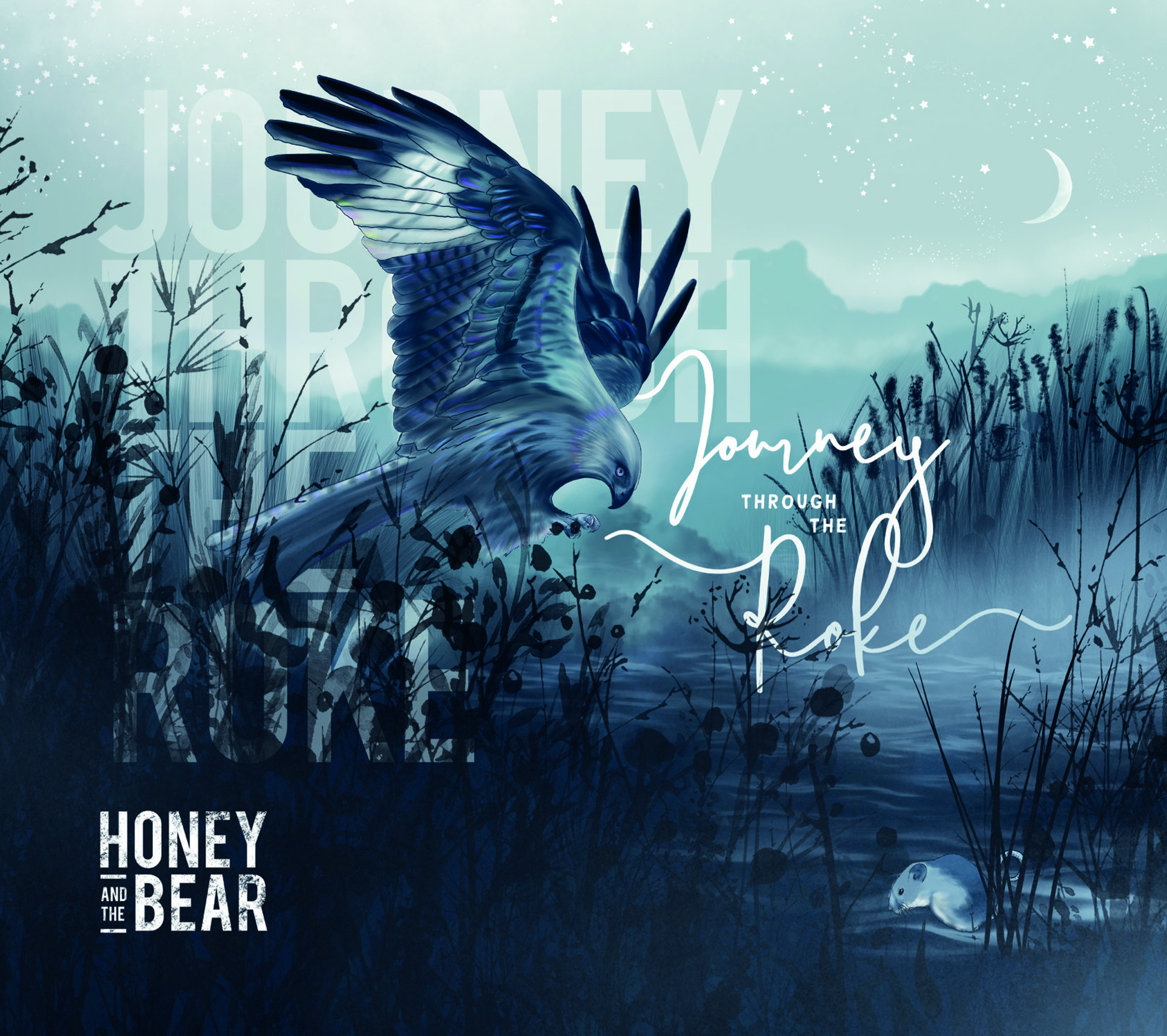
No. 10: Honey and The Bear – Journey Through The Roke
Honey and The Bear are folk duo and singer-songwriters Lucy and Jon Hart. The Suffolk-based couple originally met at a song-writing event, began writing and performing together and spent several years touring the folk circuit before releasing their debut album Made in Aker, back in 2019. Journey Though the Roke is the follow-up, ‘Roke being an old East Anglian word for the evening mist that rises from the region’s marshes and water meadows.
Six-track EP ‘Little Lore’ released 3rd December 2021
“It is clear every word and every note is well thought out. The pedal steel swoons beneath Duffy’s vocals” – Maverick magazine
Little Lore is the new alter-ego, creative endeavour and debut solo EP from Indie-Americana singer-storyteller, Tricia Duffy. Tricia rapidly caught the attention of the Americana world as one half of the duo Duffy & Bird. The duo’s debut album and follow-up EP attracted a slew of glowing reviews, with Maverick magazine heaping praise on Tricia’s vocal ability as “simply breathtaking.”
Now she sets out on a compelling new journey as Little Lore, with an EP of six newly-written, beautifully-crafted songs. Storytelling is always at the heart of Little Lore’s song-writing and her songs are both charmingly accessible and yet beguilingly challenging.
Little Lore:“It actually felt like a natural progression to start working on solo project, I am immensely proud of everything we achieved with Duffy & Bird but my confidence as a writer has definitely grown and I felt ready to take more creative control over this record.”
When you combine British wit and wordplay with cherished Americana roots, musical magic starts to happen. In her songs Little Lore brings together an affection for the heart and heritage of Americana music, with an intelligence and maturity of storytelling that can sweep you away into new and unexpected emotional worlds. While several of the songs are built around those familiar Americana themes of love, heartache and relationships, two of the songs on this new EP grapple with the complexity of climate change and our responsibilities as humans to one another and to the planet.
Little Lore’s captivating vocals and beguiling storytelling is complemented by stunning production and beautiful instrumentation from producer and multi-instrumentalist, Oli Deakin.
Little Lore:“In some ways, 18 months of isolation and lock downs has opened up huge opportunity for me as a writer, I’ve known Oli for over a decade and realising we didn’t need to be in the same country to collaborate was genuinely inspiring. He is an incredibly gifted producer and musician and he knows my taste and sensibilities in music really well, so we were very creatively aligned right from the start which made the whole process a complete joy. He is also extremely patient and has an uncanny knack of translating my ideas into reality.”
Based in Chiswick, west London and originally hailing from Portsmouth, Tricia Duffy started her singing career in a live covers band performing popular rock classics. Over time, however, a strong desire emerged to begin writing and performing her own material and she formed an acoustic Americana duo with fellow musician Al Bird. Her trip to Nashville for a writing workshop in 2017, with songwriter Verlon Thompson and others, meant she came back with new inspiration and a clutch of new songs. Duffy & Bird released a well-received album ‘5 Lines’ in 2017 and a follow-up EP ‘Spirit Level’ in 2019. While Al subsequently decided to take a back seat from recording and performing, Tricia was keen to take things a step further with a new solo direction. Little Lore was born.
Little Lore EP – track by track:
Thief: When I originally set out to write the songs for this record, I had the notion of writing an entire album on the topic of climate change – it turns out that was pretty difficult to do! This song came about, as I tried to think about what the character of the industrial revolution would be if they were personified. In this instance as the unwitting thief. I took inspiration from the likes of Sheryl Crow who is an absolute master of mixing songs with a point with a great melody. It has a folky upbeat vibe to it. Musically I was inspired by the likes of First Aid Kit who I adore. It is a little shining star of a song in my opinion – it has turned out so much better than I could ever have imagined.
Skin in the Game: I actually got the idea for this song when I was running along the river in 2019 and I saw someone reading a book with the title Skin in the Game. I think it is actually a book about cricket judging by the front cover! Clearly this is not a song about cricket … it’s an observational song about relationships and touches on the profound differences between men and women and what they want from relationships. There is also some quite significant inspiration from Bowie in the lyrics … prizes to anyone who spots the references. The production on this song is quite layered and dynamic and feels very accessible while holding on to the indie alternative americana vibe. It is good to get this one out there having sat on it for a couple of years.
Orbit: I was actually a little bit unsure about this song, I was trying to write a more typical love song which I struggle with as I feel I can tend towards cliches in the lyrics. I put this one in the mix when first starting to work with my producer Oli and it was him that said he thought it had great potential. It has a very typical Americana / country feel to it. Originally written in 4/4 time, Oli thought it sat better in 3. I have deliberately not shied away from writing songs in 3/4 or 6/8 on this record. Half the songs are in 3 and half in 4. The American vibe swings so nicely with the waltzy feel and the sentimental subject marries well with that feel.
Sleep Again: This song is really about what happens to people when they become truly informed about the horror of the climate emergency and how it will impact all of us. We saw it so clearly during the climate assembly in the UK earlier this year, when a hundred or so individuals from all walks of life were educated on the issues, and how they transformed their views and their behaviours accordingly. Once the genie is out of the bottle it can’t be put in and I liked the play on climate anxiety too – can you sleep again once you understand the impacts on so many innocent people from the rising temperatures? The production treatment we were aiming for is a lullaby feel I love the idea of taking pretty melodies with beautiful musical treatment on the bleakest of topics. I think this song has the most indie / alternative feel to it while holding on to the Americana roots.
Hyacinth: This is a song about choices, that we all make every day so that we can conform to social expectations. I guess there is a little bit of Hyacinth in all of us, and I am secretly enjoying my own boldness of the references to a certain 80s sitcom! It has a pretty strong rock- americana feel and it is really the chords and the groove that have made this song. I hope this is a song that anyone who likes a jog will put on their running list, it really zips along and can get the foot tapping.
Stars: I have wanted to write a song that touched on spirituality in some form for a while but couldn’t find a premise that suited my own truth. It seems that astrology is having a bit of a cult resurgence at the moment with apps like The Pattern coming onto the scene. And I got thinking about times in my life when I have read my stars and the stars of the people I care about even though I don’t actually believe in them – there is a desperation there. The idea that even though you don’t believe in the horoscopes yourself you are so desperate to learn anything about the person you are missing that you devour the mystic’s analysis of what they might be going through. Looking for clues. It is a really simple song that is very pretty melodically. It is one that I am particularly proud of, and it has gone down live really, really well. I absolutely love what Oli has done to bring my ideas to life – really soaring treatment.
Release information:
The vocals for the EP were recorded at Fiction Studio, London, with vocal engineering by Nathan Cooper. All the instrumentation was recorded in Brooklyn, New York.
The album is produced by Oli Deakin. Oli is a musician and producer from Penrith, Cumbria now based in Brooklyn, NY. He records under the name Lowpines and has produced records for CMAT, Swimming Bell, Elanor Moss and Benjamin Francis Leftwich, with whom he also performs live. Oli can be heard playing the following EP: acoustic guitar, 12-string guitar, high strung guitar, electric guitar, bass, piano, prophet synthesizer, Wurlitzer, strings synth, percussion, glockenspiel.
The artwork for the release was created by Afiya Paice a West London-based artist and designer. She undertakes illustration work to commission and in 2022 she will embark on a degree in Fashion Design at the world-leading fashion school, Institute Français de la Mode in Paris.
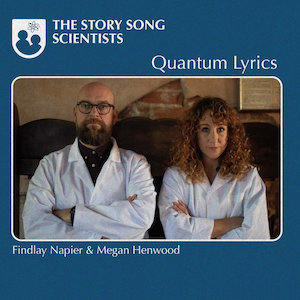
Ever since the folk revival began packing hordes of rather studious-looking, tweed-clad young men and women into the back rooms of pubs in the late 1950s, the folk genre has never exactly been ashamed of the more geeky side of its persona. And while the whole concept of a folk singer-songwriter duo turning out songs about mathematics and science is utterly bonkers – it works. But as Kate Bush proved when she released a song called Pi (π) in celebration of the mathematical formula that was drummed into us all at school, if you are a good songwriter and a talented musician you can pretty much write a song about anything.
That is certainly the case with Megan Henwood and Finlay Napier. The Story Song Scientists don’t just regurgitate mathematical formulas at us, however, but rather take us on quite a wonderful journey with their obvious aptitude for great storytelling. From climate catastrophe to medical breakthroughs to the latest in artificial intelligence to a celebration of the life of clouds, via a detour around the necessary ingredients in the Anarchist Cookbook, Quantum Lyrics offers up beautifully-crafted, innovative and thought-provoking songs with lush musical accompaniment and beautifully distinctive vocals – interspersed with some suitably quirky special effects.
The EP follows on from the duo’s well-received 2018 self-titled debut and sees the pair donning their white lab coats once again. With a cover that pays homage to an old BBC2 Open University broadcast Quantum Lyrics certainly succeeds in its efforts to inform, educate and entertain.
A prolific and acclaimed composer in the world of film, theatre and TV, Roly Witherow won many plaudits for his debut folk album ‘Ballads and Yarns’ last year – including glowing reviews in the Times and Guardian as well as praise from the specialist folk press. Now Roly has followed up 2020’s ‘Ballads and Yarns’ with a new five-track EP ‘Down By the River’ containing both original compositions and his own unique interpretations of traditional folk songs.
As a film and TV composer, Roly’s credits have included Channel 4’s On The Edge, 2015 BIFA nominated film Gregor and Netflix feature film TRY.
As a folk musician and singer, Roly’s influences include Pete Seeger, Ewan MacColl, Peggy Seeger, A.L. Lloyd, Richard Thompson, Nic Jones, Pete Bellamy, John Martyn, Shirley Collins, Dick Gaughan, Nick Hart, Lisa O’Neill and Will Pound.
Roly Witherow: “This new EP is a very new direction for me. If my first album, ‘Ballads and Yarns’ had an experimental bent, stemming from my experience as a film composer, this new album has a ’back to basics’ approach, focussing on the song itself in its most minimal form. The vast majority of the songs are for just acoustic guitar and voice, and the recordings have a very live feel to them, realised in large part by the expert production of Joe Garcia of Joe’s Garage, in Bristol.”
The EP is a combination of traditional songs from the British Isles and further afield, alongside originals such as ‘The Bird and the Frog’ – originally released as a single back in January. The album in general touches on themes of rural vs urban life, family and growing up, love and love lost, nature and animals, industrialisation and mechanisation, as well as the death and lament found in so many folk songs from Britain.
The ‘Down By The River’ EP showcases Roly’s beautifully-evocative acoustic guitar-playing alongside his resonant, distinctive lead vocal. The backing vocals on ‘Johnny’s Gone to Hilo’ are by renowned folk singer Nick Hart. Roly, himself, can also be heard playing harmonium on that same track.
Roly adds:“Down by the River has quite a playful, innocent and childlike quality to it, influenced in part by the children’s songs of Pete Seeger, Ewan MacColl and A.L. Lloyd, but also by my experience of recently becoming a father. One of the songs on the album ‘Ernie’s Song’ is dedicated to my son. Written in a remote part of Devon shortly after he was born it falls somewhere between hymnal folk and a traditional children’s song.”
Critical reaction to Roly’s debut album ‘Ballads and Yarns’:
“The result is like a modern Fairport Convention: folk, but not as purists know it. Witherow’s resonant voice sits beautifully against a spacious guitar arrangement”– The Times
“Soundtrack composer Roly Witherow mixes up art-rock, atmospherics and folk on his personal project, Ballads and Yarns, a rousing half-hour of music given extra warmth thanks to his old-fashioned vocal” – The Guardian
“a modern yet classic celebration of the art of folk music” – Folk Radio UK
Down by the River EP – track by track:
The Bird and the Frog: Previously released as a single The Bird and the Frog is a fable-esque love story, centred on the taming of a Bird by the Frog. The Frog seduces the bird, convincing her to give up her wild and free existence to live with him under a log. They live a peaceful yet humdrum life in the frog’s world and whilst the Frog is contented to have tamed the object of his love, the Bird is left with the sensation that something might be missing. I had in mind thoughts of suburban lifestyles – perhaps the home counties – and our adoption of a highly compartmentalised society, as well as being a tale of young love.
Johnny’s Gone to Hilo: The second single from the EP, Johnny’s Gone to Hilo is a sea shanty originating from the sailors of the nitrate trade of Western South America in the 19th century. Hilo likely refers to the Peruvian port of Ilo, and whilst the tone of the shanty varies a great deal in all its different versions and iterations – from drinking song to lament, I thought the melody of the song lent itself best to a sorrowful arrangement with guitar and harmonium. The backing vocals are provided by renowned local folk singer Nick Hart who, raised in a family of Morris dancers, is no stranger to telling a mournful story with his powerful voice. The recording of the harmonium with all its noisy stops, billows and pipes was a particular challenge for producer Joe Garcia, but with some clever mic placement was eventually achieved with great skill.
The Poacher’s Fate: I first heard Peter Bellamy’s beautiful rendition of this folk song that celebrates the poachers of old, a trope of English folklore, and instantly wanted to do my own version. The song is full of raw emotion and has a kind of Robin Hood ethos to it. I wanted to heighten the drama of the song by using a few different guitar techniques to follow the story, like the flamenco-style strumming that accompanies the death of the poacher. This is something I learned a long time ago when I played Classical and Flamenco nylon string guitar, but I also think it works nicely on steel strings!
Three Butchers: I came across this song in the penguin book of English folk songs, so I was first drawn to the story which is one of intrigue and deception, then I set about setting it to music, with the guitar playing a steady trot to suggest the motion of the horse and cart.
Ernie’s Song: This last song is an original named after my son. It kind of spans the territory between hymnal folk and children’s song! I’m not really sure how to categorise it to be honest, but it talks of growing up, longing for a more simple life, as well as rural vs urban existences. I wrote this during the pandemic shortly after my son was born. We were staying with my mother in a remote part of Devon which undoubtedly influenced the lyrics.
This review was originally published by Get Ready To Rock here
Seth Lakeman’s eleventh album, and his follow-up to 2020’s Mayflower-themed A Pilgrim’s Tale, was conceived during lockdown when, like countless other singer-songwriters the world over, he used the down-time from live performance to ponder the meaning of life, the universe and everything and come up with some new songs.
“The pandemic gave me a real determination to come out musically stronger and I really dug deep into myself for this album,” says Lakeman. “Being able to record and play with the band again was really quite spiritual.”
The result is Make Your Mark. Unlike its highly conceptual predecessor it tackles a range of themes, inspired by Lakeman’s own thoughts and feelings about the state of the world, love, life and death as well as the stories and landscapes of his West Country surroundings. Lakeman has spoken of this latest release as being a kind of sister album to his 2006 release Freedom Fields. The latter celebrates its fifteenth anniversary this year and the set-list for Lakeman’s current tour has focused on both songs from Freedom Fields and from this new album.
Musically, Make Your Mark is exactly what you would expect and hope for from a new Seth Lakeman album: fourteen thought-provoking yet accessible songs, all delivered in Lakeman’s unique trademark style.
Long-time musical collaborator, Ben Nicholls, joins him once more on this album with some deliciously dark, brooding superbly intense double bass playing, as does former Bellowhead and current Steeleye Span instrumentalist, Benji Kirkpatrick, who, once again, adds his distinctive banjo, bouzouki and mandolin playing.
The album is not a leap into the dark musically but from his early days as ‘the poster boy of English folk’ through to now, Seth Lakeman’s albums have demonstrated a quality and consistency in delivering fine folk songs, superb musicianship and those instantly-recognisable vocals. Fans will not be disappointed.
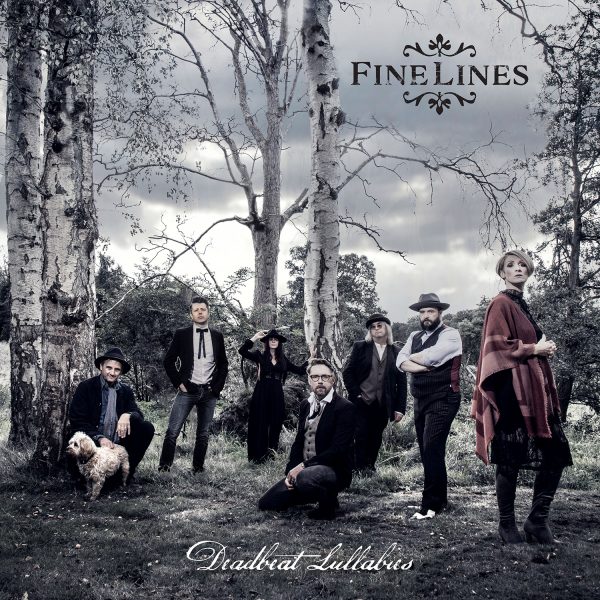
Deadbeat Lullabies is the third album from UK seven-piece Americana outfit Fine Lines. Their first two albums received a slew of glowing reviews and they’ve been a popular draw on the circuit, although so far they seem to have eluded me. Hopefully, that will be rectified before too long as they are a quality band and Deadbeat Lullabies is a fine album.
Fine Lines are Zoe Blythe (vocals), David Boardman (vocals and guitar), Gary O’Brien (piano and Hammond organ), Emily Doggett (fiddle), Chris Lee (pedal steel and mandolin), Jim Broughton (bass) and Mark Radcliffe (drums and backing vocals).
Put together by singer-songwriter David Boardman back in 2016 there’s harmony vocals (courtesy Boardman and fellow singer Zoe Blythe) exquisite pedal steel, infectious fiddle, great melodies and heartfelt lyrics. The song-writing is a joint endeavour between Boardman, who cooked up the tunes and the band’s drummer, BBC presenter and all-round music maestro, Mark Radcliffe, who came up with the lyrics. Radcliffe proves himself to be a talented lyricist. His observational storytelling perfectly captures the overall mood that the album evokes.
Fans of late-period Byrds, early-period Eagles, Gram Parsons, Tom Petty and the Band will all find plenty to like here. The influences are never far away but the songs are totally fresh and original.
While I’m writing this on a cold, dark evening in Hastings, these songs are just perfect for a chilled-out afternoon in the summer sun and I look forward to catching them at a festival at some point. We probably all need a bit more of Fine Lines in our lives at the moment.
This review was also published by the Hastings Online Times here
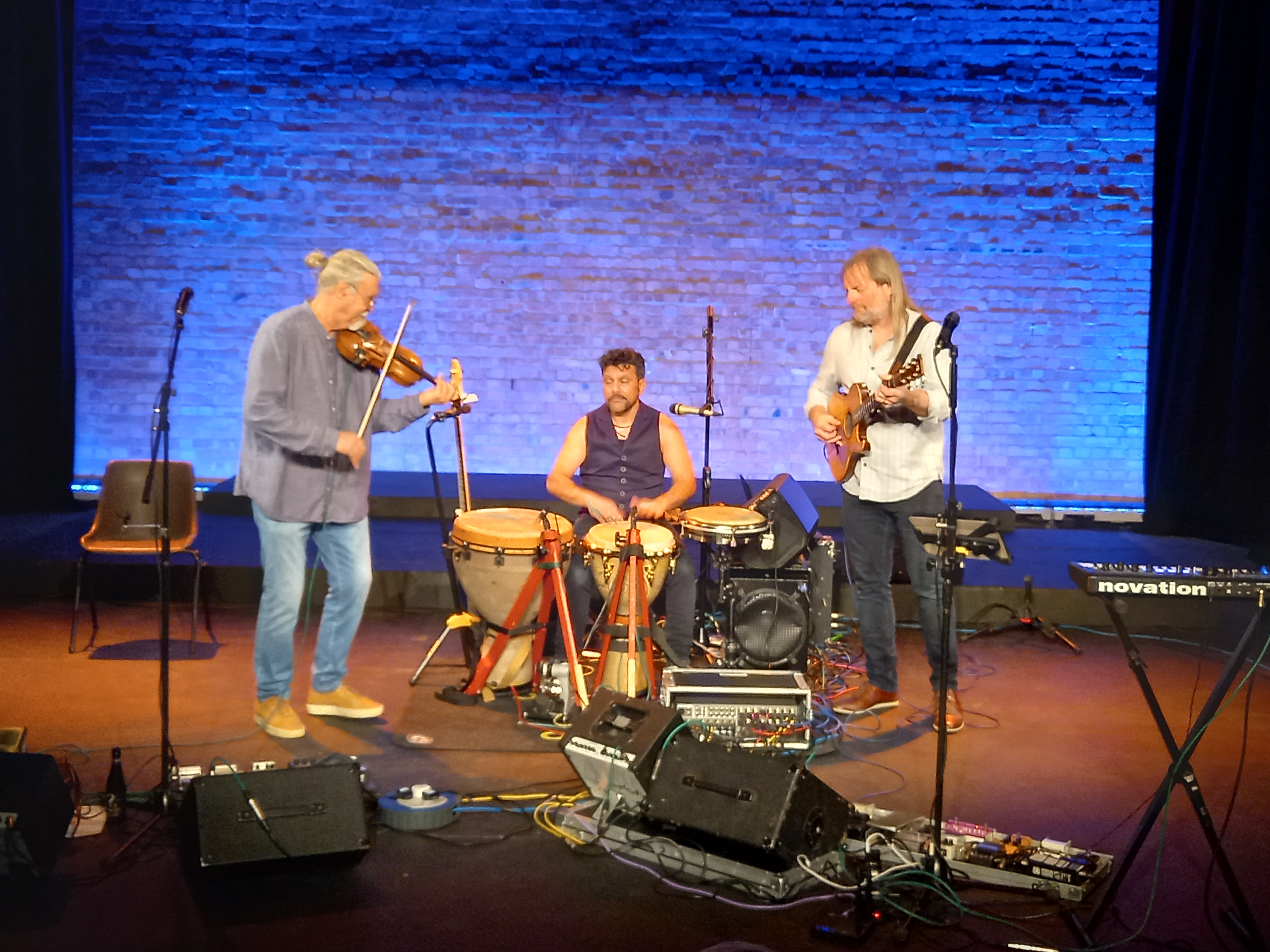
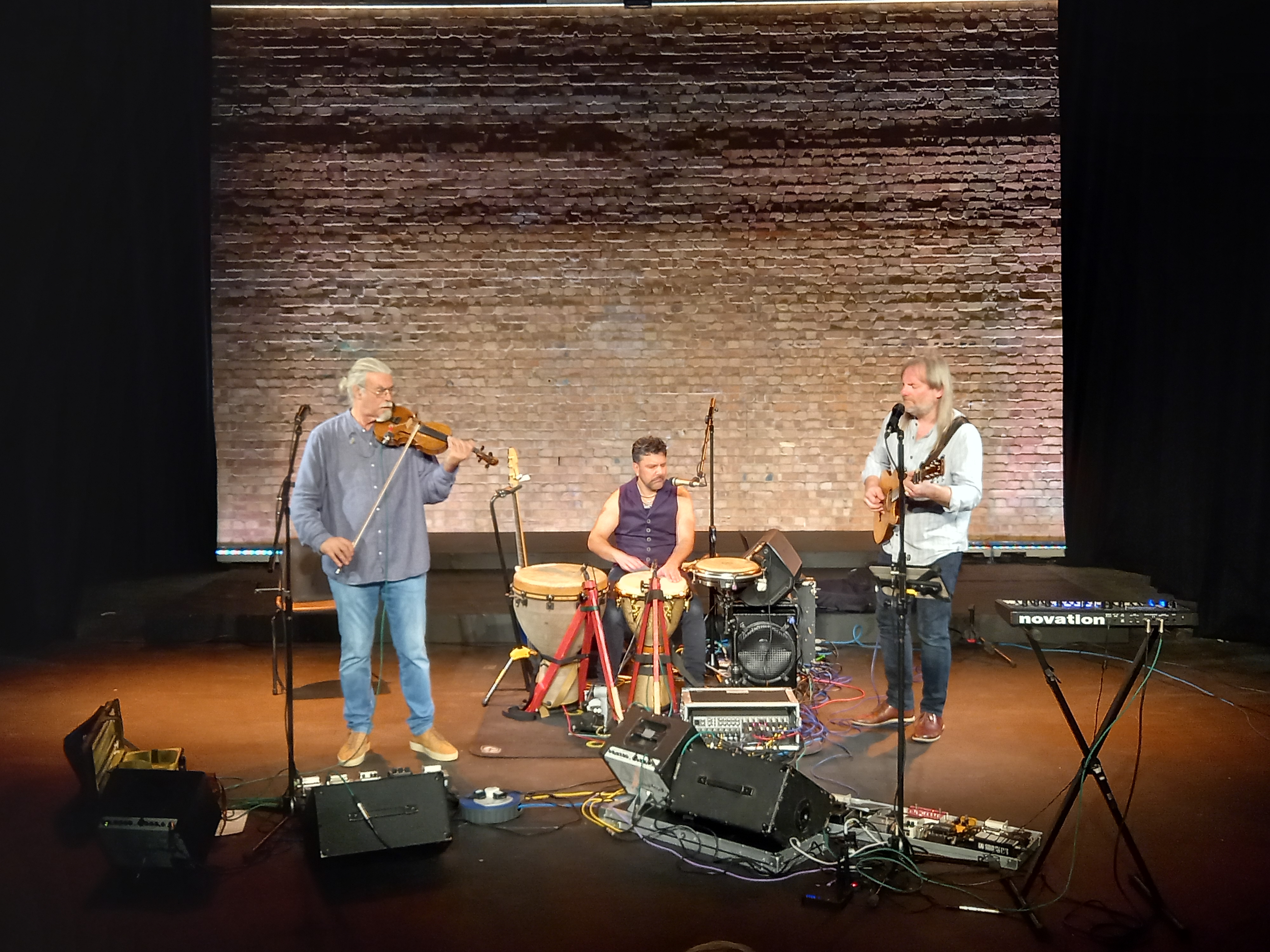
Given both guitarist, Roger Flack, and percussionist Sacha Trochet are both Hastings residents and fiddle-player Peter Knight has a longstanding association with the town going right back to his Steeleye Span days, the Gigspanner concert at the Stables Theatre in Hastings old town was something of a post-lockdown homecoming gig. There was certainly a packed auditorium to welcome back the trio.
Peter Knight’s Gigspanner has now being going for well over a decade, with their first album released back in 2009. Initially starting out as a side project from his main work as part of Steeleye Span, Knight eventually left the folk rock icons in order to make Gigspanner his main priority. Now he’s back to juggling two different bands again with an expanded Gigspanner Big Band – which incorporates multi-instrumentalist dup Phillip Henry and Hannah Martin as well as Bellowhead icon John Spiers joining the core trio. The expanded set-up are in East Sussex next month, performing at Hailsham Pavilion on 4th December. Tonight, however, it’s the regular-size trio version of Gigspanner taking the stage.
With a set that included many Gigspanner live favourites like ‘Seagull’, ‘Butterfly’, ‘Bows of London’ and ‘Sharp Goes Walkabout’ each one is greeted like an old friend. There’s no letting up in the flair, inventiveness and spirit of improvisation to the performance, however, as they distil that trademark blend of English and Irish folk and a vast array of world music influences to deliver something that continues to be spell-binding and utterly mesmerising.
The newest member of the trio, Sacha Trochet, who took over from original percussionist Vincent Salzfaas, has help propel the already excellent Gigspanner to a whole new level, bringing in a much more experimental bent to the percussion and a broader texture of sounds.
It is always an absolute delight seeing Gigspanner and after a big Covid-shaped hole in my gig diary these past eighteen months it’s lovely to have them back.
Featuring ten esteemed Scottish folk artists, the Sense of the Place album was commissioned by Stonehaven Folk Club with support from Aberdeenshire Council as part of the club’s Folk-In-Crisis-Fund to provide financial relief to performing artists whose livelihoods were seriously impacted by the Covid-19 pandemic.
An impressive endeavour in itself but this Sense of the Place no random ‘best-of’ style sampler but rather a collection of specially-commissioned and newly-recorded songs drawn from a reference archive of historical and geographical material relating to the coast lands between Findon and St. Cyrus in the north-east of Scotland.
To bring the project to fruition ten songwriters, were invited to use the archive to create ten new songs inspired by the area’s history, culture and geography. It’s a spectacularly ambitious projects with stunning results.
Some internationally acclaimed, others well known locally, there’s a top-notch array of folk singer-songwriters including Iona Fyfe, Kris Drever, Jenny Sturgeon, Findlay Napier andPaul McKenna. Musical accompaniment is provided by Aaron Jones, Mhairi Hall, Emma Smith, Jen Austin and Mike Vass.
Themes for the songs include the tale of Lady Finella – who was assassinated by a Scottish king; a celebration of Aberdeenshire’s Todhead Lighthouse – and those who worked to keep it alight; and the story of the Cutty Sark – told from the point of view of the ship!
It’s a really lovely album raising much-needed funds for an important initiative. Last year, the folk world came together under the #folkforchristmas hashtag to encourage folk fans to support folk artists by buying an album. I’m not sure if there is going to be a similar initiative this Christmas but one way or the other if you’re a folk fan I recommend you put this on your Christmas list.
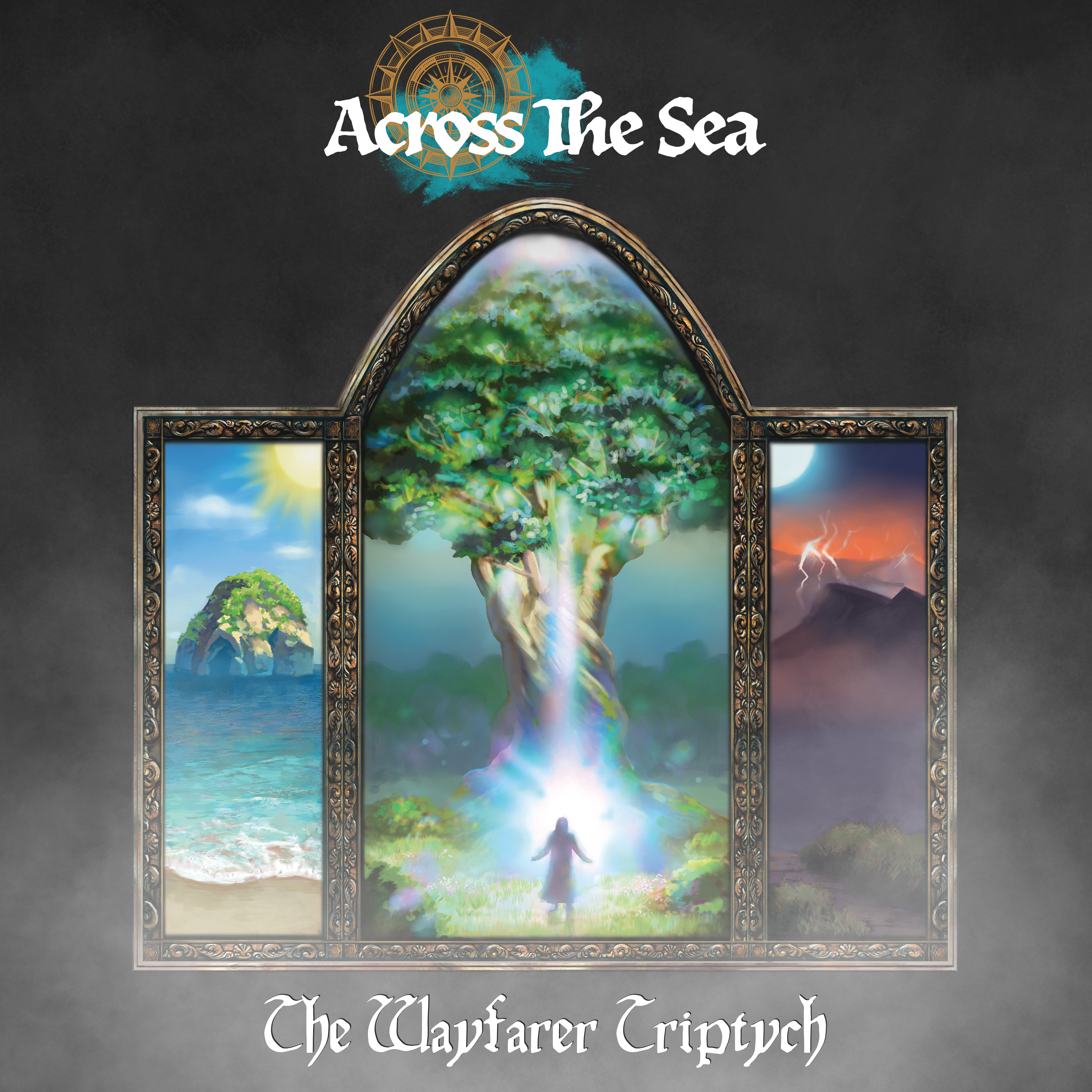
One of my album delights this year has been the The Wayfarer Triptych from Worthing-based prog acoustic duo Across The Sea. That is not just because I had the pleasure of working on PR for Hannah Katy Lewis and Pete Ferguson who make up Across The Sea but because it really is a genuinely stunning album.
Their nine-track, three-part concept album narrates the story of a girl who discovers a beguiling triptych painting and embarks on a fantastical journey in search of hope, purpose, and a forgotten truth. It’s an ambitious concept by any standards but even more so when you consider that the entire album is built around the extraordinary vocals of classically-trained Hannah Katy Lewis and the equally extraordinary acoustic guitar-playing of Pete Ferguson. Between them they conjure up the sort of magic that other prog outfits with banks of keyboards and a studio full of multi-instrumentalists would be hard-placed to emulate. The sound is deep and lush and all-encompassing with as many twists and turns as the story-telling in the lyrics.
This stunning album with breath-taking vocals, astonishing guitar work and beautiful atmospherics will have great appeal to anyone with an interest in the folk/acoustic and prog worlds. My tip: turn it up loud, forget everything and totally immerse yourself in the magic and intensity that is Across The Sea.












 Darren's music blog