Monthly Archives: December 2016

Slade, strikes and the three-day week: the story of the greatest Christmas record ever made

This and other Slade classics are covered in my book ‘Slade In The 1970s’

Brash, colourful, over the top, glittery – 1970s glam rock and Christmas seemed made for each other. Yet glam had been in ascendancy for some two years before anyone contemplated putting the two together. And more than anyone else, we can thank Slade for that. From the familiar pounding on the harmonium in the opening bars to the final “It’s Christmaaaas!” Slade’s Merry Xmas Everybody remains one of the most well-known and most popular Christmas records of all time. Released in December 1973, the Performing Rights Society once calculated that it is the world’s most listened-to song, heard by an estimated 42% of the global population.

“My mother-in-law the year before had said why don’t we write a song like “White Christmas”, something that can be played every year.” Jim Lea, Slade (Uncut Magazine)

Recorded in New York in the summer of 1973, Noddy Holder told Uncut magazine that he wanted the lyrics to convey a mood of optimism. The song certainly does that. But at the time of recording it, the band would have little clue as to how grim things were going to get in Britain that particular winter. Conservative Prime Minister Ted Heath’s increasingly fractious battle with the miners took a dramatic turn. Mineworkers, like all public employees at the time were suffering the effects of below-inflation pay increases at a time of hyper inflation, and were pursuing industrial action for higher pay. Regular domestic power cuts became a fact of life.


Merry Xmas Everybody was released on 7th December 1973. On 12th December Heath announced that in order to conserve coal stocks, as from midnight on 31st December the Government would be enforcing a three-day week. Companies were to be permitted to consume electricity only on three consecutive days per week, additional working hours were to be banned and TV companies were required to cease broadcasting at 10.30pm each night.

“We shall have a harder Christmas than we have known since the War.” Edward Heath

This was the Christmas in which Slade’s Merry Christmas was first unleashed on to the public.

It’s a ground-breaking Christmas song in a number of ways. Unlike the treacly nostalgia of previous Christmas classics, Holder and Lea managed to capture the essence of a working class family Christmas:

Are you waiting for the family to arrive
Are you sure you’ve got the room to spare inside
Does your granny always tell you
That the old songs are the best
Then she’s up and rock ‘n’ rolling with the rest

That was combined with a genuine spirit of bright, breezy optimism:

So here it is Merry Christmas, everybody’s having fun
Look to the future now, it’s only just begun

There is a freshness about the way that line is delivered that still sounds fresh even today. “In terms of comfort we shall have a harder Christmas than we have known since the war,” Heath declared ominously. But while it might be argued that anything Slade recorded at that particular time in pop history was destined for the Number 1 slot anyway, there was something marvellously subversive about Slade’s Christmas single being the best selling record at the time. People singing along to a chorus that celebrates having fun and looking to the future during the middle of a heated political stand-off, a major breakdown in industrial relations, a draconian response from government and a very bleak-looking New Year indeed.

The three-day week came into force on New Years Day 1974. The Christmas song that was the antidote to it remained at Number 1 until well into the middle of January. In fact, it was February before it dropped out of the charts. As the chorus makes clear, the song is very much a song for the New Year – looking ahead to the future – and not simply one about Christmas.

The Government’s battle with the miners continued to intensify and, refusing to back down, Heath called an election in February 1974. “Who governs Britain?” demanded Heath. “Not you!” the voters told him. He lost the election and embarked on what became known as the longest sulk in British political history. The National Union of Mineworkers secured their pay rise, returned to work and lived to fight another day. But they would be brutally smashed by the Thatcher Government a decade later and Britain’s pit communities decimated. Whatever the battles of the past, the challenge of climate change, of course, means that the only sensible coal policy today is to leave the rest of it in the ground.

Yet Slade’s Merry Xmas Everybody lives on, outliving the three-day week, Ted Heath, the miners and (in its original formation) even the band itself. That celebration of working class life in the festive season and the bright sunny optimism for a better future ahead still makes it the greatest Christmas song ever recorded.

It’s Christmaaaaaas!!!

Related posts here:

Slade in the 1970s by Darren Johnson – reviews round-up

Interview with Don Powell

Interview with Jim Lea

Slade Fan Convention 2016

Slade live in Hastings 2016

Slade live in Minehead 2015

Folk: EP review – The Changing Room ‘The Magic of Christmas’

My review was originally published by Bright Young Folk here

It’s been quite a year for The Changing Room, the Cornish-based folk duo of Tanya Brittain and Sam Kelly. Kelly picked up the Horizon prize at the BBC Folk Awards, the duo’s second album Picking Up the Pieces was released in the summer and there was also a collaboration project with The Lost Gardens of Heligan. So what better way to round of the year than with a Christmas EP.

Though neither originate from Cornwall (Brittain is originally from Sheffield and Kelly from Norfolk) they have undoubtedly helped give a greater profile to the Cornish language in folk music. Once formally classified “extinct” by UNESCO, Cornish has undergone a remarkable cultural renaissance in recent decades, thanks in no small part to the musical contributions of outfits like The Changing Room.

From June Tabor and Oysterband’s cover of Love Will Tear Us Apart to Richard Thompson’s spirited cover of Britney Spears, there have been some great folk makeovers of rock and pop classics in recent years. This EP continues that tradition with a cover of The Pretenders 1980s seasonal hit 2000 Miles, in Cornish, of course.

Even if one never learns or understands a word of Cornish it’s a beautifully expressive language and Kelly’s vocals, as fresh and contemporary-sounding as we have come to expect, handle the song equally beautifully.

The second track is Brittain’s own. Her ethereal Enya-like vocals give depth and beauty to this moodily atmospheric piano and vocals track, this time in English, all about the magic, brightness and calm of Christmas eve.

For the final track, the duo present their take on Silent Night. Anyone thinking they have quite enough versions of this song amongst their Christmas folk CDs already, can be reassured that this is something quite special. Again sung in Cornish, Kelly’s vocals are set against a mandolin backing that is as warm and melodic as a set of Christmas chimes, without a trace of overdone Christmas cheesiness or seasonal cliche.

For those looking for something striking, fresh and a just little different for their seasonal folk playlist this year The Magic of Christmas EP from this talented duo is well worth a punt.

Released November 2016

http://www.thechangingroommusic.com/

the-magic-of-christmas-ep-the-changing-room

Related review:

Sam Kelly Trio at Green Note 2015

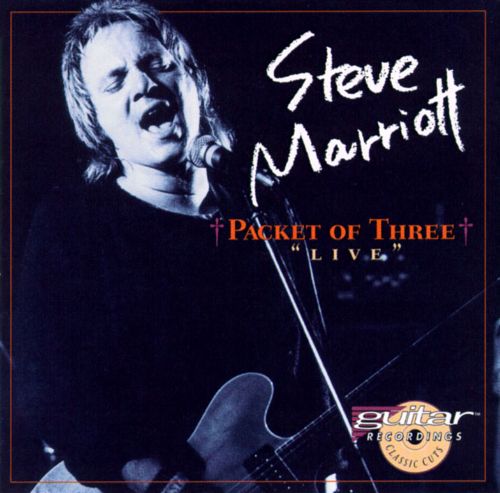
1985: Twenty of us in a cellar bar in Blackpool with Steve Marriott – memories of seeing Humble Pie/Small Faces legend

Iconic musicians of the 60s and early 70s are rightly celebrated now. But the mid 80s could be a harsh climate for many such icons. And although the end of the 60s was only 15 years previously it genuinely felt like a different world musically back then.

mi0002514837

I’d got into Marriott’s former bands, Small Faces and Humble Pie, via a compilation tape that had a track from each on. It led me to pick up compilation LPs of each band’s Immediate output and I was genuinely thrilled to see that the former guitarist/lead singer of both bands would be performing at the Bier Keller in Blackpool where I had recently moved. This would be 18-year old Darren’s third trip to the Bier Keller. The first I’d gathered a group of flatmates, friends and hangers-on to come and see Brian Connolly’s version of The Sweet. But that ended in disappointment and drunkenness when Connolly never showed up. The second time was for Tony’s McPhee’s Groundhogs, where I’d managed to persuade a flatmate to come along but he left after about three songs. The third time I was on my own.

2016-10-22-14-27-25

I got there and there were no more than around half a dozen audience members and three band members. Marriott was deep in conversation in the tiny backstage area but I got chatting to bass player Jim Leverton who was hanging by the door. I fired off the titles of several of my favourites from the Immediate compilations and waited, expectantly, for Leverton’s response. “Nah, we don’t play any of those any more. But if you enjoy the blues you’ll enjoy this.”

I really wasn’t sure what to expect at this stage. The place was still almost completely empty although the crowd had grown to about 15-20. But Marriott and his two Packet of Three colleagues came on stage and launched into an explosive set: ‘Watcha Gonna Do About It”, “Bad Moon Rising”, “Tin Soldier”, “I Don’t Need No Doctor.” Many of these would be on Marriott’s Live At Dingwalls album that my dad bought for me soon after when I enthused to him about the gig.

It was incredible to see him giving it his all to no more than 20 people. It wasn’t a particularly long set but afterwards he sat at the bar while very single member of the audience queued in line to buy him a brandy, get something signed and have a chat.

I’ve still got the faded 30-odd-year-old scrap of paper Steve Marriott, Jim Leverton and drummer Fallon Williams signed for me.

2016-12-05-09-13-15

I didn’t get to see Marriott again until I moved to London five years later and saw him at the Half Moon in Putney. Knowing the band gigged regularly on the London circuit I was looking forward to seeing quite a bit more of him. But sadly, only a few months later came the news of the tragic house fire that took his life. At least I got to see the great Steve Marriott live.

The Sweet versus Bowie: the riff in Blockbuster and Jean Genie – origins and influences

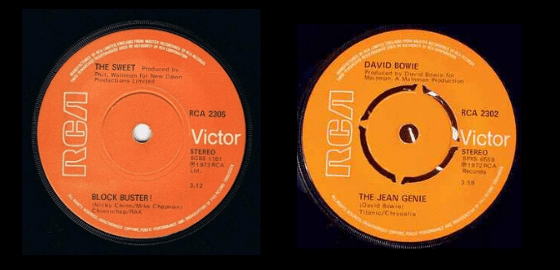
In January 1973 at the height of the glam rock craze, two singles with instantly memorable but remarkably similar riffs were both enjoying chart success: The Sweet’s ‘Blockbuster!’ and David Bowie’s ‘The  Jean Genie’, each released by RCA records. Which came first? Were they both dreamt up independently? Did one copy off the other? Or did they both draw on influences from somewhere else?

In the folk world songs have always been adapted, evolved and passed on. In the rock world that sort of behaviour is more likely to get you involved in lengthy court cases and costly lawsuits. But in folk there has been over a century of legitimate and rigorous study looking into the often murky origins of traditional songs and tunes. A simple question therefore is: can the principles of studying folk in determining song origins also be applied to glam rock?

We start with the song ‘Blockbuster!’ written by The Sweet’s then songwriting team of Mike Chapman and Nicky Chinn, recorded on 1st November 1972 in London and released in January 1973. In Dave Thompson’s Sweet biography ‘Block Buster’, The Sweet’s Steve Priest recalls Chapman playing his idea for a new song on an acoustic guitar while they were backstage at the BBC waiting to go on Top Of The Pops to perform ‘Wig Wam Bam’ (most likely their appearance on 14th September 1972).

The riff was remarkably similar to David Bowie’s ‘The Jean Genie’ recorded on 6th October 1972, released in November 1972 and in the charts at the same time. “While en route to Tennessee, ‘The Jean Genie’ was developed from an impromptu tour bus jam,” in September 1972 recounts the Mick Ronson biography, ‘The Spider With The Platinum Hair’ by Weird & Gilly. This would have been just prior to the band’s gig in Memphis which is recorded as taking place on 24th September 1972, several days after Mike Chapman strummed the riff for Blockbuster to Steve Priest on the other side of the Atlantic.

Both sides have always denied copying one another and given both ‘Blockbuster’ and ‘The Jean Genie’ were recorded and released around the same time it seems unlikely that either would have had time to secretly copy the other, then get it recorded and released, all within the confines of the same record company, RCA.

What is far more likely is that they were both influenced by the Yardbirds’ 1965 hit ‘I’m a Man’.

Alwyn Turner’s website Glitter Suits & Platform Boots quotes The Sweet’s Andy Scott as follows: “And then, you wouldn’t believe this, before our release we were in the office of the guy who was our contact at RCA and he played us the new David Bowie record, he played us ‘Jean Genie’. And I went, ‘That’s the same guitar riff,’ and he went, ‘Is it?’ This is a record company guy and I’m saying, ‘Haven’t you noticed?’ And he went, ‘No.’ I was horrified, I was thinking: that’s coming out first, and we’re coming out a week behind it, on the same label, it’s got the same guitar riff. I said: well, we don’t stand a chance of being #1. That was my thought. And within three weeks we were #1 and he was #2. I’ve since spoken to Trevor Bolder, the bass-player, and he said, ‘Remember “I’m A Man”?”

Here is that Yardbirds’ version of ‘I’m A Man’.

Interestingly, Iggy Pop and The Stooges also recorded a version of ‘I’m A Man’ during the sessions for the Raw Power album in early 1972. Bowie was involved in remixing this album and although ‘I’m A Man’ doesn’t appear on the album, he would certainly have been familiar with the Stooges cover version. Could this have had an influence on Bowie’s ‘The Jean Genie’ later that year?

We can hear Iggy & The Stooges version of ‘I’m A Man’ here.

Both recordings are, of course, cover versions of a 1955 original version of ‘I’m A Man’ by Bo Didley.

Bo Didley’s song is itself influenced by a song Willie Dixon wrote for Muddy Waters ‘Hoochie Coochie Man’ recorded in 1954

The blues of Bo Didley, Muddy Waters et al can be traced back through the early electric blues of the 1940s to the acoustic blues of the 1920s, through the slave trade, plantations and back to African origins, where a number of the elements that would come to define key features of the blues could be traced back to.

But it’s worth specifically going back to that Bo Didley tune. The riff in ‘I’m a Man’ is significantly changed from that played by Muddy Waters in Dixon’s ‘I’m A Man’. Didley has adapted the tune as a simple repetitive four note riff repeated throughout the entire song, making it notably different.

So although it was influenced by an earlier blues song I think we can safely say that the riff that appears in ‘Blockbuster!’ and ‘Jean Genie’ first emerged in a Bo Didley song in 1955.

Book: The Sweet in the 1970s

If you enjoyed reading this my book ‘The Sweet In The 1970s’ is out on 30th July 2021.

Details here

Links and thanks:

Some great background info and quotes here http://www.alwynwturner.com/glitter/sweet.html

Thanks also to Michael Duthie for pointing me towards the Mickie Most video (below) and to Josh Beeson for pointing me to the Iggy & The Stooges version of ‘I’m A Man’.

Another fascinating release from the 60s that could have played an influential role in the later 70s glam releases was Mickie Most’s 1964 version of ‘Money Honey’.

Unlike earlier versions of Money Honey by Elvis and previously The Drifters, the Mickie Most version utilises that same Bo Didley riff. Most would go on to be a towering figure in glam rock as mentor and producer for Suzi Quatro and as RAK Records boss, home to the likes of Quatro and Mud. He knew Mike Chapman very well and could have helped plant some of the creative seeds for that Blockbuster riff, further strengthening those glam rock links back to blues history.

Related posts:

‘The Sweet in the 1970s’ by Darren Johnson – published 30th July 2021

Before glam: the debut 60s singles of Bowie, Bolan, Slade, Mud and Sweet

From AC/DC to ABBA: five classic glam rock singles by non-glam bands

Slade, strikes and the three-day week: the story of the greatest Christmas record ever made

Lost In Space: interview with former Slade legend Jim Lea

Interview with Andy Scott ahead of Sweet’s 2019 UK winter tour

Death of a glam icon – Steve Priest: 1948-2020

July 2012: The night Jimmy Page asked if he could hang out with me

Of my 16-year stint in full time politics as an elected member of the London Assembly (holding first Ken Livingstone then Boris Johnson to account) most of it was never particularly glamorous. But occasionally I did get to meet the odd rock star or two in my line of work: Bob Geldof, Brian May, Dexy’s Kevin Rowlands and, yes, Jimmy Page.

It was the evening before the Opening Ceremony of the 2012 Olympics and there was a reception at the Mansion House in the City of London. I arrived at exactly the same time as Jimmy Page (who had performed at the Closing Ceremony of the Bejing Olympics you will recall but didn’t have any formal role in the London Games). Of course, I recognised him straight away, introduced myself, got him to autograph the back of my invitation and we got chatting. As I’d been to loads of these things before, while we walked up the stairs I helpfully explained the set-up and all the archaic rituals you went through. I didn’t want to monopolise his company all evening and assumed that he’d have plenty of people he wanted to chat to, so once we’d got past all the flunkies and the formal introductions and the rituals where out of the way I shook his hand and let him get on with the rest of his evening.

Two minutes later, he’s back: “Well Darren,” Jimmy whispered, “I don’t really know anyone here, do you mind if I hang out with you for the rest of the evening?”

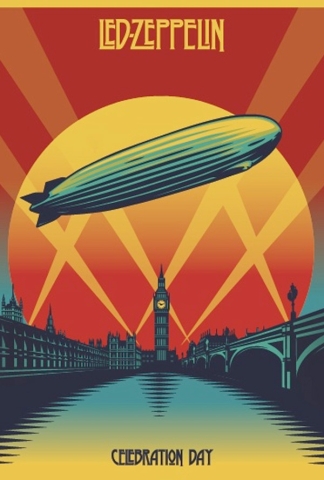
What a lovely, unassuming man and what a relaxed, fun, brilliant evening we had. I said I’d introduce him to some of the other people there but first we had a long chat about the making of Led Zep IV, about the state of the modern music industry, about his old cottage by Loch Ness, about bands and musicians we both admired and about many, many other things. I asked him what he was currently working on: “Don’t say anything to anyone yet but we’re putting out a DVD and CD of the reunion concert we did at the O2. It’s coming out in a couple of months. That’s been my main project at the moment but keep it to yourself.”

Other people joined up with us at various points during the evening (including Boris Johnson’s Environment Deputy, Matthew, another big Zep fan – pictured above on the left). But I kept my promise about the Celebration Day release and never said a word to anyone until the official announcement. We stayed until the end and as one of the waiters was clearing up after us, he quickly pulled a Led Zep CD out of his pocket and asked Jimmy to sign it, which of course he did.

I will always have fond memories of the night I let Jimmy Page hang out with me. And the surreal nature of that memorable request will probably stay with me for a good while yet.

led_zeppelin_-_celebration_day