Tag Archives: 1970s

Live review: We Love The 70s at Butlins, Bognor Regis 13-15 September 2024

And so to Butlins again for another music weekend. Although I’ve been to many such weekends over the years, with the demise of the Giants of Rock Weekend at Minehead and the Rock & Blues and the Great British Folk weekends at Skegness, my main reason for visiting Butlins these days is for the ever-popular We Love the 70s weekend. And, handily for me, this one is available at the Bognor site so it’s just a shortish trip along the Sussex coast from Hastings, rather than a mammoth cross-country trek.

Again, I doubled it up with some volunteering for the learning disability charity I volunteer for. Gig Buddies is a great project that matches up an adult who has a learning disability with a volunteer so they can go out, stay up late and have fun. And because it’s all done through volunteering, there are no budget constraints, rotas or timesheets to worry about in terms of paid support staff. Myself and my fellow 70s music fan and very good friend, Daniel, have been gig buddies for several years now but we only did our first Butlins weekend together last year. It was a brilliant success and a shed-load of fun so we were both really keen to do it again this year.

Darren (left) and Daniel (right) enjoying the funfair at Butlins

The line-up this year was the usual mixture of tribute acts, covers bands, original 70s bands (although usually with no more than one or two members from their glory years these days), and the odd genuine bona fide 70s legend.
Tribute acts

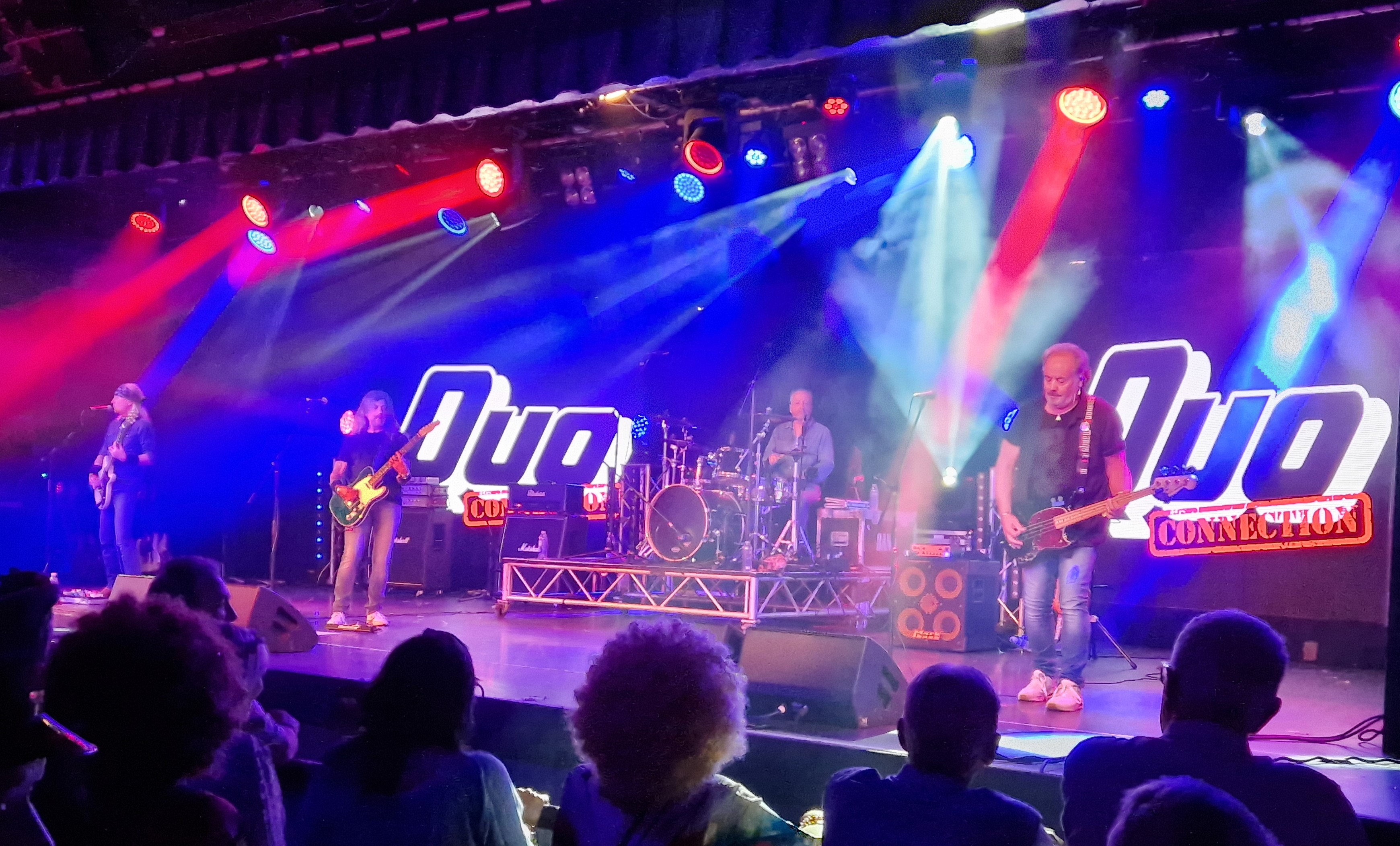
In the first category we had Elton John, Creedence Clearwater Revival and Abba tributes among others. We also had a couple of slightly-more-than-tribute-acts, in the shape of Mud II, which evolved out of original Mud singer’s Les Gray’s backing band and Quo Connection, the majority of whom had worked with original Status Quo drummer, John Coghlan, in John Coghlan’s Quo prior to his retirement. Very much at the rockier end of this weekend’s entertainment, Quo Connection were definitely one of the highlights for me, pulling off convincing renditions of classic-era 70s Quo songs like ‘Caroline’, ‘Down Down’ and ‘Whatever You Want’.
Quo Connection

Covers bands

In the second category, Glam Rock UK blasted out an entertaining selection of glam covers each evening – great if you weren’t particularly fussed about one of the bands on the main Centre Stage or were just looking for a late-night boogie after you’d caught the bands you really wanted to see.

Actual 70s bands

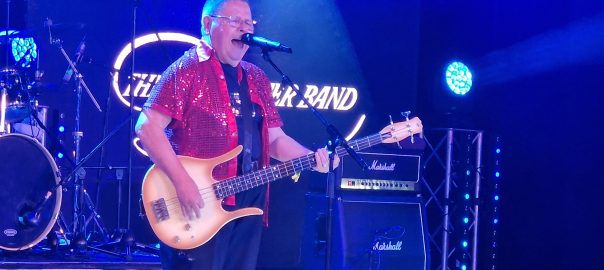
In the third category this year, bands included The Glitter Band (with original vocalist John Springate and original drummer Pete Phipps), The Bay City Rollers (with Stuart Wood now clocking up 50 years as a Roller) and Racey (still with original members Phil Fursdon on guitar and Clive Wilson on drums).

The Glitter Band were a late replacement for Slade who had to bow out as Dave Hill is currently unwell but they were definitely the glam highlight of the weekend for me. With John Springate back fronting the band, he joked at one point that he was the only original glam singer still around these days. And with Marc Bolan, Brian Connolly, Les Gray and Alvin Stardust no longer with us, Noddy Holder retired and Gary Glitter safely put away in prison – he’s certainly not wrong.

John Springate – The Glitter Band

The Glitter Band may have only one drummer these days but Pete Phipps has been pounding that glitter beat since the early days. And while there’s no brass section anymore either, Springate paid tribute to sadly now-departed members Harvey Ellison and John Rossall, along with late guitarist Gerry Shepherd. And with that signature Glitter Band sound, they pumped out many of the band’s best-known tracks, including hits like ‘Angel Face’, Just For You’ and ‘Let’s Get Together Again’. And they even thew in a few Gary Glitter numbers as well, including ‘Rock and Roll (Parts One and Two)’ and ‘Leader of The Gang’. If anything could be classed as guilty pleasure it’s these but they were undoubtedly glam classics back in the day – and probably would still have been even if Mike Leander (producer, songwriter and the genius architect of the glitter sound) had never set eyes on Paul Gadd in the first place and found himself a different frontman.

True legends

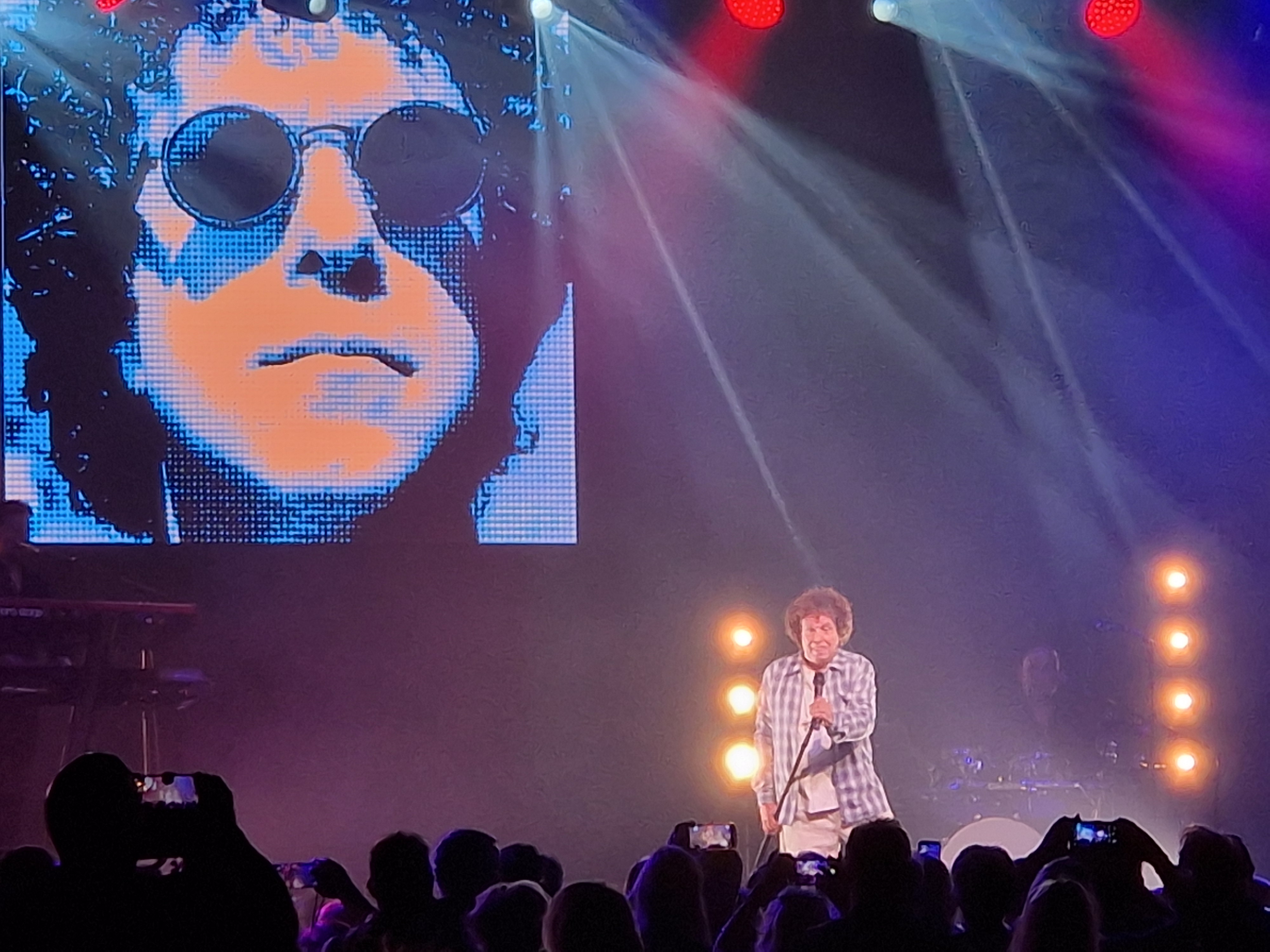
The final category I mentioned was bona fide living legends and Leo Sayer definitely fitted into this. With the cavernous new Studio 36 complex absolutely packed out for his early evening slot, he delivered a performance of sheer class. While the rest of the weekend was about enjoying some great, fun gigs at a holiday camp this was at another level altogether – a stunning show that just oozed professionalism, charisma and quality song-writing. The atmosphere in the auditorium as he reeled off hit after hit was simply incredible and I suspect everyone there shared that same feeling that they were in the presence of a true legend.
Leo Sayer

And Daniel’s verdict? He awarded ten out of ten for every artist we saw (plus ten out of ten for the food and the chalet and the swimming and the funfair!) Both of us are looking forward to coming back next year.

Glammed-up for a night out at Butlins

Related posts:

So farewell to Butlin’s Rock & Blues weekends, Skegness 13-15 January 2023

The Great British Rock & Blues Festival 2018

Giants of Rock 2022

Giants of Rock 2020

Giants of Rock 2019

Giants of Rock 2018

Giants of Rock 2017

Graham Bonnet at Giants of Rock 2016

Ian Hunter at Giants of Rock 2016

Mick Ralphs Blues Band at Giants of Rock 2016

Procol Harum at Giants of Rock 2016

Bernie Marsden at Giants of Rock 2015

Slade at Giants of Rock 2015

Mick Ralphs Blues Band at Giants of Rock 2015

‘Suzi Quatro in the 1970s’ by Darren Johnson – reviews round-up

This week sees the publication of my third book for Sonicbond’s Decades series: ‘Slade In The 1970s’. It follows on from my books on The Sweet in 2021 and Suzi Quatro last year – a glam trilogy if you will!

Here is a round-up of reviews for my previous book on Suzi Quatro. All three books are available on Amazon and other major retailers as well as the publisher’s own online shop at Burning Shed.

“Darren Johnson focuses the same obsessive-compulsive attention to detail that he applied to Sweet in his earlier contribution” – Andrew Darlington, RnR magazine

“An interesting book which should appeal to a wide audience” – John Tucker, Record Collector magazine

“Fascinating read for Suzi Q fans, aging glam rockers and anybody who enjoys a good, informative rock biography.” Jason Ritchie, Get Ready To Rock

Read full Get Ready To Rock review here

Detailed, informative and highly readable, Darren covers everything about Suzi in the 70s, plus before and beyond.” Jon Marsh, Wired Up fanzine

Related posts:

‘Slade In The 1970s’ by Darren Johnson out 26th May 2023

‘Suzi Quatro In The 1970s’ by Darren Johnson coming in July 2022

Reviews roundup: ‘The Sweet in the 1970s’

New book: ‘Suzi Quatro In The 1970s’ by Darren Johnson out in July 2022

Following my biography on The Sweet last year, I’m absolutely thrilled to have been given the opportunity to write a second book for the Decades series published by Sonicbond.

Suzi Quatro in the 1970s will be published at the end of July and is available for pre-order on Amazon here. It is also be available from other retailers and via the publisher’s own online shop here.

The synopsis on Amazon hopefully gives you a flavour of what’s in store:

‘If you talk about the ‘70s, I was a hardworking artist. I did nothing but tour – recording, touring, TV, you know. I had constant jetlag. Constant black shadows under my eyes but, oh, what a ride! What a wonderful ride. And I’m still doing it now.’ Suzi Quatro

With a succession of hit singles, including eight UK top twenty hits and two number ones, sell-out tours and six studio albums, Suzi Quatro was an enduring presence throughout the 1970s, the decade that saw her move away from being part of an all-girl band in Detroit and relocate to England for a solo career that challenged old stereotypes and helped redefine the image of the female rock icon.

Taking each year in turn this book takes a detailed look at Suzi Quatro’s career throughout the decade where she enjoyed her greatest successes, including a comprehensive overview of each album and single released during that period, her touring schedule and her frequent media appearances, including that famous guest role in Happy Days. As well as making extensive use of press archives from the era, Suzi Quatro In The 1970s also includes personal reflections from an exclusive interview with Suzi herself.

Related post:

Book: The Sweet in the 1970s

From AC/DC to ABBA: five classic glam rock singles by non-glam bands

In the early 70s the likes of Bolan, Bowie and Slade were pioneering both the sounds and the looks that would come to define glam rock. Emerging in 1971, building momentum in 1972 and absolutely dominating the UK charts by 1973, glam was everywhere by 1974. Even non-glam bands were at it.

Here we look at five bands who managed to release great glam rock singles in 1974.

1. AC/DC – Can I Sit Next To You Girl

Released as their debut single in July 1974 the original version of ‘Can I Sit Next to You Girl’ is the only AC/DC release to feature Dave Evans on lead vocals, prior to Bon Scott taking over. The band would re-record the track with Scott but here you can see and hear the original. Angus is in his schoolboy uniform, of course, but the rest of the band are looking spectacularly glammed up. And it’s not just the image that’s glam either. The vocal delivery, arrangements and guitar riff all have far more of a glam rock than a hard rock feel to them. Now I love the sleazy hard-rocking Bon Scott-era of AC/DC and wouldn’t want to change a thing – but this debut single gives a delicious glimpse of how things might have been in some parallel universe.

2. Mungo Jerry – Long Legged Woman Dressed In Black

When ‘In The Summertime’ became the band’s first big hit in 1970 Mungo Jerry’s laid-back jug-band sound couldn’t be further away from glam rock if you tried. By 1974, however, it’s blindingly clear that glam was having an influence. It’s not just lead singer Ray Dorset’s studded white leather sleeveless jacket over his bare chest, we have a drum beat that wouldn’t be out of place on a Glitter Band release and a sing-along chorus that just screams pure unadulterated glam. My particular memory of this song was at my 8th birthday party when my dad crammed me and half the kids down the street into the back of his Ford Anglia to take us to the park. On the way back this came on the radio at full volume and we had all the widows open, screaming along to it at the top of our voices.

3. The Wombles – Remember You’re A Womble

Although their first single and (the theme tune from the BBC series) epitomises the lush orchestral pop that creator Mike Batt has been associated with much of his career, for the Wombles’ second single they went down a much rockier route. Joining Mike Batt (vocals/keyboards) were session musicians Chris Spedding (guitars), Les Hurdle (bass), Clem Cattini (drums), Ray Cooper (percussion), Rex Morris (saxophone), Eddie Mordue (saxophone) and Jack Rothstein (violin). Not only was the single a brilliantly bouncy slice of glam rock but, thanks to the glorious fiddle solo, it’s a brilliant slice of folk rock, too. As such it remains the greatest glam-folk single ever made. Tim Hart of Steeleye Span kind of agreed. In his book ‘Electric Eden’ Rob Young recounts that Hart “bought a triple LP of Wombles tunes and was impressed with the clarity of it’s sub glam power pop”. Batt was hired by the band and the result was Steeleye Span’s own glam-folk smash ‘All Around My Hat’.

4. The Rolling Stones – I Know It’s Only Rock n Roll

This July 1974 single and title track of the Stones’ album later that year originally emerged out of a jam session Mick Jagger had with Ronnie Wood and Kenney Jones of the Faces, along with David Bowie and bass player Willie Weeks. The track was polished up, some guitar licks were added by Richards and a Rolling Stones classic was born. Easily the most glam-influence song the Stones produced it really reminds me of T.Rex. And, of course, if you are going to release a glam rock single you need a glam rock video to go with it. Directed by Michael Lindsay-Hogg the video shows the band dressed in sailor suits and playing in a tent which eventually fills up with bubbles. According to Keith Richards, the idea for the sailor suits came about at the last minute because none of the Stones wanted to get their own clothes ruined with detergent bubbles.

5. ABBA – Waterloo

Waterloo was written specifically as ABBA’s bid for the 1974 Eurovision Song Contest, after the group finished third with ‘Ring Ring’ in the contest for Sweden’s entry the previous year. With a driving guitar riff and a rocking upbeat tempo the song was quite a departure from the romantic ballads of previous European winners and, indeed, of ABBA’s later releases. Throw in the knee-high silver platforms, the glittery costumes and the star-shaped guitar and ‘Waterloo’ is a glam rock classic in all but name. Indeed, Abba themselves had cited ‘See My Baby Jive’ by English glam rockers Wizzard as a major influence at the time. My Nana, who was babysitting for us that night, let us stay up to watch them win Eurovision.

Related posts:

‘The Sweet in the 1970s’ by Darren Johnson – published 30th July 2021

Before glam: the debut 60s singles of Bowie, Bolan, Slade, Mud and Sweet

The Sweet versus Bowie: the riff in Blockbuster and Jean Genie – origins and influences

Slade, strikes and the three-day week: the story of the greatest Christmas record ever made

Book review: ‘Look Wot They Dun! – The ultimate guide to UK glam rock on TV in the 70s’ by Peter Checksfield

Rather than another biography giving an overview of the various glam acts of the 1970s ‘Look Wot They Dun’ is basically an encyclopedic directory that methodically lists all the TV appearances of numerous bands associated with the glam era throughout the 70s. Fifty different acts are covered in all, with the appearances for each in turn listed chronologically.

As much as I am fascinated by this era and as much as I will always love bands like Sweet and Slade and T. Rex, I must admit when I first picked up this book I wasn’t sure whether there would be enough in it to sustain my interest across a whopping 286 pages. However, I soon began to get engrossed, reading some of the fascinating little snippets and insights that accompany many of the entries. In one of his earliest TV appearances, Elton John, for example, is wearing “a horrible outfit of faded blue jeans, a long-sleeved orange T-shirt and a sleeveless striped cardigan” prior to the emergence of the flamboyantly-dressed larger-than-life character of later appearances. The Sweet’s Andy Scott had a run of appearances on Opportunity Knocks in late 1966 in an outfit called The Silverstone Set, we learn, several years before finding fame with the glam rockers. And Mud’s first TV appearance, back in 1968, is on the Basil Brush Show while David Essex’s first appears some two years earlier on the Five O’clock Club.

Indeed, although the book is presented in catalogue format and lacks an explicit overarching narrative there are, nevertheless, obvious patterns that begin to emerge across a significant number of bands. First we see tentative appearances on scratchy black and white shows during the 60s beat boom (Marc Bolan and David Bowie/Jones on Ready Steady Go, the aforementioned Andy Scott on Opportunity Knocks etc.) Then we fast-forward a few years and see those same people bedecked in glitter and glam hamming it up on Top Of The Pops in the period 1971-1973. Then by around 1974 we mostly see the glam bands to start putting away the bacofoil and the glitter and opting for a more conventional rock star jeans-and-leather jacket or cool-white-suit look. Then, finally, in many of the cases we see the number of entries for TV appearances steadily declining as the second half of the seventies draws to a close.

Though I would have welcomed a bit more by way of narrative thread, the book nevertheless provides a fascinating insight into how one of the most visual musical genres of the twentieth century projected itself on to our TV screens. And as an invaluable reference tool I’m sure ‘Look Wot They Dun’ will be something I’ll be going back to again and again.

Published: February 2019

51TxCNAgOZL._SX331_BO1,204,203,200_