Reviewing Odette Michell’s debut album for the much-missed fRoots magazine back in 2019, I wrote that The Wildest Rose was “one of the stand-out debuts of 2019”. Lots of commentators expressed similar levels of enthusiasm and she soon found herself on many people’s ‘one to watch’ lists that year.
Since then, Michell has performed alongside the likes of Show of Hands, as well as opening for folk luminaries like Martin Carthy, Phil Beer, Reg Meuross and Ninebarrow amongst others. She’s also recently begun performing with Karen Pfeiffer and Daria Kulesh in a new trio formation: Michell, Pfeiffer & Kulesh. However, it’s been quite some wait for a follow-up solo album – but finally it’s here.
Comprising ten original songs, The Queen of the Lowlands features an impressive line-up of guest musicians, including Chris Leslie, Phil Beer, Lukas Drinkwater, Vicki Swann and Stu Hanna (who also produced); alongside additional vocal contributions from Daria Kulesh, Calum Gilligan and the duo, Ninebarrow.
Reviewing Michell’s debut album I noted she had a “knack for writing songs that could easily have been collected over a hundred years ago”. A similar approach is clearly evident on this latest album, as Michell herself acknowledges.
“My approach to songwriting is to try to be as authentic as possible while keeping a foothold in the folk tradition – it’s a balancing act but every song is personal to me at some level.”
Highlights include the gentle nature-themed opening track ‘The Woodlark and the Fieldfare’ with vocal contributions from the equally nature-loving Ninebarrow; the more contemporary-sounding but no less gorgeous ‘Hourglass’, dedicated to Michell’s father and sung as a duet with Callum Gilligan; and the jaunty fiddle-driven closing track ‘All The Bonny Ships’, written about Michell’s Polish grandparents who got separated during WW2 but were miraculously reunited in Britain at the end of the war.
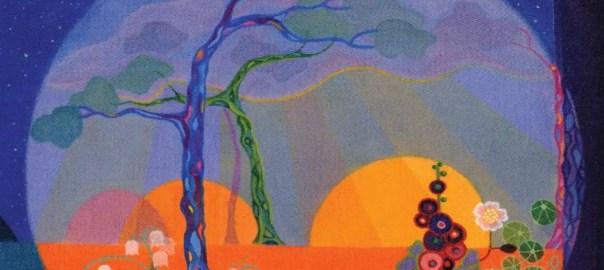
Title track ‘The Queen of the Lowlands’, meanwhile, (which features some characteristically spell-binding fiddle from Fairport’s Chris Leslie) is not about Queen Wilhelmina, the former Dutch monarch, but rather the ship named after her that played a heroic role in the First World War, transporting US troops safely back home. It’s one of several nautical-themed songs on the album, hence the striking cover art.
Following her hugely-impressive debut album, here Odette Michell has gone on to deliver an absolutely stunning follow-up. Infused with her deep appreciation and obvious knowledge of traditional song, The Queen of the Lowlands is a beautiful album with gripping storytelling, crystal-clear vocals and first-class musicianship.
I first came across Jack Rutter when three precociously-talented but slightly nervous teenagers took the stage at Fairport’s Cropredy festival back in 2011 as that year’s BBC Young Folk Awards winners as the trio Moore Moss Rutter. Since that time, Rutter has made a major mark on the UK folk scene. As well as periodic albums with Moore Moss Rutter, there have been collaborations with the likes of Sam Sweeney, Seth Lakeman and Molly Evans, plus his own solo career.
Jack Rutter:“Folk songs and music captivate me and make me happy. This album is a love letter to the music and the whole folk scene that has been a constant in my life and so many other lives down the generations and I hope it stirs something back into the big folk melting pot.”
The third in a trilogy exploring British folk songs and featuring nine songs in the trad. arr. cannon, this latest offering is yet further evidence of Jack Rutter’s growing stature as a performer. Now un-disputably, one of the finest singers and interpreters of traditional material on the UK folk scene today, This Is Something Constant is a truly excellent album from Jack Rutter.
Hot on the heels of What Are We Trying To Say, released back in March of this year, husband-and-wife duo, Stu and Debbie Hann, have another new album out, this time in collaboration with playwright, Kieran Knowles. Described as a “play with songs” The Herald began life as a short UK tour telling the story of a small-town local journalist, with Knowles providing the spoken-word parts and Megson delivering the songs. Following the success of the tour, the three teamed up once more to produce an audio recording of the show.
Megson: “It has been a fascinating process to take part in and observe the many parallels between scriptwriting and songwriting. The outcome of the project is something we are immensely proud of.”
Linking the songs, Knowles delivers a well-written and convincing narrative that serves as a worthy tribute to the finest traditions of local journalism: holding those in power to account, giving a voice to the local community and standing up against injustice. And what superb songs and superb storytelling we have from Megson here, some of which will surely develop a life of their own outside the format of this particular project.
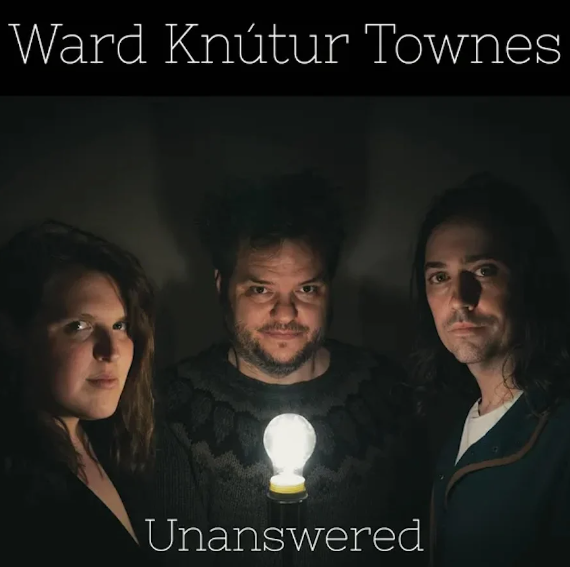
Picking up best newcomer award at the BBC Folk Awards back in 2012, Lucy Ward went on to have an impactful career on the UK folk scene but things have been rather quieter in recent years as her attention has turned to her family. Unanswered is actually her first new album to be released in five years and she’s teamed up with fellow singer-songwriters, Svavar Knútur from Iceland and Adyn Townes from Canada.
Lucy Ward:“It’s the true story of an old telephone, clearly disconnected for many years, that still sometimes rings… though no-one ever dares to answer to the ghostly caller.”
A multi-national collaboration borne out of lockdown and two years of Zoom exchanges and finally recorded at a remote location on Iceland’s northern coast, the album brings together three performers with their own unique styles to create an innovative slice of contemporary indie-folk. Stark and melancholy as befits the subject matter, there’s an intimacy and a tenderness to the songs on this album, the three contrasting voices melding with some incredible musicianship to produce something memorable and highly creative.
Notching up ten years and five albums together, The Colour Of The Night is the latest from Ninebarrow, the duo of Jon Whitley and Jay LaBouchardiere. It follows the excellent A Pocket Full Of Acorns, released in March 2021 just as the UK was heading into lockdown.
Jon Whitley:“The world has certainly felt a bit topsy-turvy since our last album but we are lucky to have received wonderful support that kept our spirits high – some of the songs here reflect that sentiment.”
The Colour of Night comprises five original songs and one instrumental piece, alongside several covers, an adaption of a Victorian poem and one traditional song. The duo’s signature vocal harmonies are set against the lush instrumentation of cellist, Lee MacKenzie, double-bassist, John Parker and percussionist, Evan Carson, alongside the duo themselves on piano, mandola and reed organ. A beautifully-uplifting album, Ninebarrow once again deliver their trademark folk magic.
An award-winning Uilleann Piper, flautist and composer, Calum Stewart has chalked up an impressive musical cv working with the likes The London Philharmonic Orchestra, The London Symphony Orchestra, BBC Scottish Symphony Orchestra, Julie Fowlis and Nitin Sawhney, in addition to pursuing his solo career. His most recent albums; True North (2023) and Tales from the North (2017) bring together traditional melodies and lyrical compositions, inspired by the landscape and heritage of the north of Scotland.
Calum Stuart:“Through this collection of music, I aim to pay tribute to the traditional tunes that have stood the test of time, while also expressing my personal connection with the north of Scotland through self-penned tracks. The songs reflect the memories, experiences, and encounters I’ve had in this captivating region.”
Featuring five traditional tunes and five new compositions from Calum Stuart, there’s a vibrancy and a freshness about True North which makes for an exhilarating celebration of Scottish traditional music and the timeless beauty of the Uilleann pipes.
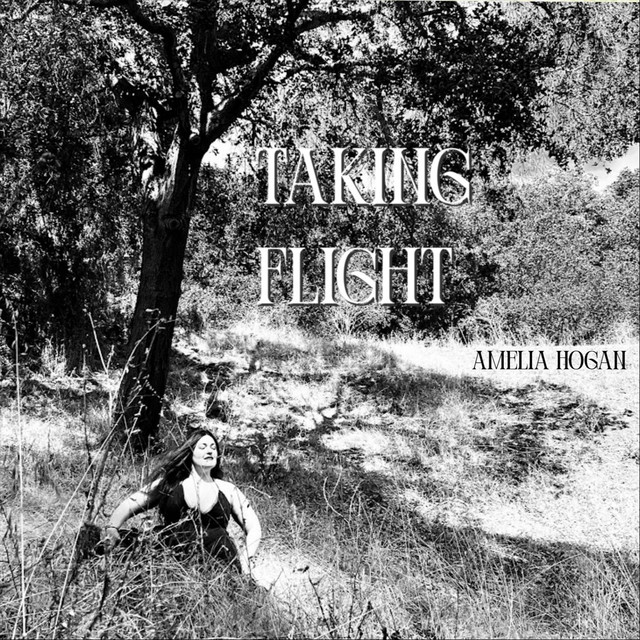
Amelia Hogan is a San Francisco-based Celtic folk singer who performs both traditional and contemporary folk. She sings in the Irish music tradition of Sean-Nós, or “old style” as well as accompanied. Amelia also plays bodhran and a small 22-string Welsh lap harp, and has toured internationally to popular acclaim. Her latest album Taking Flight features sixteen tracks of which the title track is an original composition and the remainder are a mixture of traditional numbers and Hogan’s own interpretations of songs by contemporary songwriters.
Amelia Hogan:“Birds are featured in a number of songs on the album. Often seen as a symbol of loss and sorrow, birds also represent healing and the ability to find healing in the midst of hardship. The intent of this work is to take the listener on a journey through grief and out the other side, as a bird taking flight might.”
Some well-chosen songs from a diverse range of sources and Hogan’s distinctive vocal style along with some beautiful musical accompaniment and a fine cast of supporting musicians all serve to make Taking Flight an extremely cohesive album, and a deeply immersive experience for the listener. Highly recommended.
The Scottish instrumental folk band RURA (Jack Smedley, Steven Blake, Adam Brown, and David Foley) celebrated their tenth anniversary back in 2020 with a live album – Live At The Old Fruit Market. Now they are back with a new full-length studio album – Dusk Moon. While the previous album fizzed with energy from a barnstorming live performance, Dusk Moon sees the foursome in a mellower and more contemplative mode.
Jack Smedley:“Much of the music has been inspired by a deep sense of reflection, hope and the people and places we’ve been so fortunate to meet and experience over the years. We’ve tried to focus on what we enjoyed most about our last studio album In Praise of Home and build on that sound.”
The nine-track album sees RURA come up with a stunning set of new compositions and there is some wonderful interplay between the foursome as they deliver their trademark sound of pipes, guitar, bodhran, flute and fiddle. All four members have contributed compositions and while they may have slowed down the tempo, there is no sign yet of RURA slowing down on the creative front. Another fine album.
Following their ecologically-themed debut album, Temperature’s Rising, two years ago, husband-and-wife acoustic duo Milton Hide are back with a follow-up. While their debut was something of a departure for the duo with its host of guest musicians and extensive, multi-layered production, the follow-up captures more of the essence of what Milton Hide are all about on stage: stripped-back acoustic playing, engaging melodies and thought-provoking, observational songwriting.
There’s a couple of beautifully poignant instrumentals on the album, too, including the title track.
Jim Tipler:“We got the idea for the album name, The Holloway, from a beautiful place we walk the dog. The path has got lower and lower over the centuries and the trees have grown overhead to form a kind of tunnel. You can’t help but imagine the thousands of feet that have trodden it. We didn’t have a title track, so I said Josie should write a tune on the clarinet to finish the album. It’s one of my favourite bits.”
All in all, a very fine album from this charmingly inventive East Sussex folk duo.
Caoir (pronounced Koor and meaning a blaze of fire) is the third solo album from Scottish traditional singer and Gaelic language champion, Joy Dunlop. It’s appropriately named, the infectious beats and catchy melodies definitely make for a fiery combination and a very contemporary take on Gaelic folk.
Joy Dunlop:“I’ve always loved music that pushed the boundaries of what was considered ‘trad’, without losing the soul of the songs. As a Gaelic singer, I’m always trying to make my music accessible to those who don’t speak the language. With this recording I wanted to capture the sentiment of the songs, whether the listener understands Gaelic or not, while adding new engaging elements to the music.”
With Caoir, Dunlop certainly pulls off what she set out to achieve. The vibrant instrumentation of Ron Jappy, Mhairi Marwick, Gus Stirrat, Ifedade Thomas and Euan Malloch provides the perfect backdrop for Dunlop’s beautiful vocals makes for a captivating album from start to finish.
Husband-and-wife duo, Stu and Debbie Hanna, have been a fixture on the folk scene for almost twenty years now. What Are We Trying To Say? is the duo’s thirteenth album and their first studio album in four years. Featuring eight original songs, one traditional number (Cannie Old Blind Willie’) and the words of another (‘The Barbers News’) set to newly-composed music. The central theme of the album is about how we, the public, absorb news and information in the modern age.
Debbie Hanna:“We spent so much time during the pandemic watching the news and endlessly scrolling – social media became a vital source if information but it also became clear there were so many different takes on what was happening it became hard to figure out the real truth. We began to think about the different ways news can be used – to inform, entertain us or even control us and these are the themes we have touched on in songs on the album.”
Don’t worry though – the album not a conspiracy theorist’s charter and the duo’s song ‘The Conspiracy Trap’ tackles that unfortunate modern-day obsession head on. What the album does do, however, is offer intelligent writing, sharp social commentary and heartfelt lyrics, all delivered in those rich Teeside voices and the trademark Megson sound, with captivating melodies and stacks of beautiful fiddle and mandolin.








 Darren's music blog