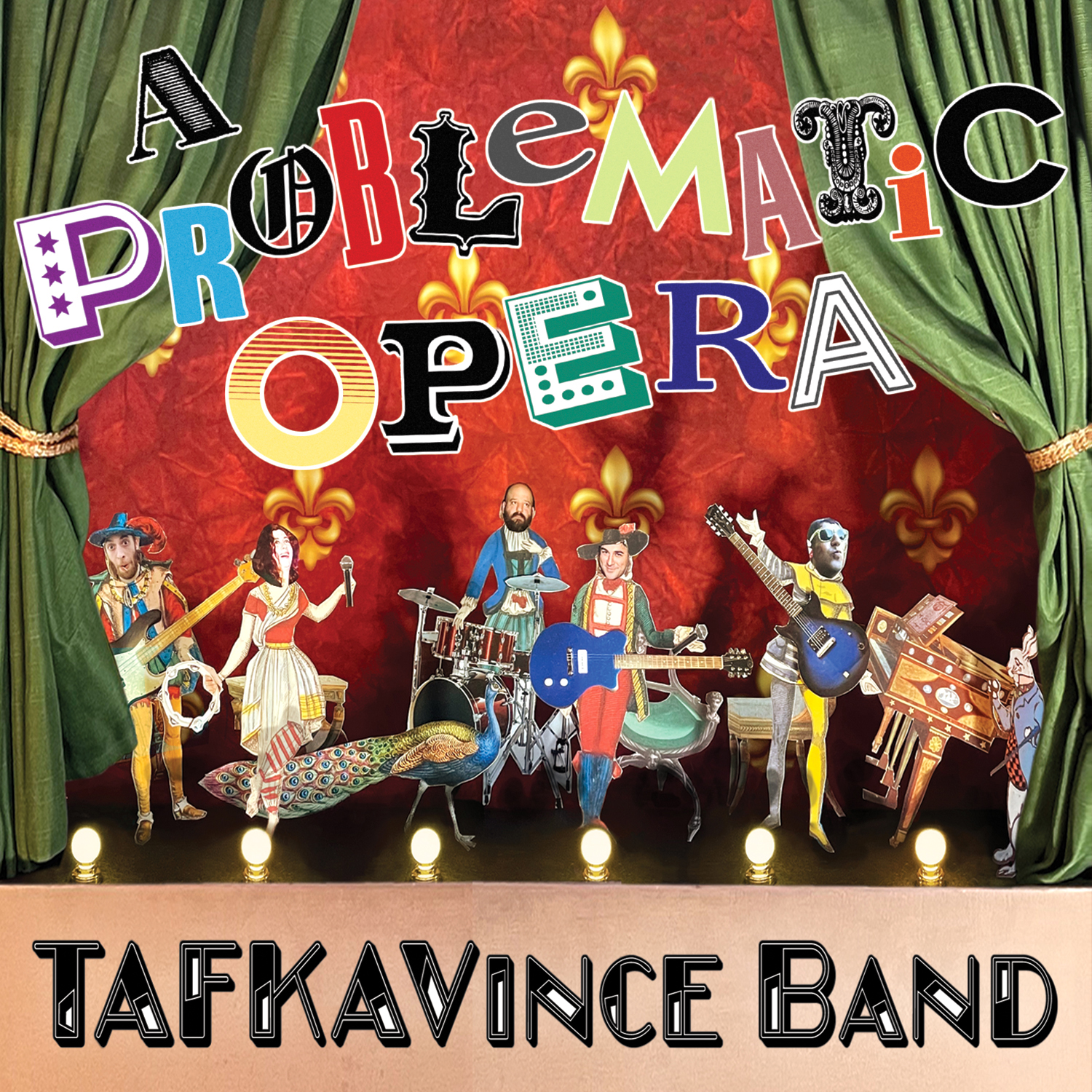
Combining elements of glam, punk, power-pop and rock and roll, The Artist Formally Known as Vince Band (or TAFKAVince Band for short) formed in 1996, releasing their debut album in 2002 and building a reputation as a fearsome live act in their home-town of Chicago as well as out on tour around the US. TAFKAVince is Vince SanFilippo (vocals and guitar), Lauren Kurtz (vocals), Brian Chinino (drums, percussion and backing vocals) Chris Geisler (bass, percussion and backing vocals) and Vee Sonnets (guitar, backing vocals and keyboards).
The band’s latest album, A Problematic Opera, is a six-track album released in May this year and features guest performances from Brian Smith, Joe Vitti, Yoko Schmadeke, and Maureen Grady. I instantly warmed to the band’s brand of trashy glam-punk and, hopefully, this latest album should bring them to the attention of a wider audience and win them plenty of new fans.
Vince tells Darren’s music blog:
“The tracks from A Problematic Opera came quickly in a songwriting binge. I chose these six songs as they seem to all mesh together and cover all aspects of what the band does. There is variety yet consistency; late-night thoughts and late-night experiences; theatrical imagery that always slips in. I envisioned these songs together on a 10-inch record so we headed into the studio to make this album. A couple long weekends in the studio gave us time to add a little extra to the solid base we worked out in our rehearsal room. Every band member individually suggesting “A Problematic Opera” as the title really brought it to completion.”
Coming together through a shared love of classic rock, folk rock and blues – bands like Led Zeppelin, Pink Floyd, Fairport Convention and Free – Parkbridge is a four-piece from Greater Manchester. The band’s debut album Rivets For The Eiffel Tower comes out in the Autumn. I catch up with lead singer, lyricist and guitarist, Robert Carter.
Firstly, what got you into performing?
It was really my cousin, Steve. He was in bands from being a teenager. He’s five years older than me and I used to go round to his house and he’d be playing the piano and he’d try and teach me how to play ‘Chopsticks’. His fingers would just go up and down the keys and I was just so impressed. And then as he got older he started being in bands. And then when I started writing songs, he was the first person that I contacted to see if he was interested in playing around with them. In the early ‘80s we got together once a week for about a year and wrote songs together. In those days it was usually his music and my lyrics. But then we both had young kids and we kind of let it drift. He’s in Whitby now but we still get together at least once a year. And we just get the guitars out and start playing. It’s great fun.
What prompted you to start writing? You said you started off writing songs with your cousin.
It was probably about 1980 when I was 20 years old. Believe it or not there was a Paul Gambaccini series about various bands and he did one on the Doors. He was talking about how Jim Morrisson had written a load of poetry and he took them to Ray Manzarek, who was obviously an accomplished musician, and Ray Manzarek said something along the lines of, “These are the greatest lyrics I’ve ever seen. Let’s form a band and make a million dollars.” And I thought it was going to be that easy. So just find a really great musician – my cousin – and we’ll make a million dollars. But it didn’t quite work like that!
So you’re still waiting for the million dollars?
Yes, although that doesn’t go quite as far these days, does it? But it did 40 years ago!
And now you’re the singer and guitarist with Parkbridge. Tell us how this project first came about.
There’s an area of Ashton-under-Lyne called Park Bridge – two words. And it’s a famous old area that I’ll come back to in a minute. But it’s got an institute which is basically like a co-operative pub and about three years ago they had what they called an acoustic night. So I trundled up with my guitar and played a few songs and our bass player, Ian Turford, was in another band at the time. Their band played a few songs and Ian then said to me, “Let’s get together and do something.” But Ian works full time and he’s playing in bands almost every night of the week. And he’s married and he’s got grand-kids and kids and all that stuff. So fitting it in was difficult. And then a couple of years later, I was introduced to Sean Dyer by one of the members who said, “You play guitar. You play guitar. Talk to each other!” So, we started chatting and even though he’s considerably younger than me, he has very similar music tastes. We talked about Paul Kossoff and Free. We talked about Peter Green and David Gilmour and Led Zeppelin. And then we started talking about folk and Fairport and Cropredy Convention and he said, ‘Oh, I’ve just got into Fairport.” And he likes a bit of Bert Jansch and Richard Thompson and the more we talked, the more we kind of clicked. I just invited him round. I said, “I’ll play you some of the songs I’ve written and see what you think.”
So we did and it worked out quite well. He started noodling – that’s a technical term for playing arpeggios and licks! – around the songs I was singing to him. So I said, “We’ve got to do this again.” So we met again the next week, did the same songs and played around with them and I said, “Do you know Ian?” – who also lived in Park Bridge at the time and he said, “Yes, of course I do – great bass player.” And I said, “Well, he and I have been talking about doing something and we’ve just never got around to it.” So, I phoned him up and the next week when we got together, Ian came, too, just with his acoustic bass. And we sat in my kitchen and started just formulating arrangements for the songs that I’d written. Ian then got us a gig supporting another band he was in and it went really well. But his band had a drummer. And Sean and I were watching this second band and we said, “Oh, we need a drummer don’t we?” Anyway, a couple of months later a drummer that Ian had played with, Dave Johnson, had his drums set up at the back of the hall in a rehearsal room. So we went and met Dave and it all started to click together. We said let’s work on some original songs, let’s play around with some covers just to get the feel and get tight as a band and that’s kind of it. So by about May last year, we’d become the four-piece that we are today.
As a band you’re upfront about bringing that mix of rock, blues and folk influences into your music. Was that a conscious decision or did that just evolve from those first few jam sessions together?
I think it’s evolved. When Sean and I first got together we were talking about folk and folk rock – in an acoustic environment. And then there was one particular song called ‘Hired To Kill’ which is on the first album, and I said, “This isn’t working.” When I wrote the song, I wrote it as a rock song and it needed a riff. So Sean started playing around with an electric riff and we bounced it around and it evolved into a rock song. As did another one called ‘Alright Jack’ which is the opening track on the album. And, again, once we put an electric riff to it, it just took on a whole new dimension. But we’ve not done that with everything. The album is a mix of rock, acoustic rock, folk rock and blues. A couple of songs I wrote were definitely written as blues songs in the twelve-bar format. So it’s evolved really. It started out as a folk rock duo and has now become either a folky blues-rock band or a bluesy folk-rock band.
What are your favourite artists and who has been a big influence on you?
After I graduated from the pop-rock bands of the early ‘70s like Slade and Sweet, I was at a neighbours. They were all a few years older than me. And one day one of the guys put on Led Zeppelin 2 and it changed my life! I heard Led Zeppelin as an 11 or 12-year-old and I just thought wow! So then I started to discover new things and started listening to the Alan Freeman show was on the radio on a Saturday afternoon. So the bands that I really got into: Led Zeppelin I’ve mentioned, of course. I love Free, Family, Pink Floyd. The heavier stuff, like Black Sabbath. I got into Uriah Heep as well. It was all of those kind of bands. A friend had Wishbone Ash’s Argus which is a sublime album. So it was really what we now call classic rock that influenced me. But, I always had a soft spot for Fairport Convention. And I got into Fairport, as many people did, because of Sandy Denny doing the duet with Robert Plant on ‘The Battle of Evermore’. And I thought, “I’ve got to hear more of her.” So I went and discovered Fairport and I’ve been a Fairport fan ever since. I go to their Cropredy festival every year – as you do! I’m also a big Neil Young fan. And the Byrds. And I just love Bob Dylan, as a song-writer, and against popular perception, I do also actually like Bob Dylan’s singing voice, too. I think he pus his songs across really, really well.
You must be excited to have the band’s debut album coming out – Rivets For The Eiffel Tower. Firstly, tell us where that title comes from.
I mentioned Park Bridge earlier. Park Bridge was formed as a village during the industrial revolution. There was a big iron foundry in Park Bridge and a mill. If you ever go to Paris, in the museum at the Eiffel Tower there is an inscription that says “Rivets made by the Park Bridge Iron Foundry, Ashton-under-Lyne.” And so Rivets For The Eiffel Tower became the obvious name for our first album. They also, we believe, made the rivets for the Sydney Harbour Bridge, too – so there might be a second album title there. And as third album’s often sink – ours won’t of course – they also made the rivets for the Titanic but we don’t talk about that one too much!
So what can people can expect from the album?
They’re all original songs. There are eight songs on the album. There’s a couple of what you would call folk rock. There’s a couple that are classic rock in style. There’s a couple that could be classed as indie rock and there’s a couple of blues songs. And they are all words written by me and music and arrangements by the band. And if you’re into the kind of bands that we’ve been talking about, maybe you’ll like what you hear. I have to say that I’m working with three fantastic musicians. Sean’s two big influences are David Gilmour and Peter Green and I think that comes out in the album. Ian, the bass-player, loves a bit of Black Sabbath and you can hear a bit of Geezer Butler’s influence in there. He plays a melodic bass quite regularly, not just a thump-thump bass, and Ian’s style kind of captures that. And Dave is quite eclectic. He loves a bit of John Bonham but he loves quite a few modern drummers as well. And they’re all great musicians and it’s a privilege for me to work with them. We’re probably a little different to most of the newish rock bands you hear these days. We try and be melodic. We try and tell a story in the lyrics. We try and offer something different. So if you’re into that classic rock sound with style, have a listen and tell us what you think!
You also present your own music show on Real Rock Radio. Can you also say a bit about that?
It started last year at the Tameside Beer Festival. Immediately after Parkbridge played, Tony Charles, the managing director of Real Rock Radio did a set of classic rock songs and we got chatting and he said, “I could really do with someone on the station who could do country rock.” And I said, “What about folk rock and acoustic rock, with a little bit of country rock thrown in?” He said, “I love it!” So I now present every Friday at 7 O’clock ‘The Acoustic & Folk Rock Show’ on Real Rock Radio. It’s repeated on Tuesdays at 2pm for those people who have better things to do on a Friday. And it’s great fun. It’s a lot more work than I expected but it’s introduced me to a lot of bands that I wasn’t aware of. And on this week’s show I’ve actually sneaked in ‘Why Do You?’ from our album but don’t tell anyone!
Rivets For The Eiffel Tower by Parkbridge goes on general release on 6th October with a limited-edition CD available from 18th August 2023.
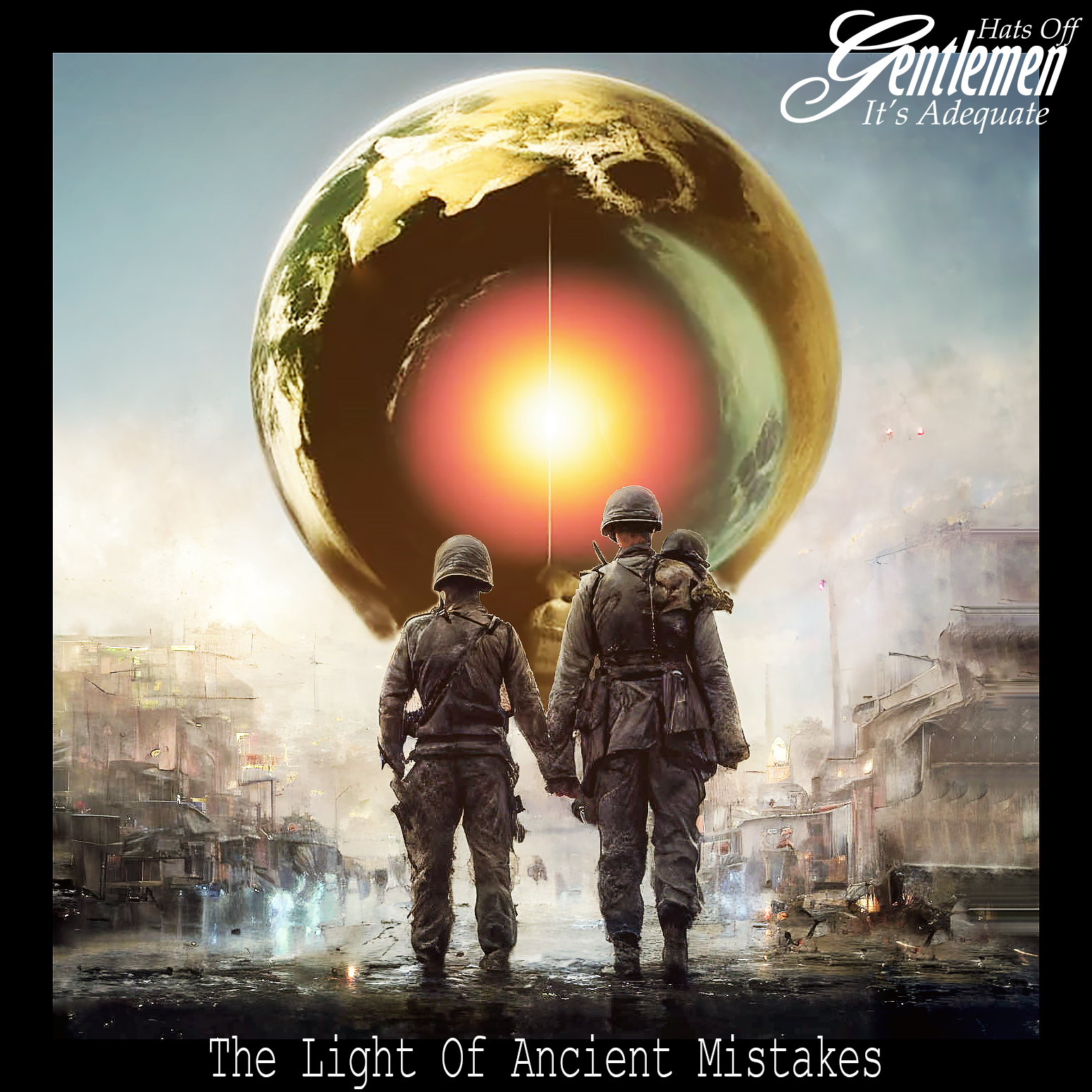
Hats Off Gentlemen It’s Adequate are a UK-based progressive rock outfit featuring Malcolm Galloway (vocalist, multi-instrumentalist and producer), Mark Gatland (bass, Chapman stick, backing vocals, additional guitar, keyboards and co-producer), and sometimes accompanied by Kathryn Thomas (flute, backing vocals).
Their forthcoming album, the band’s seventh, is The Light Of Ancient Mistakes which is set for release on 9th September. A first single from the album is the excellent ‘Burn The World’ with it’s compelling climate-themed message. All proceeds from sales of the single (at least until the end of 2024) will be donated to the Prog The Forest fundraising initiative (which donate funds to the World Land Trust, to support their work buying threatened habitat to put into protective trusts in collaboration with local communities).
Malcolm Galloway tells Darren’s Music Blog:“Of all the balls of rock in the sky, ours is the only one we know for certain harbours life. We seem so reckless in how we act. We know that increasing CO2 in the atmosphere warms the planet, and warmer air leads to more extreme weather events. Every forest is part of our life-support system. Saving rainforests from being burned down for short term financial gain helps in the fight against climate change and against the mass extinction of other species.“
Hats Off Gentlemen It’s Adequate are co-organisers of Prog The Forest, the annual progressive music environmental charity fundraising festival that has raises money to protect over 40 acres of threatened habitat.
“We work with Chris Parkins of London Prog Gigs to organise an annual fundraising progressive music festival in London. The festival donates all profits to the World Land Trust, which acquires threatened rainforests and other valuable habitats to place them in protective trust in collaboration with local communities. We will be donating all the earnings from the Burn The World single release until at least the end of 2024 to this fundraising. So far, Prog The Forest has raised enough to save over 41 acres of threatened habitat.”
The Light Of Ancient Mistakes album is available to pre-order on Bandcamp, and will be on general release on 9 September 2023. The centrepiece of the album is ‘Walking To Aldebaran’, inspired by the science fiction novella of the same name by Adrian Tchaikovsky. The tracks ‘Avrana Kern Is Made Of Ants’, ‘The Requisitioner and the Wonder’ and ‘Gothi and Gethli’ are references to a character, two spaceships and a pair of crow-like creatures which insistently deny they are sentient in Adrian Tchaikovsky’s ‘Children of Time’ series.
Science fiction author Iain M Banks’ novel ‘Look To Windward’ is the inspiration of the title track. The track ‘The Man Who Japed’ is named after the Philip K Dick novel. The childhood experiences of David Cornwell, who wrote as John le Carré are the inspiration behind ‘Sixteen Hugless Years’. ‘The Glamour Boys’ was inspired by Labour MP Chris Byrant’s book of the same name about the experiences of a group of mostly homosexual or bisexual Conservative MPs who argued against appeasement, despite the threats from Chamberlain’s government to expose their secrets. Many went on to risk, and in some cases lose their lives in the Second World War.
The album also features ‘Sold The Peace’, which explores how after spending and risking so much to fight the Cold War, some of our leaders seem willing to risk our democracy for relatively small sums. ‘The Anxiety Machine’, is a three part instrumental is interspersed within the album. ‘Goodbye Cassini’, isa flute led tribute to the space probe, and ‘imtiredandeverythinghurts’ s about Malcolm’s experiences with invisible disability due to Ehlers-Danlos Syndrome, and the difficulty knowing how to respond to the well-intentioned question ‘how are you’? The album ends with the climate change inspired ‘Burn The World’.
The Light Of Ancient Mistakes is released on 9th September 2023 and is available to pre-order on Bandcamp:
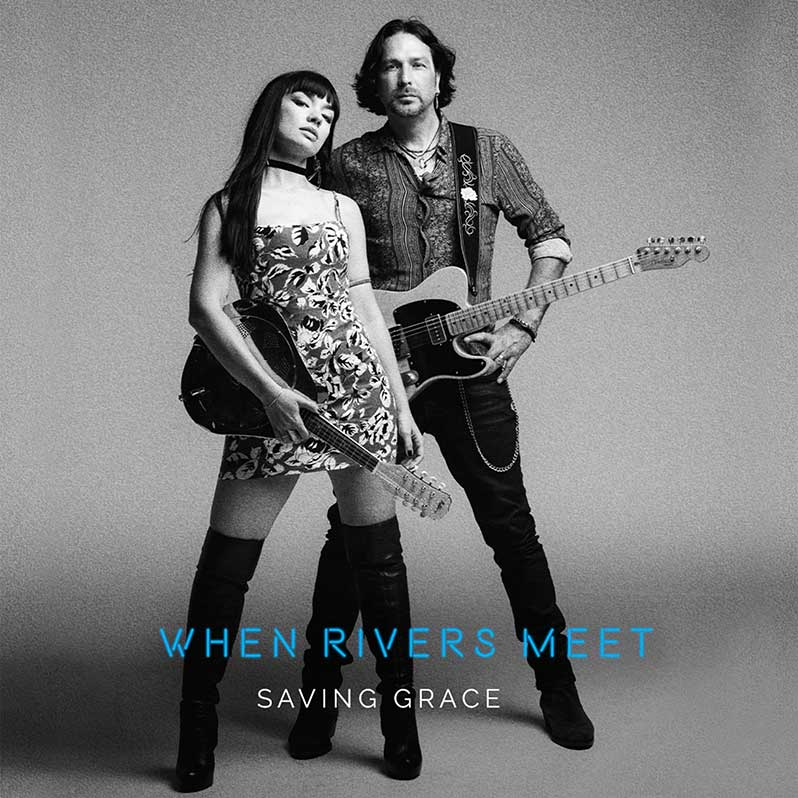
I hadn’t come across husband-and-wife blues duo When Rivers Meet until I caught them supporting King King on their recent tour. I was immediately impressed as soon as the pair walked out on stage to deliver loud, raunchy, rocked-up blues with bags of noise and bags of power.
The duo’s second album Saving Grace is released on 19th November and follows their extremely well-received debut We Fly Free which was released back in 2020, and two earlier EPs.
When Rivers Meet are Grace Bond (lead vocals, mandolin, violin) and Aaron Bond (guitar, vocals).
Grace: “We were very conscious that our debut album We Fly Free was a step up in production from our two EP releases previously The Uprising EP and Innocence of Youth. We also wanted to keep a live, authentic vibe to the new album to retain the energetic feel in the music.”
Aaron: “We wanted the album to have more of an upbeat rock feel. We knew exactly what we wanted before we set off to record Saving Grace. We set our expectations high. We’re so pleased with the result and just hope everyone else loves it as much as we do!”
Grace: “Although we wanted to do something different from our previous work, we still wanted all the same elements that make our music distinctive and recognisable as When Rivers Meet.”
Aaron: “Saving Grace has a more upbeat rock feeling than We Fly Free,” Aaron says. “We were very conscious when we started to record this album that’s the direction that we wanted to move in, and it was exactly the kind of result that wanted to achieve.”
Aaron: “As well as being inspired by classic blues including John Lee Hooker and Muddy Waters, we also draw a lot of influence from classic rock bands that include Led Zeppelin, Bad Company, Cream, and Free. To emulate some of the feel or tone of these legendary blues pioneers and seminal rock bands is something that we strive to do, and hopefully people will hear that in our music and relate to it.”
Credits: Header photo by Rob Blackham, live photo by Bruce Biege
Derek Piotr is a US-based folklorist, performer and composer from New England. His work focuses primarily on the human voice and covers genres as diverse as folk, leftfield pop, classical, and dance but he has a particular interest in Appalachian versions of traditional ballads. He has collaborated with a number of different artists including Thomas Brinkmann, Scott Solter, and Bradford Reed across various disciplines. Derek was nominated by the jury for Prix Ars Electronica in 2012, and has featured on UbuWeb and the BBC.
Derek Piotr’s CV includes an impressive ten solo albums to date in spite of only just hitting his 30s this year. I ask him about the latest Making and Then Unmaking which was released back in May.
Derek Piotr:“My tenth album, Making and Then Unmaking, is an extension of the folkloric work I’ve done in Western North Carolina, with a heavy emphasis on Appalachian ballad singing and folk and country instrumentation. Originally I was meant to work on this album in a studio in North Carolina, but due to Covid, I ended up recording 90% of the album remotely and putting the performances together via filesharing. Making and Then Unmaking features a much broader instrumental palette because of this workflow, with instruments appearing including bagpipes, clavichord, saxophone, harp, pedal steel guitar, viol da gamba, autoharp and dulcimer.”
Of particular interest to British folk enthusiasts who follow this blog is that Derek has been working in the UK all through the summer, carrying out fieldwork.
Derek Piotr: “My fieldwork in the UK has predominantly focused on collecting recordings of ‘non-singers’ in North Yorkshire. This is a direct continuity of my work in North Carolina documenting non-singers, in other words, informants who have no formal background in vocal performance but nevertheless have living knowledge of traditional song and can still sing or recite these ballads from memory. One of the informants I’ve met on my UK journey was 102…it has been a rich and valuable experience for me to collect ballads from their origin source; most of Child’s ballads were collected in Northumberland and Scotland.”
Mel Biggs, who has recorded several albums as part of acclaimed trio Moirai, is one of the UK’s leading diatonic accordion players. She releases From Darkness Comes Light her debut solo album on 1st October. Over twelve stunningly inventive instrumental tracks, Mel Biggs takes us on a journey through the seasonal changes, both natural and cultural over the course of the year. Accompanied by fiddle, mandolin, piano accordion, guitar and cittern she invites us to join her on this deeply personal and evocative journey.
I ask Mel how the album came about:
This album has taken over a decade to be made. And when I say that, I’m not talking about the physical album, which took 9-ish months in lockdown, but the mental health journey I’ve been on since my early 20s. The darkness of living with anxiety and depression, a binge eating disorder, and menstrual health issues brought forth the light that is my music and composition. Further to this, and rather poignantly, the album’s completion earlier this year coincided with me being diagnosed with ADHD and Autism. Knowing this has given me the missing pieces on my past diagnoses and, well, literally everything in my life! Especially my sensory crossovers which influence my creativity so much.
The diatonic accordion (or melodeon) became my closest friend and confidante early on when Iwasn’t able to understand and process the difficult emotions I experienced. It gave me a way to escape and meditate on the natural world around me. The healing power of the great outdoors is one of my biggest sources of inspiration. A sunny day in spring watching washing dry on the line brought forth Shivelight In Spring. Being high up in the Norwegian mountains breezed Oppland Upland into my brain. Zoning out of a difficult day whilst viewing winter’s golden light in the garden gave me Silver Linings. Meditating on the heat haze obscuring the view out the back of my house shone Shimmer into my life. Let me travel the world with my accordion and I’d write and write and be very content!
Mel fills us in on the themes that emerged for the album:
When it came to making the album, I looked at what material I had and realised the running theme was light states in nature through the seasons. Each piece relates to a different point in my personal discovery journey. From Darkness Comes Light is a symbiosis of seasons, nature, and light and their combined effect on mood and mental health recovery. It’s also become a statement to myself of never giving up on finding those missing pieces to understanding and accepting yourself for exactly who you are. Feels like a pretty big thing to say about an album of instrumental folk music, but I prefer using sounds to words any day!
From Darkness Comes Light released 1st October 2021 by Talking Cat Recordings
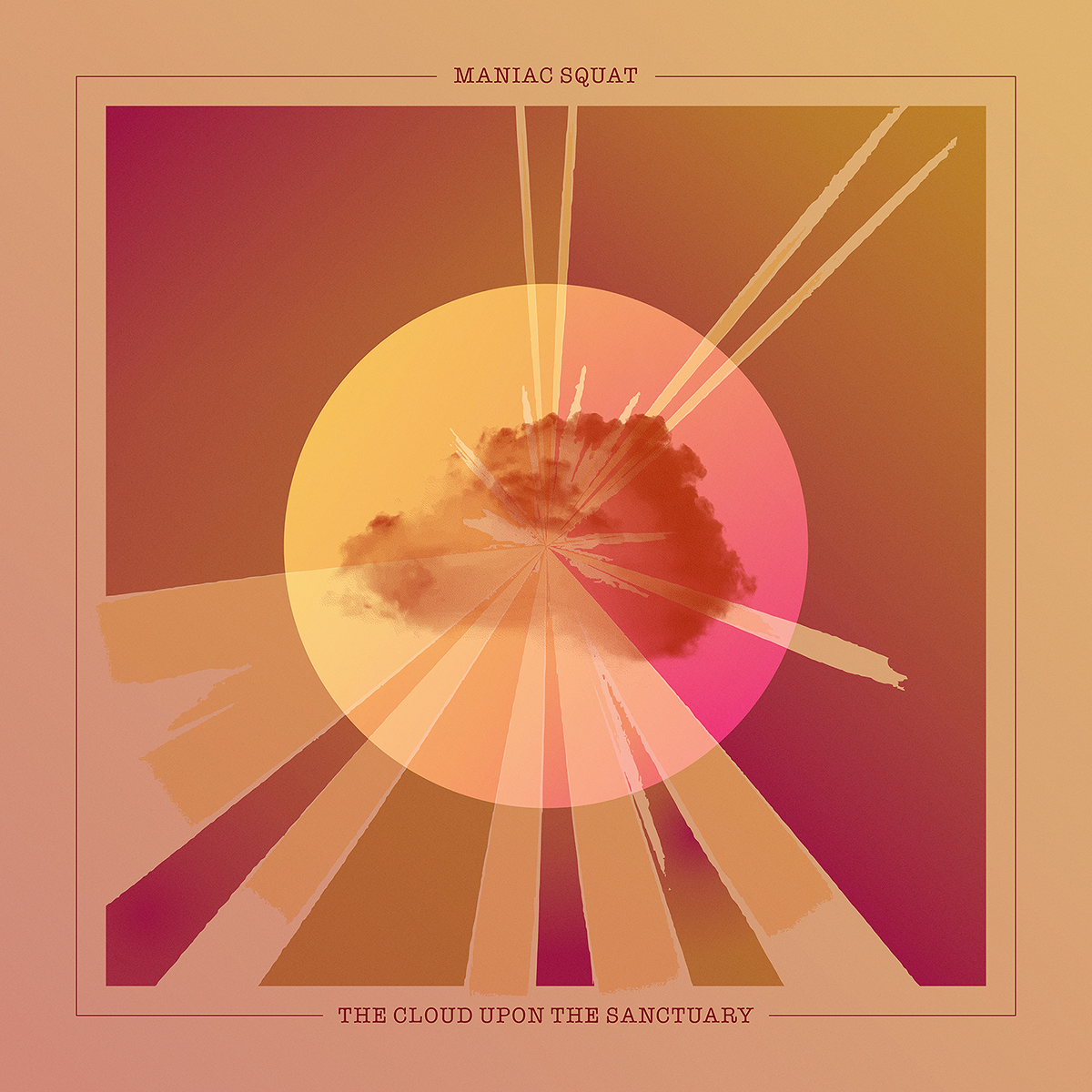
Maniac Squat were the art punk band from Colchester who had a cult hit with ‘F**k Off’ in the mid-90s – a record which secured them the coveted single of the week slot in Kerrang! no less. Performing over two hundred gigs, including support slots for Babes in Toyland and Zodiac Mindwarp as well as tours of mainland Europe, Maniac Squat made their last record in 1996 and promptly split. Now they are back, with three members of the original line-up reconvening to record a stunning concept album of experimental art-rock. The Cloud Upon the Sanctuary, which also leans heavily towards jazz, has been inspired by the work of eighteenth-century Christian mystic, author and philosopher, Karl von Eckhartshausen.
For The Cloud Upon the Sanctuary the band have teamed up with an all-star ensemble of guest musicians headed up by legendary Bowie/Iggy Pop sideman, Kevin Armstrong, who also produced the album. Joining Kevin – and the original Maniac Squat alumni of Tom Wilcox, Scott Pearce and Michael Giaquinto – are Iggy Pop’s drummer, Mat Hector; PJ Harvey’s sax player, Terry Edwards; and rising star Manchester-based rapper, El Zeeko. The release is accompanied by an equally stunning video seventeen-minute video by art director/film producer, Robert Russell, whose vibrant, other-worldly imagery deftly captures the intensity of emotions that the band delve into via their experimental soundscapes.
Original Maniac Squat frontman, Tom Wilcox, says: “Plato observed that ‘we can easily forgive a child who is afraid of the dark; the real tragedy of life is when men are afraid of the light.’
“Our wilderness years were spent stumbling horny from one fix to the next. In the course of trying to repair our complex and multi-faceted personal relationships, Scott, Michael and I were profoundly affected by both the teachings of Karl von Eckartshausen and the key change rubrics of Gustav Mahler. These inspirations provoked us into composing separate elements of a larger piece of music. We gradually brought the disparate movements together to make one work. There is no coming to consciousness without pain.”
Producer and guest musician, Kevin Armstrong, adds:“I have had many twists and turns in my nearly 50-year career in music but the things I will carry with me to my deathbed are those moments of fearless invention that do not yield to any commercial constraint nor any fear of ridicule. The Cloud Upon the Sanctuary is one such moment. When I was presented with the opportunity to help realize the revival of Maniac Squat little did I imagine that our efforts would produce such a savage and desolate beauty.”
About Maniac Squat:
Forming in Colchester, Essex, Maniac Squat pursued their own brand of art punk for five years between 1991 and 1996. They first played at Colchester Arts Centre in 1992 and were immediately banned for using an industrial grinder in their performance and for making a hole in the stage while smashing up a guitar. Maniac Squat persevered and went on to notch up the much coveted ‘Single of the Week’ accolade from Kerrang! magazine for their single ‘F**k Off’. They played over 200 gigs in their career – including tours of Germany and the Czech Republic – also releasing two singles and an album and being the go-to local support act for bands such as Babes In Toyland and Zodiac Mindwarp when their tour itinerary took them to Colchester. After splitting in 1996, Tom Wilcox, Scott Pearce and Michael Giaquinto would later re-appear in the mid-2000s as part of The Chavs, with several of their tracks used as MTV theme tunes, including ‘Nuclear War’.
The Cloud Upon the Sanctuary is released on 23rd September on all the main digital platforms and in a limited-edition vinyl format, too. It will be available via: http://maniacsquat.com/
The Cloud Upon the Sanctuary – release information:
Written by Michael Giaquinto/Scott Pearce/Tom Wilcox/El Zeeko
Lyrics adapted from A Cloud Upon the Sanctuary by Karl Von Eckartshausen
A side: The Cloud Upon the Sanctuary (Giaquinto/Pearce/Wilcox/El Zeeko)
B side: Overbevisende Mareritt (Giaquinto/Pearce/Wilcox/El Zeeko)
Tom Wilcox – vocals, guitar, piano, keyboards, percussion
Scott Pearce – guitars, keyboards, percussion
Michael Giaquinto – bass, guitar, keyboards, percussion
Featuring special guests:
El Zeeko – rap vocals
Kevin Armstrong – guitars, bass
Terry Edwards – baritone Sax
Alan Newcombe – tenor Sax
Mat Hector – drums
Produced by Kevin Armstrong
Engineered by Kevin Armstrong and Mat Hector. Mastered by Ed Woods
Video by Robert Russell
Who’s who:
Maniac Squat are:
Tom Wilcox was the front man of Maniac Squat finding notoriety with their 1995 ‘hit’ ‘F**k Off’. Tom has since produced albums for Gillian Glover and Lisa Ronson; the latter, co-produced with Paul Cuddeford, receiving a 4-star review in Mojo and widespread recognition. As a songwriter Tom has provided material for many bands including Lover, Jesse Smith and Florence Sabeva. More recently, Tom has been the producer and singer with London based art rock band Last Day Sect.
Michael Giaquinto wasbass player with Maniac Squat in the 90s and also played bass with punk legends Vice Squad, touring extensively throughout the US and Europe. He then spent several years in Brazil, where he played in Marca Diabo, the resident house band at the infamous cultural centre Casa Amarela, backing performing artists of all types, from contortionists to beat poets. Returning to the UK with an increased appetite for experimentalism, he became involved with London’s improvised music scene and has played with some its well-known figures, including Eddie Prévost, John Russell, and Steve Beresford. He has worked as a bassist for hire in a number of bands, has a master’s degree in ethnomusicology and works in music education.
Scott Pearce – (aka Arsepiece) was the guitarist in 90’s DIY punk band Maniac Squat and later in The Chavs who created the soundtrack of MTV/Viacom’s TV series ‘Blaggers’. Scott moved into music supervision and publishing for TV and Films. He now runs his own independent soundtrack label, The Nerve, and has produced over 250 albums sound tracking networks such as BBC, ITV, HBO, C4, Discovery, Viacom/CBS and ABC. He gave up drugs in 2014 which he now deeply regrets, only binge drinks at weekends but still very much enjoys amorality – if only as a keen spectator which, regrettably, makes him a somewhat duller version of his earlier self.
Special Guests:
El Zeeko was raised in a crosshair between Old Trafford and Stretford and enters the music scene with a south Manchester confidence and 90’s hip-hop energy. With exceptional wordplay reflective of his love for English language, El Zeeko graces us with a humble yet raw and honest account of his love life, brotherhood, survival and the road code in his first biblical self-titled EP project as an artist titled 25:17. Starting out as a producer at 13 inspired by his brother’s rap group Manchester’s notorious blueprint to Grime RAW-T, he learned the art and craft of production leading him to be signed to a deal with Universal as a teenager. Working both as an artist and a producer, El Zeeko continues to work with homegrown soul duo Children of Zeus, Tyler Daley, Sleazy F Baby and more due to his musical ear in the Neo-Soul and Hip-Hop space in Manchester.
Kevin Armstrong began his musical life with his own band Local Heroes SW9. After two albums, his career began thriving as a writer, producer, bandleader and guitarist. Most notably, Kevin met David Bowie in late 1984, and worked with him on various projects including putting together his band and performing at the legendary Live Aid in 1985. Bowie introduced Kevin to Iggy Pop as guitarist on the 1986 album Blah Blah Blah and Kevin became Iggy’s bandleader in 86/87. He put together Iggy’s touring band again from 2014 until 2019. He has worked with Morrissey, Grace Jones, Sinéad O’Connor, Prefab Sprout, Thomas Dolby, Transvision Vamp Brian Eno, Paul McCartney, Sandie Shaw, Gil Evans, Alien Sex Fiend, Keziah Jones and many more.
Mat Hector has become widely known for his hard-hitting groove and stylistic adaptability as drummer in Iggy Pop’s band. In addition to working with Iggy, Mat has worked with Razorlight, Thomas Dolby, Marc Almond and legendary Bowie pianist Mike Garson.
Terry Edwards is an acclaimed and much in-demand session musician, playing the saxophone, trumpet, guitar, keyboard and the flute. He’s worked with artists as diverse as Nick Cave, Ronnie Spector, PJ Harvey, Eric Mingus, Madness, Gallon Drunk, Tindersticks, Jimi Tenor, Mike Garson, Glen Matlock, The Blockheads, Siouxsie Sioux, Hot Chip, Robyn Hitchcock and Rhoda Dakar.
Alan Newcombe is interested in producing combinations of sound on a saxophone mainly using alternative fingerings, flutter tongue and so on. He also plays desiccated bebop and 32 bar standards. He appears with numerous ad hoc improv groups and workshops in London and does a daily show for his neighbours.
Robert Russell created the ground-breaking video for The Cloud Upon the Sanctuary and is a multidisciplinary graphic designer and art director whose design, branding and communications work includes projects for the likes of Virgin and Liverpool Everyman. He is passionate about music, performing, writing and producing for both personal and commercial projects.
After eighteen months of meticulous crafting, Across The Sea are set to unveil their much-anticipated second album The Wayfarer Triptych, scheduled for release on 1st October. A nine-track concept piece, the album narrates an original story penned by the band themselves, marrying fantasy and folklore, fairytale and philosophy, to present a stirring tale of drama, adventure and mystery.
An artistic endeavour near-cinematic in its scope and ambition, The Wayfarer Triptych sees the genre-defying progressive duo push every aspect of their signature sound to the extreme in order to create an immense work of astonishing musicality, vivid storytelling, dizzying virtuosity, and staggering emotional resonance.
Hailing from Worthing on the West Sussex coast in the south of England, Across The Sea sound unlike any act you’ve heard before. Evocative, otherworldly, and utterly captivating, they defy categorisation, inhabiting a place where the boundlessness of the imagination transcends genre limitations and conventions. A breathtaking synthesis of the haunting, siren-like vocals of classically trained soprano Hannah Katy Lewis and the dynamic, unorthodox and experimental guitar style of Pete Ferguson, their mesmerisingly unique sound is wildly eclectic, fiercely inventive and singularly distinctive.
Their critically-acclaimed first album Infinite Worlds was released in December 2018, featuring on HMV Brighton’s recommended list and being lauded by a diverse range of outlets as a startlingly original debut. The June 2019 stand-alone single Behind the Looking Glass gained further recognition for the duo, picking up considerable airplay in the UK and internationally.
Playing over 150 shows since their inception, the pair have earned a reputation as one of the most tirelessly active and genuinely innovative acts on the live circuit, whose immersive and theatrical performances have enchanted audiences at venues throughout the south and – as part of a successful 2019 summer tour – festivals such as Victorious, Wickham and Rhythmtree.
So, prepare to join Across The Sea on their enthralling musical odyssey The Wayfarer Triptych, as a girl, inspired by her discovery of an extraordinary and beguiling triptych painting, embarks on an epic journey through the remains of a broken world in search of hope, purpose, and a forgotten truth…
The Wayfarer Triptych will be available from Across The Sea’s online store on CD and a variety of digital formats www.acrosstheseauk.com
Across The Sea – what they say:
“Early Joni Mitchell meets Hawkwind in this Space-Rock-fuelled, Folk fusion journey. Set the controls for a far-flung flight of fantasy to a distant galaxy where Space Rock, Folk and Opera are one. Brimming with complex musical ideas and literary concepts, Across the Sea will challenge you to consider where one genre ends, and another begins.” – Alistair Goodwin, Music Producer & Events Organiser, Wickham Festival
“A unique musical act that is virtually impossible to pigeonhole genre-wise, combining amazing vocals with breath-taking guitar work.” – Ivan Roberts, Riff Taff Music Networking
“Something to get drawn into and swept away with.” – Metal Meyhem Radio
“…uncompromising, dark, ethereal beauty…the extreme juxtaposition of Hannah’s exquisitely pure vocal and Pete’s deep and intricate guitar playing is extraordinary and compelling.” – Clare and John Fowler, Dandelion Charm
“Combined they’re a 2 piece that sound like a 10 piece.” – Headlights and White Lines
“Hannah Katy Lewis’ vocal is startlingly good, ranging from Kate Bush theatricals to Middle-Eastern chanting…” – Listen With Monger
“Wow! I’ve never heard anything so intense. This is the best I’ve heard Hannah’s vocal – absolutely stunning! Brilliant guitar work by Pete too.” – Mike Five, New Music Saturday (discussing recent single ‘Nightfall in the Labyrinth’)
The Wayfarer Triptych – release information:
Track listing:
I
1. Prologue
2. Awakening
3. Nightfall in the Labyrinth
II
4. Of Mist, Mountain and Sea
5. Utopia
6. Conjure the Tempest
III
7. Serenity and Chaos
8. Light the World with Wisdom’s Flame
9. Swansong
Credits:
Vocals – Hannah Katy Lewis
Guitar – Pete Ferguson
Written, recorded & performed by Across The Sea
Recorded at Humber Studios & The Mothership, August – October 2020
L.A. Moore is a US-based singer-songwriter. Alongside two albums he’s recorded with folk rock influenced band Not Broken Yet, Late Bloomer is Moore’s first solo release.
Originally transferred to Florida from Canada for a job in corporate marketing, he found himself out of work in the economic collapse of 2008 and started attending open mic evenings in the Tampa/ St. Petersburg area. Over time L.A. hooked up with two other local musicians, John Stone and Paul Cataldo forming the folk rock band Not Broken Yet.
“When COVID came along the band slowed down its live schedule but I was fortunate to have the opportunity to sit in with The Joe Milligan Project and John Alan Carmack, both great songwriters in their own right”. “Of course the big challenge was to go out and play on my own. At that point you question whether you or the songs are good enough, but I thought, this is something I really want to do and I’m not getting any younger.”
I caught up with him recently to talk to him how he first got into performing, his inspirations and his musical influences, as well, of course, as his new album. Late Bloomer is an album of pithy, engaging, thoughtful original songs and some deft acoustic guitar-playing. I was keen to find out more.
Firstly, tell me a bit more about your musical background.
I was largely a” hobby” player, up until 2008. Guitar had always been a serious hobby and I did get out to play when I was living in Canada, but it was not until I was out of work in 2008 in Florida, that I really started to go out and perform. There is a significant and emerging music scene in the Tampa St. Petersburg area and there are wonderful opportunities to both play and interact with other local musicians. I ended up in a “Folk Rock” trio, Not Broken Yet, which has produced two original CD’s. (Not Broken Yet 2, being released as we speak). Sonically we are often compared to CSN and the Eagles.
And your main musical influences?
Being a child of the mid-sixties music scene, I was fortunate to be influenced by the great music of the time, Beatles, Stones, Zeppelin, Cream, Hendrix, with sprinklings of the other Brit Invasion bands. The first “album” I ever bought was the Butterfield Blues band, which of course lead me to The Blues Breakers, Mayall, Yardbirds etc. Motown was big too, so there is all of that.
‘Folk Music’ was still in its evolutionary phase coming out of the late 50’s, but as an acoustic guitar player I was influenced by Dylan, James Taylor, Cat Stevens, Joni Mitchell, Neil Young and local hero Bruce Cockburn who often played at the college I attended.
As my tastes and interests matured, I discovered Pentangle, Jansch and Renbourn, and later, John Martyn and Nick Drake. As I looked to improve my acoustic chops I discovered Geoff Muldaur, who had a very strong influence on my current style. Geoff also influenced the type of guitar I play, that being 12 fret models, once I discovered the unique qualities of acoustic 12 frets, I started to play them exclusively.
What were the key inspirations for the songs on the album, and your song-writing generally?
Well, “Late Bloomer” is pretty self-explanatory. I got out of the gate pretty late with performing and songwriting, but now I am making up for lost time with an enthusiasm and confidence I did not have in my youth.
When I first started going out to play in the local Florida music scene, there was a great emphasis on original song writing. Several of the venues, which did not have ASCAP licenses at the time, did not allow cover songs, so you had to write. The first of those songs was Little Miss Hurricane, influenced by my first weekend in Florida sitting in an empty house, waiting for my furniture to arrive and watching Hurricane Jean, rip the screen lanai off the back of my newly purchased home! Welcome to Florida!!
Naturally other songs followed and the themes ranged from suicide of a friend (‘Reach Out’) to ‘Home’ – which begs the question, where is home? Where you are from? Where you live? Or somewhere in the mind?
‘Rum Punch’ is also clearly influenced by the southern lifestyle. I was never a fan of Jimmy Buffet, but he is a HUGE influence in Florida and my not-so-secret wish is to one day have a crowd of sun worshippers singing ‘Rum Punch’.
As I moved forward with the songwriting I went back to some of those early acoustic influences and started to explore the great sonic opportunities of open tunings. Several of the songs on Late Bloomer are played in open D tuning.
And tell us a bit about the accompanying musicians you assembled?
Late Bloomer has a small “who’s who” of local talent. Largely produced and engineered by Stephen Paul Connolly at his Zen Studios here in St. Petersburg Florida, Stephen is a local guitar hero who toured as the lead guitar player for Roger McGuinn, when he pursued his solo career. “Steve” is highly respected for his production skills and draws the best local songwriters to his recording studio. He plays guitar, pedal steel and keys on several of the tracks.
Douglas Lichterman is a local guitar teacher and member of the Joe Milligan Project band. I have had the pleasure of playing with Douglas on several occasions and was honoured to have him play on Late Bloomer. TJ Weger is a local legend, playing guitar, mandolin, pedal steel, dobro etc. TJ was fundamental in bringing the “Americana” vibe to many of the songs. Sam Farmer is a very talented local drummer and solo musician. John Stone plays bass with me in Not Broken Yet and John Alan Carmack who sings backup on ‘Rum Punch’ is the hardest working musician in Tampa/St. Petersburg with his own exceptional CD Kentucky Motel.
Late Bloomer can be obtained via lamooremusic.com on CD and most digital platforms
After Comes The Dark – the long-awaited fourth album from Kent-based folk rock band Green Diesel is set for release on 16th July. The album was recorded during 2020 at Squarehead Studios in Sittingbourne and is the first to feature the band’s new five-person line-up. The album also marks the debut of drummer, Paul Dadswell, from Kentish acid-folk band Galley Beggar.
The current formulation of the band has enabled Green Diesel to explore new sounds and new directions. A noteworthy feature, and a distinct departure from previous albums, is that every single band member has written at least one song on the album. The result is an album of stunning folk rock with an inventive twist and innovative use of their studio surroundings.
Guitarist, vocalist and multi-instrumentalist, Greg Ireland, comments:
“After Comes The Dark is a kind of ‘folk in technicolor’. We used the studio to experiment with different sound textures and extra layers of vocal harmonies and you can hear that we’ve been inspired by more psychedelic sounds, too. There are plenty of prog rock and ‘Canterbury Sound’ bands influences in there.”
“The record is still very definitely a ‘folk’ album though. The major themes we explore are cycles, rebirth, the natural world and folklore. As each of us in the band grow older, the concept of the passing of time is apparent through many of the songs.”
As the band were preparing and arranging the songs, bands like Caravan and Genesis proved major influences – allowing Green Diesel to take a more experimental approach compared to past albums, exploring different time signatures and different musical structures. The twelve-string guitar features prominently on the album with suitably breath-taking results. The band were able to make full use of the fantastic array of keyboards available to them at Squarehead Studios.
After Comes The Dark was produced by Rob Wilkes whose previous work has included Smoke Fairies (as producer), along with Foals and Lianne La Havas (as engineer).
Hailing from Faversham in Kent, Green Diesel first emerged back in 2009, taking their inspiration from the depths of English folk lore and legend, and the classic folk-rock sound of their predecessors: Fairport Convention and The Albion Band. Blending violin, mandolin and dulcimer with electric guitars and drums, Green Diesel’s sound is born from a love of traditional English music and a desire to bring it to a modern audience. Green Diesel’s three previous albums: Now Is The Time (2012), Wayfarers All (2014) and The Hangman’s Fee (2016) have all won praise from critics and fans alike for the quality of song-writing and musicianship and the band have been a popular draw at festivals, from Broadstairs Folk Week to Beverley Folk Festival.
After Comes The Dark – track by track
‘Follow The River’ has been a Green Diesel live favourite for some time now and showcases the band’s rich vocal harmonies. Written by Greg while on a retreat to the Isle of Skye, the song was inspired by the power of water and the idea of simply surrendering to the current and being swept out to sea and to freedom. It also invokes childhood memories for Greg: “I have a vivid memory of staring at the water at Lydia Bridge in Devon for hours while on walks with my parents.”
‘Northern Frisk’, written by Ellen, is a song built around a tune, rather than a tune fitted into a song. Ellen: “I learnt the tune from the Pete Cooper book when I was looking for English 3/2 hornpipes. I knew from the start I wanted it to be about dancing and liveliness (frisk meaning to skip or leap playfully). The undead spirits emerged from the slightly darker undertones of the tune. I really like the layered crescendo as the tune builds up and imagine more and more dancers joining a whirring frenzy.”
‘Dusty Fairies’ is the band’s customary instrumental on the album. It comprises three tunes – ‘King of The Fairies’ and a couple of 3/2 hornpipes learnt from Pete Cooper’s English Fiddle Tunes book, namely ‘Dusty Miller’ and ‘Rusty Gulley’. Ellen’s dad, Chris, guests on concertina and helps create a mood that is in equal parts homage to a folk festival main-stage and tunes in the back garden with a glass of (homemade) cider.
‘Sea Song’ sees Greg returning to one of his favourite subject matters – the sea. Lyrically it plays with traditional folk ballad forms around heartbreak and loneliness. Musically, it has some medieval touches in places. Beautifully sung by Ellen, it is one of several slower songs on the album which sees the band broadening their musical palette with a contrasting array of styles.
‘I Wish My Love’ is a traditional song sung by Greg, based on Lisa Knapp’s reading of ‘The Pitman’s Love Song’. “Lots of time signatures on this one!” says Greg. “And an electric guitar solo that may not have been what A.L. Lloyd had in mind when he wrote about the song…”
‘The White Hart’ is bass-player Ben Holliday’s writing debut for the band. Ben plays guitar on this track and Greg plays bass. It is one of the more psychedelic tracks on the album, with an outro inspired by the likes of Espers and Mellow Candle. Ben: “The White Hart is a song inspired by a good friend of mine, who sadly lost her battle with a serious illness. It tells the story of resilience and grace when facing inconceivable adversity.”
‘Underworld’ was released in May as a single. Written by new drummer, Paul Dadswell: “The music was originally inspired by Philip Glass’s celebrated soundtrack to the 1982 experimental film Koyaanisqatsi, which got me playing about with an arpeggiator. I already had some lyrics about a moment of limbo when you have to choose between fantasy and reality, being born, or growing up, or moving past addiction. The moment of choice between living in the past and embracing the future. Feeling endlessly suspended between the familiar and the unknown. Or just getting out of bed in the morning…”
‘Katy Cruel’ is a traditional song, learnt from vocal trio Lady Maisery. Ellen: “There are various versions of this song, some that emphasise the plight of Katy but we wanted to make our version one that emphasises her defiance. She’ll take her own path!” The instrumental section is a 3/2 tune often known as ‘The Key To The Cellar’ and perhaps best known to folk rock fans as the tune for Steeleye Span’s ‘Cam Ye O’er Fae France’
‘Never Reach The Dawn’ is another song written by Greg, a dream-like song where the narrator is visited by the ghost of someone from the past. Lyrically, it was inspired by the canon of night visitor songs. Greg: “This is one of the tracks that helps define what the band aim to do – the inspiration and ‘launchpad’ is very traditional but we take that and bring in musical influences from outside the genre to create something completely new.”
‘Storm’ is written and sung by Matt in his customary enigmatic style! Matt: ‘Storm is an allegory for despair when met with insurmountable odds. A lament against scapegoating, denial and historic recurrence, but also a celebration of resilience and hedonism in the face of adversity.”
‘After Comes The Dark’ the album’s title track and closing song is another written by Greg. It uses the studio to create an unsettling texture – rural psychedelia meets folk horror. The song sums up the album’s themes of death, rebirth and the power of the natural world. Greg: “It doesn’t matter how many jewels and trophies you accrue – we all end up in the same place.”
Green Diesel – what they say:
“Green Diesel has skyrocketed into my top few bands” – FATEA
“Folk-rock in the grand manner” – R2 Magazine
“A band with roots deep in the native soil, playing their own electric interpretations of ancient English music” – Shindig!
“An established band simply getting better” – FolkWords











 Darren's music blog