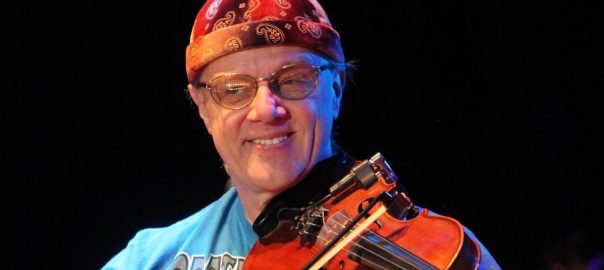
Ahead of this year’s Cropredy festival, I catch up with Fairport Convention’s Ric Sanders. We talk about first learning to play the violin at primary school, about getting his big break with Soft Machine and the invitation to play on Fairport’s Gladys’ Leap album forty years ago this year – and, of course, this year’s Cropredy line-up.
If we can talk about your very early days first, when did you first pick up a violin?
Well, I took it up when we were in junior school. The whole class had six weeks of being taught to play the violin. I mean, it’s nowhere near enough time. It was just six weeks and we had this teacher called Mr. Tunnicliffe. He’ll be long gone now but we used to call him Ten-ton Tunnicliffe because he was quite portly. But he played the violin and he taught us. He got the whole class playing a pattern on the open strings. And then with great bravura, Ten-ton Tunnicliffe would play this jig over the top of it. Very simple thing and most of the class didn’t get on too well with it. But after that third week, I could play the tune that Ten-ton Tunnicliffe was playing. I could just do it. I don’t know why. But I wasn’t interested because I wanted to be an astronaut or a scientist. So, when the six weeks ended – and I’ve never told this to an interviewer before – I forgot all about it. They weren’t our violins – they were provided by whoever – and then I forgot about it. In actual fact, seriously, I took up playing the violin again when I was 17. Because I was 17 in, I guess, the summer of love and I’d always liked the Beatles and the Stones and stuff.
Before that, my dad was an RAF radio operator. And he was stationed in Limavady in Northern Ireland during the war with the Americans, liaising with their radio people. That was his war gig. And he came back from the war festooned with nylons and chocolates and a whole stack of 78 records. Lots of the great jazz players, like Benny Goodman and Glenn Miller, Duke Ellington, Gene Krupa and all sorts, basically. And I started to hear this jazz and I kind of really liked that.
I have an elder brother, Mike, who would buy all the records. So, when there was the Trad Jazz boom, Mike bought all the Acker Bilk and Kenny Ball… Chris Barber Band, which was my favourite, because they really rocked. And then he bought all the Beatles and the Stones’ stuff. So, the first thing I ever had to buy using my own pocket money was in fact Magical Mystery Tour. But it was Sergeant Pepper and Magical Mystery Tour that made me think this is what I want to do for the rest of my life. I want to be a musician.
But I hadn’t got a guitar or a bass. I wouldn’t have taken up the drums because there’s too much to carry around. Or a keyboard. I hadn’t got any of those things but there was an old violin that my grandma had in the loft. So, I got it out of the loft, scraped all the varnish off it, polyurethaned it, filled it with cotton wool to stop feedback, and got a contact microphone that I bought from an advert in the back of the Melody Maker magazine. It cost me 19 and 6, and I strapped it to the fiddle with a few rubber bands. And I learned the riff from ‘Willie the Pimp’ by Frank Zappa on his Hot Rats album. And that was the start of it.
My mum and dad, they were hoping I was going to have some sort of academic career or be a doctor or a lawyer or a teacher or something. Quite understandable. But my mum was a good singer and my dad played. They come from a Salvation Army background so he played in the Salvation Army brass band and stuff. So, both my folks were musical and once I convinced them that I was really earnest about doing this, they were with me all the way.
And at that time, around about ‘68, ‘69, it was when you began to hear great fiddle players in the world of rock. And then, of course, I got into jazz as well and listened to Stephane Grappelli and Django Reinhardt. Stephane was a phenomenal violin player, one of the greatest ever. But I was also listening to David LaFlamme from It’s a Beautiful Day. And I was listening to Jerry Goodman from The Flock and then the Mahavishnu Orchestra. And Sugarcane Harris, who was amazing. He played on the Hot Rats album and played the violin like a blues harmonica, it sounded like. He was the bluesiest ever and was probably my main influence. Jean-Luc Ponty, of course, who may be the most high-profile modern jazz violinist, I guess.
And, also, I was listening to some great fiddle players in the UK. Of course, there was Dave Swarbrick. I play nothing like Dave Swarbrick. I can’t. Chris Leslie can. Chris Leslie can do an impression. He can even do the voice!

The first big band that I played in was with Stomu Yamashta, a Japanese avant-garde percussionist. Stomu Yamashta Red Buddha Theatre. I did a six-week European tour with him as a dep because his wife played the electric violin but she had to go back to Japan to visit her elderly parent.
So that was your first professional gig then?
Yeah, that was my first, Stomu Yamashta. I knew it was only a short-term thing and I went and auditioned for it in a room above a London pub. And there was a queue of violinists all around the block and somehow, I got the gig. And then the real big break in my life came joining Soft Machine. Because John Marshall, the drummer, got to hear me playing with Michael Garrick, the great jazz pianist who I’d written to. I’d sent him a cassette of me playing some Chick Corea tunes and said, “Can I come and see you for jazz harmony lessons?” And he said, “Better than that. Come and do a few gigs with us.”
So, I did. And John Marshall was the drummer on one of those gigs. And Soft Machine – their soprano saxophone player, Alan Wakeman, who’s Rick’s cousin, he’d left because he got a gig being musical director for David Essex. And they couldn’t find a replacement but the violin kind of occupies that same sonic range, not totally, but pretty much. And so, I got the gig in Soft Machine.

And then I’d also sent a tape to Ashley Hutchings. And having done Stomu’s thing, which was only short term, at the end of the 70s I found myself in the exciting position of being in both Soft Machine and the Albion Band, which, of course, included Ashley Hutchings, Simon Nicol and Dave Mattacks and Michael Gregory and Graham Taylor.

So that was your foot in the door into the world of folk rock then?
Yeah, and through that I met Andy Cronshaw and June Tabor and Martin Simpson and we used to play a lot together. I don’t consider myself a gifted folk player in the way that Dave Swarbrick was or the way Chris Leslie was. I’m basically a jazz rocker really and I play everything like it’s the blues. That’s my cunning secret. I play everything like it’s the blues.
But that was always part of Fairport’s DNA anyway it was never just a pure folk band.
That’s true. And, you know, Richard Thompson could play anything. And Simon Nicol he’s underrated as a guitarist. He is an incredibly good guitarist. People say that there’s been so many musicians in Fairport Convention. There’s been 29 musicians but that was all in the early days. I joined in 1985, my first album being ‘Gladys’ Leap’, which is what we’ll be celebrating because it’s the 40th anniversary. It’s my 40th anniversary as well. So, Richard guested on that album. I appeared as a guest. I recorded it in April ’85, I think and here I am 40 years later.

So how did it come about then, being invited to play on Gladys’ Leap? I think you did three tracks on that?
I did three tracks, yeah. And what had happened was that Fairport had been pretty inactive, really, except for the festival. There hadn’t been a Fairport band from, you know, 1980 to 85. And the three main members were Simon and Peggy and Dave Mattacks, or DM, as we call him. And they’d got a bunch of new material. And Peggy, was in Jethro Tull at the time which gave him the financial security to be able to build Woodworm Studios at his home in Barford St Michael. It’s no longer Peggy’s but Woodworm Studios is a great place and still is and that was where the album was recorded. And Peggy gave me a call because we go back a quite a long way because our dads knew each other.
So, it all kind of slotted into place and I never expected to be in Fairport because they’d got one of the most phenomenal fiddle players of all time, Dave Swarbrick. But Swarb didn’t want to do the Gladys’ Leap album because he wasn’t into the material. And he’d just formed Whippersnapper with Chris Leslie. I think Chris was in the frame for joining Fairport, but he declined because he’d just formed this band with Swarb and Chris is very loyal. And Fairport had been inactive for years and Whippersnapper had a full diary.
So, I got the next call. And when Peggy called, he said, “I want you to play on some recordings I’m doing. I’ll send you a cassette.” Peggy had this offshoot group – a fun outfit it was – and they were called Dave Pegg’s Cocktail Cowboys, of which Chris was a member as well. At this time, around about ‘85, I was just doing jazz gigs around the Midlands. Just going out, playing with different rhythm sections, like jazz musicians used to. And it wasn’t hugely lucrative, but I got by. Peggy sent me this tape and I thought he was asking me to play on a Cocktail Cowboys record because I had no idea that Swarb had decided that he didn’t want to carry on with Fairport. And so when the tape arrived and I listened to it, I thought, hello? Well, that’s Peggy playing the bass, obviously. That’s Dave Mattacks on drums. And that guitar I could tell straight away. And yeah, it turned out to be Gladys’ Leap. And I went along and my first day was just recording those three tracks that I did on the album. The standout track for me, and the one that stayed in the repertoire, is ‘The Hiring Fair’.
Yeah, and a real fan favourite alongside the older material.
It really is. Well, Ralph (McTell) has contributed hugely to our repertoire. Also, Dave Mattacks, apart from being one of the world’s greatest drummers, is a very accomplished keyboard player with an incredible ear for harmonies and the instrumental section is actually written and arranged by Dave Mattacks. Well, it was right up my street because it’s not overtly folky. And I just played like I would do if it was a jazz rock thing that I was doing. So, I think probably that track more than any other helped me get the gig.
And then Maartin Allcock was recruited and as I say there’s been many people in Fairport but since I joined, which is now 40 years ago, there have only been two changes of line-up really. Which is when Maartin Allcock decided to move on and is sadly no longer with us. And when DM moved to America because he was getting so many sessions, and Gerry Conway joined the band. And of course, Gerry passed away, which is very sad. He was with us for 25 years. But now we’ve got DM. We were kind of stuck, you know. What were we going to do on the winter tour and Cropredy? And so now DM comes over from America for the winter tour and for Cropredy, which is great.

So just going back to 1985, you didn’t play Cropredy that year because obviously Dave Swarbrick was still booked to perform at the festival.
Yeah, I went on the Friday night. It was a two-day festival at the time. I couldn’t stay for the Saturday because I had to get up at the crack of dawn and go to Edinburgh because I was playing at the Edinburgh Festival with a dear friend of mine who I’ve just been recording with recently again, a guy called Phil Nicol. We did two weeks at the Edinburgh fringe and what our gig was, was playing half a dozen numbers at the end of a comedy cabaret. Some of Phil’s songs, and we also did ‘May You Never’ by John Martyn and we did ‘Every Breath You Take’ which had been big at that time. By the way, I should tell you that the main star of the comedy cabaret that we did in Edinburgh was Julian Clary, who was incredibly funny. And at that time, called himself the Joan Collins Fan Club featuring Fanny the Wonderdog.
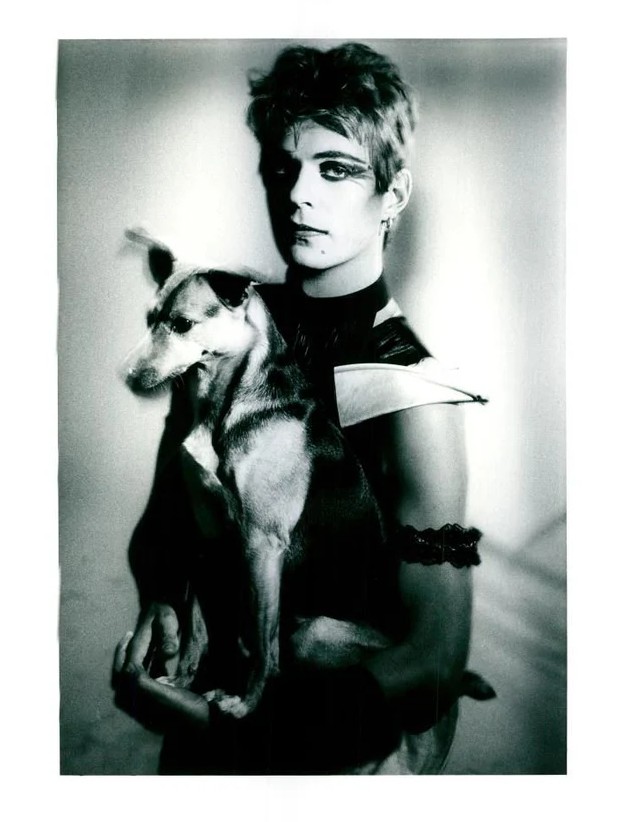
I remember because he was on Channel 4 a lot in those early days.
Yeah. He was great. I mean, you know, never heckle Julian. Never. And he would improvise. We would do two shows a day and the shows were different every time. And he’d do this thing where he’d go and find a lady’s handbag and go through it and improvise a routine from the contents. He was absolutely wonderful. Also, there was Jeremy Hardy, the late Jeremy Hardy. He was a great comedian. He was on that. So that was a great show. Yeah, that’s why I couldn’t go to the Saturday Fairport!
But soon after you did become a full-time member. What did it feel like taking over the fiddle player’s role in Fairport Convention from Dave Swarbrick?
Do you know, I wasn’t really that nervous about it. A little bit, I mean, I was nervous a little bit just because Swarb was not just such a great musician but such a such a great personality. His personality was stamped on Fairport. But actually, I get more nervous now than I did was when I was a kid because when you’re that young – I was only in my very early 30s when I joined Fairport – and I’d already played with some incredible musicians. Carl Jenkins, John Ethridge, Alan Holdsworth. I played with these guys. John McLaughlin, you know, I jammed with John McLaughlin. Toured with his group, Shakti. Not as part of his group but with Soft Machine and John McLaughlin doing a doubleheader tour of Europe. So, you know, I had the sort of cockiness of youth. I was young and I wasn’t too scared. I get more nervous now, actually. I’m 72 now. I thought when I got to this sort of an age, I’d be bulletproof but it’s been the reverse.
I remember the first concert that we did was at the Sir George Robey pub in London and from the word go, the Fairport audience were really good to me. And I’ve heard it said since – well Chris Leslie has said, “I wouldn’t have been the right person for the job because I would have sounded like Swarb at the time.” I mean, Chris has got his own style totally now. I was completely different because I couldn’t play like Swarb. I had to come at it from a completely different angle. So, I couldn’t be a replacement for Dave Swarbrick. It was something different.

Looking back over the last 40 years, what have been some of your favourite recordings in Fairport? You mentioned ‘Hiring Fair’ obviously.
I guess one of the things that I really love doing because I’m not a songwriter – Chris is a brilliant songwriter and has gone from strength to strength – but I write instrumentals. That’s what I do because that’s what I always did. And I’ve loved writing things like ‘Portmeirion’, which is my most well-known tune, I think, that people kind of like.
And another absolute standard that stands up so well alongside the older material.
Yeah, which is very gratifying. And ‘The Rose Hip’ and tunes like that. I’ve loved writing ‘Summer in December’ and stuff. They’re ballads that have got a folkish-type melody, but kind of jazzy in harmony ways. So that’s been really great to do. And, also, when I first started to write fast instrumentals for Fairport, I would just write imitation medleys. Because that was the pattern that was brilliantly done on Liege & Lief with ‘The Lark in the Morning’. When you take a jig and a reel and a hornpipe or whatever and you put three or four trad tunes as a kind of medley. So, you know, I wrote a number of those, a sort of imitation using the template of those tunes.
But then, around about Festival Bell time, I started to write instrumentals. The old way of writing, I’d write the tunes on the fiddle and then harmonise them. But then when you got to tunes like ‘Danny Jack’s Reward’ and ‘The Gallivant and ‘Steampunkery’, which is the one that’s in the repertoire at the moment, I would write those from the rhythm section up. I’d write the band part first, then find a melody to put over it. And I wasn’t sure if the band would go for that style of stuff, but that proved to be OK. One of my favourite things, which you can see on YouTube, is doing my tune ‘The Gallivant’ with the brilliant Joe Broughton and his Conservatoire Folk Ensemble, who are on the Thursday at Cropredy. Joe arranged the brass section for it. He’s a brilliant musician and I love working with him.
Is there anything else you want to tell us about Cropredy this year before we wrap up?
Well, we’ve got a great line-up. Thursday, Albert Lee, one of the world’s greatest guitarists. I’m sure he finishes his show with ‘Country Boy’. I don’t think they’d let him out of the venue alive if he didn’t finish with ‘Country Boy’. On Thursday, Peatbog Faeries, Joe Broughton with his Conservatoire Folk Ensemble, as I just mentioned. And of course, we kick it off on the Thursday with Fairport Acoustic, just a welcoming set. And then I think we’re going to get Broughton and co. to come on and do a number with us, to cross over. Also, the lovely Rosalie Cunningham is on Thursday. And I might be playing with her as well because I played on her last two albums. It’s kind of prog rock, you know, so it’s great. So that will be an exciting Thursday.

And then we’ve got the Trevor Horn band on Friday. Last year, Trevor had to cancel because of illness so he’s headlining on Friday. And you never know who Trevor Horn’s going to turn up with, what style that he’s produced is going to show up.
Yeah, that’s always a hugely entertaining part.
I’m hoping he brings Holly Johnson some time. I’d love to see ‘Relax’ at Cropredy. It would be great. So, we’ve got Trevor Horn, Joe Broughton, again, in the Urban Folk Quartet. And some bands that I don’t actually know who they are. El Pony Pisador. Well, I don’t know that group. And City Funk Orchestra. And Skipinnish.
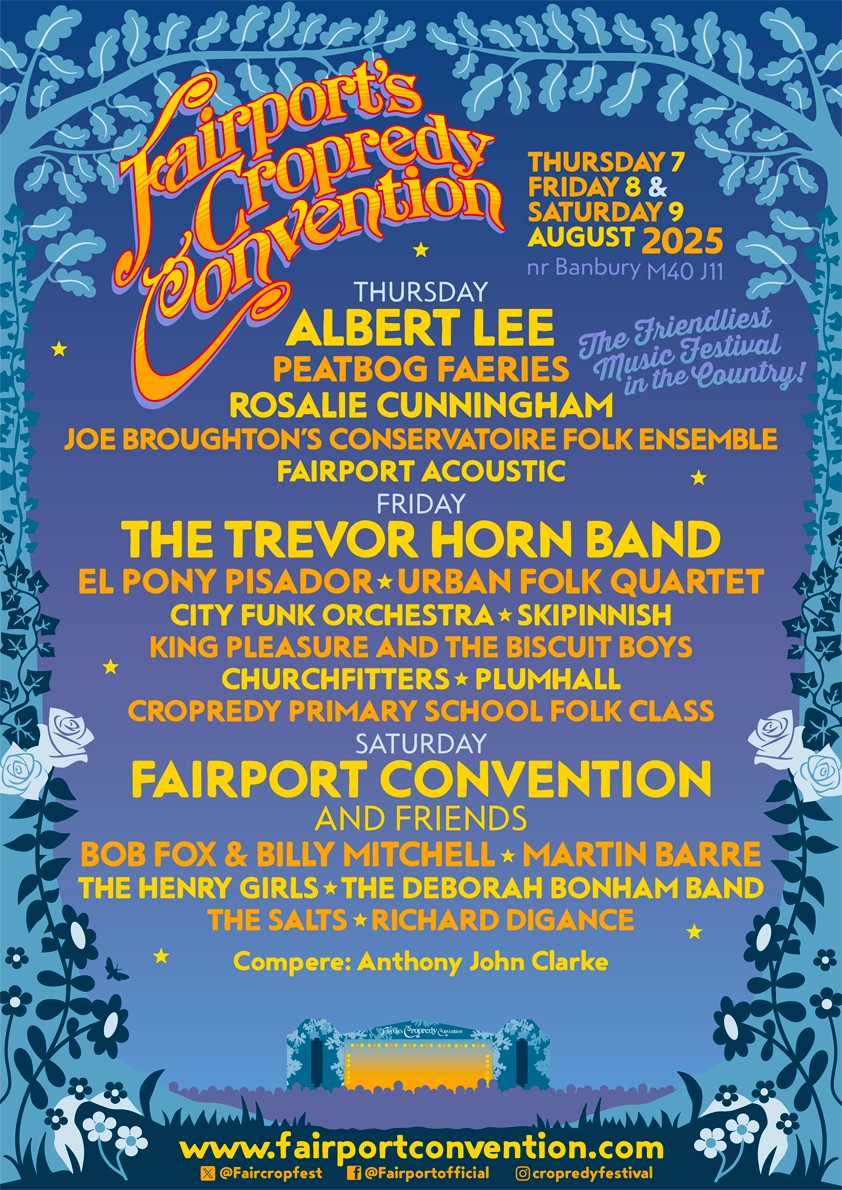
And then, of course, there’s King Pleasure and the Biscuit Boys. We’ve got the Church Fitters, Plumhall, who opened up for us, not this year, but the year before, which is great. And the day starts with the Cropredy Primary School folk class so that will be lovely. And then on the Saturday, we’ve got Richard Digance, of course. And the Deborah Bonham band, brilliant. Martin Barre from Jethro Tull. Bob Fox and Billy Mitchell, they’ll be brilliant. Who’s headlining? Oh, we are! Yeah. So, we have no doubt guests who I don’t know who….
So, there will be some surprises for us on the Saturday and some surprises for you by the sound of things!
Yeah, yeah. Chris Leslie and I don’t take much of a role in the organisation part, or DM. The triumvirate that runs the festival is Dave Pegg – of course, there wouldn’t be a festival, there wouldn’t be a Fairport without Peggy – and Simon Nicol and Gareth Williams, the festival director. So, they’re the guys in the driving seat. And I just, you know, turn up and play. Maybe tell a few jokes. But it’s great. I never in my life, for a minute, thought I would be in Fairport. I was always a fan, a massive fan of the group. And I knew pretty much all of the guys before I joined. But you know, Fairport is more than a band to me. It’s like my family as well. And we really have that feeling. We see so many bands fall apart and have arguments and whatever but it’s not like that with Fairport.
And occasionally I’ve been told by Simon and Peggy sometimes in the past I’ve played a little too jazzy and put in some scales that they don’t think were appropriate. They say, “Don’t do that!” And when they say that I think about it, and I think, “You know what they’re right, you know. No, you don’t need seven flat nines in ‘Walk Awhile.’ Just forget it!” So, yeah, it’s just a very happy band, really. And I don’t know how many years it will carry on. Until we drop, really, I think.

Fairport’s Cropredy Convention runs from 7-9 August this year: fairportconvention.com
Related posts:
Interview with Simon Nicol 2024
Live review: Fairport Convention at Union Chapel 2025
Live review: Fairport’s Cropredy Convention August 2024
Live review: Fairport’s Cropredy Convention August 2023
Live review: Fairport’s Cropredy Convention August 2022
Book review: ‘On Track: Fairport Convention – every album, every song’ by Kevan Furbank
Fairport Convention at Bexhill 2020
Live review: Fairport’s Cropredy Convention August 2018
Fairport Convention at Cropredy 2017
Album review – Fairport Convention ‘Come All Ye: The First Ten Years’
Fairport Convention – 50th anniversary gig at Union Chapel 2017
 Darren's music blog