Falling Nine are a two-piece rock project from Cardiff consisting of David Lydiard (Vocals, Guitars, Synths) & Steven Watts (Guitars, Bass, Drums, Synths). Releasing their debut EP back in 2007 they’ve had numerous releases since then and the pair has been joined by several collaborators.
For their latest release they take on the mighty Sweet classic ‘Fox On The Run’ which was the glam heroes’ first self-written smash hit in 1975 after stepping away from song-writing team Mike Chapman and Nicky Chinn.
Falling Nine frontman David Lydiard explains: “I hadn’t heard the song for ages and one day during a trip down a YouTube rabbit hole I came across a live cover by the Chili Peppers with John singing. It had a raw, punk energy to it, and being a massive Frusciante fanboy, I instantly loved it. So I put up a very rough, live acoustic version of it on our YouTube Channel, just for a bit of fun. During lockdown, Steve (Watts) stumbled across it, tells me that he likes it, and asked me if I fancy recording a full version of it, and here we are.”
‘Fox on the Run’is Falling Nine’s first new release in four years. “Sometimes life gets in the way, which is why we’ve taken so long between this and our last record (2016’s ‘Atonement’), but priorities have shifted and we’re pumped to be working on new music again.”
Falling Nine are:
David Lydiard – Vocals / Guitars / Synths
Steven Watts – Guitars / Bass / Drums
Guest lead guitarist Justin Larner was also enlisted by the duo and contributes his own original solo, giving the Sweet classic a twenty-first century makeover.
“Justin is an incredible guitar player and I’ve been a fan of his tone and his playing since first hearing him when he played with Grand Ultra, says Lydiard. “We wanted a solo that kicks you in the arse and Justin nailed it 100%.”
‘Fox on the Run’ was released on 27th November 2020 and is available on all streaming platforms
Another album of impressive blues rock from Storm Warning who have been a fixture on the UK live scene for over fifteen years now. However, this latest album Different Horizons is tinged with a note of sadness. Shortly after completing recording, guitarist, Bob Moore, sadly passed away. Different Horizons thus now acts as something of a tribute to Moore’s playing and song-writing. He was part of the band from its inception.
“Not flashy or fast, but clear, beautifully intoned and with exactly the right combination of effects. No one sounded like Bob, live or in the studio,” says vocalist Stuart Maxwell in the liner notes.
Although the band are also known for stamping their own mark on blues standards here they focus on nine new original compositions.
Commencing with birdsong before embarking on a classic slice of blues rock with title track ‘Horizons’, it’s a beautiful album and a fitting tribute. I particularly loved the moody, smouldering, bluesy guitar on tracks like ‘Can’t Sleep For Dreaming’ and ‘Long Road’ where Ian Salisbury’s soulful keyboards perfectly compliment Moore’s guitar playing. But there’s also lots to enjoy on the rockier tracks, too, like ’Questions’ with its Bad Company-esque riffing. ‘Come On In’, meanwhile, goes for some choppier Feelgoods-style R&B.
Different Horizons is an album that’s highly recommended for blues rock fans and a fitting tribute to their departed guitarist, Bob Moore.
Having made a noteworthy impact on the UK Americana scene and garnering many favourable reviews as part of Suburban Dirt, their frontman John Wallace Wheatley is open about seeking out a complete change in musical direction for his first solo album: Spent the Morning Watching TV and Looking Through My Phone. “I got bored of mandolins, banjos and hipsters wearing cowboy shirts and singing about mountains, trees and birds,” he confessed to one interviewer recently.
The acoustic guitars and cowboy shirts are out and, picking up his electric guitar, Wheatley delivers an album of perfectly crafted, bitter-sweet, soulful pop-rock.
With ten self-composed songs, including one co-written with cousin Donald Wheatley, John Wallace Wheatley’s tender, soulful vocals and warmly evocative guitar and piano playing instantly transport you back to some of popular music’s most memorable eras. It’s immediately evident that Wheatley is well-suited to this change in musical direction and he’s come up with the songs to boot. Moreover, the team he’s assembled for this solo project, particularly Andy Fairlough’s work on the mellotron, provide for some lush, exquisite, multi-layered, musical textures.
As a lyricist Wheatley doesn’t do either lightweight or upbeat. Themes include death, self-doubt and existential crisis and two of the songs are inspired by a visit to a cemetery and the chance discovery of a gravestone bearing his own name. For soulful pop-rock with intelligent song-writing, sincere vocal delivery and gorgeous instrumentation, time spent immersing oneself in this album could prove immeasurably more satisfying than a morning spent watching TV and looking through your phone.
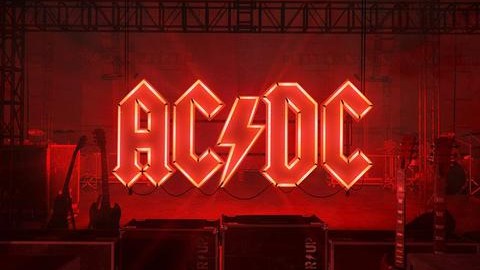
I can remember my disappointment four years ago when AC/DC announced that Brian Johnson was pulling out of their then current tour due to hearing problems but that they would likely conclude the tour with a “guest vocalist”. When Axl Rose came forward to fill in for Johnson I was hugely, hugely sceptical but was completely won over as soon as I saw him actually perform with the band. I even looked forward to the possibility of some sort of Axl-AC/DC collaboration album.
However, when rumours began that Johnson, along with recently-departed bass-player Cliff Williams and laid-off drummer Phil Rudd, were reconvening with Angus Young and the late Malcolm Young’s replacement, Stevie Young, such fanciful notions were immediately put to one side. Brian Johnson was back where he belonged and the classic AC/DC line-up, or as near as humanly possible to it, was being resurrected. This felt exactly right. It’s been six years since the last AC/DC album Rock or Bust and twelve years since Black Ice. What could be a more perfect way to end 2020 than with a new AC/DC album?
Of course, absolutely no-one was expecting any musical surprises with Power Up. And there aren’t any. Indeed, when the first single off the album ‘Shot In The Dark’ gave us a sneak preview of what was in store I would have sworn blind, had I not known it was new, that I already had it somewhere on one of the albums recorded since For Those About To Rock was released. That’s not a criticism at all. The fact that a brand new song like that instantly feels so comfortably familiar after all these years and after various traumas and tragedies is testimony to the band’s ability to deploy all their trademark musical tricks to still make a great new classic.
Across the album we have twelve tracks of classic AC/DC – hard riffing, catchy choruses, bouncy rhythms and a lead singer screaming his lungs out as he has for the last forty years. Welcome back Brian. Welcome back AC/DC.
Brilliantly, expertly, joyously predictable, Power Up is exactly what we needed in 2020.
Following the release of his highly acclaimed new album ‘The Last Glam In Town’ I talk to former Glitter Band legend, John Rossall. Our chat covers glam rock, show bands, growing up in Blackpool and, of course, John’s new album and the prospect of touring again post-Covid.
The last glam in town – that’s quite a statement isn’t it?
People have their own perspectives and thoughts on it. I just wanted to do an album. I’ve not done one for years and years, well forty-odd years, of original songs. But, yeah, I think it’s a bit of a statement really.
It’s such an authentic sound on the album that really captures the original spirit of glam. What was the experience like in the studio, making a glam rock album in the 2020s rather than the 1970s?
Well, for a start in the 70s you were actually in the room with somebody. If anybody was going to record something, they actually came in the studio to do it. You couldn’t have a guitar player playing his part in, say, Berlin and the drummer drumming in Stockholm. That’s a change. That took me a while to get used to.
Clearly it worked! Did you find the technology helped you create that glam sound even though it was recorded in a completely different context?
In some ways it did. But you have to write the song first before you worry about the technology. But I knew what I wanted to do before I started recording. I wanted to update what we did – the Glitter sound, basically. I wanted to bring it right up to the twenty-first century. It’s not been played on radio stations for quite a long time and I kind of wanted to update it. Make the drums a bit more powerful and make one or two subtle changes. But the main ingredients of it, the original production – I wanted to keep some of that magic in it.
You must be very encouraged with the reviews so far?
Yes, I am. It’s like I’ve written them myself almost! It’s a surprise. The reviews everywhere – it’s been beyond my wildest dreams really.
Tell us about some of the people you collaborated with on the album.
I had a few people. Apart from my touring band – that was the basic bottom line – but I had different guests on different songs. For instance, Jon Robb from the Membranes, we got together. I wanted to take the Glitter thing to a bit of a dark side, an almost avant-garde thing. And I found that the most challenging thing, to update it in that way but keep the roots of it still there, you know. Also, I worked with Robert Lloyd from the Nightingales. I recorded three songs with him and also Mark Standby, who’s a long-time collaborator. He was in my band about twenty years ago. He lives in Berlin now. I got Bob Bradbury from Hello to write a song for me. I wanted him to do one where we produce a kind of tribal feel with the drums. And then I got Michael (Wikman) from Sweden who plays the drum track on that. Of course, not forgetting Alan Merrill from the Arrows who wrote ‘I Love Rock ‘n’ Roll’ who wrote a song for me (‘Equaliser’) not long before he passed away, a couple of months later.
That was written especially for you for this album, was it?
Yes. We knew each other quite well in the 70s, obviously. But you know, over the years you kind of lose touch, like you do. But in the last five years we reconnected and did about three short tours in the UK. And the magic – he was still the same guy. I really enjoyed the tours we did with him and it’s so sad he never got to hear the finished thing. He actually plays guitar and does backing vocals on there.
Some of the songs on the album are really personal to you, aren’t they, like ‘Blackpool Rocks’?
Well there’s quite a lot of songs about Blackpool that I learnt when I was growing up. Most of them by the great legend George Formby – ‘My Little Stick of Blackpool Rock’ and ‘Cleaning Windows’ and all that kind of thing. But I kind of wanted to do one that went over my childhood. I grew up in Blackpool. My dad was in quite a famous Blackpool band in the Empress Ballroom. He played there for twenty years and as a kid, aged about 10 or 11, I used to go down there about once a week. And I used to stand at the side of the stage. Of course, I liked swing bands when I was about 10, 11, 12. And because he worked at the Tower Company, Winter Gardens we used to get a lot of free tickets to the summer season shows. And the whole atmosphere of Blackpool in the 50s was amazing. And that’s what basically the song is about. My childhood, Blackpool in the summer and my dad, who was still my mentor, even after all these years. So that’s what that was about. I was quite happy when it was done although it was one of the hardest songs to write on the album, actually.
If we can now go back to the very early days of your career. You were leading the Boston Show Band in the late 60s and early 70s and they morphed into the Glitter Band. We tend to think of show bands as mainly an Irish thing, but you were an English band working in Germany, weren’t you?
My first professional job, earning a living, was in an Irish show band. And I lived in Ireland for a few years. And then I joined the Mike Leander Show Band, which was an eleven-piece band, back in 1965. We did an eleven-week tour, an old-fashioned kind of package tour with the Bachelors headlining and people like Susan Maughan. And then the band disbanded and I didn’t know what to do and I thought I’ll start my own band. And that’s what I did a few months after that. Got an act together, got some guys together and we went across to Germany in 1966 and we stayed there for about nearly six years. Of course, there were personnel changes, people leave, somebody wants to settle down and when they got home sick, they’d want to go back to the UK. But I enjoyed doing it. We worked together with Paul Raven (Gary Glitter) during that time. And we kind of split really beginning of 72. We were touring the UK quite heavily. And myself and Harvey Ellison, the other sax player in the band, we had laid some notes down on ‘Rock and Roll (Part 2)’ in December of 71 and we thought the record had fizzled out. Then I got a call from Mike Leander around about the beginning of June of 72. And he asked whether we’d like to re-acquaint ourselves and work with Paul Raven again with ‘Rock and Roll (Part 2)’. And I thought yeah, we’ll do that. We were doing quite well and had some records as the Boston Showband at that time and I did make it a condition – and I liked the idea of Mike Leander producing – I did make it a condition that we would get to do a record after a reasonable amount of time, which we did.
And how many albums did you do with the Glitter Band then?
I did two.
People wouldn’t necessarily think show band to glam rock as the obvious route. But there were parts of the show band sound that became an integral part of the Glitter Band sound weren’t there?
The main thing was that most bands and groups around, they were just guitars and drums and maybe keyboards. Not a lot of them had sax and brass so that was correct. And, of course, in my very early days as a teenager in Blackpool I was playing in brass bands. And ‘Angel Face’ that’s got a kind of brass band feel about it, with the drums and the way the brass section goes especially in the middle eight. Some of those ideas, of course are apparent on the new album. As I said, I only did two albums with the Glitter Band back in the 70s, but this album is kind of the album I missed out on – that I wanted to make. Because when I left, I felt I had unfinished business with the band. I wanted the band to do something in America. We’d done it in the UK and Europe but to me the job was only half done. And I left.
So, this album isn’t just a career renaissance for you it’s actually a career highlight in terms of albums then?
Yeah, it is. When I started making the album it never entered my head, I was going to make a 70s album or a glam album. It’s just me. I’m the guy who wrote those songs in the 70s. And I’m a lot older now and more mature obviously – I hope! And I write songs now. And it’s people who are listening who put you where they think you should be. And it wasn’t a nostalgic album either. I just wanted to make a brand new statement and update the Glitter sound and do some fun songs. And that’s what this is about – having fun really, nothing serious.
You left the Glitter Band in the mid-70s for a solo career. For those who are maybe not familiar with your career since then do you want to just briefly sum up what you did musically between the Glitter Band and now with this album?
Well I did a couple of singles which were quite decent, but I was quite unlucky actually. One was playlisted everywhere. A song called ‘It’s No Use You Telling Me No’ a song I did with Twentieth Century Fox. And lo and behold just as it was coming out, they decided to close their UK office down. And we tried to buy the master back to give it to another record company, but they wouldn’t let us have it. And I was quite disillusioned. Then I went to Sweden for quite a few years. I was relatively unknown there. I thought my music was done but after a couple of years it never really leaves you. And I got a band together – Swedish guys – with the idea of just playing a few gigs, getting together at the weekends just for a bit of fun. But then I started getting invitations to go to Germany playing festivals. Big festivals, a couple of trips to the UK and, of course, it like reawakens you – the hunger. So, we were touring, quite a bit and shows in the UK. Not with any original music just mainly the old hits. And about two years ago I thought it would be nice to go on tour, make a new album with some brand-new songs and that would give me something new and creative. Well, of course, I got the album bit done and I should be on tour really now but obviously I’m not.
Yes, that’s something that’s affected every musician.
That’s the luck again! It strikes!
So, what are your plans now this album is out and assuming at some point venues reopen and we can start seeing live gigs again?
Hopefully, we’ll still tour the album, albeit next March, April, May – whenever we’re allowed to and it’s safe to do so, of course. That’s my immediate plan. Of course, the album’s only been released a couple of weeks so it’s still early days for it. We’ll have to see how we go with the album, really, and then that will decide what I do. But if it remains the same as now, I’ll probably go out and promote the album and do some shows. I still enjoy playing live. It’s still a great feeling you know.
And still going out there playing music. You could be the Jerry Lee Lewis of glam rock. The last glam standing?
Yes well. If the cap fits, yes!
Anything else you want to say?
Well I just hope people give it a chance, give it a good listen to and go out and buy it obviously. And I hope I can perform it next year on some live shows. I know through social media that people really want me to tour the album and that’s what I’ll try to do. So, all I want to say is I hope everyone gets through this alright and we can carry on and life gets back to something a bit like more like normal for us all.
Thanks to Claire Moat and Anne Street for their assistance in arranging this interview.
From Slade’s Til Deaf Do Us Part in the early 80s New Wave of British Heavy Metal boom, to Sweet’s melodic, prog-inspired masterpiece Sweet Life in the early 00s, there have definitely been some great albums from glam rock artists who subsequently managed to reinvent themselves once the allure of sequins and silver platforms began to wane. But, really, has there been anything approaching a great glam rock album since the 1970s? Look no further Glitter Band alumni, John Rossall, has just released one.
All tribal beats, honking brass, fuzzed-up guitar, sing-along choruses and enough handclaps and chants of ‘Hey’ to last you a lifetime, The Last Glam In Town is a modern masterpiece of the genre.
Rossall was part of the original Glitter Band back in the day, playing not only on a string of the shamed Leader’s early hits but going on to record a succession of Glitter Band favourites without their now-disgraced and unmentionable frontman. Rossall subsequently left in 1974 for a somewhat uneventful solo career. I’ve seen him numerous times over the past couple of decades wowing the crowds with a selection of hits from both Glitter (the man) and Glitter (the band). Last Glam In Town, however, is something else altogether – a whole new album of superbly-crafted songs that capture the vibrance, assertiveness and pure fun of glam in its heyday.
Longtime collaborator Mark Standley along with members of Rossall’s touring band, post-punk outfit the Nightingales (whose lead singer, Robert Lloyd, sings two songs), and John Robb of punk legends the Membranes (who also provides vocals on two tracks) all feature on the album alongside Rossall.
Among the album’s ten glam-filled tracks, highlights include the wonderfully menacing album opener ‘Fear of a Glam Planet’ and ‘Blackpool Rocks’ a tribute to Rossall’s home town and his father and musical hero, Bob Rossall, who returned to Blackpool after serving in the Second World War and played in Blackpool’s Empress Orchestra for two decades.
Another track ‘Equaliser’ was written by Rossall’s old friend Alan Merrill of Arrows, writer of the glam anthem ‘I Love Rock ‘n Roll’, who gifted the song to Rossall before tragically passing away from Covid back in March. Alongside the original material, the album also contains a suitably glammed-up cover of the Honeycombs ‘Have I The Right’ and concludes with an energetic cover of one of the Glitter Band’s biggest hits, playfully retitled here as ‘Let’s Get Together Again (Again)’.
For inspired and original glam rock with energy, joie de vivre and twenty-first century credibility John Rossall is definitely your man. A superb album.
Released: 30th October 2020 by Tiny Global Productions
This review was originally published by Get Ready To Rock here
With a second lockdown, miserable British weather and little sign of something vaguely resembling normality returning any time soon a new King King album is probably just the antidote we need. Driving rhythms, fat riffs, soulful vocals and big choruses, Maverick takes us right back to the classic era of blues rock.
King King’s fifth album, there’s been some adjustments to the line-up since their last offering, Exile & Grace back in 2017. Joining Alan Nimmo (vocals/guitar) are Nimmo’s brother Steve (guitar) – the two toured together for a couple of decades as the Nimmo Brothers, of course – alongside Jonny Dyke (organ/piano), Zander Greenshields (bass) and Andrew Scott (drums).
“Recording the new album with the new line-up has been a whole lot of fun and very interesting,” says Alan Nimmo. “It’s great watching the guys using the great talent they have bringing the songs to life.”
From the bombastic swagger of opening track ‘Never Give In’ to the anthemic balladry of closing song ‘End of the Line’ Maverick has all the ingredients you’d expect from a great blues rock album, including some gorgeous guitar solos and lush soulful keys. Lyrically challenging? Not particularly. It’s mainly tales of childhood dreams, love, togetherness and sunshine – exactly the sort of thing you’d have expected Paul Rodgers to be singing about forty-odd years ago.
Will it change the world? No – but it certainly cheered me up on a wet and miserable day. Welcome back King King. Another album of well-written, nicely-polished and superbly-executed blues rock. Just what we needed.
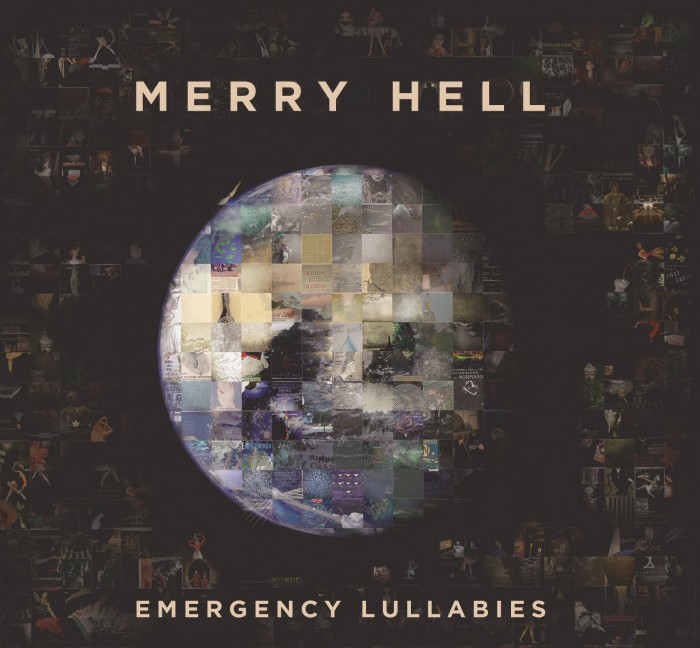
Never a band afraid of speaking its mind, committing pen to paper and pulling out some rousing anthems, for their latest album Emergency Lullabies Lancashire folk-rockers Merry Hell turn their attention to the climate crisis, lockdown and the NHS.
The climate-themed songs ‘Leave It In the Ground’, ‘Sister Atlas’ and Emergency Lullaby’ were originally released earlier in the year as singles. Having spent three decades active in the green movement there are few issues as close to my heart as this one and I was delighted to hear the band were taking on the climate mantle. With subject matter such as this, however, there is sometimes a danger that the songs either end up a bit twee and preachy on the one hand or that they are so ethereal and other-worldly that they fail to really communicate the scale and terrifying urgency of the task in hand on the other. However, with these three songs Merry Hell pull it off magnificently. They don’t tamper with their formula: it’s classic Merry Hell, sung with that same mix of fiery passion and down to earth humility that rings out from all of their best recordings.
Emergency Lullabies is Merry Hell’s sixth album. Not only did they overcome the challenges of completing Emergency it during lockdown but the extraordinary events of 2020 would, of course, provide no shortage of inspiration. If ever a band were going to rise to the challenge of celebrating togetherness and mutual support during tough times as well as paying tribute to our key workers going the extra mile it was going to be Merry Hell. ‘Beyond The Call’ was written the night the UK went into lockdown in celebration of the NHS. ‘The Green Hill of Home’ and ‘We Are Different, We Are One’ meanwhile are typically anthemic sing-alongs on the theme of solidarity and community.
‘Violet’ takes a somewhat different approach, adopting that lighter, tongue in cheek, slightly music hall, slightly Victoria Wood-esque tone that can be found on Virginia Kettle’s recent solo album.
My absolute favourite track on the album though is another Victoria Kettle song, ‘Three Little Lions’, an epic, brooding, slice of folk rock that really put me in mind of classic period Steeleye Span. Just an absolute joy to listen to.
From poignant ballads to rousing anthems Merry Hell are just tailor-made for times like these and the musicianship remains as top-notch as ever.
Describing themselves as “vaguely acoustic music for the vaguely thinking person” The Sunny Smiles Three are a new alt-folk trio composed of John Parkes, Alaric Lewis and Simon Smith. All three have spent a good few decades as stalwarts of the UK’s indie music scene. Frontman, John Parkes, has been in the likes of the Greenhouse, Fuzzbird and the Sinister Cleaners. Alaric Lewis has played bass with Breaking the Illusion, Cyanide Pills and Suzi Blu as well as being an in-demand guitar tech for some of rock/pop’s royalty. Drummer, Simon Smith, meanwhile was in the Wedding Present, the Ukranians and Cha Cha Cohen.
Fireman Spaceman Mermaid is the trio’s debut album but also includes bonus songs from a recent EP, giving you a whopping sixteen tracks of delightful indie alt-folk-rock.
Named after the retro ‘Sunny Smiles’ charity booklets back in the 1950s and 60s, the three do a nice line in slightly quirky-but-beautifully-crafted acoustic songs with bitter-sweet lyrics and catchy melodies. Parkes is a gifted singer-songwriter, able to conjure up lyrics that so perfectly capture slices of everyday life – like a Ray Davies for the modern era. And with their impeccable indie pedigrees the three have enough musical clout between them to ensure Fireman Spaceman Mermaid is nothing less than a cracking debut.
Released: The Orchard / FR Records 16th November 2020
October 2020 marks fifty years since the release of the Led Zeppelin III album. Greater Manchester Rock Radio’s Stewart Taylor recently devoted one of his ‘Classic Albums’ shows to celebrating the album’s anniversary. The show included exclusive interviews with all three surviving members of the band. GMRR have kindly shared those recollections from Jimmy Page, Robert Plant and John Paul Jones for this piece.
Led Zeppelin III showed a marked progression in style from the previous two albums where the hard rock and blues influences were accompanied by folk influences and acoustic-based tunes. To begin preparing for the band’s third album Page and Plant had decamped to the isolated Bron-Yr-Aur cottage in Wales:
Jimmy Page: “The creative process for Led Zeppelin III changed because the first album had been – I wouldn’t say in a hurry because it was done efficiently and from the period before that we had already started doing a few dates in Scandinavia – and we didn’t stop! We didn’t stop working, all the way through 1969. And we’d managed to do the second album and we were also doing dates and tours in America. And we got our first – what you would call a break. And it was nice because it was fabulous all the energy of being on the road. But it was nice to breathe a sigh of relief and take in the general scent of the countryside… There was still writing going on but it wasn’t the frantic pace of having to do a show that night. The cottage in Wales was one of Robert’s ideas… It was good because it was acoustic guitars and whatever. There was literally no electricity. It was log fire, gas lights and little tape recorders. So the electricity that was in that place was the electricity we were producing with the music if you like.”
Robert Plant: “It had been a real fast quite a rollercoaster to get to that point. From what I remember we really needed to take stock and we were very aware or wished to make a departure of some kind and to calm it all down a bit….We wanted to try and break off, break away and we had an affinity he and I. And even if it wasn’t absolutely the most fruitful moment of the time, it at least allowed us the space to have space. And that meant that when we went on to write further on down the line we had developed the ability to create more space in the music.”
The pair were then later joined by John Bonham and John Paul Jones at another location, Headley Grange:
John Paul Jones: “I suppose it was the first time we’d ever we just sat down together and just tried things, you know, tried lots of different things. We had acoustic instruments as well hanging around. And it was just really nice to sit around a stretch out a little bit I suppose and just experiment. The band was never about making the same album twice.”
On the decision to plant themselves firmly in the ‘albums band’ camp:
Jimmy Page: “It was really apparent what was going on in America. There’d been a number of FM stations that had been established. And these FM stations were playing what we’d now call alternative music – to the singles. And you’d even get to hear them playing a whole side of an album. And I thought – oh boy! This is wonderful. This is the area to go in. Not the singles market because the problem with the singles market, you’d have a single that everyone has worked on… and you’d find bands who did that, the rest of the album material wasn’t very good. Because they were a singles market band. Not only that you’d find when they did the next album… they have to do something that sounded very much like the single off the first album so everyone knew who they were. We didn’t do that.”
Led Zeppelin III saw the band exploring more acoustic material:
Robert Plant: “The thing opened up much more then. Although it was there – I mean on the second album there was ‘Ramble On’ and on the first album there was ‘Babe I’m Gonna Leave You’. There was the kind of acoustic element. The variety was there. My performance I wasn’t that pleased with on the first and second but by the third… ‘Gallows Pole is one of my favourite tracks and ‘Immigrant Song’ is, too. They were just so far between the two. And that to me was the beginning of me actually saying yep, boy, you can do something. Rather than it all being in the one idiom if you like. So yeah, I started getting a bit of pride then”
At the end of the hour-long show each of three are asked for their final thoughts on the album, listening back on it now:
John Paul Jones: “Well it reminded me how good a band it was. Also, it reminded me how much I miss John Bonham.”
Robert Plant: “All we wanted to do was keep stretching. This is the whole thing about Led Zeppelin.”
Jimmy Page: “If the band was going to stay together then you could really start going on this road where these initial ideas are expanded…right over the horizon in every direction.”






 Darren's music blog