Category Archives: Music culture & history

Absolute Beginner: Interview with Bowie/Iggy guitarist Kevin Armstrong

Kevin Armstrong has played alongside icons like David Bowie, Iggy Pop, Thomas Dolby, Sinéad O’Connor and many others. We catch up to talk about his forthcoming autobiography Absolute Beginner which comes out on 17th October; as well as the Lust For Life project which has brought together the likes of Clem Burke, Glen Matlock and Katie Puckrik to celebrate the classic Iggy album; plus our mutual love of the live music scene down here in Hastings.

When did the idea for the autobiography first come about? Was it a covid lockdown project for you or did it begin well before that?

No, it began well before that. It was after David Bowie died. Because I was in the middle of my late-blossoming run with Iggy Pop in 2014-19. I was like two years into that and I was half-expecting to see Bowie again at some point. I hadn’t seen him for twenty years but I was half-expecting to see him again just because him and Iggy are good friends and he would quite likely turn up in the old days back-stage and come and visit us or take us out for a meal or whatever. So I did expect to see him again. When he died, it was quite a shocker and so at that point I thought, well it’s time to tell the story now. I’m back with Iggy for a second time, David’s just died and these are giants of music and it just made me think, well they’re all disappearing and soon I’ll be disappearing so we might as well tell the story.

Was it part of a mourning process for you then, as a sort of personal thing as well?

Not really. It was more of a kick up the arse. It was more saying, well if ever you’re going to write this story – obviously I’d thought about it in the past –  then I just thought, well now’s the right time to start it. I didn’t know where it would go. I didn’t really think about, “Oh this is definitely going to be a book and I’m going to put it out.” It wasn’t that. It was more or less, I’ve just got to write this down now and chronicle it, even if it’s just for myself. So I started writing and because I was on the road with Iggy a lot at that time, that gives you a lot of downtime. Sitting in the back of cars, or in an aeroplane or in a hotel waiting or whatever. There’s a lot of spare time if you like so I used that time. I just carried a laptop with me and started writing. And just carried on.

So it’s definitely been more about writing than partying on tour these days?

Oh it hasn’t been partying for years, to be honest. I mean, you know it used to be groupies in the back of the bus and taking your own weight in drugs every day – but that stopped a very long time ago. These days, the more civilised and professional outfits – even Iggy Pop – it’s more bottles of Perrier and laptops.

In spite of sharing a rehearsal studio with the Sex Pistols, you are quite candid in the book about not really getting punk, musically, when it came along. Obviously, your first love was the older bands like Zepelin and Purple but then you seemed to slot into the world of post-punk extremely well?

Well, I think we all had to sink or swim at that point. I was a musician before my contemporaries at that time. So when punk came along  – I’m sure a lot of musicians felt the same – it was like “Oh, what’s this? We’re supposed to unlearn everything we’ve learned? Or pretend we don’t know stuff.” Because it’s not cool to know the difference between a major and a minor chord even. So I guess I fell into that as a means of survival really. And then, of course, your taste develops over your life, doesn’t it? Things you might have dismissed earlier on in life, you sort of get them later on and you think, “Oh yeah, I know what that’s about…” And that doesn’t always happen at a time that’s useful to you but it’s what happened to me. And then during the post-punk phase, I think clearly it became, with the more sophisticated American bands coming through – your Blondies and your Televisions – it became less  de rigueur to know absolutely nothing about music. Because if you were in the Talking Heads you had to know one end of an instrument from the other. Whereas if you were in Slaughter & The Dogs you sort of didn’t.

There’s a passage in the book that you describe as the pivotal moment in your life where you had been booked in to do a session with a mystery big-name artist in early 1985. When you got that call had you any thoughts on who it might be when you were first asked?

Yeah, Bowie was on the list. I can’t remember who else we thought it might be but Bowie was on the list because there was a rumour. I don’t know maybe it was just a hope or something. But there wasn’t a lot of time to talk to anyone about it because I wasn’t super-aware who was going to be there among the other band members either. I think I knew Matthew Seligman was going to be there, the bass-player, because we were always in touch. But the others I didn’t really know them that well so the only discussion about it was for the twenty minutes before it happened. In the studio itself, where we said, “Who do you think is coming? Who is it?” So Bowie was one of the names that came up.

So that turned out to be the make-or-break career moment for you, as you describe in the book, and a lot of things flowed from that?

Well it would do, wouldn’t it? I mean once you’ve had an opportunity like that to play with someone like that, people notice. And so it opened a lot of doors for me, of course it did. And I think it’s done that for almost everyone who’s ever played with Bowie for any length of time. Immediately, your kudos goes up. Your bankability. Your whole level of class goes up. “Oh, that guy played with Bowie.” It just becomes a badge of excellence wherever you go.

And he was always very aware of that, wasn’t he? And tried to use it in a positive way.

I think he was. Actually, the whole thing I go into in the book about, him using all that time, the precious seconds of his set at Live Aid to introduce the band by name. That was his way of understanding that. He knew. We weren’t getting paid for it but that’s hardly the point. The point was he wanted to actually say our names on that stage which was typically empathetic of him in a way. He understood that.

In the book you talk about the diverse range of artists you’ve toured or recorded with. For you as a guitarist, which have been the most satisfying, artistically, to work with?

Oh, that’s an interesting question. I did enjoy working with Morrissey very much because at that time in my path as a musician… it was just one of those stepping stones where I developed as a guitar-player, working for him. And I’ve always enjoyed working with those artists that stretch me as a musician. Sometimes they stretch you as a performer, you know. Like Iggy Pop, for instance. There’s a certain level of aggression and emotional focus you need to play, even though the music’s quite simple. But I have enjoyed working with the more sophisticated musical artists where I’ve really learnt something or had to stretch. I’ve said yes to it at the beginning and then realised, woah! I’m a little bit out of my depth. So Prefab Sprout would come into that category, as would Thomas Dolby, actually. Things where you come out the other end feeling, “Ah, I’m a bit smarter. I’ve learnt something here.”

Morrissey was the same because I actually got to write a few songs with Morrissey and I was there right from the start – it wasn’t like a “Come in and do an overdub” to something that was already happening. It was right in from the ground, writing, and making the records. So my guitar-playing took a definite leap forward with that because I was conscious of the fact that being ‘Morrissey’s guitarist’ you’ve got Johnny Marr as a bench-mark and you’d better do something that’s good. And so I’m quite pleased with the work I did with Morrissey from that point of view. And Thomas Dolby the same. Because he’s a keyboard-player and because he uses chords that aren’t in the book, you have to know your stuff and you have to learn what he’s doing. And sometimes he’d write guitar parts as well but he’d write them on a keyboard with a sequencer or something and then I’d have to translate them and make them guitaristic or make them even playable on a guitar – which was a big challenge. And lots of people still say, “Oh, I love your guitar part on this.” And actually it was Thomas’s but I learnt to play it and made it my own.

And so the most rewarding creatively aren’t necessarily the most high profile or the most lucrative?

No, not really. It depends how you judge things doesn’t it? I mean, I’ve never thought of it in that way. “I’ve got to work with famous people or people where you earn the most money.” It’s always, from a musician point of view, about how to please yourself in a way and how to bring something that’s like how to really enjoy what you’re doing. And sometimes that can be the most obscure artists. For eleven years I had a studio in Portobello Road and all manner of people came through there. And some of them were completely obscure but some of the best music I’ve ever made is on those tapes.
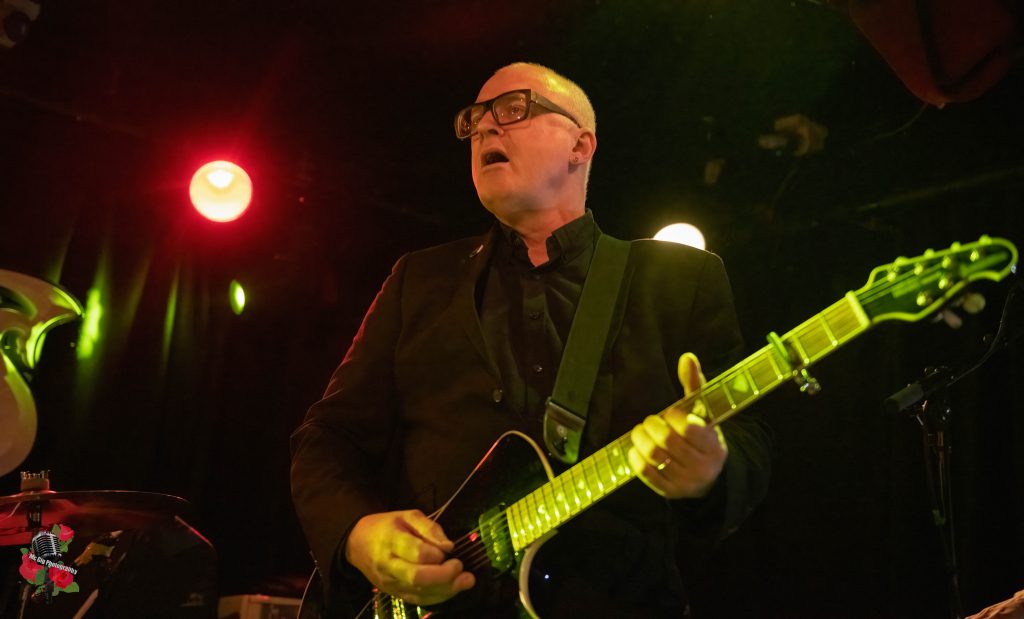
Kevin at Whelan’s, Dublin – photo credit: Ian McDonnell

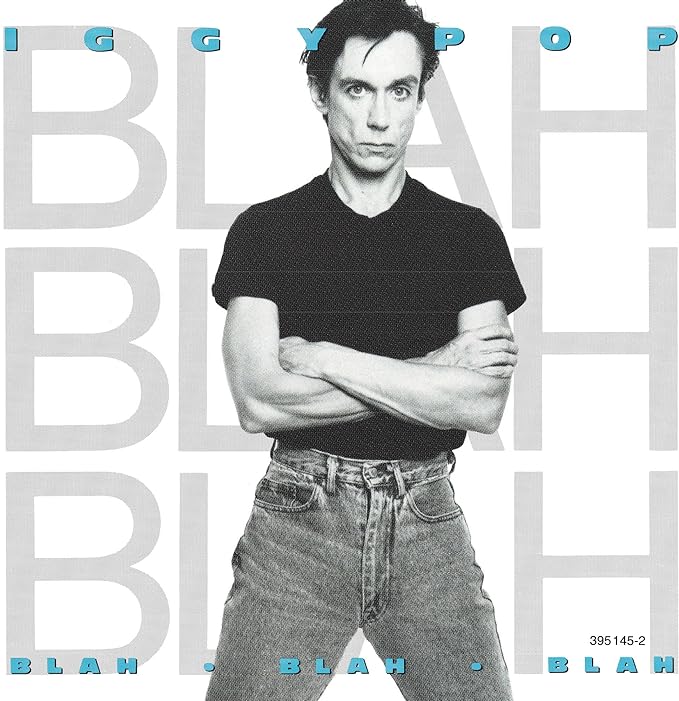
And let’s just talk a little bit about Iggy Pop. Obviously, working with David Bowie opened doors for working with Iggy on the Blah Blah Blah album – which I bought at the time it came out. And then you had a second stint with Iggy. In the book you talk about your differences in approach between the first and the second stint. Clearly, there was a certain amount of growing up along the way?

Well, it was a big gap. I stopped working with Iggy for the first time in 1986 and I didn’t get to work with him again until 2014 – so go figure! You’re a changed person by that time and I definitely didn’t know very much about my craft as a sideman in the beginning because that started with Bowie and then it went on into Iggy and became a bit of a rollercoaster. But I didn’t have any preparation or run-up to that. I wasn’t trying to be that. I was trying to be an artist before that and I just got bounced into that world. So the first time around with Iggy, I’d always thought during the intervening years, “Oh, my goodness. That was so great what we did but it could have been so much better with what I know now.” Because I didn’t really know – I was kind of as green as a cabbage then. And so getting the call in 2014 was a massive great opportunity to revisit some of that work. And we’re even playing some of the same songs and this time really use all the intervening experience to make it great. And I think we got half-way there! I never think I get more than anywhere more than halfway to what’s in my head – but we did some pretty good stuff.
You seem a little bit disappointed in the book that it came to an end because of Covid in a fairly low-key way rather than a big triumphant stadium gig somewhere?

That happened to lots of people! It happened to my son who was at school and then his school career just sort of fizzled out – with online lessons and no hoo-hah at the end of it. So I felt a little bit like that. It was a little bit of a victim of the pandemic. And Brexit, also, it has to be said. Because we used to be able to travel Europe-wide with no extra paperwork and even using our own equipment and driving it all around door-to-door anywhere in Europe, it was all fine. And then that all stopped and then when Iggy did this project with a French band for what was going to be a side-project – we were even saying, “Yeah we’re back in the saddle in a couple of months lads and here we go and all the rest of it.” And I was even talking to him directly about the changes to the set and all this stuff. And then it made sense, once they’d figured it out, for the French band to carry on as the Iggy band. Because they could travel freely and it was cheaper for them and there they were! I’m still in touch with Iggy – not on a very regular basis but we still have email traffic backwards and forwards and talk to each and it’s very pleasant – but it’s a bit of a shame, yeah, the way it finished. I thought we should have gone out n a blaze of glory rather than a rather desultory gig in a theme park in Budapest in 2019.
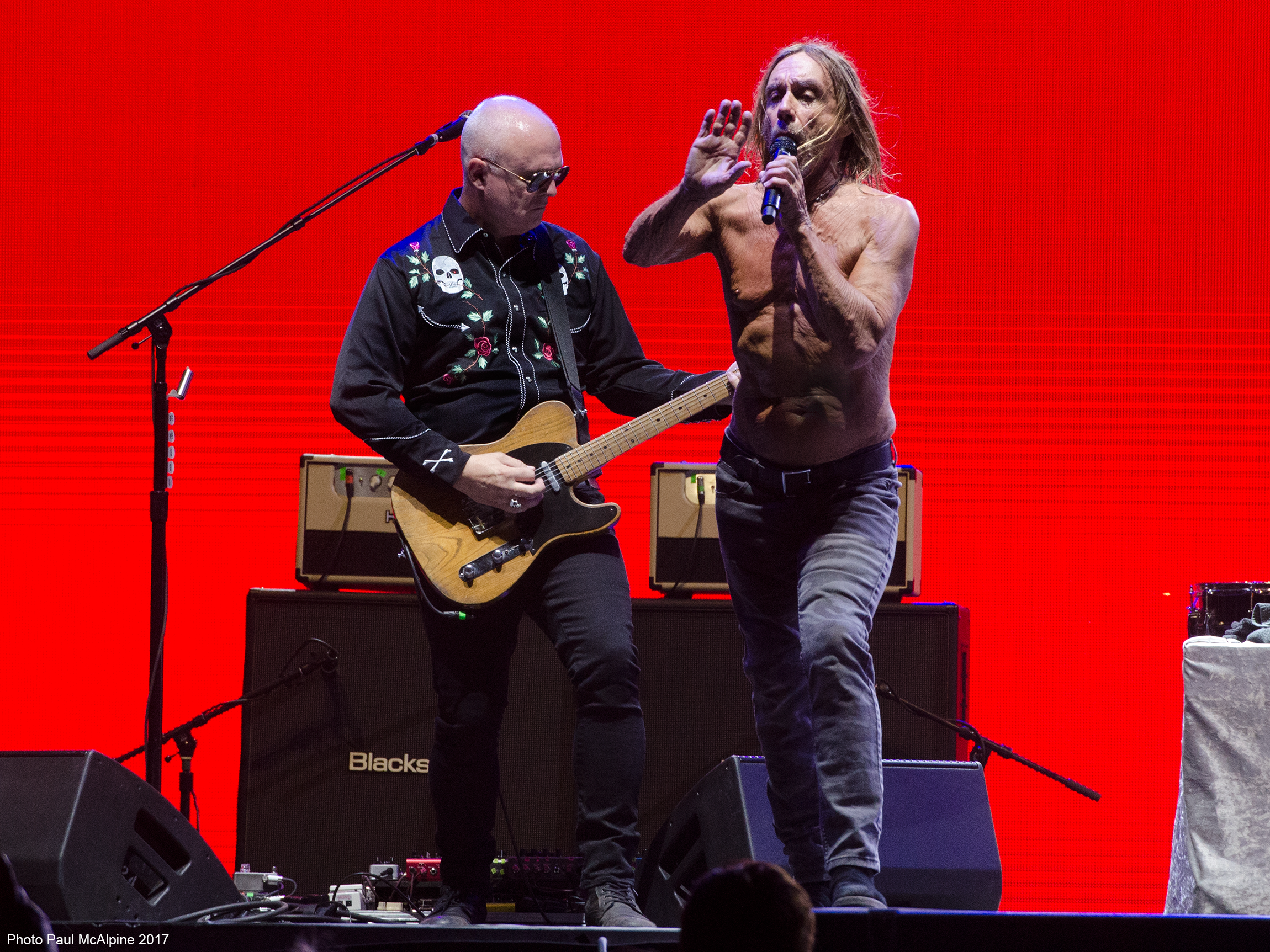
Kevin with Iggy – photo credit: Paul MCAlpine

Although you did end up still performing those songs and celebrating Iggy in quite a different way?

As you well know! Because of the great work you’ve done on the Lust For Life tour. Our friend Tom Wilcox had the idea to do a tribute thing with some ex-Iggy members so we’ve assembled Clem Burke and Glen Matlock and the excellent Katie Puckrik – who’s been a revelation to us all – singing. So we are doing that again in March 2024 and I’m looking forward to that. I even got a message from Iggy. I sent him a couple of clips of the band playing and he said, “You guys sound great!”

Lust For Life Tour – Photo credit: John Scott

Were you pleasantly surprised by the response that the Lust For Life tour got?

I definitely was, yeah. Because, as you and I know, Tom Wilcox has these amazing concepts of bands that he’d like to see put together. And some of them work and some of them go on to have a bit of a life and other ones just crash into the dust – however good they are. I recall the one we did with Richard Strange, and Lou Reed material, which I thought was very, very good but only a very few people came to sees it. But this one caught fire. Which is good really because it was originally billed, as you know, around Tony Sales – the Tin Machine bass-player and early Iggy bass-player. It was built around him and even all the merchandise had his name on and everything. And then he couldn’t make it for sort of administrative reasons so that whole tour was hanging by a thread.

It almost came to a sticky end…

It almost came to a sticky end. I had a Zoom call with Clem Burke and Tom and Katie going, “Well, what we going to do?” We’d lost the principal guy who was selling tickets and we lost a Japan trip over it. And then I thought, hang on let’s call Glen Matlock. And luckily he didn’t say no! And him and Clem had been working in Blondie, as you know, so it was brilliant. And Glen was the only person on the planet who could have filled that seat in the right way, having the Iggy connection and being a name himself. So it took off and I was very pleased with it.

And although Glen didn’t play on the Lust For Life album he’s obviously much better known in this country anyway.

Yes, he had played for Iggy. He’s played in Iggy’s band. They know each other so all of us have that connection with the music and I was so pleased with Iggy’s reaction to the band and the crowds who came as well. They really seemed to love it.
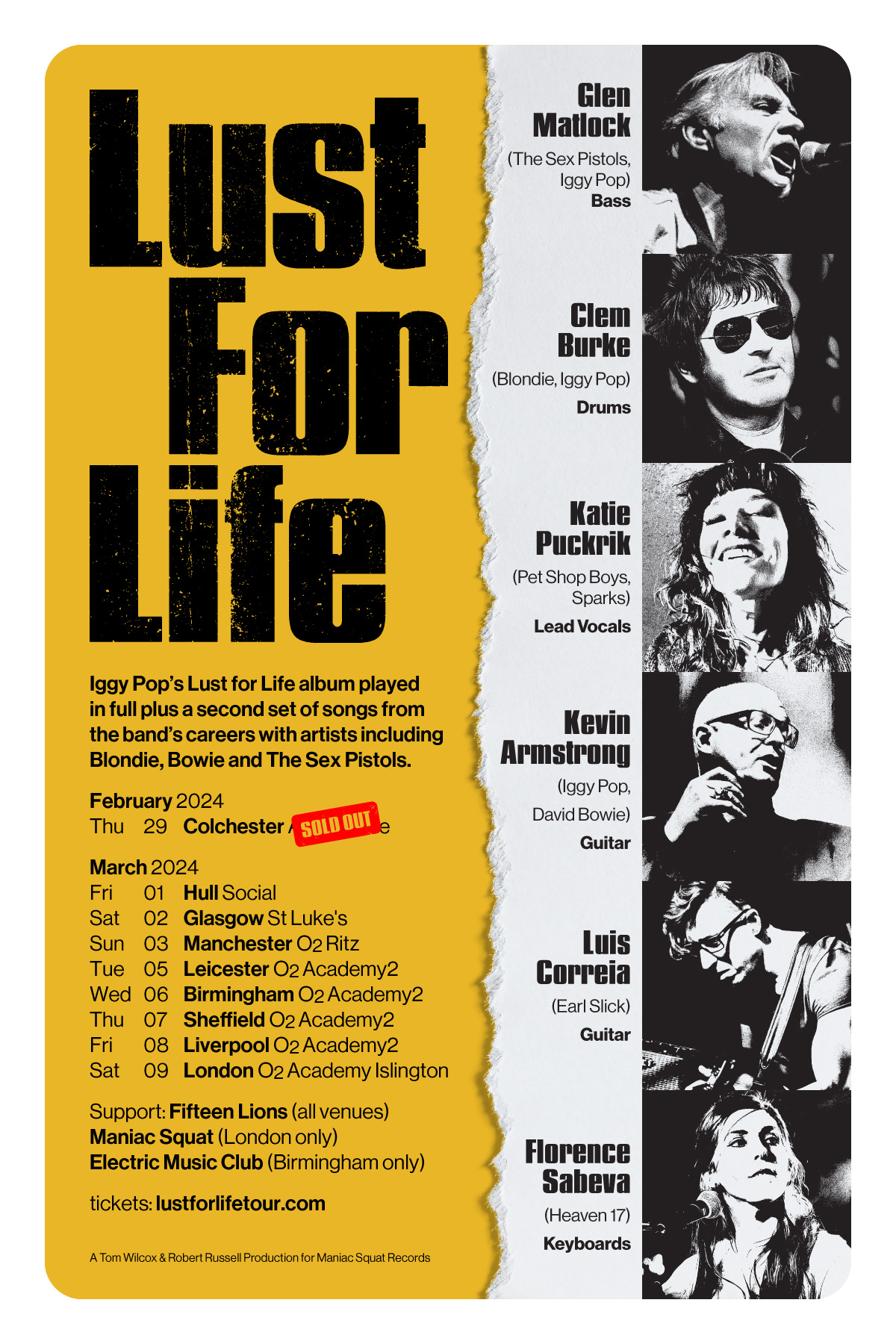
The Lust For Life band sets out on tour again in 2024

Any my final question is more of a local one really. Like a good number of musicians of a certain vintage you ended up moving from London to Hastings. Was the local music scene down here part of the attraction or was that mainly just a happy coincidence?

A bit of both really because I knew a number of musicians who were from down here so I played with Russell Field and Blair MacKichan and Liam Genockey. So I knew there was a bit of a scene down here but I was quite surprised when we moved down here and realised quite how vibrant it is. It’s actually much more active than the London area I was working in, where obviously I had my professional friends and network of people. But down here there really is a burgeoning music scene encompassing everything from young original artists to cover bands and veteran rockers and legends and all that. So there seems to be a massive culture of music in Hastings and that’s thrilling to me. It’s brilliant. I’ve been down here ten years now and it’s really in my bones now.

Yes! I’ve been here seven now and it was definitely part of the attraction for me was being able to see so many bands.

Yeah, I’ve even seen James Hunter playing in the Albion. Or you can see Liane Caroll playing for free in the wine bar in the town – it’s just great.
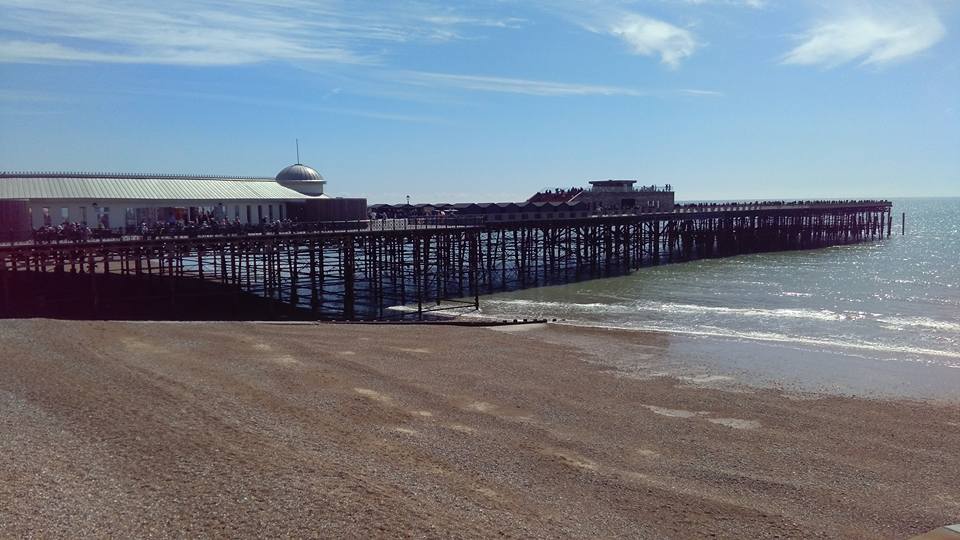
Photo: Darren Johnson

Fantastic! Is there anything else you want to tell us?

Just that the physical copies of the book are out in October. It’s available for pre-order on Amazon. I’m doing two little book launch events. One will be on 15th October at the Kino (St Leonards) and that will be canapes, wine, a bit of singing, a bit of meet and greet. And I think there’s quite exciting news of one coming in the next few days in Heddon Street which, of course, is the place of Ziggy fans / Bowie fans pilgrimage. And there’s a place called Ziggy’s which is relocating to the very building where that photograph was taken in front of that building. And I believe they want me to do a launch there.

And, of course, anybody can contact me through my website and get signed copies or come and meet at an event.

Also, probably worth mentioning we’re doing the Lust For Life Tour in March next year and I’m part of the Bowie convention in Liverpool in July next year as well so I look forward to meeting people there.

More information at: https://www.kevin-armstrong.com/

Tickets for the 20024 Lust For Life Tour available via: https://www.lustforlifetour.com/

Photo credit for header: Cormac Figgis

Related posts:

Live review: Kevin Armstrong at the Kino, St Leonards 15/2/18

Notes from the Lust For Life Tour – Feb/Mar 2023

Lust for Life 2024: Clem Burke, Glen Matlock and Katie Puckrik reunite for second UK tour

A day celebrating Slade at the Trumpet, Bilston – Book Launch & Pouk Hill Prophetz 17/6/23

To mark the publication of my latest book ‘Slade In The 1970s’ I was delighted to be at The Trumpet in Bilston, Wolverhampton, recently – along with Martin Brooks and Nigel Hart of the Pouk Hill Prophetz and a sizeable gathering of Slade fans.

Given the heatwave we’d been having all week I started wondering if we’d actually get many people along and thinking that they may well prefer to spend the day in the garden with a BBQ rather than be stuck inside a pub. I needn’t have worried. As soon as I turned up on Bilston High Street laden with a heavy rucksack full of books, I began spotting fans in Slade T-shirts waiting for The Trumpet to open. Phew!

The Trumpet was a regular stomping ground for the four members of Slade back in the day and is still a much-loved and highly-respected jazz venue. One of the musicians who played there regularly was Black Country pianist, Tommy Burton, who appears on Slade’s Old, New, Borrowed & Blue album. There is a blue plaque for him at the pub.

Once inside, Martin and Nigel of the Pouk Hill Prophetz were already busy sound-checking and I got to work setting up a display of my books on what would be the signing table, in front of the stage and handily right next to the bar. By the time things kicked off the pub had filled up nicely.

After an introduction from Nigel, I took to the mic-stand to say a little about my book, explain the concept behind Sonicbond’s Decades series (of which ‘Slade in the 1970s’ is part) and share with everyone how my long-standing love affair with the band came about. Then it was time for questions: What was my first Slade gig? How did I go about researching the book? What made me switch from being a politician to writing about music?

Following a short break where I signed copies of my books and chatted to Slade fans, it was then time for the first set of the day from the magnificent Pouk Hill Prophetz. Coming together through their shared love of Slade, Pouk Hill Prophetz have been together almost a decade now, celebrating the music of Slade and, occasionally, other glam-era icons.

The first set of the day was an entirely acoustic set where Martin and Nigel gave us their own interpretations of a number of Slade classics. From the big hits like ‘Cum On Feel The Noize’ and ‘Coz I Luv You’, to obscure early album tracks like ‘Dapple Rose’, to anthemic B-sides like ‘She Did It To Me’. It was all rather spectacular, but it wasn’t over yet. The duo would be back for two more sets in the evening, including a full electric set towards the end, with a guest drummer and a special outing for a replica version of Dave Hill’s famous Superyob guitar.

Michael Vanoverstraeten adds: “After the afternoon session, my wife and I went back home to fetch the John Birch Super Yob Guitar for Martin to play it in the evening. Martin surely blew the cobwebs of my John Birch Super Yob Guitar blasting out “Born to Be Wild” at the end of the evening.”

Michael Vanoverstraeten with Mick Marsden – a member of the N’ Betweens prior to the Holder/Hill/Lea/Powell line-up that would eventually become Slade

I’d like to thank Diane at The Trumpet for hosting us that day and giving us such a warm and friendly Black Country welcome, I’d like to thank Martin and Nigel of Pouk Hill Prophetz for giving us such wonderful music and I’d like to thank everyone who came along – all brought together through a shared love of Slade. A memorable day indeed.

Photos: Darren Johnson and Martin Brooks

Related Posts:

Darren’s books

Live review: Pouk Hill Prophetz – charity gig for Dementia UK, London 2019

Slade Convention 2016

Pouk Hill Prophetz raise thousands for brain tumour research

Live review: Francis Rossi – ‘Tunes & Chat’ at White Rock Theatre, Hastings 3/6/23

Always quite a Quo fan since being a young teenager, I’d originally booked to see Francis Rossi on his ‘I Talk Too Much Tour’ back in 2020. Covid came along and that got rescheduled and then cancelled altogether but Rossi finally makes it to Hastings’ White Rock Theatre on his follow-up tour, ‘Tunes and Chat’.

The previous tour adopted that well-established format for this type of evening: seasoned music journo chats to acclaimed rock star about their life and career, interspersed with some live songs. Sadly, (for the reasons given above) I didn’t get the chance to see Rossi do this with veteran rock writer, Mick Wall, when they went out on the road but Rossi clearly enjoyed himself because he’s back for more. However, this time he’s eschewed the standard format of on-stage bantering with an established music journo and it’s just Rossi and his guitar tech and accomplished co-musician, Andy Brook.

Brook famously doesn’t say a word during the show until right towards the end when he reads out some audience questions for Rossi to answer. So the “chat” part is very much Rossi in solo mode. It soon begins to remind me of one of those monologues that Ronnie Corbett used to do sitting on that massive big chair meandering away when he did his solo segment on The Two Ronnies. It’s very stream-of-consciousness with lots of ad-hoc, one-liners interspersed with recollections about growing up in an Italian family in south London, getting hooked on music and embarking on a potentially-lethal home experiment in trying to create his first ever electric guitar.

Along with the more generic chit-chat, there’s also some fascinating insights into how certain Quo songs came about. And, my, do we get the songs. Starting off with some of the early material like ‘In My Chair’ and ‘Down The Dustpipe’ before moving on to some of the songs recorded at the height of the band’s success in the 1970s and early 1980s, there is absolutely no shortage of Quo classics, including ‘What You’re Proposing’, ‘Paper Plane’ and ‘Rocking All Over The World’.

I’ve seen Status Quo perform acoustically in the past, of course, when they did their ‘Aquostic’ project some years back but this is a much more intimate affair and Rossi is in fine voice and clearly in his element. On stage, Rossi and Andy Brook spar extremely well together musically – even if not conversationally – and the evening ends with a wonderful, communal sing-along to ‘Caroline’.

Structured? Not really.

Insightful? Partly.

Entertaining? Absolutely!

https://www.francisrossi.com/

Related posts:

Status Quo – Aquostic at Hammersmith Apollo 26/4/15

Status Quo at Hammersmith Apollo 28/3/14

Slade in the 1970s: interview with Mike Rogers

Radio host, YouTuber, writer and producer, Tokyo-based Mike Rogers has many incredible connections in the world of rock and roll.

I’ve been in contact with Mike on numerous occasions in connection with my music PR work, representing other artists. This time, however, I was the guest on the Mike Rogers Show, talking about my recently-published book on Slade.

You can catch my interview with Mike below, where I talk about my love of ’70s glam, my new book on Slade, my two previous books on Suzi Quatro and The Sweet and my segue from London politics to music writing.

Actually, as The Times noted last weekend I’m not the first ex-London politician to write a book on Slade. Before turning my hand to music writing, I did a sixteen year stint as an elected member of the Greater London Authority (GLA), representing the Green Party. But the first person to write a book on Slade was George Tremlett, a Conservative member of the predecessor body, the Greater London Council (GLC), whose own Slade book came out in 1975.

And below Here we have George Tremlett’s 1975 book ‘The Slade Story’, alongside my own book which came out on 26th May this year.

Related posts

‘Slade In The 1970s’ by Darren Johnson out 26th May 2023

Reviews round-up: ‘Suzi Quatro In The 1970s’

Reviews round-up: ‘The Sweet in the 1970s’

‘Suzi Quatro in the 1970s’ by Darren Johnson – reviews round-up

This week sees the publication of my third book for Sonicbond’s Decades series: ‘Slade In The 1970s’. It follows on from my books on The Sweet in 2021 and Suzi Quatro last year – a glam trilogy if you will!

Here is a round-up of reviews for my previous book on Suzi Quatro. All three books are available on Amazon and other major retailers as well as the publisher’s own online shop at Burning Shed.

“Darren Johnson focuses the same obsessive-compulsive attention to detail that he applied to Sweet in his earlier contribution” – Andrew Darlington, RnR magazine

“An interesting book which should appeal to a wide audience” – John Tucker, Record Collector magazine

“Fascinating read for Suzi Q fans, aging glam rockers and anybody who enjoys a good, informative rock biography.” Jason Ritchie, Get Ready To Rock

Read full Get Ready To Rock review here

“Detailed, informative and highly readable, Darren covers everything about Suzi in the 70s, plus before and beyond.” Jon Marsh, Wired Up fanzine

Related posts:

‘Slade In The 1970s’ by Darren Johnson out 26th May 2023

‘Suzi Quatro In The 1970s’ by Darren Johnson coming in July 2022

Reviews roundup: ‘The Sweet in the 1970s’

SLADE in the SEVENTIES – with author, Darren Johnson

I talk to Gary Alikivi about my love of 70s glam, my writing and my forthcoming book on Slade for his excellent online blog here.

Alikivi's avatarALIKIVI : NORTH EAST UK MUSIC & CULTURE

I was encouraged by the reaction to my Sweet book and began work on one about Suzi Quatro, another big ‘70s icon that I’ve always been a huge fan of. However, the first band I truly fell in love with was Slade said author Darren Johnson.

Originally from the North West, Darren moved to London in 1990 where he spent over twenty years working full time in politics…

My professional background was in politics and campaigning so I’d written a lot about current affairs and had various articles published in the national press – from tackling climate change to building more council housing.

After stepping back from politics Darren moved out of the capital and in 2016 based himself in Hastings, East Sussex.

When I no longer had an endless cycle of meetings to attend, one of the things I was determined to do was go to more live gigs…

View original post 944 more words

‘Slade In The 1970s’ – book launch and music from Pouk Hill Prophetz at The Trumpet, Bilston, 17th June

Marking the publication of my third book for Sonicbond’s Decades series, Slade In The 1970s, I’ll be at the legendary Trumpet pub in Bilston on 17th June, a traditional stomping ground for the members of Slade in the early days and still a much-loved and highly-respected jazz venue.

Slade In The 1970s previewed this month in Wired Up glam fanzine:

As well as a Q&A and book signing I’m thrilled to announce there will also be a live acoustic set from Martin Brooks and Nigel Hart of the Pouk Hill Prophetz as part of the launch that afternoon (1pm-3pm) as well as a later set that evening (8pm-11pm).

Coming together through their shared love of Slade, Pouk Hill Prophetz have been together almost a decade now, bringing their own unique take on the music of Slade and other glam-era icons.

Martin Brooks, guitarist with Pouk Hill Prophetz: “Darren Johnson has been a friend of the band for many years and we are delighted to support his book launch. It is a great honour for PHP to play a gig at The Trumpet, which is such an important music venue in the Midlands and has been associated with Slade since their glory days in the 70s. It will be a day and a night to remember!”

The Trumpet, 58 High St, Bilston, Wolverhampton WV14 0EP: https://www.thetrumpet-bilston.com/

Pouk Hill Prophetz: https://www.poukhillprophetz.com/

Slade In The 1970s – out 26th May: https://www.amazon.co.uk/Slade-1970s-Decades-Darren-Johnson/dp/1789522684/

About the author: A former politician, Darren Johnson spent many years writing about current affairs but after stepping away from politics he was able to devote time to his first love: music. His first book, The Sweet In The 1970s, was published by Sonicbond in 2021, followed by Suzi Quatro In The 1970s in 2022. Now he turns his attention to the first band he truly fell in love with: Slade. A keen follower of both rock and folk, he maintains a popular music blog Darren’s Music Blog and has reviewed albums and gigs for a variety of publications. He lives in Hastings, East Sussex

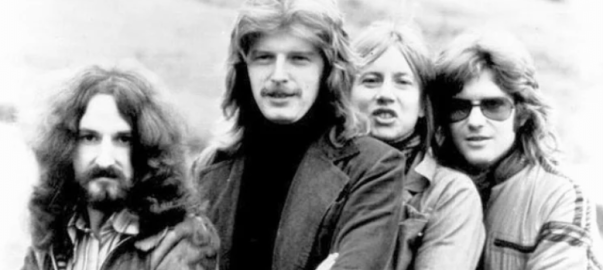
When prog met glam: the story of Barclay James Harvest, Bombadil and ‘Breathless’

One of the things that makes the early 1970s my absolute favourite era for music is not only were there so many classic releases coming out of the album-oriented rock acts at the time, like Deep Purple and Pink Floyd, but the singles charts, and what was considered mere pop, were packed with brilliant releases from acts like Slade and the Glitter Band and Suzi Quatro, too.

It wasn’t a completely straightforward division, of course. Bands like Deep Purple would get into the singles charts now and again (‘Black Night’ and ‘Strange Kind of Woman’ both made the Top Ten, for example) and Slade enjoyed three No. 1 albums on top of all of their singles sales. And in reality, the distance between bands like Purple and bands like Slade was not as great as we might imagine – with both bands delivering their own particular brand of loud, guitar-based hard rock.

Where we might perceive the gap to be much more unbridgeable, of course, is when we start considering prog and glam. The classical influences, musical complexity and long solos associated with the world of prog seem a long way away from the handclaps, glitterbeats and chanted choruses from the world of glam.

There were crossovers, however. Only few years after releasing ‘Blockbuster’ and ‘Teenage Rampage’, the Sweet moved into progressive territory with their 1978 Level Headed album. But an early crossover contender must surely be Barclay James Harvest’s 1972 dalliance with glam.

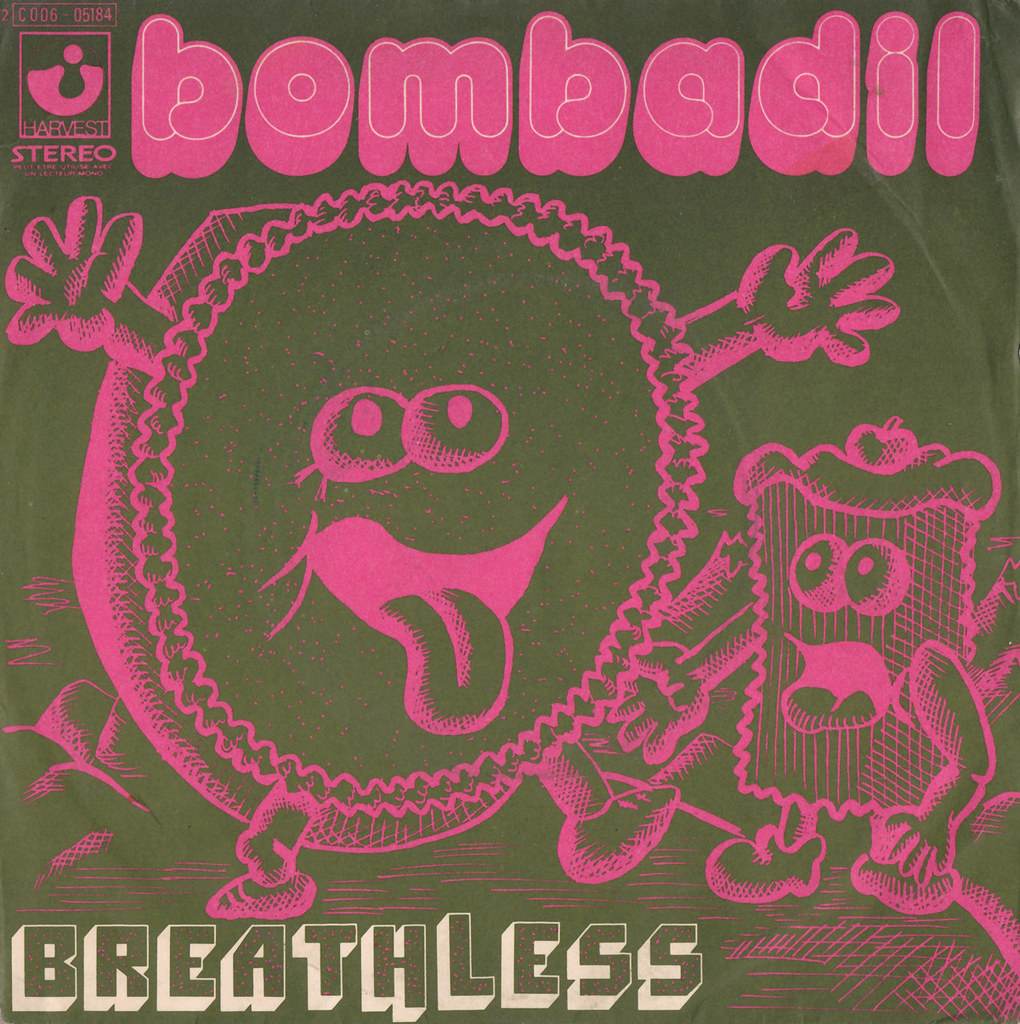
Admittedly, it was released under a pseudonym but the 1972 single ‘Breathless’ (credited to Bombadil and supposedly written by ‘Terry Bull’) was none other than Barclay James Harvest, which saw the Oldham-based prog foursome attempting to make a bid for chart success by playing the likes of Gary Glitter and Chicory Tip at their own game.

Where on earth did the pseudonym Bombadil come from though? According to the Barclay James Harvest website it was inspired by Tom Bombadil, a character in Tolkien’s Lord Of The Rings. Hmmm that is all starting to sound a bit prog and not very glam at all. Perhaps it was the name that let them down in the end then. Sadly, the single failed to make any impact on the charts but since the early 2000s the track (and its B-side ‘When The City Sleeps’) has been made available as bonus tracks on the Baby James Harvest album, leaving us with a wonderful slice of prog/glam crossover.

Further reading:

Before glam: the debut 60s singles of Bowie, Bolan, Slade, Mud and Sweet

The Sweet versus Bowie: the riff in Blockbuster and Jean Genie – origins and influences

Slade, strikes and the three-day week: the story of the greatest Christmas record ever made

Goth without the gloomy bits: five cheerful, upbeat and joy-inducing songs by goth bands

1. ‘Ziggy Stardust’ Bauhaus (1982)

Bauhaus released the eerily dark ‘Bela Lugosi’s Dead’ as their first single back in 1979, and it’s often said to be the first ever goth record. However, they were not just about gloom and doom and long-deceased vintage horror film actors. Lead vocalist, Pete Murphy, was always clear that the band looked to  early 70s glam as much as the late 70s punk scene and late 1960s garage bands: “I always thought of Bauhaus as the Velvets gone holy, or the Sweet with better haircuts.”

Nowhere is this more evident than on their glorious 1982 cover of David Bowie’s ‘Ziggy Stardust’. As a sixth-former it was constantly on the juke box in our college refectory, so much so that as a teenager I was far more familiar with this raw, thrilling and feedback-laden parcel of joy than Bowie’s original. Just perfection.

2. ‘Dear Prudence’ – Siouxsie and the Banshees (1983)

Formed in London in 1976, Siouxsie and the Banshees were a key part of the emerging punk scene but as punk evolved into post-punk they transformed into something darker, moodier and altogether more interesting. As goth, itself, emerged as a distinct subculture later on in the 1980s, Siouxie and the Banshees were often hailed as key pioneers. They always knew how to turn out a good catchy tune though and were regular fixtures in the Top Forty and frequent visitors to the Top Of The Pops studio. None more so when they decided to cover ‘Dear Prudence’ from the Beatles’ White Album in 1983, taking the wistful, mystical Lennon ballad and reimaging it as a shiny pop classic.

Many times better than the original, the Banshees’ version, in all its jangly gorgeousness went all the way to number 3 in the UK charts in 1983 yet retained enough class and mystique for it never to be regarded as a sell-out. Utterly joyous.

3. ‘Spiritwalker’ – The Cult (1984)

Formed in Bradford in the early 1980s The Cult were previously known as Death Cult, who in turn  emerged out of a band called Southern Death Cult. In terms of impeccable doomy, post-punk, dark gothic credentials, so far, so good. Over time, however, particularly when the prospect of success on the other side of the Atlantic beckoned, The Cult reinvented themselves from being cult indie scenesters in the UK to all-out stadium rockers in the US, where the band have been based ever since.

Even in their early days, however, there was always a glimmer of a rock god persona to their music, which belied their indie club roots. Long before producer, Rick Rubin, came in to help reshape the band’s sound for mainstream success, The Cult’s second single, ‘Spiritwalker’, taken from their 1984 debut album demonstrates a clear ability to turn out a great fist-pumping anthem.

4. ‘This Corrosion’ – Sisters of Mercy (1987)

Formed in Leeds in 1980, apart from a couple of year’s hiatus in the mid-80s, the Sisters of Mercy have been a consistent presence on the UK’s goth scene, albeit that in recent decades they’ve concentrated on live performances rather than new releases. The distinctive deep baritone vocal of frontman and only constant member, Andrew Eldritch makes them the ultimate goth band in many ways. But they, too, have released songs that can inspire untrammelled joy.

‘This Corrosion’ is the lead single from the band’s 1987 album, Floodland. The lyrics are a snark at former members, following a split in the band’s ranks. So far, so doom-laden, but we know from when Steve Harley released ‘(Make Me Smile) Come Up And See Me’ on an almost identical premise that songs snarking at former band members can still sound infectiously joyous. With it’s catchy, sing-along chorus and more ‘heys’ in it than the average Glitter Band single, ‘This Corrosion’ is another song to put a smile on your face and reached a well-deserved number 7 in 1987.

5. ‘Friday I’m In Love’ – The Cure (1992)

The Cure were formed in Crawley in 1978, fronted by the irrepressible Robert Smith who has remained their only constant member over the past 45 years. Certainly, both the band’s look and sound was a hit with the uber-cool alternative crowd when I was at sixth form. Smith’s instantly-recognisable look made him the ultimate goth godfather. Over time, however, he began bringing more mainstream pop sensibilities into the band’s music. This reached a pinnacle with ‘Friday I’m In Love’. When it came out in 1992 Smith described it as both a “throw your hands in the air, ‘let’s get happy’-kind of record” and “a very naïve, happy type of pop song.”

Indeed, attending Glastonbury in 2019, when The Cure were headlining, so moved was I by the happy, life-affirming, upbeat nature of this song that I ended up leading off a impromptu mass conga as ‘Friday I’m In Love’ was blasted out from the Pyramid Stage.

Book review: ‘Undercover – 500 Rolling Stones Cover Versions That You Must Hear!’ by Peter Checksfield

Following his two recent books cataloguing the glory years of Top Of The Pops, music wrier, Peter Checksfield, has turned his attention to those perennial rock gods, the Rolling Stones. More accurately, those artists who have chosen at some point in their careers to cover songs by the Rolling Stones. This bumper tome takes an in depth look at five hundred cover versions of Rolling Stones songs recorded by a vastly varied selection of artists.

‘Undercover’ not only includes the obvious Stones standards, like ‘Brown Sugar’ (covered by everyone from Little Richard to Ken Boothe to Thunder); ‘Honky Tonk Women’ (Ike & Tina Turner, Waylon Jennings, Elton John) and ‘Satisfaction’ (Otis Redding, The Supremes, Devo); but the book also covers many lesser-known songs and some lesser-known artists, too. Coventry band, The Mighty Avengers, recorded three (as then) unreleased Jagger-Richards compositions which resulted in some minor, albeit fleeting, chart success.

It could be argued that in these days of ever-expanding Wikipedia entries there’s less of a need for weighty rock encyclopaedias of this type. However, where ‘Undercover’ really comes into its own is in the 130 exclusive interviews that Checksfield carried out with many of those artists recording the cover versions featured in the book. We get fascinating insights from musicians as varied as Justin Sullivan of New Model Army; Bob Bradbury of glam almost-heroes, Hello;  Gale Paridjanian of Turin Brakes; Steve ‘Lips’ Kudlow of Anvil; Dick Taylor of The Pretty Things, Marc Almond and Sandie Shaw.

‘Undercover: 500 Rolling Stones Cover Versions That You Must Hear!’ is a fascinating reference work on both the songwriting and the enduring influence of one of the world’s greatest rock and roll bands and will probably be something I’ll keep on dipping into.

Published: November 2022 – visit Peter Checksfield’s website here

Related posts:

Book review: ‘Top Of The Pops: The Punk & New Romantic Years 1976-1986’ by Peter Checksfield

Book review: ‘Top Of The Pops: The Lost Years Rediscovered 1964-1975’ by Peter Checksfield

‘Look Wot They Dun! – The ultimate guide to UK glam rock on TV in the 70s’ by Peter Checksfield

Review: The Rolling Stones ‘Exhibitionism’ at The Saatchi Gallery

Live review: the Rolling Stones at Hyde Park 3/7/22