
Guitarist, Joe Hodgson, hails from the village of Ballymagorry in Co. Tyrone, Northern Ireland. His music, shaped by his upbringing during The Troubles, mirrors the fierce rain and winds of the Emerald Isle. I catch up with Joe to talk about his musical heroes, his solo career and the release of his new solo album, Fields of Redemption, which comes out on June 20th.
For my first question, let’s go right back to the beginning. When did you first pick up a guitar?
I picked up the first guitar after my cousins in Dublin played me some Rory Gallagher, you know? I think it was the Stage Struck album, which was him at his most rocky and stuff. And then I just was totally sold on the guitar. And then I actually got tickets to see Rory Gallagher and I was just totally blown away. And from that moment on, it’s all I ever wanted to do, you know?
Was that your first concert then, Rory Gallagher?
No, my first gig I ever went to was Thin Lizzy, I think on the Renegade tour.
That tour was my first gig as well, how weird!
Yeah, I saw them in Dublin and yeah, they were great, you know. Snowy White was with them at the time. It was brilliant. But it was definitely Rory Gallagher who was the was my main reason for playing guitar. And then after it became Gary Moore – when I first heard him. Those two were my biggest influences. Two Irish guys just coincidentally.
Two iconic and very expressive guitar players, so obviously some of that has embedded itself in you from an early age.
Oh God, yeah. I was out for a few beers last night with my wife, and the guy put on Rory Gallagher on the video screen. And he was absolutely incredible. Amazing showmanship. He never messed up. He never got out of tune, never out of time. Raw. And that was amazing, you know. Brilliant.
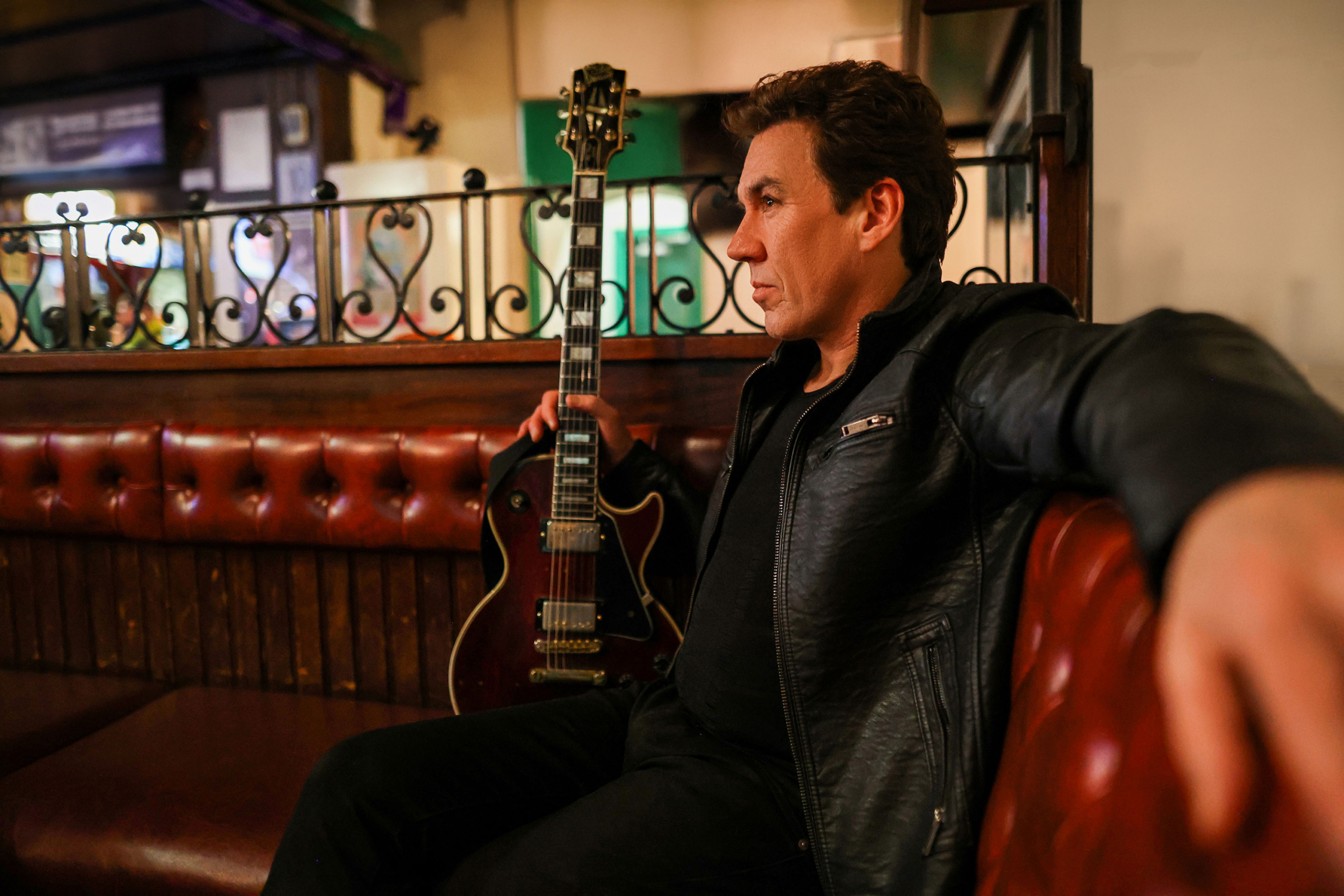
If you want to talk about sort of the music that’s influenced me when I was growing up… as I say, Rory, and then Gary was definitely my biggest single ever. I’d say he was one of the greatest players of all time. But I was also into – and I still listen to – all the older, the English guys. Like, obviously, Eric Clapton’s a huge influence on me. Jimmy Page, Jeff Beck, Peter Green. Those four are still, to this day… you don’t get any better than them! And I still go back and listen to Clapton and Beck quite regularly, you know?
But in the ‘80s, ‘90s, I was heavily influenced by all the American players, you know. Van Halen, Randy Rhoads and Jake E. Lee and all those great players. But I was also into other music. Stuff like ELO and some quite melodic music, which probably has helped define me. Melodically, it’s given me that sense, I like to think, that my influence isn’t just from the hard rock. It’s from that kind of more pop rock as well. Fleetwood Mac and stuff like that. I love listening to that.
I think that’s something that really shines through in your own music.

So, from those early days, you went on to play in a number of bands. That was over in England. Did you want to tell us about that?
Well, it was a catalogue of almost-made-it type bands, you know. The band I suppose that came closest to cracking it was a band called Rime. At the time we released an album back in the mid-2000s. And we were about to be signed up by a major promoter in America. And at the last minute, just as the CDs had been printed, the singer walked out of the band. A French guy. It was unbelievable luck, you know? And we replaced him, but it was never the same when you replace a singer. The guy in this booking agency in America, he loved the singer, you know? So, when you replace the singer, it’s always difficult.
But I was in lots of different bands over there. And the last band I was in before I left was a band called Good Guy Dies. I was with a female singer from Latvia, and we did some BBC stuff. BBC Radio Kent and local stuff in and around London. And we toured all over the country but, again, that was a weird one because my background is Thin Lizzy, Rory Gallagher, Gary Moore, Led Zeppelin, all that. And her background was Tori Amos, Bjork. So, I thought it was a good idea to try and mix these, but it was like trying to mix oil and water, you know? So, it didn’t work in the end, I don’t think, musically. But I enjoyed playing that stuff and experimenting, you know?
And then you relocated back to Northern Ireland and released your debut solo album a few years later. Was that a conscious decision to move back to Ireland and launch a solo career, or did it just happen in the way sometimes things happen in life?
Yeah, the reason I came back here was that band Good Guy Dies broke up and I just wanted to get away from London for a while. Then my mum was diagnosed with motor neurone disease. So, I ended up back here and I nursed her in the last year of her life. She died here at home. I had no intention whatsoever of coming back here permanently but as the days went on, I thought I kind of like it here, you know. People talk to you here. It’s not like London, you know, and you go for a pint and people are going, “Hey Joe, how are you man? How you doing?” So, I felt just right at home again after a while. You couldn’t pay me now to go back to London, you know! I’m quite happy here.
Brilliant. I’m sorry to hear about your mum though. Although something very creative and very positive came out of a family tragedy.
Absolutely. It was always my dream to come back. This room where I’m in now, you can see all my guitars and stuff there. This is the room I learned to play guitar in. And I always had this sort of dream to come back here and record a solo album in this room which is what I did. I recorded all the guitars in here.
So yeah, it was always in the back of my mind to do something like this, you know, the solo stuff. I just found I really enjoyed the creative freedom. And I self-financed it all myself so there’s nobody breathing down my neck saying, “You shouldn’t be doing that.” I can experiment as much as I like. So that’s probably why you see quite a lot of different styles on the album. Because I’m the boss here of this little organisation, you know, and it’s really liberating. If I want to play a blues track, I’ll play a blues track, if I want to play a jazzy track, if I want to play some harder rock, I’ll do it, you know?
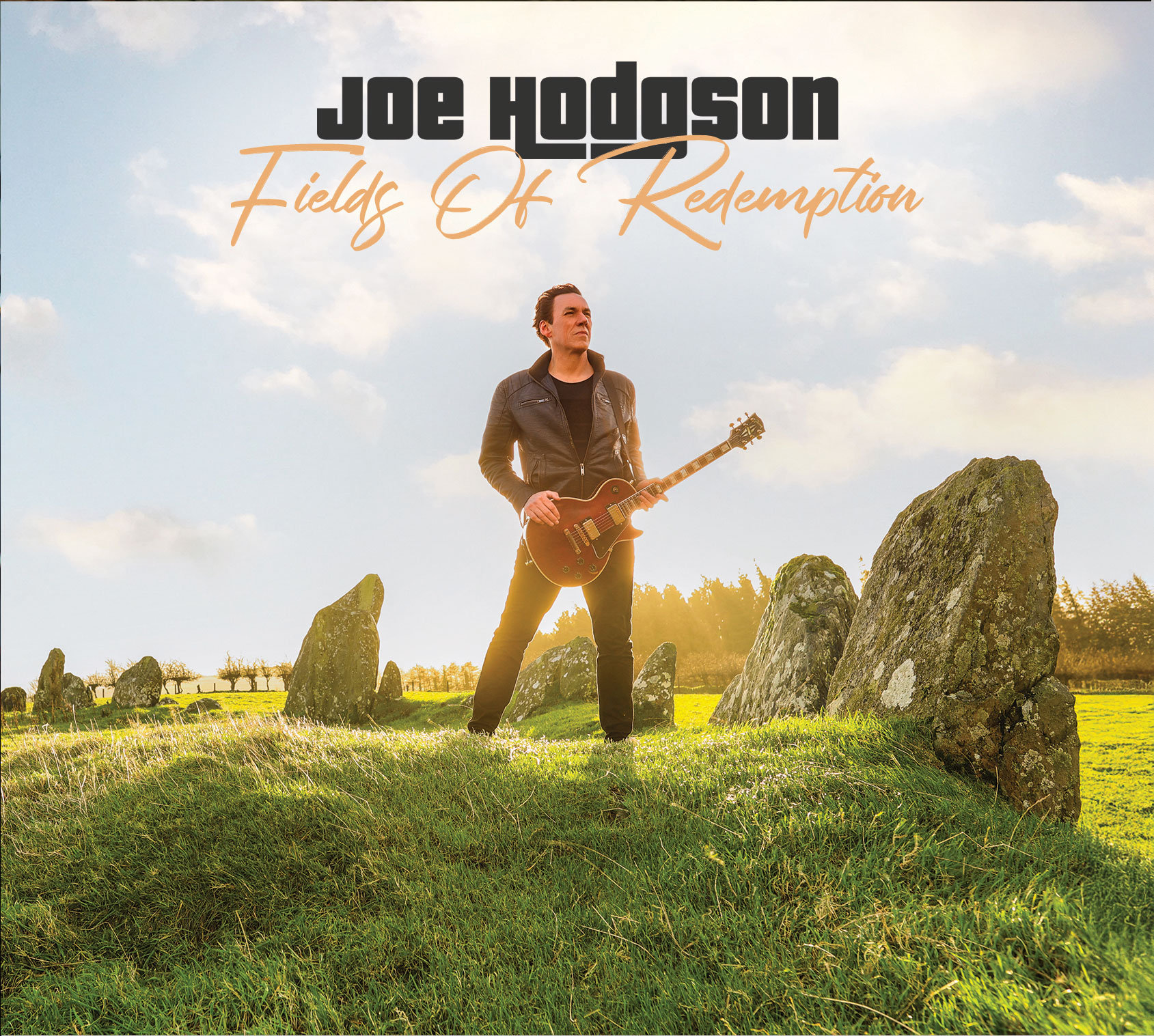
Yeah, those different styles certainly come out on the new album, and I know that’s been commented on in reviews. So, what do you want to tell us about the album Fields of Redemption that comes out on June the 20th?
Well, as I say, it’s very varied. It’s not like, say – and I’m not knocking them because I actually really like them – but you buy an Oasis album, you know what every track’s going to be. You know what it’s going to sound like before you even play it all. It’s great. But for me, that sort of approach is very limiting. So, I just wanted to be able to play whatever style I wanted at any given time, you know.
But also, the difference between this album and the last album was I got a co-producer on this album. A guy called Chris James Ryan. He’s Australian. He lives in Canada and he mixed Apparitions (Joe’s first solo album). That’s how I met him. But this time I wanted to widen the sound a bit and use orchestral elements and I wanted to bring in brass. And he was a great help with that. Communicating with these musicians along with me, you know? And we really went to town a bit more on the production this time – went really deep into getting the sounds right.
And, as I say, the guitars were recorded here in Northern Ireland, but the rest of it, like the drums and bass, were recorded in England. There were these two Austrian guys, Philipp Groyssboeck and Vinzenz Benjamin. And then I had musicians dotted all over the world. Like the horns were recorded in Germany by this Australian guy. I had a Brazilian percussionist. He was in Salvador. He recorded percussion over there.
Then one of the highlights for me was working with a guy called Paul McClure, who’s a bodhran player, the Irish drum. He was an ex-All-Ireland champion and he was phenomenal to work with. I did a couple of acoustic tracks. He’s on those, which is a first for me. I’ve never recorded an acoustic track from start to finish and I did two on this album so that was different.
It’s something I’m happy that I did, you know. Happy that I went so wide with the spectrum. But I would like to think that my guitar is the unifying factor, which brings it from start to finish and kind of makes sense of it, you know?
Oh yeah, absolutely. Your guitar shines throughout and your personality through that, I think. That’s definitely the unifying factor, isn’t it?
Yeah, and I also got to work with a singer who I’ve wanted to work with for a long time. A guy called Glen Harkin, who you heard on ‘Since You Had a Hold On Me’. Glen’s amazing. He’s probably the best male vocalist I’ve ever worked with, you know. You just turn on the mic, he was standing there behind me and I just let him open his mouth and sing. I’d say that track was done, his singing part in an hour, hour and a half.
His voice is perfect for that track. But as we say, it’s a mainly instrumental album. And I think with a lot of instrumental albums, they’re good at capturing abstract moods, but yours is actually telling stories, which I think is really, really fascinating. The music actually tells a story once you know the title. That’s quite a feat.
I’m really pleased you picked up on that because even though there’s maybe no words on the track, the tracks do mean things to me, you know? And there’s one track, that’s the very last track on the album. It’s the acoustic track, ‘The Ballad of Joe Clarke’. That’s quite a special track to me because it’s dedicated to a friend of mine who sadly died last year. And he was the person that brought me down to see Thin Lizzy in Dublin, you know? And he was a huge inspiration to me, because he played in local bands and he was a bit older than me, so I looked up to him. And I wanted to do this for him and his wife, Helena. That track means something to me, you know?

So finally, what next after this current album is released?
Next? Well, I would love to be able to tour this, you know, but it’s very, very difficult to do that with instrumental music. But if someone like a Robin Ford or a Joe Bonamassa said they want a support act. Yeah, count me in!
But looking further down the line with myself and Chris, we’ve already talked about the next album. And we actually want to go and do it in Nashville because he’s got quite a few contacts over there. Because you get these players in Nashville and they’re just unbelievable, you know. Probably do the ten songs, we’ll get the backing tracks done in a couple of days and then come back and work on the guitar. But that’s going to be a fair bit down the line, as I say, because all this is self-financed. So, it takes a while to get it together but that’s the next plan recording-wise.
Fields of Redemption is released on June 20th 2025 https://joehodgsonmusic.com/
Related posts:
This week’s featured artist: guitarist Joe Hodgson – new single out 28th March
Irish guitarist Joe Hodgson ‘You I Think Of’ – new single and video out 6th June
 Darren's music blog
Joe Hodgson has a terrific sound. I love the harmony guitar action! The only possible personal challenge I can see is that I also like vocals. As such, I’m not sure I’d listen to an entire album of Joe’s music in one shot, as beautiful as it is. On the other hand, I have to admit there are very few albums with vocals nowadays I listen to in their entirety. I can’t deny the fact the age of the instant playlist has impacted my listening habits.
LikeLiked by 2 people