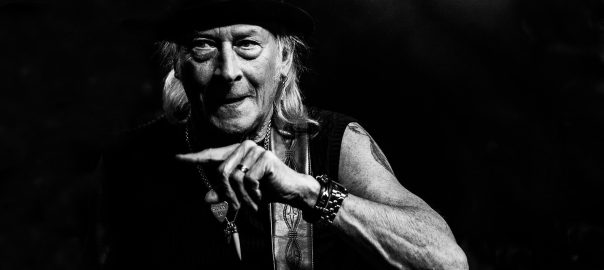
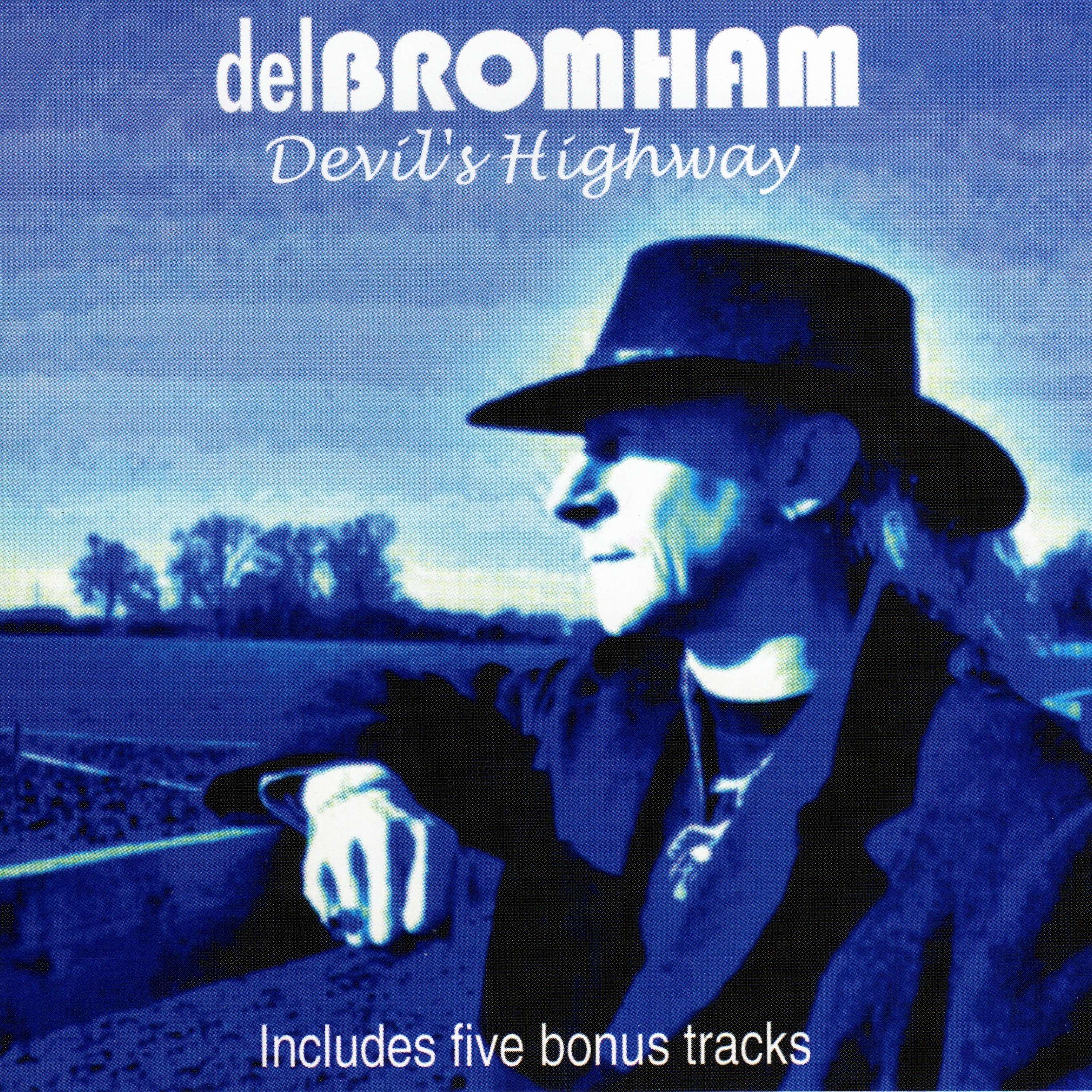
Following the re-release of his solo album Devil’s Highway on 2nd January, I catch up with guitar legend and founding member of Stray, Del Bromham. We talk about the making of the album, growing up in a home filled with music, the ups and downs of the music industry and why there’s been renewed interest in Stray, post-pandemic.
So firstly, I wanted to ask about the re-release of the solo album Devil’s Highway. As a solo work, that’s more pure blues rather than the bluesy hard rock that Stray is best known for. When you were a teenager growing up, were the traditional blues artists always important for you as well as the R&B bands like the Yardbirds and the Pretty Things?
I must admit, I have to say I was a bit of a late starter on it. Although, having said that, there’s a track on the Devil’s Highway album called ‘Careless Love’. Now, I had music in my house as a kid because my dad belonged to a record club and liked various music. And as I mentioned before, I think sometimes he would order these things. It was probably out of the back of the News of the World or something like that. And he’d have like two or three EPs turn up and it might be, you know, My Fair Lady, some obscure orchestra but one of them I remember as a kid, six or seven years old, was an EP by Big Bill Broonzy. And ‘Careless Love’ really stuck with me all the way through. So, when it came to recording the album, I thought, well, that’s my starting point. I’ll do that one.
But going back to your original question, You’re quite right. I mean, in the ‘60s, I was listening to the Yardbirds, the Pretty Things, the first Stones album. I remember I used to go around to my mate’s house, and his older brother had these so while he was at work, we’d play them. And then I got into John Mayall. And I guess it was through the British invasion, as it were, doing the blues, that I thought, well, where did they get this from? And then I slowly began to compile it in my head, if for want of a better word. Now, I was a bit of a late starter, so I wasn’t really into the authentic blues, probably not until 2000s when I actually started doing the album. And I started, like a journalist, doing research, as it were.

And that was around the time you were touring with Leslie West, was it?
Well, I did it just before. I started thinking about it in 2003. And in 2004, I had actually done the album. And then my then tour manager, Paul Newcombe – I’d already done a couple of tours with Mountain – and he met Leslie on one of the tours I did with Stray. And then, of course, when I had the album ready, he suggested to Leslie that he come over and do a tour because he had his Blues to Die For album. And Leslie being Leslie said, “Yeah, great” And Paul said, “Just come over with acoustic guitar.” He said, “Just me and an acoustic guitar?” He said, “Yes. Tell your stories. Del does it.” He said, “Well, if Del will do it, I’ll do it!” So that’s how that happened.
So then, of course, we had the album, but no label. Paul’s little company at the time was called Trigger Happy Music so we put it out on Trigger Happy. It wasn’t a general release. It was to sell at gigs and then a little while after, because of the interest, I then got a deal with Angel Air Records, who did Nine Yards. And then the boss at Angel Air said, “Oh, you did another one before, didn’t you?” I said, “Yeah.” So, he said, “Well, have you got any extra songs we could put it out with bonus tracks on?” Then it came out again.
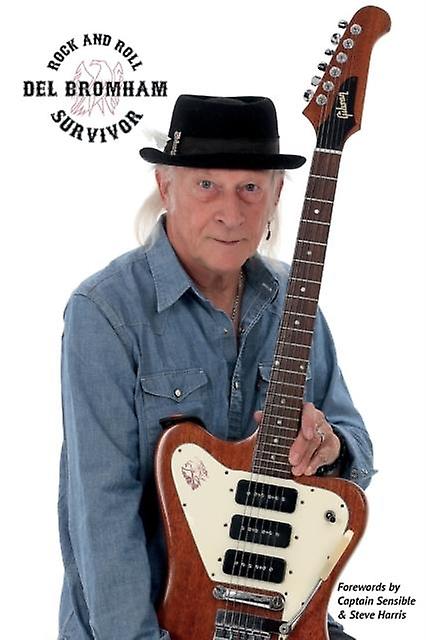
Well good luck with the album. I’ve been playing it and really enjoyed it. And you’ve mentioned it already – it’s a big theme in your autobiography, Rock and Roll Survivor – you talk very fondly about growing up in a house filled with music. That was clearly very important in shaping your direction in life, not only from your parents but from your brothers and so on.
Yeah. Yeah. Yeah. It’s surprising actually because I would recommend anybody to write their biography. I recommend it because it wasn’t really until I wrote it down and read it back. It was then I realized how important my family had been to me and music. I know I’ve written it, but it is difficult to put into words because, and there were various things, always having music in my house. Silly things like my mum going around the house singing and dusting at the same time. Playing in my brother’s group was a great thing to do, particularly as I was only about 14 years old. So, the family were very important to me and my brother was probably my biggest musical influence.
Obviously, things started to take off for Stray in the early ‘70s but by the late ‘70s, there’s repeated setbacks for the band. And you talk in your autobiography about your life as a musician becoming stressful, not pleasurable and then you went out and got a normal nine-to-five job. How frustrating was that at the time or was it just a matter of getting on with life and you deal with things as they come?
A little bit of both actually and I think it was once again down to my family. Winding the clock back, when I was 15, I didn’t want to stay on at school but myself and a couple of friends, we were all going to go to art college. That’s what we were going to do. And Pete Townshend up the road, he was going to art college as well. So, we thought, well, I’ll go to art college. But long and the short of it was that I didn’t get into art college and I was very disappointed. And I can vaguely remember the conversation. Well, you’re not going to art college. And my dad just sat there pontificating in his armchair. And he said, “Well, you’ll have to get yourself a job then, won’t you, boy?” I went, “Eh?” So, he promptly pulls out a copy of the local paper and goes all down the job vacancies there. But, you know, that was kind of, well, no-one owes you a living, you’ve got to go and do it yourself.
So then when it came to all the financial troubles we had at the end of 1977 into 1978 – I mean, it couldn’t have happened at a worse time really. Because my wife had just given birth to our first child, she was just coming up to a year old. And I’d sold my house in London, and I was moving to another house out of London in a little place called Bletchley. I was moving there. So, what I then found was because of the associations I’d had in the past, shall we say, nobody in the music business was interested. You know, it was like Stray was bad news. Don’t get involved with anything to do with Stray because something’s going to come back and bite you in the butt. Or even worse, you might have your legs or fingers broken. So, I had no choice. And to be honest with you, I was lucky because I’d never really, at 16, 17, I’d done like an office boy job. I’d never had a proper job.
And I was very lucky because where I was living in Bletchley, it was in years to come to become part of Milton Keynes. So, they were encouraging businesses to start up in Milton Keynes and giving them nice little incentives as it were. And as it turned out, Hammond organs decided to do this distribution. And I’d met up with Graham Sutton. I used to do Keith Emerson’s servicing for his Hammond. So great. I could play Hammond organs all day instead of just doing them in the studio. So, I ended up working for Hammond organs for a couple of years and I ended up doing the marketing for them. And then I went to work for somebody else doing the marketing, which in a roundabout kind of way, I believe, helped me in a way because when I got back into doing music, I had the other head about. Oh, that’s how you do that, is it?
So, you weren’t so reliant on record labels and management and the whole industry anymore. You could be far more self-sufficient after picking up all those skills, I suppose.
It wasn’t what I planned, but it just goes to prove to you how life can actually turn you into different areas, you know.
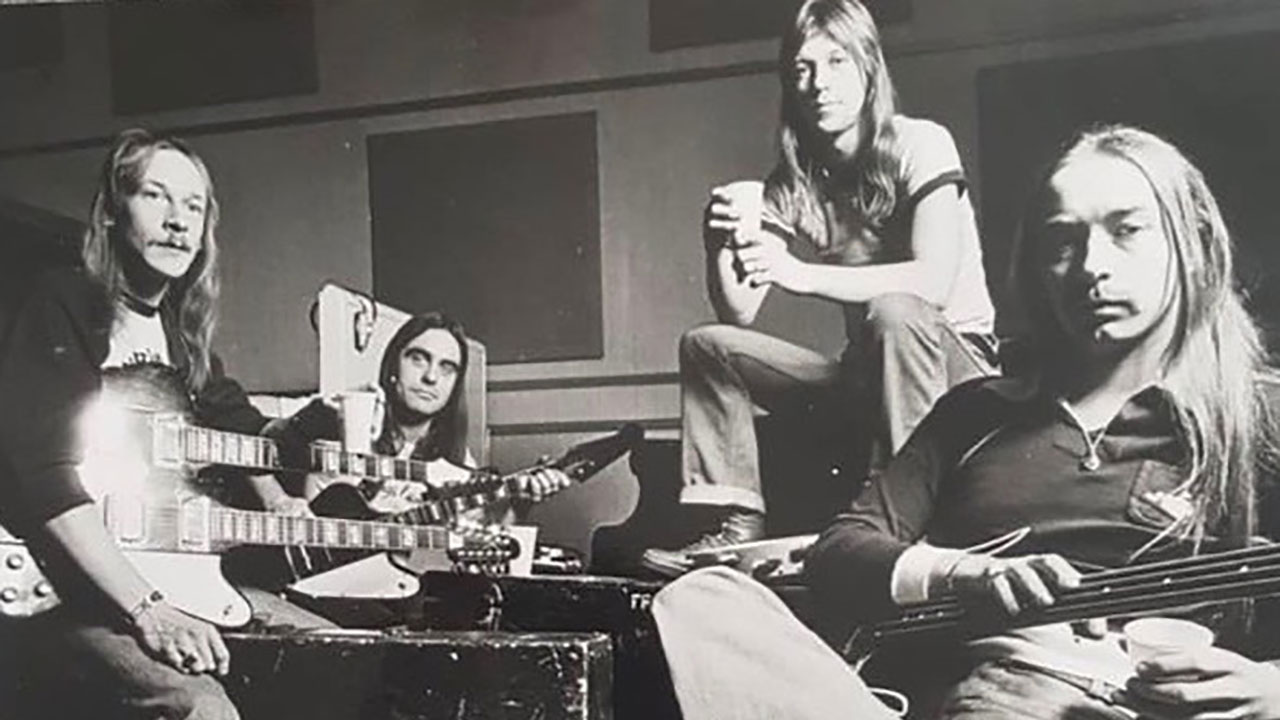
Stray’s legacy is starting to get the recognition it deserves, I think. And in the foreword to your autobiography, Steve Harris from Iron Maiden says Stray should have been as big as Black Sabbath or Deep Purple. Frustrating on one hand, but nice to read on the other?
Yeah, yeah. It is nice. I mean, I know of people from my era who just cannot get out of the ‘70s. But… stuff happens, you know. I’ve never let it drag me down. And I’m thinking about what could have been, you know. I mean, it was quite true at the time. I can remember hearing, say about 1971, 1972, “Oh, Stray, they’re going to be the next Led Zeppelin.” And then of course, the guy who managed us for a while, Wilf Pine, was to do with Worldwide Artists. And guess what? They had Black Sabbath. And so, he actually thought he was going to manage the next Black Sabbath. And I can always remember him. We’re listening back to the first album we made with him as manager and he said, “You know, I thought I was going to manage the next Black Sabbath, but I think I’ve got the Beatles here.” There were more songs. And then, of course, I think he wanted to be George Martin, so he then got an orchestra in. And that was the Mudanzas album. So that was a real change, you know, and we were disappointed because we were expecting things to step up, and it didn’t happen.
And then, of course, the management company we had at the time, I think, to be frank, they were upsetting various people in the music business, you know, with the way they acted. And then Worldwide kind of finished, and it left us out on a limb, really. And that’s kind of how it happened in brief.
But against the odds, Stray is still going out there. So, my final question then, what next for both Del and for Stray?
Well, we never know what tomorrow is going to bring, do you? It’s funny, you possibly hinted at it but there does seem to have been in the last couple of years – probably since Covid when things got back to a kind of normality- there does seem to be a more of an interest in Stray than there was prior to that. We’ve just finished about a 20-day tour with British Lion, as you know. I mean, it wasn’t just down to us, but it was sold-out every night. And we had Maiden fans there, obviously Lion fans. We’ve also done a couple of metal festivals as well, which once upon a time you thought, well Stray’s not going to fit there. But it does seem that we’re getting accepted. Even our own shows, we’ve had sellout shows just straight on their own, you know. And different people coming back to see the band or people who’ve never seen the band before. Which I’m not bothered about because the more the merrier as far as I’m concerned. You know, it’s never too late.

And you’re one of the original bands still out there, whereas many have fallen by the wayside, either because people are no longer with us or they’ve retired or whatever. So compared to a lot of your contemporaries, you’re still out there.
Well, it’s a strange paradox because all those years ago, bearing in mind we were only about 17, 18 years old when we were playing, the business at the time always used to criticize us. “Well, they can’t be that good because they’re too young.” And now here we are 50 years later and I’m one of the elder statesmen. And, of course, people said, “I didn’t know you were still going.” I said, “Well I’ve never stopped.” And the band I’ve got with me now, they’re very versatile. And they were fans of the original band as well. So, they’ve never tried to take over or do anything. So, it’s great because we’re just five mates who go out to enjoy ourselves and we happen to play instruments at the same time.
Going forward, before Christmas I was actually thinking about a new solo album. Obviously, the last About Time album by Stray was successful and it’s brought back a lot of people. We’re not on a label but for the purposes of touring we recorded a live show and that CD is called One for the Road and we sold bucket-loads of them. So, it does seem that it’s not beyond the realms of possibility that during the year I might be quite busy in the studio with a solo and another Stray album. You know I’ve thought with the last couple of Stray albums, I wonder if this is going to be the last one. But I woke up this morning de-de-de da-dum and that was a result!
Well, that’s a really nice, optimistic, forward-looking note to end on, unless there’s anything else you’d like to tell us?
Well, I haven’t really got any big scoops for you. It’s just going to be business as usual, which I’ve always done. I’ve never had any great expectations. You know, I just enjoy playing. I enjoy life and fortunately, touch wood, I’m quite heathy so long may it continue, I hope.
Thanks Del. Long may it continue!
Devil’s Highway (with bonus tracks) was released on 2 January 2026 by Singsong Music
 Darren's music blog